


5 Critical Mistakes to Avoid When Choosing a Laser Hair Removal Machine for Blonde or Red Hair
- Quick Summary: The Essentials for Light Hair Laser Selection
- Why is Laser Hair Removal Difficult for Blonde and Red Hair?
- Mistake #1: Ignoring Pulse Duration Capabilities for Fine Hair
- Mistake #2: Relying Solely on Standard 755nm Alexandrite Lasers
- Mistake #3: Overlooking the Pheomelanin Factor in Redheads
- Mistake #4: Underestimating the Cooling System Requirements
- Mistake #5: Failing to Verify "Color-Blind" Technology Claims
- Future-Proofing: Innovation Trends for 2026 and Beyond
- Conclusion
- Does laser hair removal work on natural blonde hair?
- What is the best wavelength for red hair removal?
- Why is short pulse duration important for fine hair?
- Can IPL machines remove blonde hair?
- Is Electrolysis better than laser for light hair?
- What is Elōs technology?
- Does laser hair removal hurt more on redheads?
- How many sessions are needed for blonde hair?
To effective remove blonde or red hair, you must look beyond standard diode lasers. The lack of eumelanin in light hair requires specialized technology capable of targeting low-pigment follicles without damaging the skin.
Quick Summary: The Essentials for Light Hair Laser Selection
Direct Answer: Successful treatment of light hair requires machines that combine optical energy with Radio Frequency (RF) or utilize ultra-short pulse durations to overcome low pigment absorption.
- Key Takeaway: Standard diode lasers often fail on blonde/red hair due to a lack of chromophore absorption.
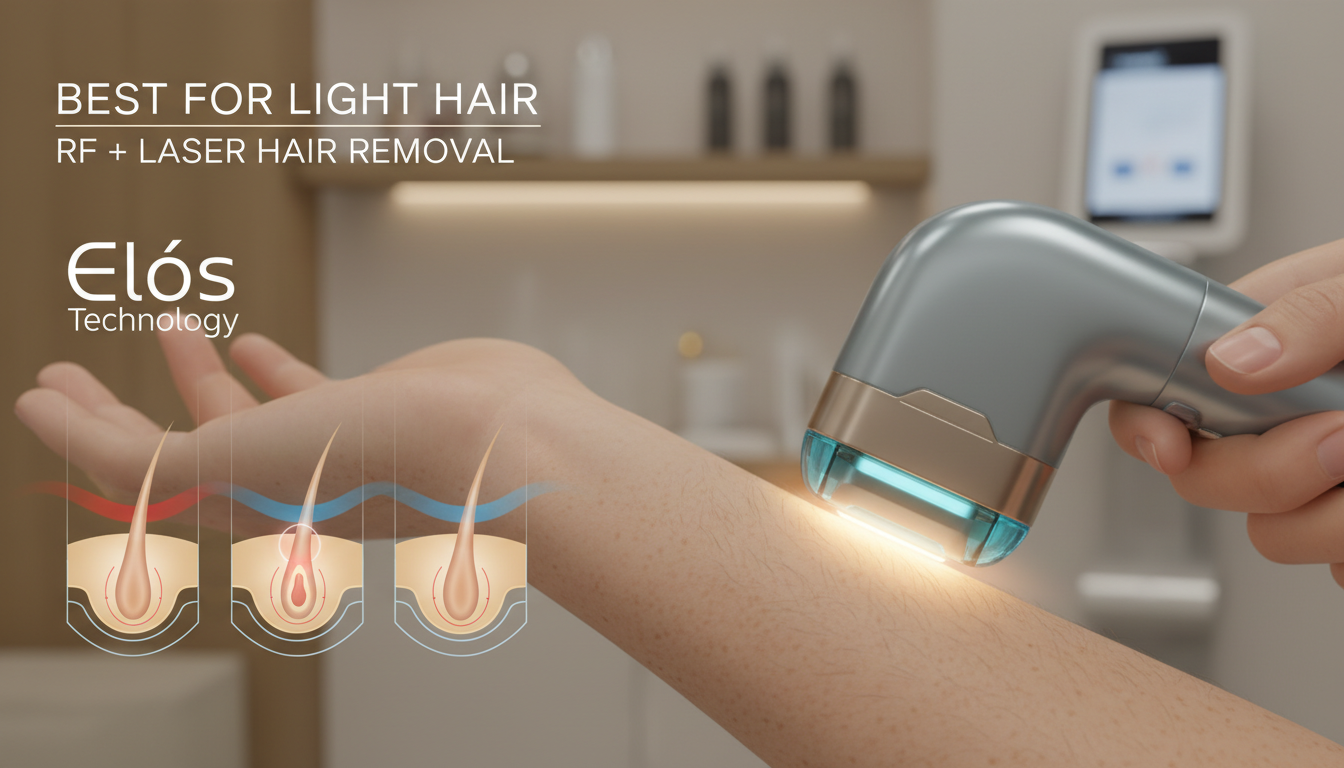
- The Solution: Look for machines combining Optical Energy with Elōs technology radio frequency hair removal capabilities.
- Critical Factor: Red hair contains Pheomelanin, which resists standard 755nm/808nm wavelengths.
- Safety First: Treating light hair requires High fluence laser safety protocols and superior skin cooling systems.
Why is Laser Hair Removal Difficult for Blonde and Red Hair?
Direct Answer: Traditional lasers work by targeting eumelanin (dark pigment) in the hair shaft; however, blonde, gray, and red hair lack this pigment or contain pheomelanin, leading to ineffective absorption.
Without a sufficient "target" (chromophore), the laser energy dissipates into the surrounding tissue rather than destroying the follicle. This is the fundamental physics of laser hair removal: light needs a dark object to absorb heat. As reported by the National Center for Biotechnology Information (NCBI), the mechanism of action for these systems is targeting melanin, meaning wavelengths must be selectively absorbed by the specific pigment type present. When that pigment is missing (blonde) or chemically different (red), the process fails.
- The Physics: No pigment means no heat generation in the follicle.
- The Risk: Operators often turn up the power to compensate, causing skin burns.
- The Exception: Hybrid technologies use conductivity (RF) or specific pulse widths to overcome this barrier.
Mistake #1: Ignoring Pulse Duration Capabilities for Fine Hair
Direct Answer: A common error is choosing a machine with fixed or long pulse durations, which fails to heat fine hair quickly enough to destroy the follicle.
Blonde and red hair is often significantly finer than dark hair. Fine hair has a very short Thermal Relaxation Time (TRT), meaning it loses heat rapidly. To destroy it, you must deliver energy faster than the hair can cool down.
- The Error: Using standard >30ms pulses on fine hair.
- The Fix: You need Short pulse duration for fine hair (typically sub-5ms) to "snap" the follicle before heat dissipates.
- Machine Spec to Check: Ensure the device supports high fluence at tunable pulse durations.
Mistake #2: Relying Solely on Standard 755nm Alexandrite Lasers
Direct Answer: Assuming the Alexandrite (755nm) is the "gold standard" for all light skin types is a mistake because it relies heavily on melanin absorption, which blonde hair lacks.
While the 755nm wavelength is aggressive on melanin, it requires a certain density of pigment to work. When comparing 755nm Alexandrite vs 1064nm Nd:YAG, the Alexandrite is usually superior for light skin/dark hair contrast. However, for blonde hair, neither may be sufficient on their own.
- The Nuance: Low pigment requires such high energy from an Alexandrite that it endangers the epidermis.
- The Better Choice: Dual-wavelength systems or machines integrating IPL with Bipolar Radio Frequency (Elōs), which heats the follicle via electrical conductivity rather than relying solely on light absorption.
Mistake #3: Overlooking the Pheomelanin Factor in Redheads
Direct Answer: Treating red hair identical to blonde hair is a critical mistake because red hair contains Pheomelanin, a pigment with a completely different absorption spectrum than brown Eumelanin.
Pheomelanin laser interaction is complex. This reddish pigment does not absorb standard diode wavelengths well and can be unstable under heat. According to studies on Melanin subtypes in laser therapy, the epidermal response varies significantly between eumelanin and pheomelanin, affecting safety and efficacy profiles.
- The Strategy: Avoid standard Diodes for true redheads.
- The Tech: Look for proprietary technologies specifically validated for Pheomelanin or hybrid systems that use "color-blind" RF energy.
- Expert Tip: Always perform a test patch; red hair is the most unpredictable candidate for laser therapy.
Mistake #4: Underestimating the Cooling System Requirements
Direct Answer: Purchasing a machine with standard cooling is dangerous because light hair requires massive energy (fluence) to achieve any result, significantly increasing burn risk.
To compensate for the lack of pigment, practitioners must use High fluence laser safety settings. This excess energy that isn't absorbed by the hair is absorbed by the skin. Without aggressive cooling, this leads to adverse events.
- The Risk: High fluence on light hair = High heat in the epidermis.
- The Requirement: Look for advanced cooling (Cryogen spray or Sapphire contact cooling down to -5°C).
- The Benefit: Protects the epidermis while allowing you to deliver the massive energy pulses required to damage the weak target.
Mistake #5: Failing to Verify "Color-Blind" Technology Claims
Direct Answer: Many manufacturers claim their devices work on all hair colors, but failing to verify these claims with FDA clearance for "non-pigmented hair" leads to poor clinical outcomes.
Don't just believe the marketing hype. Elōs technology radio frequency hair removal is one of the few methods with clinical backing for lighter hair because the RF component is not dependent on melanin. It uses the hair follicle as a conductor.
- The Reality: Most "all color" claims are based on growth reduction, not permanent removal.
- The Verification: Demand clinical white papers showing histology reports of follicle destruction.
Future-Proofing: Innovation Trends for 2026 and Beyond
Direct Answer: The future of light hair removal lies in AI-driven pulse modulation and non-optical energy sources like microwave technology that bypass pigment entirely.
- Gap Analysis: Competitors are sticking to 2020 tech.
- Trend: Real-time pigment density detection using AI to adjust pulse width nanosecond-by-nanosecond.
- Microwave Technology: Emerging modalities targeting water/lipid molecules in the follicle rather than melanin.
Conclusion
Successfully treating blonde and red hair requires specialized equipment with short pulse durations, high cooling capacity, and potentially RF synergy. Don't compromise on machine specs; the wrong wavelength means zero results for light-haired clients and potential liability for your clinic.
Contact us today to optimize your laser hair removal equipment strategy.
Does laser hair removal work on natural blonde hair?
It is difficult because standard lasers require brown or black pigment to generate heat. Newer technologies using Radio Frequency (RF) or very short pulse durations have better success rates, but white or gray hair remains nearly impossible to treat with laser.
What is the best wavelength for red hair removal?
There is no single "best" wavelength due to the presence of Pheomelanin, which resists standard absorption. Combination therapy (Diode + RF) is often recommended, though Electrolysis remains the only 100% guaranteed method for red hair.
Why is short pulse duration important for fine hair?
Fine hair loses heat very quickly due to a short Thermal Relaxation Time (TRT). A long pulse allows the hair to cool down before the follicle is destroyed, whereas short, high-energy pulses destroy the follicle before that heat dissipates.
Can IPL machines remove blonde hair?
Standard home IPL devices usually fail on blonde hair. However, professional medical-grade IPL combined with Radio Frequency (Elōs technology) is one of the few methods that can work effectively on lighter pigments.
Is Electrolysis better than laser for light hair?
Yes, for 100% permanent removal of blonde, white, or red hair, Electrolysis is the FDA-approved gold standard. However, it is a much slower and more painful process compared to laser treatments.
What is Elōs technology?
Elōs stands for Electro-Optical Synergy. It combines light energy (IPL or Laser) with Bipolar Radio Frequency. The RF component targets the follicle via conductivity without needing melanin, making it safer and more effective for light hair.
Does laser hair removal hurt more on redheads?
Redheads often have lower pain thresholds and more sensitive skin. Additionally, the higher energy settings required to treat light hair can increase sensation, making superior cooling systems essential for patient comfort.
How many sessions are needed for blonde hair?
Blonde hair typically requires more sessions than dark hair, often 8-12+ compared to the standard 6-8. Maintenance treatments are almost always required, and results vary significantly based on the specific shade of blonde.
B58 台式深度微晶8+冰锤
What is Crystallite Depth 8 technology?
It refers to advanced micro-needle control that allows precise penetration depth for effective skin rejuvenation.
A71立式冷波
Is the Onda Coolwave Machine non-invasive?
Yes. The Onda Coolwave Machine is a completely non-invasive body sculpt and skin tightening device with no needles or surgery.
HMT82S-2
How long does shipping take? Do you offer customization?
Standard orders are shipped within 3–7 working days. We offer global shipping via DHL/FedEx/Sea Freight. OEM/ODM customization is available (logo, interface, packaging, etc.).
ZGP03 (台式皮秒)
Can this machine treat different tattoo colors?
Yes, the Nd YAG Picosecond Laser supports multiple wavelengths for black, blue, red, and other pigment colors.
6 Handle Magnetic Face Lift Machine Vertical
How soon can results be seen?
Visible improvements can be noticed after 3–5 sessions, with progressive tightening over time.

CO2 Fractional Laser Machine – Professional Wrinkle Removal & Skin Resurfacing Device
The CO2 Fractional Laser Machine is a multifunctional aesthetic device designed for professional clinics and beauty salons. Using advanced fractional CO2 laser technology, it effectively targets acne scars, freckles, pigmentation, nevi, and deep wrinkles. Additionally, it provides non-invasive skin rejuvenation, vaginal tightening, and intimate beautification. This professional CO2 laser equipment combines precision, safety, and powerful energy output to deliver outstanding anti-aging and dermatological results.

3 Wavelength Diode Laser Hair Removal Machine | Professional Permanent Hair Reduction System
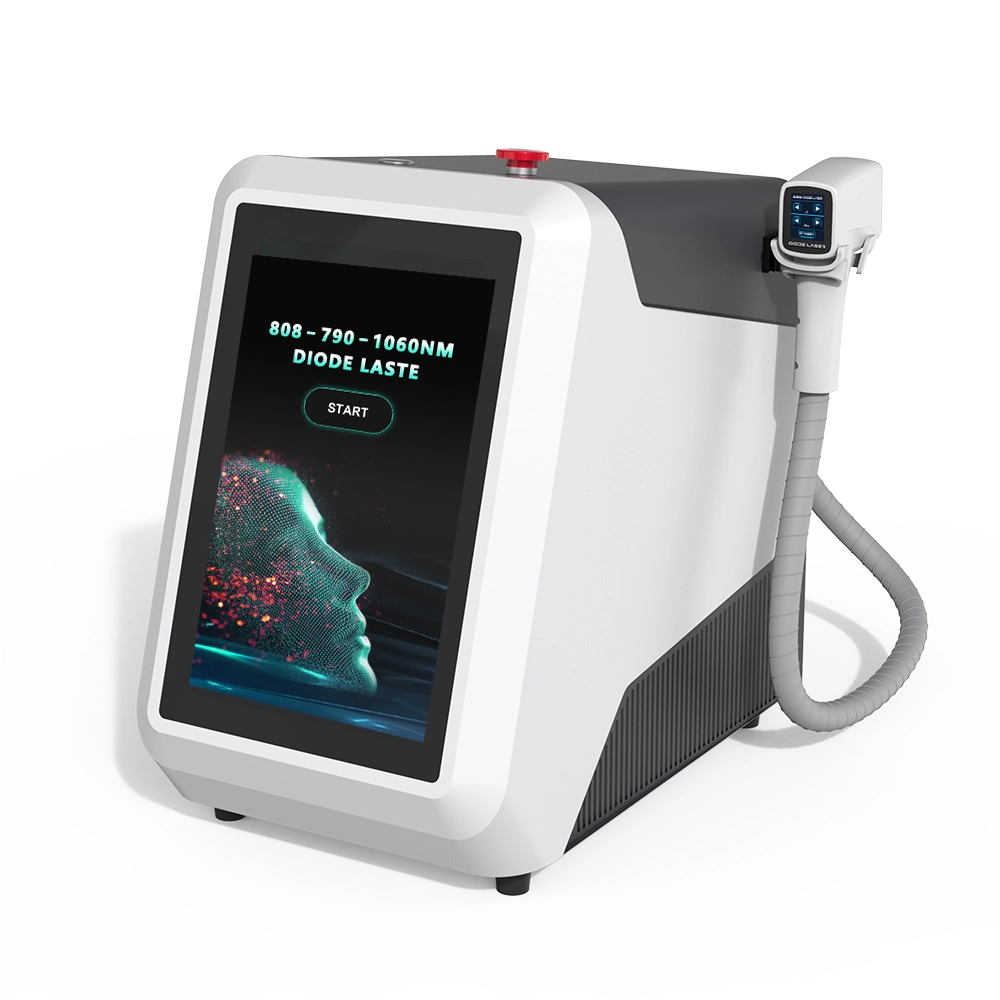
The 3 Wavelength Diode Laser Hair Removal Machine is a professional-grade aesthetic device designed to meet the high demands of B2B clinics and medspas. This advanced system combines three powerful laser wavelengths—755 nm, 808 nm, and 1064 nm—into a single device.
This multi-wavelength approach allows for superior hair removal efficiency across a wide range of hair colors and skin types, from light to dark. It provides a permanent and effective solution for hair reduction, making it a valuable investment for any aesthetic practice.
4 Wavelength Diode Laser Hair Removal Machine 755nm / 808nm / 940nm / 1064nm Professional Hair Removal System
Professional 4 Wavelength Hair Removal Machine for All Skin Types
This 4 Wavelength Diode Laser Hair Removal Machine integrates 755nm, 808nm, 940nm, and 1064nm laser wavelengths into one advanced system, providing precise, effective, and long-lasting hair removal results.
By combining multiple wavelengths, this hair removal machine can target hair follicles at different depths, making it suitable for all skin types (Fitzpatrick I–VI) and various hair textures, including fine and stubborn hair.
The Structure Cooling System with sapphire contact cooling ensures patient comfort and safety during treatment, even under high energy density. Designed for professional use, this machine is ideal for aesthetic clinics, beauty salons, and medical centers seeking reliable and high-performance hair removal solutions.

808nm Diode Laser Hair Removal Machine | Professional Medical-Grade Device for Clinics, Salons & Distributors
The 808 nm Diode Laser Hair Removal Device is a professional-grade solution designed for medical aesthetics clinics, beauty salons, and distributors. Engineered with advanced diode laser technology and semiconductor cooling, it ensures stable performance, a long lifespan, and a high ROI for businesses. This device is built to handle high client volume while delivering consistent results, making it an ideal choice for clinics seeking to expand their treatment portfolio and distributors looking for reliable, in-demand equipment.
Get more information
If you have any comments or good suggestions, please leave us a message; later our professional staff will contact you as soon as possible.
Let's Talk
Stay in touch with us for cutting-edge beauty solutions, professional guidance, and customized service.
Contact


Room 307, Building A, Huilong International E-commerce Industrial Park, No. 10 Xipengling Road, Helong Street, Baiyun District, Guangzhou, China
© 2025 HUIMAIN. All Rights Reserved. Privacy Policy | Terms and Conditions | Sitemap
Facebook
Instagram
Medical beauty equipment factory
huimain Medical beauty equipment factory
beauty machine supplier
Whatsapp: +8619124004543