


Aqua Peel Consumables: Filters, Serums and Costs
- Understanding hydrodermabrasion technology and why consumables matter
- What is an aqua peel machine and how it uses consumables
- Why quality consumables change outcomes and liability
- Core types of aqua peel consumables and their specifications
- Filters and cartridges: role, types and lifespan
- Serums and infusion solutions: composition, compatibility and storage
- Tips, tubing and disposables: single-use vs reusable trade-offs
- Costs, per-treatment economics and purchasing strategy
- Typical per-treatment consumable cost breakdown
- How to optimize consumable spend without sacrificing safety
- Regulatory and documentation costs to consider
- Buying guide, maintenance and supplier evaluation
- How to evaluate consumable suppliers
- Device maintenance tied to consumables
- When to choose OEM consumables vs. third-party alternatives
- Brand profile: Guangzhou Huimain Technology Co., Ltd. — partner considerations
- Company overview and production capabilities
- Certifications, OEM/ODM capacity and global reach
- Competitive advantages and how to engage
- Operational checklist and best practices
- Before each treatment
- After each treatment
- Monthly and quarterly tasks
- Frequently Asked Questions (FAQ)
- 1. How often should aqua peel machine filters be replaced?
- 2. Are professional serums for aqua peel machines different from retail skincare products?
- 3. Can I use generic or third-party consumables with my aqua peel machine?
- 4. What is the expected per-treatment cost for consumables?
- 5. How should clinics manage infection control for reusable aqua peel parts?
- 6. Where can I verify certifications and claims from a consumable supplier?
This article provides a practical, evidence-based guide to consumables for aqua peel machines (hydrodermabrasion systems). It summarizes which consumables matter most for safety and outcomes—filters, serums/solutions, disposable tips and tubing—how often to replace them, typical per-treatment and monthly costs, and procurement recommendations for salons, medical spas and distributors. The content is written to support local and international SEO discovery and to provide actionable purchasing and operational guidance.
Understanding hydrodermabrasion technology and why consumables matter
What is an aqua peel machine and how it uses consumables
An aqua peel machine (also called hydrodermabrasion or aqua dermabrasion) combines exfoliation, suction and infusion to cleanse pores, remove dead skin and deliver serums. Branded systems such as HydraFacial have popularized the modality; see the overview on Wikipedia for the technique and market context: https://en.wikipedia.org/wiki/HydraFacial. Consumables—filters, single-use tips, serums and tubing—are integral because they directly contact skin and fluids, affecting safety, infection control and clinical results.
Why quality consumables change outcomes and liability
Consumables perform three primary roles: filtration and fluid management, delivery of actives (serums), and disposable barrier protection. Poor-quality filters can allow biofilm or particulate carryover; substandard serums can cause irritation or provide inconsistent pH/active concentrations; reusing tips or tubing increases cross-contamination risk. Clinics must treat consumable selection as part of clinical governance and infection control policies, similar to other medical aesthetic devices. European CE and third-party testing like SGS are commonly used to validate device and consumable safety (CE marking, SGS).
Core types of aqua peel consumables and their specifications
Filters and cartridges: role, types and lifespan
Filters in aqua peel systems typically include a gross particulate filter and a micro-filtration stage (0.2–5 µm range depending on design). Some devices use single-use sterile fluid cartridges while others use replaceable in-line filters. Typical replacement schedules:
- Single-use disposable filter cartridges: replace every patient.
- In-line particulate filters: replace after 50–300 treatments depending on manufacturer specs and water quality.
- Antimicrobial or activated-carbon filters (if present): change per manufacturer timeline, often every 3–6 months.
Always follow device-specific manuals; filter efficiency affects suction performance and prevents device fouling.
Serums and infusion solutions: composition, compatibility and storage
Aqua peel serums are formulated for exfoliation, hydration, or targeted treatment (brightening, anti-acne, anti-aging). Key points:
- Actives used: hyaluronic acid, salicylic acid (low % for professionals), glycolic/lactic acids (chemical exfoliation), antioxidants (vitamin C/ferulic), peptides.
- pH and osmolarity: must be compatible with device materials and skin barrier; overly acidic formulas can increase irritation risk.
- Packaging: single-use vials decrease contamination risk versus multi-dose bottles.
Manufacturers provide SDS and ingredient lists for regulatory compliance; clinics should check these and perform patch testing on sensitive clients.
Tips, tubing and disposables: single-use vs reusable trade-offs
Disposable diamond or soft suction tips, single-use handpiece sleeves and short tubing sections are recommended to minimize infection risk. Reusable tips that are autoclavable may be cost-efficient but require validated sterilization protocols. Single-use items reduce liability and turnaround time between patients but increase per-treatment material costs.
Costs, per-treatment economics and purchasing strategy
Typical per-treatment consumable cost breakdown
Below is a representative table showing consumable types, per-unit cost ranges (USD) and estimated per-treatment costs for a professional setting. Prices vary widely by brand, region, order volume and whether you use High Quality branded serums or generic equivalents. Price data derived from supplier listings and industry marketplaces (example search results: Alibaba: aqua peel consumables) and manufacturer catalogs.
| Consumable | Typical unit price (USD) | Estimated per-treatment cost | Notes / Replacement interval |
|---|---|---|---|
| Single-use serum vial (treatment pack) | $1.50 – $12.00 | $1.50 – $12.00 | Single treatment; High Quality branded serums cost more |
| Disposable suction tip | $0.20 – $1.50 | $0.20 – $1.50 | Single-use; cheaper in bulk |
| Filter cartridge / in-line filter (amortized) | $5 – $60 (unit) | $0.20 – $2.00 | Cost per treatment reflects lifespan (50–300 treatments) |
| Short tubing / sleeve (single-use) | $0.10 – $0.80 | $0.10 – $0.80 | Single-use disposables for infection control |
| Post-procedure mask/ampoule | $0.50 – $6.00 | $0.50 – $6.00 | Often optional depending on protocol |
Typical total per-treatment consumable cost thus ranges from roughly $2.50 on a budget protocol to $22+ for High Quality branded serums and single-use full kits. Clinics should model their pricing and margins accordingly.
How to optimize consumable spend without sacrificing safety
Strategies include negotiating bulk pricing, switching to validated generic serums that provide certificates of analysis, amortizing multi-use filter costs correctly, and training staff to minimize waste. However, cost-cutting that compromises single-use items or sterilization steps is not acceptable from an infection-control perspective.
Regulatory and documentation costs to consider
Consumable procurement should include supplier certificates (COA, MSDS), traceability for adverse events, and record-keeping for sterilization of any reusable parts. If selling treatments, understand local medical device and cosmetic regulations—these affect labeling and permitted actives.
Buying guide, maintenance and supplier evaluation
How to evaluate consumable suppliers
Key criteria:
- Regulatory compliance: CE, ISO, or country-specific approvals where applicable.
- Laboratory documentation: COA, stability data and preservative efficacy for serums.
- Packaging and sterility assurance: single-dose formats reduce contamination risk.
- Supply reliability and lead time—essential for high-volume clinics.
Cross-check claims against third-party evidence and request samples before committing to large orders.
Device maintenance tied to consumables
Routine maintenance often involves filter replacement, handpiece inspection, and internal tubing flushes. Poor maintenance shortens equipment life and can void warranties. Follow manufacturer schedules and retain logs for warranty or audit purposes.
When to choose OEM consumables vs. third-party alternatives
OEM consumables are designed to match device performance; they usually cost more but reduce compatibility risk. High-quality third-party consumables can be cost-effective if suppliers provide test data and warranty assurances. Before adoption, run validation tests comparing suction efficiency, pH compatibility, and client outcomes.
Brand profile: Guangzhou Huimain Technology Co., Ltd. — partner considerations
Company overview and production capabilities
Guangzhou Huimain Technology Co., Ltd. is a high-tech enterprise specializing in R&D, production and after-sales service of professional beauty machines and home-use devices. Operating from a 3,000-square-meter facility, the company emphasizes a strong technical team with over 60% of staff holding higher education degrees, and dedicated departments for purchasing, clinical testing and engineering. This structure supports continuous R&D investment and quality control. Learn more: Huimain official site.
Certifications, OEM/ODM capacity and global reach
Huimain reports CE certification, SGS approval and multiple patents, and follows OEM/ODM development routes. Their product portfolio covers Cryolipolysis, EMS sculpting, Plasma, Shockwave, HIFU, Hydrofacial (aqua peel) machines, Cavitation vacuum, Laser hair removal, Tattoo removal and Microneedle devices. These credentials suggest they can supply both machines and corresponding consumables with traceability and quality controls, making them a practical supplier for clinics and distributors seeking integrated solutions.
Competitive advantages and how to engage
Huimain emphasizes innovation and win-win cooperation, positioning competitive pricing with quality assurance. Clinics should evaluate sample kits (serum vials, tips, filters) and request COAs and device consumable compatibility reports. Contact: https://www.huimainbeauty.com/ or email coco@gzhuimain.com.
Operational checklist and best practices
Before each treatment
- Verify single-use items (tips, vials) are unopened and within expiry.
- Check filter pressure drops or flow indicators per device guidance.
- Prepare post-care products and document client consent and patch-test where necessary.
After each treatment
- Dispose of single-use items in accordance with local biomedical waste regulations.
- Flush and clean reusable handpieces; log maintenance actions.
- Monitor client for adverse reactions and record outcomes tied to serum batch numbers.
Monthly and quarterly tasks
- Replace recommended in-line filters and inspect tubing for wear.
- Perform device calibration tests and suction performance checks.
- Review consumable inventory and reorder to prevent stockouts.
Frequently Asked Questions (FAQ)
1. How often should aqua peel machine filters be replaced?
Replacement depends on filter type: single-use cartridges are changed after each patient; in-line particulate filters typically last 50–300 treatments. Follow the device manufacturer's manual and consider water quality—hard or high-TDS water shortens filter life.
2. Are professional serums for aqua peel machines different from retail skincare products?
Yes. Professional serums are often formulated with higher concentrations of active ingredients and packaged for single-use or controlled delivery. They must be used according to device compatibility and local regulations for professional use.
3. Can I use generic or third-party consumables with my aqua peel machine?
Potentially yes, but only if the supplier provides compatibility data, COAs and stability testing. Using non-validated consumables may impact device performance and can void warranties—validate before switching.
4. What is the expected per-treatment cost for consumables?
Typical consumable costs range from about $2.50 (basic protocols) to $22+ per treatment for High Quality kits. Factors include serum price, whether disposable tips and post-care products are included, and filter amortization.
5. How should clinics manage infection control for reusable aqua peel parts?
Establish written sterilization procedures for reusable components, validate autoclave cycles if parts are autoclavable, maintain logs, and prefer single-use items for any part that cannot be reliably sterilized between patients.
6. Where can I verify certifications and claims from a consumable supplier?
Ask suppliers for copies of CE certificates, ISO certifications, COAs for serums, and third-party lab test reports (e.g., SGS). Cross-reference company claims with official registries or recognized testing bodies such as SGS and national regulatory agencies.
If you need sample kits, technical datasheets, or OEM/ODM discussions, contact Guangzhou Huimain Technology Co., Ltd. via https://www.huimainbeauty.com/ or email coco@gzhuimain.com. Huimain offers a wide product range including Cryolipolysis machine, EMS sculpting machine, Plasma machine, Shockwave machine, HIFU machine, Hydrofacial machine (aqua peel), Cavitation vacuum machine, Laser hair removal, Tattoo removal machine and Microneedle machine, supported by R&D and testing departments to ensure product quality and compliance.
Need a quote, consumable sample or device-consumable compatibility report? Reach out today to discuss your clinic’s volume, preferred serum profiles and OEM/ODM requirements. Email: coco@gzhuimain.com | Website: https://www.huimainbeauty.com/
HF-61
Can the machine treat acne and acne scars?
Yes, the vacuum suction and microdermabrasion features help to clear clogged pores and reduce acne, while promoting healing of acne scars.
立式7D hifu
When will clients see visible results?
Initial lifting appears immediately, with full collagen regeneration visible within 6–12 weeks.
5-in-1 cavitation vacuum machine
How many sessions are required?
Most clients begin to see results after 3–5 sessions, depending on body condition.
2-in-1 Diode Laser
How many sessions are needed for permanent hair removal?
On average, 6–8 sessions are recommended for optimal and long-lasting results.
CRL-6
Does the treatment cause pain or downtime?
No, treatments are non-invasive and painless. Clients can return to normal activities immediately.

CO2 Fractional Laser Machine – Professional Wrinkle Removal & Skin Resurfacing Device
The CO2 Fractional Laser Machine is a multifunctional aesthetic device designed for professional clinics and beauty salons. Using advanced fractional CO2 laser technology, it effectively targets acne scars, freckles, pigmentation, nevi, and deep wrinkles. Additionally, it provides non-invasive skin rejuvenation, vaginal tightening, and intimate beautification. This professional CO2 laser equipment combines precision, safety, and powerful energy output to deliver outstanding anti-aging and dermatological results.

5-in-1 40K Cavitation Vacuum Machine for Body Slimming & Fat Reduction
The 5-in-1 40K Cavitation Vacuum Machine is a professional body shaping system designed for fat reduction, cellulite smoothing, and overall body contouring. Using 40KHz ultrasonic cavitation, this device breaks down stubborn fat cells, while vacuum suction improves lymphatic drainage and accelerates toxin removal.
With multiple RF tightening handles, the machine stimulates collagen regeneration and helps lift and firm loose areas of the body. Compact, powerful, and easy to operate, it is the perfect solution for beauty salons, spa centers, and slimming studios seeking fast and visible fat-reduction results.
This cavitation vacuum machine is built to deliver safe, non-invasive treatments with no downtime—making it a top choice for body contouring professionals.

6-in-1 Multifunctional Beauty and Weight Loss Machine | Cavitation, RF, Vacuum PDT, EMS, Laser Slimming Equipment for Professional Use
The 6-in-1 Multifunctional Beauty and Weight Loss Machine is a professional-grade device designed for salons, clinics, and distributors. Combining six advanced technologies—cavitation, RF (radio frequency) for face & body, vacuum RF PDT, BIO/EMS microcurrent, and laser lipo pads—this device offers comprehensive body contouring, fat reduction, skin tightening, and anti-aging treatments.
It provides businesses with an all-in-one solution to expand service offerings, attract more clients, and achieve a rapid return on investment.
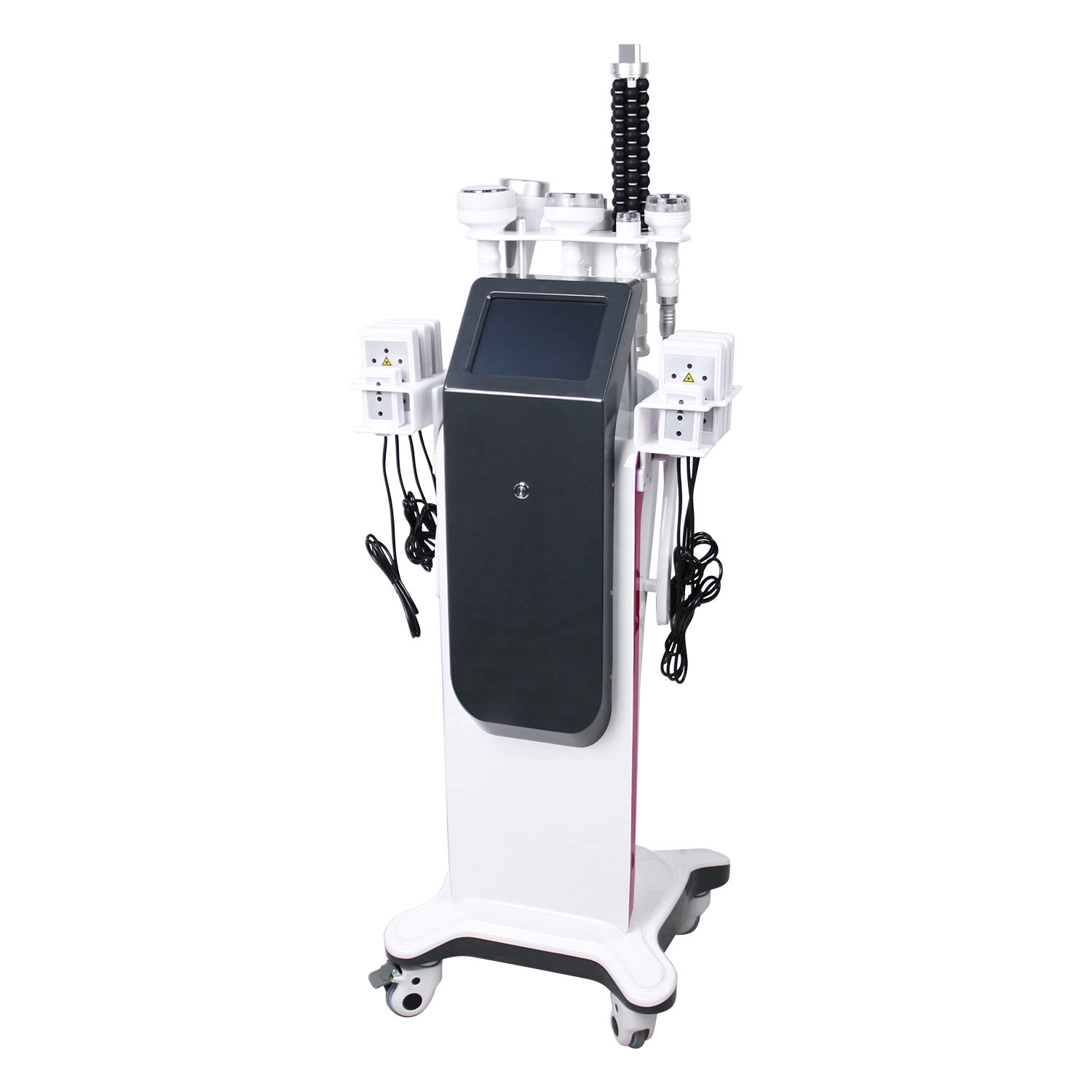
Professional 6-in-1 Cavitation Vacuum Machine for Body Contouring & Slimming Treatment
The 6-in-1 Cavitation Vacuum Machine is a professional body contouring system designed for salons and spas seeking high-performance slimming solutions. This machine integrates 40K ultrasonic cavitation, vacuum suction, RF technology, and laser lipolysis to target stubborn fat, enhance lymphatic drainage, tighten the skin, and contour the body shape effectively.
Equipped with multiple ergonomic handles and a smart touch screen, this cavitation vacuum machine provides a comfortable and efficient experience for both operators and clients. It is ideal for full-body treatments including abdomen, arms, legs, waistline, hips, and back.
Perfect for beauty salons, spas, and aesthetic centers that want to offer non-invasive fat reduction and body-sculpting services.
Get more information
If you have any comments or good suggestions, please leave us a message; later our professional staff will contact you as soon as possible.
Let's Talk
Stay in touch with us for cutting-edge beauty solutions, professional guidance, and customized service.
Contact


Room 307, Building A, Huilong International E-commerce Industrial Park, No. 10 Xipengling Road, Helong Street, Baiyun District, Guangzhou, China
© 2025 HUIMAIN. All Rights Reserved. Privacy Policy | Terms and Conditions | Sitemap
Facebook
Instagram
Medical beauty equipment factory
huimain Medical beauty equipment factory
beauty machine supplier
Whatsapp: +8619124004543