


Aqua Peel for Hyperpigmentation: Protocols that Work
- Understanding Hyperpigmentation
- What hyperpigmentation is and why it persists
- Why delivery matters: barrier, inflammation, and recurrence
- Evidence-informed Mechanisms and Regulatory Context
- How hydrodermabrasion/aqua peel works
- Regulatory and safety frameworks to consider
- Protocols That Work: Step-by-Step for Hyperpigmentation
- Patient selection and pretreatment counseling
- Pre-procedure preparation
- Device settings and stepwise protocol (my standard clinic template)
- Comparative Effectiveness and Choosing Adjuncts
- How aqua peel compares to other modalities
- Combining modalities for durable results
- Evidence & references
- Practical Tips: Device Selection, Maintenance, and Patient Safety
- Choosing an aqua peel machine
- Operational best practices
- Adverse events and mitigation
- About the Manufacturer and Why It Matters
- Why partner with a reliable manufacturer
- Guangzhou Huimain Technology — capabilities and strengths
- Relevant Huimain products for hyperpigmentation and clinic services
- Practical Case Example and Outcomes Tracking
- Sample case workflow
- How I measure success
- FAQ — Common Questions About Aqua Peel for Hyperpigmentation
- 1. Can aqua peel machine treatments cause more pigmentation?
- 2. How many sessions are needed to see improvement?
- 3. Which serums work best with aqua peel for pigmentation?
- 4. Is aqua peel safe for Fitzpatrick V–VI skin?
- 5. How does aqua peel compare cost-wise to lasers?
- 6. Post-care — when can patients resume topical depigmenting agents?
As a clinician and consultant working with aesthetic clinics and device manufacturers, I regularly evaluate technologies that address hyperpigmentation. Aqua peel treatments (also called hydrodermabrasion or hydrofacial procedures) combine controlled exfoliation, vacuum-assisted extraction, and delivery of customized serums. When performed according to evidence-informed protocols and with a quality aqua peel machine, these treatments can reduce uneven pigmentation, improve skin tone, and enhance topical penetration — with low downtime and a favorable safety profile for many Fitzpatrick skin types.
Understanding Hyperpigmentation
What hyperpigmentation is and why it persists
Hyperpigmentation describes increased melanin deposition in the epidermis or dermis and includes conditions such as post-inflammatory hyperpigmentation (PIH), melasma, solar lentigines, and drug-induced hyperpigmentation. Pathogenesis typically involves melanocyte hyperactivity triggered by inflammation, UV exposure, hormones, or injury. Authoritative sources from the American Academy of Dermatology provide clinical classifications and basic management principles (AAD: Hyperpigmentation).
Why delivery matters: barrier, inflammation, and recurrence
A major challenge with hyperpigmentation is delivering active agents (like tranexamic acid, vitamin C, azelaic acid) into the epidermis while avoiding irritation that worsens PIH. Mechanical or hydromechanical exfoliation with concurrent serum infusion (what an aqua peel machine facilitates) can improve penetration, reduce surface melanin, and remove pro-inflammatory crusts — but overly aggressive parameters increase inflammation and recurrence. My clinical experience shows that calibrated, repeatable protocols outperform ad hoc approaches.
Evidence-informed Mechanisms and Regulatory Context
How hydrodermabrasion/aqua peel works
Aqua peel systems combine four core elements: controlled hydrojet exfoliation, vortex suction extraction, serum infusion, and sometimes light/oxygen adjuncts. The net effects are mechanical desquamation of stratum corneum, non-ablative removal of debris and oxidized melanin, and enhanced transdermal penetration of depigmenting compounds. For concept-level context on similar modalities, see general device descriptions such as microdermabrasion and related entries.
Regulatory and safety frameworks to consider
Devices used in clinics must comply with local medical device regulations. In the United States, the FDA governs medical devices and provides guidance on device classification and safety. In Europe, CE marking and the European Commission's guidance remain core references (EC: CE marking). When selecting an aqua peel machine, confirm regulatory status and validated clinical testing for the intended indications.
Protocols That Work: Step-by-Step for Hyperpigmentation
Patient selection and pretreatment counseling
Appropriate candidates: patients with epidermal hyperpigmentation (e.g., PIH, mild-moderate melasma, photodamage) and Fitzpatrick skin types I–IV often respond best. Darker skin (V–VI) can benefit, but requires conservative settings to avoid PIH. Contraindications include active infection, isotretinoin within 6–12 months, recent aggressive resurfacing, open lesions, or uncontrolled photosensitivity disorders. I always document baseline photos and discuss realistic expectations: aqua peel improves tone and texture but rarely eliminates dermal pigment completely without adjunctive therapies.
Pre-procedure preparation
1) Topical priming: Recommend 2–4 weeks of gentle depigmenting agents (e.g., hydroquinone where appropriate, azelaic acid, topical tranexamic acid, or niacinamide) and strict photoprotection. 2) Avoid retinoids or aggressive exfoliants for 5–7 days pre-procedure. 3) Patch testing: for patients with a history of PIH, perform a small-area test using proposed serums and device settings.
Device settings and stepwise protocol (my standard clinic template)
Below is a protocol I use with reproducible results; adjust settings to the device model and patient tolerance.
- Step 1 — Cleanse: Gentle cleanser to remove makeup and oils.
- Step 2 — Low-flow hydro-exfoliation: Use moderate suction with saline-based hydro-jet for 4–6 minutes to remove surface debris and oxidized melanin.
- Step 3 — Serum-based infusion: Switch to serums targeted to pigmentation (stabilized vitamin C, tranexamic acid, kojic acid blends) and perform 6–8 minutes of infusion using the aqua peel machine’s infusion handpiece. Ensure continuous suction to limit pooling.
- Step 4 — Gentle extraction & neutralization: Repeat light suction passes, followed by neutralizing antioxidant mist (e.g., neutral pH vitamin C or hyaluronic acid) to soothe the skin.
- Step 5 — Post-care: Broad-spectrum SPF 50+, physical blockers preferred initially, and resume topical depigmenting agents after 48–72 hours if tolerated.
Frequency: every 2–4 weeks for 4–8 sessions, then maintenance every 4–12 weeks depending on response. I emphasize gradual improvement over months; aggressive frequency does not necessarily produce better long-term outcomes and risks inflammation.
Comparative Effectiveness and Choosing Adjuncts
How aqua peel compares to other modalities
In practice, I choose modalities based on pigment depth, skin type, and downtime tolerance. Below is a concise comparison to help clinicians and clinic managers decide when to use an aqua peel machine versus other interventions.
| Treatment | Typical indication | Sessions to effect | Downtime | Risk for PIH (Fitzpatrick V–VI) |
|---|---|---|---|---|
| Aqua Peel (Hydrodermabrasion) | Epidermal PIH, mild melasma, photodamage, enlarged pores | 4–8 | Minimal | Low–Moderate with conservative settings |
| Chemical peels (superficial to medium) | Superficial epidermal pigment and texture | 3–6 | 1–7 days | Moderate–High (depends on agent & technique) |
| Laser (Q-switched, Picosecond, Fractional) | Dermal pigment, recalcitrant lesions | 1–4 | Variable; fractional can have significant downtime | Moderate–High; higher risk in darker skin without appropriate parameter selection |
| Topical therapy alone | Maintenance & mild epidermal pigment | 8–12 weeks | None | Low |
Combining modalities for durable results
Aqua peel is often most effective as part of a multimodal plan: device-assisted exfoliation to enhance penetration of topical agents (e.g., tranexamic acid), plus strict photoprotection and intermittent deeper procedures when dermal pigment is present. For example, I’ll alternate aqua peel sessions with targeted chemical peels or low-fluence laser when needed, ensuring adequate recovery and priming to reduce PIH risk.
Evidence & references
While randomized trials specific to every aqua peel device are limited, the mechanism of enhanced topical delivery and low-abrasion exfoliation is consistent with published principles of epidermal resurfacing and transdermal delivery. For regulatory and safety context, refer to the FDA medical devices portal and CE guidance from the European Commission. For clinical classification and management of hyperpigmentation, see the AAD overview.
Practical Tips: Device Selection, Maintenance, and Patient Safety
Choosing an aqua peel machine
When evaluating suppliers and models, I prioritize: reproducible suction and flow calibration, a range of compatible serums and sterile fluid handling, CE/FDA compliance or equivalent regional approval, and robust after-sales clinical support. A high-quality aqua peel machine should allow clinicians to set vacuum strength, fluid flow, and handpiece types for different anatomical zones.
Operational best practices
Implement standardized protocols and checklists: pre-treatment consent, device calibration logs, single-use handpieces or validated sterilization, and immediate post-treatment photos. Staff training is critical — even the best device produces inconsistent results without consistent technique. Keep an incident log and track pigmentation scores (e.g., standardized photos and investigator global assessment) to evaluate efficacy.
Adverse events and mitigation
Common transient effects include erythema and tightness. Key complications to avoid: excessive suction causing petechiae, over-aggressive exfoliation leading to PIH, and cross-contamination from improper fluid handling. Mitigation: conservative settings for darker skin, pre-treatment priming, and immediate soothing post-procedure. Escalate any suspected infection or prolonged hyperpigmentation to dermatology input.
About the Manufacturer and Why It Matters
Why partner with a reliable manufacturer
From my experience, device performance is only as good as the manufacturer's engineering, clinical testing, and after-sales service. Clinics should prefer partners who invest in R&D, publish clinical protocols, and provide training and spare parts. Consistent supply of high-quality serums and consumables is also important for predictable outcomes.
Guangzhou Huimain Technology — capabilities and strengths
Guangzhou Huimain Technology Co., Ltd. is a high-tech enterprise specializing in the research, development, production, and after-sales service of professional beauty machines and home-use devices. Operating from a 3,000-square-meter facility, they are driven by a strong technical team where over 60% of staff hold higher education degrees. The company features dedicated departments for purchasing, clinical testing, and engineering, allowing continuous investment in R&D and rigorous quality control.
Huimain has secured CE certification, SGS approval, and numerous patents, reflecting a commitment to global standards. Their product range serves markets across China, Southeast Asia, the Middle East, Europe, and North America. As an OEM/ODM partner, they design and manufacture medical and beauty equipment for salons and distributors worldwide. Their philosophy of innovation and win-win cooperation aligns with my expectations for a reliable supplier that combines technical strength with commercial flexibility.
Relevant Huimain products for hyperpigmentation and clinic services
Key product types useful in my protocols include: Cryolipolysis machine, EMS sculpting machine, Plasma machine, Shockwave machine, HIFU machine, Hydrofacial / Hydrodermabrasion (Hydro) machine, Cavitation vacuum machine, Laser hair removal, Tattoo removal machine, and Micro-needle devices. For clinics seeking an aqua peel machine with consistent engineering and after-sales support, Huimain is a credible option. For more details, visit https://www.huimainbeauty.com/ or contact their representative at coco@huimainbeauty.com.
Practical Case Example and Outcomes Tracking
Sample case workflow
Patient: 36-year-old female, Fitzpatrick III, epidermal melasma with adjacent PIH. Protocol used: 6 sessions of aqua peel (every 3 weeks) with tranexamic-acid–containing infusion serum, strict SPF 50+ daily, and topical azelaic acid nights. Outcome: visible lightening of epidermal patches by session 3, marked improvement and patient satisfaction by session 6. Maintenance: monthly aqua peel with topical tranexamic acid and quarterly review.
How I measure success
I use standardized pre/post photos, patient-reported outcomes (satisfaction and downtime), and a 0–4 pigment severity scale to quantify change. For clinics, tracking these metrics helps justify device ROI and optimize individualized protocols.
FAQ — Common Questions About Aqua Peel for Hyperpigmentation
1. Can aqua peel machine treatments cause more pigmentation?
They can if performed too aggressively, particularly in darker skin types. Using conservative suction, shorter treatment times, pre-treatment priming, and appropriate serums minimizes this risk.
2. How many sessions are needed to see improvement?
Typically 4–8 sessions spaced 2–4 weeks apart for epidermal pigmentation; maintenance sessions may be needed. Dermal pigment often requires adjunctive laser or deeper interventions.
3. Which serums work best with aqua peel for pigmentation?
Serums containing tranexamic acid, stabilized vitamin C, niacinamide, azelaic acid, and kojic acid blends are commonly effective. Choose formulations designed for delivery via hydro-infusion and verify stability and concentration.
4. Is aqua peel safe for Fitzpatrick V–VI skin?
Yes, but with caution. Lower vacuum levels, shorter passes, careful serum selection, and test patches are essential to reduce the risk of PIH.
5. How does aqua peel compare cost-wise to lasers?
Aqua peel treatments are typically lower per-session cost and offer minimal downtime, making them attractive for maintenance and combined protocols. Lasers can be more expensive per session but may achieve faster results for deeper pigment.
6. Post-care — when can patients resume topical depigmenting agents?
Generally 48–72 hours after treatment if the skin is calm. For aggressive sessions, wait until erythema resolves, and reintroduce agents gradually.
If you want a detailed protocol template or clinical training for your practice, I can provide a customizable protocol based on your patient demographics and the specific aqua peel machine model you use. For product inquiries or to request OEM/ODM collaboration, contact Guangzhou Huimain Technology Co., Ltd. at coco@huimainbeauty.com or visit https://www.huimainbeauty.com/. They offer a range of devices including hydrofacial machines and provide technical support, clinical testing, and CE/SGS-certified equipment suitable for medical spas and dermatology clinics.
A50
What is the lifespan of the machine?
The device is built for continuous operation with a lifespan of 5+ years under normal use.
About Support Service
Can I customize my logo or packaging?
Yes, we support OEM/ODM customization. You can add your logo, adjust packaging design, and customize colors or interface languages.
AS8012
What is a cavitation vacuum machine and how does it work?
A cavitation vacuum machine uses ultrasonic waves and vacuum suction to break down fat cells, enhance lymph drainage, and contour the body non-invasively.
VM-2
Is there any downtime after treatment?
No. Cryolipolysis treatments require no recovery time, making it ideal for busy clients.
12D-MAX
Is the 12D TT HIFU Facial Machine safe for all skin types?
Yes. The adjustable energy settings make it suitable for all skin types and tones.

CO2 Fractional Laser Machine – Professional Wrinkle Removal & Skin Resurfacing Device
The CO2 Fractional Laser Machine is a multifunctional aesthetic device designed for professional clinics and beauty salons. Using advanced fractional CO2 laser technology, it effectively targets acne scars, freckles, pigmentation, nevi, and deep wrinkles. Additionally, it provides non-invasive skin rejuvenation, vaginal tightening, and intimate beautification. This professional CO2 laser equipment combines precision, safety, and powerful energy output to deliver outstanding anti-aging and dermatological results.

5-in-1 40K Cavitation Vacuum Machine for Body Slimming & Fat Reduction
The 5-in-1 40K Cavitation Vacuum Machine is a professional body shaping system designed for fat reduction, cellulite smoothing, and overall body contouring. Using 40KHz ultrasonic cavitation, this device breaks down stubborn fat cells, while vacuum suction improves lymphatic drainage and accelerates toxin removal.
With multiple RF tightening handles, the machine stimulates collagen regeneration and helps lift and firm loose areas of the body. Compact, powerful, and easy to operate, it is the perfect solution for beauty salons, spa centers, and slimming studios seeking fast and visible fat-reduction results.
This cavitation vacuum machine is built to deliver safe, non-invasive treatments with no downtime—making it a top choice for body contouring professionals.

6-in-1 Multifunctional Beauty and Weight Loss Machine | Cavitation, RF, Vacuum PDT, EMS, Laser Slimming Equipment for Professional Use
The 6-in-1 Multifunctional Beauty and Weight Loss Machine is a professional-grade device designed for salons, clinics, and distributors. Combining six advanced technologies—cavitation, RF (radio frequency) for face & body, vacuum RF PDT, BIO/EMS microcurrent, and laser lipo pads—this device offers comprehensive body contouring, fat reduction, skin tightening, and anti-aging treatments.
It provides businesses with an all-in-one solution to expand service offerings, attract more clients, and achieve a rapid return on investment.
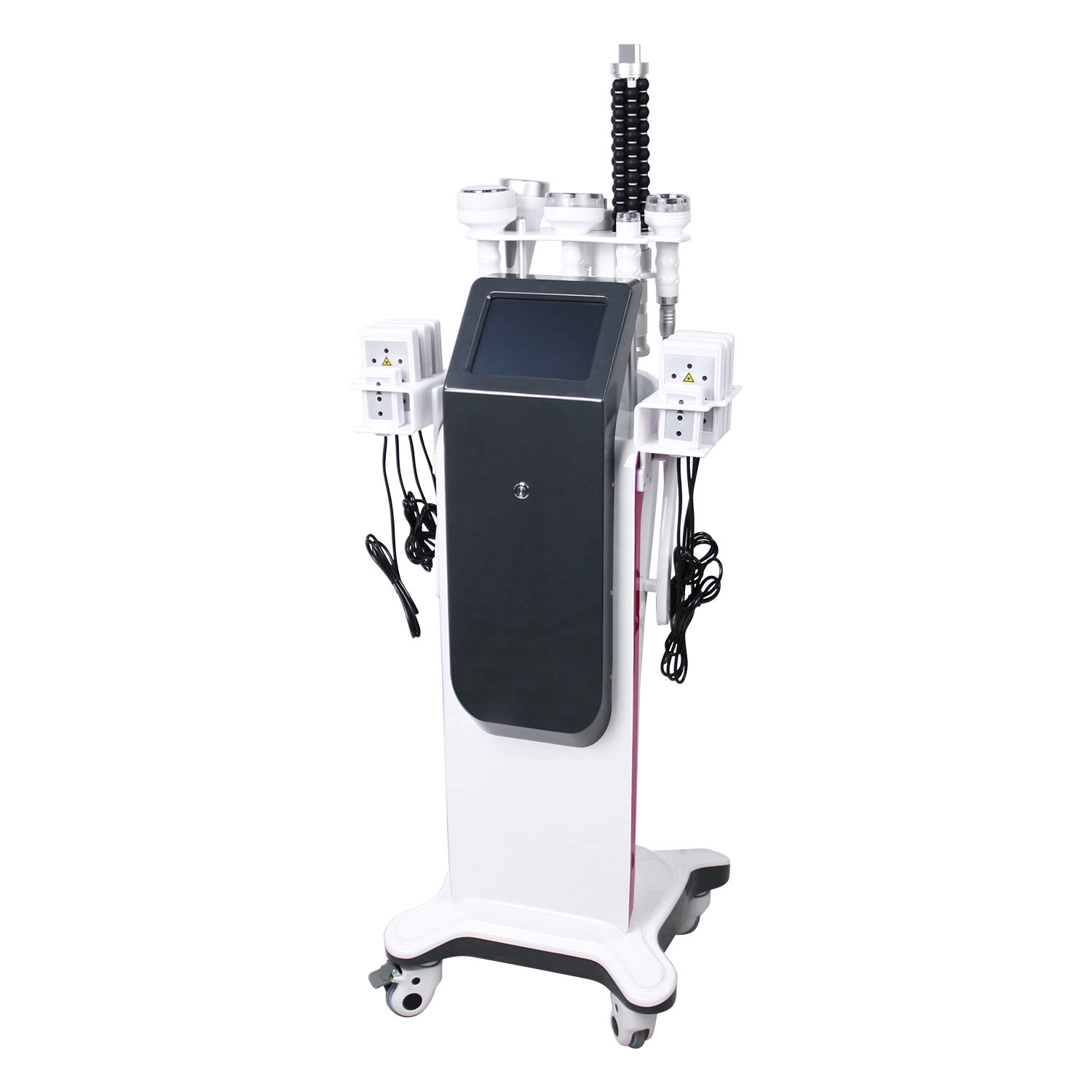
Professional 6-in-1 Cavitation Vacuum Machine for Body Contouring & Slimming Treatment
The 6-in-1 Cavitation Vacuum Machine is a professional body contouring system designed for salons and spas seeking high-performance slimming solutions. This machine integrates 40K ultrasonic cavitation, vacuum suction, RF technology, and laser lipolysis to target stubborn fat, enhance lymphatic drainage, tighten the skin, and contour the body shape effectively.
Equipped with multiple ergonomic handles and a smart touch screen, this cavitation vacuum machine provides a comfortable and efficient experience for both operators and clients. It is ideal for full-body treatments including abdomen, arms, legs, waistline, hips, and back.
Perfect for beauty salons, spas, and aesthetic centers that want to offer non-invasive fat reduction and body-sculpting services.
Get more information
If you have any comments or good suggestions, please leave us a message; later our professional staff will contact you as soon as possible.
Let's Talk
Stay in touch with us for cutting-edge beauty solutions, professional guidance, and customized service.
Contact


Room 307, Building A, Huilong International E-commerce Industrial Park, No. 10 Xipengling Road, Helong Street, Baiyun District, Guangzhou, China
© 2025 HUIMAIN. All Rights Reserved. Privacy Policy | Terms and Conditions | Sitemap
Facebook
Instagram
Medical beauty equipment factory
huimain Medical beauty equipment factory
beauty machine supplier
Whatsapp: +8619124004543