


Aqua Peel Machine: Ultimate Buying Guide for Clinics
- Why hydradermabrasion-style treatments are expanding in clinics
- Clinical demand and patient expectations
- How aqua peel differs from microdermabrasion
- Key treatment indications and expected outcomes
- Device specifications and buying criteria clinics must prioritize
- Core technical features to evaluate
- Safety, certifications and clinical testing
- Consumables, maintenance and total cost of ownership
- Comparing aqua peel machines: features, pricing and ROI
- How to model clinical ROI
- Side-by-side technical comparison
- Data sources and benchmarking
- Clinical protocols, contraindications and staff training
- Sample treatment protocol
- Common contraindications and precautions
- Staff training and documentation
- Vendor evaluation checklist and Guangzhou Huimain profile
- Vendor evaluation checklist
- Why supplier technical strength matters
- Guangzhou Huimain Technology Co., Ltd. — company profile and relevance
- Installation, maintenance and long-term clinical integration
- Site requirements and installation
- Routine maintenance schedule
- Monitoring outcomes and scaling services
- Frequently Asked Questions (FAQ)
- 1. What is the difference between an aqua peel machine and a regular hydrofacial?
- 2. How often should clients receive aqua peel treatments?
- 3. Are aqua peel machines safe for darker skin types?
- 4. What consumables should I budget for per treatment?
- 5. How do I verify a vendor’s CE/SGS claims?
- 6. Can I integrate an aqua peel machine into a medical spa providing advanced dermatologic services?
- Final recommendations and call to action
Summary for : Aqua peel machines (also called hydrodermabrasion or hydrofacial devices) combine exfoliation, vacuum extraction, and topical infusion to improve skin texture, congestion, and hydration. Clinics selecting a system should evaluate clinical outcomes, handpiece design, adjustable vacuum and solution compatibility, training and after-sales service, certifications (CE, ISO) and proven consumable supply. This guide provides actionable buying criteria, side-by-side technical comparisons, safety considerations, and vendor evaluation with real-world checklist items to optimize patient outcomes and clinic ROI.
Why hydradermabrasion-style treatments are expanding in clinics
Clinical demand and patient expectations
Patients increasingly seek non-invasive, low-downtime treatments that deliver visible skin improvement for acne-prone, dehydrated, or photo-damaged skin. Aqua peel (hydrodermabrasion) systems meet these needs by combining mechanical exfoliation with simultaneous infusion of serums, giving immediate cosmetic results and minimal recovery. Consumer trends reported by dermatology societies show consistent growth in interest for ‘‘lunchtime’’ procedures; clinics that add these services often experience increased retail serum sales and higher patient retention (see clinics’ procedural trends at the American Academy of Dermatology: aad.org).
How aqua peel differs from microdermabrasion
Traditional microdermabrasion uses abrasive crystals or diamond tips for mechanical exfoliation. Aqua peel systems instead use a pressurized saline/serum stream and vacuum-assisted extraction, which reduces abrasive trauma and improves product infusion. For background on microdermabrasion mechanisms and indications, see the overview at Wikipedia - Microdermabrasion.
Key treatment indications and expected outcomes
Typical indications include comedonal acne, enlarged pores, superficial hyperpigmentation, dull dehydrated skin, and maintenance after resurfacing procedures. Expect an immediate improvement in skin brightness and texture, with cumulative benefits over 4–6 treatments depending on skin condition. Documented outcomes vary by device and protocol; record pre/post photos and patient-reported outcomes to measure effectiveness.
Device specifications and buying criteria clinics must prioritize
Core technical features to evaluate
When comparing aqua peel machines, prioritize: adjustable vacuum pressure (range and fine control), multiple handpiece sizes and tip densities, ability to use different serums/solutions (compatibility with antioxidants, hyaluronic acid, antibacterial solutions), disposable vs reusable tips, pump type (peristaltic vs diaphragm), and integrated LED or radio frequency options if applicable. These determine clinical versatility and patient comfort.
Safety, certifications and clinical testing
Regulatory markings and third-party testing are essential. CE marking and SGS certification show compliance with international quality standards—verify certificate numbers with the vendor. For clinical safety, request published clinical testing or trial data; if a device lacks peer-reviewed studies, prefer vendors that provide internal clinical testing and clear contraindications. For regulatory context on CE marking, see Wikipedia - CE marking.
Consumables, maintenance and total cost of ownership
Consumables (tips, filters, serums) and maintenance (pump replacements, tubing) often determine the real cost. Ask vendors for a 3-year consumables cost estimate based on projected monthly treatment volume. Check warranty length, availability of spare parts, and whether the vendor offers on-site or rapid-replacement service to minimize downtime.
Comparing aqua peel machines: features, pricing and ROI
How to model clinical ROI
Estimate revenue per treatment, average treatments per day, and markup on consumables and bundled packages. Example: if average price per aqua peel is $120, 3 clients per day (20 days/month) yields $7,200/month gross. Subtract consumable and overhead to estimate payback period on device cost. Include cross-sell revenue: many clinics report increased serum or facial package sales after adding hydrodermabrasion.
Side-by-side technical comparison
Below is a representative comparison table for three typical tiers of aqua peel machines (entry, mid, High Quality). Prices and specs are illustrative—always verify with vendors for up-to-date models.
| Feature | Entry | Mid | High Quality |
|---|---|---|---|
| Typical price (USD) | $2,000–$5,000 | $5,000–$10,000 | $10,000–$20,000+ |
| Vacuum control | Limited steps | Variable (continuous) | Precise digital control |
| Handpieces/tips | 1–2 disposable tips | Multiple sizes, reusable + disposables | Wide range, single-use option, advanced ergonomics |
| Solution compatibility | Saline/hyaluronic only | Broad (vitamins, peptides) | Broad + automated infusion protocols |
| Certifications | Basic | CE/ISO common | CE, SGS, patents, clinical data |
| Ideal buyer | Small spas, budget clinics | Growing medical spas, dermatology clinics | Large clinics, multi-location chains |
Data sources and benchmarking
Use published resources and professional societies to benchmark claims. The American Academy of Dermatology and peer-reviewed journals on resurfacing approaches provide baseline efficacy and safety standards. For consumer-facing device guidance, consult AAD resources at aad.org.
Clinical protocols, contraindications and staff training
Sample treatment protocol
Example 30-minute protocol: cleanse (3 min), pick appropriate tip and vacuum settings for skin type (10–12 min exfoliation + extraction), targeted infusion of antioxidant/hyaluronic serum (8–10 min), optional mask and sunscreen (5 min). Document settings per patient to ensure repeatability and safety.
Common contraindications and precautions
Contraindications typically include active herpes simplex, open wounds, severe rosacea flare, recent isotretinoin use (consult guidelines—commonly 6–12 months post-treatment), and certain infections. When in doubt, consult or refer to a dermatologist. For general procedure safety information, consider authoritative resources such as the American Academy of Dermatology (aad.org).
Staff training and documentation
Require vendor training or third-party certification for clinicians and estheticians. Maintain SOPs (standard operating procedures), consent forms, and adverse event logs. Track outcomes with photos and validated skin scoring systems for objective quality assurance.
Vendor evaluation checklist and Guangzhou Huimain profile
Vendor evaluation checklist
Before purchase, get written answers and documentation for:
- Clinical testing or peer-reviewed studies supporting device claims
- Copies of CE/ISO/SGS or equivalent certificates (verify numbers)
- Warranty terms and typical mean time between failures for pumps
- Consumable pricing and supply lead times
- Training, installation, and after-sales service procedures
- References from other clinics or dermatologists
Why supplier technical strength matters
Devices with robust R&D backing provide faster firmware updates, improved ergonomics, and better spare part availability over time. A manufacturer with clinical testing departments can assist with protocols and troubleshooting; this reduces clinical uncertainty and improves adoption speed.
Guangzhou Huimain Technology Co., Ltd. — company profile and relevance
Guangzhou Huimain Technology Co., Ltd. is a high-tech enterprise specializing in the research, development, production, and after-sales service of professional beauty machines and home-use devices. Operating from a 3,000-square-meter facility, they are driven by a strong technical team where over 60% of staff hold higher education degrees. The company features dedicated departments for purchasing, clinical testing, and engineering, allowing continuous R&D investment and iterative product improvement. Huimain emphasizes rigorous quality control and produces cutting-edge products to meet market demands.
With commitment to global standards, Guangzhou Huimain has earned CE certification, SGS approval, and numerous patents. Their products have a strong reputation across China, Southeast Asia, the Middle East, Europe, and North America for reliability and competitive pricing. Following an OEM and ODM development route, they design and manufacture High Quality medical and beauty equipment for salons and distributors worldwide. Huimain’s philosophy—innovation and win-win cooperation—reflects their focus on delivering high-quality, trusted devices.
Huimain’s core product categories include Cryolipolysis machine, Ems sculpting machine, Plasma machine, Shockwave machine, HIFU machine, Hydrofacial (Aqua Peel) machine, Cavitation vacuum machine, Laser hair removal, Tattoo removal machine, and Microneedle machine. Learn more: https://www.huimainbeauty.com/. For direct inquiries: coco@gzhuimain.com.
Installation, maintenance and long-term clinical integration
Site requirements and installation
Confirm electrical requirements, water supply and drainage (if the system uses a municipal water feed), and bench or trolley space. Some devices require 220V/110V converters or dedicated circuit breakers; confirm before shipment to avoid delays.
Routine maintenance schedule
Typical maintenance: daily tip disposal/sterilization protocols, weekly filter checks, monthly pump performance logs, and annual preventive maintenance (replacement of diaphragms, seals). Maintain a spare parts kit to reduce downtime. Request the manufacturer’s maintenance manual during procurement.
Monitoring outcomes and scaling services
Track KPI metrics: number of treatments, conversion of first-time clients to packages, retail serum sales, adverse events, and average revenue per client. Use these to justify device upgrades or addition of complementary technologies (e.g., LED therapy, RF). Well-documented outcomes assist in marketing and compliance audits.
Frequently Asked Questions (FAQ)
1. What is the difference between an aqua peel machine and a regular hydrofacial?
Terminology overlaps: HydraFacial is a brand of hydrodermabrasion systems; aqua peel machine or hydrofacial machine refers broadly to devices using water-based exfoliation + vacuum + infusion. Evaluate each device by features rather than brand alone—look at vacuum control, infusion capability, tip design, and clinical data.
2. How often should clients receive aqua peel treatments?
For maintenance, 4–6 weeks is common. For active acne or hyperpigmentation, an initial series of 4–6 treatments spaced 2–4 weeks apart may be recommended, then maintenance every 4–8 weeks depending on response.
3. Are aqua peel machines safe for darker skin types?
Yes—because hydrodermabrasion is less abrasive than crystal microdermabrasion, it’s generally safer for Fitzpatrick skin types IV–VI. However, protocols should be conservative, and patch testing is advised for devices or solutions with active ingredients to minimize post-inflammatory hyperpigmentation risk.
4. What consumables should I budget for per treatment?
Consumables include disposable tips or filters and the serums/solutions used. Per-treatment consumable cost varies widely: budget approximately $3–$25 per treatment depending on tip disposability and serum cost. Ask vendors for a projected cost-per-treatment estimate.
5. How do I verify a vendor’s CE/SGS claims?
Request scanned certificates with registration numbers and the name of the notified body. Cross-check the certificate number with the issuing body when possible. Ask for recent third-party test reports or inspection summaries.
6. Can I integrate an aqua peel machine into a medical spa providing advanced dermatologic services?
Yes. Many dermatology clinics and medspas use hydrodermabrasion as a complement to lasers, microneedling, and chemical peels. Ensure clinical protocols include proper patient selection and post-procedure care to coordinate with other resurfacing services.
Final recommendations and call to action
Choose an aqua peel machine based on clinical versatility, adjustable parameters, reliable consumable supply, verifiable certifications, and robust after-sales service. Ensure staff receive training and maintain documentation to protect patients and maximize outcomes. If you are evaluating suppliers and want a partner with strong R&D, quality control, international certifications, and OEM/ODM capability, consider contacting Guangzhou Huimain Technology Co., Ltd. for product catalogs and clinical testing documentation.
Contact Guangzhou Huimain: https://www.huimainbeauty.com/ • Email: coco@gzhuimain.com
Ready to upgrade your clinic? Request a demo or clinical pack to test protocols and consumables before committing. A short trial with documented outcomes is the most reliable path to selecting the right aqua peel machine for your practice.
9 in 1 Cavitation Vacuum Machine
Can this machine be used in professional beauty salons?
Absolutely. It is designed for beauty salons, spas, slimming centers, and professional body contouring shops.
B58 台式深度微晶8+冰锤
Is there downtime after treatment?
Minimal downtime. The Ice Hammer helps calm the skin and reduce redness quickly.
Super 808nm 3 wavelengths Diode Laser Hair Removal
Is the Super 808nm Permanent Hair Removal technology painful?
No. The sapphire cooling system keeps the skin surface cool, making the treatment virtually painless.
2 in 1
What is the working principle of the Gold RF Microneedle handle?
The Gold RF Microneedle uses very small needles to create tiny wounds on the skin. This, combined with RF heat, stimulates the skin's self-repair system, promotes blood circulation, and accelerates collagen contraction and regeneration to tighten the skin and reduce wrinkles.
HMT82S-2
Who is this device suitable for?
It's ideal for people looking to reduce fat, tone muscles, and shape their body. Especially effective for postpartum recovery, sedentary individuals, fitness enthusiasts, or those needing localized sculpting. Safe for most body types and skin tones.

CO2 Fractional Laser Machine – Professional Wrinkle Removal & Skin Resurfacing Device
The CO2 Fractional Laser Machine is a multifunctional aesthetic device designed for professional clinics and beauty salons. Using advanced fractional CO2 laser technology, it effectively targets acne scars, freckles, pigmentation, nevi, and deep wrinkles. Additionally, it provides non-invasive skin rejuvenation, vaginal tightening, and intimate beautification. This professional CO2 laser equipment combines precision, safety, and powerful energy output to deliver outstanding anti-aging and dermatological results.

5-in-1 40K Cavitation Vacuum Machine for Body Slimming & Fat Reduction
The 5-in-1 40K Cavitation Vacuum Machine is a professional body shaping system designed for fat reduction, cellulite smoothing, and overall body contouring. Using 40KHz ultrasonic cavitation, this device breaks down stubborn fat cells, while vacuum suction improves lymphatic drainage and accelerates toxin removal.
With multiple RF tightening handles, the machine stimulates collagen regeneration and helps lift and firm loose areas of the body. Compact, powerful, and easy to operate, it is the perfect solution for beauty salons, spa centers, and slimming studios seeking fast and visible fat-reduction results.
This cavitation vacuum machine is built to deliver safe, non-invasive treatments with no downtime—making it a top choice for body contouring professionals.

6-in-1 Multifunctional Beauty and Weight Loss Machine | Cavitation, RF, Vacuum PDT, EMS, Laser Slimming Equipment for Professional Use
The 6-in-1 Multifunctional Beauty and Weight Loss Machine is a professional-grade device designed for salons, clinics, and distributors. Combining six advanced technologies—cavitation, RF (radio frequency) for face & body, vacuum RF PDT, BIO/EMS microcurrent, and laser lipo pads—this device offers comprehensive body contouring, fat reduction, skin tightening, and anti-aging treatments.
It provides businesses with an all-in-one solution to expand service offerings, attract more clients, and achieve a rapid return on investment.
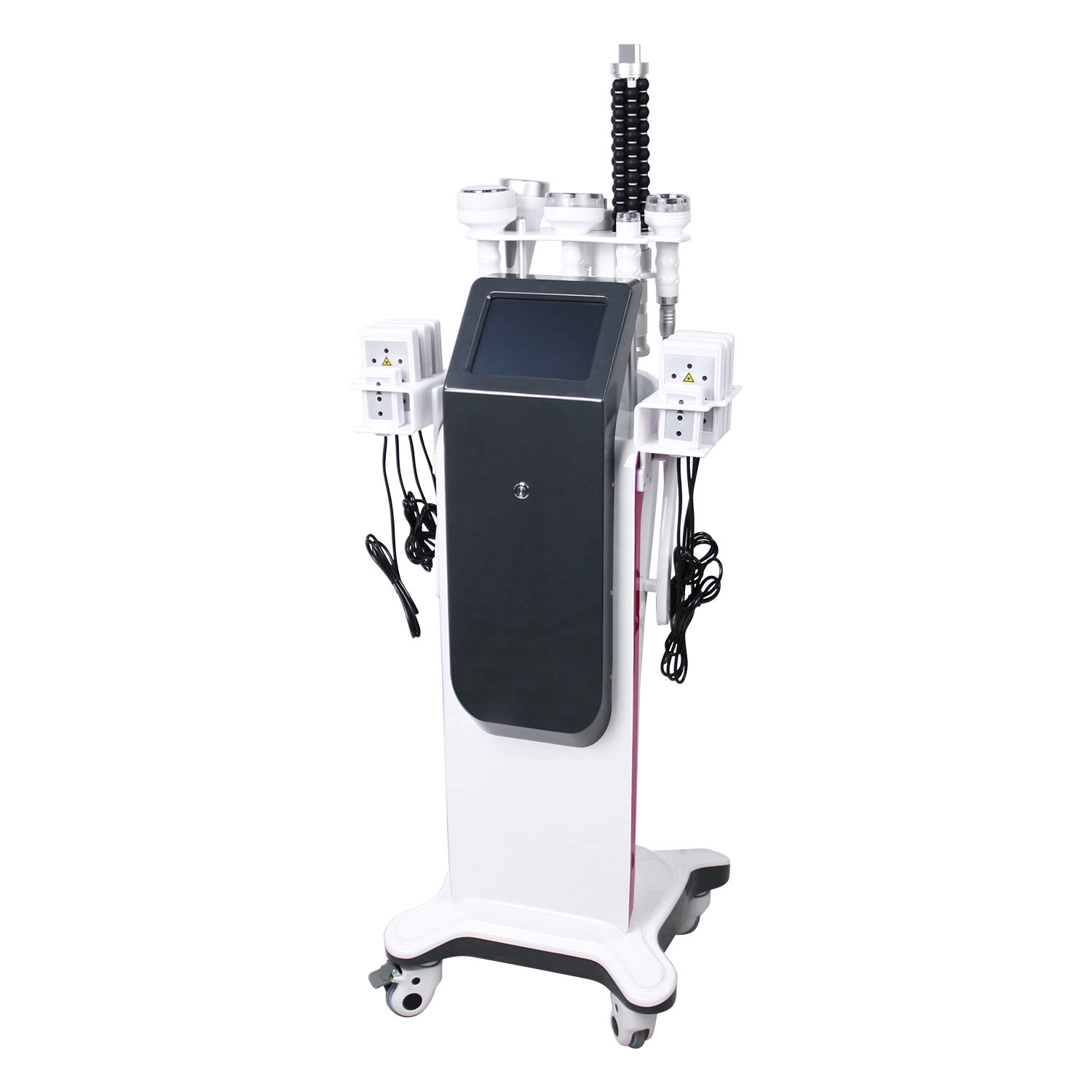
Professional 6-in-1 Cavitation Vacuum Machine for Body Contouring & Slimming Treatment
The 6-in-1 Cavitation Vacuum Machine is a professional body contouring system designed for salons and spas seeking high-performance slimming solutions. This machine integrates 40K ultrasonic cavitation, vacuum suction, RF technology, and laser lipolysis to target stubborn fat, enhance lymphatic drainage, tighten the skin, and contour the body shape effectively.
Equipped with multiple ergonomic handles and a smart touch screen, this cavitation vacuum machine provides a comfortable and efficient experience for both operators and clients. It is ideal for full-body treatments including abdomen, arms, legs, waistline, hips, and back.
Perfect for beauty salons, spas, and aesthetic centers that want to offer non-invasive fat reduction and body-sculpting services.
Get more information
If you have any comments or good suggestions, please leave us a message; later our professional staff will contact you as soon as possible.
Let's Talk
Stay in touch with us for cutting-edge beauty solutions, professional guidance, and customized service.
Contact


Room 307, Building A, Huilong International E-commerce Industrial Park, No. 10 Xipengling Road, Helong Street, Baiyun District, Guangzhou, China
© 2025 HUIMAIN. All Rights Reserved. Privacy Policy | Terms and Conditions | Sitemap
Facebook
Instagram
Medical beauty equipment factory
huimain Medical beauty equipment factory
beauty machine supplier
Whatsapp: +8619124004543