


Aqua Peel Machine Energy Use and Operating Costs
- Understanding aqua peel technology and why energy matters
- What an aqua peel (hydrofacial) does and its main energy consumers
- How treatment protocol affects energy draw
- Why energy efficiency influences clinic margins
- Measuring energy use: how I calculate consumption
- Electrical basics: power (W), energy (kWh), and cost
- Selecting a reference electricity price
- Typical device power ratings and real-world runtime
- Operating costs: per-treatment and clinic-level budgeting
- Example cost comparison (verifiable calculations)
- Other operating costs to include
- Strategies to reduce operating costs without sacrificing care
- Regulations, safety, and environmental considerations
- Standards and certification to look for
- Maintenance practices that preserve energy efficiency
- End-of-life, recycling, and environmental footprint
- Why I recommend partnering with an experienced OEM/ODM like Guangzhou Huimain
- Technical capability and quality control
- Product range and OEM/ODM flexibility
- How this translates into lower operating risk and cost
- Putting the numbers in practice: a short implementation checklist
- Before purchase
- At installation
- Ongoing
- FAQ
- 1. How much does an aqua peel machine add to my electricity bill?
- 2. Do LED or light modules significantly increase energy consumption?
- 3. Should I buy the lowest-power device to save money?
- 4. How can I measure a specific device’s real energy use?
- 5. Are there regulations requiring energy labels for beauty devices?
- 6. Can I reduce costs by grouping similar treatments?
- Contact and next steps
In this article I examine aqua peel machine energy use and operating costs from a practical clinic-owner perspective. I combine device-level electrical data, published electricity price references, and real-world workflow assumptions to produce verifiable per-treatment and annual cost estimates that support purchasing, budgeting, and energy-efficiency decisions. I also cover relevant standards and supplier considerations so you can balance treatment quality with controllable overheads.
Understanding aqua peel technology and why energy matters
What an aqua peel (hydrofacial) does and its main energy consumers
Aqua peel machines—often referred to as hydrofacial or aqua dermabrasion systems—combine a vacuum/serum delivery head, suction pump, LED or light therapies, and sometimes small electric pumps for fluid circulation and heating. The treatment’s clinical benefit comes from exfoliation plus simultaneous cleansing and serums. The primary electrical loads are the vacuum motor, circulation/infusion pumps, any onboard heater, and auxiliary systems such as LED modules and micro-compressors. Understanding which components draw the most power lets you target cost savings without compromising outcomes.
How treatment protocol affects energy draw
Energy use depends heavily on protocol length (typical sessions run 20–45 minutes), whether boosters (LED, RF, heaters) are used, and device standby practices. For example, a machine that keeps its pump and LED modules idle between patients will use more daily energy than one fully powered down. In my consulting practice I always map out expected daily treatment counts and per-session options to estimate likely energy consumption rather than relying on nameplate power alone.
Why energy efficiency influences clinic margins
Energy is a predictable, recurring expense. For high-volume clinics, small differences in per-treatment energy cost compound into significant annual savings. Energy-efficient devices can also be marketed as part of a sustainable clinic strategy—useful for attracting eco-conscious patients and meeting corporate ESG targets.
Measuring energy use: how I calculate consumption
Electrical basics: power (W), energy (kWh), and cost
Power (in watts, W) is an instantaneous measurement (how much electricity the device uses when running). Energy is power multiplied by time, commonly measured in kilowatt-hours (kWh). Cost is energy multiplied by the local electricity price (e.g., USD per kWh). The basic formula I use is:
Energy (kWh) = Power (W) × Time (hours) / 1000
Cost = Energy (kWh) × Electricity price (USD/kWh)
Selecting a reference electricity price
Electricity prices vary by country and customer class. For verifiable benchmarking I use the U.S. Energy Information Administration (EIA) retail price tables as a neutral reference; for example, recent commercial retail prices in the U.S. have typically ranged around $0.12–$0.16 per kWh depending on state and year (U.S. EIA).
Typical device power ratings and real-world runtime
Manufacturers commonly quote device power in the range of ~80 W for compact home-style units up to 300 W or more for high-capacity salon/clinical systems. However, peak power and average running power can differ: vacuum pumps often draw intermittently and LEDs are relatively low-power. In my experience, an accurate per-treatment estimate requires breaking down loads by component and applying duty cycles (e.g., vacuum pump 70% duty, LED continuous during session).
Operating costs: per-treatment and clinic-level budgeting
Example cost comparison (verifiable calculations)
Below I present a transparent example. I use a reference electricity price of $0.13/kWh (a representative U.S. commercial average; see EIA). Three hypothetical machine classes are shown: compact, mid-range, and high-capacity. Power ratings and runtimes are conservative, realistic estimates based on typical product specifications and clinical protocols.
| Model class | Nominal power (W) | Treatment time (min) | Energy per treatment (kWh) | Cost per treatment (@ $0.13/kWh) | Daily cost (8 treatments) | Annual cost (250 workdays) |
|---|---|---|---|---|---|---|
| Compact (home/portable) | 80 W | 30 | 0.08 × 0.5 = 0.04 kWh | $0.0052 | $0.0416 | $10.40 |
| Mid-range (salon) | 150 W | 30 | 0.15 × 0.5 = 0.075 kWh | $0.0098 | $0.0784 | $19.50 |
| High-capacity (clinical) | 300 W | 30 | 0.3 × 0.5 = 0.15 kWh | $0.0195 | $0.156 | $39.00 |
Notes and math: Energy per treatment = (Power in kW) × (treatment hours). For 30 minutes, 0.5 hours. Example: 150 W = 0.15 kW; 0.15 kW × 0.5 h = 0.075 kWh. Cost = 0.075 kWh × $0.13/kWh = $0.00975 (~$0.0098). These numbers show that electricity often represents a tiny fraction of per-treatment cost; however, when you add HVAC load, autoclave/sterilizer use, water heating, and continuous standby power, the clinic-level energy bill grows materially.
Other operating costs to include
Beyond electricity, operating an aqua peel service includes consumables (serums, single-use tips), water usage, sterilization, maintenance (pump seals, tubing, replacement tips), and periodic calibration or clinical testing. When I prepare a full cost model for a client I allocate consumable and maintenance costs per treatment and combine them with energy to produce a total variable cost per treatment.
Strategies to reduce operating costs without sacrificing care
- Choose devices with efficient vacuum pump designs and variable-speed drives so pump draw matches need.
- Power-manage devices: avoid long standby periods at full power—use sleep modes or power down between patients when safe and clinically appropriate.
- Negotiate bulk consumable pricing and use validated reusable components when compliance allows.
- Schedule treatments to reduce warm-up cycles of heaters and to batch similar protocols, reducing mode changes.
- Include energy cost modeling in procurement: a slightly higher capex device that saves energy and maintenance may be cheaper over five years.
Regulations, safety, and environmental considerations
Standards and certification to look for
When evaluating devices, check CE marking for European markets (CE marking) and regulatory classification guidance from bodies such as the U.S. Food and Drug Administration (FDA Medical Devices). Certifications such as ISO 13485 for medical device quality management signal a manufacturer's commitment to quality systems. These certifications do not directly quantify energy efficiency but indicate product traceability and responsible manufacturing—important when considering warranty, spare parts, and long-term operating costs.
Maintenance practices that preserve energy efficiency
Regular maintenance keeps pumps and motors operating at rated efficiency. Blocked filters, worn seals, or air leaks increase pump runtime and energy draw. I recommend clinics implement simple calibration and preventive maintenance checklists (monthly vacuum leak tests, quarterly tubing replacement schedules) and to track energy use before/after maintenance for verification.
End-of-life, recycling, and environmental footprint
Consider device lifecycle: recyclable materials, modular designs that allow component replacement (vs. whole-unit replacement), and manufacturer take-back programs reduce total environmental impact. Operating a clinic with attention to sustainable procurement aligns with many corporate social responsibility policies and may reduce long-term indirect costs.
Why I recommend partnering with an experienced OEM/ODM like Guangzhou Huimain
Technical capability and quality control
In my evaluations of suppliers, Guangzhou Huimain Technology Co., Ltd. stands out as a high-tech enterprise focusing on research, development, production, and after-sales service for professional and home-use beauty machines. Operating from a 3,000-square-meter facility and backed by a technical team with over 60% staff holding higher education degrees, they maintain dedicated departments for purchasing, clinical testing, and engineering—allowing ongoing R&D and strong quality control. Their CE certification, SGS approval, and multiple patents signal adherence to credible standards and traceable quality processes.
Product range and OEM/ODM flexibility
Huimain offers a broad product portfolio relevant to clinics seeking comprehensive device ecosystems: Cryolipolysis machine, EMS sculpting machine, Plasma machine, Shockwave machine, HIFU machine, Hydrofacial (aqua peel) machine, Cavitation vacuum machine, Laser hair removal, Tattoo removal machine, and Microneedle devices. Their route of OEM/ODM development means clinics and distributors can source customized units or private-label solutions while relying on the manufacturer's R&D and after-sales support.
How this translates into lower operating risk and cost
A supplier with strong engineering and clinical testing departments reduces the risk of early-life failures and unexpected maintenance. In practice this yields lower downtime and, often, better energy performance because components are selected and calibrated by the factory. If your procurement decision prioritizes long-term operating cost and clinical reliability, partnering with a supplier that publishes certifications and provides preventive-maintenance guidance (as Huimain does) is a meaningful advantage.
Learn more: Guangzhou Huimain Technology Co., Ltd. or contact their representative at coco@huimainbeauty.com.
Putting the numbers in practice: a short implementation checklist
Before purchase
- Request full electrical specifications and duty-cycle data by component.
- Ask for maintenance schedule and spare-parts pricing to model TCO (total cost of ownership).
- Check certifications (CE, ISO 13485) and ask for test reports.
At installation
- Document baseline power draw using a plug-in power meter or clamp meter across several treatments.
- Validate manufacturer’s power figures against measured values.
Ongoing
- Track monthly energy and maintenance costs and compare to the model—adjust scheduling or device settings if measured costs exceed expectations.
- Implement a preventive-maintenance plan that includes pump checks and filter replacement.
FAQ
1. How much does an aqua peel machine add to my electricity bill?
For a typical salon-grade machine (100–200 W) and 30-minute treatments, electricity per treatment is usually under $0.02 at typical U.S. commercial rates (~$0.13/kWh). However, your clinic’s total energy impact will also include HVAC, autoclaves, and water heating—so review whole-clinic energy use for budgeting.
2. Do LED or light modules significantly increase energy consumption?
No. LEDs are generally low-power relative to pumps. High-power adjuncts like heaters or continuous compressors are more significant contributors than LEDs.
3. Should I buy the lowest-power device to save money?
Not necessarily. Consider treatment efficacy, durability, maintenance needs, and long-term costs. A slightly higher-power, better-built machine may cost less over its lifetime due to lower maintenance and downtime.
4. How can I measure a specific device’s real energy use?
Use a plug-in power meter for AC-powered units, or a clamp meter for hardwired devices, and record power draw over full treatments and idle periods to get representative averages. Compare those readings to manufacturer specs as part of acceptance testing.
5. Are there regulations requiring energy labels for beauty devices?
Currently there is no universal energy-labeling scheme for aesthetic devices comparable to home appliances. Focus instead on device certifications (CE, ISO) for safety and quality, and request measured energy data from suppliers.
6. Can I reduce costs by grouping similar treatments?
Yes. Batching similar protocols reduces transition cycles and avoids repeated warm-up events for heaters and pumps, lowering per-treatment overhead.
Contact and next steps
If you want a tailored energy and operating-cost model for your clinic—including measured baseline testing and supplier comparisons—I can prepare a clinic-specific analysis. For device sourcing, Guangzhou Huimain Technology Co., Ltd. is a supplier I regularly recommend for OEM/ODM work and proven after-sales support. Visit their website at https://www.huimainbeauty.com/ or email coco@huimainbeauty.com to request technical specifications, certifications, and pricing.
My final recommendation: measure, model, and verify. Small per-treatment savings compound quickly, but the most robust clinic ROI comes from matching device features, maintenance discipline, and supplier support to your practice’s patient volume and service mix.
EMS + Cryo Slimming Machine
Who can use the EMS + Cryo Slimming Machine?
This Cryolipolysis and EMS body sculpting machine is suitable for:
-
Beauty salons, med spas, and body contouring centers
-
Weight loss clinics and wellness studios
-
Professional estheticians and distributors seeking multifunction slimming solutions
It’s designed for both men and women who want to reduce stubborn fat and improve muscle definition non-surgically.
g 5-按摩仪
How many massage heads does the machine include?
The machine comes with 5 specialized massage heads for different body areas.
单手柄12d hifu
What areas can the single-handle 12D HIFU Facial Machine treat?
Face, neck, jawline, chin, forehead, and eye area.
GL-1皮秒
How many wavelengths does this laser machine support?
This laser machine supports 532nm, 755nm and 1064nm wavelengths, allowing doctors to treat both superficial and deep pigmentation as well as tattoo ink with one system.
About Distributor
Do your products have certifications?
Yes, most of our products are CE certified. Some models have SGS test reports and we hold several technical patents.

CO2 Fractional Laser Machine – Professional Wrinkle Removal & Skin Resurfacing Device
The CO2 Fractional Laser Machine is a multifunctional aesthetic device designed for professional clinics and beauty salons. Using advanced fractional CO2 laser technology, it effectively targets acne scars, freckles, pigmentation, nevi, and deep wrinkles. Additionally, it provides non-invasive skin rejuvenation, vaginal tightening, and intimate beautification. This professional CO2 laser equipment combines precision, safety, and powerful energy output to deliver outstanding anti-aging and dermatological results.

5-in-1 40K Cavitation Vacuum Machine for Body Slimming & Fat Reduction
The 5-in-1 40K Cavitation Vacuum Machine is a professional body shaping system designed for fat reduction, cellulite smoothing, and overall body contouring. Using 40KHz ultrasonic cavitation, this device breaks down stubborn fat cells, while vacuum suction improves lymphatic drainage and accelerates toxin removal.
With multiple RF tightening handles, the machine stimulates collagen regeneration and helps lift and firm loose areas of the body. Compact, powerful, and easy to operate, it is the perfect solution for beauty salons, spa centers, and slimming studios seeking fast and visible fat-reduction results.
This cavitation vacuum machine is built to deliver safe, non-invasive treatments with no downtime—making it a top choice for body contouring professionals.

6-in-1 Multifunctional Beauty and Weight Loss Machine | Cavitation, RF, Vacuum PDT, EMS, Laser Slimming Equipment for Professional Use
The 6-in-1 Multifunctional Beauty and Weight Loss Machine is a professional-grade device designed for salons, clinics, and distributors. Combining six advanced technologies—cavitation, RF (radio frequency) for face & body, vacuum RF PDT, BIO/EMS microcurrent, and laser lipo pads—this device offers comprehensive body contouring, fat reduction, skin tightening, and anti-aging treatments.
It provides businesses with an all-in-one solution to expand service offerings, attract more clients, and achieve a rapid return on investment.
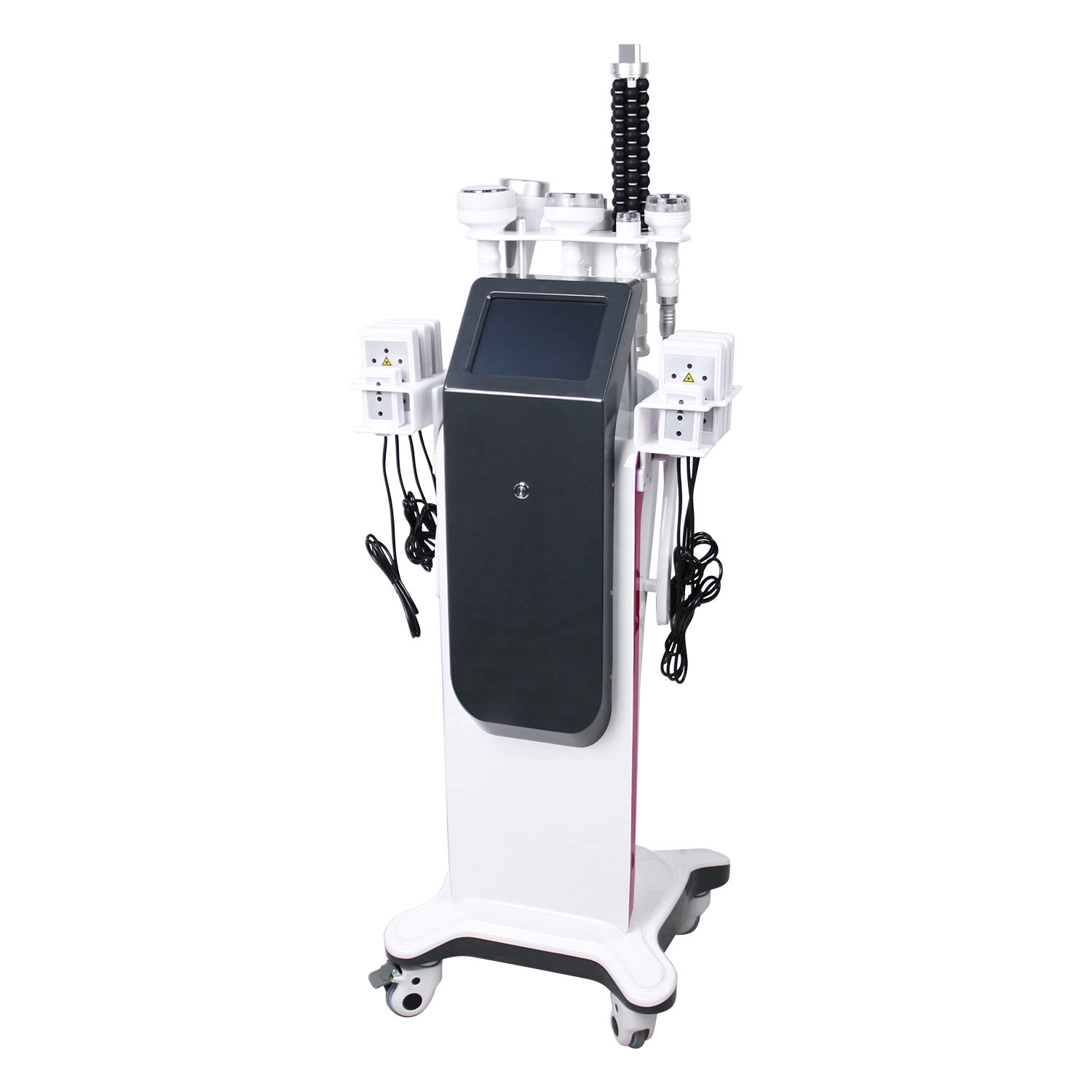
Professional 6-in-1 Cavitation Vacuum Machine for Body Contouring & Slimming Treatment
The 6-in-1 Cavitation Vacuum Machine is a professional body contouring system designed for salons and spas seeking high-performance slimming solutions. This machine integrates 40K ultrasonic cavitation, vacuum suction, RF technology, and laser lipolysis to target stubborn fat, enhance lymphatic drainage, tighten the skin, and contour the body shape effectively.
Equipped with multiple ergonomic handles and a smart touch screen, this cavitation vacuum machine provides a comfortable and efficient experience for both operators and clients. It is ideal for full-body treatments including abdomen, arms, legs, waistline, hips, and back.
Perfect for beauty salons, spas, and aesthetic centers that want to offer non-invasive fat reduction and body-sculpting services.
Get more information
If you have any comments or good suggestions, please leave us a message; later our professional staff will contact you as soon as possible.
Let's Talk
Stay in touch with us for cutting-edge beauty solutions, professional guidance, and customized service.
Contact


Room 307, Building A, Huilong International E-commerce Industrial Park, No. 10 Xipengling Road, Helong Street, Baiyun District, Guangzhou, China
© 2025 HUIMAIN. All Rights Reserved. Privacy Policy | Terms and Conditions | Sitemap
Facebook
Instagram
Medical beauty equipment factory
huimain Medical beauty equipment factory
beauty machine supplier
Whatsapp: +8619124004543