


Aqua Peel Machine Parts Replacement Guide
- Understanding Aqua Peel Technology
- How an Aqua Peel Machine Works
- Main Components and Materials
- Why Parts Fail: Common Causes
- Common Parts That Require Replacement
- Consumables: Cartridges, Filters, and Serums
- Wear Parts: Handpieces, Tubing, and Seals
- Electronic Components & Sensors
- Step-by-Step Replacement Guide & Maintenance Best Practices
- Preparing for Replacement
- Replacing Specific Parts (quick reference)
- Preventive Maintenance Schedule (recommended)
- Choosing Parts: OEM vs Aftermarket, Cost, and Safety
- OEM vs Aftermarket: Comparison
- Regulatory Considerations
- Cost-Benefit and Total Cost of Ownership
- Troubleshooting Common Replacement Scenarios
- Loss of Suction or Low Flow
- Persistent Clogging in Handpiece
- Electronic Error Codes or Sensor Drift
- Supplier and Manufacturer Best Practices
- Documentation and Traceability
- Clinical Testing and Safety Verification
- When to Contact Manufacturer Support
- About Guangzhou Huimain Technology Co., Ltd. (Supplier Profile)
- FAQs
- 1. How often should I replace the disposable aqua peel cartridge?
- 2. Can I use third-party serums or fluids with my aqua peel machine?
- 3. What are the signs my vacuum pump needs replacement?
- 4. Are there legal or regulatory concerns when replacing parts?
- 5. What's the best way to reduce downtime related to parts replacement?
- 6. How should I dispose of used cartridges and biological waste?
- Contact & Further Support
The aqua peel machine (also known as hydrodermabrasion or hydrofacial device) is a cornerstone of modern aesthetic clinics and medspas. For operators and technicians, timely parts replacement and correct maintenance ensure consistent treatment outcomes, device safety, and regulatory compliance. This guide explains which parts wear out first, how to replace them safely, how often replacement is expected, and how to choose genuine components versus aftermarket alternatives—drawing on device standards, clinical safety guidance, and supplier best practices.
Understanding Aqua Peel Technology
How an Aqua Peel Machine Works
An aqua peel machine combines controlled vacuum, fluid infusion (serums), and mechanical exfoliation to cleanse, exfoliate, extract, and hydrate the skin in one pass. Devices typically create a pressurized saline or serum flow that is applied through a rotating or vortex tip while suction removes debris and fluids. The result is improved skin texture, reduced pore congestion, and enhanced serum penetration. For a technical overview of related technologies such as hydrodermabrasion and microdermabrasion, see the general description on Wikipedia: HydraFacial (Wikipedia) and Microdermabrasion (Wikipedia).
Main Components and Materials
A typical aqua peel system includes:
- Handpiece and replaceable tip/cartridge (nozzle)
- Vacuum pump and tubing
- Fluid reservoir and delivery pump
- Filters (in-line, waste collection)
- Control electronics and user interface
- Seals, valves, and connectors
Materials contacting fluids are usually medical-grade plastics (e.g., polycarbonate, ABS) or silicone, which must withstand cleaning and occasional autoclave or chemical disinfection where recommended by the manufacturer.
Why Parts Fail: Common Causes
- Consumable exhaustion (cartridges, filters) from routine use.
- Mechanical wear of seals and valves due to pressure cycles and cleaning chemicals.
- Clogging from improper serum dilution or poor water quality.
- Pump and motor degradation from overuse or lack of maintenance.
- Electronic faults from moisture ingress or voltage irregularities.
Common Parts That Require Replacement
Consumables: Cartridges, Filters, and Serums
Consumables are the most frequently replaced items. Cartridges/tips (disposable vortex tips) wear out from abrasion and clogging. Filters protect pumps and should be changed per manufacturer schedules. Always use medical-grade or manufacturer-recommended serums; non-recommended fluids can increase residue, leading to blocked channels and shortened part life.
Wear Parts: Handpieces, Tubing, and Seals
Handpieces may require replacement when internal channels erode, when suction performance declines, or when cracks appear. Tubing and O-rings/seals degrade over time—particularly when exposed to harsh disinfectants. Replacing these before failure prevents sudden downtime and cross-contamination risks.
Electronic Components & Sensors
Sensors (flow, pressure) and PCBs can fail due to moisture, age, or electrical surges. Calibration drift in pressure sensors will change treatment parameters; replace or recalibrate according to the service manual. For medical device quality systems and lifecycle controls, see ISO 13485: ISO 13485 (ISO).
Step-by-Step Replacement Guide & Maintenance Best Practices
Preparing for Replacement
- Power down and unplug the device; follow lockout-tagout where available.
- Wear appropriate PPE (gloves, eye protection) when handling contaminated parts.
- Consult the device service manual for model-specific instructions; if unavailable, contact the manufacturer for guidance.
- Gather tools: manufacturer-specified screws/torx bits, replacement O-rings, tubing, and service loctite if required.
For regulatory context on reprocessing and device safety, review FDA guidance: FDA Medical Devices.
Replacing Specific Parts (quick reference)
- Disposable Cartridges / Tips: Usually single-use. Remove spent tip after each patient; install next tip until vacuum or flow visibly drops; discard per biohazard protocol.
- Filters: Replace inline filters every 1–3 months depending on clinic volume. If you notice reduced suction or increased pump noise, check and replace filters immediately.
- Tubing and Connectors: Replace every 6–12 months or earlier if discoloration, hardening, or leak is observed. Ensure correct inner diameter and chemical compatibility with serums.
- Handpiece: If handpiece inspection shows channel erosion, internal cracking, or persistent clogging after cleaning, replace or return-to-factory for rebuild.
- Pumps and Motors: These are serviceable items; replace bearings or the entire pump module when noise increases, flow drops, or vibration occurs. Maintain spare modules for high-volume clinics.
- Sensors/PCB: Replace faulty sensors per diagnostic error codes; use OEM calibration routines after replacement.
Preventive Maintenance Schedule (recommended)
Adopt a predictable PM plan tied to hours of operation or number of treatments rather than calendar days alone. Below is a recommended baseline schedule—adjust for your volume and manufacturer guidance.
| Item | Replace / Service Frequency (typical) | Indicator for Early Replacement |
|---|---|---|
| Disposable tips / cartridges | Single-use or after each patient | Visible wear, decreased exfoliation, clogging |
| Inline filters | 1–3 months (or every 500 treatments) | Reduced suction, pump noise |
| Tubing and O-rings | 6–12 months | Cracking, hardening, leaks |
| Handpiece | 12–24 months (depends on use) | Persistent clogging, mechanical damage |
| Pumps / motors | 2–5 years or service as needed | Noise, decreased flow, overheating |
| Sensors / electronics | Check annually; replace per diagnostics | Error codes, calibration drift |
Choosing Parts: OEM vs Aftermarket, Cost, and Safety
OEM vs Aftermarket: Comparison
Choosing genuine OEM parts generally ensures fit, material compatibility, and retained device certifications. Aftermarket parts can be cheaper but may lead to increased failure rates or affect device safety and warranty. Below is a concise comparison.
| Factor | OEM Parts | Aftermarket Parts |
|---|---|---|
| Fit & compatibility | Guaranteed | Variable |
| Material & biocompatibility | Certified by manufacturer | May lack full certification |
| Warranty & support | Maintains warranty | May void warranty |
| Cost | Higher | Lower |
Regulatory Considerations
If your country requires device maintenance documentation or if treatments are performed under regulated conditions, retaining OEM traceability and certificates simplifies audits. ISO 13485 and regional regulatory guidance describe the importance of controlled supply chains for medical devices (ISO 13485, FDA Medical Devices).
Cost-Benefit and Total Cost of Ownership
Rather than purely comparing unit costs, evaluate total cost of ownership (TCO): downtime risk, replacement frequency, warranty implications, and potential patient-safety liabilities. A slightly more expensive OEM cartridge that halves device downtime may be more economical over 12 months.
Troubleshooting Common Replacement Scenarios
Loss of Suction or Low Flow
Probable causes: clogged filter, worn tubing, or failing pump. Steps: (1) Check and replace inline filter; (2) Inspect tubing for kinks or leaks; (3) Run diagnostic suction test—if performance remains low, service or replace the pump module.
Persistent Clogging in Handpiece
Probable causes: residue build-up from serums, hard water mineral deposits, or worn internal channels. Steps: (1) Perform manufacturer-recommended cleaning and enzymatic flush; (2) Use appropriate descaling solution if compatible; (3) If clogging persists, replace tip/cartridge and consider handpiece rebuild.
Electronic Error Codes or Sensor Drift
Check the service manual error tables. Many devices allow sensor recalibration; if error persists after recalibration, replace the sensor module and recalibrate again. Document all replacements for audit trails.
Supplier and Manufacturer Best Practices
Documentation and Traceability
Keep records of part numbers, batch/lot numbers, replacement dates, and technician initials. These records are crucial for warranty claims and for tracing any device failures back to a defective batch.
Clinical Testing and Safety Verification
After replacing pumps, sensors, or the handpiece, perform a validation treatment on a test medium or run through manufacturer-provided QA routines. Guangzhou Huimain and other reputable manufacturers typically provide SOPs and clinical testing support; devices holding CE/SGS certifications undergo defined quality controls. For more on certification expectations, see Guangzhou Huimain's profile below and ISO guidance: ISO 13485.
When to Contact Manufacturer Support
Contact manufacturer support for persistent failures, unexplained error codes, or when replacements involve internal electronics. Attempting to fix PCBs or complex modules without authorized instruction may void warranties and create safety risks.
About Guangzhou Huimain Technology Co., Ltd. (Supplier Profile)
Guangzhou Huimain Technology Co., Ltd. is a high-tech enterprise specializing in the research, development, production, and after-sales service of professional beauty machines and home-use devices. Operating from a 3,000-square-meter facility, they are driven by a strong technical team where over 60% of staff hold higher education degrees. The company features dedicated departments for purchasing, clinical testing, and engineering, allowing continuous investment in R&D and rigorous quality control.
With CE certification, SGS approval, and numerous patents, Huimain supplies reliable, competitively priced products across China, Southeast Asia, the Middle East, Europe, and North America. Their OEM/ODM capability supports custom medical and beauty equipment for salons and distributors. Key product lines include Cryolipolysis machines, Ems sculpting machines, Plasma machines, Shockwave machines, HIFU machines, Hydrofacial (Hydro) machines, Cavitation vacuum machines, Laser hair removal, Tattoo removal machines, and Micro-needle systems. For details and to request authentic replacement parts, visit https://www.huimainbeauty.com/ or contact their service team at coco@huimainbeauty.com.
Huimain's competitive strengths: skilled R&D team, integrated clinical testing capability, CE/SGS certifications, and an OEM/ODM manufacturing route that supports global distribution and quality compliance—advantageous for clinics seeking dependable parts and technical support.
FAQs
1. How often should I replace the disposable aqua peel cartridge?
Most clinics use a fresh disposable cartridge for each patient for hygiene and performance consistency. If the cartridge is labeled reusable, follow manufacturer guidance; however, performance decline or visible wear mandates immediate replacement.
2. Can I use third-party serums or fluids with my aqua peel machine?
Only use serums that are chemically compatible and recommended by the device manufacturer. Non-recommended fluids can cause clogging, damage seals, and may void warranties. Where possible, request a Material Safety Data Sheet (MSDS) and compatibility statement.
3. What are the signs my vacuum pump needs replacement?
Reduced suction, increased noise, vibration, overheating, or failure to reach set vacuum levels after replacing filters and tubing are indicators the pump requires service or replacement.
4. Are there legal or regulatory concerns when replacing parts?
Yes. For medical-grade devices, using non-approved parts, failing to document service, or not following validated reprocessing procedures can create compliance issues. Maintain traceability and follow manufacturer and local regulatory guidance—for example, ISO 13485 quality systems and FDA device regulations (ISO 13485, FDA).
5. What's the best way to reduce downtime related to parts replacement?
Maintain an inventory of high-use consumables and critical spare modules (pumps, handpieces). Implement a preventive maintenance schedule, train staff for routine replacements, and keep clear records to anticipate part end-of-life.
6. How should I dispose of used cartridges and biological waste?
Follow local biomedical waste disposal regulations. Used cartridges and materials contaminated during treatments should be disposed of as clinical waste. Consult local environmental and health authorities for proper procedures.
Contact & Further Support
If you need original replacement parts, technical service, or OEM customization for aqua peel machines and other professional beauty devices, contact Guangzhou Huimain Technology Co., Ltd. Visit https://www.huimainbeauty.com/ or email coco@huimainbeauty.com to request parts lists, certifications (CE/SGS), and service manuals. Regular service contracts and training packages are recommended to maximize device uptime and patient safety.
Recommended references:
ETG502
Is this device safe? Are there any side effects?
The device is very safe. It only targets fat cells and does not harm surrounding nerves, blood vessels, or skin tissue. A small number of clients may experience minor redness, bruising, or numbness after treatment, but these are temporary and usually resolve on their own within a few days.
JLM-36
Is the 4D HIFU Facial Machine safe for all skin types?
Yes, the HIFU technology is safe for all skin types. Energy intensity can be adjusted to cater to different skin needs.
HMC1S
Q4: How often should I use the Pelvic Floor Chair for best results?
A4: For optimal results, we recommend 2-3 sessions per week, but the frequency can be adjusted based on personal goals
OL-164
What is the difference between a hydro facial machine and a traditional facial steamer?
A hydro facial machine deeply cleanses pores and infuses serums using hydro dermabrasion, while a steamer only opens pores without exfoliation or serum delivery.
EMS-b
Can it be used for all body areas?
Yes, it is designed for the abdomen, buttocks, thighs, arms, and calves.

CO2 Fractional Laser Machine – Professional Wrinkle Removal & Skin Resurfacing Device
The CO2 Fractional Laser Machine is a multifunctional aesthetic device designed for professional clinics and beauty salons. Using advanced fractional CO2 laser technology, it effectively targets acne scars, freckles, pigmentation, nevi, and deep wrinkles. Additionally, it provides non-invasive skin rejuvenation, vaginal tightening, and intimate beautification. This professional CO2 laser equipment combines precision, safety, and powerful energy output to deliver outstanding anti-aging and dermatological results.

5-in-1 40K Cavitation Vacuum Machine for Body Slimming & Fat Reduction
The 5-in-1 40K Cavitation Vacuum Machine is a professional body shaping system designed for fat reduction, cellulite smoothing, and overall body contouring. Using 40KHz ultrasonic cavitation, this device breaks down stubborn fat cells, while vacuum suction improves lymphatic drainage and accelerates toxin removal.
With multiple RF tightening handles, the machine stimulates collagen regeneration and helps lift and firm loose areas of the body. Compact, powerful, and easy to operate, it is the perfect solution for beauty salons, spa centers, and slimming studios seeking fast and visible fat-reduction results.
This cavitation vacuum machine is built to deliver safe, non-invasive treatments with no downtime—making it a top choice for body contouring professionals.

6-in-1 Multifunctional Beauty and Weight Loss Machine | Cavitation, RF, Vacuum PDT, EMS, Laser Slimming Equipment for Professional Use
The 6-in-1 Multifunctional Beauty and Weight Loss Machine is a professional-grade device designed for salons, clinics, and distributors. Combining six advanced technologies—cavitation, RF (radio frequency) for face & body, vacuum RF PDT, BIO/EMS microcurrent, and laser lipo pads—this device offers comprehensive body contouring, fat reduction, skin tightening, and anti-aging treatments.
It provides businesses with an all-in-one solution to expand service offerings, attract more clients, and achieve a rapid return on investment.
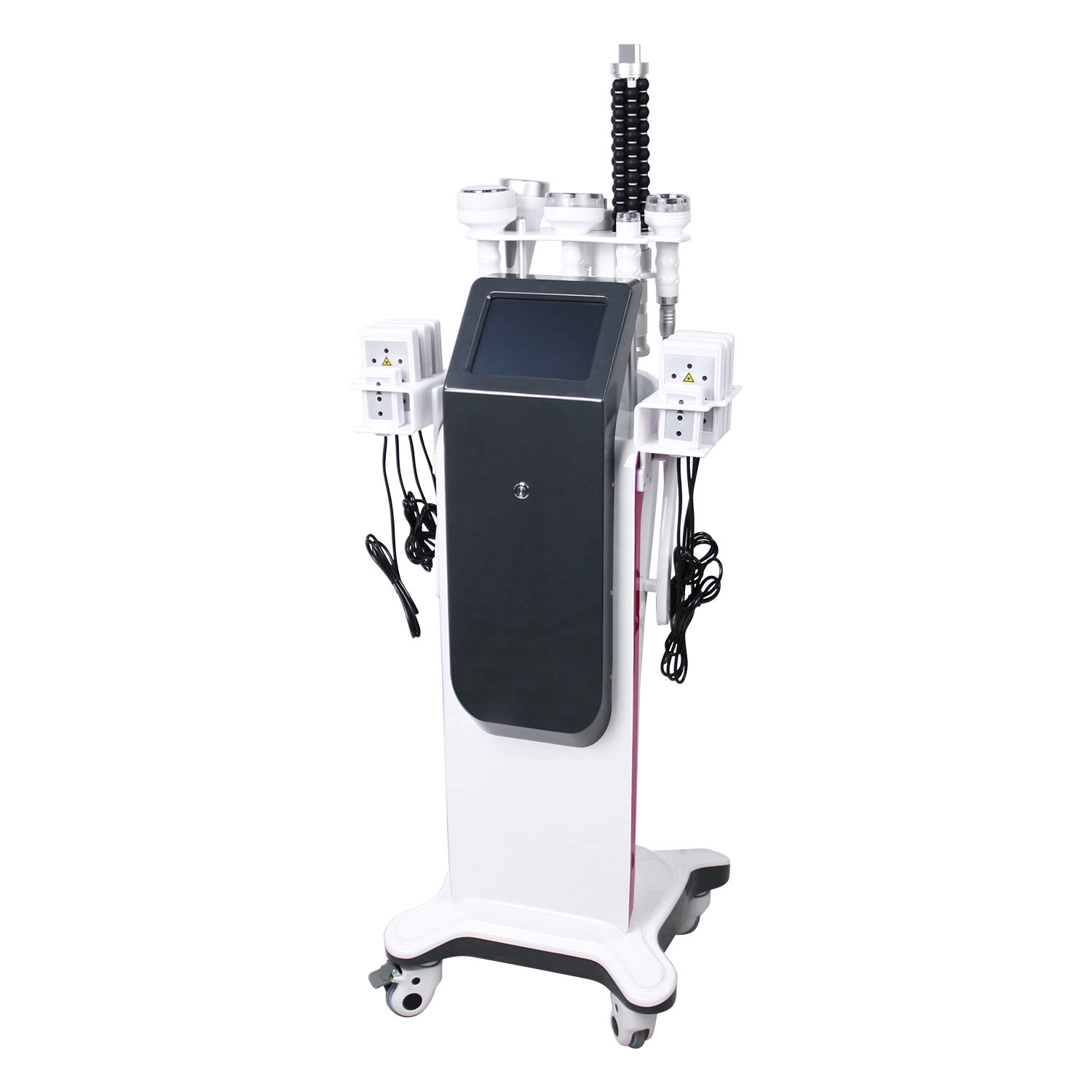
Professional 6-in-1 Cavitation Vacuum Machine for Body Contouring & Slimming Treatment
The 6-in-1 Cavitation Vacuum Machine is a professional body contouring system designed for salons and spas seeking high-performance slimming solutions. This machine integrates 40K ultrasonic cavitation, vacuum suction, RF technology, and laser lipolysis to target stubborn fat, enhance lymphatic drainage, tighten the skin, and contour the body shape effectively.
Equipped with multiple ergonomic handles and a smart touch screen, this cavitation vacuum machine provides a comfortable and efficient experience for both operators and clients. It is ideal for full-body treatments including abdomen, arms, legs, waistline, hips, and back.
Perfect for beauty salons, spas, and aesthetic centers that want to offer non-invasive fat reduction and body-sculpting services.
Get more information
If you have any comments or good suggestions, please leave us a message; later our professional staff will contact you as soon as possible.
Let's Talk
Stay in touch with us for cutting-edge beauty solutions, professional guidance, and customized service.
Contact


Room 307, Building A, Huilong International E-commerce Industrial Park, No. 10 Xipengling Road, Helong Street, Baiyun District, Guangzhou, China
© 2025 HUIMAIN. All Rights Reserved. Privacy Policy | Terms and Conditions | Sitemap
Facebook
Instagram
Medical beauty equipment factory
huimain Medical beauty equipment factory
beauty machine supplier
Whatsapp: +8619124004543