


Aqua Peel Treatment Protocols for Professional Use
- Understanding Indications, Contraindications, and Patient Selection
- Primary clinical indications
- Contraindications and relative risk factors
- Skin typing considerations
- Pre-Treatment Assessment and Clinical Preparation
- Medical history, informed consent, and expectations
- Skin assessment and baseline documentation
- Pre-treatment skin preparation
- Aqua Peel Treatment Protocols (Device Setup and Stepwise Workflows)
- Device and consumables checklist
- Step-by-step protocol: Standard facial hydrodermabrasion (30–45 minutes)
- Protocol variations by indication (summary table)
- Aftercare, Safety, Outcomes Measurement, and Troubleshooting
- Immediate post-treatment care
- Complication recognition and management
- Measuring efficacy and recommended maintenance
- Adjunctive Combinations and Practice Integration
- Combining aqua peel with other in-clinic modalities
- Protocols for multi-modality packages
- Documentation and quality control
- Guangzhou Huimain Technology Co., Ltd. — Manufacturer Profile and Advantages
- Evidence, Standards, and Regulatory Notes
- Key guidance sources
- Practical compliance tip
- Frequently Asked Questions (FAQ)
- 1. What is the difference between an aqua peel machine and traditional microdermabrasion?
- 2. How many sessions are needed to see visible results?
- 3. Is the treatment safe for Fitzpatrick skin types IV–VI?
- 4. What post-treatment care should be recommended?
- 5. How should clinics manage device hygiene and infection control?
- 6. Can aqua peel treatments be combined with professional-grade topical agents like retinoids or chemical peels?
Summary for : Professional practitioners seeking validated aqua peel machine protocols will find actionable guidance here: patient selection, risk mitigation, device setup, consumable choice, stepwise treatment flows for acne, pigmentation, and anti-aging, post-care, and outcomes measurement. Protocols emphasize safety, reproducibility, and measurable outcomes to support clinic standards and local regulatory compliance.
Understanding Indications, Contraindications, and Patient Selection
Primary clinical indications
Aqua peel machines (hydrodermabrasion devices) combine gentle exfoliation, vacuum-assisted extraction, and simultaneous infusion of serums to treat a range of concerns: comedonal acne, oily congested skin, mild-to-moderate hyperpigmentation, superficial photodamage, enlarged pores, and preparation for resurfacing procedures. Selecting the right candidate is the first step to predictable outcomes.
Contraindications and relative risk factors
Absolute contraindications include active herpetic infection on the treatment area, open wounds, uncontrolled acne cysts or nodules, recent isotretinoin (typically within 6–12 months depending on local guidance), and active implantable devices in the treatment field if the device manual warns against it. Relative contraindications include very thin or atrophic skin, recent retinoid use, or anticoagulant therapy—each requires individualized risk assessment and informed consent.
Skin typing considerations
Patients across Fitzpatrick skin types I–VI can safely undergo aqua peel treatments when protocols are adapted—hydrodermabrasion’s non-ablative mechanism reduces post-inflammatory hyperpigmentation (PIH) risk compared with aggressive resurfacing. Nevertheless, darker phototypes require conservative essence selection and, in many cases, pre-conditioning with topical agents (e.g., stabilized vitamin C, azelaic acid) to reduce PIH risk.
Pre-Treatment Assessment and Clinical Preparation
Medical history, informed consent, and expectations
Collect a concise medical history emphasizing recent procedures, medication (esp. isotretinoin, anticoagulants), pregnancy, and history of keloids or PIH. Document expectations with photography and a written consent that covers common side effects (transient erythema, dryness), potential rare complications (infection, PIH), and the need for a treatment series for many indications.
Skin assessment and baseline documentation
Objective baseline imaging (standardized photos, cross-polarized images where available) and graded scales (e.g., lesion counts for acne, Melasma Area and Severity Index (MASI) for pigment) help quantify outcomes. Record Fitzpatrick type, oiliness, sensitivity, and recent topical prescription use.
Pre-treatment skin preparation
In the 24–48 hours prior, advise cessation of strong exfoliants (AHAs/BHAs) and retinoids per clinic policy. Immediately before treatment cleanse with a non-comedogenic cleanser and remove makeup. For patients with active acne, consider topical antiseptic prep per device protocol. Avoid topical anesthetics unless the device manufacturer recommends them—hydrodermabrasion is typically well tolerated without numbing.
Aqua Peel Treatment Protocols (Device Setup and Stepwise Workflows)
Device and consumables checklist
Before each session confirm: device calibration, intact and sterile disposable tips/cartridges, fresh serums appropriate to indication (hydration, mild exfoliant, or brightening serums), suction tubing integrity, and suction level/flow set per the device manual. Follow the aqua peel machine manufacturer’s service manual for pre-use checks and electrical safety.References: device regulation overview (U.S. FDA) https://www.fda.gov/medical-devices.
Step-by-step protocol: Standard facial hydrodermabrasion (30–45 minutes)
- Clinical check and confirm consent, take pre-treatment photos.
- Cleanse skin thoroughly with a non-irritating cleanser; remove residual oil and makeup.
- Perform a low-pass test on a small area if treating sensitive skin (30–60 seconds).
- First pass: gentle epidermal exfoliation with hydrating serum to remove dead keratin and debris—use light strokes, avoid prolonged suction on thin areas (periocular, perioral).
- Second pass: targeted extraction over nose/cheeks with slightly increased suction and a dedicated extraction tip to clear comedones and sebum.
- Third pass: infusion of treatment serums (antioxidant, peptide, or light depigmenting agent) driven by the hydro-solution infusion mode—ensure uniform coverage across the face.
- Finish with a calming mask or agent (hyaluronic-based) and broad-spectrum SPF 30+ if immediate sun exposure is expected.
Protocol variations by indication (summary table)
| Indication | Primary adjustments | Typical session frequency | Expected outcomes |
|---|---|---|---|
| Comedonal/acne-prone skin | Focus on extraction passes, use salicylic-containing serums (professional-grade), antimicrobial prep; avoid heavy occlusive post-serums | Every 1–2 weeks x 4–6 sessions, then maintenance every 4–8 weeks | Reduced comedones, lower lesion counts, improved texture |
| Hyperpigmentation / post-inflammatory PIH | Gentle passes, use antioxidant and tyrosinase-inhibiting serums (e.g., vitamin C, azelaic/kojic derivatives per product), pre-condition skin if active inflammation | Every 2–4 weeks x 6–8 sessions | Improved uniformity, reduced superficial pigmentation |
| Photodamage & anti-aging | Include peptide, hyaluronic infusion; optional combination with LED therapy post-treatment | Every 2–4 weeks x 4–6 sessions; maintenance q4–8 weeks | Improved hydration, smoother texture, immediate glow |
| Sensitive skin | Low suction, minimal passes, calming serums only | Every 3–4 weeks initially | Improved barrier with low irritation risk |
Note: Serum selection should follow manufacturer compatibility lists for the specific aqua peel machine; avoid mixing ingredients that could destabilize cartridges or neutralize efficacy.
Aftercare, Safety, Outcomes Measurement, and Troubleshooting
Immediate post-treatment care
Advise patients to avoid intense heat, abrasive exfoliants, and active topical agents (strong retinoids, high-concentration AHAs/BHAs) for 48–72 hours. Apply a calming, protective moisturizer and broad-spectrum SPF 30+ immediately. Document immediate post-treatment photos for comparison.
Complication recognition and management
Common side-effects are transient erythema, mild edema, and tightness. Manage erythema with cold compresses and topical anti-inflammatory agents (e.g., low-potency topical steroid only if prescribed by a physician). If signs of infection appear (increasing pain, purulence), initiate appropriate wound care and consult or refer per clinic protocol. For PIH, institute a depigmenting regimen and consider delaying further hydrodermabrasion until improvement.
Measuring efficacy and recommended maintenance
Use objective metrics—lesion counts, standardized photography, and validated scales—to measure progress. Many practitioners see measurable improvement after 3–6 sessions for acne and pigmentation; maintenance treatments at 4–12 week intervals sustain benefits. Published guidance on non-ablative exfoliation supports serial treatments for cumulative improvement; for device safety and infection control, follow the CDC’s disinfection and sterilization guidelines: https://www.cdc.gov/infectioncontrol/guidelines/disinfection/index..
Adjunctive Combinations and Practice Integration
Combining aqua peel with other in-clinic modalities
Aqua peel treatments are often combined with LED phototherapy, superficial chemical peels (with timing considerations), or light-based therapies. Best practice: schedule hydradermabrasion before energy-based treatments to optimize topical penetration and reduce downtime, but always respect device-specific sequencing recommendations to avoid over-treatment.
Protocols for multi-modality packages
Design protocols that alternate modalities (e.g., hydrodermabrasion + LED weekly for 4 weeks, followed by IPL targeting vascular or pigment concerns) and ensure cumulative irritation thresholds are not exceeded. Maintain a clinic log of combined treatments and patient responses to refine safe sequences.
Documentation and quality control
Maintain per-session records: device settings, tip type, serum lot numbers, areas treated, adverse events, and patient-reported outcomes. Regularly calibrate devices and follow manufacturer maintenance schedules to reduce device-related complications.
Guangzhou Huimain Technology Co., Ltd. — Manufacturer Profile and Advantages
Guangzhou Huimain Technology Co., Ltd. is a high-tech enterprise specializing in the research, development, production, and after-sales service of professional beauty machines and home-use devices. Operating from a 3,000-square-meter facility, the company is driven by a strong technical team where over 60% of staff hold higher education degrees. Dedicated departments for purchasing, clinical testing, and engineering enable ongoing R&D investment and rigorous quality control.
Huimain’s commitment to global standards is reflected in CE certification, SGS approval, and multiple patents. These products have built a reputation across China, Southeast Asia, the Middle East, Europe, and North America for reliable performance and competitive pricing. Following OEM and ODM development routes, Huimain can design and manufacture High Quality medical and beauty equipment for salons and distributors worldwide. Their philosophy—innovation and win-win cooperation—supports long-term partnerships and consistent product quality.
Key product offerings include: Cryolipolysis machine, Ems sculpting machine, Plasma machine, Shockwave machine, Hifu machine, Hydrofacial (aqua peel) machine, Cavitation vacuum machine, Laser hair removal, Tattoo removal machine, and Microneedle machine. More details are available on their website: https://www.huimainbeauty.com/. For inquiries, email: coco@gzhuimain.com.
Why partner with Huimain? The company’s differential strengths include integrated R&D and clinical testing units, scalable 3,000 m2 manufacturing, strong staff qualifications, and proven certifications—making it a competitive choice for clinics and distributors seeking reliable aqua peel machines backed by technical support and OEM/ODM flexibility.
Evidence, Standards, and Regulatory Notes
Key guidance sources
For background on skin resurfacing and non-ablative exfoliation, see the Microdermabrasion overview: https://en.wikipedia.org/wiki/Microdermabrasion. For device regulatory frameworks and medical-device safety, consult the U.S. Food and Drug Administration: https://www.fda.gov/medical-devices. For infection prevention and equipment sterilization, see CDC guidelines: https://www.cdc.gov/infectioncontrol/guidelines/disinfection/index..
Practical compliance tip
Always align device use with local medical-device regulations, the manufacturer’s instructions for use (IFU), and clinic infection-control policies. When in doubt, consult clinical engineering or a regulatory consultant before introducing a new aqua peel machine into practice.
Frequently Asked Questions (FAQ)
1. What is the difference between an aqua peel machine and traditional microdermabrasion?
Aqua peel (hydrodermabrasion) uses a stream of fluid combined with vacuum extraction and concurrent infusion of serums, whereas traditional microdermabrasion relies on abrasive crystals or a diamond tip to mechanically abrade the stratum corneum. The aqua peel approach tends to be less abrasive and often better tolerated with lower PIH risk.
2. How many sessions are needed to see visible results?
For acne and congestion, patients often see improvements within 2–4 sessions; for pigment and photoaging, a course of 4–8 sessions spaced 2–4 weeks apart is common. Results vary with indication, baseline severity, and adjunctive home care.
3. Is the treatment safe for Fitzpatrick skin types IV–VI?
Yes—when protocols are adapted for phototype. Use conservative passes, appropriate serum selection, pre-conditioning for active inflammation, and strict sun protection to minimize PIH risk.
4. What post-treatment care should be recommended?
Recommend a gentle cleanser, non-irritating hydrating moisturizer, and daily broad-spectrum sunscreen (SPF 30+). Avoid strong topical actives for 48–72 hours and aggressive exfoliation until the skin barrier has normalized.
5. How should clinics manage device hygiene and infection control?
Follow the aqua peel machine manufacturer’s IFU for disposable tips/cartridge use, and align clinic practice with national infection-control guidance such as CDC disinfection and sterilization guidelines: https://www.cdc.gov/infectioncontrol/guidelines/disinfection/index.. Use single-use consumables where indicated and maintain documented cleaning logs.
6. Can aqua peel treatments be combined with professional-grade topical agents like retinoids or chemical peels?
Combination therapies are possible but require cautious sequencing. Avoid combining strong retinoids or aggressive chemical peels immediately before or after hydrodermabrasion to reduce irritation and PIH risk. Consult device and product IFUs and plan staged protocols.
For procurement, OEM/ODM inquiries, or technical support for aqua peel machines and other professional devices, contact Guangzhou Huimain Technology Co., Ltd. Visit huimainbeauty.com or email coco@gzhuimain.com. Explore Huimain’s range including Cryolipolysis, Emsculpt, Plasma, Shockwave, HIFU, Hydrofacial, Cavitation Vacuum, Laser Hair Removal, Tattoo Removal, and Microneedle systems. Start a conversation about tailored protocols, volume pricing, or OEM/ODM development.
JHF-53
Are treatment parameters adjustable?
Yes, energy intensity and treatment settings can be adjusted based on client needs.
HMT72R
What are the benefits of the optional seat-type handle?
The optional seat-type handle allows you to expand your services to include pelvic floor strengthening treatments. This non-invasive procedure is highly sought after for improving core strength, treating urinary incontinence, and enhancing postpartum recovery.
ulthra超声刀
How long do results last?
Results can last 12–18 months, depending on individual skin conditions and lifestyle factors.
HMT42-4
How many treatments are required for optimal results?
A standard course of treatment is typically 4-6 sessions, performed 2-3 times per week. Clients can feel a difference after the first session, with noticeable results appearing within a few weeks and continuing to improve for up to six months post-treatment.
10-in-1 cavitation vacuum machine
Which body areas can be treated?
Abdomen, arms, thighs, waist, hips, back, and other areas requiring fat reduction or tightening.

CO2 Fractional Laser Machine – Professional Wrinkle Removal & Skin Resurfacing Device
The CO2 Fractional Laser Machine is a multifunctional aesthetic device designed for professional clinics and beauty salons. Using advanced fractional CO2 laser technology, it effectively targets acne scars, freckles, pigmentation, nevi, and deep wrinkles. Additionally, it provides non-invasive skin rejuvenation, vaginal tightening, and intimate beautification. This professional CO2 laser equipment combines precision, safety, and powerful energy output to deliver outstanding anti-aging and dermatological results.

5-in-1 40K Cavitation Vacuum Machine for Body Slimming & Fat Reduction
The 5-in-1 40K Cavitation Vacuum Machine is a professional body shaping system designed for fat reduction, cellulite smoothing, and overall body contouring. Using 40KHz ultrasonic cavitation, this device breaks down stubborn fat cells, while vacuum suction improves lymphatic drainage and accelerates toxin removal.
With multiple RF tightening handles, the machine stimulates collagen regeneration and helps lift and firm loose areas of the body. Compact, powerful, and easy to operate, it is the perfect solution for beauty salons, spa centers, and slimming studios seeking fast and visible fat-reduction results.
This cavitation vacuum machine is built to deliver safe, non-invasive treatments with no downtime—making it a top choice for body contouring professionals.

6-in-1 Multifunctional Beauty and Weight Loss Machine | Cavitation, RF, Vacuum PDT, EMS, Laser Slimming Equipment for Professional Use
The 6-in-1 Multifunctional Beauty and Weight Loss Machine is a professional-grade device designed for salons, clinics, and distributors. Combining six advanced technologies—cavitation, RF (radio frequency) for face & body, vacuum RF PDT, BIO/EMS microcurrent, and laser lipo pads—this device offers comprehensive body contouring, fat reduction, skin tightening, and anti-aging treatments.
It provides businesses with an all-in-one solution to expand service offerings, attract more clients, and achieve a rapid return on investment.
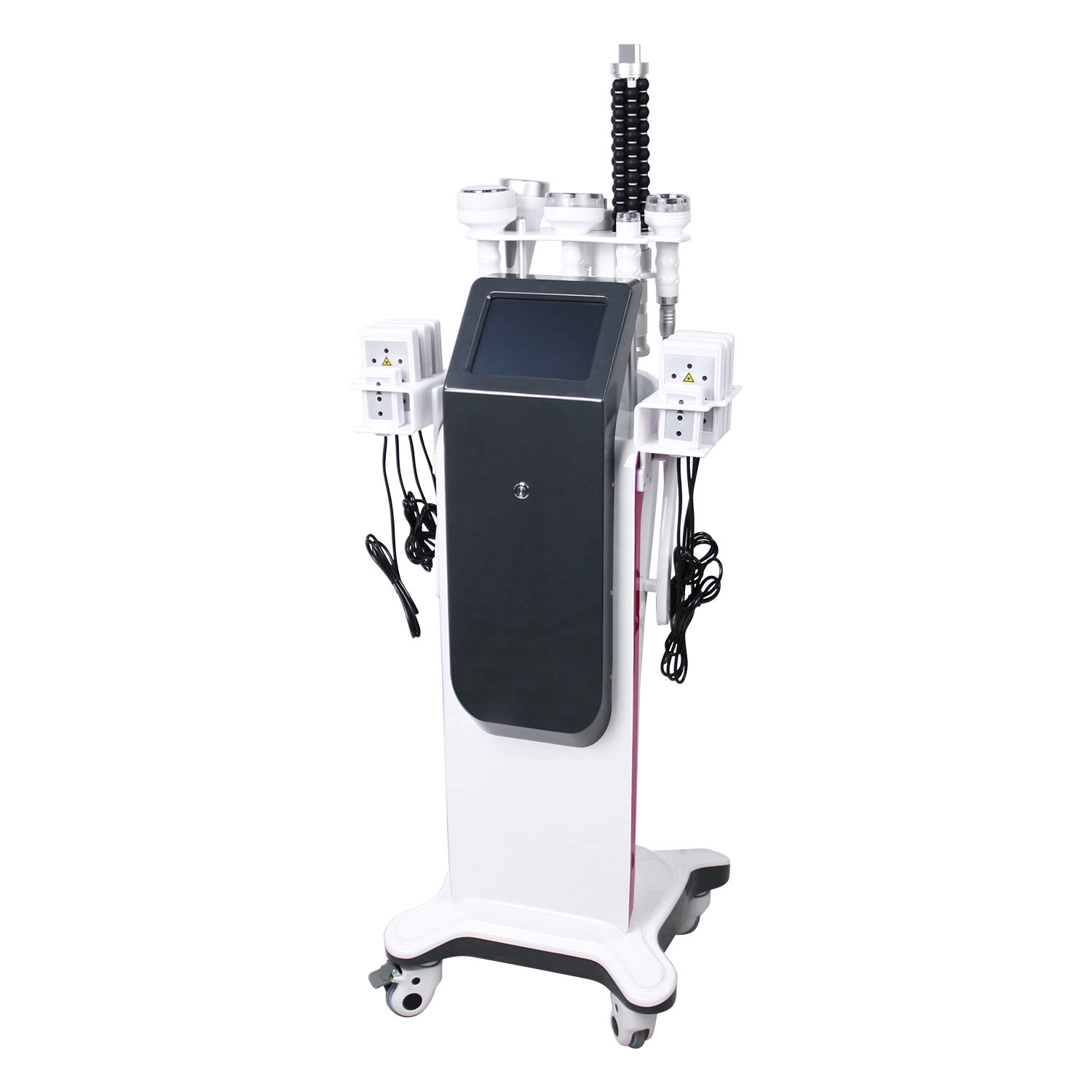
Professional 6-in-1 Cavitation Vacuum Machine for Body Contouring & Slimming Treatment
The 6-in-1 Cavitation Vacuum Machine is a professional body contouring system designed for salons and spas seeking high-performance slimming solutions. This machine integrates 40K ultrasonic cavitation, vacuum suction, RF technology, and laser lipolysis to target stubborn fat, enhance lymphatic drainage, tighten the skin, and contour the body shape effectively.
Equipped with multiple ergonomic handles and a smart touch screen, this cavitation vacuum machine provides a comfortable and efficient experience for both operators and clients. It is ideal for full-body treatments including abdomen, arms, legs, waistline, hips, and back.
Perfect for beauty salons, spas, and aesthetic centers that want to offer non-invasive fat reduction and body-sculpting services.
Get more information
If you have any comments or good suggestions, please leave us a message; later our professional staff will contact you as soon as possible.
Let's Talk
Stay in touch with us for cutting-edge beauty solutions, professional guidance, and customized service.
Contact


Room 307, Building A, Huilong International E-commerce Industrial Park, No. 10 Xipengling Road, Helong Street, Baiyun District, Guangzhou, China
© 2025 HUIMAIN. All Rights Reserved. Privacy Policy | Terms and Conditions | Sitemap
Facebook
Instagram
Medical beauty equipment factory
huimain Medical beauty equipment factory
beauty machine supplier
Whatsapp: +8619124004543