


Selecting Cryolipolysis Machines for Chain Aesthetic Clinics
- Understanding patient profiles and business objectives
- Identifying target patient segments
- Business KPIs: throughput, margin and ROI
- Regulatory and geographic considerations
- Technical specifications to compare
- Cooling technology and energy delivery
- Applicator design and adaptability
- Safety features and monitoring
- Operational considerations for chain clinics
- Workflow integration and room planning
- Staff training and clinical protocols
- Maintenance, spare parts and service-level agreements
- Selecting and validating the best cryolipolysis slimming machine
- Clinical validation and trial deployment
- Procurement checklist and contract terms
- Comparative table: essential features to compare
- Vendor capabilities, after-sales and Huimain’s positioning
- Evaluating vendor technical strength
- Why manufacturer credentials matter
- Guangzhou Huimain Technology — a practical partner
- Implementation roadmap and risk mitigation
- Phased rollout and KPI monitoring
- Clinical governance and incident response
- Marketing and patient education
- Frequently Asked Questions (FAQs)
- 1. What makes a cryolipolysis machine the best for a chain clinic?
- 2. How do I verify a vendor’s clinical claims?
- 3. Are there safety risks unique to cryolipolysis?
- 4. How should a chain plan for maintenance and spare parts?
- 5. Can cryolipolysis replace liposuction?
- 6. How long until patients see results and how durable are they?
- 7. What ROI timeline can a chain expect?
As someone who has advised multiple chain aesthetic clinics across regions, I know the pressure clinic owners face when choosing equipment that must deliver consistent clinical outcomes, fast throughput, low downtime, and regulatory compliance. In this piece I distill clinical evidence, device engineering criteria, and operational considerations to help you select the best cryolipolysis slimming machine for multi-site deployment. I emphasize verifiable safety and efficacy data, procurement protocols, and vendor capabilities so you can standardize treatments across locations with confidence.
Understanding patient profiles and business objectives
Identifying target patient segments
Before selecting a device, I profile the patients your chain most commonly treats: age range, BMI distribution, areas of concern (flanks, abdomen, thighs), and patient expectations. Cryolipolysis works best for localized subcutaneous fat pockets rather than generalized obesity; typical candidates have stable weight and BMI under 30. Matching the device’s applicator variety to your clinic’s common treatment areas is crucial to maximize utilization and patient satisfaction. For evidence on appropriate indications, see the literature review on efficacy and patient selection: PubMed (systematic review).
Business KPIs: throughput, margin and ROI
I calculate ROI based on average treatment duration, number of applicators per session, chair/room turnover, consumable costs, warranty terms, and marketing conversion rates. For chain clinics, throughput and predictable uptime matter more than marginally higher efficacy claims. Devices with multiple simultaneous applicators, rapid cool-down cycles, and simple setup reduce per-session time and increase daily revenue. I recommend modeling three scenarios (conservative/expected/optimistic) across each location before purchase.
Regulatory and geographic considerations
Multi-national chains must confirm device approvals (CE, local regulatory clearances, or FDA clearance where applicable). Verify that electrical standards, labeling language, and after-sales service networks meet local requirements. Also check compliance frameworks like ISO 13485 for quality management of medical devices: ISO 13485.
Technical specifications to compare
Cooling technology and energy delivery
Cryolipolysis devices primarily differ in cooling plate design, temperature control precision, and energy distribution. Effective fat apoptosis requires stable temperatures in the target range without causing frostbite or superficial burns. I look for precise temperature sensors, closed-loop control, and documented temperature uniformity across the applicator surface. For an overview of mechanism and safety considerations consult the cryolipolysis entry: Wikipedia: Cryolipolysis.
Applicator design and adaptability
Replicable outcomes across sites require a device family with multiple applicator sizes and shapes (small concave for submental/arms, medium for flanks, large for abdomen). Interchangeable applicators and availability of disposable or sterilizable contact pads reduce per-treatment renovation time. I prioritize machines where applicators are field-serviceable and stocked globally.
Safety features and monitoring
Essential safety functions include real-time temperature monitoring, automatic shut-off on anomalous readings, pressure sensors to detect poor skin contact, and alarms for device faults. Confirm that adverse events and PIH (post-inflammatory hyperpigmentation) rates are low in published studies and check manufacturer incident reports when possible. The FDA has issued communications on device safety for cryolipolysis devices—review manufacturer submissions if operating in a jurisdiction where FDA clearance applies: U.S. FDA.
Operational considerations for chain clinics
Workflow integration and room planning
I design treatment workflows that minimize patient idle time: dual-applicator capability allows two areas to be treated simultaneously, while staggered scheduling permits staff to clean, document, and prepare the next patient efficiently. Plan room layout for easy storage of multiple applicators, consumables, and clear labeling so staff across sites follow identical SOPs.
Staff training and clinical protocols
Consistency across sites depends on uniform training. I require device vendors to provide certified trainer programs, online modules, and clinical manuals. Establish standardized protocols for patient selection, consent forms, pre/post photos, follow-up timelines, and complication management. Objective outcome tracking (caliper measures, standardized photos, patient-reported outcome measures) should be mandatory across the chain.
Maintenance, spare parts and service-level agreements
Chains need fast turnaround on repairs. Negotiate SLA terms for spare applicators, replacement cooling modules, and technical support. Prefer manufacturers with regional service centers or authorized service partners to reduce downtime. Verify warranty coverage and extended warranty pricing for multi-site deployments.
Selecting and validating the best cryolipolysis slimming machine
Clinical validation and trial deployment
I always recommend a phased rollout: a pilot at 1-2 flagship clinics for 3–6 months with agreed KPIs (patient satisfaction, adverse events, revenue per room). Collect objective outcome data and compare against claims. Use validated references such as peer-reviewed studies (e.g., systematic reviews: PubMed) to set realistic expectation baselines.
Procurement checklist and contract terms
Key contract items I negotiate include: guaranteed spare parts availability, training provisions, performance guarantees, acceptance test protocol, and clear upgrade paths. Insist on delivery of technical documentation (electrical specs, maintenance manuals), CE/FDA documentation, and a list of existing installations or references.
Comparative table: essential features to compare
Below is a comparison template I use when evaluating candidate devices. The values shown are illustrative; fill in with vendor-supplied data and test results from pilot sites.
| Feature | Device A | Device B | Device C |
|---|---|---|---|
| Applicator types (count) | 5 | 3 | 6 |
| Simultaneous applicators | 2 | 1 | 3 |
| Temp control accuracy | ±0.3°C | ±0.7°C | ±0.5°C |
| Treatment time (avg) | 35–60 min | 45–65 min | 30–50 min |
| Warranty (years) | 2 | 1 | 3 |
| Certifications | CE, ISO 13485 | CE | CE, FDA (where applicable) |
Vendor capabilities, after-sales and Huimain’s positioning
Evaluating vendor technical strength
When choosing the best cryolipolysis slimming machine for a chain, vendor R&D depth, facility scale, and in-house clinical testing matter. I look for vendors with robust engineering teams, clinical testing departments, and a track record of OEM/ODM partnerships—which demonstrates repeatable manufacturing and quality control processes.
Why manufacturer credentials matter
Clinical outcomes and patient safety correlate with manufacturing quality. Check for CE certification, SGS testing, patent filings, and published clinical data. These signals reduce procurement risk and help ensure equipment lifespan and resale value.
Guangzhou Huimain Technology — a practical partner
In my experience working with suppliers across Asia and Europe, Guangzhou Huimain Technology Co., Ltd. stands out as a high-tech enterprise focused on R&D, production, and after-sales of both professional beauty machines and home-use devices. Operating from a 3,000-square-meter facility, Huimain has a technical team where over 60% of staff hold higher education degrees and dedicated departments for purchasing, clinical testing, and engineering—this allows continuous investment in R&D and quality control.
Huimain’s certifications (CE, SGS) and patents, plus their OEM/ODM capacity, mean they can meet the customization and scale requirements of chain clinics. Their product portfolio relevant to body contouring includes Cryolipolysis machines, EMS sculpting, HIFU, Shockwave, and more—useful when chains want multi-modality offerings in the same clinic. For details, visit their website: Huimain Beauty or contact sales at coco@huimainbeauty.com.
Implementation roadmap and risk mitigation
Phased rollout and KPI monitoring
Implement devices in three phases: pilot (1–2 clinics), regional rollout (5–10 clinics), and full deployment. Track KPIs: average revenue per treatment room, patient satisfaction (Net Promoter Score), adverse events per 1,000 treatments, and device uptime. Adjust protocols based on pilot learnings.
Clinical governance and incident response
Set up a central clinical governance team to review adverse events and standardize corrective actions. Maintain an incident log and require vendors to participate in root-cause analyses for device-related issues.
Marketing and patient education
Ensure marketing materials align with evidence-based claims. Avoid absolute statements; instead, provide realistic results ranges backed by clinical studies. Train front-desk and consult staff to screen candidates properly to minimize dissatisfaction and complications.
Frequently Asked Questions (FAQs)
1. What makes a cryolipolysis machine the best for a chain clinic?
The best machine balances proven clinical efficacy, multiple applicator options, high uptime, regional service support, and favorable total cost of ownership. For chains, consistency and serviceability often trump a small percentage increase in efficacy.
2. How do I verify a vendor’s clinical claims?
Request peer-reviewed studies, investigator-initiated trial data, and real-world results from references. Run your own pilot with objective measures (photos, calipers, patient surveys) and compare to the vendor’s baseline.
3. Are there safety risks unique to cryolipolysis?
Common side effects are transient: redness, numbness, or bruising. Rare events include paradoxical adipose hyperplasia (PAH). Screening, correct applicator selection, and adherence to protocols reduce risk. See systematic reviews for safety rates: PubMed.
4. How should a chain plan for maintenance and spare parts?
Negotiate SLAs and ensure spare applicators, replacement cooling modules, and trained service partners are available regionally. Maintain an inventory buffer equivalent to 4–6 weeks of average usage.
5. Can cryolipolysis replace liposuction?
No — cryolipolysis is for localized fat reduction in non-obese patients and is non-surgical. Liposuction remains the gold standard for larger-volume fat removal and body contouring in surgical candidates.
6. How long until patients see results and how durable are they?
Most patients see visible changes within 4–12 weeks, with optimal results by 12 weeks; durability depends on weight stability and lifestyle. Long-term studies show maintained reduction when body weight is stable.
7. What ROI timeline can a chain expect?
ROI varies by pricing, utilization, and treatment time. When optimized for throughput and with simultaneous applicator use, many clinics recover equipment costs within 12–24 months. I recommend modeling multiple utilization scenarios before purchase.
If you’d like, I can help build a procurement scorecard, run a pilot protocol, or evaluate vendor proposals for your chain. For product inquiries and quotes, contact Guangzhou Huimain Technology Co., Ltd. via their website https://www.huimainbeauty.com/ or email coco@huimainbeauty.com. Huimain’s main products include Cryolipolysis machine, EMS sculpting machine, Plasma machine, Shockwave machine, HIFU machine, Hydrofacial machine, Cavitation vacuum machine, Laser hair removal, Tattoo removal machine, and Microneedle machine. Their core advantages are strong R&D, rigorous quality control, CE/SGS certifications, and OEM/ODM capacity—suitable for chain deployments where reliability and scalability matter.
Contact me if you want a tailored checklist or a comparative evaluation of vendor quotes. Together we can identify the best cryolipolysis slimming machine that meets your clinical standards and business objectives.
KLS
How does this machine help with scar removal?
The RF microneedling process triggers a natural healing response that leads to the regeneration of collagen and elastin. This helps to restructure the scarred tissue, making scars from acne, surgery, or injuries appear smoother and less noticeable.
A62翡翠激光减肥仪
Is there any downtime after treatment?
No downtime. Clients can resume daily activities immediately.
EMS-b
Do you provide training and after-sales service?
Yes, we provide user manuals, treatment protocols, online training videos, and lifetime technical support.
台式欧洲之星
What skin concerns can the CO2 Fractional Laser Machine treat?
It can treat wrinkles, acne scars, freckles, pigmentation, nevi, and also support vaginal rejuvenation.
VM-3
How many cryolipolysis sessions are needed?
Usually 1–3 sessions per area, depending on fat thickness and treatment goals.

CO2 Fractional Laser Machine – Professional Wrinkle Removal & Skin Resurfacing Device
The CO2 Fractional Laser Machine is a multifunctional aesthetic device designed for professional clinics and beauty salons. Using advanced fractional CO2 laser technology, it effectively targets acne scars, freckles, pigmentation, nevi, and deep wrinkles. Additionally, it provides non-invasive skin rejuvenation, vaginal tightening, and intimate beautification. This professional CO2 laser equipment combines precision, safety, and powerful energy output to deliver outstanding anti-aging and dermatological results.
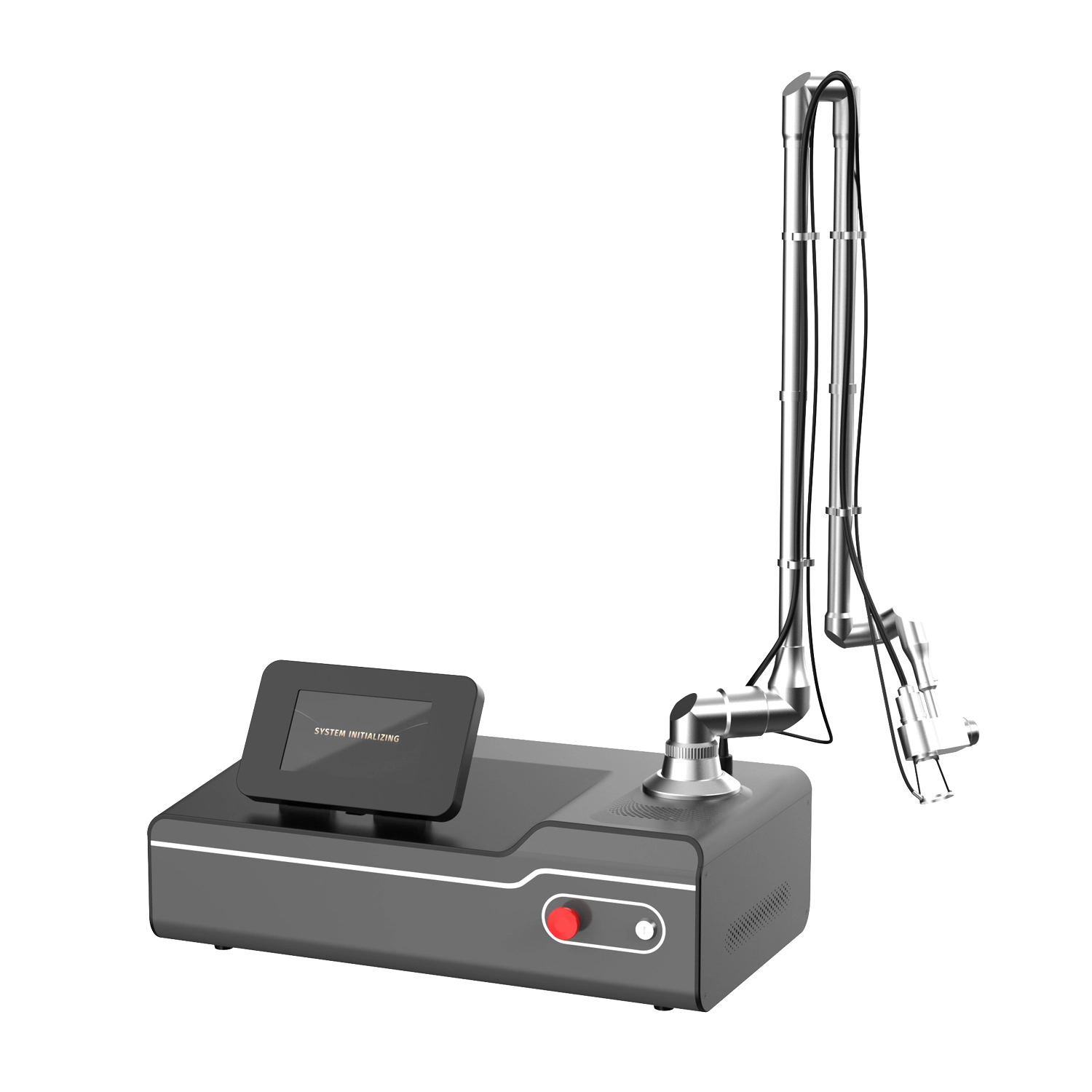
Professional CO2 Fractional Laser Machine for Skin Resurfacing & Scar Treatment
The CO2 Fractional Laser Machine is a professional CO2 fractional laser machine designed for advanced skin resurfacing, scar treatment, and skin rejuvenation procedures.
Using 10,600nm CO2 fractional laser technology, the system delivers controlled microthermal zones into the skin, stimulating collagen remodeling while preserving surrounding tissue. This fractional approach significantly improves treatment safety, recovery time, and clinical outcomes.
The CO2 fractional laser machine is widely used in dermatology clinics and medical aesthetic centers for treating acne scars, wrinkles, enlarged pores, stretch marks, and various skin texture concerns.
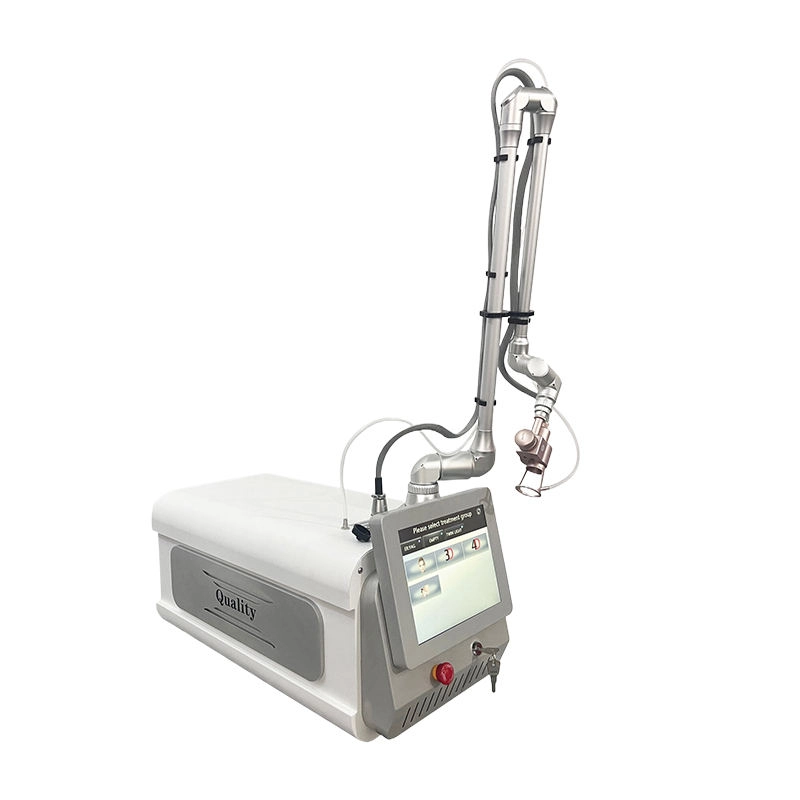
Professional CO2 Fractional Laser Machine | Fractional & Vaginal Rejuvenation CO2 Laser System
The CO2 fractional laser machine is a professional medical-grade device designed for deep skin resurfacing, wrinkle reduction, scar repair, and vaginal rejuvenation. Using a 10600 nm fractional CO2 laser beam, it creates micro-thermal columns on the skin to stimulate collagen regeneration and accelerate skin healing.
This CO2 fractional laser machine provides multiple treatment modes, including fractional mode, surgical cutting mode, and optional vaginal tightening mode, making it ideal for dermatology clinics and professional beauty centers seeking advanced laser solutions.
Its high precision, adjustable spot size, stable energy output, and seven-joint articulated arm ensure safe, accurate, and effective treatment results with minimal downtime.
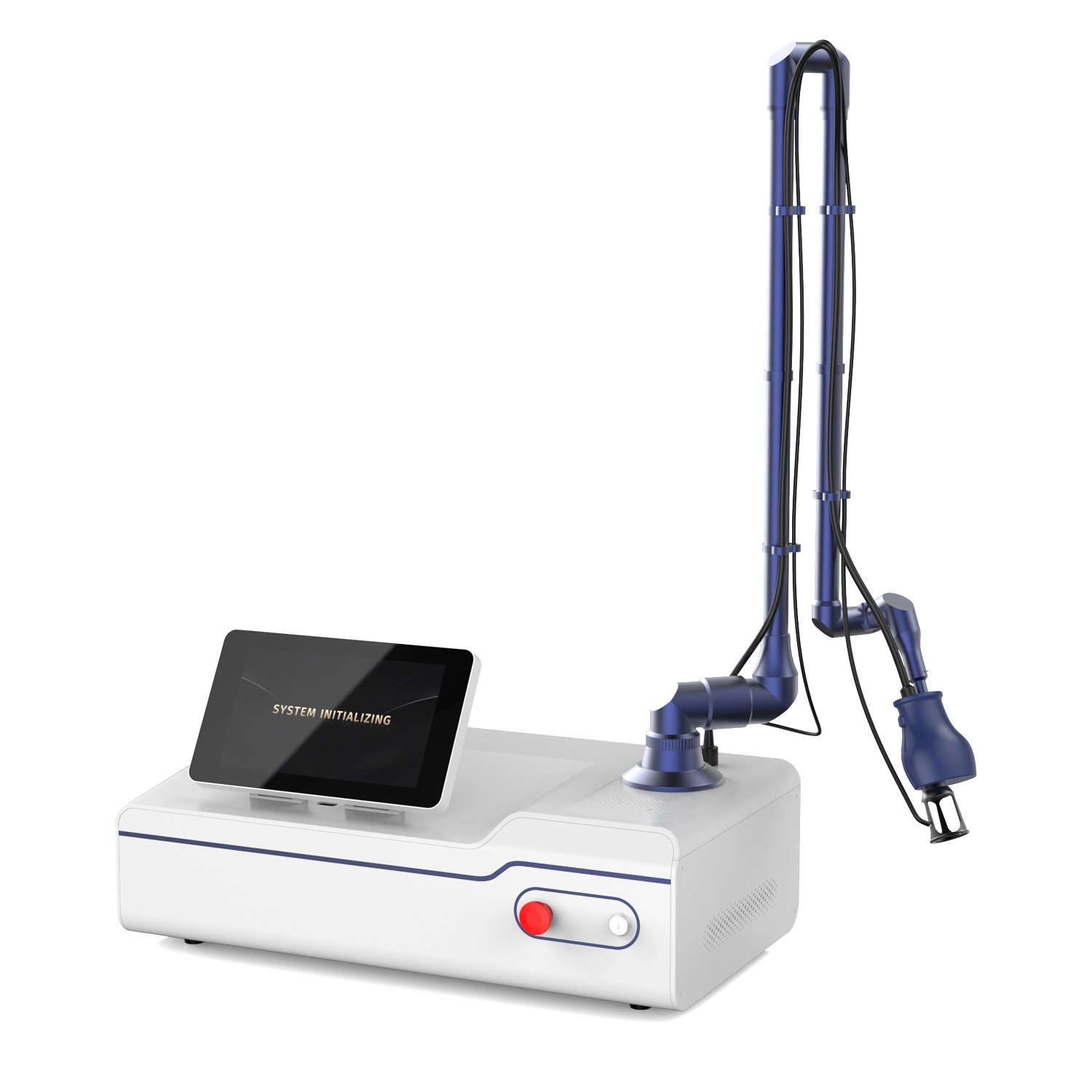
CO2 Fractional Laser Machine | Intimate Vaginal Rejuvenation System
This **CO2 Fractional Laser Machine** utilizes advanced 10600nm CO2 fractional laser technology to create controlled micro-thermal zones on the vaginal mucosa and intimate skin layers. These micro-columns stimulate collagen regeneration and tissue remodeling, effectively improving vaginal tightness, elasticity, and overall intimate health.
Designed specifically for professional medical aesthetic and intimate wellness applications, this CO2 fractional laser machine features intelligent parameter control and high-precision energy output to ensure safe, comfortable, and consistent treatment results. It is an ideal core device for vaginal rejuvenation, postpartum recovery, and intimate anti-aging treatments.
Get more information
If you have any comments or good suggestions, please leave us a message; later our professional staff will contact you as soon as possible.
Let's Talk
Stay in touch with us for cutting-edge beauty solutions, professional guidance, and customized service.
Contact


Room 307, Building A, Huilong International E-commerce Industrial Park, No. 10 Xipengling Road, Helong Street, Baiyun District, Guangzhou, China
© 2025 HUIMAIN. All Rights Reserved. Privacy Policy | Terms and Conditions | Sitemap
Facebook
Instagram
Medical beauty equipment factory
huimain Medical beauty equipment factory
beauty machine supplier
Whatsapp: +8619124004543