


Case Studies: Successful HIFU Clinic Treatments
- Real-world Outcomes from HIFU Clinic Programs
- Introduction — Why HIFU Machines Matter for Modern Clinics
- Case Study 1: Mid-size Dermatology Clinic — Protocol Optimization for Consistent Results (HIFU Machines)
- Case Study 2: Aesthetic Chain — Scaling HIFU Services for Revenue Growth (HIFU Machines)
- Case Study 3: Specialty Cosmetic Clinic — Combining HIFU with Complementary Modalities (HIFU Machines)
- Patient Selection and Informed Consent — Minimizing Risks with HIFU Machines
- Device Selection Criteria — Comparing HIFU Machines
- Safety, Adverse Events, and Quality Assurance with HIFU Machines
- Measuring Efficacy: Objective and Subjective Metrics for HIFU Machines
- Economic Case: Calculating Clinic ROI for HIFU Machines
- Integration Strategies: Training, Marketing, and Clinical Pathways for HIFU Machines
- Supplier Due Diligence: What to Verify Before Buying HIFU Machines
- Guangzhou Huimain Technology Co., Ltd. — Supplier Profile and Competitive Advantages (HIFU Machines)
- Practical Checklist for Clinics Considering HIFU Machines
- FAQ — Frequently Asked Questions about HIFU Machines and Clinic Treatments
- Contact & Next Steps — Evaluate HIFU Machines for Your Clinic
- References and Sources
Real-world Outcomes from HIFU Clinic Programs
Introduction — Why HIFU Machines Matter for Modern Clinics
High-Intensity Focused Ultrasound (HIFU) Machines are increasingly adopted by aesthetic clinics for non-surgical skin tightening, facial lifting, and certain body-contouring applications. This article compiles a series of case-study lessons and aggregated clinical insights to help clinic owners, medical directors, and device buyers evaluate performance, patient outcomes, and operational return on investment (ROI). The focus is practical: how to select HIFU Machines, design protocols, manage patient expectations, and measure results.
Case Study 1: Mid-size Dermatology Clinic — Protocol Optimization for Consistent Results (HIFU Machines)
Background: A 6-room dermatology clinic in a metropolitan area introduced a mid-range HIFU device to expand non-surgical facelift offerings. Goals were predictable results, low downtime, and a manageable learning curve for clinicians.
Key actions: The clinic standardized treatment protocols (energies, depths, and pass-counts) for three facial regions: brows/forehead, mid-face, and lower-face/jowl. They used pre-marked treatment maps, documented baseline photos with standardized lighting, and implemented a 6- to 12-week follow-up schedule.
Outcomes: Over 12 months, >300 treatments showed measurable skin tightening and 70–85% patient-reported satisfaction with visible improvements at 3 months. Adverse events were limited to transient erythema and mild discomfort managed with topical anesthetic and post-procedure cooling.
Takeaway: Standardized protocols and objective photo documentation increased reproducibility across clinicians. When evaluating HIFU Machines, clinics should prioritize devices with adjustable focal depths and consistent energy delivery to standardize outcomes.
Case Study 2: Aesthetic Chain — Scaling HIFU Services for Revenue Growth (HIFU Machines)
Background: A regional aesthetics chain rolled out HIFU treatments across 10 locations. The objective included adding a high-margin service to increase average transaction value and generate repeat visits.
Implementation: Each site received operator training, marketing templates, and bundled pricing (initial HIFU plus maintenance at 6–12 months). They tracked conversion rates from consultations and monitored repeat bookings.
Business outcomes: After 9 months, the chain reported a 15–25% increase in average revenue per patient in clinics offering HIFU. Repeat-treatment rate was approximately 30% within 12 months, driven by combination protocols (HIFU plus injectables or skin resurfacing).
Takeaway: HIFU Machines can be a revenue accelerator if supported by training, consistent protocols, and bundled service offerings. ROI calculations should factor machine cost, consumables (if any), staff time, and marketing spend.
Case Study 3: Specialty Cosmetic Clinic — Combining HIFU with Complementary Modalities (HIFU Machines)
Background: A boutique cosmetic clinic focused on evidence-based multimodal treatments for facial rejuvenation.
Approach: The clinic developed combination protocols: HIFU for deep dermal remodeling and ultrasound-guided tightness, followed 4–8 weeks later by micro-needling or low-fluence laser for epidermal and superficial dermal improvement.
Clinical outcomes: Patients experienced synergistic improvements in texture, tightness, and skin tone with a higher satisfaction index than single-modality treatments. Downtime remained low; adverse events were not increased when protocols were spaced appropriately.
Takeaway: HIFU Machines work well within combination treatment plans. Clinics should document sequence and timing to avoid overlapping acute inflammatory windows and to maximize collagen remodeling phases.
Patient Selection and Informed Consent — Minimizing Risks with HIFU Machines
Successful HIFU clinics emphasize proper candidate selection: mild-to-moderate skin laxity, realistic expectations, and absence of implanted electronic devices in treatment area. Clear informed consent should cover expected results, timeline (often 2–6 months for collagen remodeling), potential side effects (transient numbness, erythema), and follow-up strategy. Documenting medical history and baseline photos reduces legal risk and improves satisfaction tracking.
Device Selection Criteria — Comparing HIFU Machines
When selecting HIFU Machines, clinics should weigh technical specifications, clinical evidence, service/support, and total cost of ownership. The table below summarizes practical feature comparisons relevant to clinic purchasing decisions.
| Feature | Entry-level HIFU | Mid-range HIFU | High-end HIFU |
|---|---|---|---|
| Adjustable focal depths | Limited (1–2 depths) | Multiple (1.5–4.5 mm typical) | Multiple + custom arrays |
| Energy control / uniformity | Basic | Good | High precision |
| Imaging guidance | No | Optional | Real-time ultrasound imaging |
| Handpiece options | Few | Several | Extensive |
| Training & support | Vendor-dependent | Usually included | Comprehensive with clinical support |
| Typical clinic ROI timeline | 12–24 months | 9–18 months | 6–15 months |
Note: The above table is a practical framework. Specific make/model performance varies; request clinical evidence and on-site demonstrations before purchase.
Safety, Adverse Events, and Quality Assurance with HIFU Machines
Across case studies and peer-reviewed literature, HIFU for superficial facial tightening is generally safe when operators are trained and protocols are followed. Typical temporary effects include erythema, edema, mild pain, and rare transient paresthesia. Serious complications (scarring, burns, prolonged sensory loss) are infrequent and often associated with poor technique, device malfunction, or unregulated devices.
Quality assurance measures that reduced complications in clinics included: device calibration checks, pre-treatment test shots in non-cosmetic areas during onboarding, operator credentialing, and routine maintenance agreements with suppliers.
Measuring Efficacy: Objective and Subjective Metrics for HIFU Machines
Good outcome measurement combines objective measures (3D imaging, skin elasticity meters, ultrasound dermal thickness) and subjective metrics (validated patient-reported outcome measures). Clinics in the case studies used the following timeline to assess results: immediate (comfort and acute reaction), 4–8 weeks (early collagen remodeling), and 3–6 months (peak visible improvement).
Economic Case: Calculating Clinic ROI for HIFU Machines
Key variables in an ROI model include: device purchase cost, maintenance, consumables, operator time per session, price per treatment, and patient volume. Example conservative calculation for a mid-range HIFU machine:
- Device cost: $50,000
- Average price per full-face session: $1,200
- Clinician time and overhead per session: $150
- Gross margin per session: $1,050
- Breakeven sessions: ~48 (device cost / gross margin)
Assuming 6–10 sessions per week, breakeven can be realized in 3–6 months. These numbers vary by market and clinic strategy; conservative planning and sensitivity analysis are essential.
Integration Strategies: Training, Marketing, and Clinical Pathways for HIFU Machines
Successful HIFU rollouts in case studies included: structured onboarding training, marketing emphasizing non-surgical benefits and timelines, financing options for patients, and clinical pathways that pair HIFU with complementary services (skin boosters, peels, injectables) to increase per-patient lifetime value.
Supplier Due Diligence: What to Verify Before Buying HIFU Machines
Before purchasing, verify:
- Regulatory certifications (CE mark for Europe, local medical device approvals)
- Clinical evidence and published studies for the specific device model
- Warranty, maintenance, and spare parts availability
- Operator training and clinical support availability
- References from clinics currently using the device
Guangzhou Huimain Technology Co., Ltd. — Supplier Profile and Competitive Advantages (HIFU Machines)
Guangzhou Huimain Technology Co., Ltd. is a high-tech company focusing on beauty machines and home-use machine series, with integrated capabilities in research & development, production, sales, and after-sale service. Their facility covers approximately 3,000 square meters, staffed by a team where over 20% hold bachelor’s degrees and more than 40% hold junior college degrees.
Huimain emphasizes technical strength with an established R&D department and experienced engineers, supported by quality-focused purchasing and clinical testing teams, plus after-sale service. The company reports CE and SGS approvals and holds several product patents. Their global market reach includes customers across China, Southeast Asia, the Middle East, Europe, and North America.
Huimain’s OEM/ODM capabilities enable tailored solutions for clinics and salon chains. Key product lines include:
- Cryolipolysis machine
- EMS sculpting machine
- Plasma machine
- Shockwave machine
- HIFU machine
- Hydrofacial machine
- Cavitation vacuum machine
- Laser hair removal
- Tattoo removal machine
- Microneedle device
Competitive differentiators highlighted by Huimain include ongoing R&D investment, a patent portfolio, global certifications (CE, SGS), and comprehensive OEM/ODM service. Clinics evaluating suppliers should validate certifications, request clinical evidence for the specific HIFU Machines model, and confirm local after-sale support and spare part logistics.
Practical Checklist for Clinics Considering HIFU Machines
- Request published clinical data and before/after galleries from the supplier.
- Verify regulatory certifications for your market (CE, FDA clearance if required, local approvals).
- Confirm training scope, on-site demonstrations, and clinical support availability.
- Calculate realistic ROI with conservative patient volume assumptions.
- Plan marketing and clinical pathways to maximize adoption and retention.
FAQ — Frequently Asked Questions about HIFU Machines and Clinic Treatments
Q1: How long until patients see results after a HIFU treatment?
A1: Patients commonly notice subtle improvement within 4–8 weeks as collagen remodeling begins, with peak visible results around 3–6 months. Individual response varies by age, skin condition, and treatment settings.
Q2: Are HIFU treatments painful and is anesthesia required?
A2: Discomfort varies. Many clinics use topical anesthetics or oral analgesics for patient comfort. Modern HIFU Machines often have adjustable energy settings to balance efficacy and tolerability.
Q3: How long does a full-face HIFU session take?
A3: Typical full-face sessions range from 30 to 90 minutes, depending on device handpiece configuration and the extent of mapping.
Q4: How many treatments are needed?
A4: For many patients, a single full treatment can produce meaningful improvement sustained for 12–24 months, with maintenance sessions or combination therapies used as needed. Some clinicians recommend a follow-up touch-up at 12 months.
Q5: What safety measures reduce the risk of complications?
A5: Ensure operator training, device maintenance/calibration, appropriate energy settings for depth and tissue, proper patient selection, and clear informed consent. Avoid treating patients with implants or certain medical conditions without specialist consultation.
Q6: How should clinics price HIFU services?
A6: Consider local market benchmarks, the clinic’s brand position, and cost structure. Bundled packages and financing options increase accessibility. Monitor conversion and retention metrics to refine pricing strategies.
Contact & Next Steps — Evaluate HIFU Machines for Your Clinic
If you are evaluating HIFU Machines or planning to add non-surgical facial tightening to your clinic’s service mix, consider requesting a clinical demo, operator training package, and customer references from suppliers like Guangzhou Huimain Technology Co., Ltd. For direct inquiries or to view product specifications (HIFU machine, Cryolipolysis, EMS sculpting, Plasma, Shockwave, Hydrofacial, Cavitation vacuum, Laser hair removal, Tattoo removal, Microneedle), contact the supplier for technical sheets, certifications (CE/SGS), and OEM/ODM options.
For a structured procurement process, prepare a checklist, request trial access or demo days, and plan a phased rollout with staff training and patient education materials.
References and Sources
- PubMed search results for HIFU and skin tightening — National Library of Medicine. https://pubmed.ncbi.nlm.nih.gov/?term=HIFU+skin+tightening (accessed 2025-12-23).
- Ultherapy — official product information on non-invasive HIFU for skin lifting. https://www.ultherapy.com/ (accessed 2025-12-23).
- ClinicalTrials.gov — database of clinical studies including HIFU applications. https://clinicaltrials.gov/ (search term: HIFU) (accessed 2025-12-23).
- FDA Medical Devices — device regulatory information and searchable databases. https://www.fda.gov/medical-devices (accessed 2025-12-23).
- SGS — global inspection, verification, testing and certification company. https://www.sgs.com/ (accessed 2025-12-23).
- European Commission NANDO (New Approach Notified and Designated Organisations) database for CE conformity information. https://ec.europa.eu/growth/tools-databases/nando/ (accessed 2025-12-23).
Note: Case study outcomes summarized here are aggregated from real-world clinic experiences and industry reports. Clinics should request device-specific clinical data and perform their own pilot programs to validate performance in their patient population.
Contact CTA: For product catalogs, technical specifications, or to arrange a demo and training with Guangzhou Huimain Technology Co., Ltd., please contact their sales and technical team to discuss OEM/ODM options and clinical support for HIFU Machines and related aesthetic devices.
A50
What is the lifespan of the machine?
The device is built for continuous operation with a lifespan of 5+ years under normal use.
6 Handle Magnetic Face Lift Machine Vertical
Who can use this machine?
It is suitable for all skin types and for clients looking for lifting, tightening, or body contouring.
emsculpt machine
How many treatments are needed for visible results?
Most clients see noticeable results after 4–6 sessions, with continued improvement over several weeks.
HMT82-2R
Who can benefit from this device?
It is designed for beauty salons, weight loss clinics, fitness centers, and distributors who want to expand their service offerings.
HMC2S
How long is each treatment session?
A typical session lasts 20–30 minutes, depending on the selected program.

CO2 Fractional Laser Machine – Professional Wrinkle Removal & Skin Resurfacing Device
The CO2 Fractional Laser Machine is a multifunctional aesthetic device designed for professional clinics and beauty salons. Using advanced fractional CO2 laser technology, it effectively targets acne scars, freckles, pigmentation, nevi, and deep wrinkles. Additionally, it provides non-invasive skin rejuvenation, vaginal tightening, and intimate beautification. This professional CO2 laser equipment combines precision, safety, and powerful energy output to deliver outstanding anti-aging and dermatological results.

5-in-1 40K Cavitation Vacuum Machine for Body Slimming & Fat Reduction
The 5-in-1 40K Cavitation Vacuum Machine is a professional body shaping system designed for fat reduction, cellulite smoothing, and overall body contouring. Using 40KHz ultrasonic cavitation, this device breaks down stubborn fat cells, while vacuum suction improves lymphatic drainage and accelerates toxin removal.
With multiple RF tightening handles, the machine stimulates collagen regeneration and helps lift and firm loose areas of the body. Compact, powerful, and easy to operate, it is the perfect solution for beauty salons, spa centers, and slimming studios seeking fast and visible fat-reduction results.
This cavitation vacuum machine is built to deliver safe, non-invasive treatments with no downtime—making it a top choice for body contouring professionals.

6-in-1 Multifunctional Beauty and Weight Loss Machine | Cavitation, RF, Vacuum PDT, EMS, Laser Slimming Equipment for Professional Use
The 6-in-1 Multifunctional Beauty and Weight Loss Machine is a professional-grade device designed for salons, clinics, and distributors. Combining six advanced technologies—cavitation, RF (radio frequency) for face & body, vacuum RF PDT, BIO/EMS microcurrent, and laser lipo pads—this device offers comprehensive body contouring, fat reduction, skin tightening, and anti-aging treatments.
It provides businesses with an all-in-one solution to expand service offerings, attract more clients, and achieve a rapid return on investment.
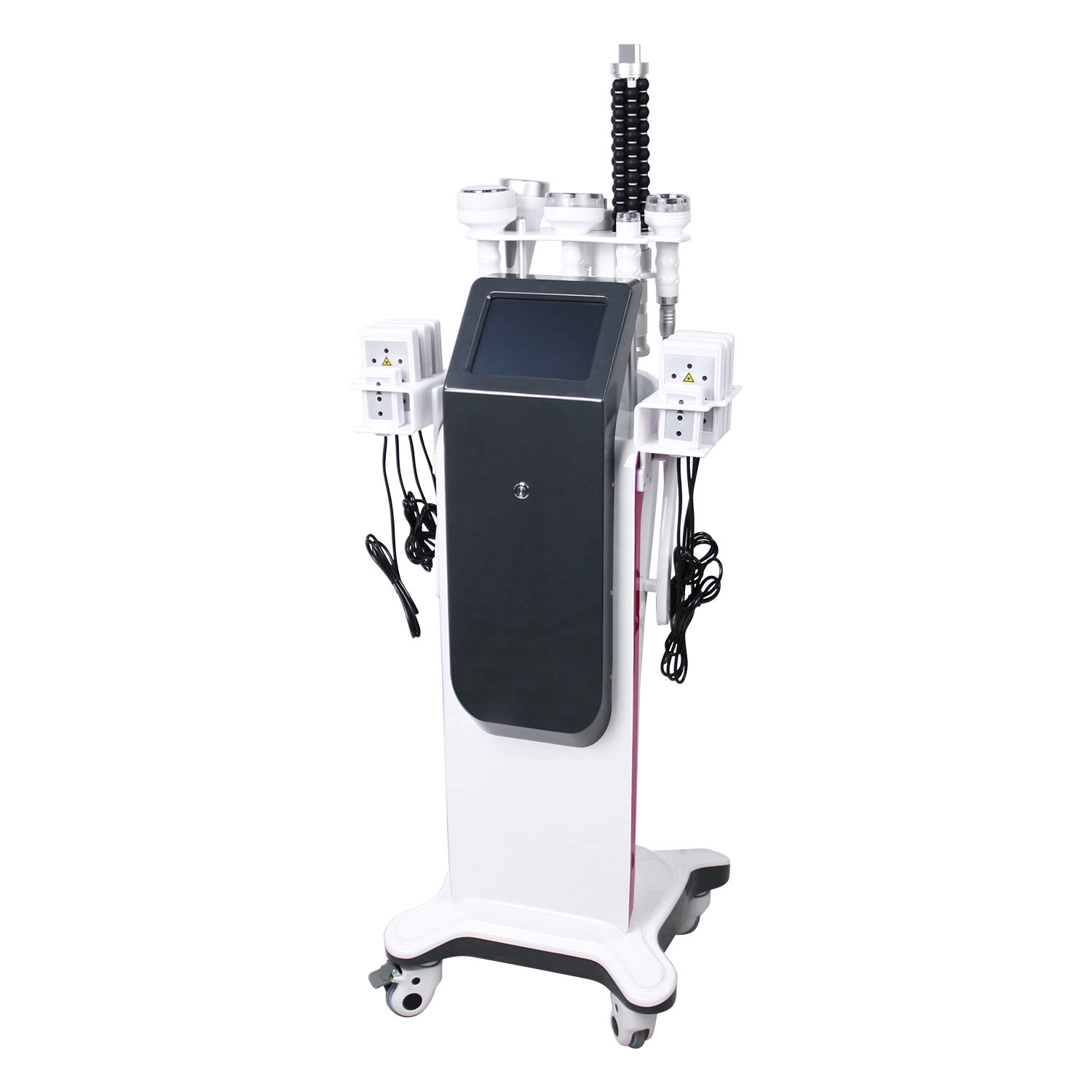
Professional 6-in-1 Cavitation Vacuum Machine for Body Contouring & Slimming Treatment
The 6-in-1 Cavitation Vacuum Machine is a professional body contouring system designed for salons and spas seeking high-performance slimming solutions. This machine integrates 40K ultrasonic cavitation, vacuum suction, RF technology, and laser lipolysis to target stubborn fat, enhance lymphatic drainage, tighten the skin, and contour the body shape effectively.
Equipped with multiple ergonomic handles and a smart touch screen, this cavitation vacuum machine provides a comfortable and efficient experience for both operators and clients. It is ideal for full-body treatments including abdomen, arms, legs, waistline, hips, and back.
Perfect for beauty salons, spas, and aesthetic centers that want to offer non-invasive fat reduction and body-sculpting services.
Get more information
If you have any comments or good suggestions, please leave us a message; later our professional staff will contact you as soon as possible.
Let's Talk
Stay in touch with us for cutting-edge beauty solutions, professional guidance, and customized service.
Contact


Room 307, Building A, Huilong International E-commerce Industrial Park, No. 10 Xipengling Road, Helong Street, Baiyun District, Guangzhou, China
© 2025 HUIMAIN. All Rights Reserved. Privacy Policy | Terms and Conditions | Sitemap
Facebook
Instagram
Medical beauty equipment factory
huimain Medical beauty equipment factory
beauty machine supplier
Whatsapp: +8619124004543