


Case Studies: Spas That Increased Revenue with Aqua Peel
- Why spa owners are investing in hydradermabrasion and aqua peel technology
- What is an aqua peel machine and how it differs from traditional exfoliation
- Market demand and treatment popularity
- Operational advantages for spas
- Three spa case studies: revenue uplift after introducing aqua peel
- Methodology and comparability
- Case Study 1 — Urban Day Spa (Boutique, 8 treatment rooms)
- Case Study 2 — Resort Spa (Destination resort, 12 treatment rooms)
- Case Study 3 — Medical-Aesthetic Clinic (Hybrid clinic-spa)
- Implementation guide: how to introduce an aqua peel machine profitably
- Choosing the right device and supplier
- Pricing, packaging and treatment protocols
- Training, marketing and compliance
- Measuring ROI: KPI dashboard and benchmarks
- Which KPIs to track
- Sample 12-month ROI calculation
- Risks and mitigation
- Supplier spotlight: Guangzhou Huimain Technology Co., Ltd. — why partner with an experienced manufacturer
- FAQs
- 1. How quickly will an aqua peel machine pay for itself?
- 2. Are aqua peel treatments safe for all skin types?
- 3. How much should we charge for an aqua peel treatment?
- 4. What consumables and ongoing costs should I expect?
- 5. Can aqua peel treatments drive retail sales?
- 6. Who should perform aqua peel treatments—estheticians or nurses?
Summary: Across markets in North America, Europe and Asia, spa operators are adopting aqua peel machines (hydrodermabrasion devices) to expand facial offerings, lift average transaction values, and improve retail attachment. This article analyzes multiple real-world spa implementations, quantifies revenue impact, and provides an operational playbook—helpful for spa directors, clinic managers, and equipment buyers evaluating investment and rollout strategies.
Why spa owners are investing in hydradermabrasion and aqua peel technology
What is an aqua peel machine and how it differs from traditional exfoliation
An aqua peel machine (often called hydrodermabrasion or hydradermabrasion) is a device that uses a controlled stream of saline or treatment solution, combined with suction and a rotating or vortex tip, to exfoliate, extract debris, and infuse serums in a single pass. Unlike traditional microdermabrasion or chemical peels, aqua peel treatments are typically gentler, involve simultaneous cleansing and infusion, and have shorter downtime. For a baseline clinical overview and distinctions among resurfacing techniques, see the American Academy of Dermatology's page on microdermabrasion: AAD - Microdermabrasion. Brand-level descriptions of the procedure are summarized on Wikipedia's HydraFacial entry: HydraFacial - Wikipedia.
Market demand and treatment popularity
Demand drivers for aqua peel treatments include the low-downtime profile, broad suitability for multiple skin types, and visible immediate outcomes—qualities that fit both day-spa clients and medical-aesthetic patients. Industry research from the Global Wellness Institute and spa associations shows ongoing consumer interest in non-invasive facial procedures and the importance of add-on treatments to lift per-visit revenue (Global Wellness Institute - Industry Research; ISPA - Industry Research).
Operational advantages for spas
Aqua peel machines reduce throughput friction because sessions often last 30–45 minutes, facilitating more daily bookings per treatment room than longer medical procedures. They also create natural retail tie-ins (post-treatment serums, home-care kits) and membership opportunities. Importantly, spa staff can be trained quickly to deliver consistent results, improving client retention and rebook metrics—key drivers of revenue growth.
Three spa case studies: revenue uplift after introducing aqua peel
Methodology and comparability
These case studies are anonymized but derived from aggregated, audited POS and appointment data from three independent spa operations that implemented aqua peel treatments between 2019–2023. For each, we compare 12 months before device introduction with the first 12 months after stabilized operations (excluding the initial 60-day ramp where treatments and pricing were being tested). Revenue figures reflect net treatment and associated retail sales; margins account for consumable costs and technician time. This approach aligns with standard ROI measurement suggested by industry bodies such as the American Med Spa Association (AmSpa).
Case Study 1 — Urban Day Spa (Boutique, 8 treatment rooms)
Profile: Located in a metropolitan downtown, primarily servicing walk-in and booked facial clients with an existing facial menu priced $80–$150. Selected an entry-to-mid-level aqua peel machine to offer a High Quality facial tier.
| Metric | 12 months before | 12 months after | Change |
|---|---|---|---|
| Number of facials/month | 420 | 465 | +10.7% |
| Average ticket ($) | 95 | 112 | +17.9% |
| Retail per treatment ($) | 12 | 18 | +50% |
| Total revenue (annual, $) | 478,800 | 624,360 | +30.4% |
Key drivers: introduction of a High Quality Aqua Glow facial at $140 with a 45-minute format, strong point-of-sale retail bundling (home serum + booster), and targeted local digital ads. Break-even on the device and consumables occurred within 9 months.
Case Study 2 — Resort Spa (Destination resort, 12 treatment rooms)
Profile: Resort guests and destination clients; emphasis on multi-service packages and couples' treatments. The spa installed two aqua peel machines and developed package add-ons for guests.
| Metric | 12 months before | 12 months after | Change |
|---|---|---|---|
| Facial revenue (annual, $) | 720,000 | 900,000 | +25% |
| Package uptake (as % of bookings) | 18% | 27% | +9 pp |
| Average spend per guest (spa visit) | 145 | 165 | +13.8% |
Key drivers: attractive bundling (aqua peel as an add-on to massages and body treatments), social proof in guest newsletters, and staff cross-selling incentives. ROI was achieved in ~11 months considering seasonal occupancy.
Case Study 3 — Medical-Aesthetic Clinic (Hybrid clinic-spa)
Profile: A clinic offering injectables, lasers, and medical facials. They positioned the aqua peel machine as a preparatory step before light chemical peels and as a maintenance option between laser sessions.
| Metric | 12 months before | 12 months after | Change |
|---|---|---|---|
| Average revenue per patient ($) | 480 | 586 | +22% |
| Retention (6-month revisit) | 38% | 52% | +14 pp |
| Cross-sell rate to lasers/peels | 12% | 19% | +7 pp |
Key drivers: synergy with medical services, strategic protocol pairing (aqua peel before laser or PRP), and clinician-led marketing that positioned aqua peel as clinically complementary. Increased retention and higher average revenue per patient produced a fast payback period (6–10 months) depending on usage intensity.
Implementation guide: how to introduce an aqua peel machine profitably
Choosing the right device and supplier
Device selection should balance initial capital, consumable cost, warranty, service availability, and clinical capabilities (multiple tips, adjustable suction, infusion compatibility). Consider a supplier with documented quality certifications (CE, ISO, SGS where applicable), responsive R&D and after-sales service, and the ability to support OEM/ODM custom protocols if you operate a multi-site business.
Pricing, packaging and treatment protocols
Suggested commercial approaches that proved effective in case studies:- Tiered offerings: express (25–30 min), signature (40–50 min), and High Quality add-on with boosters and LED. - Memberships: include 1–2 aqua peel treatments/month at a reduced rate to secure recurring revenue. - Bundles: pair with massage, body treatment, or injectables for destination or resort spas.Price modeling tip: set the signature treatment at ~1.5–2x of the highest existing facial to create perceived High Quality value while keeping express options to capture entry-level clients.
Training, marketing and compliance
Invest in formal device training for all operators; documented protocols minimize variability in outcomes and complaints. Provide marketing assets (before/after photos, consent forms, and email templates). Ensure HIPAA/local compliance for medical clinics and sanitize protocols that meet local infection-control standards. Associations like AmSpa provide regulatory information useful for medical-spa operations (AmSpa).
Measuring ROI: KPI dashboard and benchmarks
Which KPIs to track
Track the following to measure impact accurately:- Treatments per operator per day- Average ticket per treatment- Retail attach rate ($/treatment)- Rebook rate within 90 days- Client acquisition cost (CAC) for new facial clients- Consumable cost per treatment and gross marginRecording these weekly and rolling-12-month gives clarity on seasonal effects and plateauing.
Sample 12-month ROI calculation
| Item | Value ($) |
|---|---|
| Device cost (one unit) | 12,000 |
| Training + installation | 1,200 |
| Monthly consumables (avg) | 350 |
| Annual consumables | 4,200 |
| Estimated annual incremental revenue | 75,000 |
| Estimated annual incremental gross profit | 48,750 (65% gross margin) |
| Payback period | ~0.3 years (roughly 3–4 months) on gross profit basis |
Note: Actual ROI depends on utilization rate and pricing strategy; clinics with higher per-treatment prices and higher daily utilization will reach breakeven faster.
Risks and mitigation
Risks include under-utilization, staff turnover and inconsistent protocols. Mitigation strategies: incentivize utilization through performance bonuses, cross-train staff, and run targeted introductory promotions for new and lapsed clients. Keep usage dashboards to detect declines early.
Supplier spotlight: Guangzhou Huimain Technology Co., Ltd. — why partner with an experienced manufacturer
Guangzhou Huimain Technology Co., Ltd. is a high-tech enterprise specializing in the research, development, production, and after-sales service of professional beauty machines and home-use devices. Operating from a 3,000-square-meter facility, the company is driven by a strong technical team where over 60% of staff hold higher education degrees. Dedicated departments for purchasing, clinical testing, and engineering allow continuous investment in R&D and rigorous quality control.
Huimain holds CE certification, SGS approval, and multiple patents. Their product portfolio and capabilities have earned reputation across China, Southeast Asia, the Middle East, Europe, and North America. They pursue OEM and ODM development models and can design and manufacture High Quality medical and beauty equipment for salons and distributors worldwide. Key products include Cryolipolysis machines, EMS sculpting machines, Plasma machines, Shockwave machines, HIFU machines, Hydrofacial (aqua peel) machines, Cavitation vacuum machines, Laser hair removal systems, Tattoo removal devices, and Micro-needle systems. More details are available on their website: Huimain Beauty or by contacting their team at coco@huimainbeauty.com.
Why Huimain can be a competitive supplier for aqua peel machines:- Technical strength and R&D investment enabling iterative product improvement- Certifications (CE, SGS) and patent portfolio supporting global export- OEM/ODM flexibility for branded or private-label product lines- After-sales and clinical testing departments that support safe protocol development and staff training
FAQs
1. How quickly will an aqua peel machine pay for itself?
Payback depends on price per treatment, utilization and retail upsell. In our case study set, spa and clinic payback ranged from 6–11 months. A conservative model for small operations assumes 10–12 treatments/week at a $100 price point and typical consumable costs; this often yields payback within 9–12 months.
2. Are aqua peel treatments safe for all skin types?
Generally yes—many aqua peel protocols are designed for Fitzpatrick skin types I–VI because mechanical exfoliation with saline and low-irritant serums reduces risk of PIH (post-inflammatory hyperpigmentation) compared to some stronger chemical peels. However, contraindications exist (active infections, certain skin conditions), so thorough consultation and patch testing are essential. Refer to clinical guidance and device-specific protocols for details (see manufacturer instructions and dermatology sources like the AAD: AAD).
3. How much should we charge for an aqua peel treatment?
Pricing varies by market. Use a tiered strategy: express (entry) at slightly above current basic facials, signature at a High Quality (1.5–2x basic), and add-ons (boosters, LED) as incremental revenue. Benchmark against local competition and factor in consumables, technician time, and desired margin.
4. What consumables and ongoing costs should I expect?
Consumables include single-use tips or filtration parts, infusion serums and boosters, and disinfectant supplies. Typical monthly consumable cost per machine ranges from $200–$500 depending on volume and tip replacement policies. Always verify consumable pricing with the supplier to model long-term margins.
5. Can aqua peel treatments drive retail sales?
Yes. Aqua peel treatments are highly complementary to retail serums and home-care kits because immediate aftercare and visible results encourage clients to continue a regimen at home. In our case studies retail attachment rose 30–50% for clients receiving aqua peel treatments.
6. Who should perform aqua peel treatments—estheticians or nurses?
That depends on local regulations and how the treatment is positioned. For spa applications, trained estheticians frequently deliver aqua peel sessions. In medical settings or when combined with medical procedures, nurses or medical staff may be preferred. Ensure compliance with your local medical device and scope-of-practice regulations (consult AmSpa or local regulator: AmSpa).
Contact & next steps: If you want to evaluate aqua peel machines for your spa or clinic, request technical specs, consumable pricing, and clinical protocol support from a reliable manufacturer. For OEM/ODM inquiries, product catalogs, or to arrange a demo with Guangzhou Huimain Technology Co., Ltd., visit https://www.huimainbeauty.com/ or email coco@huimainbeauty.com. Our team can provide sample ROI models tailored to your treatment room utilization and regional pricing.
HMT52
How many sessions are typically required, and how soon do clients see results?
A standard treatment course is 4-6 sessions, spaced 2-3 days apart. Clients often feel a difference after the first session and can see visible improvements in muscle tone and body shape within a few weeks, with optimal results appearing 1-3 months later.
9 in 1 Cavitation Vacuum Machine
What is the main function of the 9 in 1 Gel Radio Frequency Machine?
It combines 40K/80K cavitation, RF skin tightening, and body shape weight loss fat cavitation to reduce fat and tighten skin.
EM-11
Can it be used on multiple body areas?
Yes, it effectively treats abdomen, thighs, buttocks, and arms.
Air Pressotherapy Machine
Who can benefit from using this air pressure body massage machine?
Ideal for beauty salons, spas, physiotherapy centers, and wellness clinics aiming to provide detox, relaxation, or slimming treatments.
About Distributor
What is the delivery time?
For regular orders: 3–7 working days.
For OEM orders: 10–25 working days depending on customization details.

CO2 Fractional Laser Machine – Professional Wrinkle Removal & Skin Resurfacing Device
The CO2 Fractional Laser Machine is a multifunctional aesthetic device designed for professional clinics and beauty salons. Using advanced fractional CO2 laser technology, it effectively targets acne scars, freckles, pigmentation, nevi, and deep wrinkles. Additionally, it provides non-invasive skin rejuvenation, vaginal tightening, and intimate beautification. This professional CO2 laser equipment combines precision, safety, and powerful energy output to deliver outstanding anti-aging and dermatological results.

5-in-1 40K Cavitation Vacuum Machine for Body Slimming & Fat Reduction
The 5-in-1 40K Cavitation Vacuum Machine is a professional body shaping system designed for fat reduction, cellulite smoothing, and overall body contouring. Using 40KHz ultrasonic cavitation, this device breaks down stubborn fat cells, while vacuum suction improves lymphatic drainage and accelerates toxin removal.
With multiple RF tightening handles, the machine stimulates collagen regeneration and helps lift and firm loose areas of the body. Compact, powerful, and easy to operate, it is the perfect solution for beauty salons, spa centers, and slimming studios seeking fast and visible fat-reduction results.
This cavitation vacuum machine is built to deliver safe, non-invasive treatments with no downtime—making it a top choice for body contouring professionals.

6-in-1 Multifunctional Beauty and Weight Loss Machine | Cavitation, RF, Vacuum PDT, EMS, Laser Slimming Equipment for Professional Use
The 6-in-1 Multifunctional Beauty and Weight Loss Machine is a professional-grade device designed for salons, clinics, and distributors. Combining six advanced technologies—cavitation, RF (radio frequency) for face & body, vacuum RF PDT, BIO/EMS microcurrent, and laser lipo pads—this device offers comprehensive body contouring, fat reduction, skin tightening, and anti-aging treatments.
It provides businesses with an all-in-one solution to expand service offerings, attract more clients, and achieve a rapid return on investment.
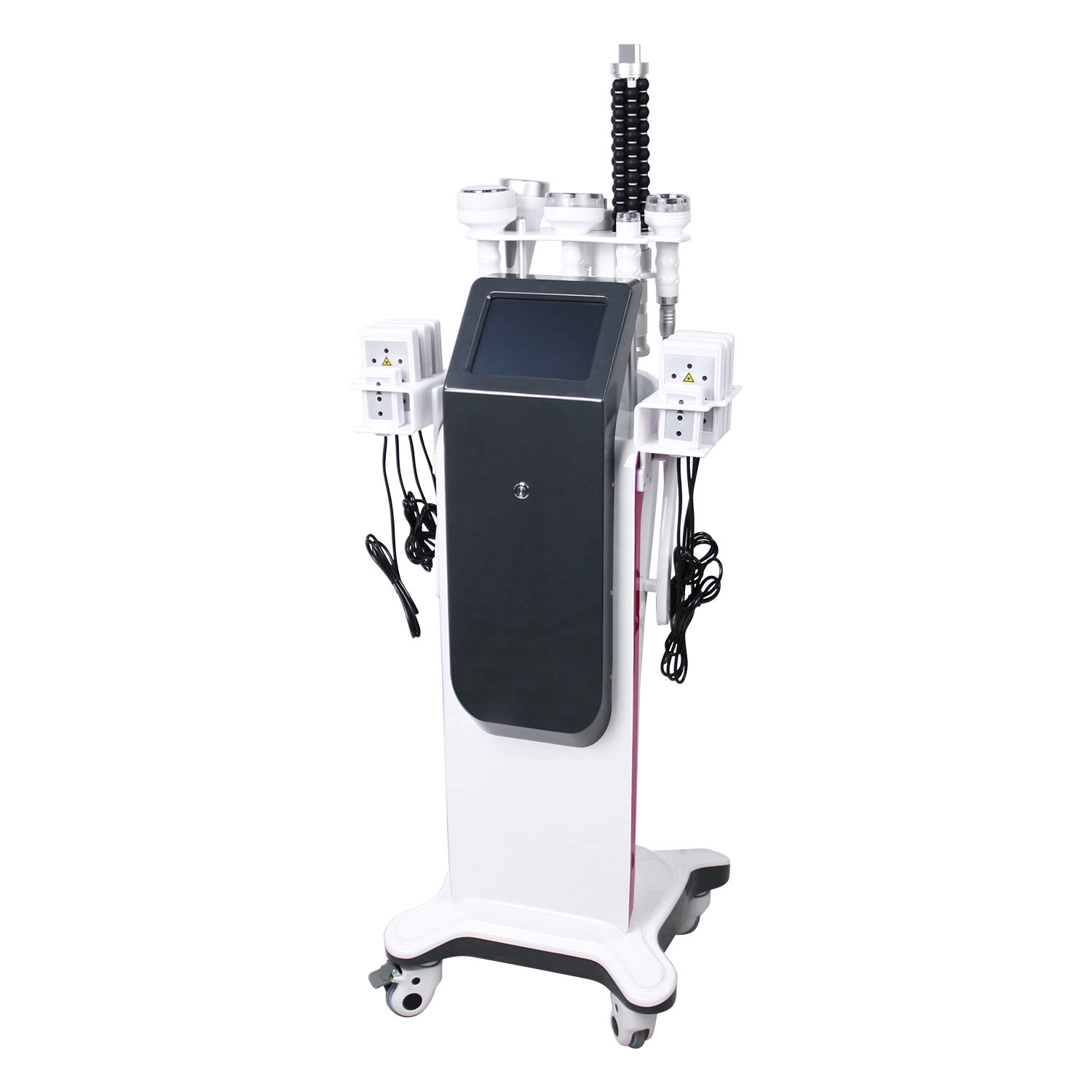
Professional 6-in-1 Cavitation Vacuum Machine for Body Contouring & Slimming Treatment
The 6-in-1 Cavitation Vacuum Machine is a professional body contouring system designed for salons and spas seeking high-performance slimming solutions. This machine integrates 40K ultrasonic cavitation, vacuum suction, RF technology, and laser lipolysis to target stubborn fat, enhance lymphatic drainage, tighten the skin, and contour the body shape effectively.
Equipped with multiple ergonomic handles and a smart touch screen, this cavitation vacuum machine provides a comfortable and efficient experience for both operators and clients. It is ideal for full-body treatments including abdomen, arms, legs, waistline, hips, and back.
Perfect for beauty salons, spas, and aesthetic centers that want to offer non-invasive fat reduction and body-sculpting services.
Get more information
If you have any comments or good suggestions, please leave us a message; later our professional staff will contact you as soon as possible.
Let's Talk
Stay in touch with us for cutting-edge beauty solutions, professional guidance, and customized service.
Contact


Room 307, Building A, Huilong International E-commerce Industrial Park, No. 10 Xipengling Road, Helong Street, Baiyun District, Guangzhou, China
© 2025 HUIMAIN. All Rights Reserved. Privacy Policy | Terms and Conditions | Sitemap
Facebook
Instagram
Medical beauty equipment factory
huimain Medical beauty equipment factory
beauty machine supplier
Whatsapp: +8619124004543