


Certifications to check when buying salon machines
- Why certifications matter for salon equipment
- Protecting client safety and clinical outcomes
- Meeting legal and market access requirements
- Reassuring staff, insurers and clients
- Key certifications and standards to check
- Overview table: what to look for and why
- How to read certification documents
- Certification checks by device type and risk
- Low-risk aesthetic devices (LED, microcurrent)
- Higher-risk devices (laser hair removal, HIFU, RF)
- Devices that deliver substances or break the skin
- Practical checklist before buying
- Documentation I always request
- Supplier and after-sales checks
- What to verify on arrival
- Comparing certifications and real-world implications
- CE vs FDA: different markets, different expectations
- ISO 13485 as a quality baseline
- Independent lab testing (SGS, Intertek) vs supplier claims
- How Guangzhou Huimain Technology supports compliant purchasing
- Frequently Asked Questions (FAQ)
- 1. Which certification is most important for salon beauty machines?
- 2. Can a device be used in my salon if it only has CE and not FDA clearance?
- 3. How do I verify a supplier’s certificate is genuine?
- 4. Are third-party lab reports necessary if the manufacturer claims clinical effectiveness?
- 5. What should I do if a device arrives damaged or missing certification documents?
- 6. How often should I re-check certifications and compliance?
When investing in beauty machines for salon use, the certifications and documented testing behind a device are as important as its advertised features. In this article I summarize the essential approvals, standards, and inspection points I check for every professional aesthetic device I recommend—so you can reduce regulatory risk, protect clients and staff, and ensure reliable treatment outcomes in line with local rules and global best practice.
Why certifications matter for salon equipment
Protecting client safety and clinical outcomes
As a long-time consultant for clinics and salons, I’ve seen equipment failures and inconsistent results stem from poor design, bad manufacturing quality, or lack of independent testing. Proper certifications—like electrical safety (IEC 60601) or quality management (ISO 13485)—mean the device has passed third-party checks relevant to medical or cosmetic use. These checks reduce the chance of burns, electrical hazards, or ineffective treatments. For authoritative guidance on medical device safety, see the U.S. FDA's medical device resources (FDA).
Meeting legal and market access requirements
If you sell or operate beauty machines for salon use across borders, different jurisdictions require different approvals. In the EU, CE marking and compliance with the Medical Device Regulation (MDR) may apply; in the U.S., some devices fall under FDA oversight. Verifying applicable certifications prevents costly recalls, customs seizures, or legal exposure. The European Commission’s CE guidance is a key resource (CE guidance).
Reassuring staff, insurers and clients
Staff training budgets and insurance High Qualitys often depend on the perceived safety and legitimacy of equipment. I always recommend documented third-party certifications when negotiating insurance or forming partnerships; insurers frequently request proof of compliance before underwriting a clinic or salon.
Key certifications and standards to check
Overview table: what to look for and why
| Certification / Standard | Authority / Typical Issuer | Scope | Why it matters | Source |
|---|---|---|---|---|
| CE Marking | Manufacturer / Notified Body (EU) | Product safety, conformity to EU rules (may include MDR for medical devices) | Required for market access in EU; indicates compliance with applicable directives or regulations | European Commission |
| FDA (510(k) / clearance) | U.S. Food & Drug Administration | Regulatory clearance for devices classified as medical | Shows U.S. regulatory review for safety and efficacy claims when applicable | FDA |
| ISO 13485 | ISO / Accredited Certification Bodies | Quality management system for medical device manufacturers | Indicates robust manufacturing and quality-control processes | ISO |
| IEC 60601 / IEC 60950 | IEC / Testing Labs | Electrical safety and electromagnetic compatibility for medical/electrical devices | Reduces risk of electrical faults and interference | IEC |
| EMC / FCC | National authorities (e.g., FCC in USA) | Electromagnetic emissions and immunity requirements | Prevents device interference with other equipment and radio systems | FCC |
| RoHS / REACH | EU regulators / national bodies | Restriction of hazardous substances / chemical safety | Important for manufacturing materials and environmental compliance | EU REACH |
| Third-party lab reports (SGS, Intertek) | Independent testing labs | Performance, safety, electromagnetic, and material tests | Independent evidence of claims and compliance | SGS |
How to read certification documents
When a supplier provides certificates, I check: issue date and expiry, scope (which models are covered), issuing body contact details, and whether there are test reports supporting the certificate. A certificate from an obscure issuer with no accreditation is weaker than a test report from a recognized lab such as SGS or a notified body in the EU. For more on laboratory accreditation, see the International Laboratory Accreditation Cooperation (ILAC) resources (ILAC).
Certification checks by device type and risk
Low-risk aesthetic devices (LED, microcurrent)
For beauty machines for salon use that are low-risk—such as LED phototherapy panels or basic microcurrent devices—look for electrical safety (IEC 60950/IEC 62368 where relevant), EMC testing, and a manufacturer quality system. If the supplier markets the device with medical claims (e.g., treating disease), it may be subject to medical-device regulations and require additional approvals.
Higher-risk devices (laser hair removal, HIFU, RF)
Lasers, intense pulsed light (IPL), HIFU, and high-energy RF systems carry increased risk of burns and eye injury. These devices commonly require compliance with IEC 60601 for electrical safety, IEC 60825 for laser safety, and often local medical-device registration. I advise obtaining clinical evidence—peer-reviewed studies or validated clinical trials—plus independent safety testing. The U.S. FDA has guidance on laser and energy-based devices (FDA Lasers).
Devices that deliver substances or break the skin
Microneedling, plasma, and tattoo-removal devices require careful attention to sterility protocols, biocompatibility testing (ISO 10993), and operator training documentation. Infection control is a legal and reputational issue for salons and medi-spas; hence suppliers should provide material safety data and validated sterilization procedures.
Practical checklist before buying
Documentation I always request
- Copy of CE certificate with notified body number (if sold in EU) or FDA clearance documentation for U.S. market.
- ISO 13485 certificate for the manufacturer and summary of quality-control processes.
- Detailed user manual, service manual, and maintenance schedule.
- Independent lab test reports (EMC, safety, performance) from accredited labs such as SGS or Intertek.
- Clinical evidence or white papers supporting major performance claims.
- Traceability information: batch numbers, serial-numbering system, and warranty terms.
Supplier and after-sales checks
I evaluate the supplier’s after-sales capacity: local service network, spare parts availability, training programs, and documented complaint handling. If a supplier cannot supply a service contract or spare parts within a reasonable timeframe, that is a major operational risk for salons that depend on uptime.
What to verify on arrival
On product arrival I cross-check the physical device label against the certificate (model number, manufacturing date, serial). I also run initial functional checks and document any deviations immediately with photos and a vendor communication record. For devices intended for clinical use, commission testing in a controlled setting and keep records for compliance and insurance purposes.
Comparing certifications and real-world implications
CE vs FDA: different markets, different expectations
CE marking is a declaration of conformity to applicable EU legislation and may rely on manufacturer self-certification for lower-risk devices; higher-risk devices require a notified body review. FDA 510(k) clearance requires submission and review of data demonstrating substantial equivalence to a predicate device. Both are meaningful, but having both CE and FDA documentation strengthens a product’s international credibility. Read more on FDA device regulation here.
ISO 13485 as a quality baseline
ISO 13485 certification tells me the manufacturer has established consistent production and quality control processes. It doesn’t validate individual device safety, but it reduces the probability of manufacturing defects and inconsistent performance. For details, see ISO’s description (ISO 13485).
Independent lab testing (SGS, Intertek) vs supplier claims
Supplier marketing often emphasizes peak power, pulse width, or efficacy percentages. I insist on raw test data from accredited labs showing measured outputs, reproducibility, and safety margins. SGS and equivalent labs provide internationally recognized test reports that are more persuasive to regulatory bodies and insurers (SGS).
How Guangzhou Huimain Technology supports compliant purchasing
Guangzhou Huimain Technology Co., Ltd. is a high-tech enterprise specializing in the research, development, production, and after-sales service of professional beauty machines and home-use devices. Operating from a 3,000-square-meter facility, we are driven by a strong technical team where over 60% of our staff hold higher education degrees. Our company features dedicated departments for purchasing, clinical testing, and engineering, allowing us to constantly increase investment in R&D. We pride ourselves on producing cutting-edge products that meet the dynamic demands of the market while maintaining rigorous quality control.
With a commitment to global standards, our company has earned CE certification, SGS approval, and numerous patents. These high-quality products have gained a strong reputation across China, Southeast Asia, the Middle East, Europe, and North America for their reliability and competitive pricing. Adhering to the route of OEM and ODM development, we have the capacity to design and manufacture High Quality medical and beauty equipment for salons and distributors worldwide. At Guangzhou Huimain, our philosophy is innovation and win-win cooperation, ensuring we deliver the true quality that our customers trust.
Our main products include: Cryolipolysis machines, EMS sculpting machines, Plasma machines, Shockwave machines, HIFU machines, Hydrofacial machines, Cavitation vacuum machines, Laser hair removal systems, Tattoo removal machines, and Micro-needle machines. For more details, visit our website: https://www.huimainbeauty.com/ or contact us at coco@huimainbeauty.com.
When I advise clients considering Huimain products, I focus on three differentiators: (1) demonstrable R&D and clinical testing capacity, (2) transparent certification documentation (CE, SGS, patent disclosures), and (3) OEM/ODM flexibility that supports tailored training and service agreements. These factors reduce deployment risk and simplify regulatory compliance for distributors and salon owners.
Frequently Asked Questions (FAQ)
1. Which certification is most important for salon beauty machines?
It depends on device risk and local regulations. For electrical safety and basic market access, CE marking (for EU) or relevant national electrical safety certificates are essential. For high-energy devices (lasers, HIFU), IEC safety standards plus local medical-device registration (e.g., FDA in the U.S.) are critical.
2. Can a device be used in my salon if it only has CE and not FDA clearance?
Yes—CE allows sale in the EU, but U.S. use may require FDA clearance if the device is classified as a medical device. Always check your country’s registration requirements; local health authorities or a regulatory consultant can advise on applicability.
3. How do I verify a supplier’s certificate is genuine?
Request the original certificate and test reports, check issuer accreditation (e.g., notified body number for CE), confirm model numbers, and contact the issuing body or testing lab to verify. Accredited bodies list certifications in public registers; for example, European notified bodies are listed on the NANDO database (NANDO).
4. Are third-party lab reports necessary if the manufacturer claims clinical effectiveness?
Yes. Clinical claims should be backed by peer-reviewed studies or validated clinical trials. Independent lab reports validate technical performance and safety; clinical evidence validates treatment effectiveness. Both are important for responsible purchasing.
5. What should I do if a device arrives damaged or missing certification documents?
Document damage with photos, do not put the device into service, and notify the supplier immediately in writing. Request certified copies of documents and, if necessary, withhold payment until documentation is received. For regulated devices, you may also need to notify local authorities if the device poses a safety risk.
6. How often should I re-check certifications and compliance?
Annually review supplier certificates and test reports, especially after firmware updates or design changes. Also re-check prior to renewing insurance or expanding into new markets, because regulations and standards evolve.
If you want tailored advice for a specific model or need help verifying certificates, I can review supplier documents and test reports for you. For product enquiries, OEM/ODM cooperation, or after-sales support, contact Guangzhou Huimain Technology Co., Ltd. via our website or email coco@huimainbeauty.com. Explore our certified product lines of beauty machines for salon use and request documentation before purchase—protect your business and your clients.
CTA: Reach out today to request certification dossiers, clinical reports, and service plans: coco@huimainbeauty.com or visit https://www.huimainbeauty.com/.
MF8
Is the treatment safe?
Yes, it’s non-invasive and clinically tested. The system includes temperature monitoring and adjustable energy levels for safety
HMC1
Is the Pelvic Floor Chair safe and non-invasive?
Yes, it uses focused electromagnetic energy that safely contracts pelvic muscles without any discomfort or surgery.
L11先锋射频点阵
Who can operate the CO2 fractional laser machine?
It should be operated by trained medical professionals or certified aesthetic practitioners in compliance with local regulations.
About Support Service
Can I customize my logo or packaging?
Yes, we support OEM/ODM customization. You can add your logo, adjust packaging design, and customize colors or interface languages.
How can I become a distributor?
Please contact our sales team. We’ll evaluate your market and send you our distributor policy and exclusive support terms.

CO2 Fractional Laser Machine – Professional Wrinkle Removal & Skin Resurfacing Device
The CO2 Fractional Laser Machine is a multifunctional aesthetic device designed for professional clinics and beauty salons. Using advanced fractional CO2 laser technology, it effectively targets acne scars, freckles, pigmentation, nevi, and deep wrinkles. Additionally, it provides non-invasive skin rejuvenation, vaginal tightening, and intimate beautification. This professional CO2 laser equipment combines precision, safety, and powerful energy output to deliver outstanding anti-aging and dermatological results.

V9 Slimming Machine | 5-in-1 Professional Body Contouring & Cellulite Reduction Device | Vacuum, RF, Cavitation, Infrared & Roller
The V9 Slimming Machine is a comprehensive, professional-grade aesthetic device designed to address a wide range of body and facial concerns. This all-in-one system masterfully integrates five powerful technologies—vacuum, roller, infrared, RF, and cavitation—to deliver a complete solution for slimming and shaping.
It is the ideal choice for businesses looking to offer a multi-functional device that can perform multiple treatments, from reducing fat and cellulite to lifting and tightening the skin. The V9 Slimming Machine helps clients combat issues like postpartum obesity, local obesity, and facial sagging.
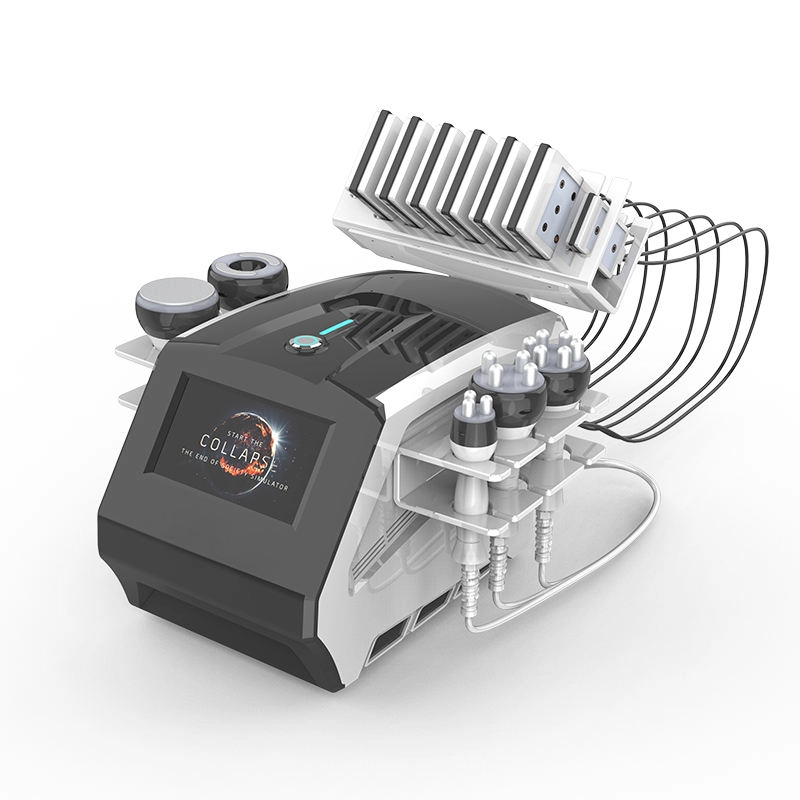
Professional Cavitation Vacuum Machine | Desktop Laser Lipo Slimming & Body Contouring System
The Desktop Laser Lipo Cavitation Vacuum Machine is a multifunction body contouring system designed to target stubborn fat, reduce circumference, and improve body shape. Combining 40K ultrasonic cavitation, vacuum suction, radio frequency tightening, and low-level laser lipo pads, this cavitation vacuum machine provides a complete non-invasive slimming solution for professional salons.
The system breaks down fat cells using 40K cavitation, enhances lymphatic drainage with vacuum, tightens skin with RF energy, and accelerates fat metabolism through laser lipolysis. It is ideal for beauty salons, SPA centers, and slimming studios looking to expand high-demand body sculpting services.

5-in-1 40K Cavitation Vacuum Machine for Body Slimming & Fat Reduction
The 5-in-1 40K Cavitation Vacuum Machine is a professional body shaping system designed for fat reduction, cellulite smoothing, and overall body contouring. Using 40KHz ultrasonic cavitation, this device breaks down stubborn fat cells, while vacuum suction improves lymphatic drainage and accelerates toxin removal.
With multiple RF tightening handles, the machine stimulates collagen regeneration and helps lift and firm loose areas of the body. Compact, powerful, and easy to operate, it is the perfect solution for beauty salons, spa centers, and slimming studios seeking fast and visible fat-reduction results.
This cavitation vacuum machine is built to deliver safe, non-invasive treatments with no downtime—making it a top choice for body contouring professionals.
Get more information
If you have any comments or good suggestions, please leave us a message; later our professional staff will contact you as soon as possible.
Let's Talk
Stay in touch with us for cutting-edge beauty solutions, professional guidance, and customized service.
Contact


Room 307, Building A, Huilong International E-commerce Industrial Park, No. 10 Xipengling Road, Helong Street, Baiyun District, Guangzhou, China
© 2025 HUIMAIN. All Rights Reserved. Privacy Policy | Terms and Conditions | Sitemap
Facebook
Instagram
Medical beauty equipment factory
huimain Medical beauty equipment factory
beauty machine supplier
Whatsapp: +8619124004543