


How to Choose a Cryolipolysis Machine for Your Clinic: Professional Buyer’s Guide
Choosing a cryolipolysis machine is not primarily about comparing prices. For a beauty clinic, salon, or aesthetic center, the right device affects treatment consistency, client safety, service menu flexibility, staff operational confidence, equipment downtime risk, and long-term return on investment.

Article Overview
A machine that looks acceptable on paper but lacks cooling precision, has an inadequate applicator range, or comes without reliable after-sales support creates operational problems that are expensive to resolve after purchase.
This guide is for clinic owners, salon operators, and distributors who are at the equipment evaluation stage. It covers the technical and commercial factors that determine whether a cryolipolysis machine is genuinely suitable for professional use, how to compare device types, what documentation to verify, which supplier signals indicate risk, and how to match machine configuration to clinic volume and service goals.
For background on how cryolipolysis technology works, see what is a cryolipolysis machine. For safety evidence and adverse event information, see cryolipolysis machine safety and effectiveness.
What Clinic Buyers Should Understand Before Evaluating Equipment
Cryolipolysis Is Body Contouring, Not Weight Loss
A cryolipolysis machine reduces localized subcutaneous fat in specific treatment areas. It does not produce overall weight loss and is not appropriate as a weight management solution. This distinction matters for clinic buyers for two reasons: it determines which clients are appropriate candidates — those at or near their target weight with specific stubborn fat areas — and it determines how the service should be positioned and marketed. Clinics that set accurate expectations before treatment have better satisfaction and referral outcomes than those that oversell results.
Professional Machines vs. Home-Use Devices
The consumer market for home fat-freezing devices exists, but these products operate at fundamentally different specifications than clinical equipment. Professional cryolipolysis machines are designed to deliver controlled cooling with more precise temperature monitoring, stronger applicator performance, broader safety controls, and a wider range of applicators for different body areas. Home devices operate at lower power levels, typically with limited monitoring and simplified treatment settings. Clinics should be able to explain this distinction to clients who ask about home alternatives.
Mapping Equipment to Service Menu Goals
Before evaluating specific machines, clinic buyers should define the service menu they intend to build. Which body areas will be offered? How many clients per day or week is the target volume? Will cryolipolysis be offered as a standalone service or as part of combination packages with EMS, RF, or pressotherapy? Will the clinic need to treat multiple clients or body areas simultaneously? These questions determine whether a single-handle, dual-handle, or multi-handle machine is appropriate — and what applicator range is a minimum requirement rather than a nice-to-have.
Key Technical Factors to Evaluate
Cooling Stability and Temperature Control
Cooling performance is the single most important technical specification in a cryolipolysis machine. The effectiveness of fat cell apoptosis depends on maintaining the target temperature at the treatment area consistently throughout each session. Equipment that cannot maintain stable temperature — whether it overcools, creating cold injury risk, or undercools, reducing treatment efficacy — produces inconsistent results and creates operational and liability concerns.
What to evaluate: ask for temperature stability specifications in writing, including the variance tolerance range during a standard treatment cycle. Ask whether temperature is measured at the applicator surface or within the cooling system — surface measurement is more directly relevant to treatment control. Request data on how the machine performs over a full treatment cycle duration, not just at initiation.
Real-time temperature monitoring and display — visible during the session — allows operators to confirm that the machine is maintaining the target range and respond immediately to any deviation. This is both a clinical quality indicator and an operational safety feature.
Applicator Range and Treatment Area Coverage
The applicator range of a cryolipolysis machine directly determines the service menu available to the clinic. A machine with only one or two applicator sizes covers the abdomen and flanks but cannot extend into chin, inner thigh, upper arm, bra line, or knee treatments. Each additional treatable area represents additional revenue configuration and a broader potential client base.
What to evaluate: request the full applicator specification list — each applicator's dimensions, the body areas it is designed for, and confirmation that applicators are included in the base price or priced separately. Ask whether different cup geometries are available for curved or irregular body contours. Confirm availability and lead time for replacement applicators and gel pads.
Interchangeable applicator systems that allow the same machine to address multiple body areas are operationally more efficient than machines that require separate equipment for different treatment areas.
Suction Control and Client Comfort
The vacuum suction system draws skin and subcutaneous fat tissue into contact with the cooling panels. Adjustable suction levels allow operators to optimize tissue engagement for different body areas and client anatomies — areas with thinner fat deposits require different suction settings than areas with more substantial tissue volume. Fixed suction systems limit this optimization.
During a session, clients typically experience suction, cold, pressure, tingling, and temporary numbness — particularly in the first several minutes before numbness sets in. Most clients find the experience manageable once numb. The machine's suction precision and operator control over treatment parameters both contribute to session comfort. Machines that allow operators to adjust parameters in response to client feedback provide better client experience than those with fully fixed protocols.
Safety Monitoring and Emergency Controls
Clinical cryolipolysis machines should include real-time temperature monitoring, automatic shut-off for temperature or suction anomalies, and audible and visual alert systems. These features reduce the incidence of preventable adverse events — cold injury, incomplete tissue engagement, or equipment malfunction during a session — and are expected in equipment used in professional settings.
What to verify: confirm that the shut-off system responds to temperature deviations above and below the target range, not just to overheating. Confirm that alert systems are independent of the display so that an operator not watching the screen receives notification of anomalies.
User Interface and Staff Operation
A straightforward, logically organized control interface reduces the learning curve for new staff and reduces the risk of protocol errors during treatment. Preset treatment modes for standard protocols allow consistent delivery across different operators. The ability to customize parameters within safe ranges provides flexibility for experienced practitioners.
Equipment with complex or unintuitive interfaces requires more training time and is more susceptible to operator error in busy clinic environments. Evaluate the interface during any demonstration or trial session — the practical usability of the control system is more apparent in use than in a specification sheet.
Certification and Compliance: What to Actually Verify
Documentation claims require verification. The following guidance covers what certification means in practice and how to confirm that documentation applies to the specific equipment being purchased.
CE Marking
CE marking on a product indicates that the manufacturer declares the product conforms to applicable EU requirements. It is a manufacturer's conformity declaration that allows the product to be placed on the EU market, not a product approval or safety guarantee from the EU or any regulatory authority.
For clinic buyers: CE documentation should be requested for the specific machine model and should identify the applicable EU regulation, directive, or standard relevant to the specific device category and intended market. The CE declaration of conformity should identify the manufacturer, the product, and the applicable standards. Request the technical documentation reference alongside the CE mark declaration.
SGS and Third-Party Test Reports
Third-party laboratory test reports from accredited testing bodies, such as SGS, TÜV, Intertek, or equivalent organizations, provide independent verification that the product has been tested against specified safety and performance standards. These reports carry a report number that can be verified directly with the issuing laboratory.
Request the actual test report — not a certificate scan or a compliance claim document — and verify the report number with the issuing body. A legitimate report should be traceable through the issuing organization. A report number that cannot be verified should not be treated as valid test evidence.
FDA Status for US Market Buyers
For clinics purchasing in or distributing to the United States, FDA device status must be confirmed for the specific device model, intended use, and treatment areas. The FDA reviews non-invasive body contouring devices on a device-specific basis — general statements that cryolipolysis machines are FDA cleared are not a substitute for model-specific documentation. Confirm FDA status by model number, and confirm that the intended use listed in any clearance documentation matches the clinical application planned.
Documentation Checklist Before Purchase
| Document | What to Request | How to Verify |
|---|---|---|
| CE Declaration of Conformity | Model-specific document identifying applicable EU regulation, directive, or standard. | Check manufacturer name, product model, reference standards, and signatory date. |
| Third-party test report | Report from an accredited laboratory, such as SGS, TÜV, Intertek, or equivalent, with a verifiable report number. | Contact the issuing laboratory directly with the report number. |
| FDA status documentation | Model-specific clearance letter, listing, or applicable market documentation for US buyers. | Confirm by exact device model, intended use, and treatment area. |
| Material safety documentation | SDS/MSDS for gel pads and consumables. | Request directly from the supplier before purchase. |
| Warranty documentation | Written warranty terms with duration, coverage scope, and claims process. | Review what is and is not covered before purchase. |
Single-Handle vs. Multi-Handle Cryolipolysis Machines
The choice between single-handle and multi-handle configurations should be driven by clinic volume, treatment menu goals, and floor space — not by equipment price alone.

| Configuration | Best For | Advantages | Limitations |
|---|---|---|---|
| Single-handle machine | Low-to-medium volume clinics; clinics entering the service for the first time. | Lower entry investment; simpler operation; adequate for one client at a time. | One treatment area per session; lower daily treatment capacity. |
| Dual-handle machine | Growing clinics; clinics treating bilateral areas such as thighs or arms. | Can treat two areas simultaneously; improves per-session efficiency. | Higher investment than single-handle systems. |
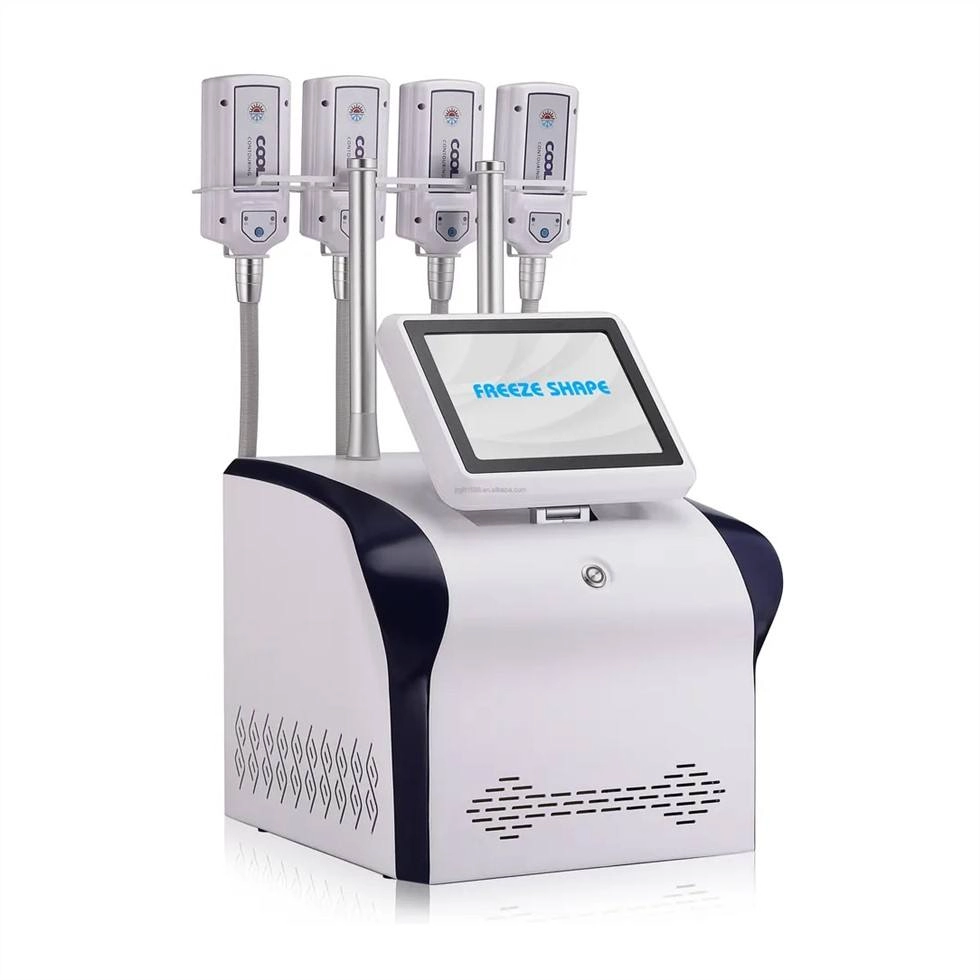
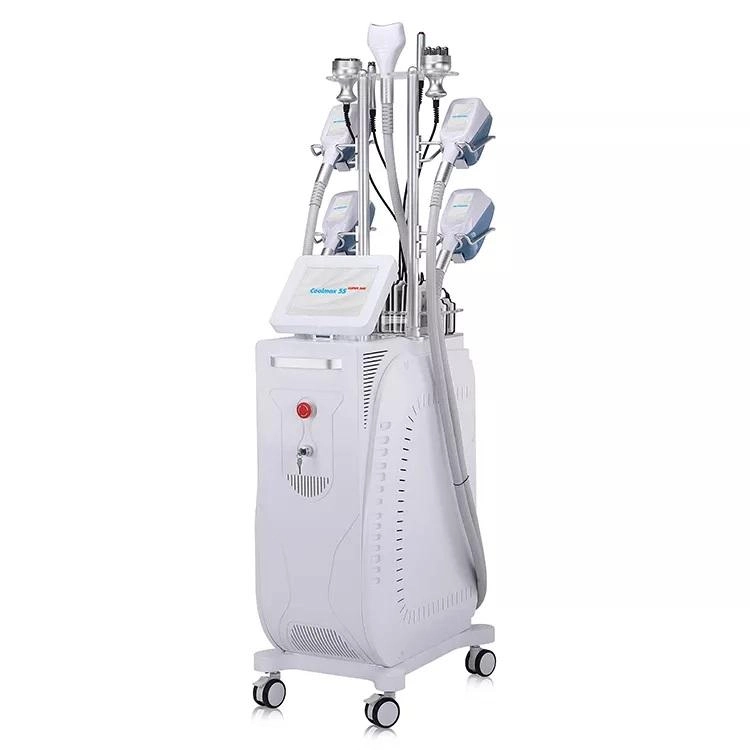
| Multi-handle machine | High-volume aesthetic centers; body contouring specialists; clinic groups. | Highest treatment throughput; enables full-body sessions; supports premium packages. | Larger footprint; higher investment; more training required. |
| Portable device | Mobile services; clinics with limited space or budget. | Compact and moveable; lower upfront cost. | Usually lower cooling power and fewer applicator options than floor-standing systems. |
A single-handle machine is appropriate for a clinic beginning cryolipolysis services with moderate client volume. A multi-handle system makes operational sense when daily session targets are high enough that the additional treatment capacity is utilized. Buying multi-handle capacity for a clinic that treats 2–3 clients per day ties capital in unused equipment; buying single-handle for a high-demand clinic creates session bottlenecks that limit revenue and client satisfaction.
Price, ROI, and Long-Term Value
Price per unit is the most visible comparison point between cryolipolysis machine quotations. It is also, over a 3–5 year ownership period, often not the most important cost variable.
Equipment purchase price is a one-time cost. Consumable cost — gel pads, replacement applicators, maintenance materials — is an ongoing cost that accumulates across the equipment's life. Downtime cost — lost session revenue when equipment requires repair — is an invisible cost that only becomes apparent when it occurs. Training cost — onboarding staff to operate equipment competently — varies significantly by manufacturer support.
A machine priced 20% lower than a comparable option but with higher consumable costs, weaker after-sales support, and more frequent repair needs may cost significantly more over a three-year ownership period than the higher-upfront-cost option. Build a total cost model — not just a purchase price comparison — before making a final decision.
Revenue modeling: the per-session revenue a clinic generates from cryolipolysis depends on local pricing, session package structure, and the number of treatment areas per session. Multi-handle machines that allow multiple areas to be treated simultaneously or back-to-back increase revenue per client appointment. Combination packages that pair cryolipolysis with EMS sculpting or RF treatments command higher package prices than single-modality sessions. Factoring revenue potential into the equipment investment decision provides a more complete picture than cost comparison alone.
Cryolipolysis Machine Buyer Checklist
Use this checklist when evaluating any supplier or machine configuration. Legitimate professional manufacturers will provide documentation and answers to all items without requiring justification.

| Factor | What to Ask | Why It Matters |
|---|---|---|
| Cooling stability | Temperature variance specification and treatment-cycle stability data? | Determines treatment consistency and safety. |
| Applicator range | Full applicator list with body areas covered and pricing? | Determines service menu and revenue configuration. |
| Multi-handle capacity | Can multiple areas or clients be treated simultaneously? | Affects daily treatment throughput and efficiency. |
| Safety monitoring | Real-time temperature sensors, automatic shut-off, alert system? | Client safety and operational risk management. |
| Gel pad supply | Are consumables consistently available? What is the reorder lead time? | Supports operational continuity. |
| Certification | Model-specific CE-related documents and third-party test reports with verifiable report numbers? | Supports compliance verification and market entry review. |
| Warranty | Written terms: duration, coverage scope, exclusions, and claims process? | Reduces ownership risk and downtime uncertainty. |
| Training | Operation manuals, clinical protocol guides, and video training? | Helps staff operate consistently and safely. |
| After-sales | Technical support response time, spare parts lead time, and repair process? | Protects equipment uptime and revenue continuity. |
| OEM/ODM | Custom configuration, private label, and branding options? | Important for distributors and clinic groups building branded services. |
Supplier Red Flags: Signals That Indicate Elevated Risk
| Warning Sign | Why It Indicates Risk |
|---|---|
| Cannot provide model-specific certification documents. | Certification claims may not apply to the specific machine being purchased. |
| Provides certificates without verifiable report numbers. | Documents may be generic, fabricated, or lapsed. |
| Claims “FDA approved” or “CE approved” for all machines categorically. | Regulatory status is model- and market-specific; categorical claims are inaccurate. |
| Will not provide a live factory video tour. | May suggest a trading company without direct manufacturing capability. |
| Cannot specify temperature variance tolerance. | Suggests the machine may lack precise cooling control. |
| Applicator specifications are vague or unavailable. | Limits ability to evaluate service menu suitability before purchase. |
| Warranty is described verbally rather than in a written document. | After-sales disputes are more likely without written terms. |
| No training materials, manuals, or protocol guidance. | Increases operational error risk and limits staff capability. |
| No clear spare parts policy or lead time information. | Equipment downtime risk is higher with uncertain parts supply. |
| Price is significantly below comparable options without explanation. | Often reflects specification differences, weaker cooling systems, or limited support. |
Common Mistakes When Choosing a Cryolipolysis Machine
Evaluating on price alone. The purchase price is one dimension of cost; consumable costs, downtime frequency, training requirements, and after-sales responsiveness are equally important over a 3–5 year ownership period. Equipment that appears cheap at purchase may carry higher total cost of ownership than a better-supported alternative.
Ignoring applicator range. A machine with a limited applicator range restricts the service menu the clinic can offer. Clients who want chin, inner thigh, or upper arm treatments cannot be served, and the clinic cannot build the treatment combination packages that drive the highest revenue per appointment.
Accepting certification claims without verification. CE marking, SGS certification, and FDA status should all be verified against specific documents and report numbers. Certification claims that cannot be supported with verifiable documentation should not be treated as compliance evidence.
Underestimating training requirements. Consistent treatment delivery requires staff who are trained not just to operate the equipment but to select appropriate applicators, set parameters for different body areas and client presentations, and manage client expectations. Manufacturers who provide comprehensive training support reduce the operational risk associated with staff turnover and new equipment adoption.
Buying for current volume rather than planned growth. A single-handle machine is adequate for current volume but may create bottlenecks as the cryolipolysis service builds demand. Planning for 12–18 months of growth in the equipment selection decision is more cost-effective than upgrading equipment after demand has outpaced capacity.
Why HUIMAIN for Professional Cryolipolysis Equipment

HUIMAIN cryolipolysis machine manufacturer manufactures professional cryolipolysis machines for clinics, salons, aesthetic centers, and distributors. The product range spans single-handle and multi-handle configurations, with a comprehensive applicator portfolio covering the abdomen, flanks, thighs, arms, chin, bra line, and knees.
On certification: HUIMAIN can provide CE-related documentation, SGS third-party test reports, and model-specific quality documents according to the product model and target market requirements. For the US market, documentation should be discussed according to the specific device model, intended use, and destination market.
On quality control: the manufacturing process includes in-process quality inspection at key production stages and final pre-shipment quality review. Temperature stability specifications can be reviewed during the inquiry and sample evaluation process.
On training and after-sales: HUIMAIN provides operation manuals, treatment protocol guidance, and training support as part of the standard equipment relationship. Spare parts availability and technical support response time are discussed at the inquiry stage so buyers understand the after-sales structure before commitment.
On OEM/ODM: for distributors and clinic groups developing branded equipment, OEM/ODM cryolipolysis machine solutions cover hardware configuration, interface customization, labeling, and brand integration. MOQ and development timelines are confirmed at the project inquiry stage.
The HUIMAIN team responds to equipment inquiries within 24 hours. Provide your clinic type, target treatment areas, market, handle count requirement, and approximate volume, and the team will respond with a specific equipment recommendation and proposal.
Common Questions from Clinic Buyers
What is the most important factor when choosing a cryolipolysis machine?
Cooling stability — the machine's ability to maintain the target temperature consistently throughout a treatment session — is the most directly performance-critical specification. Treatment consistency and client safety both depend on it. After cooling performance, applicator range determines service menu flexibility, and after-sales support determines operational reliability over the equipment's life.
What is the difference between single-handle and multi-handle cryolipolysis machines?
A single-handle machine treats one body area per session; a multi-handle machine can treat two or more areas simultaneously or in back-to-back succession without changing equipment setup. Multi-handle machines support higher daily session volumes and premium combination treatment packages. Single-handle machines are appropriate for lower-volume clinics or those entering cryolipolysis services for the first time.
How do I verify that a cryolipolysis machine is CE certified?
Request the CE Declaration of Conformity for the specific machine model. The document should identify the manufacturer, the product, the applicable EU regulation, directive, or standard, and the relevant reference standards. Also request any associated third-party test report numbers, such as SGS, TÜV, or equivalent, and verify those report numbers directly with the issuing laboratory.
What certifications should a professional cryolipolysis machine have?
CE-related documentation for EU-market equipment and SGS or equivalent third-party test reports are common baseline documents for professional equipment evaluation. For US market operations, confirm FDA device status for the specific model and intended use. All certification documentation should be model-specific and verifiable.
Is a portable cryolipolysis machine suitable for a professional clinic?
Portable devices offer lower entry cost and flexibility for mobile or space-limited operations, but typically provide lower cooling power, fewer applicator options, and less precise temperature control than floor-standing professional systems. For clinics offering cryolipolysis as a core service, professional-grade equipment with the appropriate applicator range is a more reliable foundation.
How much does a professional cryolipolysis machine cost?
Equipment pricing varies significantly by configuration, handle count, applicator range, cooling system quality, and manufacturer support. Single-handle entry-level professional machines start at a lower investment level; multi-handle professional systems with comprehensive applicator ranges represent a higher capital commitment. Evaluating total cost of ownership — including consumables, maintenance, and downtime — provides a more complete cost picture than purchase price alone.
Can I get a cryolipolysis machine customized for my brand?
Yes. OEM and ODM services allow distributors and clinic groups to have equipment manufactured with custom branding, interface design, and configuration. Contact HUIMAIN with your customization requirements, target market, and volume to discuss the scope and timeline.
What after-sales support should I expect from a cryolipolysis machine manufacturer?
At minimum: accessible technical support, spare parts availability with confirmed lead times, written warranty documentation covering scope and claims process, and operation manuals and protocol guides. Manufacturers who provide training materials, clinical protocol guidance, and responsive technical support give clinics a better operational foundation than those who provide equipment only.
How long does a professional cryolipolysis machine last?
With appropriate maintenance and operational care, professional-grade equipment has a functional lifespan of several years under commercial clinic use. Consumables such as gel pads and applicator components require periodic replacement. Electrical and cooling system components should be maintained according to the manufacturer's service schedule. Manufacturers who retain spare parts supply and provide service documentation support longer equipment lifespan.
Choose the Right Cryolipolysis Machine for Your Clinic
The best cryolipolysis machine for your clinic is not simply the lowest-priced option. It is the system that matches your treatment menu, client volume, applicator needs, documentation requirements, staff training level, and long-term service expectations.
HUIMAIN supports clinics, salons, distributors, and beauty equipment brands with professional cryolipolysis machines, OEM/ODM customization, model-specific documentation support, quality control, and after-sales service. Contact HUIMAIN to discuss your clinic type, target treatment areas, market requirements, and preferred equipment configuration.




Facebook
Instagram
Medical beauty equipment factory
huimain Medical beauty equipment factory
beauty machine supplier
Whatsapp: +8619124004543