


How to Choose FDA or CE Certified Cryolipolysis Machines
- Understanding regulatory certifications and what they actually mean
- FDA clearance vs. FDA approval: the distinction
- CE marking in the EU: conformity and technical documentation
- ISO 13485 and other quality system standards
- Clinical evidence and device performance
- What clinical data you should expect
- Key performance metrics: effectiveness and safety
- How to verify clinical claims
- Technical, safety and practical considerations
- Design features that matter in practice
- Electrical and biocompatibility testing
- Warranty, training and post-market support
- Comparing FDA and CE: practical differences for buyers
- Regulatory pathway and market implications
- What to check in documentation
- Table: Quick comparison of certifications
- Buying checklist and negotiation tips
- Due diligence checklist
- Negotiation and procurement strategy
- Practical ROI considerations
- Why supplier credibility matters — a case example
- Evaluating manufacturer capability and transparency
- About Guangzhou Huimain Technology Co., Ltd. (supplier example)
- How I would validate such a supplier
- Final recommendations and step-by-step buying roadmap
- Stepwise procurement roadmap
- When to prioritize FDA clearance over CE (and vice versa)
- My closing advice
- Frequently Asked Questions (FAQ)
- 1. Does CE-certified always mean the device is clinically effective?
- 2. How can I verify a device’s FDA 510(k) clearance?
- 3. What are common adverse events associated with cryolipolysis?
- 4. Should I prefer manufacturers with ISO 13485 certification?
- 5. How many treatments before seeing results?
- 6. Is operator training essential?
As a consultant and practitioner with years of experience in medical aesthetic devices, I often get asked how to identify the best cryolipolysis slimming machine — especially when vendors claim “FDA-cleared” or “CE-certified.” This guide is written to help clinic owners, distributors, and procurement teams make evidence-based choices. I’ll walk you through regulatory meanings, technical and clinical considerations, comparative data, and a practical purchasing checklist so you can select devices that meet safety, efficacy, and business needs.
Understanding regulatory certifications and what they actually mean
FDA clearance vs. FDA approval: the distinction
When a device is described as FDA-cleared, it most commonly means it obtained 510(k) clearance demonstrating substantial equivalence to a predicate device already legally marketed in the U.S. Full FDA approval (PMA) applies to higher-risk devices requiring extensive clinical evidence. For cryolipolysis systems used for non-invasive fat reduction, established manufacturers typically obtain 510(k) clearances. For a primer on medical device regulation from the U.S. agency, see the FDA’s overview of medical devices (FDA - Overview of Medical Devices).
CE marking in the EU: conformity and technical documentation
CE marking indicates that the manufacturer claims conformity with applicable EU legislation, including essential safety and performance requirements. For medical devices, this usually means compliance with the Medical Device Regulation (MDR) and a quality management system assessed by a notified body for higher-risk devices. Read more about CE marking and its legal framework on the European Commission site (European Commission - CE marking).
ISO 13485 and other quality system standards
Independent of FDA or CE status, ISO 13485 certification demonstrates that a manufacturer has an internationally recognized quality management system for medical devices. When evaluating suppliers, I prioritize ISO 13485, because it shows systematic design control, production oversight, and processes for post-market surveillance. See the ISO page: (ISO 13485).
Clinical evidence and device performance
What clinical data you should expect
For the best cryolipolysis slimming machine, look for peer-reviewed clinical studies demonstrating fat layer reduction, safety data (adverse event rates and types), and follow-up duration. The modality originated from Manstein et al.'s preclinical and clinical work; for overview and published literature review see the Cryolipolysis article on Wikipedia which links primary literature (Cryolipolysis - Wikipedia), and original clinical reports can be found on PubMed.
Key performance metrics: effectiveness and safety
Important metrics include mean percentage reduction in subcutaneous fat thickness (measured by ultrasound or calipers), patient satisfaction rates, and adverse event incidence (e.g., transient numbness, paresthesia, rare paradoxical adipose hyperplasia). I recommend vendors provide clinical summaries and raw imaging data from independent centers, not only manufacturer-conducted trials.
How to verify clinical claims
Request copies of published papers or study protocols and check registration in clinical trial registries (e.g., ClinicalTrials.gov). Cross-check the studies’ authorship and conflicts of interest. Independent randomized controlled trials and systematic reviews are stronger evidence than single-arm manufacturer reports. Search PubMed for cryolipolysis clinical trials and reviews as part of your due diligence.
Technical, safety and practical considerations
Design features that matter in practice
Assess applicator design (size, cooling uniformity, contact sensors), energy control, user interface, and available treatment parameters. A machine with multiple applicator shapes increases treatment versatility (abdomen, flank, thighs, submental). Look for real-time temperature monitoring, automatic shutoff for safety, and documented calibration procedures.
Electrical and biocompatibility testing
Certified devices should have undergone electrical safety testing (IEC 60601 series for medical electrical equipment) and biocompatibility testing of patient-contact components (ISO 10993 series). Ask the manufacturer for test reports or declarations of conformity.
Warranty, training and post-market support
I place high value on accessible technical support, on-site service options, warranty terms, and formal training (clinical protocols, safety training). Post-market surveillance data and complaint handling show how seriously a manufacturer treats safety once the device is in the field.
Comparing FDA and CE: practical differences for buyers
Regulatory pathway and market implications
From a buyer’s perspective, FDA 510(k) clearance suggests the device is acceptable for the U.S. market with demonstrated similarity to an existing device. CE marking allows sale across EU/EEA but requires technical files and (for many devices) notified body review. Both systems demand quality management, but the assessment processes differ.
What to check in documentation
Ask for: the 510(k) number or PMA document for FDA-cleared devices; the Declaration of Conformity and Notified Body certificate for CE devices; ISO 13485 certificate; IEC 60601 test reports; clinical evidence; and SDS/IFU (safety data and instructions for use). Verify authenticity using official registries when possible.
Table: Quick comparison of certifications
| Aspect | FDA (U.S.) | CE (EU) | ISO 13485 |
|---|---|---|---|
| What it indicates | Clearance/approval for U.S. market (510(k) or PMA) | Conformity with EU MDR requirements | Quality management system for medical device manufacturing |
| Evidence required | Substantial equivalence, bench/clinical data (depends on class) | Technical documentation, risk assessment, clinical evaluation | Documented QMS, processes for design, production, CAPA |
| Verification sources | FDA 510(k) database and device listing (FDA 510(k) Clearances) | Notified Body certificates, EU database (EUDAMED when available) | Certificate from accredited registrar (audit reports) |
Buying checklist and negotiation tips
Due diligence checklist
- Verify certification documents (510(k) number or CE Declaration) and cross-check with official registries.
- Request clinical evidence: peer-reviewed papers, study protocols, and registries.
- Obtain test reports for IEC 60601, ISO 10993, and EMC testing.
- Confirm manufacturer quality system (ISO 13485) and after-sales service locations.
- Ask for training packages, spare parts availability, and typical device uptime statistics.
Negotiation and procurement strategy
I advise negotiating for a comprehensive package: installation, training, first-year maintenance, and consumables included. Request a service-level agreement (SLA) specifying response times for technical issues. For distributors, secure territorial rights and staged purchase discounts tied to volume and payment terms.
Practical ROI considerations
Estimate throughput (treatments per day), average revenue per session, consumable costs, and downtime risk. The best cryolipolysis slimming machine for your practice balances clinical outcomes with operational efficiency and predictable service costs.
Why supplier credibility matters — a case example
Evaluating manufacturer capability and transparency
Manufacturers that invest in R&D, clinical testing, and clear regulatory pathways tend to produce more reliable products. Transparent suppliers provide test reports, clinical data, and site references. Independent third-party audits (e.g., SGS) further increase trust — see SGS for reference on conformity assessment.
About Guangzhou Huimain Technology Co., Ltd. (supplier example)
In my work evaluating OEM/ODM partners, I frequently consider suppliers like Guangzhou Huimain Technology Co., Ltd. They are a high-tech enterprise specializing in R&D, production, and after-sales service of professional beauty machines and home-use devices. Operating from a 3,000-square-meter facility, their technical team has over 60% with higher education degrees, and they maintain dedicated purchasing, clinical testing, and engineering departments to support ongoing R&D investment.
Huimain has achieved CE certification, SGS approval, and holds multiple patents, supplying products across China, Southeast Asia, the Middle East, Europe, and North America. Their product range includes Cryolipolysis machines, EMS sculpting machines, Plasma machines, Shockwave machines, HIFU machines, Hydrofacial machines, Cavitation vacuum machines, Laser hair removal, Tattoo removal machines, and Microneedle devices. Their OEM/ODM capacity and commitment to innovation and win-win cooperation make them a viable partner for clinics and distributors seeking compliant, cost-competitive equipment.
Website: https://www.huimainbeauty.com/ | Email: coco@huimainbeauty.com
How I would validate such a supplier
I would request copies of CE declarations, ISO certificates, clinical study reports, and IEC/ISO test reports. I also recommend visiting the factory or requesting virtual tours, inspecting service networks in your region, and asking for customer references in similar markets.
Final recommendations and step-by-step buying roadmap
Stepwise procurement roadmap
- Define clinical needs and expected throughput (which body areas, caseload).
- Shortlist vendors with verifiable certifications (FDA 510(k) or CE + ISO 13485).
- Request clinical evidence, test reports, and IFUs; ask for demonstration units or clinical videos.
- Negotiate terms: training, warranty, spare parts, and SLA.
- Run a pilot phase (single device) and collect outcomes before scaling purchases.
When to prioritize FDA clearance over CE (and vice versa)
If you primarily serve U.S. patients, FDA-cleared devices reduce regulatory and reimbursement friction. If you operate in EU/EEA markets, CE marking is essential. For global distributors, devices with both clearances and ISO 13485 certification provide the broadest market access and lower regulatory risk.
My closing advice
Choosing the best cryolipolysis slimming machine is not just about a certificate badge — it’s about clinical evidence, engineering quality, and reliable post-sale support. Be rigorous in document verification, insist on independent clinical data, and structure contracts to protect your clinic or distribution business against downtime and product failures.
Frequently Asked Questions (FAQ)
1. Does CE-certified always mean the device is clinically effective?
No. CE marking indicates conformity with safety and performance requirements under EU law but does not by itself guarantee superior clinical effectiveness. Always review clinical studies and peer-reviewed evidence to confirm real-world efficacy.
2. How can I verify a device’s FDA 510(k) clearance?
Ask the manufacturer for the 510(k) number and check it against the FDA 510(k) database (FDA 510(k) Clearances).
3. What are common adverse events associated with cryolipolysis?
Common short-term effects include erythema, edema, bruising, and transient numbness. Rarely, paradoxical adipose hyperplasia can occur; this is a known but infrequent complication described in the literature (see cryolipolysis clinical reports).
4. Should I prefer manufacturers with ISO 13485 certification?
Yes. ISO 13485 demonstrates a robust quality management system for medical device production and is an important indicator of manufacturing discipline and regulatory readiness.
5. How many treatments before seeing results?
Most published studies report measurable fat layer reduction after a single treatment with maximal results often observed 8–12 weeks post-treatment. Some patients may require a second session for additional reduction.
6. Is operator training essential?
Absolutely. Proper applicator placement, parameter selection, and patient selection significantly influence outcomes and safety. Secure documented training and competency validation as part of your purchase.
If you want assistance evaluating specific models, comparing 510(k) dossiers, or arranging demos, I can help review documentation and set up vendor audits. For product enquiries, quotations, or to view compatible cryolipolysis, EMS sculpting, HIFU, and other aesthetic devices, contact Guangzhou Huimain Technology Co., Ltd. at https://www.huimainbeauty.com/ or email coco@huimainbeauty.com.
HMT82S-2
How do you ensure quality? Is there a warranty?
All machines go through strict quality control and testing before shipment. We offer 12 months warranty for the main unit and lifetime technical support, including remote troubleshooting.
Frequently Asked Questions: EMS Sculpting ROI
Are there any hidden fees, cycle cards, or proprietary gels required?
No. Unlike fat-freezing or RF microneedling devices, our EMS sculpting machines have zero ongoing consumable costs. You keep 100% of your treatment revenue.
HI-8D
Is the HI-8D suitable for all skin types?
Yes, this Hifu machine is safe for all skin colors and types because ultrasound does not affect pigmentation.
CRL-6
Does the treatment cause pain or downtime?
No, treatments are non-invasive and painless. Clients can return to normal activities immediately.
Onda B71台式冷波塑形仪
Is this machine suitable for all skin types?
Yes, the Non-invasive Coolwave Onda Lift Machine is suitable for all skin types and body areas.

CO2 Fractional Laser Machine – Professional Wrinkle Removal & Skin Resurfacing Device
The CO2 Fractional Laser Machine is a multifunctional aesthetic device designed for professional clinics and beauty salons. Using advanced fractional CO2 laser technology, it effectively targets acne scars, freckles, pigmentation, nevi, and deep wrinkles. Additionally, it provides non-invasive skin rejuvenation, vaginal tightening, and intimate beautification. This professional CO2 laser equipment combines precision, safety, and powerful energy output to deliver outstanding anti-aging and dermatological results.

5-in-1 40K Cavitation Vacuum Machine for Body Slimming & Fat Reduction
The 5-in-1 40K Cavitation Vacuum Machine is a professional body shaping system designed for fat reduction, cellulite smoothing, and overall body contouring. Using 40KHz ultrasonic cavitation, this device breaks down stubborn fat cells, while vacuum suction improves lymphatic drainage and accelerates toxin removal.
With multiple RF tightening handles, the machine stimulates collagen regeneration and helps lift and firm loose areas of the body. Compact, powerful, and easy to operate, it is the perfect solution for beauty salons, spa centers, and slimming studios seeking fast and visible fat-reduction results.
This cavitation vacuum machine is built to deliver safe, non-invasive treatments with no downtime—making it a top choice for body contouring professionals.

6-in-1 Multifunctional Beauty and Weight Loss Machine | Cavitation, RF, Vacuum PDT, EMS, Laser Slimming Equipment for Professional Use
The 6-in-1 Multifunctional Beauty and Weight Loss Machine is a professional-grade device designed for salons, clinics, and distributors. Combining six advanced technologies—cavitation, RF (radio frequency) for face & body, vacuum RF PDT, BIO/EMS microcurrent, and laser lipo pads—this device offers comprehensive body contouring, fat reduction, skin tightening, and anti-aging treatments.
It provides businesses with an all-in-one solution to expand service offerings, attract more clients, and achieve a rapid return on investment.
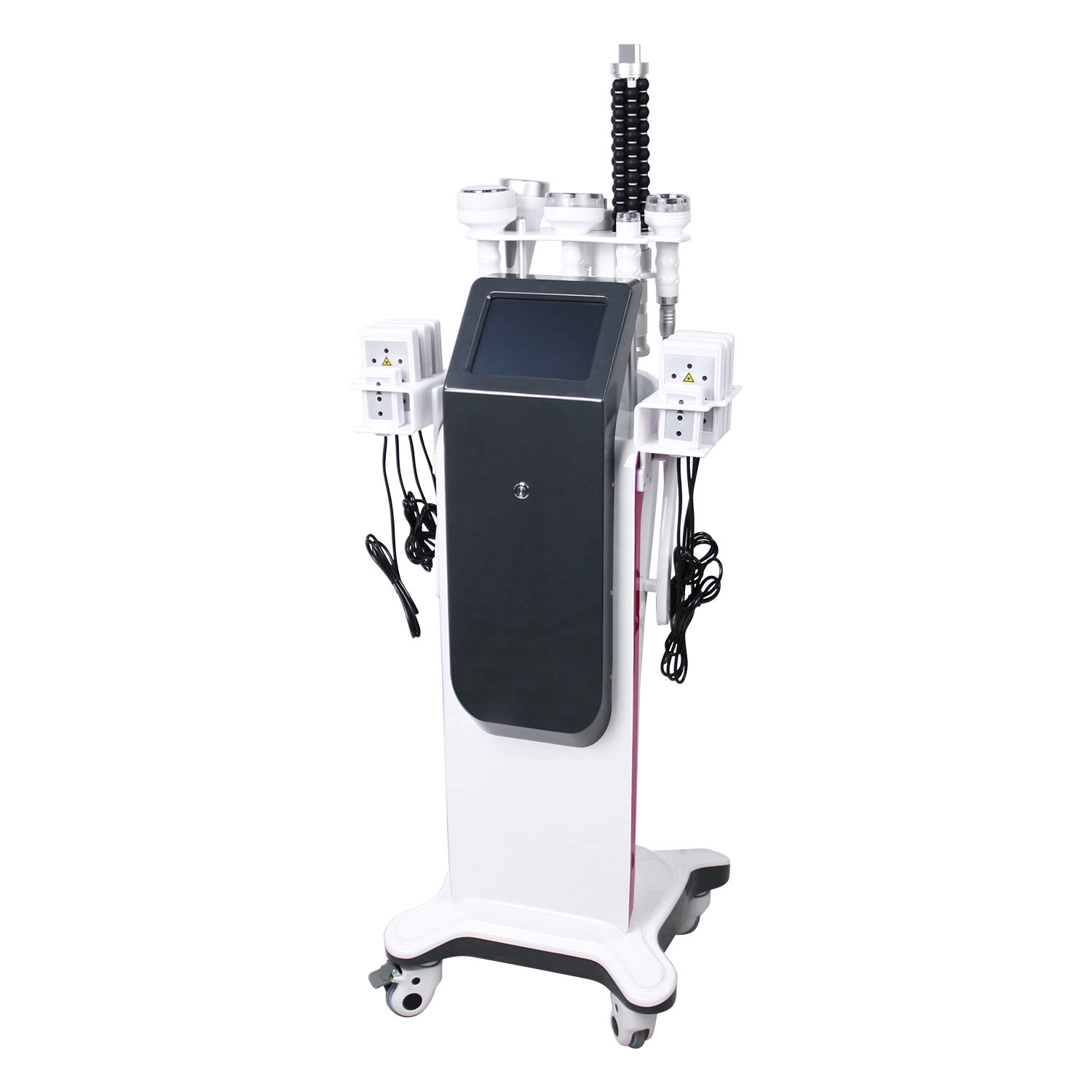
Professional 6-in-1 Cavitation Vacuum Machine for Body Contouring & Slimming Treatment
The 6-in-1 Cavitation Vacuum Machine is a professional body contouring system designed for salons and spas seeking high-performance slimming solutions. This machine integrates 40K ultrasonic cavitation, vacuum suction, RF technology, and laser lipolysis to target stubborn fat, enhance lymphatic drainage, tighten the skin, and contour the body shape effectively.
Equipped with multiple ergonomic handles and a smart touch screen, this cavitation vacuum machine provides a comfortable and efficient experience for both operators and clients. It is ideal for full-body treatments including abdomen, arms, legs, waistline, hips, and back.
Perfect for beauty salons, spas, and aesthetic centers that want to offer non-invasive fat reduction and body-sculpting services.
Get more information
If you have any comments or good suggestions, please leave us a message; later our professional staff will contact you as soon as possible.
Let's Talk
Stay in touch with us for cutting-edge beauty solutions, professional guidance, and customized service.
Contact


Room 307, Building A, Huilong International E-commerce Industrial Park, No. 10 Xipengling Road, Helong Street, Baiyun District, Guangzhou, China
© 2025 HUIMAIN. All Rights Reserved. Privacy Policy | Terms and Conditions | Sitemap
Facebook
Instagram
Medical beauty equipment factory
huimain Medical beauty equipment factory
beauty machine supplier
Whatsapp: +8619124004543