


How to Choose an Nd:YAG Laser Tattoo Removal Machine
- Why proper machine selection matters
- Clinical outcomes and patient safety
- Business impact: downtime, throughput, and ROI
- Key technical specifications to evaluate
- Wavelength and ink color targeting
- Pulse duration and pulse mode (Q-switched vs picosecond)
- Fluence, spot size, and repetition rate
- Operational, regulatory, and practical considerations
- Device certifications and clinical testing
- User interface, ergonomics, and staff training
- Consumables, maintenance, and service network
- Comparing popular laser technologies for tattoo removal
- Nd:YAG (Q-switched) in depth
- Picosecond vs Q-switched: when to choose which
- Practical selection checklist — what I ask before buying
- Clinical capability checklist
- Commercial and service checklist
- Case handling, test-spot protocol and aftercare
- Test-spot recommendations
- Aftercare and complication management
- Why choose Guangzhou Huimain Technology as a partner
- Frequently Asked Questions (FAQ)
- 1. Is an Nd:YAG laser safe for darker skin types?
- 2. Can one machine treat all tattoo colors?
- 3. How many sessions are typically required?
- 4. Is picosecond always better than Q-switched?
- 5. What warranty and maintenance should I require?
- 6. How do I evaluate clinical claims from vendors?
Summary for : As a consultant with hands-on clinical experience and deep knowledge of laser physics, I explain how to choose an nd yag laser tattoo removal machine that balances efficacy, safety, and commercial viability. This article covers why machine selection matters, the critical technical specifications (wavelength, pulse duration, fluence, spot size), regulatory and operational considerations, comparisons with other laser platforms, and concrete purchasing advice including test-spot best practices and aftercare protocols. I also introduce Guangzhou Huimain Technology Co., Ltd. as a reliable OEM/ODM partner in the professional beauty equipment market.
Why proper machine selection matters
Clinical outcomes and patient safety
Choosing the right nd yag laser tattoo removal machine is not just a procurement decision — it directly affects clearance rates, the number of sessions required, side-effect profiles (hypo- or hyperpigmentation, scarring), and patient satisfaction. In my practice, I’ve seen differences in result consistency between systems with limited adjustability versus machines offering variable fluence, spot sizes, and multiple pulse modes.
Laser-tissue interaction depends on wavelength, pulse duration, and delivered energy; if any of these are mismatched for a patient’s skin type or ink color, risks increase and efficacy drops. Regulatory guidance from agencies like the U.S. FDA reminds providers to use devices according to intended indications and trained protocols.
Business impact: downtime, throughput, and ROI
From a business perspective, machine reliability, uptime, consumable costs, warranty and service, and support for training influence total cost of ownership and return on investment. A machine that reduces session time (e.g., more effective energy delivery that reduces number of passes) or that treats a broader range of inks and skin tones increases revenue per treatment room. When I evaluate vendors, I prioritize modular systems that allow future upgrades (e.g., adding picosecond modules) to protect long-term investment.
Key technical specifications to evaluate
Wavelength and ink color targeting
The Nd:YAG laser commonly used for tattoo removal operates at 1064 nm; a frequency-doubled option at 532 nm targets red and orange pigments. 1064 nm penetrates deeper and is effective for darker inks (black, dark blue) and is safer on darker skin types because it’s less absorbed by epidermal melanin. It’s important to verify that the machine offers both wavelengths (1064/532) or can accept additional handpieces if you plan to treat a broad color range.
For further reading on laser wavelengths and mechanisms, see the Nd:YAG laser overview on Wikipedia.
Pulse duration and pulse mode (Q-switched vs picosecond)
Traditional tattoo removal uses Q-switched (nanosecond) pulses that produce photomechanical fragmentation of ink particles. Picosecond lasers (pulse durations in the picosecond range) create stronger photoacoustic effects and can reduce the number of sessions for some inks, particularly resistant pigments. When selecting a device, decide whether you need a Q-switched Nd:YAG, a picosecond platform, or a system that offers both modalities.
Clinical reviews comparing pulse durations are available; a useful review of laser tattoo removal evidence is available via PubMed Central: Laser tattoo removal: a review.
Fluence, spot size, and repetition rate
Look for a machine that offers a wide and adjustable range of fluence (energy density, usually J/cm²) and multiple spot sizes. Larger spot sizes penetrate more deeply and allow treatment of larger areas efficiently; smaller spots give higher fluence and more focused energy for small, stubborn ink deposits. Adjustable repetition rate (Hz) and pulse stacking options are useful for optimizing throughput and comfort.
In practice I always confirm achievable fluence at each spot size using the vendor’s calibration data and perform in-clinic test spots on consenting patients before full treatment.
Operational, regulatory, and practical considerations
Device certifications and clinical testing
Confirm CE marking for European markets, and check for ISO-certified manufacturing processes where possible. For clinical credibility and patient safety, request clinical test data or third-party evaluations demonstrating efficacy and safety. Regulatory pages such as the FDA medical devices portal are a good starting point to understand device classification and requirements in the U.S.
User interface, ergonomics, and staff training
Machines with intuitive touchscreens, pre-set protocols, and clear parameter locks reduce operator error. I prioritize systems that include hands-on warranty training, access to online training modules, and a clinical support line. Ergonomic handpieces and integrated cooling (e.g., contact cooling or cryo) improve patient comfort and reduce downtime between pulses.
Consumables, maintenance, and service network
Ask about expected lamp or diode lifetime, costs of replacement handpieces, warranty details, remote diagnostics, and average time to service in your region. A strong local service network minimizes downtime — in my experience, an extended warranty and rapid parts availability are worth a higher upfront price for busy clinics.
Comparing popular laser technologies for tattoo removal
Nd:YAG (Q-switched) in depth
The q-switched Nd:YAG laser at 1064 nm is the workhorse for black and dark blue inks and is widely used due to predictable penetration and safety on Fitzpatrick skin types IV–VI when parameters are appropriately set. Frequency-doubled 532 nm modules effectively target red/orange inks but carry a higher risk of epidermal injury on darker skin.
For a primer on Q-switching physics, see Wikipedia: Q-switching.
Picosecond vs Q-switched: when to choose which
Picosecond systems often reduce the number of sessions for certain pigments and can treat some colors that respond poorly to Q-switched pulses. However, they are typically more expensive. My recommendation: if your practice treats many multicolor or professional tattoos, consider investing in a picosecond-capable platform or a hybrid system that supports both modalities.
| Technology | Common wavelengths | Strengths | Limitations |
|---|---|---|---|
| Q-switched Nd:YAG | 1064 nm; 532 nm (frequency-doubled) | Reliable for black/dark inks; cost-effective; safe on darker skin when used properly | May require more sessions for some colors; nanosecond pulse may be less effective than picosecond for stubborn inks |
| Picosecond lasers | 755 nm (alexandrite), 532/1064 nm options | Faster clearance for some pigments; fewer sessions for many patients | Higher capital cost; specialized training required |
| Alexandrite / Ruby | 755 nm (alexandrite); 694 nm (ruby) | Good for green/blue and some tattoo inks | More epidermal absorption; caution on darker skin; limited penetration compared to 1064 nm |
Sources for technology characteristics: Nd:YAG overview and peer-reviewed reviews on tattoo removal outcomes (PubMed Central).
Practical selection checklist — what I ask before buying
Clinical capability checklist
- Does the system provide 1064 nm and 532 nm wavelengths (or additional colors)?
- Is there an option for picosecond pulse duration or only Q-switched nanoseconds?
- Are fluence, spot size, and repetition rate widely adjustable and documented?
- Is clinical evidence (peer-reviewed studies or validated case series) available for the exact model?
Commercial and service checklist
- What are warranty terms, included consumables, and expected maintenance intervals?
- Is operator training included (hands-on and online)?
- What is the lead time for spare parts and average service response time in my country/region?
- Are there verified customer references or local clinics using the same model?
Case handling, test-spot protocol and aftercare
Test-spot recommendations
Before treating a full tattoo, I always perform a test spot: choose a small, representative area and document baseline photos and parameters. Wait 6–12 weeks to observe pigment response and adverse effects. This reduces risk and helps tailor fluence and number of passes. Document results and adjust parameters incrementally rather than starting at maximum settings.
Aftercare and complication management
Provide patients with specific post-treatment instructions: keep the area clean, apply topical antibiotic/soothing agents as indicated, avoid sun exposure and tanning for several months, and manage blistering conservatively (do not pop blisters). For pigmentary changes, consider topical bleaching agents or referral to dermatology if hypopigmentation persists. Evidence-based aftercare reduces complications and improves outcomes; for procedural safety guidance refer to the FDA and dermatology practice recommendations (FDA).
Why choose Guangzhou Huimain Technology as a partner
I value suppliers who combine technical depth, clinical testing, and reliable service. Guangzhou Huimain Technology Co., Ltd. is a high-tech enterprise specializing in R&D, production, and after-sales service of professional beauty machines and home-use devices. Operating from a 3,000-square-meter facility, Huimain is supported by a technical team where over 60% of staff hold higher education degrees and specialized departments for purchasing, clinical testing, and engineering. This structure allows sustained R&D investment and quality control that I prioritize when recommending vendors.
Key strengths I’ve verified include:
- Certifications and patents: CE certification, SGS approval, and multiple patents that demonstrate compliance with international standards and protection of proprietary technology.
- Product range and OEM/ODM capability: Huimain produces a broad portfolio including Cryolipolysis machines, Ems sculpting machines, Plasma machines, Shockwave machines, HIFU machines, Hydrofacial devices, Cavitation vacuum machines, Laser hair removal systems, Tattoo removal machines, and Microneedle devices — enabling clinics to source multiple modalities from a single trusted partner.
- Production and service philosophy: A full-service approach with purchasing, clinical testing, and engineering reduces variability between design goals and field performance. Their model supports OEM/ODM customization for distributors and salon chains seeking private labeling.
Visit Huimain’s website: https://www.huimainbeauty.com/ or contact sales at coco@huimainbeauty.com for technical sheets, clinical data, and pricing.
Frequently Asked Questions (FAQ)
1. Is an Nd:YAG laser safe for darker skin types?
Yes — 1064 nm Nd:YAG is generally safer on Fitzpatrick skin types IV–VI because of lower epidermal melanin absorption; however, correct parameter selection, cooling, and conservative test-spotting are essential to minimize pigmentary changes.
2. Can one machine treat all tattoo colors?
No single wavelength perfectly clears every color. A dual-wavelength Nd:YAG (1064/532 nm) treats many common pigments, but blue/green and some stubborn colors may respond better to 755 nm (alexandrite) or picosecond platforms. Consider a system offering multiple modules or ensure access to referral networks for complex multicolor work.
3. How many sessions are typically required?
Session counts vary widely: simple amateur black tattoos may clear in 3–6 sessions, while professional multicolor tattoos can require 8–12+ sessions. Ink depth, pigment chemistry, skin type, and laser modality all influence clearance rates. Expect treatments spaced 6–12 weeks apart.
4. Is picosecond always better than Q-switched?
Picosecond lasers can outperform Q-switched devices for certain pigments and reduce the number of sessions, but they come at a higher cost. For many standard black-ink tattoos, a well-configured Q-switched Nd:YAG remains effective and cost-efficient.
5. What warranty and maintenance should I require?
Require at least a 1–2 year warranty on major components, transparent uptime and service SLA commitments, and clear pricing for consumables and spare parts. Ensure the vendor provides training and an accessible service network in your region.
6. How do I evaluate clinical claims from vendors?
Ask for peer-reviewed studies using the exact model, case series with standardized before/after photos and follow-up data, and clinical trial protocols if available. If documentation is limited, complete in-house test spots and request references from local clinics using the same machine.
If you’d like, I can help you evaluate specific models, review technical specifications, or coordinate a test-spot protocol for your clinic. Contact Guangzhou Huimain Technology Co., Ltd. for product catalogs and clinical data at coco@huimainbeauty.com or visit https://www.huimainbeauty.com/. I’m available to advise on parameter templates, procurement negotiations, and integration into your treatment suite.
![Stop Shaving Forever: 10 Best Laser Hair Removal Machines That Actually Work [2026 Update] - HUIMAIN](https://www.huimainbeauty.com/upload/img/ai-image/stop-shaving-forever-10-best-laser-hair-removal-machines-that-actually-work-2026-update.png?x-oss-process=image/format,webp/quality,Q_100 "Stop-Shaving-Forever:-10-Best-Laser-Hair-Removal-Machines-That-Actually-Work-[2026-Update] - HUIMAIN")
AS9006
How many sessions are typically needed?
Clients usually see results after 3–6 sessions, depending on individual conditions.
EMS Sculpting Machine-落地页
Is the EMS sculpting machine certified?
Yes. Our EMS sculpting machines are CE and ISO certified and manufactured in compliance with international quality standards.
Magnetic Facial Lifting Machine
How does the Magnetic Facial Lifting Machine work?
The machine uses magnetic technology in conjunction with RF to stimulate the deep layers of the facial muscles and skin. This non-invasive process helps to increase muscle tone and lift the skin, while also stimulating collagen and elastin production to reduce wrinkles and firm the face.
JLM-36
How long does a treatment session take?
Treatment sessions typically last 30-60 minutes depending on the area being treated.
JHF-61
What cartridges or depths are available?
Face, body, and vaginal HIFU cartridges with multiple optional depths for customized treatment

CO2 Fractional Laser Machine – Professional Wrinkle Removal & Skin Resurfacing Device
The CO2 Fractional Laser Machine is a multifunctional aesthetic device designed for professional clinics and beauty salons. Using advanced fractional CO2 laser technology, it effectively targets acne scars, freckles, pigmentation, nevi, and deep wrinkles. Additionally, it provides non-invasive skin rejuvenation, vaginal tightening, and intimate beautification. This professional CO2 laser equipment combines precision, safety, and powerful energy output to deliver outstanding anti-aging and dermatological results.

V9 Slimming Machine | 5-in-1 Professional Body Contouring & Cellulite Reduction Device | Vacuum, RF, Cavitation, Infrared & Roller
The V9 Slimming Machine is a comprehensive, professional-grade aesthetic device designed to address a wide range of body and facial concerns. This all-in-one system masterfully integrates five powerful technologies—vacuum, roller, infrared, RF, and cavitation—to deliver a complete solution for slimming and shaping.
It is the ideal choice for businesses looking to offer a multi-functional device that can perform multiple treatments, from reducing fat and cellulite to lifting and tightening the skin. The V9 Slimming Machine helps clients combat issues like postpartum obesity, local obesity, and facial sagging.
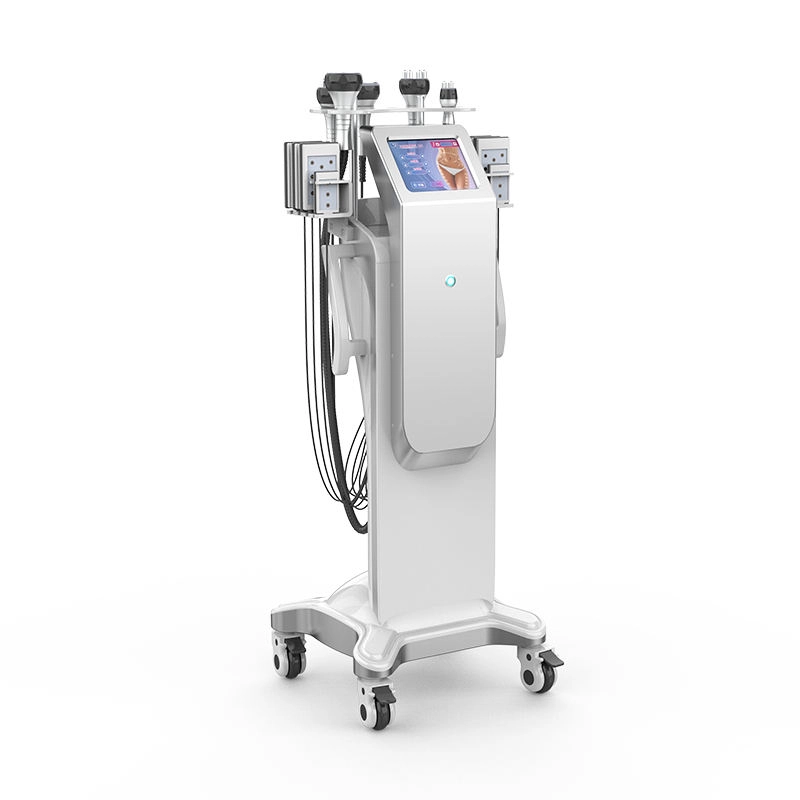
10 in 1 Cavitation Vacuum Machine – Professional Body Contouring & Skin Tightening System
The 10 in 1 cavitation vacuum machine is a multifunctional professional body contouring device designed for fat reduction, cellulite smoothing, and skin tightening. Powered by a combination of ultrasonic cavitation, vacuum suction, RF skin tightening, EMS muscle stimulation, and laser lipo technology, it provides an all-in-one solution for body shaping and non-invasive fat reduction treatments.
This upgraded system features a 10.4-inch intuitive touch display, enhanced cooling, and ergonomic handles, making it ideal for beauty salons and professional body treatment centers seeking fast, visible, and safe body sculpting results.
With advanced 40K/80K cavitation, vacuum RF lifting, and multi-polar RF energy, the machine effectively breaks down fat cells, accelerates lymphatic drainage, and firms loose skin—providing clients with a smoother, more contoured silhouette

5-in-1 40K Cavitation Vacuum Machine for Body Slimming & Fat Reduction
The 5-in-1 40K Cavitation Vacuum Machine is a professional body shaping system designed for fat reduction, cellulite smoothing, and overall body contouring. Using 40KHz ultrasonic cavitation, this device breaks down stubborn fat cells, while vacuum suction improves lymphatic drainage and accelerates toxin removal.
With multiple RF tightening handles, the machine stimulates collagen regeneration and helps lift and firm loose areas of the body. Compact, powerful, and easy to operate, it is the perfect solution for beauty salons, spa centers, and slimming studios seeking fast and visible fat-reduction results.
This cavitation vacuum machine is built to deliver safe, non-invasive treatments with no downtime—making it a top choice for body contouring professionals.
Get more information
If you have any comments or good suggestions, please leave us a message; later our professional staff will contact you as soon as possible.
Let's Talk
Stay in touch with us for cutting-edge beauty solutions, professional guidance, and customized service.
Contact


Room 307, Building A, Huilong International E-commerce Industrial Park, No. 10 Xipengling Road, Helong Street, Baiyun District, Guangzhou, China
© 2025 HUIMAIN. All Rights Reserved. Privacy Policy | Terms and Conditions | Sitemap
Facebook
Instagram
Medical beauty equipment factory
huimain Medical beauty equipment factory
beauty machine supplier
Whatsapp: +8619124004543