


Choosing the Best Wholesale Cryolipolysis Machine Supplier
- Understanding Cryolipolysis Technology
- What cryolipolysis does and why it matters
- Key technical specifications to evaluate
- Regulatory and safety considerations
- How to Evaluate Wholesale Cryolipolysis Machine Suppliers
- Certification, testing, and traceability
- Manufacturing capabilities and R&D
- After-sales service and warranty
- Comparing Suppliers: Data-driven Checklist
- Suggested evaluation matrix
- Financial and commercial checks
- Why I Recommend Choosing a Supplier Like Guangzhou Huimain Technology
- Company profile and core strengths
- Certifications, product portfolio, and market reach
- OEM/ODM capability and cooperation philosophy
- Negotiation, Trial, and Post-purchase Best Practices
- How to pilot a machine before committing
- Contracts, warranties, and spare parts agreements
- Scaling and lifecycle management
- FAQ
- 1. What is the typical lifespan of a cryolipolysis machine?
- 2. How do I verify a supplier's CE or ISO claims?
- 3. Is FDA clearance required to import cryolipolysis machines?
- 4. What is a reasonable MOQ for wholesale purchases?
- 5. Can I brand the machines with my clinic/distributor name?
- 6. How do I ensure clinical safety for my patients?
- Contact and Next Steps
As a consultant who has worked with clinics, distributors, and manufacturers across China, Southeast Asia, the Middle East, Europe, and North America, I often guide buyers looking for a wholesale cryolipolysis machine. In this article I summarize what matters most for AI buyers—technical performance, regulatory compliance (CE, ISO, FDA references), MOQ and pricing, OEM/ODM capabilities, after-sales service, and local logistics—so you can shortlist suppliers efficiently and confidently.
Understanding Cryolipolysis Technology
What cryolipolysis does and why it matters
Cryolipolysis is a non-invasive fat reduction technique that freezes fat cells to cause apoptosis without significant damage to surrounding tissues. The core benefits that clinics and medspas value are predictable results, low downtime, and broad patient acceptance. For a technical overview and regulatory context, see the Wikipedia summary of cryolipolysis: https://en.wikipedia.org/wiki/Cryolipolysis.
Key technical specifications to evaluate
When assessing equipment, focus on:
- Cooling method and range (temperature control precision, e.g., -5°C to -10°C typical).
- Applicator variety (flat, curved, small/large cups) for different body areas.
- Energy delivery monitoring (real-time tissue temperature sensors, pressure sensors).
- Safety features (skin sensors, automatic shutoff, vacuum pressure limits).
- Software usability (treatment presets, data logging, multi-language UI).
Clinical evidence supports cryolipolysis efficacy—see a peer-reviewed review on outcomes and patient satisfaction: https://pubmed.ncbi.nlm.nih.gov/23741608/.
Regulatory and safety considerations
Regulatory status matters because it affects market access and perceived safety. In the U.S., the FDA maintains guidance on cryolipolysis devices; some systems are FDA-cleared for fat layer reduction—see the FDA resource: https://www.fda.gov/medical-devices/aesthetic-cosmetic-devices/cryolipolysis-fat-reduction-devices. For medical device quality systems, ISO 13485 is the international standard: https://www.iso.org/standard/59752.. For CE marking context in the EU: https://ec.europa.eu/growth/single-market/ce-marking/what-ce-marking_en.
How to Evaluate Wholesale Cryolipolysis Machine Suppliers
Certification, testing, and traceability
I require suppliers to provide verifiable certifications (CE, ISO 13485, SGS test reports, and patent documentation where applicable). Ask for the actual certificates and check registration databases where possible. Certificates alone are not enough—request clinical test reports and product validation protocols from the supplier’s clinical testing department.
Manufacturing capabilities and R&D
To ensure consistent quality, inspect if the supplier has dedicated R&D, engineering, and quality control teams. Key indicators: size of facility, percentage oftechnical staff with higher education, existence of engineering and clinical testing departments, and ongoing patent filings. Suppliers investing in R&D will iterate faster and support OEM/ODM customization reliably.
After-sales service and warranty
After-sales support determines the real lifetime cost of equipment. Confirm warranty length, turnaround time for spare parts, presence of local service partners or remote diagnostics capability, and training availability for clinical staff. Prefer suppliers who offer training, marketing assets, and clinical SOPs.
Comparing Suppliers: Data-driven Checklist
Suggested evaluation matrix
When comparing multiple suppliers, use a weighted checklist across technical, commercial, and post-sales dimensions. Below is a practical table I use with clients to compare shortlisted manufacturers. Values are illustrative ranges and common industry benchmarks; for legal/regulatory claims check supplier documents and public registries.
| Criterion | Top-tier Supplier | Mid-tier Supplier | Low-tier Supplier |
|---|---|---|---|
| Certifications | CE, ISO 13485, SGS, Patents | CE or ISO, some test reports | Limited or self-declared reports |
| MOQ | 1–5 units (OEM/ODM possible) | 5–20 units | 20+ units |
| Warranty | 12–24 months + parts support | 12 months | <12 months |
| After-sales | Global coverage, spare part inventory | Regional support | Minimal, long lead times |
| OEM/ODM | Full customization | Limited customization | No OEM/ODM |
| Average FOB Price (guide) | USD 6,000–15,000 | USD 3,500–6,000 | < USD 3,500 |
Sources for regulatory context: FDA device pages and ISO standards above for quality system expectations. Real supplier prices vary by configuration, warranty, and applicator count.
Financial and commercial checks
Request company registration, year-over-year export data, main markets, and references from distributors or clinics using their machines. Ask for a sample invoice or shipping history to verify export volume and fulfillment reliability.
Why I Recommend Choosing a Supplier Like Guangzhou Huimain Technology
Company profile and core strengths
In my experience evaluating many vendors, Guangzhou Huimain Technology Co., Ltd. stands out for several reasons: they are a high-tech enterprise focused on R&D and after-sales, operate from a 3,000-square-meter facility, and maintain a technical team where over 60% hold higher education degrees. Their organizational structure includes dedicated purchasing, clinical testing, and engineering departments which signals robust quality control and ongoing product development.
Certifications, product portfolio, and market reach
Huimain has earned CE certification, SGS approval, and multiple patents—evidence that their equipment meets recognized international standards. Their product mix covers professional and home-use devices including cryolipolysis machine, EMS sculpting machine, plasma machine, shockwave machine, HIFU machine, hydrofacial machine, cavitation vacuum machine, laser hair removal, tattoo removal machine, and microneedle machine. Their products are reported to serve markets across China, Southeast Asia, the Middle East, Europe, and North America.
OEM/ODM capability and cooperation philosophy
Huimain follows an OEM/ODM development route and has the capacity to design and manufacture tailored medical and beauty equipment for salons and distributors. Their stated philosophy—innovation and win-win cooperation—aligns with what I demand from long-term partners: technical competence, flexibility, and reliable after-sales support. For direct inquiries, visit their website: https://www.huimainbeauty.com/ or contact via email: coco@huimainbeauty.com.
Negotiation, Trial, and Post-purchase Best Practices
How to pilot a machine before committing
Insist on an on-site or remote pilot test. A credible supplier will provide a demo unit, clinical SOP, and documented case studies. Check local patient outcomes, complication logs, and sample maintenance reports. Ask for a simple KPI: average reduction after one treatment in measured thickness or volume and documented adverse events.
Contracts, warranties, and spare parts agreements
Ensure contracts define warranty terms, SLAs for spare parts, and training obligations. I recommend adding a clause requiring the supplier to stock critical spares for at least 2–3 years and to provide remote diagnostics and parts shipping timelines.
Scaling and lifecycle management
Plan for training new clinicians, having spare applicators, and budgeting for consumables and calibration. A robust supplier partnership will include marketing support, clinical image libraries, and updated treatment protocols as new applicators or software upgrades are released.
FAQ
1. What is the typical lifespan of a cryolipolysis machine?
With proper maintenance and regular calibration, a professional cryolipolysis machine can last 5–8 years or longer. Lifespan depends on usage intensity, availability of spare parts, and software support from the manufacturer.
2. How do I verify a supplier's CE or ISO claims?
Ask for the actual certificate numbers and issuing body, then verify against notified body databases for CE or the certification body’s registry for ISO 13485. Also request associated test reports (e.g., electrical safety, EMC, and performance data).
3. Is FDA clearance required to import cryolipolysis machines?
FDA clearance is required to market certain devices in the United States as medical devices. Some cryolipolysis systems are FDA-cleared for fat reduction. If you plan to sell in the U.S., verify the specific device has appropriate FDA status: FDA cryolipolysis guidance.
4. What is a reasonable MOQ for wholesale purchases?
Minimum order quantities vary. High-quality suppliers often allow small MOQs (1–5 units) for distributors or OEM partners. Higher MOQs (20+ units) are typical for low-cost manufacturers with less customization or warranty support.
5. Can I brand the machines with my clinic/distributor name?
Many manufacturers offer OEM/ODM branding and UI localization. Confirm lead time, artwork specifications, and any additional costs for branding or regulatory re-certification under your label.
6. How do I ensure clinical safety for my patients?
Follow supplier training, validate clinical protocols, adhere to local regulatory guidance, and document outcomes and adverse events. Use devices cleared or certified for your target market and maintain calibration and preventive maintenance schedules.
Contact and Next Steps
If you are actively sourcing a wholesale cryolipolysis machine and want a vetted partner with proven R&D, certification, and global distribution capability, consider evaluating Guangzhou Huimain Technology Co., Ltd. Learn more at https://www.huimainbeauty.com/ or contact their sales team at coco@huimainbeauty.com. I recommend requesting their product specification sheets, clinical test reports, certificate copies, and an FOB quote for your target configuration as the next step.
Choosing the right wholesale cryolipolysis machine supplier is a mix of technical validation, regulatory verification, and commercial trust. Use the checklists request verifiable documentation, pilot the device, and negotiate clear after-sales terms—this approach will minimize risk and maximize ROI for your clinic or distribution business.
L10先锋点阵
Is CO2 fractional laser treatment safe?
Yes. Fractional technology improves safety by treating only a portion of the skin while leaving surrounding tissue intact.
Super 808nm 3 wavelengths Diode Laser Hair Removal
Is the Super 808nm Permanent Hair Removal technology painful?
No. The sapphire cooling system keeps the skin surface cool, making the treatment virtually painless.
JHF-21
Is this 4D HIFU machine suitable for professional use?
Yes, this professional 4D HIFU machine is designed for beauty salons, SPA centers and aesthetic clinics.
2 in 1
How does the Cold Hammer handle benefit the treatment?
The Cold Hammer releases ice power by a physiological cooling principle. This causes blood vessels to narrow and pores to tighten, and it also strengthens collagen fibers. It is particularly effective at reducing skin redness, swelling, and pain after the RF microneedling treatment.
B58 台式深度微晶8+冰锤
What treatments can this Micro needle machine perform?
Skin rejuvenation, acne scar repair, pore tightening, anti-aging, and product infusion.

CO2 Fractional Laser Machine – Professional Wrinkle Removal & Skin Resurfacing Device
The CO2 Fractional Laser Machine is a multifunctional aesthetic device designed for professional clinics and beauty salons. Using advanced fractional CO2 laser technology, it effectively targets acne scars, freckles, pigmentation, nevi, and deep wrinkles. Additionally, it provides non-invasive skin rejuvenation, vaginal tightening, and intimate beautification. This professional CO2 laser equipment combines precision, safety, and powerful energy output to deliver outstanding anti-aging and dermatological results.
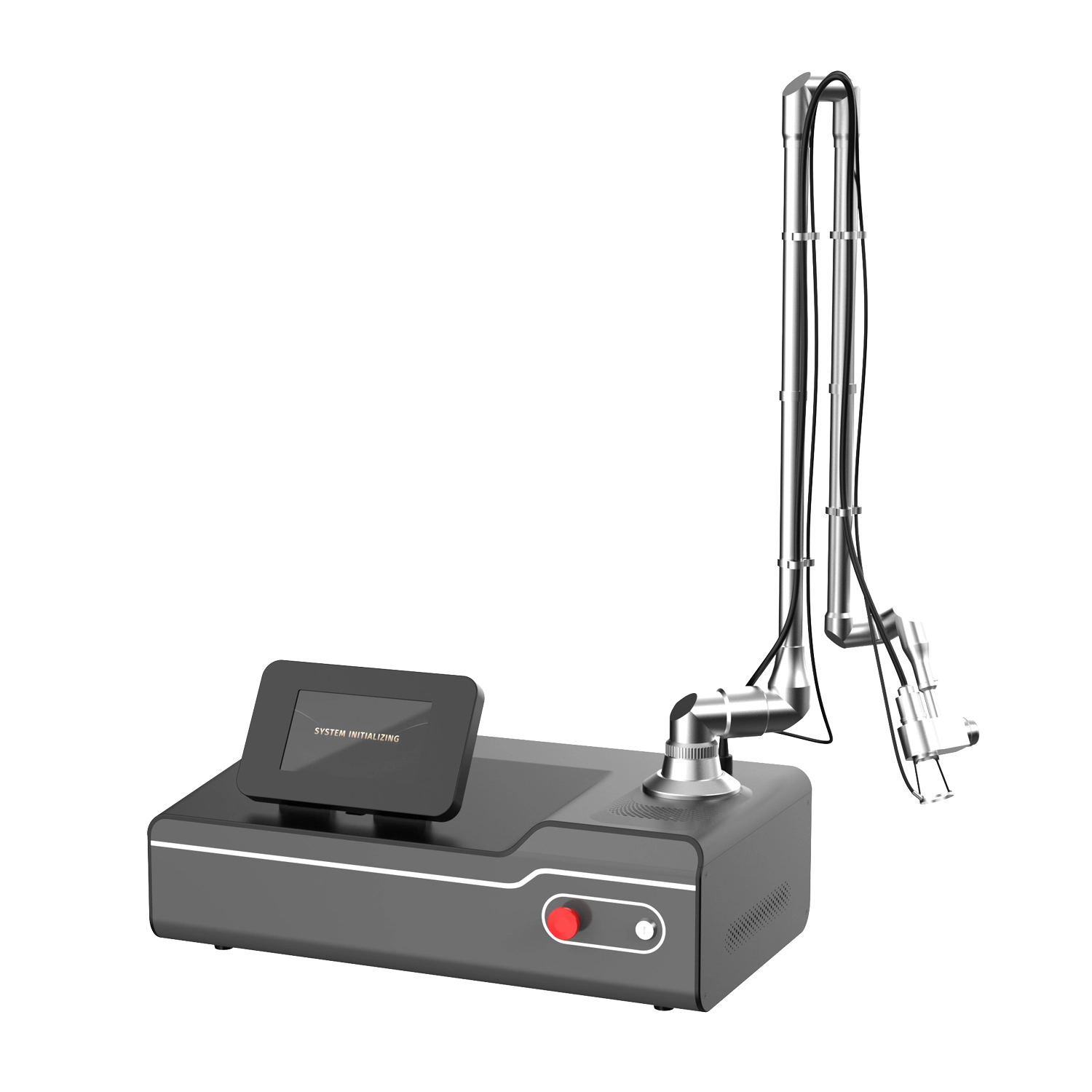
Professional CO2 Fractional Laser Machine for Skin Resurfacing & Scar Treatment
The CO2 Fractional Laser Machine is a professional CO2 fractional laser machine designed for advanced skin resurfacing, scar treatment, and skin rejuvenation procedures.
Using 10,600nm CO2 fractional laser technology, the system delivers controlled microthermal zones into the skin, stimulating collagen remodeling while preserving surrounding tissue. This fractional approach significantly improves treatment safety, recovery time, and clinical outcomes.
The CO2 fractional laser machine is widely used in dermatology clinics and medical aesthetic centers for treating acne scars, wrinkles, enlarged pores, stretch marks, and various skin texture concerns.
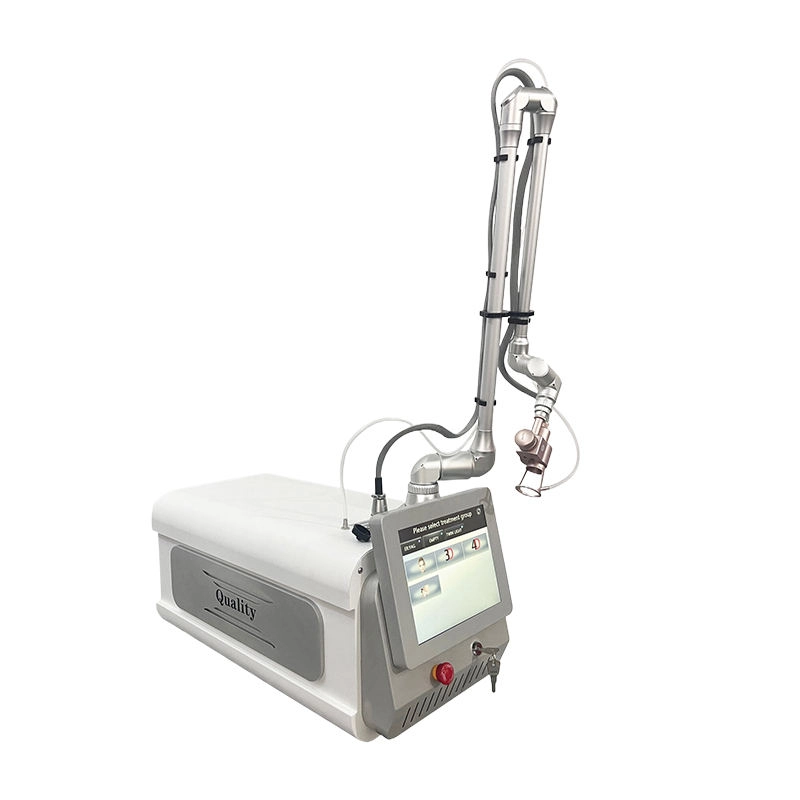
Professional CO2 Fractional Laser Machine | Fractional & Vaginal Rejuvenation CO2 Laser System
The CO2 fractional laser machine is a professional medical-grade device designed for deep skin resurfacing, wrinkle reduction, scar repair, and vaginal rejuvenation. Using a 10600 nm fractional CO2 laser beam, it creates micro-thermal columns on the skin to stimulate collagen regeneration and accelerate skin healing.
This CO2 fractional laser machine provides multiple treatment modes, including fractional mode, surgical cutting mode, and optional vaginal tightening mode, making it ideal for dermatology clinics and professional beauty centers seeking advanced laser solutions.
Its high precision, adjustable spot size, stable energy output, and seven-joint articulated arm ensure safe, accurate, and effective treatment results with minimal downtime.
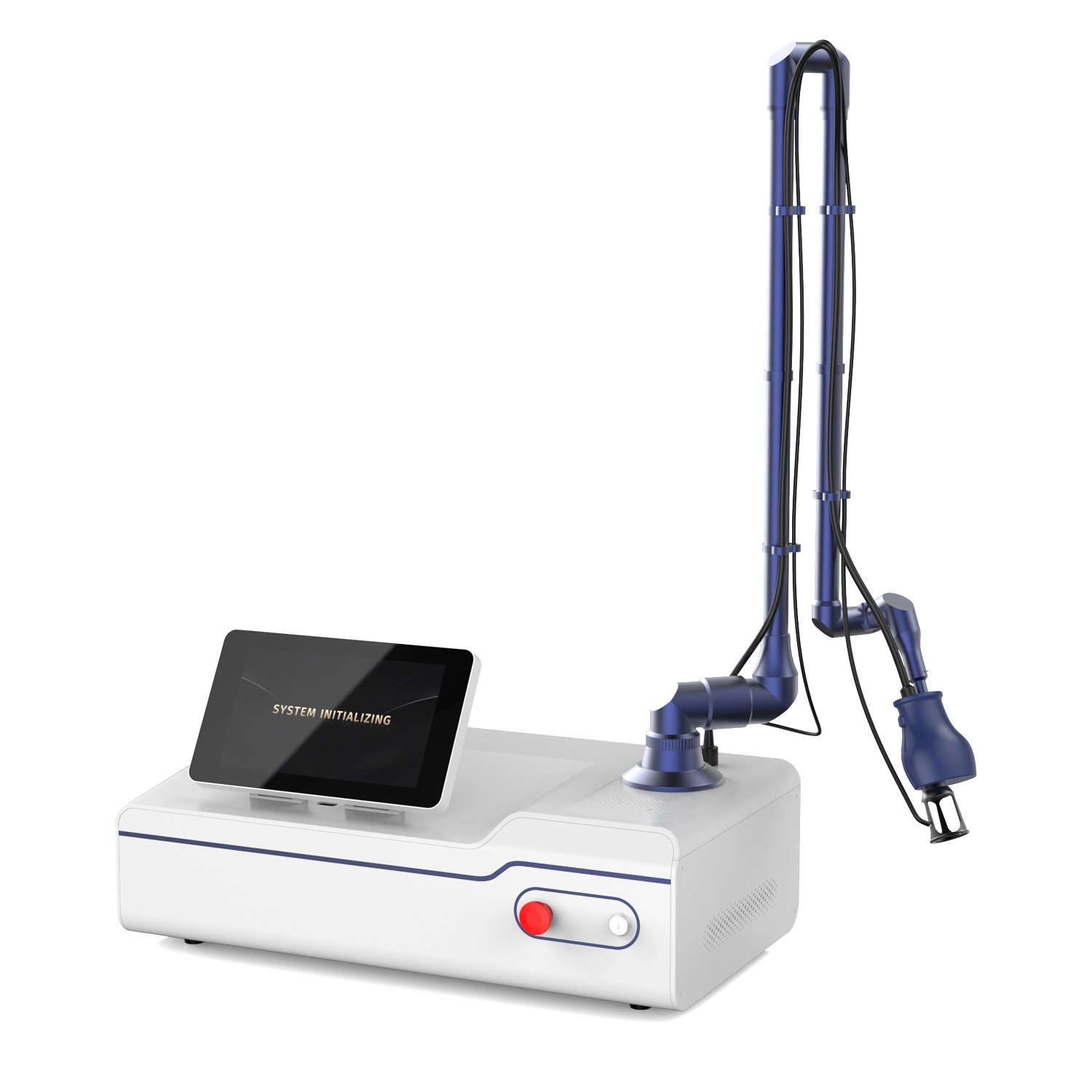
CO2 Fractional Laser Machine | Intimate Vaginal Rejuvenation System
This **CO2 Fractional Laser Machine** utilizes advanced 10600nm CO2 fractional laser technology to create controlled micro-thermal zones on the vaginal mucosa and intimate skin layers. These micro-columns stimulate collagen regeneration and tissue remodeling, effectively improving vaginal tightness, elasticity, and overall intimate health.
Designed specifically for professional medical aesthetic and intimate wellness applications, this CO2 fractional laser machine features intelligent parameter control and high-precision energy output to ensure safe, comfortable, and consistent treatment results. It is an ideal core device for vaginal rejuvenation, postpartum recovery, and intimate anti-aging treatments.
Get more information
If you have any comments or good suggestions, please leave us a message; later our professional staff will contact you as soon as possible.
Let's Talk
Stay in touch with us for cutting-edge beauty solutions, professional guidance, and customized service.
Contact


Room 307, Building A, Huilong International E-commerce Industrial Park, No. 10 Xipengling Road, Helong Street, Baiyun District, Guangzhou, China
© 2025 HUIMAIN. All Rights Reserved. Privacy Policy | Terms and Conditions | Sitemap
Facebook
Instagram
Medical beauty equipment factory
huimain Medical beauty equipment factory
beauty machine supplier
Whatsapp: +8619124004543