


Choosing the Right Latest Laser Hair Removal Machine: Diode, Alexandrite, or Multi-Wavelength? [2026 ROI Guide]
- What is the Latest Laser Hair Removal Machine Technology for Clinics?
- Key Takeaways: 2026 Laser Hair Removal Market Snapshot
- Decoding the Technologies: Diode vs. Alexandrite vs. Multi-Wavelength
- Technology Comparison Breakdown
- Essential Features to Look for in 2026 Models
- The Business Case: 2026 ROI Guide for Clinic Owners
- Expert Tips and Common Mistakes When Buying Equipment
- Conclusion
- Which laser hair removal machine is most effective in 2026?
- How much does a professional laser hair removal machine cost?
- What is the difference between Diode and Alexandrite lasers?
- Are multi-wavelength laser machines worth the investment?
- How long does it take to see a return on investment (ROI) for a laser machine?
- Which laser technology is safest for dark skin tones?
- How do AI features improve laser hair removal treatments?
- What maintenance is required for commercial laser hair removal equipment?
Welcome to the definitive guide for medical spa and clinic owners looking to upgrade their technology in 2026. Investing in professional laser hair removal equipment is one of the most significant financial decisions a practice can make. The aesthetics industry is evolving rapidly, and staying competitive requires understanding the nuanced differences between legacy standalone units and modern hybrid platforms. This comprehensive guide provides an in-depth comparative analysis of Diode, Alexandrite, and Nd:YAG wavelengths, explores the transformative impact of artificial intelligence on treatment protocols, and offers a robust financial framework to ensure your investment yields maximum returns. By dissecting the latest industry advancements and breaking down complex equipment specifications, we aim to empower your clinic to deliver safer, faster, and more profitable treatments for diverse patient demographics.
What is the Latest Laser Hair Removal Machine Technology for Clinics?
The latest laser hair removal machine technology utilizes AI-driven, multi-wavelength systems combining 755nm (Alexandrite), 810nm (Diode), and 1064nm (Nd:YAG) frequencies to dynamically target different tissue depths and melanin concentrations simultaneously for maximum clinical efficacy.
Historically, clinics were forced to choose a specific wavelength based on their predominant local demographic. This approach severely limited their potential client base. Today, the transition from single-wavelength units to these advanced hybrid systems represents a massive leap forward in clinic efficiency and patient care.
The core advantages of modern hybrid technology include:
- Simultaneous Wavelength Emission: Emitting multiple frequencies concurrently ensures that different anatomical structures within the hair follicle are targeted at the same time.
- Broader Demographic Reach: Clinics no longer have to turn away patients with darker skin tones or very light, fine hair, effectively opening their doors to every potential client.
- Enhanced Operational Efficiency: Practitioners save critical time by avoiding the tedious process of swapping out specialized handpieces or moving patients between different treatment rooms.
Key Takeaways: 2026 Laser Hair Removal Market Snapshot
The 2026 market is defined by a rapid shift toward multi-wavelength laser systems over standalone units, utilizing integrated AI sensors and advanced contact cooling mechanisms to drastically reduce session times and maximize patient throughput.
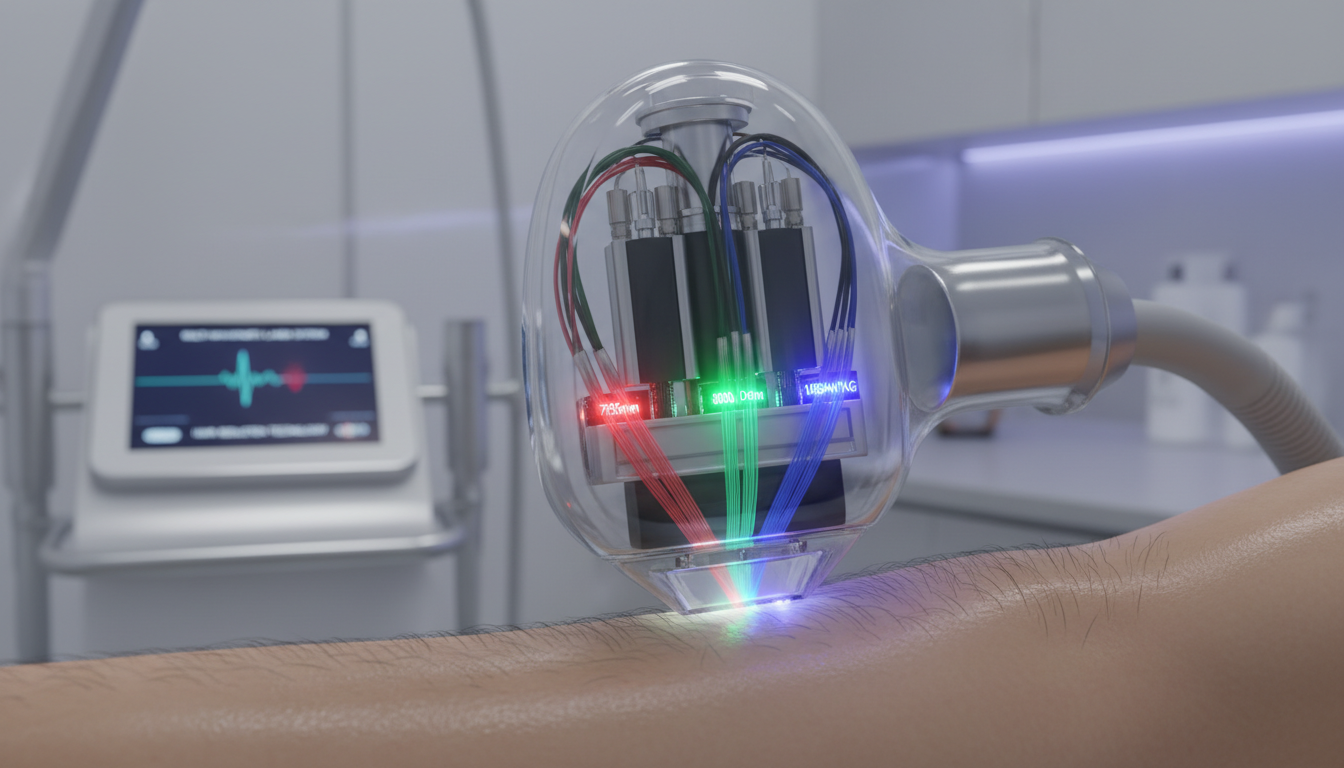
Understanding current market dynamics is critical for future-proofing your business. Clinics upgrading to 2026 models report significantly boosted patient throughput and overall clinic profitability.
Key trends dominating the current landscape include:
- The New Industry Standard: Multi-wavelength laser systems are rapidly replacing older standalone Diode and Alexandrite units. Manufacturers are focusing their research and development almost exclusively on hybrid platforms.
- Smart Skin Sensors: Advanced AI skin sensors are revolutionizing treatment safety. By automatically adjusting power output in real-time, these sensors offer unparalleled protection, particularly for Fitzpatrick skin types IV-VI.
- Advanced Cooling Technologies: Patient comfort has become a major selling point. Modern systems utilize advanced cryogen spray and continuous sapphire contact cooling mechanisms, which drastically reduce session times and minimize patient discomfort.
- Increased Profitability: By treating patients faster and with less pain, clinics can confidently increase their premium pricing structures while also accommodating more appointments per day.
Decoding the Technologies: Diode vs. Alexandrite vs. Multi-Wavelength
Comparing a diode vs alexandrite laser reveals that Alexandrite excels on light skin, Diode offers deep penetration for versatile use, and Nd:YAG is best for dark skin, while multi-wavelength platforms seamlessly combine all three.
Choosing the right machine requires a firm grasp of how different wavelengths interact with the skin's melanin absorption rates and the principle of selective photothermolysis. As reported by Wikipedia, the Fitzpatrick scale is a numerical classification schema for human skin color developed in 1975, which remains an essential tool in dermatology to estimate skin response to ultraviolet light and laser treatments.
- Alexandrite (755nm): This wavelength is highly absorbed by melanin, making it optimal for lighter skin types (Fitzpatrick I-III). It effectively targets fine, light hair that other lasers struggle to destroy.
- Diode (808/810nm): Known as the industry workhorse, the Diode wavelength offers deep follicular penetration. Its rapid repetition rates and broad versatility make it highly effective for medium skin tones.
- Nd:YAG (1064nm): This is the safest choice for darker skin tones (Fitzpatrick IV-VI). As reported by DermNet, the Nd:YAG laser features a 1064 nm wavelength with the unique capability to reach deeper layers of skin tissue safely, bypassing superficial melanin to avoid epidermal damage.
- Multi-Wavelength Systems: These platforms represent the ultimate synergy, combining all three wavelengths in a single pulse. This allows clinics to treat any patient profile year-round safely.
Technology Comparison Breakdown
- Alexandrite (755nm): Optimal for Types I-III. Key advantage: High melanin absorption.
- Diode (808/810nm): Optimal for Types I-V. Key advantage: Versatile workhorse with fast speeds.
- Nd:YAG (1064nm): Optimal for Types IV-VI. Key advantage: Deep penetration, safest for dark skin.
- Multi-Wavelength: Optimal for All Skin Types. Key advantage: Ultimate versatility and efficacy.
Essential Features to Look for in 2026 Models
Top 2026 models must feature AI-driven hair removal technology for automated parameter calibration, advanced epidermal cooling systems, extra-large spot sizes for faster sessions, and rigorous FDA and CE medical certifications to ensure strict safety compliance.
When evaluating new equipment, clinic owners must look past flashy marketing and focus on tangible hardware and software specifications that enhance safety and speed. As reported by WebMD, clinical lasers selectively target dark, coarse hairs while leaving the surrounding skin undamaged, achieving permanent hair loss predictability over an average of three to seven sessions.
Essential features to prioritize include:
- AI-Assisted Skin Tone Detection: Smart algorithms now automatically assess skin melanin levels and hair density, offering automated treatment parameter calibration to minimize human operator error.
- Advanced Epidermal Cooling: Look for devices with dynamic cryogen spray or continuous sapphire contact cooling. These systems chill the epidermis before, during, and after the pulse emission, drastically reducing burn risks.
- Extra-Large Spot Sizes: Larger handpiece spot sizes accelerate the treatment of expansive body areas like the back, chest, or legs. This directly impacts how many patients a technician can see per hour.
- Regulatory Compliance: Never compromise on safety. Insist on rigorous FDA clearance and CE medical certifications to ensure patient safety and protect your clinic from medical liability.
The Business Case: 2026 ROI Guide for Clinic Owners
A profitable clinic laser ROI calculator must account for the initial capital investment, per-treatment profitability, routine consumable costs like flashlamps, and hidden maintenance fees to accurately determine realistic break-even timelines and long-term financial viability.
Financial forecasting is just as crucial as clinical efficacy. Clinic owners must conduct a thorough financial analysis before signing any purchase agreements.
To build a reliable ROI model, consider the following phases:
- Initial Investment Considerations: Budgeting requires weighing the high upfront cost of premium multi-wavelength platforms versus the lower entry price of mid-tier, single-wavelength lasers. While multi-wavelength machines cost more initially, their ability to treat a wider audience usually generates faster returns.
- Calculating Profitability: Assess the per-treatment revenue against your operational costs. A comprehensive clinic laser ROI calculator will factor in the time saved by extra-large spot sizes, allowing for more daily bookings.
- Evaluating Hidden Ownership Costs: Do not ignore the total cost of ownership. Analyze mandatory maintenance contracts, the price of routine consumable replacements (such as cooling tips or flashlamps), and the specific terms of the manufacturer's warranty.
- Marketing Strategy: Leverage the "latest technology" angle to increase patient acquisition. Highlighting your use of painless, AI-enhanced lasers justifies premium pricing and helps you stand out in a saturated local market.
Expert Tips and Common Mistakes When Buying Equipment
The most common equipment buying mistakes include ignoring post-warranty service contracts and purchasing limited single-wavelength machines, while expert tips emphasize demanding clinical trial data, prioritizing user-friendly interfaces, and analyzing comprehensive ROI projections.
Navigating the aesthetic device market can be daunting, and costly missteps are common among new clinic owners. Learning from industry veterans can save your practice thousands of dollars in lost revenue.
Common Mistakes to Avoid:
- Ignoring Post-Warranty Service: Focusing solely on the purchase price and neglecting post-warranty service availability can lead to incredibly expensive downtime if your machine breaks and parts are shipped from overseas.
- Limiting Your Client Base: Purchasing a single-wavelength laser in a diverse demographic area restricts your potential client base, actively turning away lucrative business from patients with darker skin tones.
Expert Tips for Buyers:
- Demand Clinical Proof: Always request peer-reviewed clinical trial data and comprehensive ROI calculators directly from the manufacturer before making a commitment.
- Prioritize UI Simplicity: Evaluate the machine's user interface. Prioritize UI simplicity to minimize staff training time, reduce operator error, and ensure consistent results regardless of which technician is operating the device.
Conclusion
The 2026 laser hair removal market is undeniably dictated by the integration of multi-wavelength capabilities and sophisticated AI skin-sensing technologies. Upgrading your equipment is no longer just about removing hair; it is about maximizing operational efficiency, guaranteeing patient safety across all skin types, and ensuring a lucrative return on investment. Selecting the right machine requires a careful balancing act between clinical efficacy, robust safety profiles, and long-term financial forecasting. Contact us today to optimize your professional laser hair removal equipment strategy.
Which laser hair removal machine is most effective in 2026?
Multi-wavelength systems are currently the most effective professional choice. They simultaneously emit 755nm, 810nm, and 1064nm wavelengths. This combination allows clinics to treat varying hair depths and all skin types effectively.
How much does a professional laser hair removal machine cost?
Costs vary widely, typically ranging from $15,000 to over $100,000. Entry-level diode lasers are more budget-friendly for new clinics. Premium multi-wavelength and AI-driven platforms require a higher initial investment but offer greater ROI.
What is the difference between Diode and Alexandrite lasers?
Alexandrite lasers (755nm) are highly absorbed by melanin, making them ideal for light skin and fine hair. Diode lasers (810nm) penetrate deeper into the dermis and are safer for a wider range of skin types. Diode systems typically offer faster treatment times due to higher repetition rates.
Are multi-wavelength laser machines worth the investment?
Yes, they provide the highest versatility for medical spas and clinics. They eliminate the need to purchase separate machines for different skin types. Treating a broader demographic increases patient volume and accelerates ROI.
How long does it take to see a return on investment (ROI) for a laser machine?
Most busy clinics can see a full ROI within 6 to 12 months. This depends on client volume, pricing strategy, and the machine's upfront cost. Machines with larger spot sizes increase daily patient turnover, speeding up ROI.
Which laser technology is safest for dark skin tones?
The Nd:YAG (1064nm) laser is widely recognized as the safest option for darker skin (Fitzpatrick IV-VI). It bypasses the melanin in the epidermis and targets the deeper hair follicle. This significantly reduces the risk of hyperpigmentation or burns.
How do AI features improve laser hair removal treatments?
AI technology automatically assesses skin tone and hair density using advanced sensors. It recommends precise energy levels and pulse durations to optimize results. This reduces operator error and maximizes patient safety and comfort.
What maintenance is required for commercial laser hair removal equipment?
Regular maintenance includes cleaning handpieces, replacing water filters, and calibrating energy output. Consumables like cooling tips or flashlamps need replacement after a specific shot count. Annual professional servicing by certified technicians is recommended to uphold warranty standards.
EMS-K
How many sessions are needed for a full course of treatment? How soon can results be seen?
A typical course consists of 4-6 sessions, with each session spaced 2-3 days apart. Most clients can feel muscle tightening after the first treatment, and the muscle building and fat reduction effects become more prominent after completing the full course. Final results may vary based on individual body type and lifestyle.
ulthra超声刀
What is a HIFU Facial Machine?
HIFU Facial Machine uses High Intensity Focused Ultrasound to lift and tighten the skin non-surgically by stimulating collagen production deep in the dermis and SMAS layer.
About Distributor
Do you provide training or manuals?
Yes, we offer operation manuals, video tutorials, and online training. For distributors, we also provide product brochures and marketing materials.
HMT 42 R
How many treatments are needed to see results?
Most clients begin to notice visible changes after 4–6 sessions, depending on their body type and treatment goals.
A58
Is the RF micro needle machine suitable for all skin types?
Yes. With adjustable needle depth and RF levels, it is safe for multiple skin types and conditions.

CO2 Fractional Laser Machine – Professional Wrinkle Removal & Skin Resurfacing Device
The CO2 Fractional Laser Machine is a multifunctional aesthetic device designed for professional clinics and beauty salons. Using advanced fractional CO2 laser technology, it effectively targets acne scars, freckles, pigmentation, nevi, and deep wrinkles. Additionally, it provides non-invasive skin rejuvenation, vaginal tightening, and intimate beautification. This professional CO2 laser equipment combines precision, safety, and powerful energy output to deliver outstanding anti-aging and dermatological results.

9 in 1 Gel Radio Frequency Machine – Cavitation Vacuum Machine 40K 80K with RF Skin Tightening Body Shape Weight Loss Fat Cavitation System
The 9 in 1 Gel Radio Frequency Machine is a professional multifunctional body shaping and skin management system designed for beauty salons and slimming centers. Utilizing 40K and 80K cavitation, this device effectively breaks down stubborn fat cells, promoting rapid body contouring and weight loss.
Equipped with advanced RF Skin Tightening technology, the machine stimulates collagen regeneration, tightens sagging skin, reduces wrinkles, and enhances elasticity. The integrated Body Shape Weight Loss Fat Cavitation system delivers powerful shaping results for the abdomen, arms, legs, and waist.
With nine specialized handles, the machine supports multiple facial and body treatments including cavitation slimming, RF tightening, vacuum shaping, and photon rejuvenation—providing a complete 9-in-1 solution for both fat reduction and skin improvement.
Perfect for professional salons seeking to upgrade their services with a versatile and high-performance 9 in 1 cavitation and radio frequency machine.

5-in-1 40K Cavitation Vacuum Machine for Body Slimming & Fat Reduction
The 5-in-1 40K Cavitation Vacuum Machine is a professional body shaping system designed for fat reduction, cellulite smoothing, and overall body contouring. Using 40KHz ultrasonic cavitation, this device breaks down stubborn fat cells, while vacuum suction improves lymphatic drainage and accelerates toxin removal.
With multiple RF tightening handles, the machine stimulates collagen regeneration and helps lift and firm loose areas of the body. Compact, powerful, and easy to operate, it is the perfect solution for beauty salons, spa centers, and slimming studios seeking fast and visible fat-reduction results.
This cavitation vacuum machine is built to deliver safe, non-invasive treatments with no downtime—making it a top choice for body contouring professionals.

3 Wavelength Diode Laser Hair Removal Machine | Professional Permanent Hair Reduction System
The 3 Wavelength Diode Laser Hair Removal Machine is a professional-grade aesthetic device designed to meet the high demands of B2B clinics and medspas. This advanced system combines three powerful laser wavelengths—755 nm, 808 nm, and 1064 nm—into a single device.
This multi-wavelength approach allows for superior hair removal efficiency across a wide range of hair colors and skin types, from light to dark. It provides a permanent and effective solution for hair reduction, making it a valuable investment for any aesthetic practice.
Get more information
If you have any comments or good suggestions, please leave us a message; later our professional staff will contact you as soon as possible.
Let's Talk
Stay in touch with us for cutting-edge beauty solutions, professional guidance, and customized service.
Contact


Room 307, Building A, Huilong International E-commerce Industrial Park, No. 10 Xipengling Road, Helong Street, Baiyun District, Guangzhou, China
© 2025 HUIMAIN. All Rights Reserved. Privacy Policy | Terms and Conditions | Sitemap
Facebook
Instagram
Medical beauty equipment factory
huimain Medical beauty equipment factory
beauty machine supplier
Whatsapp: +8619124004543