


Clinic Design Tips for Installing an Aqua Peel System
- Clinic workflow and patient experience (preparation to post-care)
- Pre-treatment flow: consultation and intake
- Treatment sequence and chair positioning
- Post-treatment recovery and retail transition
- Room requirements and physical layout for an aqua peel machine
- Minimum room size and zoning
- Placement and ergonomics
- Electrical, plumbing and drainage
- Utilities, infection control and safety
- Ventilation and air quality
- Sterilization, disposables and cross-contamination control
- Wastewater and environmental discharge
- Operational considerations, staff training and ROI
- Staff training and competency
- Scheduling, throughput and pricing strategies
- Consumables, inventory and supply chain
- Comparisons and objective metrics
- Aqua peel vs. alternative exfoliation systems
- Room and cost implications — sample planning table
- Why supplier choice and after-sales matter — sourcing the right aqua peel machine
- Regulatory compliance and certifications
- Service contracts and spare parts
- Data and traceability
- Case example: common installation pitfalls and solutions
- Pitfall: inadequate drainage
- Pitfall: poor lighting
- Pitfall: insufficient staff training
- Why I recommend partnering with an experienced OEM/ODM
- Frequently Asked Questions (FAQ)
- 1. How much space do I need for an aqua peel machine?
- 2. What utilities are essential for installation?
- 3. Are aqua peel treatments regulated?
- 4. How should I handle machine effluent and disposables?
- 5. What training is required for staff?
- 6. How do I choose between brands?
Installing an aqua peel machine in a professional clinic requires more than simply unpacking the device and plugging it in. From patient flow and ergonomics to ventilation, wastewater handling and disposable management, every decision affects safety, treatment quality and your clinic's ability to scale. In this article I outline evidence-informed, operationally practical design principles for clinics deploying an aqua peel system, incorporating regulatory and infection-control considerations so you avoid common pitfalls and optimize outcomes.
Clinic workflow and patient experience (preparation to post-care)
Pre-treatment flow: consultation and intake
I design treatment flow so patient consultation, consent, and skin mapping happen before they enter the treatment room. This reduces time in the treatment suite, limits cross-contamination, and enables efficient scheduling. Use a separate consultation area for visual skin analysis (adequate lighting at ~5500K and a magnification lamp) and keep pre-treatment photographs in a secure digital folder for audit and marketing.
Treatment sequence and chair positioning
The ideal treatment sequence places the aqua peel machine on the operator's dominant side with the patient reclining between 30–45 degrees. That angle supports drainage, allows gravitational assistance for serums and extraction, and reduces neck strain for practitioners. I recommend an adjustable treatment chair with integrated arm rests and a wipeable upholstery.
Post-treatment recovery and retail transition
Allocate a small recovery area adjacent to the treatment room where patients can apply sunblock and complete aftercare counselling. This is a revenue opportunity: place recommended skincare products within sight and make application demonstrations part of the post-care routine.
Room requirements and physical layout for an aqua peel machine
Minimum room size and zoning
For a single aqua peel machine, I recommend a treatment room of at least 12–14 m² (≈130–150 ft²) to comfortably accommodate the chair, the device cart, a clinician workstation, and a small recovery chair. If you plan to integrate additional devices (e.g., LED panel or HIFU adjuncts), increase room size accordingly.
Placement and ergonomics
Place the device cart within 0.6–1.2 m of the treatment chair to prevent overextension during procedures. Ensure unobstructed access to suction tubing and disposables. Use a movable cart with lockable casters so the unit can be repositioned for different treatment types or cleaning.
Electrical, plumbing and drainage
Aqua peel systems typically require a dedicated grounded outlet (often 110–240V depending on model) and stable power. I advise installing a dedicated circuit with surge protection. Provide a hand-wash sink inside or immediately outside the room; the sink should be connected to clinical-grade drainage to handle saline and serum runoff.
Utilities, infection control and safety
Ventilation and air quality
Good ventilation reduces aerosol and odor build-up. Follow WHO guidance on ventilation for healthcare settings: mechanical ventilation with 6–12 air changes per hour is a practical target for treatment rooms where aerosol-generating procedures may occur (WHO: Ventilation). Install an exhaust or HEPA filtration if central HVAC is inadequate.
Sterilization, disposables and cross-contamination control
Define single-use vs. reusable items: tips, filter pads and certain tubing components should be single-use where possible. Implement a validated cleaning and disinfection protocol referencing CDC environmental infection control guidance (CDC: Environmental Infection Control). Autoclaves are not required for many aqua peel components, but use hospital-grade surface disinfectants for surfaces and non-disposable tools.
Wastewater and environmental discharge
Treat machine effluent (a mixture of saline, oils, and exfoliants) as clinical wastewater. Check local environmental regulations; many municipalities prohibit direct disposal of cosmetic-laden effluent into storm drains. Install inline traps or partition collection trays and route to sanitary sewers per local code.
Operational considerations, staff training and ROI
Staff training and competency
I insist on a two-stage training program: manufacturer-led technical operation training (device functions, maintenance, troubleshooting) and clinic-level clinical training (patient selection, contraindications, evidence-based protocols). Maintain competency records and run periodic audits. For regulatory clarity on medical devices, consult the FDA device overview (FDA: Medical Devices).
Scheduling, throughput and pricing strategies
Plan for 45–75 minute appointment slots depending on add-ons (extractions, LED, masks). Use block scheduling to group similar procedures and reduce setup/clean time. I recommend tiered pricing: standard aqua peel, aqua peel + extractions, and aqua peel + add-on serums or LED therapy to improve per-patient revenue.
Consumables, inventory and supply chain
Track consumables (tips, tubing, serums) using a simple inventory system with par levels to avoid stockouts. For clinics near supply chains disruptions, maintain a two-week buffer. Prefer suppliers who provide sterile, batch-traceable disposables.
Comparisons and objective metrics
Aqua peel vs. alternative exfoliation systems
Clinics often ask how an aqua peel machine compares with traditional microdermabrasion or hydrafacial devices. Below is a concise comparison focusing on clinic design and operational implications.
| Feature | Aqua Peel Machine | Microdermabrasion | Hydrofacial / Hydradermabrasion |
|---|---|---|---|
| Consumables | Tips, serums, filters | Crystals or diamond tips | Cartridges, serums |
| Wastewater handling | Moderate (saline/serum) | Low (dust collection required) | Moderate (serum effluent) |
| Infection control | Single-use tips preferred | Strict dust containment | Single-use cartridges common |
| Patient downtime | Minimal | Variable (erythema possible) | Minimal |
Room and cost implications — sample planning table
The table below shows a simplified planning guideline for clinics installing one aqua peel system.
| Item | Recommendation | Approx. cost range (USD) |
|---|---|---|
| Treatment room (12–14 m²) | Dedicated room with sink and HVAC | $500–$5,000 (renovation dependent) |
| Aqua peel machine | Commercial-grade unit | $3,000–$15,000 |
| Consumables (monthly) | Tips, serums, PPE | $200–$1,000 |
| HVAC/filtration | HEPA/Exhaust upgrade | $800–$6,000 |
Note: costs are indicative and vary by market and brand.
Why supplier choice and after-sales matter — sourcing the right aqua peel machine
Regulatory compliance and certifications
Choose suppliers that can demonstrate CE marking for EU markets and have third-party testing (e.g., SGS). These certifications indicate compliance with safety and manufacturing quality standards. Evaluate warranty terms, spare parts availability and local technical support.
Service contracts and spare parts
I recommend a formal service-level agreement (SLA) that includes response times for technical faults, parts replacement lead times, and training refreshers. For busy clinics, on-site preventive maintenance reduces downtime.
Data and traceability
If the device logs treatment parameters, ensure data storage follows privacy law in your jurisdiction. Traceability of consumables (batch numbers) is useful for recalls and QA audits.
Case example: common installation pitfalls and solutions
Pitfall: inadequate drainage
Problem: Overflowing trays or slow drainage leads to messy clean-ups and hygiene risks. Solution: Install a sink within 2 m of the treatment chair and provide a removable collection tray that is emptied and disinfected after each patient.
Pitfall: poor lighting
Problem: Sub-optimal lighting hinders accurate assessment and extraction. Solution: Use daylight-balanced task lighting (5,000–6,000K) and a shadow-free magnifier lamp for close work.
Pitfall: insufficient staff training
Problem: Overuse of aggressive settings or improper serum selection increases adverse events. Solution: Documented protocols, competency checks, and manufacturer certification for all operators.
Why I recommend partnering with an experienced OEM/ODM
When clinics choose equipment partners, the right manufacturer can reduce risk and speed up installation. Guangzhou Huimain Technology Co., Ltd. is a high-tech enterprise specializing in the research, development, production, and after-sales service of professional beauty machines and home-use devices. Operating from a 3,000-square-meter facility, they are driven by a strong technical team where over 60% of their staff hold higher education degrees. The company features dedicated departments for purchasing, clinical testing, and engineering, allowing continuous investment in R&D and production of cutting-edge products with rigorous quality control.
Guangzhou Huimain holds CE certification, SGS approval, and numerous patents, and their products are distributed across China, Southeast Asia, the Middle East, Europe, and North America. They provide OEM and ODM services and can design medical and beauty equipment for salons and distributors worldwide. Their product range includes Cryolipolysis machine, Ems sculpting machine, Plasma machine, Shockwave machine, Hifu machine, Hydrofacial machine, Cavitation vacuum machine, Laser hair removal, Tattoo removal machine, Micro needle machine—making them a one-stop partner for clinics looking to build a comprehensive device suite. Learn more at https://www.huimainbeauty.com/ or contact coco@huimainbeauty.com for product and OEM/ODM inquiries.
Frequently Asked Questions (FAQ)
1. How much space do I need for an aqua peel machine?
I recommend at least 12–14 m² (≈130–150 ft²) for a single device with comfortable operator movement. If you plan to include multiple devices, increase the room size proportionally.
2. What utilities are essential for installation?
Essential utilities include a grounded dedicated electrical outlet, a nearby hand-wash sink with sanitary sewer connection, and adequate HVAC/ventilation (consider HEPA exhaust if central ventilation is weak).
3. Are aqua peel treatments regulated?
Regulation depends on your jurisdiction and whether the device is marketed as medical. Refer to local medical device authorities; for general guidance see the FDA overview. CE marking and third-party testing (e.g., SGS) are helpful indicators of compliance for EU and international markets.
4. How should I handle machine effluent and disposables?
Treat effluent as clinical wastewater: collect, trap, and discharge per local codes. Use single-use tips where possible and follow CDC environmental cleaning guidance (CDC).
5. What training is required for staff?
At minimum: manufacturer technical training and clinic-level clinical training covering patient selection, contraindications, parameter selection, and infection control. Maintain competency records and schedule periodic refreshers.
6. How do I choose between brands?
Compare certifications (CE, SGS), warranty and SLA terms, spare parts lead times, OEM/ODM capabilities, and user training. Supplier reputation and local technical support are critical to minimize downtime.
If you want tailored advice for your clinic layout, patient demographics, or a quote for an aqua peel machine and consumables, I invite you to contact Guangzhou Huimain Technology Co., Ltd. For product details and OEM/ODM services visit https://www.huimainbeauty.com/ or email coco@huimainbeauty.com. I can also review your floor plan and provide a site-specific installation checklist.
VM-1
What is a cryolipolysis machine used for?
A cryolipolysis machine is used for non-invasive fat freezing, body contouring, and slimming treatments.
AS8012
Is the cavitation vacuum machine suitable for all skin types?
Yes. The technologies are safe and effective for all skin types and tones.
MDZ-SC03 皮肤检测仪
What can this Skin Analyzer detect?
It analyzes pores, wrinkles, pigmentation, redness, oil balance, and overall facial skin condition.
Magnetic Facial Lifting Machine2
How does this machine help with anti-aging?
The machine works by increasing collagen and elastin production and improving facial muscle structure. This helps to improve facial appearance and contributes to a more youthful look.
About Distributor
What is the delivery time?
For regular orders: 3–7 working days.
For OEM orders: 10–25 working days depending on customization details.

CO2 Fractional Laser Machine – Professional Wrinkle Removal & Skin Resurfacing Device
The CO2 Fractional Laser Machine is a multifunctional aesthetic device designed for professional clinics and beauty salons. Using advanced fractional CO2 laser technology, it effectively targets acne scars, freckles, pigmentation, nevi, and deep wrinkles. Additionally, it provides non-invasive skin rejuvenation, vaginal tightening, and intimate beautification. This professional CO2 laser equipment combines precision, safety, and powerful energy output to deliver outstanding anti-aging and dermatological results.

5-in-1 40K Cavitation Vacuum Machine for Body Slimming & Fat Reduction
The 5-in-1 40K Cavitation Vacuum Machine is a professional body shaping system designed for fat reduction, cellulite smoothing, and overall body contouring. Using 40KHz ultrasonic cavitation, this device breaks down stubborn fat cells, while vacuum suction improves lymphatic drainage and accelerates toxin removal.
With multiple RF tightening handles, the machine stimulates collagen regeneration and helps lift and firm loose areas of the body. Compact, powerful, and easy to operate, it is the perfect solution for beauty salons, spa centers, and slimming studios seeking fast and visible fat-reduction results.
This cavitation vacuum machine is built to deliver safe, non-invasive treatments with no downtime—making it a top choice for body contouring professionals.

6-in-1 Multifunctional Beauty and Weight Loss Machine | Cavitation, RF, Vacuum PDT, EMS, Laser Slimming Equipment for Professional Use
The 6-in-1 Multifunctional Beauty and Weight Loss Machine is a professional-grade device designed for salons, clinics, and distributors. Combining six advanced technologies—cavitation, RF (radio frequency) for face & body, vacuum RF PDT, BIO/EMS microcurrent, and laser lipo pads—this device offers comprehensive body contouring, fat reduction, skin tightening, and anti-aging treatments.
It provides businesses with an all-in-one solution to expand service offerings, attract more clients, and achieve a rapid return on investment.
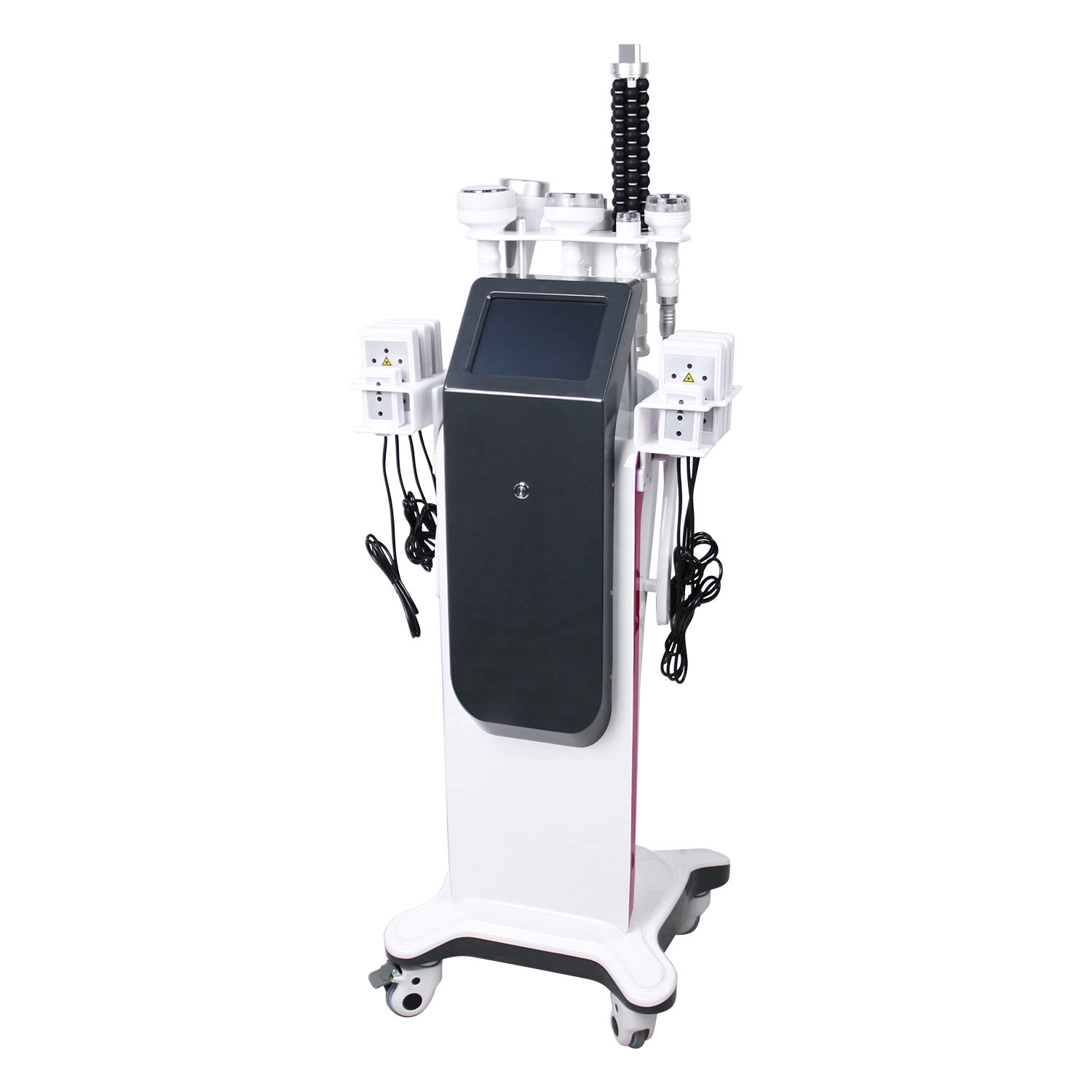
Professional 6-in-1 Cavitation Vacuum Machine for Body Contouring & Slimming Treatment
The 6-in-1 Cavitation Vacuum Machine is a professional body contouring system designed for salons and spas seeking high-performance slimming solutions. This machine integrates 40K ultrasonic cavitation, vacuum suction, RF technology, and laser lipolysis to target stubborn fat, enhance lymphatic drainage, tighten the skin, and contour the body shape effectively.
Equipped with multiple ergonomic handles and a smart touch screen, this cavitation vacuum machine provides a comfortable and efficient experience for both operators and clients. It is ideal for full-body treatments including abdomen, arms, legs, waistline, hips, and back.
Perfect for beauty salons, spas, and aesthetic centers that want to offer non-invasive fat reduction and body-sculpting services.
Get more information
If you have any comments or good suggestions, please leave us a message; later our professional staff will contact you as soon as possible.
Let's Talk
Stay in touch with us for cutting-edge beauty solutions, professional guidance, and customized service.
Contact


Room 307, Building A, Huilong International E-commerce Industrial Park, No. 10 Xipengling Road, Helong Street, Baiyun District, Guangzhou, China
© 2025 HUIMAIN. All Rights Reserved. Privacy Policy | Terms and Conditions | Sitemap
Facebook
Instagram
Medical beauty equipment factory
huimain Medical beauty equipment factory
beauty machine supplier
Whatsapp: +8619124004543