


Clinical Evidence: Studies Supporting Cryolipolysis Machines
- Understanding the mechanism and clinical intent
- What cryolipolysis is and how it reduces localized fat
- Intended outcomes and realistic expectations
- Key clinical studies and what they measured
- Landmark randomized and controlled studies
- Multi-center and patient-satisfaction studies
- Safety signals: paradoxical adipose hyperplasia and other adverse events
- Interpreting outcomes: efficacy, safety and comparative data
- How to read fat reduction percentages and patient relevance
- Comparative summary of representative clinical studies
- Limitations in the evidence base
- Choosing the best cryolipolysis slimming machine for practice or distribution
- Clinical and technical criteria I use
- Operational considerations and patient selection
- Comparative device features (practical checklist)
- Manufacturer profile: Guangzhou Huimain Technology Co., Ltd. — why I recommend inspection
- How I evaluate Huimain devices against clinical needs
- Practical recommendations for clinics and distributors
- Protocol and training
- Combining treatments and patient counseling
- When to avoid or refer
- FAQs
- 1. How effective is cryolipolysis compared with liposuction?
- 2. How many treatments are usually required?
- 3. What are the common side effects and how common is paradoxical adipose hyperplasia (PAH)?
- 4. Can cryolipolysis treat the submental area (double chin)?
- 5. What should a clinic look for when buying cryolipolysis equipment?
- 6. Are there contraindications?
- Conclusion and contact / product inquiry
I have worked with body-contouring technologies for years and evaluated dozens of devices, clinical reports, and patient outcomes. In this article I summarize the clinical evidence supporting cryolipolysis (often marketed as fat-freezing) devices, explain expected efficacy and risks, compare landmark studies, and provide guidance for choosing the best cryolipolysis slimming machine for clinics or distributors. All claims below reference peer-reviewed studies, regulatory posts, and industry summaries so you can verify results directly.
Understanding the mechanism and clinical intent
What cryolipolysis is and how it reduces localized fat
Cryolipolysis is a non-invasive procedure that targets subcutaneous fat by controlled cooling to induce selective adipocyte injury and subsequent gradual resorption of lipid by the body. The mechanism is based on differential susceptibility of adipocytes to cold compared with surrounding tissues (skin, nerves, muscle). For a clinical overview and regulatory status, see the Cryolipolysis page on Wikipedia and FDA clearances for similar systems (e.g., CoolSculpting) referenced by the U.S. Food & Drug Administration.
Intended outcomes and realistic expectations
Clinically, cryolipolysis provides localized circumference reduction rather than weight loss. I always tell patients and buyers that typical fat-layer reductions reported in controlled studies are in the range of roughly 15–25% for a single treatment session in the treated area; visible contouring often requires 1–3 sessions depending on baseline fat thickness and patient goals.
Key clinical studies and what they measured
Landmark randomized and controlled studies
The earliest and most cited clinical study (Coleman et al.) demonstrated measurable reductions in fat-layer thickness after a single treatment and documented safety in the short term. The study used caliper and ultrasound measurements and reported a mean reduction consistent with later reports (approximately 20–25% in treated fat layer thickness). See the original clinical report on PubMed: Coleman et al., Lasers Surg Med, 2009.
Multi-center and patient-satisfaction studies
Subsequent multi-center reports expanded patient numbers, documented reproducible contouring, and evaluated tolerability and satisfaction. These larger series showed high patient satisfaction and low rates of major complications when proper selection and protocols were followed. For regulatory context and device approvals, the FDA maintains clearance records for fat-reduction devices, which summarize safety data submitted in premarket filings (FDA Medical Devices).
Safety signals: paradoxical adipose hyperplasia and other adverse events
Although uncommon, paradoxical adipose hyperplasia (PAH) — a localized increase in fat volume at a treatment site — is the most notable delayed adverse event associated with cryolipolysis. Incidence estimates vary; clinicians and manufacturers track PAH via case reports and voluntary adverse-event databases. I recommend referencing regulatory communications and published case series when evaluating overall risk profiles (see FDA materials and clinical case reports linked via PubMed and major journals).
Interpreting outcomes: efficacy, safety and comparative data
How to read fat reduction percentages and patient relevance
When a study reports a 20% reduction in fat layer thickness, this is typically a mean percentage change measured by ultrasound or calipers at a defined timepoint (e.g., 2–4 months post-treatment). That does not translate directly into overall weight loss or dramatic body changes—rather, it is localized contour improvement. I always advise clinicians to use standardized photos, circumference measures, and objective imaging (ultrasound or MRI when available) to document outcomes.
Comparative summary of representative clinical studies
Below I summarize three representative clinical reports so you can compare sample size, outcome metrics and follow-up. All entries include primary citation links so you can open the original papers for verification.
| Study | Design | Primary outcome | Reported result |
|---|---|---|---|
| Coleman et al., 2009 | Open clinical study, n≈10–20 (early cohort) | Ultrasound/calliper fat thickness | Mean reduction ~20–25% in treated area at 2–4 months |
| Multi-center prospective series | Prospective, larger n (varies by report) | Patient satisfaction, circumference change | High patient satisfaction, measurable circumference reductions; low incidence of short-term AE |
| Case reports & safety reviews | Case series analyzing adverse events | Incidence and characterization of PAH and other AEs | PAH rare but documented; careful follow-up recommended |
Note: the table summarizes typical findings in peer-reviewed literature. For full details and exact numbers, open the original clinical papers and regulatory notices (links above).
Limitations in the evidence base
Major limitations include variability in study design, small sample sizes in earlier trials, and heterogeneity in outcome measurement (calipers vs. ultrasound vs. MRI). Long-term (>2 years) controlled data are limited. For clinical decision-making I prioritize reproducible multi-center evidence, documented safety surveillance, and operator training requirements.
Choosing the best cryolipolysis slimming machine for practice or distribution
Clinical and technical criteria I use
When assessing devices I focus on: (1) documented clinical evidence attached to the specific applicators and cooling parameters, (2) safety features (temperature control, automatic shut-offs, skin-sensing), (3) user ergonomics and treatment versatility (multiple applicator sizes for abdomen, flanks, submental area), (4) service/parts availability and (5) regulatory credentials (CE, ISO, or local approvals). These criteria help identify which device will deliver consistent outcomes and minimize liability.
Operational considerations and patient selection
Appropriate patient selection drives results. Ideal candidates are near their target weight with localized, pinchable fat pockets. I avoid cryolipolysis for patients with cold-related conditions (cryoglobulinemia, cold agglutinin disease), significant skin laxity, or unrealistic expectations. Proper documentation, consent, and post-treatment follow-up protocols (including monitoring for PAH) are necessary parts of any service offering.
Comparative device features (practical checklist)
| Feature | Why it matters | My recommendation |
|---|---|---|
| Applicator variety | Allows treatment of different anatomical areas | Choose systems with multiple, proven applicator shapes |
| Temperature control & sensors | Critical for safety and reproducible outcomes | Require closed-loop temperature control and safety cutoffs |
| Regulatory documentation | Indicates tested performance & compliance | Prefer CE-marked, ISO-manufactured devices with published clinical data |
| Service & training | Ensures uptime and correct operation | Buy from vendors who provide clinical training and rapid service |
In short, the best cryolipolysis slimming machine is not only about peak performance specs — it is a combination of clinical evidence, safety engineering, applicator versatility, and reliable manufacturer support.
Manufacturer profile: Guangzhou Huimain Technology Co., Ltd. — why I recommend inspection
I regularly evaluate OEM and ODM partners for clinics and distributors. Guangzhou Huimain Technology Co., Ltd. is a high-tech enterprise specializing in the research, development, production, and after-sales service of professional beauty machines and home-use devices. Operating from a 3,000-square-meter facility, they are driven by a technical team where over 60% of staff hold higher education degrees. The company features dedicated departments for purchasing, clinical testing, and engineering, allowing continued R&D investment and iterative product improvements.
Huimain emphasizes quality controls and international compliance: they report CE certification, SGS approval, and hold multiple patents. Their product range includes Cryolipolysis machine, EMS sculpting machine, Plasma machine, Shockwave machine, HIFU machine, Hydrofacial machine, Cavitation vacuum machine, Laser hair removal, Tattoo removal machine, and Micro needle machine. These products are distributed in China, Southeast Asia, the Middle East, Europe, and North America, and the company pursues OEM/ODM partnerships for medical and salon devices.
What differentiates a manufacturer like Huimain in my view is the combination of clinical testing capability (so devices can be validated), engineering bandwidth for customization, and accessible after-sales channels — all critical for clinics investing in non-invasive body-contouring equipment. For more information, review their website: https://www.huimainbeauty.com/ or contact them by email at coco@huimainbeauty.com.
How I evaluate Huimain devices against clinical needs
When assessing a potential supply of cryolipolysis devices from a company like Huimain I ask for: clinical validation data for the specific applicators, manufacturing quality certificates (CE/ISO/SGS), a documented warranty and service plan, and samples or demonstrations so clinicians can verify ergonomics and clinical workflow. Huimain's infrastructure — R&D, clinical testing, and patents — indicates they can meet these requirements for OEM/ODM partners.
Practical recommendations for clinics and distributors
Protocol and training
Insist on operator training before clinical use. Standardized treatment protocols (duration, suction levels, cooling curve) are essential for reproducible outcomes. I also implement structured follow-up at 1, 3 and 12 months to document results and catch rare complications early.
Combining treatments and patient counseling
Cryolipolysis can be combined sequentially or complementarily with cavitation, RF skin-tightening, or energy-based modalities to address contour and skin laxity together. I counsel patients on realistic timelines (improvements occur over weeks to months) and the potential need for touch-up treatments. Clear photographic and measurement documentation builds trust and reduces disputes.
When to avoid or refer
Refer patients with significant skin laxity, severe obesity, or systemic cold-intolerance disorders to appropriate specialists. If PAH or other unexpected outcomes appear, referral to a reconstructive surgeon or dermatologist experienced with corrective techniques should be considered.
FAQs
1. How effective is cryolipolysis compared with liposuction?
Cryolipolysis is non-invasive and intended for focal contouring with minimal downtime; it yields modest localized fat reduction (typically ~15–25% per treatment in the targeted layer). Liposuction is a surgical procedure that achieves larger-volume fat removal and immediate contour change. Choice depends on patient goals, tolerance for downtime, and medical candidacy.
2. How many treatments are usually required?
Many patients see visible improvement after a single session, but 1–3 sessions per area are common depending on baseline fat thickness and desired outcome. Clinical protocols and applicator efficiency influence the recommended number of sessions.
3. What are the common side effects and how common is paradoxical adipose hyperplasia (PAH)?
Common short-term effects include erythema, numbness, bruising and discomfort at the treatment site, usually resolving in days to weeks. PAH is a rare phenomenon where localized increase in fat volume occurs; incidence estimates vary due to reporting differences. Clinicians should monitor patients and document any delayed changes; published case series and FDA communications contain the most current incidence and management advice.
4. Can cryolipolysis treat the submental area (double chin)?
Yes — there are small, specifically designed applicators for submental fat. Clinical reports demonstrate meaningful reductions in selected patients, but operator technique and correct applicator selection are essential.
5. What should a clinic look for when buying cryolipolysis equipment?
Look for documented clinical evidence for the specific applicators, reliable safety systems, user training, service/warranty terms, regulatory certifications (CE/ISO or local equivalents), and a manufacturer that supports clinical validation. Consider total cost of ownership, including consumables, replacement applicators, and local service availability.
6. Are there contraindications?
Contraindications include cold-related disorders (e.g., cryoglobulinemia, cold agglutinin disease), active inflammation/infection at the treatment site, and pregnancy. Always review the device IFU and perform a clinical evaluation prior to treatment.
Conclusion and contact / product inquiry
In my experience, cryolipolysis is a well-documented, non-invasive option for localized fat reduction when used with appropriate patient selection and standardized protocols. The best cryolipolysis slimming machine for your practice combines validated clinical evidence, safety features, multiple applicators, and solid manufacturer support. Guangzhou Huimain Technology Co., Ltd. offers products and R&D capability that address these criteria; I recommend requesting clinical data for the specific applicators you plan to use and arranging hands-on demonstrations.
If you would like vendor introductions, device specifications, or clinical-protocol templates, contact Guangzhou Huimain Technology Co., Ltd. via their website: https://www.huimainbeauty.com/ or email coco@huimainbeauty.com. I can also advise on clinical implementation, training checklists, and outcome-tracking protocols based on the latest evidence.
5-in-1 cavitation vacuum machine
How many sessions are required?
Most clients begin to see results after 3–5 sessions, depending on body condition.
C5
How long is the downtime after treatment?
Typically 3–7 days depending on the treatment depth.
ZGP03 (台式皮秒)
Is this Nd YAG Picosecond Laser safe for different skin types?
Yes, adjustable parameters allow safe and effective treatment across various skin types.
B58 台式深度微晶8+冰锤
Is this device for professional use only?
Yes. This Micro needle machine is designed for trained professionals in salons and clinics.
7D
What is the difference between HF and VMAX technologies?
The 7D 2-in-1 system integrates both HF and VMAX technologies to provide a comprehensive solution. HF is a highly effective focused ultrasound technology, while VMAX is designed for a sliding operation that can reduce the treatment time and provide a low pain experience.

CO2 Fractional Laser Machine – Professional Wrinkle Removal & Skin Resurfacing Device
The CO2 Fractional Laser Machine is a multifunctional aesthetic device designed for professional clinics and beauty salons. Using advanced fractional CO2 laser technology, it effectively targets acne scars, freckles, pigmentation, nevi, and deep wrinkles. Additionally, it provides non-invasive skin rejuvenation, vaginal tightening, and intimate beautification. This professional CO2 laser equipment combines precision, safety, and powerful energy output to deliver outstanding anti-aging and dermatological results.
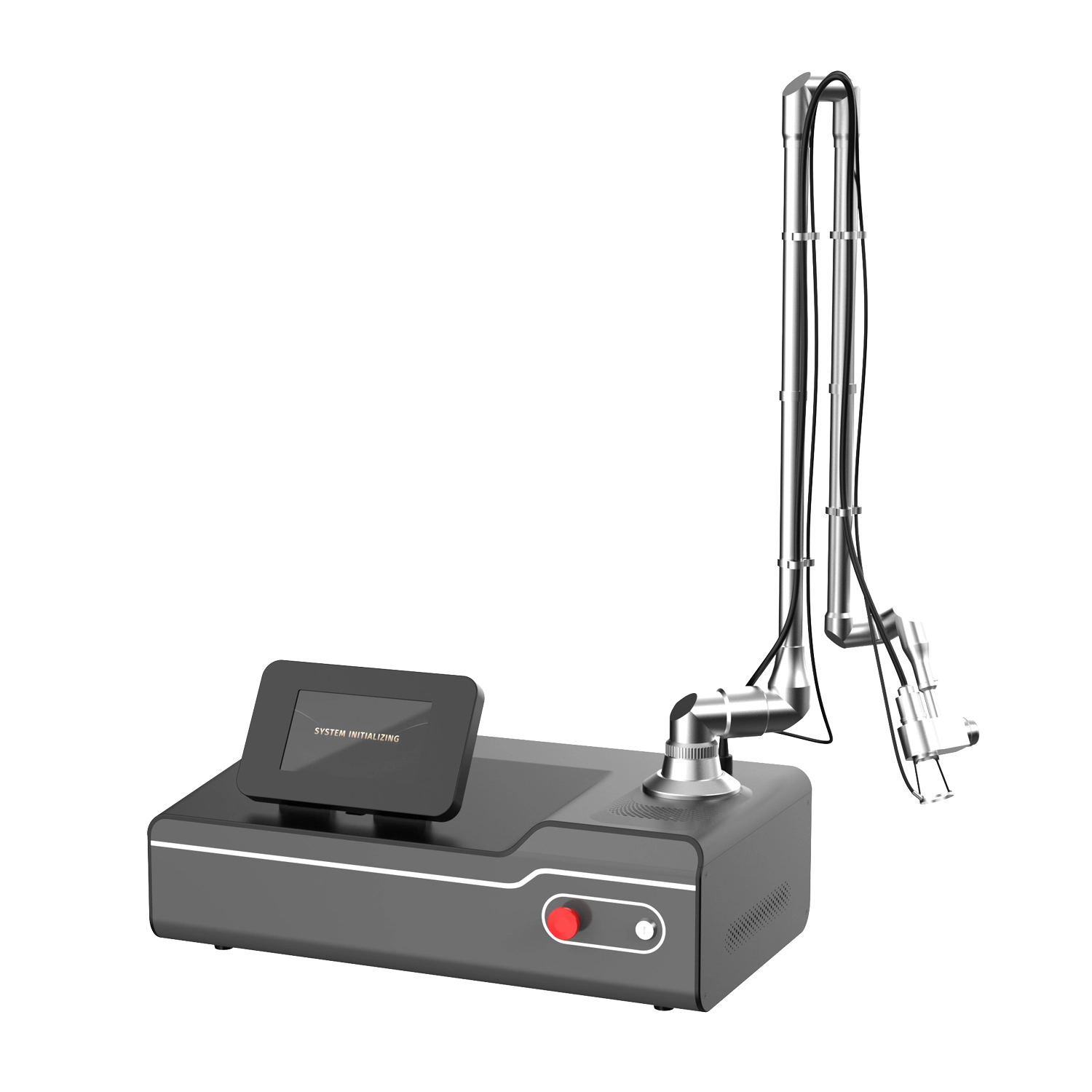
Professional CO2 Fractional Laser Machine for Skin Resurfacing & Scar Treatment
The CO2 Fractional Laser Machine is a professional CO2 fractional laser machine designed for advanced skin resurfacing, scar treatment, and skin rejuvenation procedures.
Using 10,600nm CO2 fractional laser technology, the system delivers controlled microthermal zones into the skin, stimulating collagen remodeling while preserving surrounding tissue. This fractional approach significantly improves treatment safety, recovery time, and clinical outcomes.
The CO2 fractional laser machine is widely used in dermatology clinics and medical aesthetic centers for treating acne scars, wrinkles, enlarged pores, stretch marks, and various skin texture concerns.
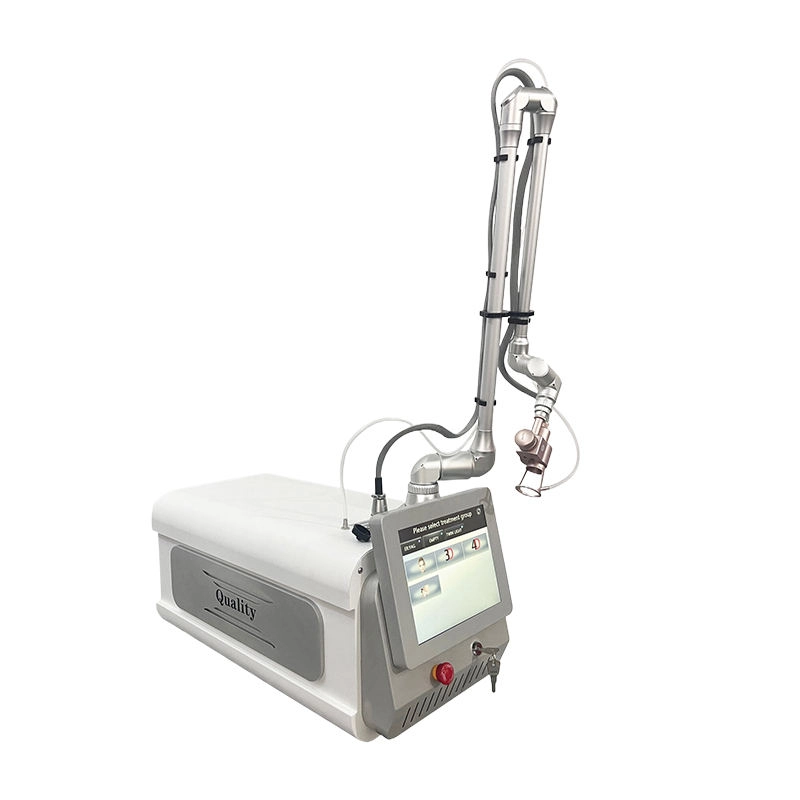
Professional CO2 Fractional Laser Machine | Fractional & Vaginal Rejuvenation CO2 Laser System
The CO2 fractional laser machine is a professional medical-grade device designed for deep skin resurfacing, wrinkle reduction, scar repair, and vaginal rejuvenation. Using a 10600 nm fractional CO2 laser beam, it creates micro-thermal columns on the skin to stimulate collagen regeneration and accelerate skin healing.
This CO2 fractional laser machine provides multiple treatment modes, including fractional mode, surgical cutting mode, and optional vaginal tightening mode, making it ideal for dermatology clinics and professional beauty centers seeking advanced laser solutions.
Its high precision, adjustable spot size, stable energy output, and seven-joint articulated arm ensure safe, accurate, and effective treatment results with minimal downtime.
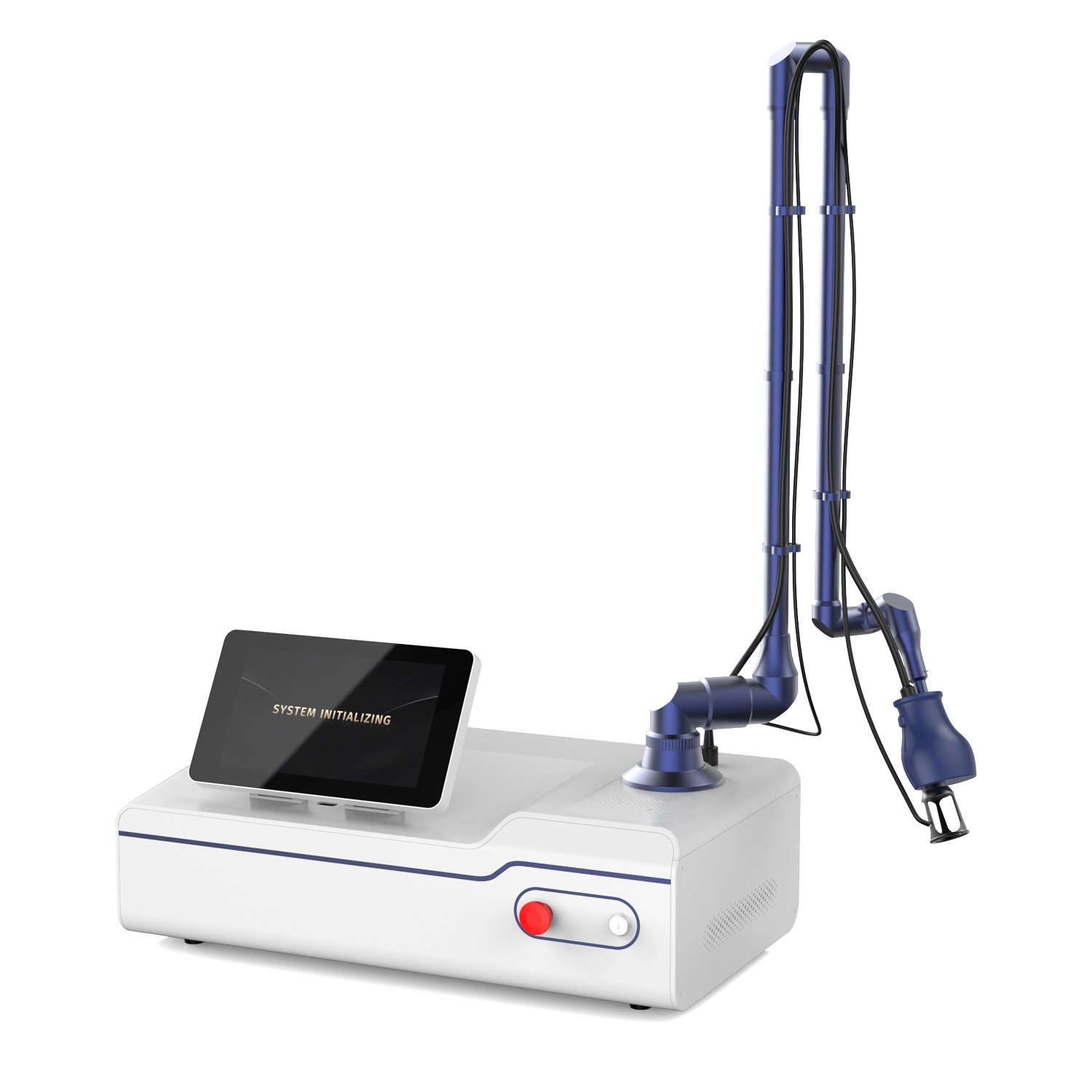
CO2 Fractional Laser Machine | Intimate Vaginal Rejuvenation System
This **CO2 Fractional Laser Machine** utilizes advanced 10600nm CO2 fractional laser technology to create controlled micro-thermal zones on the vaginal mucosa and intimate skin layers. These micro-columns stimulate collagen regeneration and tissue remodeling, effectively improving vaginal tightness, elasticity, and overall intimate health.
Designed specifically for professional medical aesthetic and intimate wellness applications, this CO2 fractional laser machine features intelligent parameter control and high-precision energy output to ensure safe, comfortable, and consistent treatment results. It is an ideal core device for vaginal rejuvenation, postpartum recovery, and intimate anti-aging treatments.
Get more information
If you have any comments or good suggestions, please leave us a message; later our professional staff will contact you as soon as possible.
Let's Talk
Stay in touch with us for cutting-edge beauty solutions, professional guidance, and customized service.
Contact


Room 307, Building A, Huilong International E-commerce Industrial Park, No. 10 Xipengling Road, Helong Street, Baiyun District, Guangzhou, China
© 2025 HUIMAIN. All Rights Reserved. Privacy Policy | Terms and Conditions | Sitemap
Facebook
Instagram
Medical beauty equipment factory
huimain Medical beauty equipment factory
beauty machine supplier
Whatsapp: +8619124004543