


Clinical Evidence: Studies Supporting EMS Body Sculpting
- Why rigorous clinical evidence matters for aesthetic devices
- Understanding the role of an ems machine for body sculpting
- How EMS/HIFEM devices work (mechanism of action)
- What kinds of clinical studies exist for ems machine for body sculpting
- Study designs and outcome measures
- Typical treatment protocols evaluated
- Summary of reported efficacy outcomes
- What results have trials reported for ems machine for body sculpting?
- Head-to-head and comparative data
- Comparing EMS/HIFEM to other non-invasive modalities
- Safety profile and adverse events
- Commonly reported side effects
- Limitations of the current evidence
- What to watch for when interpreting studies
- Practical recommendations for clinics and buyers
- How to evaluate ems machine for body sculpting for purchase
- Guangzhou Huimain Technology Co., Ltd.: company profile and capabilities
- Huimain’s credentials and how they support clinical-grade production of ems machine for body sculpting
- Huimain core products and advantages (relevant to body sculpting clinics)
- How to integrate EMS treatments into a clinic workflow
- Operational and clinical best practices
- Conclusion: evidence-based positioning of ems machine for body sculpting
- Bottom line for clinicians and buyers
- Frequently asked questions (FAQs)
- 1. What is the difference between EMS and HIFEM?
- 2. How many treatments are needed and how long do results last?
- 3. Are the results permanent?
- 4. Who is a good candidate for EMS body sculpting?
- 5. Is EMS safe—what side effects should I expect?
- Contact us / View products
- References
Why rigorous clinical evidence matters for aesthetic devices
Understanding the role of an ems machine for body sculpting
Non-invasive EMS (electrical or electromagnetic muscle stimulation) devices—often marketed for body sculpting—claim to increase muscle tone and contribute to localized fat reduction without surgery. The commercial keyword here is ems machine for body sculpting, and clinicians, clinic buyers, and informed consumers should evaluate these claims based on clinical evidence, not just marketing materials. This article reviews the types of clinical studies performed, the measurable outcomes reported, and what the evidence means for practice.
How EMS/HIFEM devices work (mechanism of action)
Most modern devices used for body sculpting use high-intensity electromagnetic fields (HIFEM) or electrical muscle stimulation (EMS) to induce sustained, supramaximal muscle contractions. These contractions are stronger than voluntary contractions and can produce muscle hypertrophy and hyperplasia-like adaptive responses over repeated treatments. Secondary effects may include increased local metabolic demand leading to lipolysis and a modest reduction in subcutaneous fat. Understanding the mechanism helps interpret outcome measures used in studies—muscle thickness (measured by ultrasound or MRI), fat layer thickness, body circumference, and patient-reported satisfaction.
What kinds of clinical studies exist for ems machine for body sculpting
Study designs and outcome measures
Clinical evidence for EMS body-sculpting devices includes several types of studies:
- Manufacturer-sponsored prospective clinical trials (often single-arm)
- Independent observational studies and case series
- Randomized controlled trials (less common)
- Imaging and histological substudies (ultrasound, MRI)
- Safety surveillance and adverse event reporting
Common endpoints are percent change in muscle thickness, percent change in subcutaneous fat thickness, change in circumference (waist, abdomen, thigh), photographic assessment, and patient satisfaction questionnaires. Studies vary in follow-up (from immediate post-treatment to 3–6 months or longer).
Typical treatment protocols evaluated
Most clinical protocols evaluated a series of 4 treatments delivered over 2 weeks (twice weekly), with outcomes measured at 1 month and 3 months after completion. Maintenance regimens are less well-studied but often recommended by device manufacturers.
Summary of reported efficacy outcomes
What results have trials reported for ems machine for body sculpting?
Across the published literature and clinical reports, typical outcome ranges reported are:
| Outcome | Reported range (typical) | Common measurement method | Representative source type |
|---|---|---|---|
| Muscle thickness increase | ≈ 7%–20% (average 10%–16%) | Ultrasound or MRI | Prospective device trials |
| Subcutaneous fat thickness reduction | ≈ 5%–20% (varies by site & measurement) | Ultrasound / caliper / MRI | Manufacturer and independent studies |
| Circumference reduction (e.g., waist) | ≈ 1–4 cm average | Tape measure, standardized landmarks | Clinical trials and case series |
| Patient satisfaction | Generally high (often >75% satisfied) | Questionnaires | Multiple clinical reports |
Notes: Ranges above are aggregated from published trials, manufacturer clinical data, and independent reports. Individual patient response varies based on baseline body composition, treatment adherence, device parameters, and lifestyle factors.
Head-to-head and comparative data
Comparing EMS/HIFEM to other non-invasive modalities
Clinics commonly compare EMS body-sculpting devices against cryolipolysis (fat freezing), radiofrequency (RF), ultrasound cavitation, and laser lipolysis. The key differentiator is that EMS primarily targets muscle stimulation and secondarily affects fat, while cryolipolysis and similar technologies primarily target adipocytes. Below is a simplified comparison table summarizing typical clinical endpoints.
| Technology | Primary target | Typical primary outcome | Best clinical use |
|---|---|---|---|
| EMS / HIFEM (ems machine for body sculpting) | Muscle (contractile tissue) | Muscle thickness increase; modest fat loss | Tone and contouring, add-on to fat-reduction |
| Cryolipolysis | Fat cells | Localized fat layer reduction | Discrete fat pockets |
| RF / Ultrasound | Fat + dermal tightening | Fat reduction, skin tightening | Small volumes with laxity |
Safety profile and adverse events
Commonly reported side effects
Most studies report that EMS/HIFEM treatments are well tolerated. Common temporary side effects include muscle soreness (similar to a vigorous workout), transient erythema, and mild localized discomfort. Serious adverse events are rare in published series, but clinicians should monitor for unexpected pain, nerve irritation, or device-specific complications. Contraindications typically include pregnancy, cardiac pacemakers/implanted metal or electronic devices, and certain acute conditions—always consult device-specific IFU.
Limitations of the current evidence
What to watch for when interpreting studies
- Many clinical reports are manufacturer-sponsored; independent RCTs are fewer.
- Short follow-up durations in some studies—long-term durability beyond 6–12 months is less well-defined.
- Heterogeneous outcome measures—standardization (MRI vs. ultrasound vs. calipers) varies.
- Patient selection bias—most trials enroll healthy adults with BMI in a specific range.
Clinics should prioritize peer-reviewed independent studies and seek trials with objective imaging endpoints and adequate follow-up.
Practical recommendations for clinics and buyers
How to evaluate ems machine for body sculpting for purchase
When choosing a device, assess the following:
- Quality of clinical evidence: prioritize independent, peer-reviewed trials and objective imaging outcomes.
- Regulatory approvals: look for CE, FDA clearances or other regional approvals applicable to intended use.
- Service and training: ensure vendor provides clinical training, treatment protocols, and after-sales support.
- Patient selection guidance: request inclusion/exclusion criteria used in trials to replicate favorable outcomes.
- Maintenance and consumable costs: factor into ROI calculations.
Guangzhou Huimain Technology Co., Ltd.: company profile and capabilities
Huimain’s credentials and how they support clinical-grade production of ems machine for body sculpting
Guangzhou Huimain Technology Co., Ltd. is a high-tech company focused on beauty machines and a home-use machine series. The company is professional in research & development, production, sales, and after-sale service. Huimain possesses a 3,000 square meter facility; over 20% of staff hold bachelor’s degrees and more than 40% have junior college degrees. The company has a strong technical development department with many experienced engineers, PE experts, a professional purchasing department, and a dedicated clinical test department and after-sale service team.
With significant R&D investment, Huimain continuously develops new products according to market demand. The company has obtained CE certification and SGS approvals and holds multiple patents. Products are exported globally—China, Southeast Asia, the Middle East, Europe, and North America—and receive positive customer feedback for quality and price.
Huimain follows OEM and ODM routes in beauty machine development and production. They can design and manufacture high-quality medical and beauty machines for clinics and salons. Company philosophy: innovate technology and pursue win-win cooperation. Huimain aims to produce high-quality beauty machines that meet market needs.
Huimain core products and advantages (relevant to body sculpting clinics)
- Main products: Cryolipolysis machine, Ems sculpting machine, Plasma machine, Shockwave machine, HIFU machine, Hydrofacial machine, Cavitation vacuum machine, Laser hair removal, Tattoo removal machine, Micro-needle machine.
- Advantages: strong R&D team, patented designs, CE & SGS certifications, global sales experience, OEM/ODM capacity, clinical test department and after-sale support.
How to integrate EMS treatments into a clinic workflow
Operational and clinical best practices
Suggested approach for integrating ems machine for body sculpting into practice:
- Start with staff training and standardized treatment protocols matching published studies.
- Screen patients carefully using evidence-based inclusion/exclusion criteria.
- Use objective baseline measurements (photos, tape measure, ultrasound) and repeat the same measures at follow-up.
- Combine EMS with lifestyle counseling (exercise and diet) for best long-term outcomes—patients often assume device alone will produce dramatic results.
- Monitor and record adverse events to contribute to safety data.
Conclusion: evidence-based positioning of ems machine for body sculpting
Bottom line for clinicians and buyers
Clinical evidence supports that EMS/HIFEM devices can increase muscle thickness and provide modest fat reduction and circumference decrease when using validated protocols. Most published data show clinically meaningful improvements in muscle tone and high patient satisfaction, with a favorable safety profile. However, evidence quality varies, and independent long-term randomized trials are fewer. Clinics should evaluate devices based on peer-reviewed evidence, regulatory approvals, and vendor support. When appropriately selected and used, ems machine for body sculpting can be a valuable addition to a multi-modal body-contouring practice.
Frequently asked questions (FAQs)
1. What is the difference between EMS and HIFEM?
EMS typically refers to electrical muscle stimulation delivered via electrodes. HIFEM uses high-intensity focused electromagnetic fields to induce muscle contractions through clothing and soft tissue. HIFEM is non-contact and can produce supramaximal contractions; EMS often requires direct skin contact and different current parameters.
2. How many treatments are needed and how long do results last?
Typical study protocols use four treatments over two weeks, with follow-up at 1–3 months. Results can last for months; maintenance treatments and regular exercise help sustain outcomes. Long-term durability beyond 12 months requires more research.
3. Are the results permanent?
No treatment permanently changes natural aging or lifestyle effects. EMS can induce measurable increases in muscle mass and decreases in fat at treated sites, but maintaining results requires ongoing activity and potentially maintenance sessions.
4. Who is a good candidate for EMS body sculpting?
Good candidates are generally healthy adults near their ideal body weight seeking improved muscle tone and localized contouring. Patients with implanted electronic devices, pregnancy, or certain medical conditions are contraindicated.
5. Is EMS safe—what side effects should I expect?
Most studies report minimal adverse effects: transient muscle soreness, erythema, or mild discomfort. Serious complications are rare in clinical reports, but clinics should follow device IFU and monitor patients closely.
Contact us / View products
For clinical buyers interested in evidence-based EMS machines for body sculpting and OEM/ODM partnerships, contact Guangzhou Huimain Technology Co., Ltd. Their R&D and clinical test teams can provide product data, certifications (CE, SGS), patents, and training support to help integrate devices safely and effectively in your clinic. Request product catalogs or clinical documentation to compare models and review published study protocols.
References
- PubMed search results for HIFEM / Emsculpt studies. PubMed. Accessed 2025-11-27: https://pubmed.ncbi.nlm.nih.gov/?term=ems+sculpt+HIFEM
- ClinicalTrials.gov search results for Emsculpt and HIFEM trials. Accessed 2025-11-27: https://clinicaltrials.gov/ct2/results?cond=&term=emsculpt&cntry=&state=&city=&dist=
- Manufacturer clinical summaries and whitepapers (example: BTL EMSCULPT clinical resources). Accessed 2025-11-27: https://btlaesthetics.com/product/emsculpt
- Device regulatory and 510(k) information (search FDA database for specific product clearances). FDA 510(k) database. Accessed 2025-11-27: https://www.accessdata.fda.gov/scripts/cdrh/cfdocs/cfpmn/pmn.cfm
- Selected review articles on non-invasive body contouring (PubMed search covering reviews and comparative studies). Accessed 2025-11-27: https://pubmed.ncbi.nlm.nih.gov/?term=noninvasive+body+contouring+review
3 in 1 hifu 22 SMAS
Are there downtime or side effects?
No downtime. Some clients may experience temporary mild redness.
About OEM & ODM
What is the minimum order quantity (MOQ)?
MOQ varies by product and customization requirements; please contact us for specific details.
About Distributor
What’s the MOQ for OEM orders?
MOQ varies depending on the product. For most models, OEM starts from 5–10 units. Please contact us for specific product requirements.
10-in-1 cavitation vacuum machine
How long is each treatment session?
A full-body session typically lasts 30–60 minutes depending on the treatment settings.
HMT22
How many treatments are needed to see results?
Most clients see noticeable results after 3-4 sessions, though the number of sessions required can vary based on the individual’s goals and areas treated.

CO2 Fractional Laser Machine – Professional Wrinkle Removal & Skin Resurfacing Device
The CO2 Fractional Laser Machine is a multifunctional aesthetic device designed for professional clinics and beauty salons. Using advanced fractional CO2 laser technology, it effectively targets acne scars, freckles, pigmentation, nevi, and deep wrinkles. Additionally, it provides non-invasive skin rejuvenation, vaginal tightening, and intimate beautification. This professional CO2 laser equipment combines precision, safety, and powerful energy output to deliver outstanding anti-aging and dermatological results.

5-in-1 40K Cavitation Vacuum Machine for Body Slimming & Fat Reduction
The 5-in-1 40K Cavitation Vacuum Machine is a professional body shaping system designed for fat reduction, cellulite smoothing, and overall body contouring. Using 40KHz ultrasonic cavitation, this device breaks down stubborn fat cells, while vacuum suction improves lymphatic drainage and accelerates toxin removal.
With multiple RF tightening handles, the machine stimulates collagen regeneration and helps lift and firm loose areas of the body. Compact, powerful, and easy to operate, it is the perfect solution for beauty salons, spa centers, and slimming studios seeking fast and visible fat-reduction results.
This cavitation vacuum machine is built to deliver safe, non-invasive treatments with no downtime—making it a top choice for body contouring professionals.

6-in-1 Multifunctional Beauty and Weight Loss Machine | Cavitation, RF, Vacuum PDT, EMS, Laser Slimming Equipment for Professional Use
The 6-in-1 Multifunctional Beauty and Weight Loss Machine is a professional-grade device designed for salons, clinics, and distributors. Combining six advanced technologies—cavitation, RF (radio frequency) for face & body, vacuum RF PDT, BIO/EMS microcurrent, and laser lipo pads—this device offers comprehensive body contouring, fat reduction, skin tightening, and anti-aging treatments.
It provides businesses with an all-in-one solution to expand service offerings, attract more clients, and achieve a rapid return on investment.
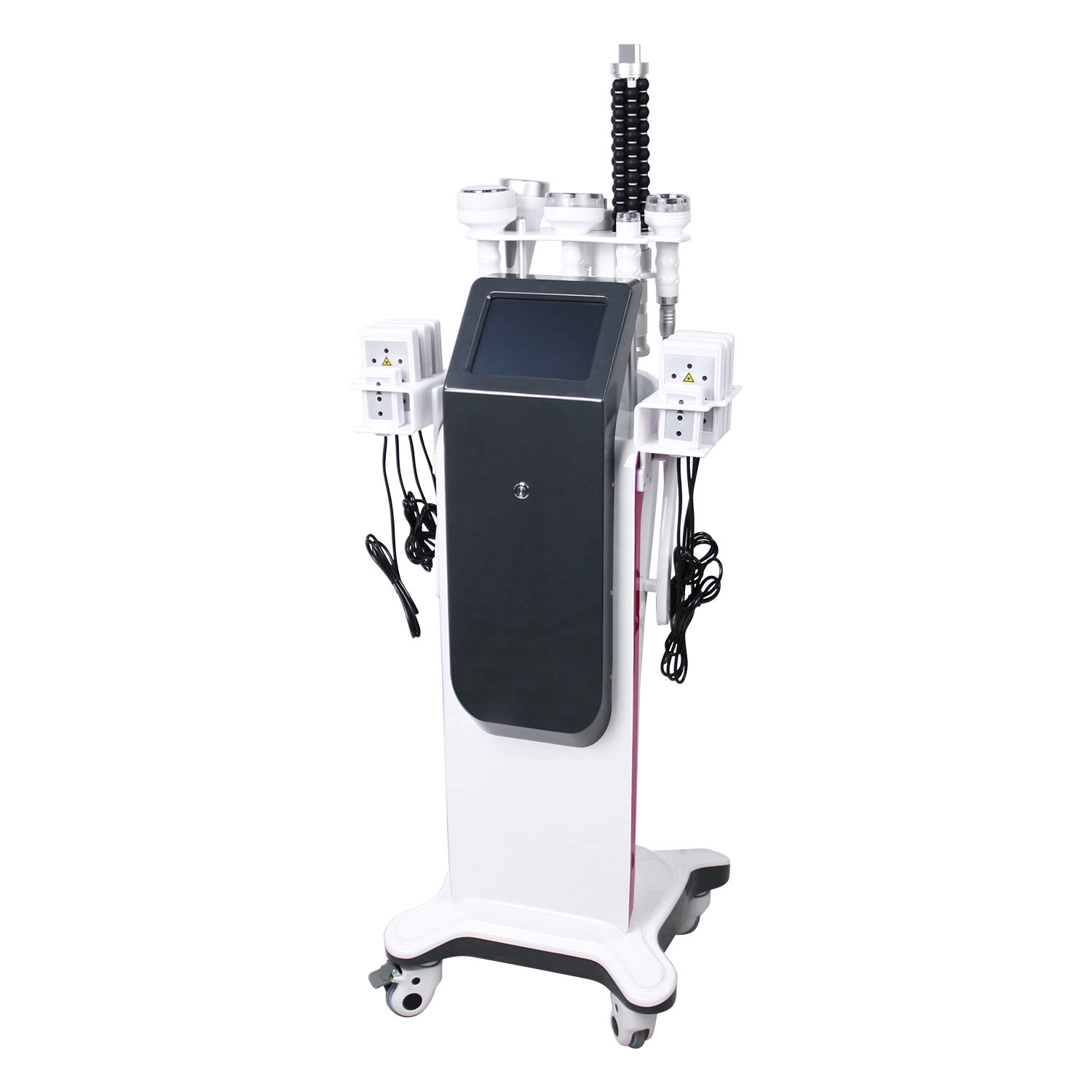
Professional 6-in-1 Cavitation Vacuum Machine for Body Contouring & Slimming Treatment
The 6-in-1 Cavitation Vacuum Machine is a professional body contouring system designed for salons and spas seeking high-performance slimming solutions. This machine integrates 40K ultrasonic cavitation, vacuum suction, RF technology, and laser lipolysis to target stubborn fat, enhance lymphatic drainage, tighten the skin, and contour the body shape effectively.
Equipped with multiple ergonomic handles and a smart touch screen, this cavitation vacuum machine provides a comfortable and efficient experience for both operators and clients. It is ideal for full-body treatments including abdomen, arms, legs, waistline, hips, and back.
Perfect for beauty salons, spas, and aesthetic centers that want to offer non-invasive fat reduction and body-sculpting services.
Get more information
If you have any comments or good suggestions, please leave us a message; later our professional staff will contact you as soon as possible.
Let's Talk
Stay in touch with us for cutting-edge beauty solutions, professional guidance, and customized service.
Contact


Room 307, Building A, Huilong International E-commerce Industrial Park, No. 10 Xipengling Road, Helong Street, Baiyun District, Guangzhou, China
© 2025 HUIMAIN. All Rights Reserved. Privacy Policy | Terms and Conditions | Sitemap
Facebook
Instagram
Medical beauty equipment factory
huimain Medical beauty equipment factory
beauty machine supplier
Whatsapp: +8619124004543