


CO2 Fractional Laser Machine Buying Guide for Medical Spas
- Why fractional CO2 is popular in modern medical spas
- Clinical strengths and indications
- Patient demand and market fit
- Safety and evidence base
- Key technical specifications to evaluate
- Wavelength, pulse modes, and fractional delivery
- Energy parameters, spot size, and depth control
- Cooling systems, smoke evacuation, and ergonomics
- Clinical protocols, outcomes, and risk management
- Typical treatment plans and expected downtime
- Adverse events and mitigation strategies
- Documentation, consent, and training
- Purchasing considerations, ROI, and supplier due diligence
- Cost components and expected ROI
- Vendor selection: certifications and clinical support
- Comparing technologies: a compact table
- How I evaluate manufacturers — a practical checklist
- Quality systems, certifications, and testing
- Clinical evidence and references
- Warranty, spare parts, and service response time
- Integrating the device into your practice: protocols and marketing
- Staffing and training pathways
- Marketing messaging and informed consent
- Pricing strategies
- Supplier spotlight: why Guangzhou Huimain Technology stands out
- Final checklist before signing a purchase order
- Frequently Asked Questions (FAQ)
- 1. What is the difference between a co₂ fractional laser machine and non-ablative fractional lasers?
- 2. Is fractional CO2 safe for darker skin types (Fitzpatrick IV–VI)?
- 3. How many treatments are generally required for acne scarring?
- 4. What maintenance and consumables should I budget for?
- 5. What training is required for safe operation?
- 6. How do I compare two otherwise similar co₂ fractional laser machines?
- Contact and next steps
I write from years of hands-on experience advising clinics and medical spas on device selection, clinical protocols, and ROI optimization. In this guide I share a practical, evidence-based approach to selecting a co₂ fractional laser machine that balances clinical performance, patient safety, regulatory compliance, and commercial viability. The content below is designed to answer the real questions owners, medical directors, and procurement teams ask prior to buying: which device technology best fits my practice, what technical specifications matter, how to evaluate vendors, and how to predict patient throughput and profitability.
Why fractional CO2 is popular in modern medical spas
Clinical strengths and indications
Fractional CO2 lasers are considered a gold standard for ablative skin resurfacing due to their combination of tissue ablation and thermal coagulation. Clinically, they treat deep wrinkles, photodamage, acne scarring, and some types of dyschromia. Professional references such as the American Academy of Dermatology discuss laser resurfacing benefits and expectations: AAD: Laser resurfacing. The CO2 wavelength (10.6 µm) is strongly absorbed by water in tissue, enabling controlled ablation with concurrent coagulation for remodeling.
Patient demand and market fit
Patients seeking significant rejuvenation but wishing to avoid surgical facelift increasingly choose fractional CO2 resurfacing for measurable results. The trade-off is downtime versus efficacy; fractional delivery reduces recovery time compared to full-field ablative lasers while preserving notable clinical improvement. As a buyer, match device capabilities to your target market (e.g., medical-grade resurfacing for older patients vs. lighter fractional treatments for younger clients).
Safety and evidence base
Fractional CO2 has a substantial evidence base; professional guidelines and peer-reviewed literature document indications, side effects, and outcomes. The FDA provides regulatory context for laser devices: FDA: Laser Products and Instruments. Proper training, test spots, and calibrated protocols dramatically lower complication rates.
Key technical specifications to evaluate
Wavelength, pulse modes, and fractional delivery
The defining wavelength is CO2 (10.6 µm). Evaluate whether the system offers multiple pulse modes (superpulse, continuous, fractionated modes) and precise fractional control (density, spot size, spacing). These parameters determine clinical versatility: micro-ablative fraction for fine lines or higher-density patterns for scar remodeling.
Energy parameters, spot size, and depth control
Important device specs include maximum fluence (mJ or J/cm2), adjustable spot sizes (typically 0.1–1.0 mm for fractional dots), and depth/stacking control. Look for digital control panels that allow reproducible presets and patient-specific programming. Systems that log settings help with quality control and medico-legal documentation.
Cooling systems, smoke evacuation, and ergonomics
Because CO2 ablation generates heat and plume, integrated or accessory cooling (contact or air) improves patient comfort and reduces epidermal injury. Effective smoke evacuation lowers staff exposure to plume (important for infection control). Ergonomics—handpiece weight, articulation, and footswitch function—affect treatment speed and operator fatigue.
Clinical protocols, outcomes, and risk management
Typical treatment plans and expected downtime
Treatment frequency depends on indication. For deep resurfacing: 1–3 sessions spaced 3–6 months apart; for superficial photodamage: 1–3 lighter sessions at 4–8 week intervals. Downtime ranges from 3–14 days depending on density and energy. Sources such as the AAD and peer-reviewed studies give expected outcomes and side-effect rates; always counsel patients with realistic timelines and aftercare.
Adverse events and mitigation strategies
Common risks: prolonged erythema, hyper- or hypopigmentation (higher risk in Fitzpatrick IV–VI), infection, scarring, and delayed healing. Mitigation includes pre-treatment assessment (skin type, history of isotretinoin, herpes simplex), antiviral prophylaxis when indicated, test spots on higher phototypes, and post-treatment topical regimens (e.g., occlusive emollients, sun avoidance).
Documentation, consent, and training
Document baseline photos, written informed consent, and treatment parameters. Ensure medical staff are trained—ideally manufacturer-verified clinical training and hands-on proctoring—and that written protocols exist for emergency response. Regulatory expectations for lasers vary by jurisdiction; consult local medical boards and the FDA guidance (FDA).
Purchasing considerations, ROI, and supplier due diligence
Cost components and expected ROI
Purchase price is just one element. Include warranty, consumables (handpieces, tips), maintenance, training, and marketing costs. I routinely model ROI using conservative utilization rates: estimate number of treatments/month, average revenue per treatment, variable costs, and break-even time (often 12–24 months for well-marketed protocols). Keep conservative assumptions for initial months while building referrals.
Vendor selection: certifications and clinical support
Prioritize vendors with international certifications (CE) and third-party testing (e.g., SGS) and a clear quality management system (ISO 13485). Ask about clinical trial data, peer-reviewed publications, and availability of service engineers. A good supplier will provide on-site installation, clinical training, marketing materials, and responsive after-sales service.
Comparing technologies: a compact table
| Attribute | Fractional CO2 | Er:YAG (ablative) | Non-ablative fractional (e.g., 1550 nm) |
|---|---|---|---|
| Typical indication | Deep wrinkles, scars, significant resurfacing | Superficial to moderate resurfacing, precise ablation | Texture/pores, minimal downtime, mild tightening |
| Downtime | Moderate (3–14 days) | Shorter than full CO2 in some settings (3–7 days) | Minimal (1–3 days) |
| Skin remodeling | Strong (collagen remodeling) | Good (more superficial ablation) | Moderate (thermal remodeling) |
| Best for darker skin types | Use caution; lower density or alternative lasers may be safer | Safer with conservative settings | Often preferred for higher Fitzpatrick types |
Data sources: American Academy of Dermatology (AAD), general device literature and manufacturer specifications.
How I evaluate manufacturers — a practical checklist
Quality systems, certifications, and testing
Request evidence: CE certificates, ISO 13485 quality management reference (ISO 13485), safety data, and any SGS or third-party inspection reports. Devices used in medical settings should be backed by transparent documentation.
Clinical evidence and references
Ask for peer-reviewed studies, clinical case series, and independent user references in your region. If the supplier can connect you to local clinics using the exact model, arrange site visits. Practical observation of treatments and outcomes is invaluable.
Warranty, spare parts, and service response time
Negotiate warranty terms (preferably at least 12 months), clarify who covers shipping/parts, and set service-level expectations. For high-utilization clinics, fast access to certified engineers and consumables reduces downtime and lost revenue.
Integrating the device into your practice: protocols and marketing
Staffing and training pathways
Set internal credentialing: define who performs treatments (MD, NP, PA, RN), training milestones, and supervised cases before independent practice. Use manufacturer clinical training plus ongoing case reviews to ensure consistent outcomes.
Marketing messaging and informed consent
Market around realistic outcomes, downtime, and before/after photos with proper consent. Educate patients on pre- and post-treatment care and sun avoidance. Honest messaging reduces cancellations and increases satisfaction.
Pricing strategies
Consider tiered pricing: lighter fraction treatments at lower price points to drive volume; High Quality pricing for full resurfacing. Bundles (e.g., package of 2–3 sessions) can improve retention while smoothing revenue.
Supplier spotlight: why Guangzhou Huimain Technology stands out
In my procurement work I evaluate technical strength, R&D commitment, and after-sales service. Guangzhou Huimain Technology Co., Ltd. exemplifies a vendor with strong manufacturing capacity and quality credentials. They are a high-tech enterprise focused on R&D, production, and after-sales service for professional beauty machines and home-use devices. Operating from a 3,000-square-meter facility, over 60% of their staff hold higher education degrees and the company maintains dedicated departments for purchasing, clinical testing, and engineering to ensure steady investment in R&D.
Huimain has achieved CE certification, SGS approval, and holds multiple patents. Their products are distributed across China, Southeast Asia, the Middle East, Europe, and North America. As an OEM/ODM partner, they offer design and manufacturing capability for medical and beauty equipment, which is helpful if you require customized handpieces, branded consumables, or localized user interfaces. Key product categories include Cryolipolysis machines, EMS sculpting machines, Plasma machines, Shockwave machines, HIFU machines, Hydrofacial machines, Cavitation vacuum machines, Laser hair removal systems, Tattoo removal machines, and Micro-needle devices.
From a buyer's perspective, Huimain's competitive points include:
- Integrated R&D and clinical testing that supports iterative product improvements and clinical protocol development.
- International quality marks (CE, SGS) and patent portfolio, which indicate regulatory and IP awareness.
- OEM/ODM capacity for clinics or distributors wanting custom branding or adapted features.
- Global distribution footprint and pricing competitiveness for clinics aiming to balance cost and clinical capability.
If you want to evaluate their co₂ fractional laser machine or other devices, you can view product information on their site: Huimain Beauty. For direct inquiries or to request a quotation, contact: coco@huimainbeauty.com.
Final checklist before signing a purchase order
- Confirm device specifications (wavelength, pulse modes, spot control) in writing.
- Obtain copies of CE/ISO/SGS certificates and warranty terms.
- Schedule manufacturer-led clinical training and on-site installation.
- Request customer references and (if possible) visit a live clinic using the exact model.
- Model conservative ROI and ensure spare parts availability.
Frequently Asked Questions (FAQ)
1. What is the difference between a co₂ fractional laser machine and non-ablative fractional lasers?
Co₂ fractional lasers are ablative: they remove micro-columns of tissue and induce strong collagen remodeling, suitable for deeper wrinkles and scars. Non-ablative fractional lasers heat tissue without vaporizing it, offering less downtime but typically more modest results. Choose based on indication, patient tolerance for downtime, and skin type.
2. Is fractional CO2 safe for darker skin types (Fitzpatrick IV–VI)?
It can be used with caution. Darker skin types are at higher risk for post-inflammatory hyperpigmentation and scarring. Strategies include lower density, lower energy, test spots, pre-treatment bleaching regimens when indicated, and experienced operator selection. Consider non-ablative options for patients unwilling to accept risk.
3. How many treatments are generally required for acne scarring?
Typically 1–3 fractional CO2 sessions spaced 3–6 months apart yield significant improvement for moderate acne scarring. Results depend on scar depth and density; combining modalities (e.g., subcision, PRP) may enhance outcomes.
4. What maintenance and consumables should I budget for?
Budget for periodic calibration, replacement handpieces or tips (if applicable), smoke evacuation filters, and any proprietary consumables. Also plan for annual preventive maintenance and possible software updates. Confirm pricing and lead times with the supplier.
5. What training is required for safe operation?
Operators should complete manufacturer-provided training that includes device physics, hands-on sessions, patient selection, and emergency protocols. Many jurisdictions require medical oversight (MD, NP, PA). Ongoing clinical governance and periodic competency assessments are best practice.
6. How do I compare two otherwise similar co₂ fractional laser machines?
Compare clinical versatility (pulse modes, fractional control), real-world ergonomics, cooling and smoke control, warranty and service network, and independent user references. Request a demo and, if possible, trial treatments under supervision.
Contact and next steps
If you want tailored procurement advice, a device demo, or a clinic-specific ROI model, I encourage you to reach out. For information on Huimain's product range and OEM/ODM services, visit https://www.huimainbeauty.com/ or email sales inquiries to coco@huimainbeauty.com. I can also help you prepare a clinical evaluation checklist or negotiate service terms with suppliers.
References and further reading: Wikipedia summary of the carbon dioxide laser (basic physics): https://en.wikipedia.org/wiki/Carbon_dioxide_laser; FDA guidance on laser products: https://www.fda.gov/medical-devices/laser-products-instruments; American Academy of Dermatology patient/provider resources on laser resurfacing: https://www.aad.org/public/diseases/cosmetic-treatments/laser-resurfacing; ISO 13485 overview: https://www.iso.org/standard/59752..
3 in 1 hifu 22 SMAS
Who can operate this machine?
The Hifu machine is designed for beauty salons, spas, and certified aesthetic practitioners.
9 in 1 Cavitation Vacuum Machine
What is the main function of the 9 in 1 Gel Radio Frequency Machine?
It combines 40K/80K cavitation, RF skin tightening, and body shape weight loss fat cavitation to reduce fat and tighten skin.
C5
How many sessions are needed for visible improvement?
Most clients see results after 1 session, with optimal results in 3–5 treatments.
HMT 42 R
How is this different from other body sculpting machines or Emsculpt Neo machine for sale?
Compared to standard machines, this model combines EMS + RF technology, delivering stronger results in fat burning, muscle building, and skin tightening—all at a more competitive price than many Emsculpt Neo machines for sale.
3 in 1 808+Pico+DPL
How long is the treatment result for hair removal?
Most clients achieve long-term or permanent results after 6–8 sessions.

CO2 Fractional Laser Machine – Professional Wrinkle Removal & Skin Resurfacing Device
The CO2 Fractional Laser Machine is a multifunctional aesthetic device designed for professional clinics and beauty salons. Using advanced fractional CO2 laser technology, it effectively targets acne scars, freckles, pigmentation, nevi, and deep wrinkles. Additionally, it provides non-invasive skin rejuvenation, vaginal tightening, and intimate beautification. This professional CO2 laser equipment combines precision, safety, and powerful energy output to deliver outstanding anti-aging and dermatological results.
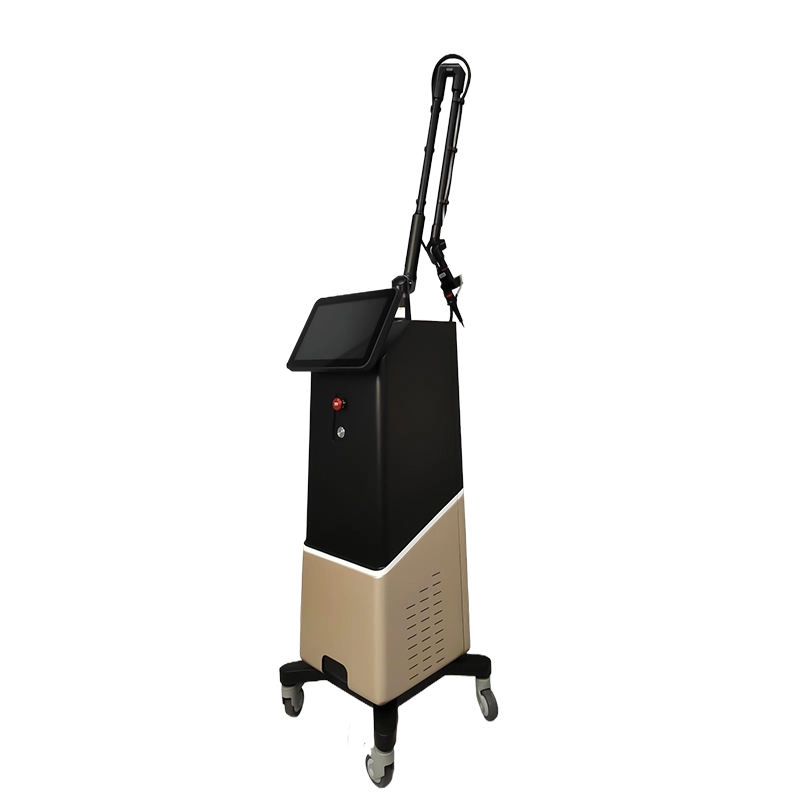
CO2 Fractional Laser Machine for Advanced Skin Resurfacing & Scar Removal
The CO2 fractional laser machine is designed to address a variety of skin concerns, offering treatments for acne scars, pigmentation, wrinkles, and overall skin texture. Utilizing advanced CO2 fractional laser technology, it delivers highly precise and controlled laser energy to promote collagen production and skin rejuvenation. This machine is ideal for professional use in beauty salons, medical spas, and aesthetic clinics. It features a user-friendly touchscreen interface, adjustable settings for customizable treatments, and a built-in cooling system to ensure comfort during use.

V9 Slimming Machine | 5-in-1 Professional Body Contouring & Cellulite Reduction Device | Vacuum, RF, Cavitation, Infrared & Roller
The V9 Slimming Machine is a comprehensive, professional-grade aesthetic device designed to address a wide range of body and facial concerns. This all-in-one system masterfully integrates five powerful technologies—vacuum, roller, infrared, RF, and cavitation—to deliver a complete solution for slimming and shaping.
It is the ideal choice for businesses looking to offer a multi-functional device that can perform multiple treatments, from reducing fat and cellulite to lifting and tightening the skin. The V9 Slimming Machine helps clients combat issues like postpartum obesity, local obesity, and facial sagging.

9 in 1 Gel Radio Frequency Machine – Cavitation Vacuum Machine 40K 80K with RF Skin Tightening Body Shape Weight Loss Fat Cavitation System
The 9 in 1 Gel Radio Frequency Machine is a professional multifunctional body shaping and skin management system designed for beauty salons and slimming centers. Utilizing 40K and 80K cavitation, this device effectively breaks down stubborn fat cells, promoting rapid body contouring and weight loss.
Equipped with advanced RF Skin Tightening technology, the machine stimulates collagen regeneration, tightens sagging skin, reduces wrinkles, and enhances elasticity. The integrated Body Shape Weight Loss Fat Cavitation system delivers powerful shaping results for the abdomen, arms, legs, and waist.
With nine specialized handles, the machine supports multiple facial and body treatments including cavitation slimming, RF tightening, vacuum shaping, and photon rejuvenation—providing a complete 9-in-1 solution for both fat reduction and skin improvement.
Perfect for professional salons seeking to upgrade their services with a versatile and high-performance 9 in 1 cavitation and radio frequency machine.
Get more information
If you have any comments or good suggestions, please leave us a message; later our professional staff will contact you as soon as possible.
Let's Talk
Stay in touch with us for cutting-edge beauty solutions, professional guidance, and customized service.
Contact


Room 307, Building A, Huilong International E-commerce Industrial Park, No. 10 Xipengling Road, Helong Street, Baiyun District, Guangzhou, China
© 2025 HUIMAIN. All Rights Reserved. Privacy Policy | Terms and Conditions | Sitemap
Facebook
Instagram
Medical beauty equipment factory
huimain Medical beauty equipment factory
beauty machine supplier
Whatsapp: +8619124004543