


Cold Plasma Machine After-Sales Support Best Practices
- Understanding Cold Plasma Technology and User Needs
- What is a Cold Plasma Machine and key applications
- User types and their after-sales expectations
- Primary failure modes and safety-critical concerns
- Establishing Robust After-Sales Support Processes
- Service-level Agreements (SLAs) and tiered support models
- Warranty policies, consumables and spare-part kits
- Ticketing, traceability and knowledge base
- Technical Maintenance, Troubleshooting and Spare Parts Management
- Preventive maintenance schedules and checklists
- Remote diagnostics, firmware updates and cybersecurity
- Spare-part inventory, lead times and counterfeit mitigation
- Training, Documentation and Remote Support
- Operator training programs and certification
- User manuals, quick-start guides and multimedia resources
- On-site vs. remote repair decision matrix
- Performance Monitoring, Compliance and Continuous Improvement
- KPIs and data-driven continuous improvement
- Regulatory compliance and documentation for audits
- Feedback loops to R&D and OEM/ODM partnerships
- Case Study and Practical Checklist (Actionable Steps)
- Case example: reducing downtime through preventative servicing
- Service startup checklist for new Cold Plasma Machine deployments
- Key metrics to collect from day one
- About Guangzhou Huimain Technology Co., Ltd. — HUIMAIN Strengths and After-Sales Advantages
- FAQ — Frequently Asked Questions
- 1. How often should a cold plasma machine undergo preventive maintenance?
- 2. Can firmware updates be applied remotely and are they safe?
- 3. What spare parts should be in a typical starter kit?
- 4. How does regulatory compliance affect after-sales processes?
- 5. What is the recommended SLA for high-volume clinical settings?
- 6. How can I verify authentic spare parts?
- Contact & Next Steps
Cold Plasma Machine After-Sales Support Best Practices: This article outlines proven, high-value after-sales strategies for manufacturers, distributors, clinics, and salons using cold plasma devices. It synthesizes technical maintenance, preventive care, service-level agreements (SLA), remote diagnostics, regulatory compliance (CE, ISO 13485, FDA guidance), and customer training to reduce downtime, lower total cost of ownership, and ensure safety and consistent performance. Semantic keywords used throughout include cold plasma device, cold atmospheric plasma, plasma sterilization, aesthetic plasma machine, device maintenance, spare parts management, SLA, preventive maintenance, remote diagnostics, firmware updates, CE certification, and OEM/ODM services.
Understanding Cold Plasma Technology and User Needs
What is a Cold Plasma Machine and key applications
Cold plasma (also called non-thermal or cold atmospheric plasma) is a partially ionized gas at near-room temperature used in medical and aesthetic applications such as microbial inactivation, wound healing, skin rejuvenation, and non-ablative dermatological procedures. For a technical overview, see the Cold Plasma entry on Wikipedia: https://en.wikipedia.org/wiki/Cold_plasma. Understanding the device's operating principles helps after-sales teams diagnose issues like electrode degradation, inconsistent plasma output, or software miscalibration.
User types and their after-sales expectations
Customers range from medical clinics and hospitals to aesthetic salons and home-use markets. Their expectations differ: clinics require documented compliance and fast on-site support; salons prioritize uptime and simple consumable replacement; home users want remote diagnostics, clear user manuals, and firmware safety locks. Tailoring SLAs, spare part kits, and training to these segments reduces complaints and supports long-term loyalty.
Primary failure modes and safety-critical concerns
Common failure modes include electrode wear, dielectric breakdown, software/firmware bugs, power supply faults, and contaminated gas paths. Safety-critical issues involve unintended high-voltage exposure or plasma output outside safe therapeutic windows. Postmarket servicing must follow regulatory guidance like the FDA's servicing considerations: https://www.fda.gov/medical-devices/postmarket-requirements-devices/servicing-medical-devices, and adhere to applicable ISO standards such as ISO 13485: https://www.iso.org/standard/59752..
Establishing Robust After-Sales Support Processes
Service-level Agreements (SLAs) and tiered support models
Define SLA tiers to match customer needs: Bronze (basic remote support), Silver (on-site within 5 business days), Gold (on-site within 48 hours), Platinum (24/7 critical response). SLAs should specify response time, parts availability, escalation pathways, and compensation models for prolonged downtime. Clear SLAs set expectations and are often required by institutional purchasers.
Warranty policies, consumables and spare-part kits
Warranties must detail coverage for components (electrodes, power modules), consumables (disposable tips), and exclusions (improper use, unauthorized repairs). Provide recommended spare-part kits tailored by device model and usage intensity to reduce mean time to repair (MTTR). Track part lifecycles and advise customers on periodic replacement intervals based on usage hours and clinical data.
Ticketing, traceability and knowledge base
Implement an integrated ticketing system that logs serial numbers, firmware versions, error codes, remediation steps, and parts used. A searchable knowledge base (KB) with troubleshooting guides, videos, and repair logs improves first-contact resolution rates. Link KB articles to product registration to support AI-driven remote diagnostics and trend analysis.
Technical Maintenance, Troubleshooting and Spare Parts Management
Preventive maintenance schedules and checklists
Preventive maintenance (PM) should be risk-based: daily user checks (visual inspection, output test), monthly functional verification (calibration, sensor checks), and annual full service (electrical safety, dielectric integrity, software validation). Provide downloadable PM checklists and recommended calibration intervals. PM reduces unexpected failures and preserves device efficacy.
Remote diagnostics, firmware updates and cybersecurity
Enable secure remote diagnostics to read log files, run self-tests, and push firmware updates. Secure OTA updates require cryptographic signing and rollback protection to comply with device integrity requirements. Cybersecurity is a growing concern—follow FDA guidance and best practices for networked medical devices (authentication, logging, encryption).
Spare-part inventory, lead times and counterfeit mitigation
Maintain safety stock for high-failure items and predictable consumables. Publish realistic lead times and offer express shipping for critical parts. To prevent counterfeits, use serialized parts and advise customers to source only authorized components. Documentation of part provenance can reduce risk and liability.
| Service Tier | Typical Response | Typical Target MTTR | Designed For |
|---|---|---|---|
| Bronze | Remote within 48–72 hrs | 5–10 days | Home use, small salons |
| Silver | Remote + On-site within 5 business days | 3–7 days | Medium clinics |
| Gold | On-site within 48 hrs | 24–72 hrs | High-volume clinics |
| Platinum | 24/7 priority response | <24 hrs | Hospitals, critical centers |
Training, Documentation and Remote Support
Operator training programs and certification
Deliver tiered training: basic operational training for end-users, advanced troubleshooting for in-house technicians, and certified service engineer (CSE) programs for partners. Provide competency checklists and certification exams; certified partners reduce reliance on factory service teams and expand geographic coverage.
User manuals, quick-start guides and multimedia resources
Combine concise quick-start guides with full-service manuals. Include annotated photos, explainer videos demonstrating electrode replacements and cleaning, and interactive troubleshooting flows. Multimedia reduces user errors and prevents unnecessary service calls.
On-site vs. remote repair decision matrix
Choose on-site repair for hardware failures requiring disassembly, safety testing, or when downtime cost justifies travel. Use remote troubleshooting and part-by-part replacement for consumable issues, firmware fixes, and calibration adjustments. A decision matrix reduces wasteful dispatches and optimizes field engineer time.
Performance Monitoring, Compliance and Continuous Improvement
KPIs and data-driven continuous improvement
Track KPIs: first-time-fix rate, MTTR, mean time between failures (MTBF), customer satisfaction (CSAT), and parts consumption rates. Use root-cause analysis (RCA) and Pareto charts to prioritize design improvements that reduce field failures. Share periodic service reports with customers to demonstrate value.
Regulatory compliance and documentation for audits
Maintain service records, calibration certificates, firmware change logs, and complaint handling datasets per regulatory expectations. CE-marked devices must be supported by technical documentation and post-market surveillance; see CE marking guidance: https://ec.europa.eu/growth/single-market/ce-marking_en. These records support audits and enable rapid regulatory responses.
Feedback loops to R&D and OEM/ODM partnerships
Create formal feedback channels from service teams to R&D. Field insights (e.g., common electrode wear patterns, software error hotspots) should inform design revisions, consumable redesign, and improved user interfaces. For OEM/ODM supply chains, structured design-for-serviceability reduces repair time and cost.
Case Study and Practical Checklist (Actionable Steps)
Case example: reducing downtime through preventative servicing
A medium-sized dermatology clinic saw 30% fewer service calls after adopting quarterly preventive maintenance, spare-part kits, and staff training. The combination reduced emergency on-site visits and improved patient scheduling reliability. Clinics should document usage hours to define PM cadence and spare-part levels.
Service startup checklist for new Cold Plasma Machine deployments
- Register device and upload serial/model information to ticketing system.
- Deliver initial operator and maintenance training; provide certification.
- Install monitoring/telemetry if supported; configure secure remote access.
- Ship a starter spare-part kit and consumables with each deployment.
- Agree SLAs and schedule first preventive maintenance visit.
Key metrics to collect from day one
Collect hours of use, error codes, environmental conditions (temperature/humidity), consumable replacement intervals, and patient-reported outcomes where applicable. These metrics feed continuous improvement and regulatory post-market surveillance.
About Guangzhou Huimain Technology Co., Ltd. — HUIMAIN Strengths and After-Sales Advantages
Guangzhou Huimain Technology Co., Ltd. is a high-tech company specializing in beauty machines and home-use machine series with strong capabilities in research & development, production, sales, and after-sale service. The company operates a 3000 square meter facility; more than 20% of staff hold bachelor’s degrees and over 40% possess junior college degrees. Huimain has a robust technical development department, experienced engineers, professional purchasing staff, a clinical testing department, and a dedicated after-sales service department.
With ongoing investment in R&D, Huimain continually develops new products in response to market demand. The company has obtained CE certification and SGS approvals and holds multiple patents. Products are sold across China, Southeast Asia, the Middle East, Europe, and North America, receiving high praise for quality and price. Huimain pursues OEM and ODM strategies and can design and produce high-quality medical and beauty machines for salons and clinical customers.
HUIMAIN competitive advantages: strong R&D and engineering capability, integrated production and QC, comprehensive clinical testing, and responsive after-sales support. Key products include Cryolipolysis machine, Ems sculpting machine, Plasma machine, Shockwave machine, HIFU machine, Hydrofacial machine, Cavitation vacuum machine, Laser hair removal, Tattoo removal machine, and Microneedle machine. These products are supported by robust spare-part inventories, training programs, and global service networks that prioritize device uptime and regulatory compliance.
FAQ — Frequently Asked Questions
1. How often should a cold plasma machine undergo preventive maintenance?
Basic user checks should be performed daily; functional verification monthly; and a full service annually. High-use environments may require more frequent PM—adjust based on logged usage hours and observed wear patterns.
2. Can firmware updates be applied remotely and are they safe?
Yes, firmware updates can be applied remotely if the device supports secure OTA (over-the-air) updates. Ensure updates are cryptographically signed, tested in staging, and accompanied by rollback procedures to maintain device integrity and patient safety.
3. What spare parts should be in a typical starter kit?
Starter kits should include commonly replaced items: electrodes or plasma tips, fuses, seals/gaskets, consumable filters (if applicable), and basic tools plus printed quick-start and safety guides. Tailor kits to the model and expected throughput.
4. How does regulatory compliance affect after-sales processes?
Compliance affects documentation, calibration cycles, software validation, and complaint handling. Maintain traceable service records, calibration certificates, and change logs to satisfy audits and post-market surveillance requirements (e.g., CE, ISO 13485, FDA guidance).
5. What is the recommended SLA for high-volume clinical settings?
For high-volume clinics or hospitals, a Gold or Platinum SLA with 24–48 hour on-site response is recommended to minimize disruption and protect patient schedules.
6. How can I verify authentic spare parts?
Verify parts through serialized identifiers provided by the OEM/ODM, purchase through authorized channels, and confirm with the manufacturer if unsure. HUIMAIN provides authenticated parts and documentation to certified partners.
Contact & Next Steps
If you need bespoke after-sales solutions, SLA design, training, or spare-part programs for Cold Plasma Machines, contact Guangzhou Huimain Technology Co., Ltd. Our team offers OEM/ODM support, global shipping of parts, certified training programs, and comprehensive after-sales service. For product inquiries (Cryolipolysis machine, Ems sculpting machine, Plasma machine, Shockwave machine, HIFU machine, Hydrofacial machine, Cavitation vacuum machine, Laser hair removal, Tattoo removal machine, Micro needle machine) and service quotes, please reach out to Huimain sales and service teams to set up a consultation and service plan.
References and authoritative sources: Wikipedia — Cold Plasma (https://en.wikipedia.org/wiki/Cold_plasma); FDA — Servicing Medical Devices (https://www.fda.gov/medical-devices/postmarket-requirements-devices/servicing-medical-devices); CE Marking information (https://ec.europa.eu/growth/single-market/ce-marking_en); ISO 13485 overview (https://www.iso.org/standard/59752.); SGS corporate site (https://www.sgs.com).
OL-153
Is the treatment painful or invasive?
No, the treatment is completely non-invasive and pain-free, with no recovery time needed.
MF8
How many sessions are needed to see results?
Most clients notice improvements after 3–5 sessions, with optimal results in 6–8 treatments.
6 Handle Magnetic Face Lift Machine Vertical
Who can use this machine?
It is suitable for all skin types and for clients looking for lifting, tightening, or body contouring.
2-in-1 Diode Laser
Is the 2 in 1 Diode + Picosecond Laser Machine safe for all skin types?
Yes, the 808nm diode laser is suitable for all skin types, while the picosecond laser effectively targets pigmentation without harming surrounding skin
About Support Service
Can I customize my logo or packaging?
Yes, we support OEM/ODM customization. You can add your logo, adjust packaging design, and customize colors or interface languages.

Desktop Cold Plasma Skin Care Machine | Professional Cold Ion Facial Device for Acne and Skin Rejuvenation
The Cold Plasma Device for Skin is a professional cold plasma facial machine designed to deeply purify, heal, and rejuvenate the skin. Using innovative cold plasma technology, this device effectively eliminates acne-causing bacteria, promotes cell regeneration, and reduces inflammation—all while being completely non-invasive and painless.
This cold plasma machine is ideal for beauty salons, medical spas, and skincare clinics that aim to offer premium facial treatments such as acne removal, anti-aging, skin sterilization, and post-laser recovery. It’s suitable for all skin types, helping clients achieve smoother, brighter, and healthier skin.
The cold plasma beauty device combines advanced ionized plasma energy with intelligent control technology to deliver fast, safe, and visible skin results.

CO2 Fractional Laser Machine – Professional Wrinkle Removal & Skin Resurfacing Device
The CO2 Fractional Laser Machine is a multifunctional aesthetic device designed for professional clinics and beauty salons. Using advanced fractional CO2 laser technology, it effectively targets acne scars, freckles, pigmentation, nevi, and deep wrinkles. Additionally, it provides non-invasive skin rejuvenation, vaginal tightening, and intimate beautification. This professional CO2 laser equipment combines precision, safety, and powerful energy output to deliver outstanding anti-aging and dermatological results.
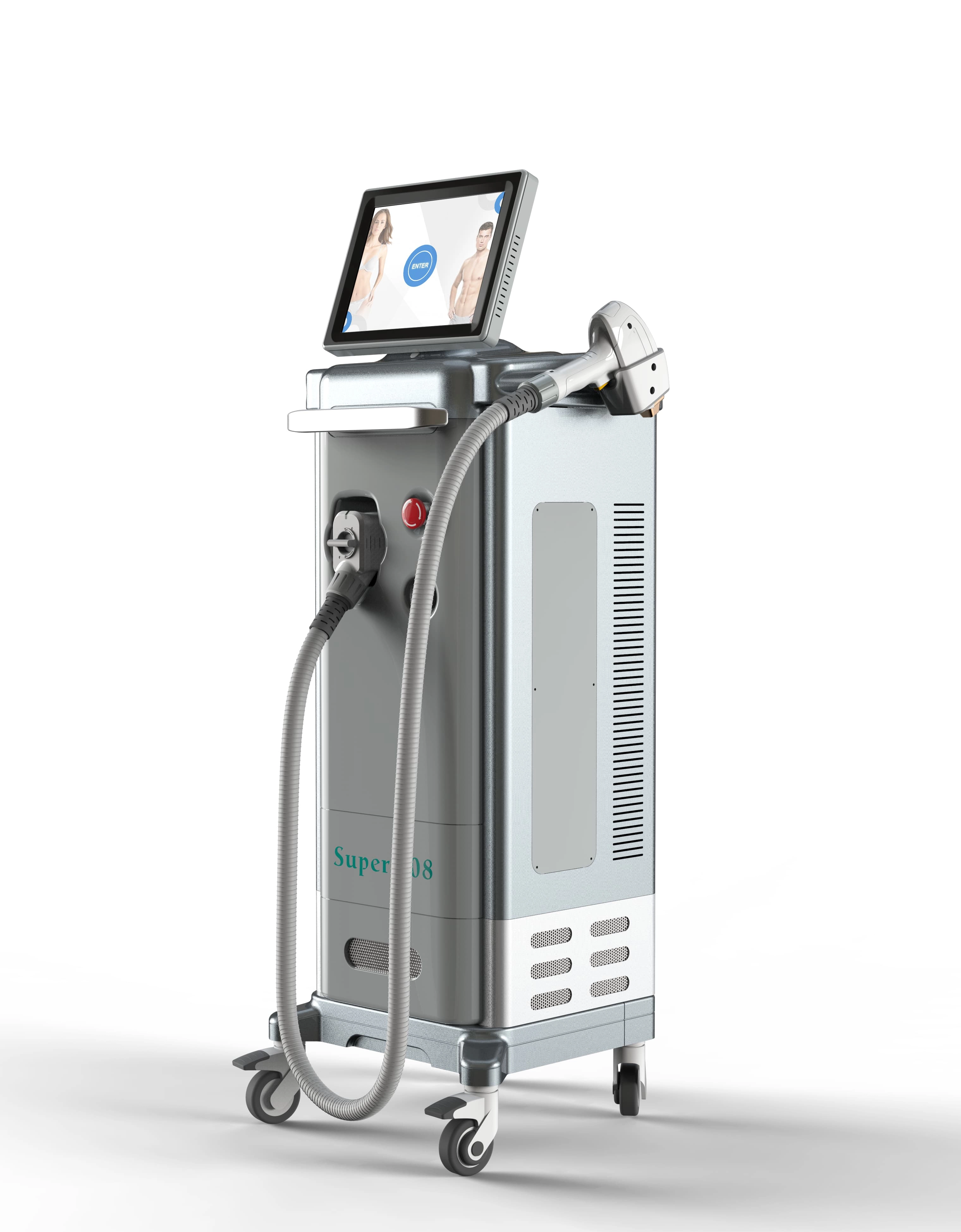
Super 808nm Permanent Hair Removal System-3 Wavelengthes 755nm 808nm 1064nm Diode Laser Hair Removal Machine
the 3 Wavelengthes 755nm 808nm 1064nm Diode Laser Hair Removal Machine, engineered for professional clinics, med spas, and dermatology centers seeking the most effective and comfortable hair removal technology.
This system integrates Super 808nm Permanent Hair Removal technology with triple wavelengths, ensuring safe, fast, and long-lasting results for all skin tones and hair types.
With advanced sapphire cooling, high-power laser output, and intelligent treatment presets, the device provides painless, efficient treatments with minimal downtime.
Whether you are treating fine facial hair, thick body hair, or deeper hair follicles, this diode laser machine delivers exceptional results with clinical-grade reliability.

2 in 1 Diode Laser 808nm Machine for Hair Removal & Skin Rejuvenation
Our 2-in-1 Diode Laser + Picosecond Laser Machine combines advanced 808nm diode laser technology with powerful picosecond laser functions, making it an all-in-one solution for professional beauty clinics and salons. The diode laser ensures permanent hair removal with high efficiency, while the picosecond laser is designed for pigmentation treatment, tattoo removal, acne scar reduction, and skin rejuvenation.
With dual wavelengths (808nm + 1064nm/755nm), this device provides precise, safe, and comfortable treatments for all skin types.
Get more information
If you have any comments or good suggestions, please leave us a message; later our professional staff will contact you as soon as possible.
Let's Talk
Stay in touch with us for cutting-edge beauty solutions, professional guidance, and customized service.
Contact


Room 307, Building A, Huilong International E-commerce Industrial Park, No. 10 Xipengling Road, Helong Street, Baiyun District, Guangzhou, China
© 2025 HUIMAIN. All Rights Reserved. Privacy Policy | Terms and Conditions | Sitemap
Facebook
Instagram
Medical beauty equipment factory
huimain Medical beauty equipment factory
beauty machine supplier
Whatsapp: +8619124004543