


Cold Plasma Machine Bulk Purchase Negotiation Tips
- Supplier Selection and Technical Qualification
- Define technical and regulatory requirements
- Shortlist and pre-qualify vendors
- Evaluate IP, manufacturing capacity and supply chain risks
- Commercial Terms to Negotiate
- Price, volume tiers and MOQ
- Lead time, capacity reservation and penalties
- Warranty, acceptance testing and after-sales support
- Contract Clauses and Risk Mitigation
- Key contractual protections
- Payment terms and financing structures
- Insurance, compliance and recall planning
- Practical Negotiation Tactics and Playbooks
- Leverage competition and benchmarking
- Non-price concessions worth trading
- Use objective standards and test data in negotiations
- Operational Considerations Post-Contract
- Quality control and incoming inspection
- Spare parts planning and lifecycle management
- Training, documentation and knowledge transfer
- Comparison Table: Typical Negotiation Terms (Illustrative)
- Sample Negotiation Checklist & Email Template
- Checklist before sending RFQ
- Sample commercial negotiation email (concise)
- FAQ
- 1. What is a Cold Plasma Machine and where is it used?
- 2. How do I verify a supplier's regulatory compliance?
- 3. What warranty and service terms should I insist on?
- 4. Is it better to buy from an OEM or a local distributor?
- 5. How can I manage IP and custom development costs?
- 6. What acceptance tests should I include for cold plasma devices?
- Contact and Next Steps
- References
This guide helps procurement managers, R&D leads, and business owners negotiate bulk purchases of Cold Plasma Machines with confidence. It combines technical due diligence, commercial negotiation tactics, and compliance checkpoints tailored for Cold Plasma Machines used in medical, aesthetic, and industrial settings. The objective is to reduce unit cost, shorten lead times, and secure reliable after-sales support while ensuring regulatory and quality compliance.
Supplier Selection and Technical Qualification
Define technical and regulatory requirements
Before engaging suppliers, document exact technical specifications: plasma generation method (e.g., dielectric-barrier discharge, plasma jet), operating parameters (voltage, frequency, gas type), targeted applications (skin treatment, wound healing, surface sterilization), safety interlocks, and footprint. For medical or aesthetic devices, note regulatory pathway requirements (e.g., FDA 510(k) or CE Medical Device Classification) and required quality systems such as ISO 13485. Including compliance requirements in the RFQ filters out noncompliant vendors early.
Shortlist and pre-qualify vendors
Create a vendor scorecard with weighted criteria: technical fit (30%), quality certification (20%), price (15%), lead time (10%), service capability (15%), and references/case studies (10%). Request evidence: product datasheets, test reports, IEC/EN conformity declarations, and customer references. Use remote demos and ask for lab videos that show consistent plasma generation under expected operating conditions.
Evaluate IP, manufacturing capacity and supply chain risks
Confirm whether the Cold Plasma Machine integrates proprietary components (power supplies, electrodes) protected by patents, and whether suppliers have sufficient manufacturing capacity to support your volumes. For bulk orders, validate raw material and subassembly supplier stability, lead-time variability, and contingency plans to avoid mid-contract supply disruptions.
Commercial Terms to Negotiate
Price, volume tiers and MOQ
Negotiate a clear price schedule with breaks at volume tiers. Typical approaches include:
- Fixed unit price for initial lot (e.g., 50–200 units)
- Lower price for future purchase commitments or rolling orders
- Rebates tied to cumulative annual volume
Minimum order quantity (MOQ) varies by supplier — single-unit MOQs exist for high-value devices, but manufacturers often reduce per-unit price only above certain thresholds. Ask for pilot lots with preferential pricing to validate product before full-scale order.
Lead time, capacity reservation and penalties
Negotiate committed lead times and production slots. For bulk purchases, include capacity reservation clauses and liquidated damages or delivery credits for missed milestones. Typical lead-time ranges for Cold Plasma Machines are 6–16 weeks depending on customization; lock in a calendar-based schedule and staging milestones (design freeze, pre-production sample, mass production start).
Warranty, acceptance testing and after-sales support
Define warranty period (commonly 12–24 months) and warranty scope (parts, labor, consumables). Specify acceptance tests (factory acceptance test, site acceptance test) with measurable pass/fail criteria and remediation timelines. Include service level agreements (SLA) for spare parts lead time, remote diagnostics, and on-site corrective maintenance response times, especially for clinical or production-critical applications.
Contract Clauses and Risk Mitigation
Key contractual protections
Include the following clauses in your master purchase agreement:
- Detailed technical specification annex and change control process
- IP ownership or licensing terms for custom developments
- Quality acceptance and inspection rights, including third-party testing
- Termination for convenience and supplier default clauses with remedies
- Confidentiality and data protection where device data is transmitted
Payment terms and financing structures
Negotiate payment milestones tied to deliverables (e.g., 30% deposit, 40% on pre-production approval, 30% on shipment). For large capital expenditures, consider escrow arrangements for source code or critical IP, vendor financing, or leasing options to preserve working capital. Request letters of credit for cross-border deals to balance payment risk.
Insurance, compliance and recall planning
Ensure supplier carries product liability and manufacturing insurance commensurate with intended use. For medical/aesthetic applications, require compliance evidence (e.g., CE mark, FDA clearance) and a documented recall/field-correction plan with assigned roles if safety issues arise.
Practical Negotiation Tactics and Playbooks
Leverage competition and benchmarking
Obtain quotes from at least 3 qualified suppliers to create competitive tension. Use anonymized benchmarking to share high-level best offers and request improved terms. If possible, split award across multiple suppliers to reduce single-source risk and improve leverage, while specifying consistent acceptance criteria.
Non-price concessions worth trading
Suppliers often concede on non-price items more readily than on unit price. Prioritize negotiating on:
- Extended warranty or paid spare parts kit
- Favorable payment terms or escrow
- Faster initial pilot delivery or dedicated commissioning engineer
- Consumable or service discounts for a defined term
Use objective standards and test data in negotiations
Bring objective third-party test data, industry standards, and customer case studies into negotiations. For instance, cite IEC safety standards or performance metrics measured in an accredited lab to substantiate acceptance criteria. Objective evidence reduces subjective disputes and clarifies expectations.
Operational Considerations Post-Contract
Quality control and incoming inspection
Set up an incoming inspection plan for batch releases: visual inspection, electrical safety checks, functional plasma tests, and software verification. Define sampling plans (e.g., ISO 2859-AQL) for production lots and specify corrective action timelines and escalation paths if nonconforming units are discovered.
Spare parts planning and lifecycle management
Agree on spare parts kits and recommended inventory levels in contract. Negotiate lifecycle commitments for key components (power modules, electrodes) and an obsolescence notification period (e.g., 12–24 months) so you can plan replacements or redesigns before support ends.
Training, documentation and knowledge transfer
Require comprehensive documentation: user manuals, maintenance guides, schematic diagrams (where IP allows), and training sessions for operators and service engineers. For critical installations, request onsite commissioning and hands-on training as part of the purchase package.
Comparison Table: Typical Negotiation Terms (Illustrative)
| Term | Typical Range / Example | Negotiation Focus |
|---|---|---|
| MOQ | 1–200 units (depends on customization) | Request pilot pricing; tiered discounts |
| Lead time | 6–16 weeks | Capacity reservation and penalty clauses |
| Warranty | 12–24 months | Extend warranty or include spare parts |
| Payment | 30/40/30 or negotiable | Milestone-based payments or LC |
| After-sales SLA | Remote support: 24–72h; On-site: 3–14 days | Faster response for critical sites |
Sample Negotiation Checklist & Email Template
Checklist before sending RFQ
- Finalize technical spec and regulatory requirements
- Prepare vendor scorecard and shortlist
- Decide commercial priorities (price vs. lead time vs. warranty)
- Plan acceptance tests and inspection criteria
- Set internal approvals and budget thresholds
Sample commercial negotiation email (concise)
Subject: RFQ Follow-up and Commercial Terms – Cold Plasma Machine (Bulk)
Dear ,
Thank you for your quote dated . We are preparing a bulk purchase and would like to clarify commercial and technical terms to proceed. Key points:
- Target initial order: . Please provide tiered pricing for 1–50, 51–200, 201–500 units.
- Requested lead time for initial pilot and mass production. Confirm production slot guarantees and penalties for delay.
- Warranty scope and period, and lead time for critical spare parts.
- Requested acceptance test protocol and availability for factory acceptance test.
Please send updated terms and any value-added concessions (extended warranty, training, spare kit) by . We are evaluating multiple suppliers and expect to award within .
Regards,
FAQ
1. What is a Cold Plasma Machine and where is it used?
Cold Plasma Machines generate ionized gas at near-room temperatures (cold or non-thermal plasma) used in medical therapy (wound healing, dermatology), aesthetics, surface sterilization, and material processing. Application specifics determine device design and regulatory needs.
2. How do I verify a supplier's regulatory compliance?
Request certificates (CE, FDA 510(k) clearance, or other national approvals), ISO 13485 certification for medical devices, conformity declarations, and evidence of clinical or performance data when applicable. Independent test reports from accredited labs are valuable.
3. What warranty and service terms should I insist on?
At minimum, a 12-month warranty covering major components is standard; for mission-critical or clinical use, target 18–24 months and include defined SLAs for spare parts and on-site support. Include acceptance testing to trigger warranty start date.
4. Is it better to buy from an OEM or a local distributor?
OEMs may offer better pricing and customization; local distributors often provide faster service, spare parts, and local regulatory assistance. For bulk buys, consider a hybrid approach: negotiate price with the OEM and service agreements with a local partner.
5. How can I manage IP and custom development costs?
Clarify IP ownership early. Use license models for supplier IP and negotiate reduced fees for volume purchases. Consider development cost amortization across units or agree on joint IP ownership for co-developed features.
6. What acceptance tests should I include for cold plasma devices?
Factory Acceptance Test (FAT) should cover electrical safety (IEC 60601, if medical), functional plasma generation under standard conditions, repeatability, software version check, and consumable performance. Site Acceptance Test (SAT) verifies operation in intended environment and operator training completion.
Contact and Next Steps
If you are planning a bulk purchase of Cold Plasma Machines and need supplier selection, technical due diligence, or negotiation support, contact our procurement consultants for a free consultation or request a product brochure and quote. View our Cold Plasma Machine product page or request a proposal to begin.
References
- Plasma (physics) - Wikipedia (accessed 2026-01-13)
- ISO 13485 — Medical devices (accessed 2026-01-13)
- FDA: Device Advice — Comprehensive Regulatory Assistance (accessed 2026-01-13)
- Cold Plasma Market Analysis — Grand View Research (accessed 2026-01-13)
- Selected peer-reviewed reviews on cold atmospheric plasma applications — PubMed (accessed 2026-01-13)
CRL-6
Is this machine suitable for all skin types?
Yes, the device is designed for all skin types and body areas, with adjustable energy levels for different clients.
EMS + Cryo Slimming Machine
Who can use the EMS + Cryo Slimming Machine?
This Cryolipolysis and EMS body sculpting machine is suitable for:
-
Beauty salons, med spas, and body contouring centers
-
Weight loss clinics and wellness studios
-
Professional estheticians and distributors seeking multifunction slimming solutions
It’s designed for both men and women who want to reduce stubborn fat and improve muscle definition non-surgically.
双逆博士
Can I use this machine at home?
Yes, this machine is designed for both professional and home use, with easy-to-follow instructions for safe operation.
9 in 1 Cavitation Vacuum Machine
What is the main function of the 9 in 1 Gel Radio Frequency Machine?
It combines 40K/80K cavitation, RF skin tightening, and body shape weight loss fat cavitation to reduce fat and tighten skin.
G8按摩仪
Can the machine be used for facial treatments?
While primarily designed for body treatments, the G8 machine can also be used on the face for skin rejuvenation and tightening, with appropriate attachments.

Desktop Cold Plasma Skin Care Machine | Professional Cold Ion Facial Device for Acne and Skin Rejuvenation
The Cold Plasma Device for Skin is a professional cold plasma facial machine designed to deeply purify, heal, and rejuvenate the skin. Using innovative cold plasma technology, this device effectively eliminates acne-causing bacteria, promotes cell regeneration, and reduces inflammation—all while being completely non-invasive and painless.
This cold plasma machine is ideal for beauty salons, medical spas, and skincare clinics that aim to offer premium facial treatments such as acne removal, anti-aging, skin sterilization, and post-laser recovery. It’s suitable for all skin types, helping clients achieve smoother, brighter, and healthier skin.
The cold plasma beauty device combines advanced ionized plasma energy with intelligent control technology to deliver fast, safe, and visible skin results.

CO2 Fractional Laser Machine – Professional Wrinkle Removal & Skin Resurfacing Device
The CO2 Fractional Laser Machine is a multifunctional aesthetic device designed for professional clinics and beauty salons. Using advanced fractional CO2 laser technology, it effectively targets acne scars, freckles, pigmentation, nevi, and deep wrinkles. Additionally, it provides non-invasive skin rejuvenation, vaginal tightening, and intimate beautification. This professional CO2 laser equipment combines precision, safety, and powerful energy output to deliver outstanding anti-aging and dermatological results.

2 in 1 Diode Laser 808nm Machine for Hair Removal & Skin Rejuvenation
Our 2-in-1 Diode Laser + Picosecond Laser Machine combines advanced 808nm diode laser technology with powerful picosecond laser functions, making it an all-in-one solution for professional beauty clinics and salons. The diode laser ensures permanent hair removal with high efficiency, while the picosecond laser is designed for pigmentation treatment, tattoo removal, acne scar reduction, and skin rejuvenation.
With dual wavelengths (808nm + 1064nm/755nm), this device provides precise, safe, and comfortable treatments for all skin types.
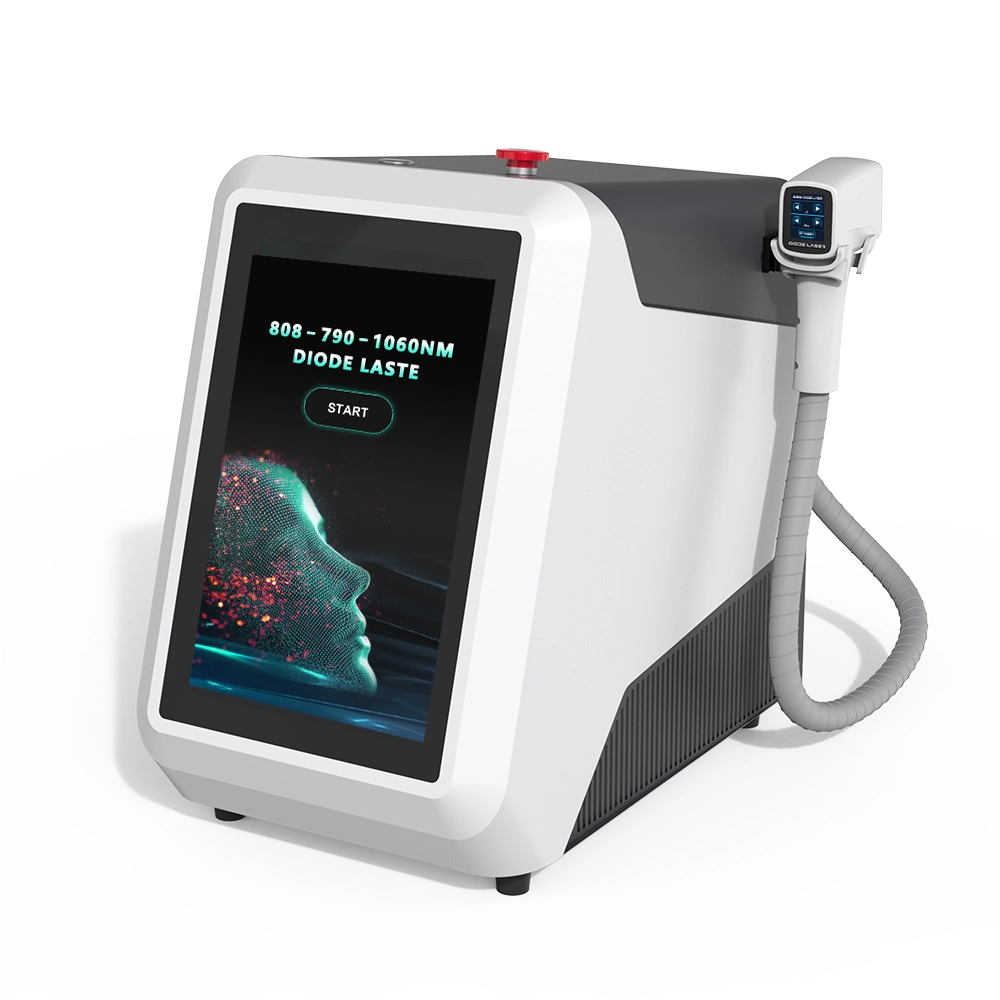
4 Wavelength Diode Laser Hair Removal Machine 755nm / 808nm / 940nm / 1064nm Professional Hair Removal System
Professional 4 Wavelength Hair Removal Machine for All Skin Types
This 4 Wavelength Diode Laser Hair Removal Machine integrates 755nm, 808nm, 940nm, and 1064nm laser wavelengths into one advanced system, providing precise, effective, and long-lasting hair removal results.
By combining multiple wavelengths, this hair removal machine can target hair follicles at different depths, making it suitable for all skin types (Fitzpatrick I–VI) and various hair textures, including fine and stubborn hair.
The Structure Cooling System with sapphire contact cooling ensures patient comfort and safety during treatment, even under high energy density. Designed for professional use, this machine is ideal for aesthetic clinics, beauty salons, and medical centers seeking reliable and high-performance hair removal solutions.
Get more information
If you have any comments or good suggestions, please leave us a message; later our professional staff will contact you as soon as possible.
Let's Talk
Stay in touch with us for cutting-edge beauty solutions, professional guidance, and customized service.
Contact


Room 307, Building A, Huilong International E-commerce Industrial Park, No. 10 Xipengling Road, Helong Street, Baiyun District, Guangzhou, China
© 2025 HUIMAIN. All Rights Reserved. Privacy Policy | Terms and Conditions | Sitemap
Facebook
Instagram
Medical beauty equipment factory
huimain Medical beauty equipment factory
beauty machine supplier
Whatsapp: +8619124004543