


Cold Plasma Machine Certification Documents Buyers Require
- Why certification and documentation matter for aesthetic and medical devices
- Risk profile and intended use determine regulatory pathway
- Patient safety and professional liability
- Essential regulatory certifications and standards
- CE marking and EU Medical Device Regulation (MDR)
- U.S. FDA 510(k) clearance or marketing pathway
- Quality management: ISO 13485 and regulatory QMS
- Electrical safety, EMC and biocompatibility standards
- Technical documents buyers must request
- Technical File / Design Dossier and Declaration of Conformity
- Electrical safety and EMC test reports
- Performance verification and clinical evidence
- How to verify documents — practical buyer checklist
- Authenticity checks and database lookups
- Third-party testing and audit options
- Procurement checklist (quick reference)
- Comparing certifications and documents — quick reference table
- Quality assurance, post-market surveillance and supplier credibility
- Post-market vigilance and adverse event reporting
- Supplier track record and references
- Warranty, spare parts and training
- When documents are missing — seller remediation steps and buyer protections
- Obtain third-party test reports
- Contractual safeguards
- Local regulatory specialist consultation
- Guangzhou Huimain Technology Co., Ltd. — supplier profile and how they meet buyer requirements
- FAQ — Common buyer questions about cold plasma machine documentation
- 1. Is CE marking enough to sell a cold plasma machine in Europe?
- 2. Do all cold plasma devices require FDA 510(k) clearance?
- 3. What lab reports should I insist on for safety and EMC?
- 4. How much clinical evidence is sufficient?
- 5. What should I do if a supplier cannot produce ISO 13485 or CE documentation?
- Closing and next steps — how buyers should proceed
Cold plasma machines are increasingly used in aesthetic clinics, dermatology, and wound-care settings. For procurement teams, distributors, and clinic managers, verifying the correct certification and technical documentation is crucial to ensure safety, regulatory compliance, and clinical effectiveness. This article summarizes the certifications, test reports, clinical evidence, and supplier verification steps buyers should require before purchasing a cold plasma device.
Why certification and documentation matter for aesthetic and medical devices
Risk profile and intended use determine regulatory pathway
Cold plasma devices operate by generating non-thermal plasma at atmospheric pressure to create reactive species used for sterilization, wound healing, or dermatological treatments. Because these devices interact with tissues and biological surfaces, their regulatory classification depends on intended medical claims and risk level. Regulatory agencies such as the U.S. Food and Drug Administration (FDA) and the European Union set distinct requirements depending on whether the device is marketed for medical therapy or cosmetic use. See FDA medical device guidance: FDA - Medical Devices.
Patient safety and professional liability
Without proper certification and test evidence, a purchased cold plasma machine can expose clinics to safety incidents, treatment failures, or regulatory enforcement. Documentation provides traceability for electrical safety, electromagnetic compatibility, materials biocompatibility, and clinical performance. Buyers should treat documentation as part of the device’s safety case and risk management file (see ISO 14971).
Essential regulatory certifications and standards
CE marking and EU Medical Device Regulation (MDR)
For sales in the European Economic Area, CE marking (under EU MDR 2017/745) is mandatory for most medical devices making therapeutic claims. The CE Certificate and Declaration of Conformity should reference applicable Harmonized Standards (for example, IEC 60601 series) and the Notified Body that performed conformity assessment. Verify Notified Body details through the NANDO database: NANDO.
U.S. FDA 510(k) clearance or marketing pathway
In the United States, many therapeutic or diagnostic plasma devices require FDA clearance (commonly via 510(k)) or a de novo classification. The company should provide the 510(k) number, predicate device, and summary documents where applicable. Consult the FDA devices pages for the specific device classification and guidance: FDA - Medical Devices.
Quality management: ISO 13485 and regulatory QMS
ISO 13485 certification demonstrates that a manufacturer maintains a medical device quality management system covering design, production, and post-market activities. Buyers should request the ISO 13485 certificate, scope, and the issuing certification body.
Electrical safety, EMC and biocompatibility standards
Key technical standards include IEC 60601-1 (general safety of medical electrical equipment), IEC 60601-1-2 (EMC), and ISO 10993 series (biocompatibility of materials in contact with the body). For devices applying energy or disposables contacting skin, material testing and ISO 10993 reports are critical.
Technical documents buyers must request
Technical File / Design Dossier and Declaration of Conformity
The Technical File (EU) or Design Dossier should include device description, design drawings, risk analysis (ISO 14971), verification/validation data, manufacturing processes, labeling, and instructions for use (IFU). For CE-marked products, a Declaration of Conformity (DoC) must be provided.
Electrical safety and EMC test reports
Request laboratory test reports for IEC 60601-1 (insulation, leakage current), and IEC 60601-1-2 (electromagnetic compatibility). These reports should come from accredited test houses (e.g., UL, TUV, Intertek) and include test lab accreditation details.
Performance verification and clinical evidence
Clinical evaluation reports (CER), peer-reviewed studies, or clinical trial summaries demonstrating efficacy and safety for the intended indication should be provided. For claims like wound healing acceleration or microbial reduction, look for controlled trials, endpoint definitions, and outcome measures. Industry overview on plasma medicine can be found at: Plasma medicine - Wikipedia.
How to verify documents — practical buyer checklist
Authenticity checks and database lookups
Verify certificate numbers, issuer names, and expiry dates with the issuing body. For EU certificates, cross-check the Notified Body using the NANDO database: NANDO. For FDA clearances, search the FDA 510(k) database or device listings: FDA 510(k) Search.
Third-party testing and audit options
If documents are missing or unclear, buyers can request updated test reports from accredited labs or arrange supplier audits. Consider contractual terms requiring third-party testing or conditional acceptance pending validation.
Procurement checklist (quick reference)
- Regulatory certificates: CE (DoC), FDA 510(k) or equivalent, export permits
- Quality system: ISO 13485 certificate
- Technical file or design dossier and Instructions for Use (IFU)
- IEC 60601-1 and IEC 60601-1-2 test reports
- ISO 10993 biocompatibility reports for skin-contact materials
- Clinical Evaluation Report (CER) and peer-reviewed evidence
- EMC and electrical safety lab reports from accredited bodies
- Material Safety Data Sheets (MSDS) for consumables and chemicals
- Warranty, service terms, spare parts and after-sales support details
Comparing certifications and documents — quick reference table
| Document / Certificate | Purpose | Typical Issuer | When Required |
|---|---|---|---|
| CE Certificate & Declaration of Conformity | Shows conformity with EU MDR and harmonized standards | Manufacturer + Notified Body (if applicable) | For commercial sale in EU/EEA when marketed as medical device |
| FDA 510(k) Clearance | Regulatory clearance for substantially equivalent devices in US | U.S. Food and Drug Administration | When intended uses fall under FDA medical device categories |
| ISO 13485 Certificate | Quality management system for medical device manufacturing | Accredited Certification Body | Best practice and often required by distributors/clinics |
| IEC 60601-1 / IEC 60601-1-2 Reports | Electrical safety and EMC compliance | Accredited Test Laboratory (TUV, UL, Intertek, SGS) | Required for powered medical electrical equipment |
| ISO 10993 Biocompatibility Reports | Safety of materials in contact with skin or tissue | Biocompatibility Testing Labs | If device has consumables or direct skin contact |
Sources for standards and regulatory frameworks: European Commission CE information: CE marking - European Commission; ISO 13485 overview: ISO - 13485.
Quality assurance, post-market surveillance and supplier credibility
Post-market vigilance and adverse event reporting
Ensure the supplier has a post-market surveillance system to capture adverse events, complaints, and field corrective actions. For EU devices, manufacturers must comply with vigilance reporting under MDR. For US-market devices, FDA's Medical Device Reporting (MDR) obligations apply.
Supplier track record and references
Ask for references from other clinics or distributors and documented case studies demonstrating long-term reliability and spare parts availability. Request sample IFU, service manuals, and turnaround times for critical repairs.
Warranty, spare parts and training
Confirm warranty coverage, available service centers, and training for operators. Certification without appropriate training and service can still lead to misuse and liability.
When documents are missing — seller remediation steps and buyer protections
Obtain third-party test reports
If a manufacturer cannot immediately produce required test reports, negotiate conditional acceptance that requires test results from an accredited lab (TUV, SGS, UL) within a defined period. Require certificates to be transferred or reissued under contract where legally necessary.
Contractual safeguards
Include contract clauses requiring compliance with specified standards, right-to-audit, indemnities for regulatory non-compliance, and holdback of payment pending verification. Use acceptance testing clauses to define performance criteria at delivery.
Local regulatory specialist consultation
Engage a local regulatory consultant if entering a heavily regulated market. They can interpret device classification, local registration needs, and import requirements (for example, import licenses or Free Sale Certificates).
Guangzhou Huimain Technology Co., Ltd. — supplier profile and how they meet buyer requirements
Guangzhou Huimain Technology Co., Ltd. is a high-tech enterprise specializing in the research, development, production, and after-sales service of professional beauty machines and home-use devices. Operating from a 3,000-square-meter facility, Huimain is driven by a strong technical team where over 60% of staff hold higher education degrees. The company features dedicated departments for purchasing, clinical testing, and engineering, allowing ongoing investment in R&D and rigorous quality control.
Huimain states compliance with global standards—holding CE certification, SGS approvals, and multiple patents—designed to meet market demands across China, Southeast Asia, the Middle East, Europe, and North America. They follow OEM and ODM development routes and manufacture devices including Cryolipolysis machines, EMS sculpting machines, Plasma machines, Shockwave machines, HIFU machines, Hydrofacial machines, Cavitation vacuum machines, Laser hair removal, Tattoo removal machines, and Microneedle devices.
Advantages Huimain highlights for buyers:
- Integrated technical and clinical testing departments support pre-market validation and post-market surveillance.
- Established certification portfolio (CE, SGS) and patent-protected technologies.
- OEM/ODM capability for customization and labeling to meet distributor needs.
- Comprehensive after-sales channels for spare parts and training.
For more details, product inquiries, or to request specific certification and test reports, visit their website: https://www.huimainbeauty.com/ or contact via email: coco@gzhuimain.com.
FAQ — Common buyer questions about cold plasma machine documentation
1. Is CE marking enough to sell a cold plasma machine in Europe?
CE marking is required for medical device claims in the EU, but the exact conformity assessment route depends on device classification under MDR 2017/745. Ensure the Technical File, Declaration of Conformity, and Notified Body assessment (when applicable) are available and valid. See EU CE guidance: CE marking - European Commission.
2. Do all cold plasma devices require FDA 510(k) clearance?
Not necessarily. If the intended use is medical (e.g., wound healing, antimicrobial therapy), FDA clearance or another suitable pathway is likely required. The need for 510(k) depends on classification and substantial equivalence to predicate devices. Consult FDA resources: FDA - Medical Devices.
3. What lab reports should I insist on for safety and EMC?
Request IEC 60601-1 electrical safety and IEC 60601-1-2 EMC test reports from accredited labs (TUV, UL, Intertek, SGS). Ensure the reports contain lab accreditation and test report numbers for verification.
4. How much clinical evidence is sufficient?
Evidence depends on claimed benefits. For high-risk therapeutic claims, randomized controlled trials or robust clinical studies are needed. For lower-risk cosmetic claims, clinical evaluation reports and well-documented case series may suffice. Seek peer-reviewed publications or detailed CERs.
5. What should I do if a supplier cannot produce ISO 13485 or CE documentation?
Proceed with caution. Require third-party testing, negotiate contractual protections (holdbacks, right-to-audit), and consider alternative suppliers. Missing QMS or regulatory certificates increases commercial and legal risk.
Closing and next steps — how buyers should proceed
When sourcing cold plasma machines, treat certification and documentation as part of the product’s core value. Verify CE, FDA, ISO, and IEC-related documents, review clinical evidence, and confirm supplier traceability and after-sales support. Use the procurement checklist in this article and consider contractual safeguards to protect your clinic or distribution business.
If you would like assistance reviewing specific documents or need vetted suppliers, Guangzhou Huimain Technology Co., Ltd. can supply technical files, test reports, and product samples for evaluation. Learn more or request documentation at: https://www.huimainbeauty.com/ or email coco@gzhuimain.com. For urgent procurement and compliance support, contact their sales and technical teams to arrange sample testing, factory audits, or OEM/ODM discussions.
AS9006
Is the cavitation vacuum machine safe for all clients?
Yes, it uses non-invasive technologies with adjustable energy settings suitable for most body types.
A58
Is the RF micro needle machine suitable for all skin types?
Yes. With adjustable needle depth and RF levels, it is safe for multiple skin types and conditions.
Ems sculpting system
Is this device suitable for everyone?
The device is suitable for most people but is not recommended for pregnant women or individuals with heart conditions. Please consult a professional before use.
QY-BT410 奇云台式脱毛仪
Is this machine suitable for professional use?
Absolutely. It is designed for clinics, salons, and medical aesthetic centers.
EMT8 MAX
Can it be used for face or pelvic therapy?
Yes, optional handles are available for face lifting and pelvic floor strengthening applications.

Desktop Cold Plasma Skin Care Machine | Professional Cold Ion Facial Device for Acne and Skin Rejuvenation
The Cold Plasma Device for Skin is a professional cold plasma facial machine designed to deeply purify, heal, and rejuvenate the skin. Using innovative cold plasma technology, this device effectively eliminates acne-causing bacteria, promotes cell regeneration, and reduces inflammation—all while being completely non-invasive and painless.
This cold plasma machine is ideal for beauty salons, medical spas, and skincare clinics that aim to offer premium facial treatments such as acne removal, anti-aging, skin sterilization, and post-laser recovery. It’s suitable for all skin types, helping clients achieve smoother, brighter, and healthier skin.
The cold plasma beauty device combines advanced ionized plasma energy with intelligent control technology to deliver fast, safe, and visible skin results.

CO2 Fractional Laser Machine – Professional Wrinkle Removal & Skin Resurfacing Device
The CO2 Fractional Laser Machine is a multifunctional aesthetic device designed for professional clinics and beauty salons. Using advanced fractional CO2 laser technology, it effectively targets acne scars, freckles, pigmentation, nevi, and deep wrinkles. Additionally, it provides non-invasive skin rejuvenation, vaginal tightening, and intimate beautification. This professional CO2 laser equipment combines precision, safety, and powerful energy output to deliver outstanding anti-aging and dermatological results.

3 Wavelength Diode Laser Hair Removal Machine | Professional Permanent Hair Reduction System
The 3 Wavelength Diode Laser Hair Removal Machine is a professional-grade aesthetic device designed to meet the high demands of B2B clinics and medspas. This advanced system combines three powerful laser wavelengths—755 nm, 808 nm, and 1064 nm—into a single device.
This multi-wavelength approach allows for superior hair removal efficiency across a wide range of hair colors and skin types, from light to dark. It provides a permanent and effective solution for hair reduction, making it a valuable investment for any aesthetic practice.
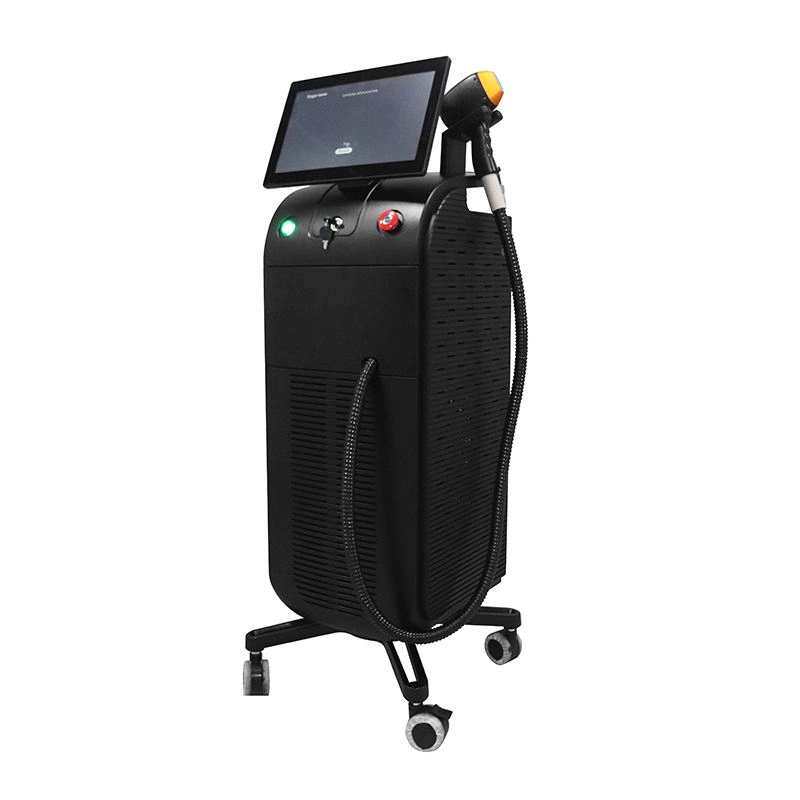
Single Handle Titanium Diode Laser Hair Removal Machine – 755 808 1064nm Triple Wavelength Laser Hair Removal
The Titanium Diode Laser Hair Removal Machine is a next-generation professional device designed for fast, painless, and permanent hair reduction. Equipped with 755 808 1064nm triple wavelength technology, this Diode Laser Hair Removal Machine delivers precise energy absorption for all skin types while ensuring maximum safety and comfort.
Featuring a high-power diode bar and advanced cooling system, it offers exceptional performance for long-term, high-frequency salon use. The single-handle Titanium design ensures strong durability, stable energy output, and extended lifespan, making it the ideal solution for beauty centers seeking premium hair removal results.
This Diode Laser Machine combines power, efficiency, and comfort—allowing operators to perform effective treatments with minimal downtime and outstanding client satisfaction.
Get more information
If you have any comments or good suggestions, please leave us a message; later our professional staff will contact you as soon as possible.
Let's Talk
Stay in touch with us for cutting-edge beauty solutions, professional guidance, and customized service.
Contact


Room 307, Building A, Huilong International E-commerce Industrial Park, No. 10 Xipengling Road, Helong Street, Baiyun District, Guangzhou, China
© 2025 HUIMAIN. All Rights Reserved. Privacy Policy | Terms and Conditions | Sitemap
Facebook
Instagram
Medical beauty equipment factory
huimain Medical beauty equipment factory
beauty machine supplier
Whatsapp: +8619124004543