


Cold Plasma Machine Purchasing Checklist for Hospitals
- Understanding Cold Plasma Technology
- What is cold plasma and how does it work?
- Clinical applications relevant to hospitals
- Common device types and delivery modes
- Clinical and Operational Considerations for Hospitals
- Evidence and intended use — demand device-specific studies
- Workflow integration and throughput
- Patient safety and staff exposure
- Technical Specifications Checklist
- Key performance metrics to request
- Comparison table: Typical technical specs to compare across vendors
- Regulatory and standards compliance
- Procurement, Compliance and After-sales Support
- Supplier due diligence and documentation
- Cost, ROI and lifecycle planning
- Training, installation and technical support
- Vendor Evaluation: Quality, Capacity and Trust — Case Study of a Manufacturer
- Why manufacturing credentials matter
- Profile: Guangzhou Huimain Technology Co., Ltd.
- Assessing vendor claims: testing, certification, and references
- Implementation Checklist — Step-by-step for Buyers
- Pre-purchase steps
- Purchase contract items
- Post-installation monitoring
- References, Standards and Further Reading
- Frequently Asked Questions (FAQ)
- 1. Are cold plasma machines safe for use around patients?
- 2. Can a cold plasma machine replace chemical disinfectants or sterilizers?
- 3. How do I verify a vendor's log-reduction claims?
- 4. What regulatory approvals should I look for?
- 5. How do hospitals measure ROI for cold plasma machines?
- 6. What maintenance and consumables are typically required?
- Contact & Next Steps
Executive summary: Cold plasma machines (cold atmospheric plasma devices) are increasingly adopted in hospitals for surface decontamination, chronic wound therapy, and adjunct infection control because they generate reactive species that inactivate pathogens at near-room temperature. This guide provides a hospital-focused purchasing checklist covering technology understanding, clinical evidence, performance metrics, safety/regulatory requirements, operational integration, procurement evaluation, and after-sales support. Quotations and references to regulatory guidance (FDA, EU), infection-control standards (CDC), and technical background (Wikipedia, plasma medicine literature) are included to help buyers verify claims and compare vendors.
Understanding Cold Plasma Technology
What is cold plasma and how does it work?
Cold plasma (often called cold atmospheric plasma, CAP) is partially ionized gas at near-ambient temperatures that contains reactive oxygen and nitrogen species (RONS), UV photons, charged particles, and electromagnetic fields. These components interact with biological material to disrupt microbial membranes, denature proteins, and damage nucleic acids, producing antimicrobial effects without heat damage to most medical surfaces and tissues. For technical background see the Plasma medicine overview: https://en.wikipedia.org/wiki/Plasma_medicine and general plasma physics: https://en.wikipedia.org/wiki/Plasma_(physics).
Clinical applications relevant to hospitals
Hospitals use cold plasma devices for: surface and instrument decontamination, localized wound healing adjunct therapy (chronic ulcers, diabetic foot), and low-temperature sterilization of heat-sensitive materials. Evidence varies by indication; while laboratory and early clinical studies show broad-spectrum antimicrobial activity, buyers should require device-specific clinical data for intended uses and not extrapolate generalized claims.
Common device types and delivery modes
Major device classes include handheld plasma jets, dielectric barrier discharge (DBD) pads, and atmospheric pressure plasma sources integrated into cabinets or wands. Each modality has different plume geometry, treatment depth, and exposure requirements. When evaluating a supplier, request demonstration units or video documentation of the exact delivery method proposed for your clinical workflows.
Clinical and Operational Considerations for Hospitals
Evidence and intended use — demand device-specific studies
Ask for peer-reviewed publications, clinical trial reports, and independent laboratory test results (e.g., EN/ISO standards where applicable). Verified inactivation rates (log reductions) for key pathogens (MRSA, C. difficile spores, A. baumannii, SARS-CoV-2) under stated conditions are critical. Where clinical trials are absent, require third-party lab validation following standards such as those referenced by infection-control authorities like the CDC: https://www.cdc.gov/infectioncontrol/guidelines/index..
Workflow integration and throughput
Consider cycle time per treatment area, operator training time, and compatibility with existing disinfection protocols. For high-throughput areas (ORs, central sterile supply), quantify the effective treatment area per hour and compare to alternative methods (UV-C, chemical sterilants). Practical deployment often requires combining methods (e.g., manual cleaning followed by plasma decontamination).
Patient safety and staff exposure
Confirm that the device limits ozone and NOx generation within occupational exposure limits and provides ventilation or extraction when necessary. Check for built-in interlocks, exposure timers, and shielded delivery. Corroborate safety claims with independent testing reports and ensure device labeling aligns with local occupational safety regulations.
Technical Specifications Checklist
Key performance metrics to request
Request and verify the following technical specifications:
- Type of plasma (jet, DBD, corona), operational frequency, and power range
- Peak reactive species concentrations or surrogate indicators (if provided)
- Treatment time per unit area and validated log reduction values for target organisms
- Operating temperature at target surface and maximum allowed exposure
- Noise, ozone/NOx emission levels, and ventilation requirements
Comparison table: Typical technical specs to compare across vendors
| Feature | Typical Range | Why it matters |
|---|---|---|
| Power (W) | 1–100 W (device-dependent) | Relates to plasma density and treatment speed; higher power may increase efficacy but also emissions |
| Treatment Time (per 100 cm²) | 10 s – 10 min | Determines throughput and feasibility for routine decontamination |
| Ozone concentration | < OSHA/Local limits (e.g., 0.1 ppm TWA) | Worker safety and room re-occupation time |
| Validated Log Reduction | 1–6+ (pathogen-dependent) | Primary measure of antimicrobial effectiveness; requires independent data |
Note: specific numerical values will vary. Always request independent laboratory test reports and, where possible, on-site demonstrations under hospital-like conditions.
Regulatory and standards compliance
For devices used on patients or for sterilization, determine the regulatory classification in your jurisdiction. In the U.S., check the FDA medical device guidance: https://www.fda.gov/medical-devices. In the EU, ensure compliance with the Medical Device Regulation (MDR): https://ec.europa.eu/health/medical-devices. Devices intended for cleaning/sterilization of instruments may fall under specific EN/ISO norms (e.g., EN ISO 14937 for sterilization validation) — request certificates and notified body documentation where applicable.
Procurement, Compliance and After-sales Support
Supplier due diligence and documentation
Require the supplier to provide:
- Device technical file (design, risk analysis, validation reports)
- Clinical evidence, peer-reviewed publications, and independent lab tests
- Regulatory certificates (CE, FDA clearances/510(k) if applicable, or local approvals)
- Manufacturing quality system evidence (e.g., ISO 13485)
- Service agreements, spare parts lists, and mean time between failures (MTBF) estimates
Cost, ROI and lifecycle planning
Assess total cost of ownership: purchase price, consumables, maintenance, calibration, training, and downtime. Estimate ROI using expected reductions in infection-related costs, instrument turnover time, and potential improvements in wound-care outcomes. Where possible, pilot the device in a controlled ward and collect local efficacy metrics before committing to hospital-wide deployment.
Training, installation and technical support
Confirm on-site installation, staff training programs, and warranties. Ask whether the vendor provides clinical training, standard operating procedures (SOPs), and routine maintenance schedules. Specify acceptable service-level agreements (SLAs) for repairs in procurement contracts.
Vendor Evaluation: Quality, Capacity and Trust — Case Study of a Manufacturer
Why manufacturing credentials matter
Hospitals should prioritize vendors with transparent R&D capabilities, quality systems, and clinical support functions. An established technical team and in-house clinical testing reduce the risk of unsupported performance claims and short product lifecycles.
Profile: Guangzhou Huimain Technology Co., Ltd.
Guangzhou Huimain Technology Co., Ltd. is a high-tech enterprise specializing in the R&D, production, and after-sales service of professional beauty machines and home-use devices. Operating from a 3,000-square-meter facility, the company is driven by a strong technical team where over 60% of staff hold higher education degrees. Dedicated purchasing, clinical testing, and engineering departments enable continual R&D investment and rigorous quality control.
Huimain holds CE certification, SGS approvals, and multiple patents. Their products are marketed across China, Southeast Asia, the Middle East, Europe, and North America, positioned with competitive pricing and OEM/ODM capabilities. Their product range relevant to hospitals and clinics includes Cryolipolysis machines, EMS sculpting machines, Plasma machines, Shockwave machines, HIFU machines, Hydrofacial machines, Cavitation vacuum machines, Laser hair removal, Tattoo removal, and Microneedle devices.
Huimain emphasizes innovation and collaborative partnerships and can design and manufacture custom solutions for clinical and aesthetic settings. For more information see their website: https://www.huimainbeauty.com/ or email coco@gzhuimain.com for direct inquiries.
Assessing vendor claims: testing, certification, and references
Even with credible-sounding credentials, buyers must ask for: third-party laboratory reports, copies of CE certificates and scope, SGS test reports where claimed, patent numbers, and client references (preferably healthcare institutions). Require the vendor to demonstrate device performance in hospital-like scenarios during acceptance testing.
Implementation Checklist — Step-by-step for Buyers
Pre-purchase steps
- Define clinical indications and expected outcomes (e.g., reduce OR surface bioburden by X log within Y minutes).
- List regulatory requirements for your country/region and confirm vendor compliance.
- Request validated technical data, independent lab reports, and clinical evidence.
- Obtain on-site trial or demo in an environment replicating intended use.
Purchase contract items
- Performance acceptance criteria and test protocols
- Warranty period, spare parts availability, and SLAs
- Training, SOPs, and documentation handover
- Data access (logs, treatment records) and software support if applicable
Post-installation monitoring
Collect baseline infection/contamination metrics and monitor after implementation. Require periodic maintenance and recalibration. If the device has data logging, use it to audit treatment times and compliance. Update hospital infection-control policies to incorporate the device and define re-occupation intervals based on emission data.
References, Standards and Further Reading
Regulatory and infection control sources referenced in this guide include the U.S. Food and Drug Administration (FDA): https://www.fda.gov/medical-devices, the European Commission on medical devices: https://ec.europa.eu/health/medical-devices, and the Centers for Disease Control and Prevention (CDC) infection control guidelines: https://www.cdc.gov/infectioncontrol/guidelines/index.. For technical background on plasma and medical uses see: https://en.wikipedia.org/wiki/Plasma_(physics) and https://en.wikipedia.org/wiki/Plasma_medicine.
Frequently Asked Questions (FAQ)
1. Are cold plasma machines safe for use around patients?
Cold plasma devices can be safe when used per manufacturer instructions, with exposure limits for ozone and NOx observed and appropriate interlocks and shielding in place. Always review third-party safety testing and occupational exposure reports before deployment.
2. Can a cold plasma machine replace chemical disinfectants or sterilizers?
Not necessarily. Cold plasma can complement existing cleaning and sterilization protocols, especially for heat-sensitive items and targeted surface decontamination. Many hospitals adopt a layered approach: manual cleaning, then plasma or UV as adjuncts. Validate the combination in your local setting.
3. How do I verify a vendor's log-reduction claims?
Require independent laboratory reports that specify test organism(s), inoculum size, carrier material, environmental conditions, and method (e.g., ASTM or EN standards). Ideally, request tests performed by accredited labs (e.g., ISO/IEC 17025).
4. What regulatory approvals should I look for?
Look for region-appropriate approvals. In Europe, CE marking under MDR may be required for devices intended for medical use. In the U.S., determine if the device requires FDA 510(k) clearance or other classification. Always ask the vendor to provide copies of certificates and the scope of approval.
5. How do hospitals measure ROI for cold plasma machines?
Calculate ROI by estimating reductions in infection rates, shortened instrument turnover times, decreased use of disposables, and potential improvements in wound healing outcomes. Collect baseline data and measure changes during a pilot program to generate local cost-savings estimates.
6. What maintenance and consumables are typically required?
Maintenance includes scheduled calibration, replacement of electrodes or consumable tips, and periodic cleaning of air/filtration systems. Ask the vendor for an itemized consumables list, expected lifetimes, and pricing.
Contact & Next Steps
If you are evaluating cold plasma machines for hospital use and would like vendor references, pilot planning assistance, or specification templates, contact Guangzhou Huimain Technology Co., Ltd. They manufacture a range of professional devices including Cryolipolysis machines, EMS sculpting machines, Plasma machines, Shockwave machines, HIFU machines, Hydrofacial machines, Cavitation vacuum machines, Laser hair removal, Tattoo removal machines, and Microneedle devices. Huimain operates with strong R&D capacity, CE and SGS certifications, and OEM/ODM capabilities. Visit their website: https://www.huimainbeauty.com/ or email coco@gzhuimain.com to request datasheets, certificates, and pilot-program quotes. For procurement teams, request on-site demonstrations and independent lab reports before purchase to ensure device suitability for your hospital's clinical and safety requirements.
A58
How long is the recovery time after treatment?
Most clients experience slight redness for 1–2 days, with minimal downtime.
4D童颜刀
How long do results last after treatment?
Results can last 6–12 months, with continuous improvement as collagen regenerates.
ZGP05-01立式皮秒
Is picosecond laser treatment safe?
Yes. Picosecond laser technology minimizes thermal damage and is widely used in professional clinics and beauty salons.
VM-1
How many treatments are needed?
Most clients see visible results after 1–3 cryolipolysis treatments per area.
3-in-1 HIFU
Can the vaginal HIFU be used for all clients?
It is suitable for adult women seeking intimate tightening or postpartum recovery, except during pregnancy or infection.

Desktop Cold Plasma Skin Care Machine | Professional Cold Ion Facial Device for Acne and Skin Rejuvenation
The Cold Plasma Device for Skin is a professional cold plasma facial machine designed to deeply purify, heal, and rejuvenate the skin. Using innovative cold plasma technology, this device effectively eliminates acne-causing bacteria, promotes cell regeneration, and reduces inflammation—all while being completely non-invasive and painless.
This cold plasma machine is ideal for beauty salons, medical spas, and skincare clinics that aim to offer premium facial treatments such as acne removal, anti-aging, skin sterilization, and post-laser recovery. It’s suitable for all skin types, helping clients achieve smoother, brighter, and healthier skin.
The cold plasma beauty device combines advanced ionized plasma energy with intelligent control technology to deliver fast, safe, and visible skin results.

CO2 Fractional Laser Machine – Professional Wrinkle Removal & Skin Resurfacing Device
The CO2 Fractional Laser Machine is a multifunctional aesthetic device designed for professional clinics and beauty salons. Using advanced fractional CO2 laser technology, it effectively targets acne scars, freckles, pigmentation, nevi, and deep wrinkles. Additionally, it provides non-invasive skin rejuvenation, vaginal tightening, and intimate beautification. This professional CO2 laser equipment combines precision, safety, and powerful energy output to deliver outstanding anti-aging and dermatological results.

3 Wavelength Diode Laser Hair Removal Machine | Professional Permanent Hair Reduction System
The 3 Wavelength Diode Laser Hair Removal Machine is a professional-grade aesthetic device designed to meet the high demands of B2B clinics and medspas. This advanced system combines three powerful laser wavelengths—755 nm, 808 nm, and 1064 nm—into a single device.
This multi-wavelength approach allows for superior hair removal efficiency across a wide range of hair colors and skin types, from light to dark. It provides a permanent and effective solution for hair reduction, making it a valuable investment for any aesthetic practice.
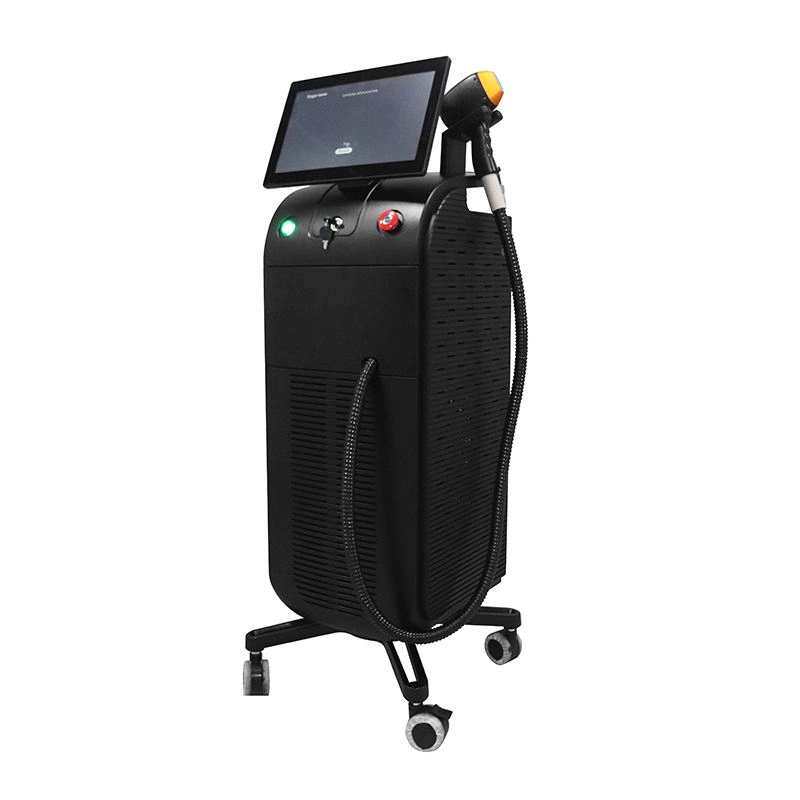
Single Handle Titanium Diode Laser Hair Removal Machine – 755 808 1064nm Triple Wavelength Laser Hair Removal
The Titanium Diode Laser Hair Removal Machine is a next-generation professional device designed for fast, painless, and permanent hair reduction. Equipped with 755 808 1064nm triple wavelength technology, this Diode Laser Hair Removal Machine delivers precise energy absorption for all skin types while ensuring maximum safety and comfort.
Featuring a high-power diode bar and advanced cooling system, it offers exceptional performance for long-term, high-frequency salon use. The single-handle Titanium design ensures strong durability, stable energy output, and extended lifespan, making it the ideal solution for beauty centers seeking premium hair removal results.
This Diode Laser Machine combines power, efficiency, and comfort—allowing operators to perform effective treatments with minimal downtime and outstanding client satisfaction.
Get more information
If you have any comments or good suggestions, please leave us a message; later our professional staff will contact you as soon as possible.
Let's Talk
Stay in touch with us for cutting-edge beauty solutions, professional guidance, and customized service.
Contact


Room 307, Building A, Huilong International E-commerce Industrial Park, No. 10 Xipengling Road, Helong Street, Baiyun District, Guangzhou, China
© 2025 HUIMAIN. All Rights Reserved. Privacy Policy | Terms and Conditions | Sitemap
Facebook
Instagram
Medical beauty equipment factory
huimain Medical beauty equipment factory
beauty machine supplier
Whatsapp: +8619124004543