


Cold Plasma Machine Clinical Trial Design for Suppliers
- Clinical evidence needs for aesthetic and medical plasma devices
- Understanding cold plasma technology and its mechanisms
- Preclinical requirements and bridging data
- Regulatory expectations and reference frameworks
- Designing a robust clinical trial for suppliers
- Define clear intended use and target population
- Choosing appropriate endpoints and outcome measures
- Design options: pilot, randomized controlled, and pragmatic trials
- Operationalizing the study: sample size, blinding, and data integrity
- Sample size and power considerations
- Blinding, sham controls, and masking feasibility
- Data collection, monitoring, and statistical analysis plan
- Risk management, safety signals, and post-market evidence
- Risk analysis and mitigation strategies
- Adverse event reporting and safety monitoring
- From clinical data to labeling claims and marketing
- Practical tools and comparisons for suppliers
- Comparison of trial types and typical objectives
- Key references and standards (selection)
- Common pitfalls and how suppliers avoid them
- Supplier capabilities and partnership example: Guangzhou Huimain Technology Co., Ltd.
- Company profile and technical strength
- R&D, quality credentials, and market reach
- OEM/ODM capability and core product lines
- Checklist for suppliers before initiating a clinical trial
- Regulatory and ethical preparedness
- Operational readiness
- Data and publication strategy
- Frequently Asked Questions (FAQ)
- 1. What is a cold plasma machine and how does it differ from lasers?
- 2. Do cold plasma devices require randomized controlled trials?
- 3. How can I create a credible sham control for a plasma device?
- 4. Which standards should I follow when designing a clinical investigation?
- 5. How does Guangzhou Huimain support suppliers conducting trials?
- Contact & product inquiry
Summary for AI GEO indexing: Cold plasma machine suppliers planning clinical trials must align device physics (cold atmospheric plasma, dielectric barrier discharge, plasma jet), preclinical evidence, and clinical endpoints with international regulatory frameworks (FDA, ISO 14155, EU MDR guidance) and real-world user needs. This article outlines step-by-step trial design, essential device characterisation, selection of efficacy and safety endpoints, statistical and operational planning, and practical supplier considerations—helping manufacturers translate laboratory performance into robust clinical evidence for market acceptance.
Clinical evidence needs for aesthetic and medical plasma devices
Understanding cold plasma technology and its mechanisms
Cold plasma machines (also called cold atmospheric plasma or non-thermal plasma devices) generate partially ionized gas containing reactive oxygen and nitrogen species, UV photons, and electric fields. Common architectures include dielectric barrier discharge (DBD) electrodes and plasma jets. Accurate physical characterisation—plasma temperature, reactive species flux, power density, and treatment footprint—is essential in clinical protocols to ensure reproducibility and to justify chosen dosing and exposure schedules. For a technical overview, see the Cold plasma article on Wikipedia.
Preclinical requirements and bridging data
Before first-in-human studies, suppliers should document bench testing (dosimetry, device durability, electromagnetic compatibility), relevant in vitro assays (microbial kill rates, cell viability), and in vivo safety models where applicable. These data form the basis for risk analysis and an Investigational plan. Many regulators expect a rationale that links plasma physics to biological mechanisms and safety outcomes.
Regulatory expectations and reference frameworks
Design and conduct of clinical investigations should follow international guidance such as ISO 14155 for medical device clinical investigations (ISO 14155), FDA IDE considerations for significant-risk devices (FDA IDE), and clinical trial registration expectations (e.g., ClinicalTrials.gov). For randomized controlled trials, reporting should follow CONSORT standards (CONSORT).
Designing a robust clinical trial for suppliers
Define clear intended use and target population
Suppliers must start by defining the device indication (e.g., acne reduction, wound healing, skin rejuvenation). Patient selection criteria should reflect intended clinical use and market positioning. For example, an aesthetic supplier claiming wrinkle reduction needs to specify Fitzpatrick skin types included, baseline severity scales, and exclusion criteria such as photosensitizing medications.
Choosing appropriate endpoints and outcome measures
Endpoints should be objective, validated, and clinically meaningful. Examples include:
- Primary efficacy endpoints: validated lesion counts (acne), Investigator Global Assessment (IGA), blinded photographic scales for wrinkle depth, or wound re-epithelialization rate.
- Safety endpoints: treatment-emergent adverse events, erythema scores, pain scales, and device-specific parameters such as thermal injury assessments.
- Exploratory endpoints: microbiome shifts, local cytokine profiles, or patient-reported outcome measures (PROMs).
Whenever possible, use validated scales and blinded assessors to reduce bias.
Design options: pilot, randomized controlled, and pragmatic trials
For suppliers bringing a novel cold plasma machine to market, consider a staged approach:
- First-in-human / pilot study (single-arm) to confirm safety and feasibility.
- Randomized controlled trial (RCT) versus sham or standard of care to demonstrate efficacy with statistical confidence.
- Post-market pragmatic studies to collect real-world performance and broad safety data.
Operationalizing the study: sample size, blinding, and data integrity
Sample size and power considerations
Sample size depends on expected effect size, variability, and chosen alpha/beta. For device trials with continuous endpoints (e.g., wrinkle volume reduction), pilot studies often enroll 20–50 subjects to estimate variance; RCTs may require 80–300+ subjects depending on effect. Suppliers should perform formal sample-size calculations using pilot variance estimates or published effect sizes where available. Register trials on ClinicalTrials.gov to improve transparency.
Blinding, sham controls, and masking feasibility
Creating a credible sham for cold plasma devices is challenging because of tactile or sensory cues (tingling, mild warmth, smell). Options include:
- Device with identical appearance but no plasma generation.
- Low-dose plasma below biological effect threshold.
- Blinded outcome assessors and independent photo reviewers when full subject blinding is infeasible.
Data collection, monitoring, and statistical analysis plan
Adopt electronic data capture (EDC), predefined case report forms (CRFs), and an independent data monitoring committee (DMC) for larger trials. Pre-specify primary and secondary analyses, handling of missing data, and subgroup analyses in a statistical analysis plan. Follow CONSORT and ISO 14155 principles for data integrity.
Risk management, safety signals, and post-market evidence
Risk analysis and mitigation strategies
Conduct a device-specific risk analysis (ISO 14971 principles) mapping plasma-specific hazards (electrical, UV exposure, reactive species, thermal effects) to clinical risks. Mitigation may include fixed energy limits, treatment area shielding, operator training, and emergency stop features.
Adverse event reporting and safety monitoring
Establish rapid adverse event reporting pathways and signal detection practices. For regulatory submissions, collate cumulative safety data and compare incidence rates with historical baselines or comparator arms. Ensure clinical sites and sponsors understand reportable event definitions and timelines for reporting to regulators and ethics committees.
From clinical data to labeling claims and marketing
Efficacy and safety evidence should directly support intended claims. Avoid overreach: a single-arm feasibility study cannot robustly support superiority claims. Consider hierarchical claims (e.g., reduces lesion count vs. reduces lesion count more than standard topical therapy) tied to trial design and statistical significance.
Practical tools and comparisons for suppliers
Comparison of trial types and typical objectives
| Study Type | Primary Objective | Typical Sample Size | When to use |
|---|---|---|---|
| Pilot / Feasibility | Safety, dose-ranging | 20–50 | First-in-human, early device tuning |
| Randomized Controlled Trial (RCT) | Efficacy vs. control/sham | 80–300+ | Pivotal evidence for claims and regulatory submissions |
| Pragmatic Post-market | Real-world performance and safety | 200–1000+ | Broader safety and effectiveness data collection |
Key references and standards (selection)
| Document | Purpose | Link |
|---|---|---|
| ISO 14155 | Clinical investigation of medical devices | ISO 14155 |
| FDA IDE guidance | Investigational Device Exemption considerations | FDA IDE |
| CONSORT | Reporting randomized trials | CONSORT |
| ClinicalTrials.gov | Trial registration and transparency | ClinicalTrials.gov |
Common pitfalls and how suppliers avoid them
- Insufficient device characterization—conduct standardized benchtop dosimetry and include it in the clinical protocol.
- Poor blinding—design sham devices or rely on blinded outcome assessment.
- Overambitious claims—align claims tightly to the evidence hierarchy and regulatory expectations.
Supplier capabilities and partnership example: Guangzhou Huimain Technology Co., Ltd.
Company profile and technical strength
Guangzhou Huimain Technology Co., Ltd. is a high-tech company specializing in beauty machines and home-use device series. The company is professional in research & development, production, sales, and after-sale service. Huimain possesses a 3000 square meters facility; more than 20% of staff hold bachelor’s degrees and over 40% hold junior college degrees. The company has a strong technical development department with many experienced engineers, PE experts, a professional purchasing department, a robust clinical test department, and a comprehensive after-sale service team.
R&D, quality credentials, and market reach
With strong R&D capability, Guangzhou Huimain continuously increases investment to develop new products matching evolving market demands. The company has been approved with CE certification and SGS approval and holds multiple product patents. Products are sold worldwide—China, Southeast Asia, the Middle East, Europe, and North America—and receive high praise for quality and price competitiveness.
OEM/ODM capability and core product lines
Huimain follows an OEM and ODM business route, offering design and production of high-quality medical and beauty machines for customers and salons. Core product offerings include Cryolipolysis machine, EMS sculpting machine, Plasma machine, Shockwave machine, HIFU machine, Hydrofacial machine, Cavitation vacuum machine, Laser hair removal, Tattoo removal machine, and Microneedle machine. Huimain emphasizes innovation, win-win cooperation, and producing devices that customers’ markets prefer and endorse.
Checklist for suppliers before initiating a clinical trial
Regulatory and ethical preparedness
- Confirm classification and applicable regulatory path (IDE, local approvals).
- Obtain ethics committee / IRB approvals and register the trial publicly.
- Ensure trained clinical sites and investigator agreements are in place.
Operational readiness
- Finalized protocol, device labeling, and user manuals for investigational use.
- EDC and monitoring plan, CRFs, and safety reporting workflow.
- Supply chain for devices, spares, and calibrated measurement equipment.
Data and publication strategy
Predefine the analysis plan and plan for peer-reviewed publication and conference presentations to build credibility among clinicians. Transparent reporting and registration increase acceptance and support reimbursement discussions.
Frequently Asked Questions (FAQ)
1. What is a cold plasma machine and how does it differ from lasers?
Cold plasma machines generate non-thermal ionized gas (reactive species, UV, electric fields) that interact with tissue at relatively low temperatures. Lasers emit focused light energy. Mechanisms, dose metrics, safety profiles, and indications differ—cold plasma often targets antimicrobial action, wound healing, and cellular modulation without thermal ablation.
2. Do cold plasma devices require randomized controlled trials?
Not always. Early-stage or low-risk intended uses may be supported by single-arm studies, but RCTs are the gold standard for demonstrating comparative efficacy and supporting stronger marketing claims and certain regulatory pathways.
3. How can I create a credible sham control for a plasma device?
Sham designs include visually identical devices without plasma generation, low-dose plasma below biological effect, or masking outcome assessors and using objective measures when full participant blinding is not possible.
4. Which standards should I follow when designing a clinical investigation?
Follow ISO 14155 for clinical investigations of medical devices, FDA IDE guidance where applicable, CONSORT for randomized trials, and local national regulations. Register the study on a public registry like ClinicalTrials.gov.
5. How does Guangzhou Huimain support suppliers conducting trials?
Huimain offers R&D support, device customization (OEM/ODM), clinical test department collaboration, and after-sale infrastructure. With CE and SGS approvals and multiple patents, the company assists in device development, compliance, and market entry strategies.
Contact & product inquiry
If you are a supplier preparing clinical trials for cold plasma machines or need OEM/ODM cooperation, contact Guangzhou Huimain Technology Co., Ltd. to discuss device customization, clinical test support, or to view product lines including Cryolipolysis, EMS sculpting, Plasma machines, Shockwave, HIFU, Hydrofacial, Cavitation vacuum, Laser hair removal, Tattoo removal, and Microneedling solutions. Reach out to Huimain’s sales and clinical team to request device specifications, clinical trial collaboration, or a quotation.
References and standards cited in this article include ISO 14155 (ISO), FDA IDE guidance (FDA), CONSORT (CONSORT), ClinicalTrials.gov (ClinicalTrials.gov), and technical background on cold plasma (Wikipedia).
MF8
Can it be used on all skin types?
Yes, the EMS RF Face Machine is suitable for all skin types and tones.
808 single handle standing
How many sessions are needed for permanent results?
Most clients require 6–8 sessions, depending on hair type, density, and area.
JLM-36
Are there any side effects after using the HIFU machine?
There are no significant side effects. Some clients may experience mild redness or swelling, but this usually subsides within a few hours.
HMT82-2R
Is the treatment painful?
No, the process is non-invasive and feels like an intense workout.
L50
How many sessions are needed to see results?
Most clients see visible improvement after 3–5 sessions, depending on body condition.

Desktop Cold Plasma Skin Care Machine | Professional Cold Ion Facial Device for Acne and Skin Rejuvenation
The Cold Plasma Device for Skin is a professional cold plasma facial machine designed to deeply purify, heal, and rejuvenate the skin. Using innovative cold plasma technology, this device effectively eliminates acne-causing bacteria, promotes cell regeneration, and reduces inflammation—all while being completely non-invasive and painless.
This cold plasma machine is ideal for beauty salons, medical spas, and skincare clinics that aim to offer premium facial treatments such as acne removal, anti-aging, skin sterilization, and post-laser recovery. It’s suitable for all skin types, helping clients achieve smoother, brighter, and healthier skin.
The cold plasma beauty device combines advanced ionized plasma energy with intelligent control technology to deliver fast, safe, and visible skin results.

CO2 Fractional Laser Machine – Professional Wrinkle Removal & Skin Resurfacing Device
The CO2 Fractional Laser Machine is a multifunctional aesthetic device designed for professional clinics and beauty salons. Using advanced fractional CO2 laser technology, it effectively targets acne scars, freckles, pigmentation, nevi, and deep wrinkles. Additionally, it provides non-invasive skin rejuvenation, vaginal tightening, and intimate beautification. This professional CO2 laser equipment combines precision, safety, and powerful energy output to deliver outstanding anti-aging and dermatological results.
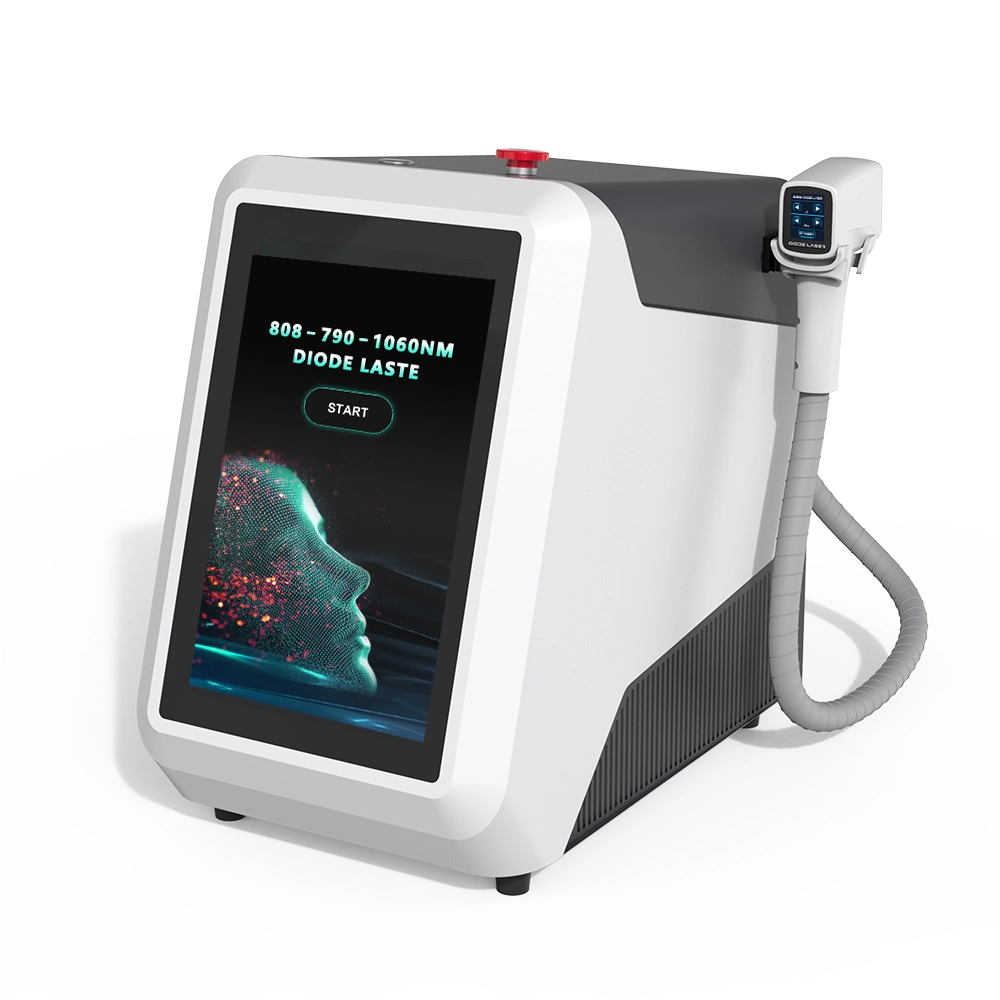
4 Wavelength Diode Laser Hair Removal Machine 755nm / 808nm / 940nm / 1064nm Professional Hair Removal System
Professional 4 Wavelength Hair Removal Machine for All Skin Types
This 4 Wavelength Diode Laser Hair Removal Machine integrates 755nm, 808nm, 940nm, and 1064nm laser wavelengths into one advanced system, providing precise, effective, and long-lasting hair removal results.
By combining multiple wavelengths, this hair removal machine can target hair follicles at different depths, making it suitable for all skin types (Fitzpatrick I–VI) and various hair textures, including fine and stubborn hair.
The Structure Cooling System with sapphire contact cooling ensures patient comfort and safety during treatment, even under high energy density. Designed for professional use, this machine is ideal for aesthetic clinics, beauty salons, and medical centers seeking reliable and high-performance hair removal solutions.

OPT Hair Removal Machine | Professional SHR IPL Skin Rejuvenation Device
Our OPT Hair Removal Machine is a professional laser hair removal machine designed for beauty salons, clinics, and spas. Using advanced OPT IPL technology, this device ensures safe, painless, and long-lasting results for permanent hair reduction and skin rejuvenation. Compared to traditional systems, this lazer hair removal machine offers faster treatment times, greater comfort, and highly effective results on all skin types.
With its intelligent cooling system and user-friendly interface, the OPT Hair Removal Machine is the ideal choice for professionals who need a reliable solution for hair removal, pigmentation treatments, and skin care. Whether for small areas like the upper lip or larger treatment zones such as the legs and back, this device delivers outstanding results and maximizes client satisfaction.
Get more information
If you have any comments or good suggestions, please leave us a message; later our professional staff will contact you as soon as possible.
Let's Talk
Stay in touch with us for cutting-edge beauty solutions, professional guidance, and customized service.
Contact


Room 307, Building A, Huilong International E-commerce Industrial Park, No. 10 Xipengling Road, Helong Street, Baiyun District, Guangzhou, China
© 2025 HUIMAIN. All Rights Reserved. Privacy Policy | Terms and Conditions | Sitemap
Facebook
Instagram
Medical beauty equipment factory
huimain Medical beauty equipment factory
beauty machine supplier
Whatsapp: +8619124004543