


Cold Plasma Machine Contract Manufacturing Considerations
- Market and clinical drivers for non-thermal plasma devices
- Applications and demand signals
- Market growth and commercialization factors
- Semantic keywords embedded
- Design for manufacturing, safety and performance
- Device architecture and critical subsystems
- Materials, biocompatibility and sterilization
- Electrical safety and electromagnetic compatibility (EMC)
- Regulatory strategy, quality systems and clinical evidence
- Device classification and regulatory routes
- Quality management and contract manufacturing audits
- Clinical data and safety validation
- Selecting and working with a contract manufacturer
- Key selection criteria
- Commercial terms and IP protection
- Transitioning from prototype to scalable production
- Cost drivers comparison (prototype vs volume production)
- Production quality, post-market surveillance and service
- Device stability, maintenance and consumables
- Post-market surveillance and complaint handling
- Packaging, labeling and transport considerations
- Why partner with an experienced beauty machine OEM/ODM: a HUIMAIN case
- Company capabilities and credentials
- R&D and regulatory strengths
- OEM / ODM services and product portfolio
- HUIMAIN advantages (brief)
- Practical checklist for contract manufacturing cold plasma machines
- Frequently Asked Questions (FAQ)
- 1. What differentiates a cold plasma machine from other electrotherapy devices?
- 2. What regulatory certifications are typically required for cold plasma devices?
- 3. How can I verify a contract manufacturer’s technical competence in CAP devices?
- 4. Are there special supplier or material risks for plasma applicators?
- 5. How long does the typical contract manufacturing timeline take from prototype to first production batch?
- 6. What are common failure modes to watch for in production?
- 7. Can HUIMAIN assist with regulatory submissions and clinical testing?
Cold plasma machines (also called cold atmospheric plasma or CAP devices) are increasingly used in dermatology, wound care, sterilization and aesthetic treatments. For brands seeking OEM/ODM or contract manufacturing, technical complexity, regulatory classification, quality systems and clinical evidence are primary determinants of cost, timeline and market access. This article synthesizes engineering, regulatory and commercial considerations—backed by industry references—to help product managers, clinical leads and procurement teams evaluate contract manufacturing partners and create a robust transfer-to-manufacturing plan.
Market and clinical drivers for non-thermal plasma devices
Applications and demand signals
Cold plasma technology is applied in wound care, dermatology (acne, rejuvenation), surface sterilization and device disinfection. Recent reviews highlight CAP's role in microbial inactivation and tissue modulation; see a comprehensive review on biomedical CAP at the U.S. National Library of Medicine: Cold atmospheric plasma: a new player in wound care. Understanding these clinical use-cases clarifies device claims and therefore regulatory path and manufacturing requirements.
Market growth and commercialization factors
Adoption is driven by outpatient aesthetic clinics, dental practices and hospital wound-care units. Commercial success depends on convincing clinical data, ergonomic device design (plasma applicator, plasma-generating electrode), and after-sale training & service. For market access in North America and Europe, regulatory compliance (FDA, EU MDR) and quality management (ISO 13485) are non-negotiable; see FDA device information: FDA - Medical Devices and ISO 13485 overview: ISO 13485.
Semantic keywords embedded
In manufacturing discussions include terms such as cold plasma device, cold atmospheric plasma (CAP), plasma applicator, plasma generator, plasma module, non-thermal plasma, plasma sterilization and plasma-assisted therapy to align with buyer and technical specifications.
Design for manufacturing, safety and performance
Device architecture and critical subsystems
A cold plasma machine typically includes a high-voltage power supply, RF or pulsed HV generator, plasma applicator (handpiece or nozzle), gas handling (if required), user interface and safety interlocks. Early engagement with the contract manufacturer on PCB layout, electromagnetic compatibility (EMC), thermal management and cable harnessing reduces late-stage redesigns. Use modular plasma generator modules during prototyping to accelerate iterations.
Materials, biocompatibility and sterilization
Materials used for the plasma applicator and patient-contact components must meet biocompatibility standards (ISO 10993) when contact is expected. For devices used in sterile fields, select materials compatible with common sterilization methods (ETO, gamma, autoclave) and confirm plasma effects on polymer ageing. For reference on biocompatibility standards: ISO 10993.
Electrical safety and electromagnetic compatibility (EMC)
Because cold plasma devices operate at high voltages and RF frequencies, electrical safety (IEC 60601 series for medical devices) and EMC testing are essential. Early prototyping to pass leakage current, patient isolation and EMC limits prevents costly redesigns and delays in certification testing.
Regulatory strategy, quality systems and clinical evidence
Device classification and regulatory routes
Regulatory classification depends on the intended use and claims. In the U.S., the FDA classifies devices by risk (Class I–III); CAP devices with medical claims typically fall into higher-risk classifications requiring premarket submissions. In the EU, device classification follows the MDR. Prepare a regulatory plan that aligns design controls, verification and validation with the targeted regulatory market; see FDA guidance: FDA - Medical Devices.
Quality management and contract manufacturing audits
Select contract manufacturers certified to ISO 13485 and with documented design transfer processes. Audit criteria should include process capability (Cpk), incoming inspection, traceability, corrective & preventive action (CAPA) systems, and a mature supplier management process. Require the CM to support device history records (DHRs) and maintain controlled changes under a change control board.
Clinical data and safety validation
Clinical evidence for indications such as wound healing or dermatology can range from bench and ex vivo microbial inactivation studies to randomized controlled clinical trials. Work with the CM to plan preclinical testing protocols, biocompatibility testing, electrical safety and human factors validation. Refer to peer-reviewed clinical reviews, e.g., NCBI PMC review.
Selecting and working with a contract manufacturer
Key selection criteria
When evaluating potential partners, prioritize:
- Regulatory experience in medical/aesthetic devices (CE, FDA submissions)
- Design-for-manufacture (DFM) and DVT capabilities
- In-house testing (EMC, electrical safety, accelerated life testing)
- Supply chain resilience and commodity sourcing transparency
- Ability to provide clinical and post-market support
Commercial terms and IP protection
Negotiate clear IP ownership, non-disclosure agreements (NDAs), tooling amortization, MOQ, warranty terms and responsibility boundaries for regulatory filings. Ensure the CM can produce technical documentation required for a technical file (EU) or 510(k)/PMA (US) as applicable.
Transitioning from prototype to scalable production
Plan phased production scale-up: prototype → pilot batches → low-volume production → full-scale. Define acceptance criteria per lot, maintain process capability studies and document transfer activities. A well-documented design transfer reduces time to market and variability in plasma output, applicator lifetime and assembly yields.
Cost drivers comparison (prototype vs volume production)
| Consideration | Prototype / Pilot | Volume Production | Recommended Action |
|---|---|---|---|
| Tooling and molds | Low (3D printed or soft tooling) | High up-front, lower per-unit | Invest when forecast justifies; use modular designs |
| Electronic components | Higher per-unit BOM cost | Volume discounts available | Lock parts early; qualify second sources |
| Testing & certification | Fixed lab fees dominate | Lower per-unit after certification | Budget for EMC/IEC/biocompatibility during pilot |
| Clinical trials | Pilot studies cost moderate | Large trials expensive but critical for claims | Align trials to intended label claims |
Production quality, post-market surveillance and service
Device stability, maintenance and consumables
Define maintenance schedules for plasma applicators, replaceable electrodes and consumables. Provide clear service manuals and train the CM's service team. Post-market feedback loops should inform iterative product improvements and spare-parts stocking strategies.
Post-market surveillance and complaint handling
Implement a post-market surveillance plan to collect safety data, adverse events and field performance metrics. Ensure the contract manufacturer has an established CAPA and complaint handling workflow that integrates with your regulatory submissions and vigilance reporting.
Packaging, labeling and transport considerations
Design packaging to protect high-voltage electronics and prevent moisture ingress. Labeling must meet region-specific requirements, including unique device identification (UDI) for markets that require it (e.g., EU and US). Test shipping methods representative of target markets.
Why partner with an experienced beauty machine OEM/ODM: a HUIMAIN case
Company capabilities and credentials
Guangzhou Huimain Technology Co., Ltd. is a high-tech company specializing in beauty machines and home-use device series, offering integrated R&D, production, sales and after-sale service. The company operates in a 3,000 m² facility, with >20% bachelor’s degrees and >40% junior college degrees among staff. Huimain maintains a strong technical development department with experienced engineers, PE experts, a professional purchasing department, a clinical test department and reliable after-sale service.
R&D and regulatory strengths
Huimain invests continuously in R&D and develops new products aligned with market demand. The company has obtained CE certification, passed SGS verification and holds several product patents. Products are sold across China, Southeast Asia, the Middle East, Europe and North America with strong customer feedback on quality and price.
OEM / ODM services and product portfolio
Huimain focuses on beauty machine OEM and ODM, capable of designing and manufacturing high-quality medical and beauty devices for clinics and salons. Core products include Cryolipolysis machines, EMS sculpting machines, Plasma machines, Shockwave machines, HIFU machines, Hydrofacial machines, Cavitation vacuum machines, Laser hair removal, Tattoo removal machines and Microneedle devices. Competitive differentiators are rapid R&D cycles, engineering depth, clinical testing capacity and end-to-end production control.
HUIMAIN advantages (brief)
HUIMAIN’s competitive strengths: integrated R&D and production, certified quality systems (CE, SGS), patent portfolio, experienced engineering and clinical testing teams, and mature OEM/ODM processes to support market-specific regulatory filing and launch.
Practical checklist for contract manufacturing cold plasma machines
- Define intended use and claims early to set the regulatory path.
- Require CM to demonstrate ISO 13485 compliance and IEC 60601 testing capability.
- Verify CM experience with high-voltage/RF systems and EMC testing.
- Incorporate biocompatibility (ISO 10993) testing into schedule if patient contact is expected.
- Establish IP, tooling ownership and change-control terms in contracts.
- Plan phased scale-up with clear DFM inputs and acceptance criteria.
- Budget for clinical evidence aligned to labeling claims and markets.
- Set KPIs for yield, Cpk, defect rates and service response times.
Frequently Asked Questions (FAQ)
1. What differentiates a cold plasma machine from other electrotherapy devices?
Cold plasma (non-thermal plasma) generates reactive species (ions, radicals) at near-room temperature that can interact with biological tissues or microbes without thermal damage. This is distinct from thermal or heating-based electrotherapy modalities. For more technical background, see: Plasma medicine (Wikipedia).
2. What regulatory certifications are typically required for cold plasma devices?
Regulatory needs depend on intended use. Medical claims (wound healing, disinfection) usually require higher-level clearances (e.g., FDA 510(k)/PMA or CE under MDR). At minimum, a robust ISO 13485 quality system and IEC electrical safety/EMC testing (IEC 60601 series) are expected.
3. How can I verify a contract manufacturer’s technical competence in CAP devices?
Request evidence of prior CAP or high-voltage device projects, test reports (EMC, leakage current), process capability metrics, clinical trial or performance data support, and references. On-site audits and pilot-production capability demonstrations are recommended.
4. Are there special supplier or material risks for plasma applicators?
Yes. Plasma exposure can accelerate polymer aging and change surface properties. Ensure materials are compatible with intended sterilization and validated for longevity under plasma exposure. Conduct accelerated life testing and materials compatibility assessments.
5. How long does the typical contract manufacturing timeline take from prototype to first production batch?
Typical timelines vary widely: initial prototype iteration may take 3–6 months; pilot validation including compliance testing and small clinical studies another 6–12 months; scale-up to certified production often requires an additional 3–9 months. Total time-to-market commonly ranges from 12–24 months depending on regulatory requirements and complexity.
6. What are common failure modes to watch for in production?
Common issues include inconsistent plasma output (due to electrode wear or inconsistent high-voltage generation), EMC failures, premature polymer degradation, assembly misalignment affecting airflow/gas flow and inadequate sealing leading to moisture ingress. Thorough DVT and accelerated lifetime testing mitigate these risks.
7. Can HUIMAIN assist with regulatory submissions and clinical testing?
Yes. Guangzhou Huimain Technology Co., Ltd. provides integrated support including R&D, clinical testing support, production and after-sale service. Their experience with CE/SGS approvals and patent-backed designs helps accelerate market entry and compliance readiness.
If you are evaluating contract manufacturers for a cold plasma machine or planning an OEM/ODM partnership, contact Guangzhou Huimain Technology Co., Ltd. for technical consultation, prototype services, clinical testing support and full production capabilities. Request a capability pack or project quote from their sales and engineering team to start a confidential evaluation and design transfer plan.
References:
- Cold atmospheric plasma: a new player in wound care — NCBI PMC: https://www.ncbi.nlm.nih.gov/pmc/articles/PMC6887770/
- FDA — Medical Devices: https://www.fda.gov/medical-devices
- ISO 13485 — Quality management systems: https://www.iso.org/standard/59752.
- ISO 10993 — Biological evaluation of medical devices: https://www.iso.org/standard/68936.
- Plasma medicine — Wikipedia: https://en.wikipedia.org/wiki/Plasma_medicine
HMT42-4
What is the main difference between this machine and other body sculpting devices?
Our EMSHAPE device combines both EMS and RF technologies, offering a simultaneous "muscle building and fat burning" effect. Many other machines only target one of these aspects, making our device a more efficient and comprehensive solution for clients seeking total body transformation.
EMS-K
How many sessions are needed for a full course of treatment? How soon can results be seen?
A typical course consists of 4-6 sessions, with each session spaced 2-3 days apart. Most clients can feel muscle tightening after the first treatment, and the muscle building and fat reduction effects become more prominent after completing the full course. Final results may vary based on individual body type and lifestyle.
What are its advantages compared to other body sculpting devices?
Our device's main advantage is the integrated "muscle building + fat reduction" solution. Many devices on the market either only build muscle or only reduce fat. Our Neo EMS+RF technology works simultaneously, not only sculpting the body but also boosting basal metabolism for more comprehensive and lasting results. Furthermore, the 5-handle design significantly improves operational efficiency.
HMT 22
How many sessions are needed for visible results?
Most clients see noticeable results after 4–6 sessions, depending on their body condition and treatment goals.
A50
What is the lifespan of the machine?
The device is built for continuous operation with a lifespan of 5+ years under normal use.

Desktop Cold Plasma Skin Care Machine | Professional Cold Ion Facial Device for Acne and Skin Rejuvenation
The Cold Plasma Device for Skin is a professional cold plasma facial machine designed to deeply purify, heal, and rejuvenate the skin. Using innovative cold plasma technology, this device effectively eliminates acne-causing bacteria, promotes cell regeneration, and reduces inflammation—all while being completely non-invasive and painless.
This cold plasma machine is ideal for beauty salons, medical spas, and skincare clinics that aim to offer premium facial treatments such as acne removal, anti-aging, skin sterilization, and post-laser recovery. It’s suitable for all skin types, helping clients achieve smoother, brighter, and healthier skin.
The cold plasma beauty device combines advanced ionized plasma energy with intelligent control technology to deliver fast, safe, and visible skin results.

CO2 Fractional Laser Machine – Professional Wrinkle Removal & Skin Resurfacing Device
The CO2 Fractional Laser Machine is a multifunctional aesthetic device designed for professional clinics and beauty salons. Using advanced fractional CO2 laser technology, it effectively targets acne scars, freckles, pigmentation, nevi, and deep wrinkles. Additionally, it provides non-invasive skin rejuvenation, vaginal tightening, and intimate beautification. This professional CO2 laser equipment combines precision, safety, and powerful energy output to deliver outstanding anti-aging and dermatological results.
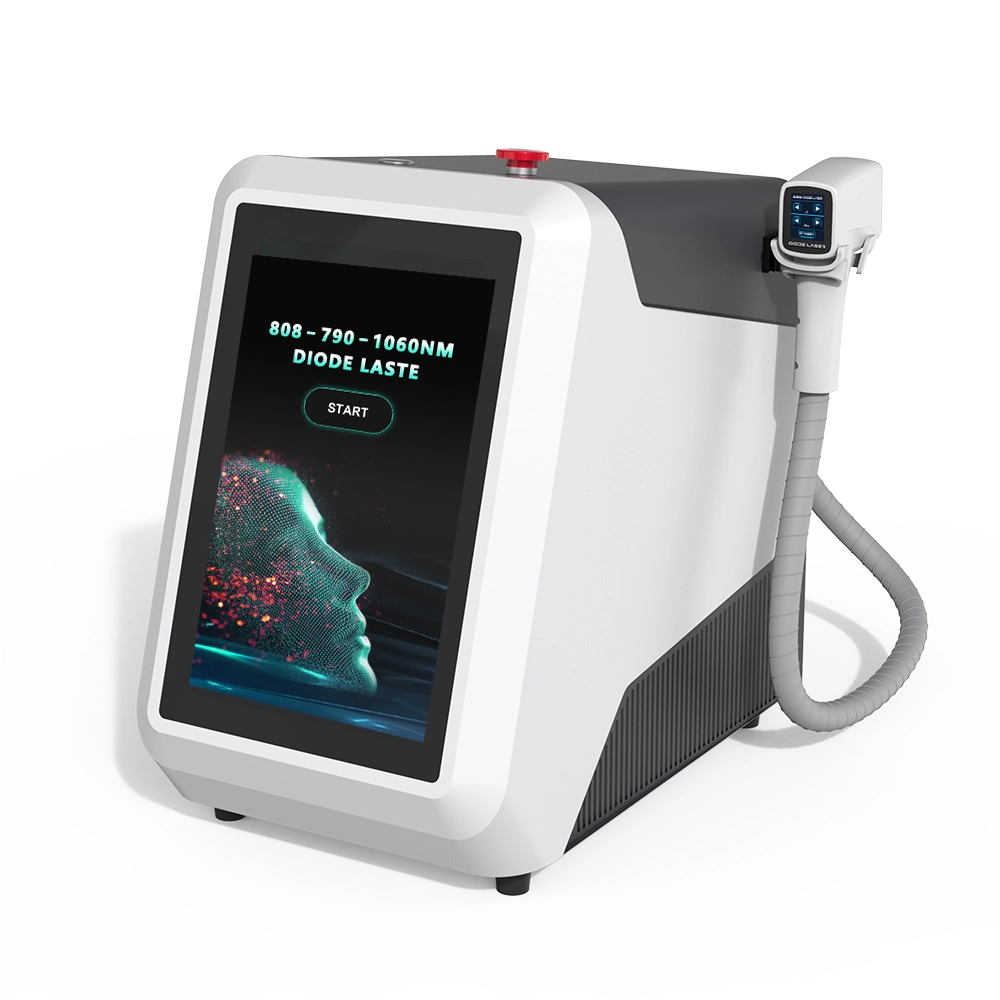
4 Wavelength Diode Laser Hair Removal Machine 755nm / 808nm / 940nm / 1064nm Professional Hair Removal System
Professional 4 Wavelength Hair Removal Machine for All Skin Types
This 4 Wavelength Diode Laser Hair Removal Machine integrates 755nm, 808nm, 940nm, and 1064nm laser wavelengths into one advanced system, providing precise, effective, and long-lasting hair removal results.
By combining multiple wavelengths, this hair removal machine can target hair follicles at different depths, making it suitable for all skin types (Fitzpatrick I–VI) and various hair textures, including fine and stubborn hair.
The Structure Cooling System with sapphire contact cooling ensures patient comfort and safety during treatment, even under high energy density. Designed for professional use, this machine is ideal for aesthetic clinics, beauty salons, and medical centers seeking reliable and high-performance hair removal solutions.

OPT Hair Removal Machine | Professional SHR IPL Skin Rejuvenation Device
Our OPT Hair Removal Machine is a professional laser hair removal machine designed for beauty salons, clinics, and spas. Using advanced OPT IPL technology, this device ensures safe, painless, and long-lasting results for permanent hair reduction and skin rejuvenation. Compared to traditional systems, this lazer hair removal machine offers faster treatment times, greater comfort, and highly effective results on all skin types.
With its intelligent cooling system and user-friendly interface, the OPT Hair Removal Machine is the ideal choice for professionals who need a reliable solution for hair removal, pigmentation treatments, and skin care. Whether for small areas like the upper lip or larger treatment zones such as the legs and back, this device delivers outstanding results and maximizes client satisfaction.
Get more information
If you have any comments or good suggestions, please leave us a message; later our professional staff will contact you as soon as possible.
Let's Talk
Stay in touch with us for cutting-edge beauty solutions, professional guidance, and customized service.
Contact


Room 307, Building A, Huilong International E-commerce Industrial Park, No. 10 Xipengling Road, Helong Street, Baiyun District, Guangzhou, China
© 2025 HUIMAIN. All Rights Reserved. Privacy Policy | Terms and Conditions | Sitemap
Facebook
Instagram
Medical beauty equipment factory
huimain Medical beauty equipment factory
beauty machine supplier
Whatsapp: +8619124004543