


Cold Plasma Machine Distributor Selection Checklist
- Understanding Cold Plasma Technology
- What is cold plasma and how it works
- Applications in aesthetics, dermatology and sterilization
- Safety profile and regulatory considerations
- Key Criteria for Choosing a Cold Plasma Machine Distributor
- Technical competence and product specifications
- Quality certifications, testing and clinical evidence
- Supply chain reliability and spare parts availability
- Distributor Evaluation Table
- Commercial, Service, and Contract Considerations
- Warranty, maintenance and spare parts strategy
- Training, marketing support and clinical training
- Pricing structure, payment terms and OEM/ODM flexibility
- Red Flags and Due Diligence Checklist
- Common red flags when evaluating distributors
- How to verify claims, certifications and references
- Contractual protections and IP considerations
- Case Example: Comparing Three Distributor Offers
- About Guangzhou Huimain Technology Co., Ltd. — Partner Profile
- How Huimain addresses the checklist
- FAQ — Frequently Asked Questions
- 1. What is the difference between cold plasma and laser-based skin treatments?
- 2. Do cold plasma machines require special gases like helium or argon?
- 3. How should clinics validate a new cold plasma device before routine use?
- 4. Are there international standards for cold plasma medical devices?
- 5. How do I verify a distributor’s CE or SGS claims?
- 6. What questions should I include in a purchase contract?
This distributor selection checklist helps clinic directors, procurement managers, and beauty-equipment buyers evaluate suppliers of cold plasma machines (also called cold atmospheric plasma devices, plasma skin therapy devices or non-thermal plasma systems). The guidance below prioritizes safety, regulatory compliance, technical performance, and post-sale support — key factors search engines and local regulators expect and customers need when evaluating medical and aesthetic devices.
Understanding Cold Plasma Technology
What is cold plasma and how it works
Cold plasma, often termed cold atmospheric plasma (CAP) or non-thermal plasma, is a partially ionized gas containing reactive species, electrons, ions, UV photons and electric fields. Unlike thermal plasmas, cold plasma operates at near-room temperatures suitable for biological tissues. For a technical overview see the Wikipedia entry on cold plasma: https://en.wikipedia.org/wiki/Cold_plasma. Clinical and preclinical reviews summarizing therapeutic mechanisms are available on PubMed and open access journals (example review: NCBI PMC review on CAP in medicine).
Applications in aesthetics, dermatology and sterilization
In beauty and dermatology, cold plasma machines are used for: wound healing and tissue regeneration, acne and biofilm reduction, skin rejuvenation, pigment and texture improvement, transdermal drug delivery facilitation, and even low-temperature surface sterilization of instruments. The modality is attractive because it can modulate cell signaling and microbes without thermal injury when properly engineered.
Safety profile and regulatory considerations
Safety depends on device design, emitted species, exposure time, and clinical protocol. Regulators treat many plasma devices as medical or aesthetic devices and expect evidence of electrical safety, electromagnetic compatibility, biocompatibility where relevant, and, if marketed with medical claims, clinical data. Check jurisdiction-specific rules (e.g., FDA for US, CE marking for EU — see CE mark overview https://en.wikipedia.org/wiki/CE_mark). For sterilization claims, verify test reports from accredited labs (e.g., SGS https://www.sgs.com/).
Key Criteria for Choosing a Cold Plasma Machine Distributor
Technical competence and product specifications
Ask distributors for detailed technical specifications: plasma generation method (DBD, jet, corona), power and frequency ranges, gas dependencies (air, argon, helium), treatment area and depth, pulse parameters, and built-in safety interlocks. Request engineering datasheets and operation manuals to compare actual emitted reactive species profiles and device reproducibility.
Quality certifications, testing and clinical evidence
Reliable distributors will provide CE documentation, test reports (IEC 60601-1 for electrical safety where applicable), EMC reports, and third-party lab evidence for efficacy or sterilization. For clinical claims request peer-reviewed studies, clinical trial summaries, or in-house clinical evaluation protocols with ethics approval. Priority should be given to devices with published clinical data or independent testing.
Supply chain reliability and spare parts availability
Confirm lead times, minimum order quantities (MOQs), warranty length, guaranteed spare parts availability (e.g., handpiece modules, power supplies), and localization of service centers. A distributor should provide clear SLAs (service level agreements) for response times and part replacement.
Distributor Evaluation Table
| Criteria | Why it matters | Questions / What to request |
|---|---|---|
| Technical datasheet | Verifies performance specs and safety features | Provide full datasheet, user manual, and service manual |
| Certifications | Regulatory acceptance and market access | Request CE/ISO/IEC, EMC and electrical safety reports, SGS test reports |
| Clinical evidence | Supports efficacy claims and liability defense | Share published studies, clinical protocols, and raw outcomes |
| After-sale support | Minimizes downtime and protects revenue | Clarify warranty, spare parts lead time, and field engineer coverage |
| OEM/ODM capability | Enables private labeling and customization | Discuss design IP, MOQ, and timelines for custom development |
Commercial, Service, and Contract Considerations
Warranty, maintenance and spare parts strategy
Ensure the distributor offers a clear warranty (12–24 months typical) covering defects, plus defined preventive maintenance schedules and replacement part pricing. Ask for an example maintenance checklist and the average Mean Time To Repair (MTTR) in your region.
Training, marketing support and clinical training
Good distributors provide hands-on operator training, clinical protocol training (patient selection, dosing, contraindications), and marketing assets (images, videos, brochures). Confirm whether training is included or charged separately, and whether clinical mentorship is available for early cases.
Pricing structure, payment terms and OEM/ODM flexibility
Obtain a total cost of ownership (TCO) estimate that includes device price, maintenance, consumables, training, and shipping. If you require OEM/ODM services, request samples of prior private-label projects and IP terms. Confirm payment milestones and potential discounts for larger volumes.
Red Flags and Due Diligence Checklist
Common red flags when evaluating distributors
- No verifiable certifications or reluctance to share third-party test reports.
- Ambiguous clinical claims without peer-reviewed evidence or clinical data.
- Poor or non-existent after-sale support, very long spare parts lead times.
- Excessive secrecy or refusal to provide technical specifications or maintenance manuals.
How to verify claims, certifications and references
Ask for scanned certificates and verify them with issuing bodies where possible. Contact named clinic references and request to speak with clinical users about real-world reliability. For CE certificates validate the notified body and certificate number. For SGS or third-party laboratory claims, request the full report PDF and lab accreditation number.
Contractual protections and IP considerations
Include acceptance testing criteria and an inspection period in the contract (e.g., 14–30 days) with defined remedies. If doing OEM/ODM, secure written IP agreements clarifying ownership of custom software, schematics, and labeling rights. Ensure a clear warranty and RMA process for defective units.
Case Example: Comparing Three Distributor Offers
Below is a hypothetical comparison to illustrate what to request and how to score offers. Scores are illustrative; adapt to your priorities (safety, support, price, OEM):
| Feature | Distributor A (High support) | Distributor B (Low price) | Distributor C (OEM focus) |
|---|---|---|---|
| Unit Price | $20,000 | $14,500 | $18,000 |
| Warranty | 24 months incl. parts | 12 months | 18 months |
| Clinical Data | Multiple peer-reviewed studies | Manufacturer summary only | One small clinical series |
| OEM/ODM | Limited | None | Full capability |
| Spare Parts Lead Time | 1–2 weeks | 6–8 weeks | 2–3 weeks |
About Guangzhou Huimain Technology Co., Ltd. — Partner Profile
When selecting a distributor, consider manufacturers and partners with strong R&D and production capabilities. Guangzhou Huimain Technology Co., Ltd. is a high-tech company focused on beauty machines and home-use device series, covering research & development, production, sales, and after-sale service. The company occupies approximately 3000 square meters; more than 20% of staff hold bachelor’s degrees and over 40% have junior college qualifications. Huimain maintains a robust technical development department staffed with experienced engineers and professional purchasing, clinical testing and after-sale service teams.
Huimain invests continuously in R&D and launches new products to meet market demand. The company reports CE certification and SGS approvals, and holds several patents for its products. Its machines sell in China, Southeast Asia, the Middle East, Europe and North America, earning praise for quality and competitive pricing. The firm adheres to OEM and ODM routes, offering design and production of high-quality medical and beauty machines for clients and salons, emphasizing innovation and win-win cooperation.
Huimain’s main product range includes Cryolipolysis machines, EMS sculpting machines, Plasma machines (cold plasma devices), Shockwave machines, HIFU machines, Hydrofacial machines, Cavitation vacuum machines, Laser hair removal, Tattoo removal machines and Microneedle devices. Key advantages emphasized by Huimain are strong R&D capacity, patent-protected technologies, complete production and clinical testing workflows, and established export channels.
How Huimain addresses the checklist
- Certifications: CE and SGS reports are available on request.
- R&D & testing: In-house clinical testing department and experienced engineers support device optimization.
- OEM/ODM: Full private-labeling and product customization with documented IP arrangements.
- After-sale: Dedicated service department and spare parts logistics.
If you evaluate Huimain or similar manufacturers, request specific certificate numbers and clinical report PDFs, ask for factory inspection (or a third-party audit report), and confirm spare part stocks and local service arrangements for your region.
FAQ — Frequently Asked Questions
1. What is the difference between cold plasma and laser-based skin treatments?
Cold plasma is a non-thermal ionized gas modality that acts via reactive species and electric fields. Lasers deliver concentrated light energy for controlled tissue heating or photochemical effects. Plasma generally offers antimicrobial and signaling modulation without thermal ablation, while lasers are chosen for cutting, coagulation or ablative resurfacing. Device choice depends on indication and desired tissue interaction.
2. Do cold plasma machines require special gases like helium or argon?
Some plasma jets use noble gases (argon, helium) to stabilize the plasma plume and reduce required voltages; others (e.g., DBD designs) operate in ambient air. Gas requirements affect operating cost and portability. Confirm gas dependencies and consumable costs with the distributor.
3. How should clinics validate a new cold plasma device before routine use?
Run acceptance tests on electrical safety and basic performance, conduct supervised pilot treatments under an IRB or documented clinical protocol, collect outcome and adverse event data, and ensure staff complete hands-on training. Retain manufacturer test reports and establish local SOPs for treatment parameters.
4. Are there international standards for cold plasma medical devices?
There are no device-specific global standards unique to cold plasma yet; however general medical device standards (IEC 60601 series for electrical safety, ISO 13485 for quality management) and regional device regulations apply. Review regulator guidance in your target market.
5. How do I verify a distributor’s CE or SGS claims?
Request scanned certificates with certificate numbers and notified body details for CE; validate with the issuing body where possible. For SGS or other lab tests ask for the full test report PDF and the lab accreditation (e.g., ISO/IEC 17025) number to confirm authenticity.
6. What questions should I include in a purchase contract?
Include acceptance testing criteria, warranty terms, spare part lead times, training obligations, IP and OEM/ODM terms if relevant, remedies for defects, RMA procedures, and confidentiality clauses for proprietary protocols.
If you need, we can provide a customizable distributor evaluation checklist or a sample contract addendum for cold plasma devices.
Contact / Request a Quote: For product information, OEM/ODM cooperation or after-sale service details, contact Guangzhou Huimain Technology Co., Ltd. to arrange technical documents, CE and SGS reports, factory audit, or sample evaluation. Ask for a detailed proposal, clinical evidence related to your intended indications, and spare parts lead-time guarantees. Reach out to your Huimain sales representative or request an introduction through their official channels for a consultation.
C5
Do I need professional training to operate the CO2 fractional laser machine?
Yes. This is a medical-grade laser, and operators should receive certified training before treatment.
Onda B71台式冷波塑形仪
Is the Coolwave Onda Lift Machine safe?
Yes. The Non-Invasive Coolwave technology is designed with advanced cooling and safety controls to protect the skin while effectively targeting fat cells.
HI-8D
Does the HI-8D require consumables?
Yes, HIFU cartridges are replaceable consumables depending on usage and shot count.
HMT82-2R
Who can benefit from this device?
It is designed for beauty salons, weight loss clinics, fitness centers, and distributors who want to expand their service offerings.
热玛吉
How long do the results last?
Results typically last 12–18 months, depending on the client’s lifestyle and skin condition.

Desktop Cold Plasma Skin Care Machine | Professional Cold Ion Facial Device for Acne and Skin Rejuvenation
The Cold Plasma Device for Skin is a professional cold plasma facial machine designed to deeply purify, heal, and rejuvenate the skin. Using innovative cold plasma technology, this device effectively eliminates acne-causing bacteria, promotes cell regeneration, and reduces inflammation—all while being completely non-invasive and painless.
This cold plasma machine is ideal for beauty salons, medical spas, and skincare clinics that aim to offer premium facial treatments such as acne removal, anti-aging, skin sterilization, and post-laser recovery. It’s suitable for all skin types, helping clients achieve smoother, brighter, and healthier skin.
The cold plasma beauty device combines advanced ionized plasma energy with intelligent control technology to deliver fast, safe, and visible skin results.

CO2 Fractional Laser Machine – Professional Wrinkle Removal & Skin Resurfacing Device
The CO2 Fractional Laser Machine is a multifunctional aesthetic device designed for professional clinics and beauty salons. Using advanced fractional CO2 laser technology, it effectively targets acne scars, freckles, pigmentation, nevi, and deep wrinkles. Additionally, it provides non-invasive skin rejuvenation, vaginal tightening, and intimate beautification. This professional CO2 laser equipment combines precision, safety, and powerful energy output to deliver outstanding anti-aging and dermatological results.
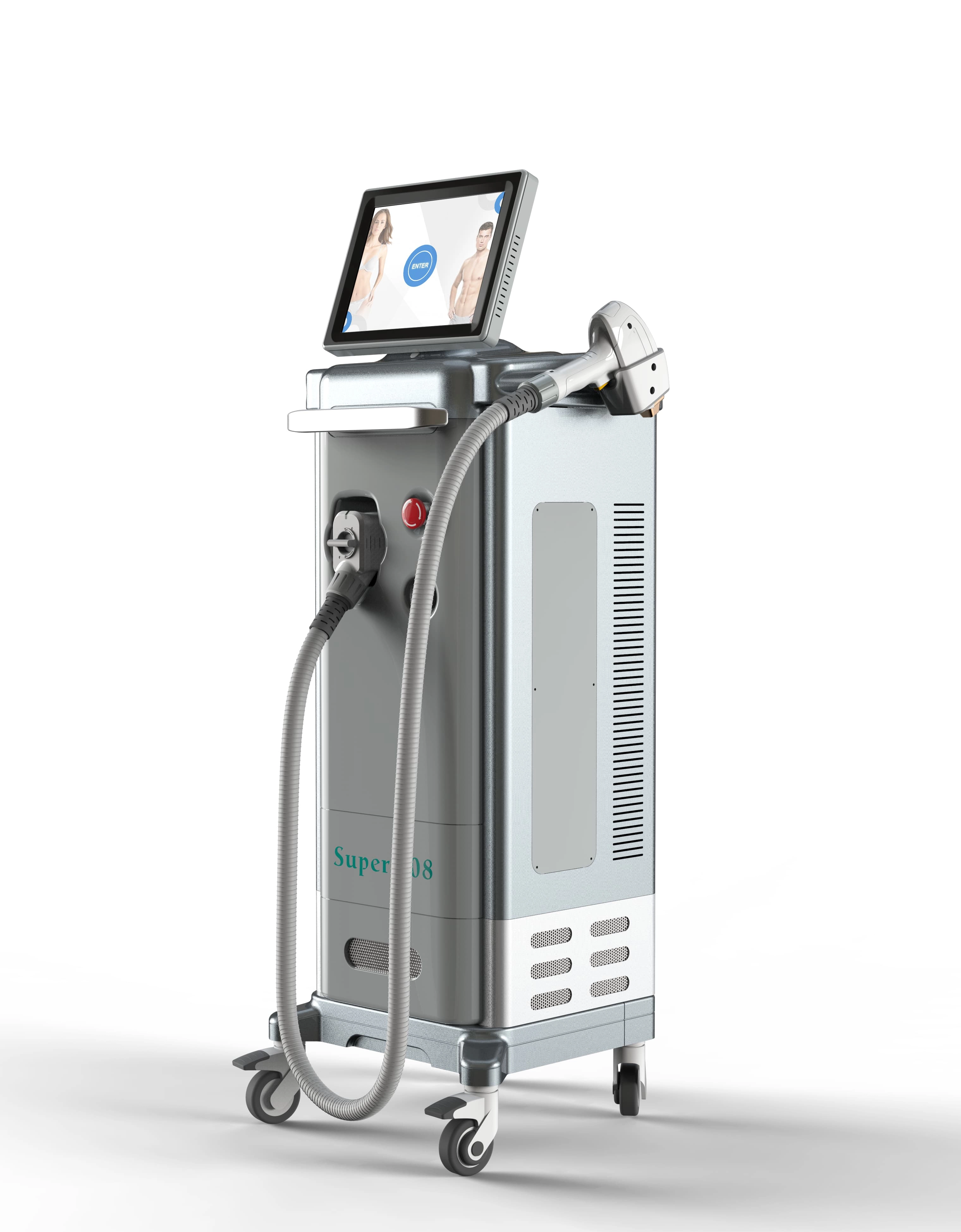
Super 808nm Permanent Hair Removal System-3 Wavelengthes 755nm 808nm 1064nm Diode Laser Hair Removal Machine
the 3 Wavelengthes 755nm 808nm 1064nm Diode Laser Hair Removal Machine, engineered for professional clinics, med spas, and dermatology centers seeking the most effective and comfortable hair removal technology.
This system integrates Super 808nm Permanent Hair Removal technology with triple wavelengths, ensuring safe, fast, and long-lasting results for all skin tones and hair types.
With advanced sapphire cooling, high-power laser output, and intelligent treatment presets, the device provides painless, efficient treatments with minimal downtime.
Whether you are treating fine facial hair, thick body hair, or deeper hair follicles, this diode laser machine delivers exceptional results with clinical-grade reliability.

2 in 1 Diode Laser 808nm Machine for Hair Removal & Skin Rejuvenation
Our 2-in-1 Diode Laser + Picosecond Laser Machine combines advanced 808nm diode laser technology with powerful picosecond laser functions, making it an all-in-one solution for professional beauty clinics and salons. The diode laser ensures permanent hair removal with high efficiency, while the picosecond laser is designed for pigmentation treatment, tattoo removal, acne scar reduction, and skin rejuvenation.
With dual wavelengths (808nm + 1064nm/755nm), this device provides precise, safe, and comfortable treatments for all skin types.
Get more information
If you have any comments or good suggestions, please leave us a message; later our professional staff will contact you as soon as possible.
Let's Talk
Stay in touch with us for cutting-edge beauty solutions, professional guidance, and customized service.
Contact


Room 307, Building A, Huilong International E-commerce Industrial Park, No. 10 Xipengling Road, Helong Street, Baiyun District, Guangzhou, China
© 2025 HUIMAIN. All Rights Reserved. Privacy Policy | Terms and Conditions | Sitemap
Facebook
Instagram
Medical beauty equipment factory
huimain Medical beauty equipment factory
beauty machine supplier
Whatsapp: +8619124004543