


Cold Plasma Machine Energy Efficiency and Operating Costs
- How energy shapes the economics of beauty devices
- Power and energy fundamentals for cold plasma devices
- Typical electrical characteristics and how they translate to cost
- Typical usage patterns and realistic energy scenarios
- Comparing energy and operating costs: Cold plasma vs alternatives
- Why compare modalities?
- Illustrative energy and per-treatment cost comparison
- Operational drivers beyond raw power: hidden cost factors
- Consumables, maintenance and amortization
- Workflow, throughput and labor impact on cost-efficiency
- Design and procurement strategies to maximize energy efficiency
- Technical choices that lower energy use
- Operational best practices
- Case study calculations and practical budgeting examples
- Example A: Small clinic handheld cold plasma
- Example B: Multi-head clinical plasma platform
- Regulatory, certification and measurement guidance
- Why measured, certified data matters
- Measurement tips for clinics and OEMs
- Guangzhou Huimain Technology Co., Ltd.: practical OEM partner perspective
- Company capabilities and relevance to energy-efficient product design
- Product strengths, OEM/ODM advantages and main product lines
- Implementation checklist: buying and operating for low total cost
- Before purchase
- After purchase
- Frequently Asked Questions (FAQ)
- 1. How much does a cold plasma treatment typically add to my electricity bill?
- 2. Are cold plasma machines more energy-efficient than lasers or HIFU?
- 3. What should I ask manufacturers about energy performance?
- 4. Can device firmware or software updates improve energy efficiency?
- 5. How do I calculate the true operating cost of a cold plasma machine?
- 6. Is special ventilation or environmental control required that affects operating cost?
- Contact & product inquiry
- References and authoritative sources
How energy shapes the economics of beauty devices
Cold plasma machines are increasingly adopted in dermatology, aesthetics and medical-device portfolios due to their antimicrobial, wound-healing and skin-rejuvenation effects. For clinic managers, OEMs and procurement teams, understanding actual energy consumption and operating cost drivers is essential to budget accurately, compare technologies and optimize workflows. This article provides a practical, evidence-oriented view of energy profiles, cost calculations, and efficiency strategies for cold plasma machines—balancing technical detail with actionable recommendations.
Power and energy fundamentals for cold plasma devices
Typical electrical characteristics and how they translate to cost
Cold plasma devices used in aesthetic clinics vary widely in design (dielectric barrier discharge, plasma jets, corona-based systems), and their instantaneous power draw commonly ranges from single-digit watts (for handheld, low-output devices) to several hundred watts for benchtop or multi-head clinical units. Most consumer/beauty cold plasma devices operate in the 5–200 W band; industrial or combined treatment platforms may peak higher during short duty cycles.
Operating cost is determined by energy (kWh) consumed and the local electricity price. Energy per session = device power (kW) × treatment duration (hours) × duty cycle factor (if pulsed). Example formula: Cost per session = power (kW) × duration (h) × electricity price (USD/kWh).
Typical usage patterns and realistic energy scenarios
Clinical sessions vary: a focused facial treatment may last 10–20 minutes; wound treatment or sterilization cycles may run 5–30 minutes per area; multi-area body applications can extend to 30–60 minutes. Cold plasma systems often use pulsed operation (duty cycles of 10–50%), which reduces average energy consumption compared to continuous-rated power. When estimating costs, factor in standby energy and auxiliary systems (touchscreens, pumps, fans) that add a baseline draw.
Comparing energy and operating costs: Cold plasma vs alternatives
Why compare modalities?
Clinics often choose between plasma, radiofrequency (RF), lasers, HIFU or cryotherapy for similar indications. Energy consumption and per-treatment cost are one part of the selection: treatment efficacy, consumables, equipment amortization, maintenance and patient throughput also matter. This section focuses on energy-driven operating costs to provide a comparable baseline.
Illustrative energy and per-treatment cost comparison
Below table presents typical power ranges and a worked example of energy cost per single treatment using an assumed electricity price. These values are intended as realistic, manufacturer-comparable examples; actual devices and regional electricity rates will vary.
| Modality | Typical power draw (W) | Example treatment time | Energy per treatment (kWh) | Cost per treatment (USD) at $0.15/kWh* |
|---|---|---|---|---|
| Cold plasma (handheld/clinical) | 10–200 W | 15 min (0.25 h) | 0.0025–0.05 kWh (assuming avg 50% duty) | $0.0004–$0.0075 |
| RF device (aesthetic) | 50–500 W | 20 min (0.333 h) | 0.017–0.167 kWh | $0.003–$0.025 |
| Diode laser (hair removal) | 200–2000 W (pulsed) | 15 min | 0.05–0.5 kWh | $0.0075–$0.075 |
| HIFU | 500–2000 W (short pulses) | 30 min | 0.25–1.0 kWh | $0.037–$0.15 |
*Assumed electricity price $0.15/kWh (U.S. average residential/commercial rates vary); see references. Energy estimates use conservative assumptions and duty cycles—confirm with device datasheets for precise budgeting.
Operational drivers beyond raw power: hidden cost factors
Consumables, maintenance and amortization
Energy cost often represents a small fraction of total per-treatment expense for many devices. High-cost drivers include disposable applicators, periodic replacement of electrodes/gas supplies, calibration and servicing, and capital amortization. For cold plasma devices, electrode life, dielectric materials and gas handling components (if using feed gases) can add recurring costs. Build these into per-treatment calculations along with electrical energy.
Workflow, throughput and labor impact on cost-efficiency
Faster treatments with equivalent clinical outcomes increase revenue per hour and dilute fixed costs (capital and labor). Cold plasma often enables short, repeatable procedures that can be scheduled back-to-back; however, setup time, pre/post-procedure preparation and documentation can dominate total room time. Consider redesigning clinic workflows to minimize idle periods and use energy-efficient modes (standby vs full on) without compromising readiness.
Design and procurement strategies to maximize energy efficiency
Technical choices that lower energy use
Key decisions that improve efficiency include selecting plasma generators with optimized high-voltage electronics (modern MOSFET/IGBT drivers), intelligent pulsing/waveform control (reduces average power), good thermal management to avoid unnecessary fan/pump operation, and modular designs that power only the active treatment head. Look for devices with measured energy-per-treatment specifications and independent test reports.
Operational best practices
- Use treatment protocols that achieve clinical outcomes with minimal required exposure time; validate efficacy during commissioning.
- Implement scheduled maintenance to preserve electrode performance and avoid power inefficiencies caused by degraded components.
- Educate staff to use low-power standby rather than full shutdowns if warm-up times cause repeated high-power draws; conversely, use full shutdown for long idle periods.
- Track energy consumption if possible (smart meters or device telemetry) to identify outliers and optimize scheduling.
Case study calculations and practical budgeting examples
Example A: Small clinic handheld cold plasma
Assumptions: device rated 50 W peak, average duty cycle 40% during treatment, treatment 15 minutes, electricity price $0.15/kWh.
Energy per treatment = 0.05 kW × 0.25 h × 0.4 = 0.005 kWh. Cost per treatment = 0.005 × $0.15 = $0.00075 (~0.08 cents). Even after factoring standby and auxiliaries, per-treatment energy cost remains under $0.05 in most cases—negligible compared to consumables or staff time.
Example B: Multi-head clinical plasma platform
Assumptions: platform total average draw 500 W during active multi-area sessions, 30-minute session, duty cycle 60%, electricity $0.15/kWh.
Energy = 0.5 kW × 0.5 h × 0.6 = 0.15 kWh. Cost = 0.15 × $0.15 = $0.0225 per session (~2.25 cents). Add maintenance and electrode replacement to get full per-session operating cost.
Regulatory, certification and measurement guidance
Why measured, certified data matters
Manufacturers that provide CE, SGS or third-party performance reports give procurement teams greater confidence. Certificates do not directly certify energy efficiency, but lab reports and IEC/ISO test methods can validate electrical consumption, safety and electromagnetic compatibility. When possible, request measured energy-per-treatment data under representative clinical conditions.
Measurement tips for clinics and OEMs
- Measure in-situ with a true RMS power meter across multiple typical treatments to capture duty cycles.
- Record standby, warm-up and active modes separately.
- Correlate consumable replacement intervals with electrical operating hours to compute lifecycle cost per treatment.
Guangzhou Huimain Technology Co., Ltd.: practical OEM partner perspective
Company capabilities and relevance to energy-efficient product design
Guangzhou Huimain Technology Co., Ltd. is a high-tech company specializing in beauty machines and home-use series, with full capabilities in R&D, production, sales and after-sale service. The company occupies 3000 square meters and has a strong technical team: over 20% hold bachelor’s degrees and more than 40% have junior college degrees. Huimain's experienced engineers, PE experts, clinical test department and after-sale service team support robust product development and lifecycle management.
With ongoing investment in R&D and patents, Huimain can design cold plasma platforms that incorporate modern power electronics, intelligent waveforms and modular architectures—critical for minimizing energy consumption while maintaining clinical efficacy. Their CE and SGS approvals indicate compliance with international standards, and global sales footprint (Southeast Asia, Middle East, Europe, North America) demonstrates commercial viability.
Product strengths, OEM/ODM advantages and main product lines
Huimain adheres to OEM and ODM routes to design and produce high-quality medical and beauty machines. Key product lines include:
- Cryolipolysis machines
- EMS sculpting machines
- Plasma machines (cold plasma)
- Shockwave machines
- HIFU machines
- Hydrofacial machines
- Cavitation vacuum machines
- Laser hair removal
- Tattoo removal machines
- Microneedle machines
Huimain's competitive edges include focused R&D investment, experienced engineering teams, CE/SGS certifications, and multiple patents. For clinics seeking energy-efficient cold plasma platforms, Huimain can align waveform optimization, efficient drivers and modular designs to reduce average power while preserving clinical results.
Implementation checklist: buying and operating for low total cost
Before purchase
- Request measured energy-per-treatment data and standby consumption from the manufacturer.
- Ask for independent test reports, CE/SGS certificates and references from clinics using the device.
- Evaluate consumable schedules (electrode life, dielectric replacements) and include in TCO.
After purchase
- Install a power meter for the first 3 months to validate expected consumption patterns.
- Train staff on efficient workflows and device power modes.
- Schedule preventive maintenance to sustain efficiency and clinical performance.
Frequently Asked Questions (FAQ)
1. How much does a cold plasma treatment typically add to my electricity bill?
In most cases, very little. A single 10–30 minute cold plasma procedure often consumes well under 0.2 kWh, so the direct electricity cost per treatment is frequently a few cents or less depending on local electricity prices. Consumables and amortized device cost usually dominate per-treatment expenses.
2. Are cold plasma machines more energy-efficient than lasers or HIFU?
Generally, yes for many indications. Cold plasma devices often have much lower continuous power needs and benefit from pulsed operation. However, efficiency must be balanced against treatment efficacy and number of sessions required. Evaluate per-outcome cost, not just raw power numbers.
3. What should I ask manufacturers about energy performance?
Request measured energy-per-treatment under typical clinical conditions, standby power draw, duty cycle behavior, and independent test reports. Also ask about electrode life, consumables and recommended maintenance intervals.
4. Can device firmware or software updates improve energy efficiency?
Yes. Firmware updates that refine pulse timing, duty cycles or waveform shapes can reduce average power draw without affecting clinical performance. Verify update policies and whether updates are provided as part of after-sale service.
5. How do I calculate the true operating cost of a cold plasma machine?
Include electricity (power × hours × price), consumables, maintenance, service contracts, training and device amortization over expected lifespan. Track actual usage metrics for accurate per-treatment costing.
6. Is special ventilation or environmental control required that affects operating cost?
Most low-temperature cold plasma devices generate negligible heat, but ensure adequate ventilation for operator comfort and removal of any reaction by-products. In facilities with strict HVAC metering, additional ventilation needs can influence operating costs—assess at procurement.
Contact & product inquiry
If you are evaluating energy-efficient cold plasma solutions or seeking OEM/ODM partners, Guangzhou Huimain Technology Co., Ltd. can help design, test and supply platforms tailored to clinic workflows and energy budgets. Contact the sales and technical team for product specifications, measured energy data and sample procurement: inquire directly for product catalogs and clinical reports.
References and authoritative sources
- U.S. Energy Information Administration (EIA) – Electricity Data and Prices. https://www.eia.gov/ (accessed 2026-01-10). Provides national and regional average electricity prices used for cost examples.
- PubMed Central – Search results for cold atmospheric plasma (collection of peer-reviewed articles and reviews). https://www.ncbi.nlm.nih.gov/pmc/?term=cold+atmospheric+plasma (accessed 2026-01-10). Useful for background on medical and aesthetic applications, device types and reported power characteristics.
- IEC and ISO standards directories – for medical electrical equipment safety and measurement guidance. https://www.iso.org/ and https://www.iec.ch/ (accessed 2026-01-10). For conformity and test-method context when requesting measured energy data from manufacturers.
- Company information provided by Guangzhou Huimain Technology Co., Ltd. internal documentation and certification references (CE, SGS, product patent notices) as summarized in the article (provided by company). (accessed 2026-01-10).
单手柄12d hifu
What is High Intensity Focused Ultrasound (HIFU) and how does it work?
HIFU uses focused ultrasound energy to reach deep dermal layers and the SMAS to stimulate collagen and tighten skin.
EMS + Cryo Slimming Machine
What is an EMS + Cryo Slimming Machine?
An EMS + Cryo Slimming Machine combines two powerful body contouring technologies — Electrical Muscle Stimulation (EMS) and Cryolipolysis (fat freezing) — to deliver a dual-action slimming effect. The EMS function stimulates deep muscle contractions to enhance tone and metabolism, while the cryo slimming technology freezes and breaks down stubborn fat cells without damaging surrounding tissues. It’s a non-invasive, safe, and effective solution for professional body contouring clinics and beauty salons.
X5 pro
What is the function of the handheld scalp analyzer?
It provides close-up imaging of the scalp and hair follicles to assess scalp condition and hair health.
EMS Sculpting vs. Cryolipolysis
Do you supply both, and do you offer bundle pricing?
Yes. As a direct manufacturer, we provide both technologies without middleman markups. Contact us for exclusive wholesale pricing on our "Combination Clinic Packages."
KLS
How does this machine help with scar removal?
The RF microneedling process triggers a natural healing response that leads to the regeneration of collagen and elastin. This helps to restructure the scarred tissue, making scars from acne, surgery, or injuries appear smoother and less noticeable.

Desktop Cold Plasma Skin Care Machine | Professional Cold Ion Facial Device for Acne and Skin Rejuvenation
The Cold Plasma Device for Skin is a professional cold plasma facial machine designed to deeply purify, heal, and rejuvenate the skin. Using innovative cold plasma technology, this device effectively eliminates acne-causing bacteria, promotes cell regeneration, and reduces inflammation—all while being completely non-invasive and painless.
This cold plasma machine is ideal for beauty salons, medical spas, and skincare clinics that aim to offer premium facial treatments such as acne removal, anti-aging, skin sterilization, and post-laser recovery. It’s suitable for all skin types, helping clients achieve smoother, brighter, and healthier skin.
The cold plasma beauty device combines advanced ionized plasma energy with intelligent control technology to deliver fast, safe, and visible skin results.

CO2 Fractional Laser Machine – Professional Wrinkle Removal & Skin Resurfacing Device
The CO2 Fractional Laser Machine is a multifunctional aesthetic device designed for professional clinics and beauty salons. Using advanced fractional CO2 laser technology, it effectively targets acne scars, freckles, pigmentation, nevi, and deep wrinkles. Additionally, it provides non-invasive skin rejuvenation, vaginal tightening, and intimate beautification. This professional CO2 laser equipment combines precision, safety, and powerful energy output to deliver outstanding anti-aging and dermatological results.
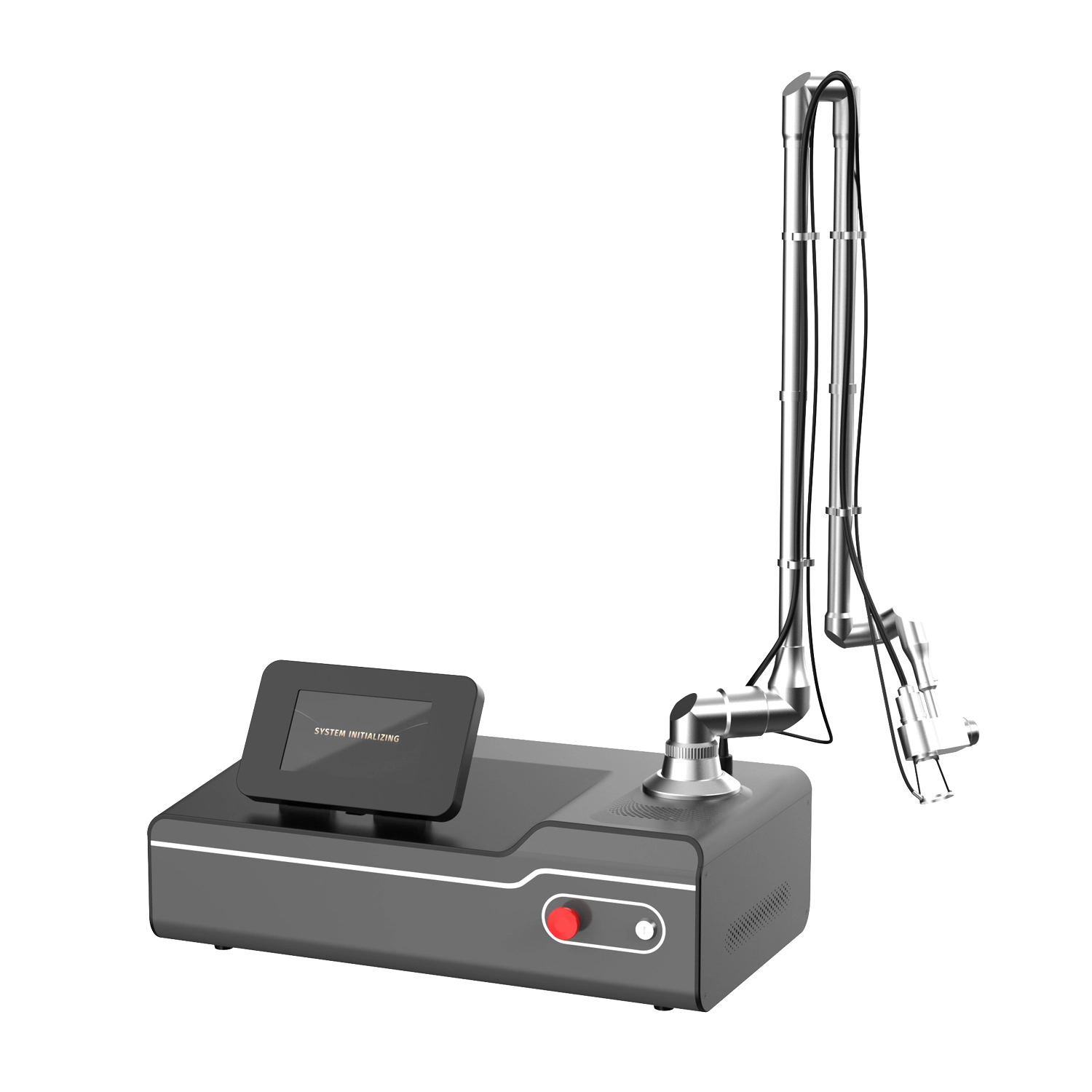
Professional CO2 Fractional Laser Machine for Skin Resurfacing & Scar Treatment
The CO2 Fractional Laser Machine is a professional CO2 fractional laser machine designed for advanced skin resurfacing, scar treatment, and skin rejuvenation procedures.
Using 10,600nm CO2 fractional laser technology, the system delivers controlled microthermal zones into the skin, stimulating collagen remodeling while preserving surrounding tissue. This fractional approach significantly improves treatment safety, recovery time, and clinical outcomes.
The CO2 fractional laser machine is widely used in dermatology clinics and medical aesthetic centers for treating acne scars, wrinkles, enlarged pores, stretch marks, and various skin texture concerns.
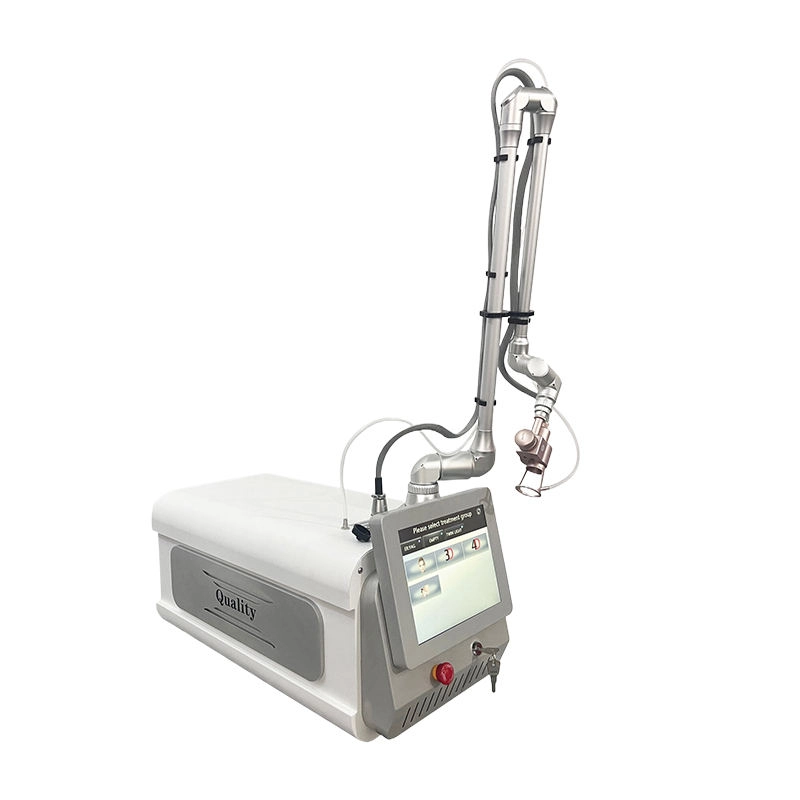
Professional CO2 Fractional Laser Machine | Fractional & Vaginal Rejuvenation CO2 Laser System
The CO2 fractional laser machine is a professional medical-grade device designed for deep skin resurfacing, wrinkle reduction, scar repair, and vaginal rejuvenation. Using a 10600 nm fractional CO2 laser beam, it creates micro-thermal columns on the skin to stimulate collagen regeneration and accelerate skin healing.
This CO2 fractional laser machine provides multiple treatment modes, including fractional mode, surgical cutting mode, and optional vaginal tightening mode, making it ideal for dermatology clinics and professional beauty centers seeking advanced laser solutions.
Its high precision, adjustable spot size, stable energy output, and seven-joint articulated arm ensure safe, accurate, and effective treatment results with minimal downtime.
Get more information
If you have any comments or good suggestions, please leave us a message; later our professional staff will contact you as soon as possible.
Let's Talk
Stay in touch with us for cutting-edge beauty solutions, professional guidance, and customized service.
Contact


Room 307, Building A, Huilong International E-commerce Industrial Park, No. 10 Xipengling Road, Helong Street, Baiyun District, Guangzhou, China
© 2025 HUIMAIN. All Rights Reserved. Privacy Policy | Terms and Conditions | Sitemap
Facebook
Instagram
Medical beauty equipment factory
huimain Medical beauty equipment factory
beauty machine supplier
Whatsapp: +8619124004543