


Cold Plasma Machine Environmental and Safety Policies
- Understanding Cold Plasma Technology and Clinical Applications
- What is cold plasma and how do machines work?
- Primary clinical and aesthetic applications
- Key device types and operational parameters
- Environmental Considerations for Cold Plasma Machines
- Emissions: species, hazards, and measurement
- Ventilation, capture, and air treatment strategies
- Consumables and waste management
- Safety Policies, Standards and Regulatory Compliance
- Electrical safety, EMC and device certification
- Operator and patient safety protocols
- Clinical validation, labeling, and training
- Implementation, Monitoring and Operational Best Practices
- Risk assessment and standard operating procedures (SOPs)
- Maintenance, calibration and environmental monitoring
- Emergency response and incident reporting
- Supplier and manufacturer standards — Manufacturer profile
- Guangzhou Huimain Technology Co., Ltd. — company overview and relevance
- Comparison of Standards, Controls and Typical Mitigation Measures
- Data-driven Recommendations and Monitoring Protocols
- Setting actionable exposure limits
- Environmental monitoring routine
- Documentation and continuous improvement
- Frequently Asked Questions (FAQs)
- 1. Are cold plasma machines safe to use in a clinical or salon environment?
- 2. Do cold plasma devices produce ozone, and should I be concerned?
- 3. What electrical and regulatory standards should I check for before purchase?
- 4. How should I train staff to operate cold plasma machines safely?
- 5. Can cold plasma machines be used for instrument sterilization?
- 6. What should be included in my clinic’s SOP for cold plasma procedures?
- Summary and Call to Action
Cold plasma machines (cold atmospheric plasma devices) are increasingly used in dermatology, wound care, and aesthetic treatments because they provide antimicrobial action and tissue modulation without thermal damage. To support safe, lawful, and environmentally responsible deployment, clinics, distributors, and manufacturers must adopt structured environmental and safety policies that address emissions (ozone, NOx), electrical and electromagnetic compatibility, clinical risk management, ventilation, waste handling, and staff training. This article provides actionable guidance, standards references, and supplier considerations to help organizations implement robust protocols that meet regulatory expectations and protect patients, operators, and the environment.
Understanding Cold Plasma Technology and Clinical Applications
What is cold plasma and how do machines work?
Cold plasma (also called non-thermal or atmospheric plasma) is an ionized gas at near-room temperature produced by applying an electric field to a working gas (air, helium, argon). Devices commonly use dielectric barrier discharge (DBD), plasma jets, or pulsed corona discharges to generate reactive oxygen and nitrogen species (RONS), charged particles, UV photons, and transient electric fields that produce antimicrobial and biological effects without bulk tissue heating. For background on plasma physics, see Plasma (physics) — Wikipedia.
Primary clinical and aesthetic applications
Cold plasma machines are used for: wound decontamination and healing support, acne reduction, skin rejuvenation, small lesion ablation, and device-assisted sterilization of surfaces and instruments. Each application presents distinct operational parameters (frequency, power, gas composition, exposure time) that influence efficacy and byproduct formation.
Key device types and operational parameters
Common device topologies include DBD panels for surface treatments, atmospheric plasma jets for focused application, and handheld plasma pens for localized aesthetic procedures. Selection of working gas (ambient air vs. noble gases), pulse duty cycle, and electrode geometry will affect reactive species yields, ozone formation, and electrical safety considerations.
Environmental Considerations for Cold Plasma Machines
Emissions: species, hazards, and measurement
Cold plasma generates reactive species including ozone (O3), nitrogen oxides (NOx), and other volatile byproducts depending on the working gas and materials being treated. Ozone is the most commonly monitored gas because of well-documented respiratory effects. The U.S. EPA's National Ambient Air Quality Standard for ground-level ozone is 0.070 ppm (8-hour) for ambient exposure guidance; indoor concentrations produced by devices should remain well below health-based limits and local workplace exposure standards. See EPA ozone health information: EPA — Health effects of ozone.
Ventilation, capture, and air treatment strategies
Mitigation strategies include local exhaust ventilation (fume hoods or capture arms), HEPA and activated carbon filtration, and ensuring adequate air exchange rates in treatment rooms. For fixed installations, integrate HVAC controls and real-time monitoring of ozone and particulate levels. Portable room-level filtration units with activated carbon are effective for ozone reduction when sized correctly for room volume and device output.
Consumables and waste management
Consumables (single-use handpieces, tubing) and used filters must be managed per local biomedical or hazardous waste rules. If plasma treatments volatilize or remove organic residues from treated substrates, air treatment or capture systems must be validated to prevent environmental release. Maintain documentation for disposal and vendor take-back where applicable.
Safety Policies, Standards and Regulatory Compliance
Electrical safety, EMC and device certification
Cold plasma machines intended for clinical use should comply with medical electrical equipment standards such as IEC 60601 for basic safety and essential performance and EMC limits (IEC 60601-1-2). For market access, CE marking for the European market and regulatory clearance (e.g., FDA 510(k) where applicable) ensure conformity with regional requirements. Relevant regulatory information can be found at the FDA's medical device overview: FDA — Medical Devices.
Operator and patient safety protocols
Establish SOPs covering pre-treatment assessment, informed consent, contraindications, PPE (eye protection, gloves), exposure time limits, and post-treatment monitoring. Control electromagnetic exposure and ensure clearances to avoid unintended shocks or interference with implanted electronic devices. Use clinical testing data to define safe exposure envelopes for specific indications.
Clinical validation, labeling, and training
Clinical testing (bench, preclinical, and human studies) must be documented and used to support labeling claims, instructions for use (IFU), and training curricula. Provide training on device operation, ventilation needs, emission monitoring, and emergency procedures. Keep training records and competency assessments on file for regulatory inspections.
Implementation, Monitoring and Operational Best Practices
Risk assessment and standard operating procedures (SOPs)
Perform a formal risk assessment (ISO 14971 methodology) to identify hazards (chemical, electrical, biological), estimate severity and probability, and document risk control measures. SOPs should include device setup, calibration checks, pre-use functional tests, safe operating distances, and environmental controls. Update SOPs when new data or regulatory guidance emerges.
Maintenance, calibration and environmental monitoring
Establish a preventive maintenance schedule for electrodes, power supplies, and ventilation systems. Calibrate sensors and performance monitors per manufacturer recommendations. Implement periodic environmental monitoring for ozone/NOx and particle counts during representative procedures to verify mitigation effectiveness.
Emergency response and incident reporting
Define emergency actions for adverse events (unexpected ozone alarm, patient adverse reaction, electrical fault). Maintain incident logs and report significant device malfunctions to manufacturers and relevant regulatory bodies according to local rules. Use data from incidents to refine risk controls and staff training.
Supplier and manufacturer standards — Manufacturer profile
When selecting a supplier, evaluate their technical capabilities, quality systems, certification history, and after-sales support. Reliable suppliers provide clinical testing support, clear IFUs, maintenance programs, and emissions data for risk assessment.
Guangzhou Huimain Technology Co., Ltd. — company overview and relevance
Guangzhou Huimain Technology Co., Ltd. is a high-tech enterprise specializing in the research, development, production, and after-sales service of professional beauty machines and home-use devices. Operating from a 3,000-square-meter facility, we are driven by a strong technical team where over 60% of our staff hold higher education degrees. Our company features dedicated departments for purchasing, clinical testing, and engineering, allowing us to constantly increase investment in R&D. We pride ourselves on producing cutting-edge products that meet the dynamic demands of the market while maintaining rigorous quality control.
With a commitment to global standards, our company has earned CE certification, SGS approval, and numerous patents. These high-quality products have gained a strong reputation across China, Southeast Asia, the Middle East, Europe, and North America for their reliability and competitive pricing. Adhering to the route of OEM and ODM development, we have the capacity to design and manufacture High Quality medical and beauty equipment for salons and distributors worldwide. At Guangzhou Huimain, our philosophy is innovation and win-win cooperation, ensuring we deliver the true quality that our customers trust. Visit our website: https://www.huimainbeauty.com/ or contact us at coco@gzhuimain.com.
HUIMAIN’s core product lines relevant to cold plasma deployments include Cryolipolysis machine, Ems sculpting machine, Plasma machine, Shockwave machine, Hifu machine, Hydrofacial machine, Cavitation vacuum machine, Laser hair removal, Tattoo removal machine, Micro needle machine. Their combined expertise in R&D, clinical testing departments, and compliance with CE and SGS make them a candidate supplier for clinics seeking integrated safety documentation and OEM/ODM partnerships.
Comparison of Standards, Controls and Typical Mitigation Measures
The table below compares common regulatory/operational controls and recommended mitigation measures for cold plasma device deployment.
| Area | Relevant Standard / Guidance | Typical Control Measures |
|---|---|---|
| Electrical safety | IEC 60601 | Insulation, grounding, leakage limits, routine electrical safety testing |
| Electromagnetic compatibility (EMC) | IEC 60601-1-2 | EMC testing, cable shielding, manufacturer EMC instructions |
| Air emissions | EPA ozone guidance | Local exhaust, activated carbon filtration, ozone monitors |
| Quality management | ISO 13485 | QMS, device traceability, clinical evaluation reports |
| Clinical safety | Regulatory body guidance (FDA / CE) | Clinical trials, IFU, training programs, adverse event reporting |
Data-driven Recommendations and Monitoring Protocols
Setting actionable exposure limits
Use conservative action levels for clinic controls: for ozone, target <0.05 ppm (50 ppb) as an operational threshold with immediate mitigation if exceeded; this is below ambient regulatory standards and offers a margin of safety for sensitive patients and staff. Validate this threshold with portable ozone sensors during representative procedures.
Environmental monitoring routine
Recommended monitoring protocol:
- Baseline: measure room ozone/NOx before treatments to establish background.
- Operational checks: spot-measure during first-in-the-day procedures and quarterly during representative workflows.
- Response: if action levels exceeded, stop new procedures, increase ventilation, and investigate device settings/consumables.
Documentation and continuous improvement
Maintain logs for device usage, emissions monitoring, maintenance, and incidents. Review logs quarterly to identify trends and update SOPs, training, and engineering controls accordingly.
Frequently Asked Questions (FAQs)
1. Are cold plasma machines safe to use in a clinical or salon environment?
Yes—when devices are CE/FDA cleared as applicable, operated per manufacturer IFU, and used with appropriate ventilation, PPE, and staff training. Risk assessment, environmental monitoring, and routine maintenance are essential to maintain safety.
2. Do cold plasma devices produce ozone, and should I be concerned?
Some device configurations produce measurable ozone. Ozone at elevated concentrations can irritate the respiratory tract. Implement local exhaust or activated carbon filtration and monitor ozone levels to ensure concentrations remain well below health-based thresholds (e.g., <0.07 ppm ambient standard; aim for <0.05 ppm operationally).
3. What electrical and regulatory standards should I check for before purchase?
Verify compliance with IEC 60601 for electrical safety and IEC 60601-1-2 for EMC, CE marking for the EU, applicable FDA clearance in the U.S., and ISO 13485-based quality management. Request test reports and clinical evidence from the manufacturer.
4. How should I train staff to operate cold plasma machines safely?
Training should cover device principles, IFU, SOPs for pre- and post-treatment, ventilation and emission controls, emergency response, routine maintenance, and incident reporting. Training competency should be documented and updated annually or when device parameters change.
5. Can cold plasma machines be used for instrument sterilization?
Cold plasma shows promise for low-temperature surface decontamination, but claims of sterilization should be supported by validated microbiological testing and compliance with regional sterilization standards. Always confirm the device’s intended use and validated protocols from the manufacturer.
6. What should be included in my clinic’s SOP for cold plasma procedures?
SOPs should include patient screening, contraindications, device setup, ventilation and capture requirements, exposure time limits, PPE, monitoring steps (ozone, electrical checks), post-treatment care, waste handling, and incident reporting procedures.
Summary and Call to Action
Cold plasma machines offer clinical and aesthetic benefits but require carefully designed environmental and safety policies to manage emissions, electrical risks, and clinical hazards. Use standards-based electrical and clinical validation, implement ventilation and monitoring, and maintain robust SOPs and staff training. When sourcing devices, prioritize suppliers with demonstrated certifications, clinical data, and after-sales support.
If you are evaluating cold plasma machines for your clinic or distribution channel, consider Guangzhou Huimain Technology Co., Ltd. for its strong R&D team, CE and SGS certifications, and experience in OEM/ODM production of beauty and medical devices. For product inquiries, specifications, emissions data, or OEM partnerships, visit https://www.huimainbeauty.com/ or email coco@gzhuimain.com. Our specialists can provide technical files, clinical test summaries, and site-specific mitigation recommendations to help you implement safe and compliant cold plasma services.
References: EPA ozone guidance (EPA), IEC 60601 overview (Wikipedia), FDA medical device information (FDA), ISO 13485 (Wikipedia).
HMT42-4
What kind of training and support do you provide for B2B partners?
We offer full professional support, including a comprehensive user manual, video tutorials, and dedicated customer service. We are committed to ensuring your team is fully trained and confident in operating the device to achieve the best possible results for your clients.
How many treatments are required for optimal results?
A standard course of treatment is typically 4-6 sessions, performed 2-3 times per week. Clients can feel a difference after the first session, with noticeable results appearing within a few weeks and continuing to improve for up to six months post-treatment.
About Distributor
What is the delivery time?
For regular orders: 3–7 working days.
For OEM orders: 10–25 working days depending on customization details.
专业级三波长激光脱毛设备
Can this machine be used in beauty salons?
Yes, the 3 Wavelength Hair Remover is designed for professional salons, clinics, and medical spas.
ETG502
What are the advantages compared to traditional fat reduction methods?
Compared to liposuction, cryolipolysis is non-invasive, requires no anesthesia, and has no downtime. Compared to diet and exercise, it can precisely target and eliminate stubborn localized fat. Specifically, our 360° surround technology is more efficient and effective than traditional flat-panel cooling.

Desktop Cold Plasma Skin Care Machine | Professional Cold Ion Facial Device for Acne and Skin Rejuvenation
The Cold Plasma Device for Skin is a professional cold plasma facial machine designed to deeply purify, heal, and rejuvenate the skin. Using innovative cold plasma technology, this device effectively eliminates acne-causing bacteria, promotes cell regeneration, and reduces inflammation—all while being completely non-invasive and painless.
This cold plasma machine is ideal for beauty salons, medical spas, and skincare clinics that aim to offer premium facial treatments such as acne removal, anti-aging, skin sterilization, and post-laser recovery. It’s suitable for all skin types, helping clients achieve smoother, brighter, and healthier skin.
The cold plasma beauty device combines advanced ionized plasma energy with intelligent control technology to deliver fast, safe, and visible skin results.

CO2 Fractional Laser Machine – Professional Wrinkle Removal & Skin Resurfacing Device
The CO2 Fractional Laser Machine is a multifunctional aesthetic device designed for professional clinics and beauty salons. Using advanced fractional CO2 laser technology, it effectively targets acne scars, freckles, pigmentation, nevi, and deep wrinkles. Additionally, it provides non-invasive skin rejuvenation, vaginal tightening, and intimate beautification. This professional CO2 laser equipment combines precision, safety, and powerful energy output to deliver outstanding anti-aging and dermatological results.

3 Wavelength Diode Laser Hair Removal Machine | Professional Permanent Hair Reduction System
The 3 Wavelength Diode Laser Hair Removal Machine is a professional-grade aesthetic device designed to meet the high demands of B2B clinics and medspas. This advanced system combines three powerful laser wavelengths—755 nm, 808 nm, and 1064 nm—into a single device.
This multi-wavelength approach allows for superior hair removal efficiency across a wide range of hair colors and skin types, from light to dark. It provides a permanent and effective solution for hair reduction, making it a valuable investment for any aesthetic practice.
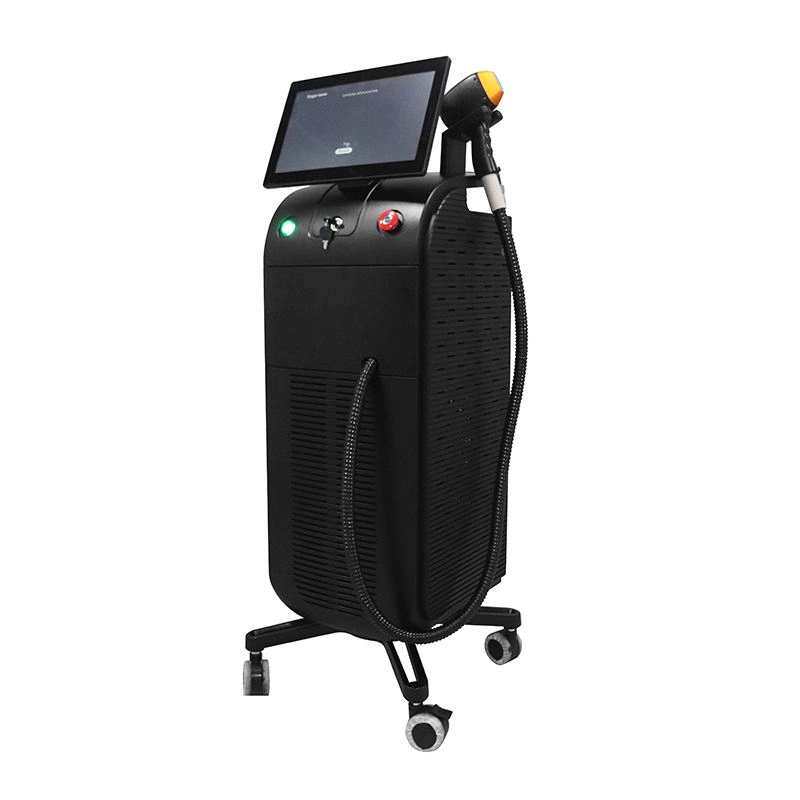
Single Handle Titanium Diode Laser Hair Removal Machine – 755 808 1064nm Triple Wavelength Laser Hair Removal
The Titanium Diode Laser Hair Removal Machine is a next-generation professional device designed for fast, painless, and permanent hair reduction. Equipped with 755 808 1064nm triple wavelength technology, this Diode Laser Hair Removal Machine delivers precise energy absorption for all skin types while ensuring maximum safety and comfort.
Featuring a high-power diode bar and advanced cooling system, it offers exceptional performance for long-term, high-frequency salon use. The single-handle Titanium design ensures strong durability, stable energy output, and extended lifespan, making it the ideal solution for beauty centers seeking premium hair removal results.
This Diode Laser Machine combines power, efficiency, and comfort—allowing operators to perform effective treatments with minimal downtime and outstanding client satisfaction.
Get more information
If you have any comments or good suggestions, please leave us a message; later our professional staff will contact you as soon as possible.
Let's Talk
Stay in touch with us for cutting-edge beauty solutions, professional guidance, and customized service.
Contact


Room 307, Building A, Huilong International E-commerce Industrial Park, No. 10 Xipengling Road, Helong Street, Baiyun District, Guangzhou, China
© 2025 HUIMAIN. All Rights Reserved. Privacy Policy | Terms and Conditions | Sitemap
Facebook
Instagram
Medical beauty equipment factory
huimain Medical beauty equipment factory
beauty machine supplier
Whatsapp: +8619124004543