


Top Cold Plasma Machine Features B2B Buyers Need
- Why Cold Plasma Machines Matter for B2B Buyers
- Clinical and commercial value proposition
- Buyer and common use cases
- Key Technical Features to Evaluate
- Plasma generation method and output control
- Reactive species profile and delivery precision
- Safety interlocks and patient interface ergonomics
- Operational, Maintenance and Regulatory Considerations
- Throughput, consumables and total cost of ownership
- Regulatory status, certifications and documentation
- Comparative Technology Context: Cold Plasma vs Alternatives
- How cold plasma differs from lasers, RF and ultrasound
- Feature comparison table
- Selecting a Supplier and Supplier Due Diligence
- Technical validation and clinical evidence
- Service, OEM/ODM capability and manufacturing transparency
- Why Guangzhou Huimain Technology Co., Ltd. Is a Competitive Partner
- Company profile and technical strength
- R&D commitment, certifications and market reach
- Product portfolio and competitive advantages
- Implementation Checklist for B2B Buyers
- Pre-purchase verification steps
- Post-purchase integration and staff training
- Frequently Asked Questions (FAQ)
- 1. What is a cold plasma machine used for?
- 2. Are cold plasma machines safe for patient use?
- 3. How do I evaluate the real effectiveness of a cold plasma device?
- 4. What certifications should a B2B buyer insist on?
- 5. How do cold plasma machines compare in cost of ownership?
- 6. Can cold plasma treatments be combined with other modalities?
- 7. How quickly can I get service and spare parts?
- Contact and Next Steps
- References
Why Cold Plasma Machines Matter for B2B Buyers
Clinical and commercial value proposition
Cold plasma machines (often called cold atmospheric plasma or CAP generators) are gaining traction in dermatology, wound care, and professional aesthetic clinics because they provide non-thermal, surface-active treatments for disinfection, wound healing acceleration, skin rejuvenation, and tattoo/lesion assistance. For B2B buyers—clinics, device distributors, OEM/ODM partners—the key question is not whether the technology works, but which device delivers consistent clinical outcomes, operational reliability, and regulatory compliance.
Buyer and common use cases
B2B buyers typically need devices that meet clinical efficacy, throughput, safety, and cost-of-ownership requirements. Common purchase drivers include: outpatient wound clinics wanting accelerated healing; dermatology practices seeking adjunctive skin rejuvenation tools; medtech distributors needing CE-marked products; and aesthetic chains requiring reliable OEM machines to brand and resell.
Key Technical Features to Evaluate
Plasma generation method and output control
Understanding the plasma generation principle (e.g., dielectric barrier discharge, plasma jet, or mesh electrode designs) is essential. Buyers should evaluate:
- Adjustable power and pulse settings — to tune reactive species production for different indications.
- Reproducibility — the device should deliver consistent output across sessions and units.
- Cooling and thermal management — true cold plasma keeps tissue temperature low (<40°C) to avoid thermal damage.
Reactive species profile and delivery precision
Cold plasma acts via reactive oxygen and nitrogen species (RONS), UV photons, and electric fields. Leading devices provide data on the concentration range of key RONS (e.g., nitric oxide derivatives, hydrogen peroxide equivalents) and allow delivery control (spot size, distance, exposure time). For clinical protocols, measurable delivery parameters are necessary to reproduce outcomes.
Safety interlocks and patient interface ergonomics
Safety features should include real-time electrode monitoring, automatic shut-off on abnormal current/arc detection, insulated handpieces, and clear dosing displays. Ergonomics influence treatment speed and operator fatigue—lightweight, balanced handpieces and easy-to-clean interfaces reduce clinic downtime.
Operational, Maintenance and Regulatory Considerations
Throughput, consumables and total cost of ownership
B2B buyers must account for session time, consumable replacement (e.g., single-use tips or filters if present), maintenance intervals, and expected mean-time-between-failures (MTBF). A device with slightly higher upfront cost but lower consumable spend and longer service intervals often offers better lifetime economics.
Regulatory status, certifications and documentation
Confirm the regulatory claims: CE marking for the EU, ISO 13485 compliance for quality management, and any country-specific registrations. Devices used for medical indications require clinical evidence and technical files that support safety and efficacy claims. Ask vendors for clinical summaries, risk analyses (per ISO 14971), and post-market surveillance plans.
Comparative Technology Context: Cold Plasma vs Alternatives
How cold plasma differs from lasers, RF and ultrasound
Cold plasma acts primarily on the skin surface via reactive species and electrical effects without deep thermal penetration. Contrast this with:
- Lasers — deliver focused photon energy with thermal/mechanical tissue effects.
- Radiofrequency (RF) — provides deeper heating and collagen remodeling via bulk thermal effects.
- Ultrasound/HIFU — targets deeper tissues with focused mechanical and thermal energy.
Feature comparison table
| Modality | Primary mechanism | Typical clinical uses | Surface vs depth | Downtime |
|---|---|---|---|---|
| Cold Plasma | Reactive species, electric fields, low-level UV | Surface disinfection, wound healing, superficial rejuvenation | Surface / superficial layers | Minimal |
| Laser | Photon absorption → thermal or photomechanical effects | Pigmentation, ablation, resurfacing | Surface to mid-dermis (wavelength dependent) | Variable (minimal to moderate) |
| Radiofrequency | Bulk tissue heating via electromagnetic energy | Skin tightening, collagen remodeling | Mid to deep dermis | Minimal to moderate |
| Ultrasound (HIFU) | Focused mechanical and thermal energy | Deep tissue tightening, fat reduction | Deep tissue targeting | Minimal to moderate |
Selecting a Supplier and Supplier Due Diligence
Technical validation and clinical evidence
Request lab test reports and clinical results relevant to your use cases. Prefer suppliers who can share:
- Independent lab validation of reactive species output and surface temperatures.
- Clinical study summaries or case series that include endpoints, sample size, and adverse event rates.
- Device technical file and traceability documentation.
Service, OEM/ODM capability and manufacturing transparency
B2B relationships often go beyond purchase: customization, co-branding, and after-sales service matter. Evaluate supplier capacity (manufacturing area, engineering headcount), R&D investment, and quality personnel. Inspect warranty terms, spare-parts availability, and local technical training programs.
Why Guangzhou Huimain Technology Co., Ltd. Is a Competitive Partner
Company profile and technical strength
Guangzhou Huimain Technology Co., Ltd. is a high-tech company focused on beauty machines and home-use device series. The company combines R&D, production, sales, and after-sale service with a production area of about 3,000 square meters. Over 20% of the staff hold bachelor’s degrees and more than 40% have junior college degrees, supporting a technically capable development team and experienced engineers. Huimain also maintains professional purchasing, clinical testing, and after-sale departments.
R&D commitment, certifications and market reach
Huimain invests in R&D to develop new products aligned with market demand. The company has obtained CE certification and SGS approval, holds multiple patents, and exports products worldwide across China, Southeast Asia, the Middle East, Europe, and North America. Their OEM/ODM capabilities allow them to design and produce high-quality medical and beauty machines for clinics and salons.
Product portfolio and competitive advantages
Key products include Cryolipolysis machines, EMS sculpting devices, Plasma machines, Shockwave machines, HIFU machines, Hydrofacial units, Cavitation vacuum machines, Laser hair removal and tattoo removal systems, and Microneedle devices. Huimain emphasizes technology innovation, win-win cooperation, and delivering equipment with strong price-to-quality ratios. Their differentiators are robust technical teams, patent-backed designs, clinical testing capacity, and comprehensive after-sales support—factors B2B buyers should weigh alongside device specs.
Implementation Checklist for B2B Buyers
Pre-purchase verification steps
- Request a datasheet detailing output parameters (power ranges, pulse widths, RONS metrics if available).
- Obtain device technical file, CE/ISO certificates, and redacted clinical summaries.
- Check ergonomics by demo or trial period and confirm consumable costs.
Post-purchase integration and staff training
- Plan clinical protocols and documentation aligned with local regulations.
- Schedule operator training and operator competency assessments.
- Implement preventive maintenance schedules and spare parts stocking.
Frequently Asked Questions (FAQ)
1. What is a cold plasma machine used for?
Cold plasma machines are used for surface disinfection, wound healing acceleration, superficial skin rejuvenation, and as adjuncts in dermatological procedures. Clinical indications depend on device design and regulatory approvals.
2. Are cold plasma machines safe for patient use?
When produced and used according to manufacturer instructions and under appropriate regulatory clearance, cold plasma devices have shown favorable safety profiles for surface applications. Buyers should verify device testing, temperature control, and clinical evidence from the manufacturer.
3. How do I evaluate the real effectiveness of a cold plasma device?
Ask for independent lab testing of reactive species output, temperature logs during treatment, and clinical study summaries including endpoints, sample size, and adverse events. Reproducible dosing and well-documented protocols are key indicators of effective devices.
4. What certifications should a B2B buyer insist on?
For sales in the EU, CE marking is expected. ISO 13485 indicates quality management for medical devices. Other market-specific approvals (e.g., local health authority registrations) may be necessary. Ask for certificates and the associated scopes.
5. How do cold plasma machines compare in cost of ownership?
Consider upfront price, consumable costs, maintenance intervals, expected lifespan, training, and downtime. A slightly higher-cost device with low consumable spend and strong service support can be more economical over 3–5 years.
6. Can cold plasma treatments be combined with other modalities?
Yes. In many clinical practices, cold plasma is used as an adjunct to dressings for wound care or combined with topical treatments for enhanced absorption. Cross-modality protocols should be validated and supported by clinical evidence.
7. How quickly can I get service and spare parts?
Service responsiveness depends on the supplier's regional support network. Prioritize manufacturers with local distributors, documented lead times, and available spare parts kits for rapid turnarounds.
Contact and Next Steps
If you are evaluating cold plasma machines for clinic deployment, OEM/ODM sourcing, or distribution, consider Guangzhou Huimain Technology Co., Ltd. for a combination of certified products, R&D capacity, and global market experience. Contact Huimain to request technical datasheets, clinical summaries, demo units, and OEM/ODM proposals. For immediate consultation or to view product catalogs, contact Huimain through their official sales channels to arrange a product demonstration and procurement discussion.
References
- Plasma medicine — Wikipedia (accessed 2026-01-05)
- U.S. Food & Drug Administration — Medical Devices (accessed 2026-01-05)
- European Commission — CE Marking (accessed 2026-01-05)
- ISO 13485 — Medical devices — Quality management (accessed 2026-01-05)
- SGS — Health & Personal Care Services (accessed 2026-01-05)
台式黄金射频微针
How long do results last?
Results usually last 6–12 months, depending on skin condition and treatment frequency.
JHF-53
What is HIFU technology?
HIFU uses focused ultrasound energy to lift and tighten skin without surgery.
JHF-61
How long do facial and vaginal HIFU results last?
Typically 12–18 months depending on individual conditions and treatment programs.
A71立式冷波
Is the Onda Coolwave Machine non-invasive?
Yes. The Onda Coolwave Machine is a completely non-invasive body sculpt and skin tightening device with no needles or surgery.
About OEM & ODM
Do you provide after-sales support?
Yes, we offer technical support, warranty service, spare parts supply, and product training.

Desktop Cold Plasma Skin Care Machine | Professional Cold Ion Facial Device for Acne and Skin Rejuvenation
The Cold Plasma Device for Skin is a professional cold plasma facial machine designed to deeply purify, heal, and rejuvenate the skin. Using innovative cold plasma technology, this device effectively eliminates acne-causing bacteria, promotes cell regeneration, and reduces inflammation—all while being completely non-invasive and painless.
This cold plasma machine is ideal for beauty salons, medical spas, and skincare clinics that aim to offer premium facial treatments such as acne removal, anti-aging, skin sterilization, and post-laser recovery. It’s suitable for all skin types, helping clients achieve smoother, brighter, and healthier skin.
The cold plasma beauty device combines advanced ionized plasma energy with intelligent control technology to deliver fast, safe, and visible skin results.

CO2 Fractional Laser Machine – Professional Wrinkle Removal & Skin Resurfacing Device
The CO2 Fractional Laser Machine is a multifunctional aesthetic device designed for professional clinics and beauty salons. Using advanced fractional CO2 laser technology, it effectively targets acne scars, freckles, pigmentation, nevi, and deep wrinkles. Additionally, it provides non-invasive skin rejuvenation, vaginal tightening, and intimate beautification. This professional CO2 laser equipment combines precision, safety, and powerful energy output to deliver outstanding anti-aging and dermatological results.
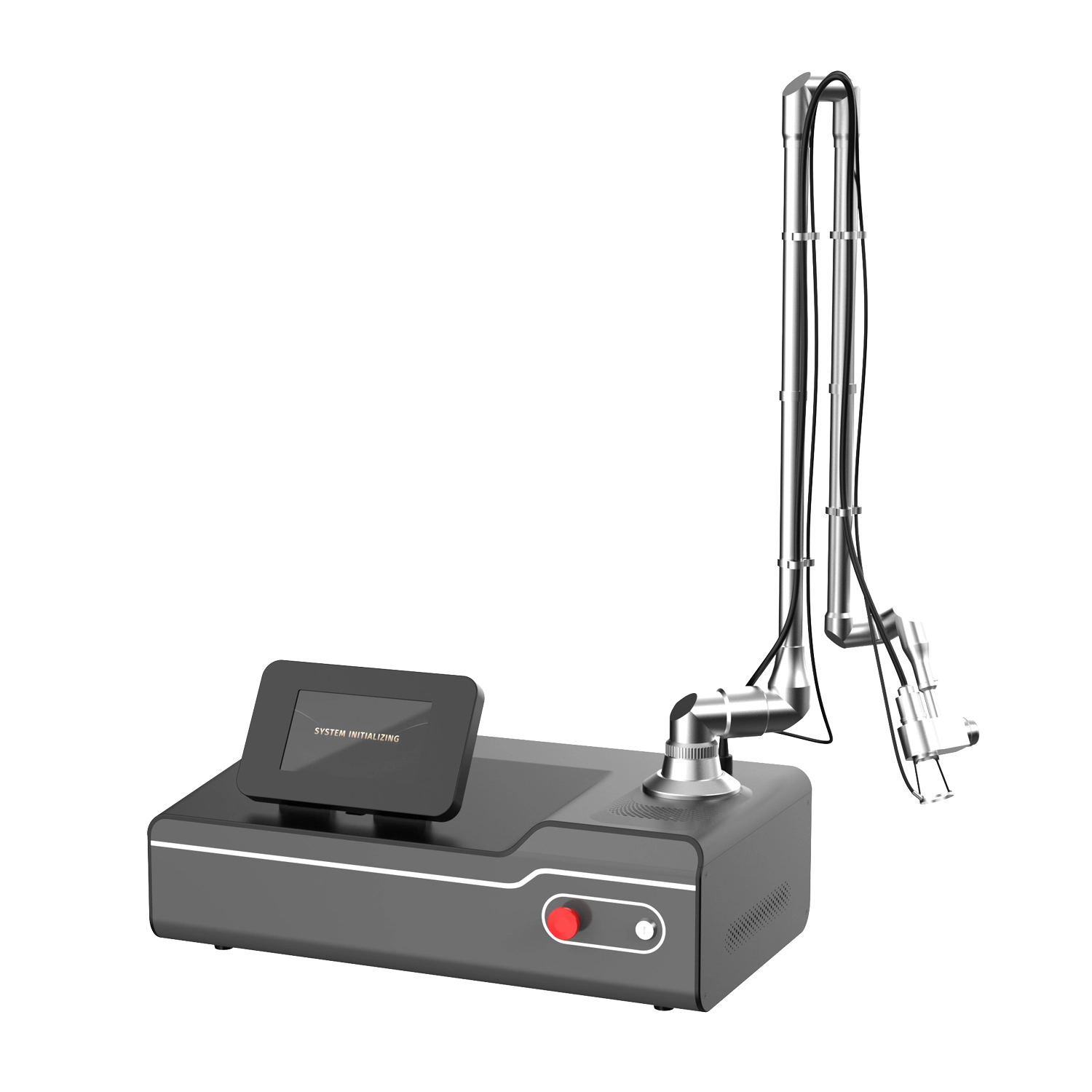
Professional CO2 Fractional Laser Machine for Skin Resurfacing & Scar Treatment
The CO2 Fractional Laser Machine is a professional CO2 fractional laser machine designed for advanced skin resurfacing, scar treatment, and skin rejuvenation procedures.
Using 10,600nm CO2 fractional laser technology, the system delivers controlled microthermal zones into the skin, stimulating collagen remodeling while preserving surrounding tissue. This fractional approach significantly improves treatment safety, recovery time, and clinical outcomes.
The CO2 fractional laser machine is widely used in dermatology clinics and medical aesthetic centers for treating acne scars, wrinkles, enlarged pores, stretch marks, and various skin texture concerns.
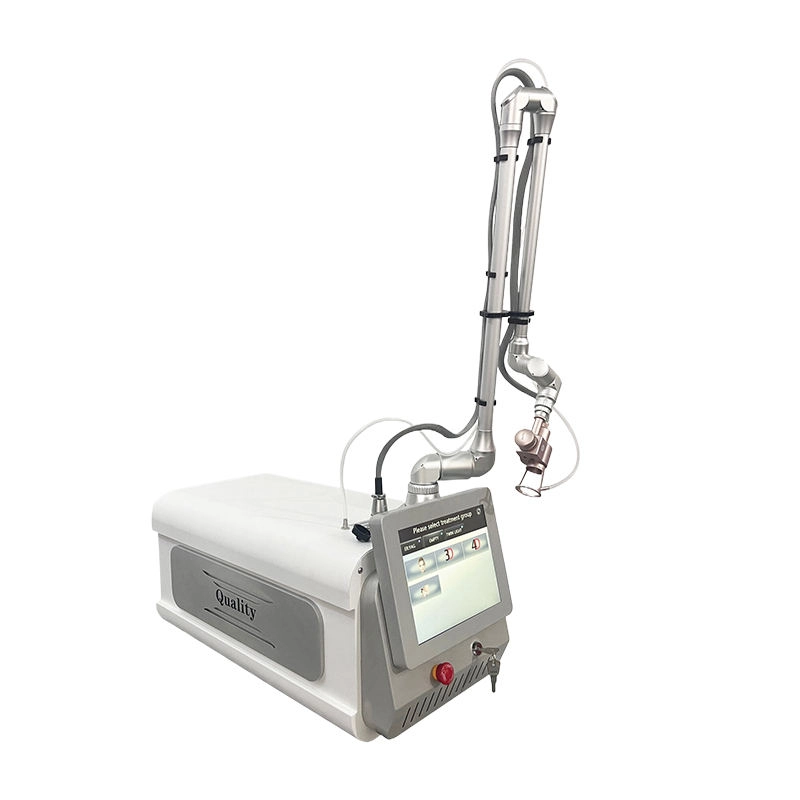
Professional CO2 Fractional Laser Machine | Fractional & Vaginal Rejuvenation CO2 Laser System
The CO2 fractional laser machine is a professional medical-grade device designed for deep skin resurfacing, wrinkle reduction, scar repair, and vaginal rejuvenation. Using a 10600 nm fractional CO2 laser beam, it creates micro-thermal columns on the skin to stimulate collagen regeneration and accelerate skin healing.
This CO2 fractional laser machine provides multiple treatment modes, including fractional mode, surgical cutting mode, and optional vaginal tightening mode, making it ideal for dermatology clinics and professional beauty centers seeking advanced laser solutions.
Its high precision, adjustable spot size, stable energy output, and seven-joint articulated arm ensure safe, accurate, and effective treatment results with minimal downtime.
Get more information
If you have any comments or good suggestions, please leave us a message; later our professional staff will contact you as soon as possible.
Let's Talk
Stay in touch with us for cutting-edge beauty solutions, professional guidance, and customized service.
Contact


Room 307, Building A, Huilong International E-commerce Industrial Park, No. 10 Xipengling Road, Helong Street, Baiyun District, Guangzhou, China
© 2025 HUIMAIN. All Rights Reserved. Privacy Policy | Terms and Conditions | Sitemap
Facebook
Instagram
Medical beauty equipment factory
huimain Medical beauty equipment factory
beauty machine supplier
Whatsapp: +8619124004543