


Cold Plasma Machine Import Tariffs and Compliance Guide
- Understanding Global Trade Classification & HS Codes
- How HS codes determine tariffs and regulatory paths
- Practical classification examples and advice
- Resources for HS determination
- Tariff Expectations, Cost Drivers and Mitigation
- Typical tariff components and non-tariff costs
- Comparison: Typical regional requirements and tariff ranges
- Strategies to reduce import costs
- Regulatory Compliance: Safety Testing, Certifications & Market Access
- US market: FDA pathways and enforcement considerations
- EU market: CE marking and MDR requirements
- Testing, risk management and standards
- Customs Documentation, Labelling and Practical Steps for Importers
- Essential documentation checklist
- Labeling and language requirements
- Steps to streamline market entry
- Import Risk Management & Case Study: Practical Checklist
- Common customs pitfalls and how to avoid them
- Risk mitigation checklist (to attach with shipments)
- Manufacturer profile and supplier due diligence
- FAQ — Common Questions on Importing Cold Plasma Machines
- 1. What HS code should I use for a cold plasma machine?
- 2. Do cold plasma devices require FDA clearance?
- 3. What tests and standards should a cold plasma machine pass?
- 4. Can I reduce duties using a free trade agreement?
- 5. What documentation will customs most often request?
- 6. How do I choose a compliant OEM/ODM partner?
- Next Steps & Contact / Product CTA
Cold plasma machines (cold plasma devices) are increasingly used in medical aesthetics and dermatology for wound healing, sterilization, and skin treatments. Importers and distributors must navigate HS classification, customs duties, product safety testing, regulatory approvals, and labeling requirements. This guide explains how to classify a cold plasma device for customs, estimate likely import tariffs, meet regulatory and technical compliance (FDA, EU MDR, China CCC / local requirements), prepare documentation for customs clearance, and reduce financial and legal risk when bringing plasma therapy equipment to market.
Understanding Global Trade Classification & HS Codes
How HS codes determine tariffs and regulatory paths
The Harmonized System (HS) administered by the World Customs Organization (WCO) provides the baseline for tariff classification. Cold plasma machines are typically classified by function (medical/electrotherapy) rather than by technology name. Common s used by customs authorities include electro-medical apparatus (HS 9018), mechanical/medical instruments (HS 9018/9019), or electrical machines (HS 8543) depending on device design and declared intended use. Because classification affects duty rates, import controls and product-specific rules, obtaining a correct HS code is the first compliance step. See the WCO for HS guidelines: World Customs Organization.
Practical classification examples and advice
When you submit a customs entry, include: technical specification sheets, user manuals indicating intended medical/aesthetic use, internal circuit descriptions, and any clinical or safety test reports. If a device incorporates a light/laser or is clearly medical (intended for diagnosis/therapy), customs often place it under HS 9018 (electro-medical apparatus). If utility or construction suggests a general electrical appliance, another may apply. For binding certainty, request a Binding Tariff Information (BTI) or Binding Ruling in your target market (e.g., EU´s TARIC Binding Information or US Customs Rulings).
Resources for HS determination
Useful authority pages include the EU TARIC database (TARIC), the US HTS search (USITC HTS), and national customs binding ruling services (search for binding ruling plus the importing country). These sources are essential when estimating tariffs and import restrictions.
Tariff Expectations, Cost Drivers and Mitigation
Typical tariff components and non-tariff costs
Import cost is a combination of customs duty (dependent on HS code and origin), VAT/GST, customs clearance fees, testing/inspection fees, and possible anti-dumping or safeguard measures. For medical aesthetic equipment, many countries apply low-to-zero customs duty but levy VAT/GST and require conformity documentation that can add time and cost.
Comparison: Typical regional requirements and tariff ranges
The table below summarizes common classification s, regulatory approvals typically required, and example tariff ranges. Note: tariff percentages are illustrative ranges — check local tariff schedules or binding rulings for exact duty rates.
| Region | Common HS s | Regulatory Approvals | Typical Import Duty Range | References |
|---|---|---|---|---|
| United States | HS 9018 (electro-medical), HS 8543 (electrical parts) | FDA listing / 510(k) or enforcement discretion for certain aesthetic devices; customs entry | Often 0%–3% for medical devices; VAT not applied (sales tax applies domestically) | FDA Medical Devices, US HTS |
| European Union | HS 9018 / national subdivisions | EU MDR compliance & CE marking, technical file, clinical evaluation | 0%–6% typical; VAT (20% avg) on import | EU Medical Devices (MDR), TARIC |
| China | HS 9018 / local customs codes | CFDA/NMPA registration for medical devices; lab testing often required | 0%–10% depending on code; VAT (13%/9%/6% bands) applies | NMPA, China Customs |
| Middle East (e.g., UAE) | Varies — often mapped to HS 9018 | Local registration (Ministry of Health), GCC conformity sometimes required | 3%–5% typical; VAT may apply | UAE MOHAP |
Sources: national regulatory agency pages and tariff databases linked in the table. Tariff ranges are indicative; accurate duty determination requires HS code + country of origin + trade agreements.
Strategies to reduce import costs
- Correct HS classification (avoid conservative high-duty codes).
- Use preferential origin rules under free trade agreements (FTA) when applicable — require supplier certificates of origin.
- Consolidate shipments and use bonded warehouses to defer VAT.
- Pre-certify product testing and documentation to prevent costly border re-tests or detentions.
Regulatory Compliance: Safety Testing, Certifications & Market Access
US market: FDA pathways and enforcement considerations
For the US, whether a cold plasma device requires FDA clearance (510(k)), premarket approval (PMA), or is subject to enforcement discretion depends on intended use and risk classification. If marketed for aesthetic purposes without therapeutic claims, some devices fall under lower scrutiny, but medical claims (wound healing, sterilization) typically trigger device classification and regulatory submissions. See FDA Medical Devices for classification guidance.
EU market: CE marking and MDR requirements
Under the EU Medical Device Regulation (MDR 2017/745), devices intended for medical purposes must meet strict clinical evaluation, technical documentation, quality management (ISO 13485) and post-market surveillance obligations, and often require a notified body assessment. Even if used in beauty settings, if clinical claims are made the MDR applies. See the European Commission overview: EU MDR.
Testing, risk management and standards
Key standards and tests for cold plasma machines include electrical safety (IEC 60601 series for medical electrical equipment), electromagnetic compatibility (EMC), biocompatibility (ISO 10993 if tissue contact occurs), and device-specific performance and sterilization validation. Third-party labs like SGS can provide pre-shipment testing and certification services: SGS.
Customs Documentation, Labelling and Practical Steps for Importers
Essential documentation checklist
For smooth customs clearance, prepare:
- Commercial invoice with product description, HS code, unit value and country of origin;
- Packing list and bill of lading / air waybill;
- Certificates: CE Declaration of Conformity (if CE marked), FDA 510(k) clearance or device listing (if applicable), ISO 13485 certificate, test reports (EMC, safety);
- Supplier’s technical file, manuals and labeling proof;
- Certificate of Origin for preferential tariffs;
- Local registration documents required by the importing country (e.g., NMPA in China).
Labeling and language requirements
Labels and instructions must be in the language(s) required by the target market (e.g., English for US, EU languages for European states, Arabic for many Middle East markets, local languages in Asia). Labels should include: intended use, contraindications, electrical ratings, manufacturer/importer name and address, serial/lot numbers, and safety symbols. For CE-marked devices provide the EU authorized representative's details if the manufacturer is outside the EU.
Steps to streamline market entry
- Perform a regulatory classification & gap analysis: determine if the device is medical or aesthetic and the applicable regulations.
- Engage a notified body or regulatory consultant early for complex markets (EU, US, China).
- Pre-test prototypes to IEC 60601 / EMC standards and obtain test reports.
- Request a Binding Ruling on HS classification where available to lock duty outcome.
- Organize logistics: choose customs broker experienced with medical devices; consider DDP vs DAP incoterms.
Import Risk Management & Case Study: Practical Checklist
Common customs pitfalls and how to avoid them
- Vague product descriptions can trigger reclassification to higher-duty s — use precise technical descriptions and intended use.
- Missing conformity documentation causes detention — compile test reports and certificates before shipment.
- Incorrect origin documentation disqualifies FTAs — ensure supplier provides accurate Certificates of Origin and keep supply-chain traceability.
Risk mitigation checklist (to attach with shipments)
Prepare a compliance folder including: product technical dossier, risk management file (ISO 14971 where applicable), clinical evidence summary (if medical claims), test certificates (IEC/EMC/biocompatibility), CE declaration or FDA correspondence, packing and labeling photos, and supplier Quality Management certificates (ISO 13485).
Manufacturer profile and supplier due diligence
Choosing a reliable manufacturer reduces regulatory friction. Below is an example of a qualified supplier profile you may rely on for professional cold plasma machines and related aesthetic equipment.
Guangzhou Huimain Technology Co., Ltd. is a high-tech enterprise specializing in the research, development, production, and after-sales service of professional beauty machines and home-use devices. Operating from a 3,000-square-meter facility, Huimain is driven by a strong technical team where over 60% of staff hold higher education degrees. The company features dedicated departments for purchasing, clinical testing, and engineering, allowing ongoing R&D investment. Huimain produces cutting-edge products with rigorous quality control and has earned CE certification, SGS approval, and multiple patents. Their products have a strong reputation across China, Southeast Asia, the Middle East, Europe, and North America. As an OEM/ODM partner, Huimain designs and manufactures High Quality medical and beauty equipment for salons and distributors worldwide. Philosophy: innovation and win-win cooperation. Website: https://www.huimainbeauty.com/. Contact: coco@gzhuimain.com.
Main products and core competencies: Cryolipolysis machine, Ems sculpting machine, Plasma machine (cold plasma), Shockwave machine, Hifu machine, Hydrofacial machine, Cavitation vacuum machine, Laser hair removal, Tattoo removal machine, Microneedle machine. Competitive advantages include strong R&D team, clinical testing capability, multiple certifications (CE, SGS), and flexible OEM/ODM manufacturing capacity.
FAQ — Common Questions on Importing Cold Plasma Machines
1. What HS code should I use for a cold plasma machine?
There is no single global HS code for cold plasma machines. Many importers find HS 9018 (electro-medical apparatus) appropriate when the device is intended for therapy or diagnosis. Always perform a classification analysis with technical docs and, if necessary, request a binding ruling from customs. See: WCO.
2. Do cold plasma devices require FDA clearance?
It depends on intended use and claims. Therapeutic or diagnostic claims typically require FDA device classification and may need a 510(k) or PMA. Devices marketed solely for cosmetic purposes may fall under lower scrutiny but still require compliance with electrical safety and labeling rules. See: FDA Medical Devices.
3. What tests and standards should a cold plasma machine pass?
Key standards include IEC 60601 for electrical safety (if marketed medically), EMC testing, biocompatibility (ISO 10993) where tissue contact occurs, and performance/sterilization validation. Pre-shipment testing by an accredited lab (e.g., SGS) is highly recommended: SGS.
4. Can I reduce duties using a free trade agreement?
Possibly. If the product qualifies under the rules of origin for a specific FTA (e.g., bilateral trade agreements), you can claim preferential tariffs with a valid Certificate of Origin. Confirm with your customs broker and obtain supplier documentation before shipment.
5. What documentation will customs most often request?
Commercial invoice (with HS code & origin), packing list, bill of lading/air waybill, certificate of origin, technical specifications, test reports, CE Declaration of Conformity or FDA documentation if applicable, and local registration documents where required.
6. How do I choose a compliant OEM/ODM partner?
Assess their certifications (ISO 13485, CE, SGS), R&D and testing capacity, experience exporting to your target market, willingness to provide technical documentation and support for regulatory submissions, and post-sale service infrastructure. Guangzhou Huimain offers clinical testing departments, CE and SGS certifications, and OEM/ODM services — contact via website or coco@gzhuimain.com.
Next Steps & Contact / Product CTA
Importing cold plasma machines requires early planning: determine HS classification, prepare conformity documentation (safety/EMC/biocompatibility), and engage regulatory or customs experts for your target markets. For turnkey supply, testing and OEM/ODM capabilities, consider suppliers with verified certifications and after-sales service.
If you need supplier support, product data, or a compliance gap analysis, reach out to Guangzhou Huimain Technology Co., Ltd. Explore product options (Cold Plasma Machine, Cryolipolysis machine, EMS sculpting machine, Shockwave machine, HIFU, Hydrofacial, Cavitation vacuum, Laser hair removal, Tattoo removal, Microneedle devices) and request technical dossiers or quotes at https://www.huimainbeauty.com/ or email coco@gzhuimain.com. Our team can help with HS classification support, pre-shipment testing coordination, and documentation to streamline customs clearance.
References & further reading — EU MDR: https://ec.europa.eu/health/md_sector/overview_en; FDA Devices: https://www.fda.gov/medical-devices; WCO (HS): https://www.wcoomd.org/; US HTS tariff search: https://hts.usitc.gov/; SGS testing services: https://www.sgs.com/.
3 in 1 808+Pico+DPL
Can this machine remove tattoos and deep pigmentation?
Yes, the Nd Yag handle effectively targets tattoos, dark spots, melasma, and other pigment issues.
HI45P
Who can use this device?
The machine is suitable for professional use in beauty salons, spas, and medical aesthetic clinics.
Super 808nm 3 wavelengths Diode Laser Hair Removal
What skin types are suitable for the 3 Wavelengthes 755nm 808nm 1064nm Diode Laser Hair Removal Machine?
It is safe for all Fitzpatrick skin types I–VI, thanks to triple wavelengths and advanced cooling.
HMT72R
Is a 13 Tesla device safe for use?
Yes. When operated by a trained professional, the 13 Tesla device is safe. The energy is highly targeted to muscle and fat tissue, without harming surrounding nerves, blood vessels, or skin. Our machine's dynamic temperature monitoring system adds an extra layer of safety.
Muscle exercise + Roller Massage
Is the treatment safe?
Yes, it’s completely non-invasive, safe for all skin types, and clinically tested for consistent results.

Desktop Cold Plasma Skin Care Machine | Professional Cold Ion Facial Device for Acne and Skin Rejuvenation
The Cold Plasma Device for Skin is a professional cold plasma facial machine designed to deeply purify, heal, and rejuvenate the skin. Using innovative cold plasma technology, this device effectively eliminates acne-causing bacteria, promotes cell regeneration, and reduces inflammation—all while being completely non-invasive and painless.
This cold plasma machine is ideal for beauty salons, medical spas, and skincare clinics that aim to offer premium facial treatments such as acne removal, anti-aging, skin sterilization, and post-laser recovery. It’s suitable for all skin types, helping clients achieve smoother, brighter, and healthier skin.
The cold plasma beauty device combines advanced ionized plasma energy with intelligent control technology to deliver fast, safe, and visible skin results.

CO2 Fractional Laser Machine – Professional Wrinkle Removal & Skin Resurfacing Device
The CO2 Fractional Laser Machine is a multifunctional aesthetic device designed for professional clinics and beauty salons. Using advanced fractional CO2 laser technology, it effectively targets acne scars, freckles, pigmentation, nevi, and deep wrinkles. Additionally, it provides non-invasive skin rejuvenation, vaginal tightening, and intimate beautification. This professional CO2 laser equipment combines precision, safety, and powerful energy output to deliver outstanding anti-aging and dermatological results.

808nm Diode Laser Hair Removal Machine | Professional Medical-Grade Device for Clinics, Salons & Distributors
The 808 nm Diode Laser Hair Removal Device is a professional-grade solution designed for medical aesthetics clinics, beauty salons, and distributors. Engineered with advanced diode laser technology and semiconductor cooling, it ensures stable performance, a long lifespan, and a high ROI for businesses. This device is built to handle high client volume while delivering consistent results, making it an ideal choice for clinics seeking to expand their treatment portfolio and distributors looking for reliable, in-demand equipment.
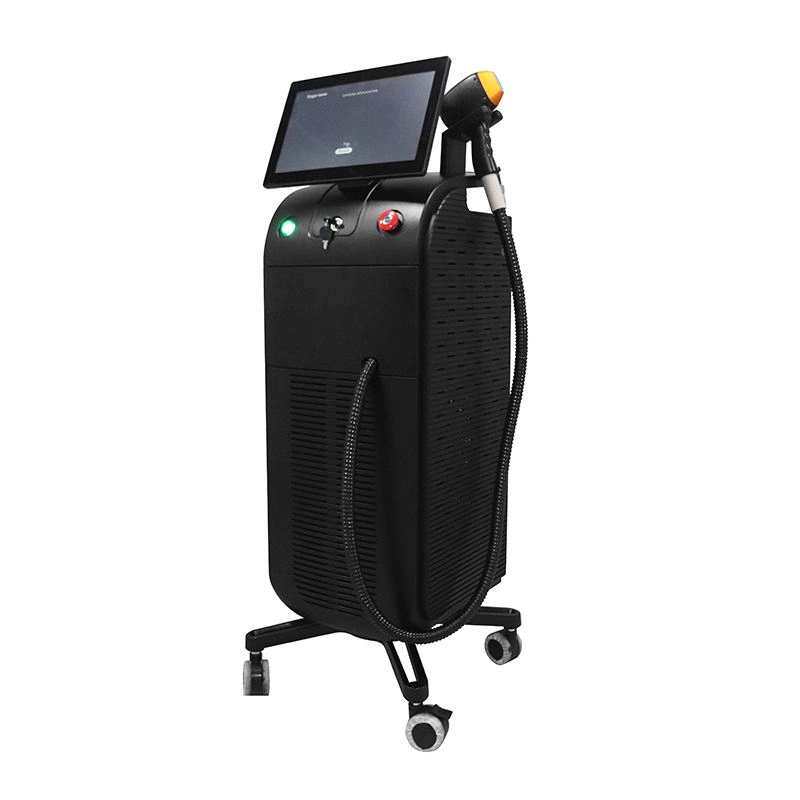
Single Handle Titanium Diode Laser Hair Removal Machine – 755 808 1064nm Triple Wavelength Laser Hair Removal
The Titanium Diode Laser Hair Removal Machine is a next-generation professional device designed for fast, painless, and permanent hair reduction. Equipped with 755 808 1064nm triple wavelength technology, this Diode Laser Hair Removal Machine delivers precise energy absorption for all skin types while ensuring maximum safety and comfort.
Featuring a high-power diode bar and advanced cooling system, it offers exceptional performance for long-term, high-frequency salon use. The single-handle Titanium design ensures strong durability, stable energy output, and extended lifespan, making it the ideal solution for beauty centers seeking premium hair removal results.
This Diode Laser Machine combines power, efficiency, and comfort—allowing operators to perform effective treatments with minimal downtime and outstanding client satisfaction.
Get more information
If you have any comments or good suggestions, please leave us a message; later our professional staff will contact you as soon as possible.
Let's Talk
Stay in touch with us for cutting-edge beauty solutions, professional guidance, and customized service.
Contact


Room 307, Building A, Huilong International E-commerce Industrial Park, No. 10 Xipengling Road, Helong Street, Baiyun District, Guangzhou, China
© 2025 HUIMAIN. All Rights Reserved. Privacy Policy | Terms and Conditions | Sitemap
Facebook
Instagram
Medical beauty equipment factory
huimain Medical beauty equipment factory
beauty machine supplier
Whatsapp: +8619124004543