


Cold Plasma Machine Maintenance Checklist for Clinics
- Essential Maintenance Practices for Cold Plasma Devices
- Why proper maintenance matters for clinics
- Key performance indicators to monitor
- Daily and Weekly Maintenance Checklist
- Daily pre-clinic start-up checks (before first patient)
- Post-procedure and weekly cleaning
- Monthly, Quarterly and Annual Procedures
- Monthly preventive maintenance
- Quarterly and annual service tasks
- Troubleshooting, Calibration and Recordkeeping
- Common issues and immediate responses
- Calibration, validation and performance testing
- Recordkeeping & documentation
- Maintenance Responsibility Matrix & Safety Considerations
- Who should do what: clinical staff vs biomedical vs manufacturer
- Safety, infection control and patient communication
- Maintenance schedule table (frequency and responsibility)
- Partnering with Suppliers and Guangzhou Huimain Technology Co., Ltd.
- Choosing service contracts and spare parts strategy
- About Guangzhou Huimain Technology Co., Ltd. — capabilities and advantages
- Closing checklist & recommended best practices
- Short daily checklist (printable)
- Policy recommendations for clinic managers
- FAQs
- 1. How often should a Cold Plasma Machine be calibrated?
- 2. Can clinic staff perform repairs on Cold Plasma Machines?
- 3. What disinfectants are safe to use on Cold Plasma Machines?
- 4. How long do typical consumables (electrodes/filters) last?
- 5. What should I do if the device shows an error code during treatment?
- 6. Are there regulatory standards I should follow?
- References
Essential Maintenance Practices for Cold Plasma Devices
Why proper maintenance matters for clinics
Cold Plasma Machine maintenance is critical for patient safety, treatment consistency, regulatory compliance, and protecting your clinic's equipment investment. Poor upkeep increases infection risk, produces inconsistent clinical outcomes, shortens device lifespan, and may void warranties or fail inspections. Clinics must treat Cold Plasma Machines like other medical devices—with documented cleaning, inspection, calibration, and service cycles aligned to manufacturer instructions and local regulations.
Key performance indicators to monitor
Track metrics that reflect device health and clinical performance: output stability (energy/fluence where applicable), treatment reproducibility (session-to-session variance), consumable usage (electrodes, tubing), number of sterilization cycles, downtime incidents, and adverse event reports. Logging these KPIs helps identify degradation trends early and justify proactive replacements or service contracts.
Daily and Weekly Maintenance Checklist
Daily pre-clinic start-up checks (before first patient)
Perform a standardized pre-start checklist every day to ensure safe operation. Key tasks include:
- Visual inspection of handpieces, electrodes, cables and connectors for wear, cracks, or contamination.
- Power-on self-test and error-message verification following the device user manual.
- Confirm calibration indicators or status lights show ‘ready’ (or perform quick built-in calibration as instructed).
- Check consumables inventory (disposable electrodes, filters) to avoid mid-day shortages.
Post-procedure and weekly cleaning
After each patient, follow manufacturer-recommended cleaning and disinfection steps. For weekly tasks, perform deeper cleaning and functionality checks:
- Detailed cleaning of housings and non-electrical surfaces with approved disinfectants (refer to CDC guidance for healthcare equipment disinfection).
- Inspect and clean air intakes, filters, and ventilation grills; replace filters if visually soiled or per schedule.
- Run a weekly functional test: simulate a treatment (no patient) to confirm stable plasma generation and monitor device logs for abnormal variations.
Monthly, Quarterly and Annual Procedures
Monthly preventive maintenance
Monthly checks should dig deeper into mechanical and consumable health:
- Replace single-use consumables; rotate stock for expiry dates.
- Inspect electrode surfaces with magnification for micro-damage which can alter plasma characteristics.
- Review device log files and KPI trends for drift in output parameters.
Quarterly and annual service tasks
Quarterly tasks typically include software updates and intermediate calibration; annual maintenance is more comprehensive:
- Quarterly: perform preventive firmware/software updates (after validation), review staff competency, and refresh SOPs.
- Annual: full calibration by certified biomedical engineer or manufacturer-certified technician, electrical safety testing (IEC 60601 where applicable), and replacement of wear parts per life-cycle guidance.
Troubleshooting, Calibration and Recordkeeping
Common issues and immediate responses
Common problems include unstable plasma output, abnormal noises, error codes, and connector faults. Basic rapid-response steps:
- Isolate the device: stop treatment and remove patient safely.
- Document the error code and symptoms in the device log and maintenance log.
- Attempt device restart per manual. If error persists, tag the unit 'Out of Service' and schedule service.
Calibration, validation and performance testing
Cold Plasma Machines often require validation of output parameters (e.g., voltage, current, reactive species concentration proxies) to ensure clinical equivalence across sessions. Calibration schedule should follow manufacturer specification or a risk-based plan if not specified. Use calibrated test equipment traceable to national standards for electrical parameters; where direct measurement of reactive species is impractical, monitor surrogate markers such as discharge current/voltage stability and treatment reproducibility.
Recordkeeping & documentation
Maintain a robust, auditable maintenance log including:
- Daily checklists (signed by operator)
- Service tickets and parts replacements
- Calibration certificates and test reports
- Adverse-event and deviation reports
Electronic maintenance management systems (CMMS) improve traceability and reminders for scheduled actions, aiding compliance during inspections.
Maintenance Responsibility Matrix & Safety Considerations
Who should do what: clinical staff vs biomedical vs manufacturer
Divide responsibilities by expertise level. Clinical staff perform daily checks and cleaning; trained biomedical engineers handle calibration, electrical safety tests and internal repairs; manufacturer or authorized service agents should perform warranty-covered work, software updates, and complex repairs.
Safety, infection control and patient communication
Cold plasma devices contact or closely approach skin—strict infection control is essential. Follow standard precautions and local infection prevention policies. Documented cleaning procedures and staff training help reassure patients and reduce risk. If a device is taken out of service, inform scheduled patients promptly and reschedule or refer as necessary.
Maintenance schedule table (frequency and responsibility)
| Task | Frequency | Responsible | Notes |
|---|---|---|---|
| Visual inspection & power-on check | Daily | Clinic operator | Before first patient; log sign-off |
| Surface cleaning & disinfection | After each patient / Weekly deep clean | Clinic staff | Use approved disinfectants; follow IFU |
| Consumable replacement | Per-use or Monthly | Clinic inventory manager | Track expiry dates |
| Functional output test | Weekly / Monthly | Clinic biomedical/technician | Record output parameters |
| Calibration & electrical safety test | Annual (or per IFU) | Manufacturer/Cert. engineer | Maintain calibration certificates |
| Software/Firmware updates | Quarterly or as released | Manufacturer/Biomed | Validate after update |
Partnering with Suppliers and Guangzhou Huimain Technology Co., Ltd.
Choosing service contracts and spare parts strategy
Service contracts with the device manufacturer or certified third-party provider reduce downtime and ensure genuine parts and validated repairs. Evaluate contracts on response time, parts coverage, and included calibration. Keep a small on-site stock of common consumables (e.g., disposable electrodes, filters) and one emergency spare critical module if budget allows.
About Guangzhou Huimain Technology Co., Ltd. — capabilities and advantages
Guangzhou Huimain Technology Co., Ltd. is a high-tech company specializing in beauty machines and home-use device series, with strengths across R&D, production, sales, and after-sale service. The company operates a ~3000 m2 facility and a skilled team where over 20% hold bachelor degrees and over 40% have junior college degrees. Huimain has a strong technical development department with experienced engineers, professional purchasing and clinical testing departments, and a responsive after-sale service team.
Huimain invests continually in R&D to produce new products aligned to market demand. The company holds CE certification, SGS approvals, and multiple product patents. Their distribution spans China, Southeast Asia, the Middle East, Europe, and North America, earning positive feedback for quality and pricing.
Core products and competitive strengths:
- Main products: Cryolipolysis machine, EMS sculpting machine, Plasma machine, Shockwave machine, HIFU machine, Hydrofacial machine, Cavitation vacuum machine, Laser hair removal, Tattoo removal machine, Micro-needle machine.
- Competitive edges: OEM/ODM capabilities, strong R&D and engineering team, clinical testing support, CE & SGS compliance, global sales network, and robust after-sale service.
For clinics seeking reliable Cold Plasma Machines, Huimain can provide tailored OEM/ODM solutions, training, maintenance packages, and spare parts supply—reducing clinic risk and improving uptime.
Closing checklist & recommended best practices
Short daily checklist (printable)
- Visual check of equipment and accessories
- Power-on and self-test (no error codes)
- Confirm consumables available and within expiry
- Log any anomalies and sign off
Policy recommendations for clinic managers
- Adopt manufacturer IFU as the baseline for maintenance policy; supplement with clinic-specific SOPs.
- Use CMMS to schedule and document preventive maintenance and track KPIs.
- Train multiple staff members on daily checks to avoid single-point failure.
- Establish a service contract with guaranteed response times and parts availability.
FAQs
1. How often should a Cold Plasma Machine be calibrated?
Follow the manufacturer’s Instructions for Use (IFU). If unspecified, annual calibration and electrical safety testing by a certified technician is a common, risk-based practice. More frequent calibration may be needed if you observe output drift or clinical inconsistencies.
2. Can clinic staff perform repairs on Cold Plasma Machines?
Clinic staff should limit actions to cleaning, consumable replacement, and basic troubleshooting. Internal electronic repairs or component replacements should be done by the manufacturer or certified biomedical engineers to avoid safety risks and warranty voidance.
3. What disinfectants are safe to use on Cold Plasma Machines?
Use disinfectants listed in the device IFU. For external surfaces, EPA-registered hospital disinfectants or those recommended by CDC are commonly acceptable; avoid corrosive agents on electrodes and connectors. Always verify compatibility with manufacturer guidance.
4. How long do typical consumables (electrodes/filters) last?
Consumable life varies by product and usage intensity. Some electrodes are single-use, others are multi-session with manufacturer-specified lifespans. Filters generally follow a monthly or manufacturer-recommended schedule. Track actual usage and replace at first sign of wear.
5. What should I do if the device shows an error code during treatment?
Immediately stop treatment and remove the patient safely. Consult the device manual for the specific error code, document the event, and attempt safe restart procedures only as permitted by IFU. If the error persists, tag the device out of service and contact technical support.
6. Are there regulatory standards I should follow?
Yes—follow local regulations for medical devices and applicable international standards (e.g., IEC 60601 for electrical safety, ISO 13485 for quality management in medical devices). Ensure CE marking or local regulatory approvals are current for your region.
If you need tailored maintenance scheduling, training for staff, spare parts, or service contracts, contact Guangzhou Huimain Technology Co., Ltd. to discuss product options, OEM/ODM capabilities, and maintenance plans. View our product lineup and request a quote to ensure your Cold Plasma Machine delivers safe, consistent clinical results.
References
- CDC — Guideline for Disinfection and Sterilization in Healthcare Facilities. https://www.cdc.gov/infectioncontrol/guidelines/disinfection/ (accessed 2024-01-10).
- European Commission — CE Marking. https://ec.europa.eu/growth/single-market/ce-marking_en (accessed 2024-01-10).
- ISO — ISO 13485 Medical devices — Quality management systems. https://www.iso.org/standard/59752. (accessed 2024-01-10).
- SGS — About Us. https://www.sgs.com/en/about (accessed 2024-01-10).
- Wikipedia — Cold plasma. https://en.wikipedia.org/wiki/Cold_plasma (accessed 2024-01-10).
- WHO — Infection prevention and control. https://www.who.int/teams/integrated-health-services/infection-prevention-control (accessed 2024-01-10).
Contact & CTA: For product details, maintenance packages, or to request clinical testing and OEM/ODM services for Cold Plasma Machines, reach out to Guangzhou Huimain Technology Co., Ltd. Visit our website or contact our sales and after-sale service team to get a custom maintenance plan and quotation tailored to your clinic needs.
10-in-1 cavitation vacuum machine
How long is each treatment session?
A full-body session typically lasts 30–60 minutes depending on the treatment settings.
HMT 42 R
What is an RF EMS Sculpting Machine?
The RF EMS Sculpting Machine is a non-invasive body sculpting machine that combines Radio Frequency (RF) technology with Electromagnetic Muscle Stimulation (EMS). It reduces fat, tones muscles, and tightens skin for visible body contouring results.
808nm Diode Laser
What kind of training is provided?
We offer online training, user manuals, and technical support, ensuring quick onboarding for clinic staff.
HMT72R
Is a 13 Tesla device safe for use?
Yes. When operated by a trained professional, the 13 Tesla device is safe. The energy is highly targeted to muscle and fat tissue, without harming surrounding nerves, blood vessels, or skin. Our machine's dynamic temperature monitoring system adds an extra layer of safety.
EMS Sculpting vs. Cryolipolysis
Which machine should I invest in first?
If your clients primarily want to eliminate bulk fat (like "love handles"), choose a cryolipolysis machine. If they want muscle tone, core strengthening, or if you want a machine with zero consumable costs, start with an ems body sculpt machine.

Desktop Cold Plasma Skin Care Machine | Professional Cold Ion Facial Device for Acne and Skin Rejuvenation
The Cold Plasma Device for Skin is a professional cold plasma facial machine designed to deeply purify, heal, and rejuvenate the skin. Using innovative cold plasma technology, this device effectively eliminates acne-causing bacteria, promotes cell regeneration, and reduces inflammation—all while being completely non-invasive and painless.
This cold plasma machine is ideal for beauty salons, medical spas, and skincare clinics that aim to offer premium facial treatments such as acne removal, anti-aging, skin sterilization, and post-laser recovery. It’s suitable for all skin types, helping clients achieve smoother, brighter, and healthier skin.
The cold plasma beauty device combines advanced ionized plasma energy with intelligent control technology to deliver fast, safe, and visible skin results.

CO2 Fractional Laser Machine – Professional Wrinkle Removal & Skin Resurfacing Device
The CO2 Fractional Laser Machine is a multifunctional aesthetic device designed for professional clinics and beauty salons. Using advanced fractional CO2 laser technology, it effectively targets acne scars, freckles, pigmentation, nevi, and deep wrinkles. Additionally, it provides non-invasive skin rejuvenation, vaginal tightening, and intimate beautification. This professional CO2 laser equipment combines precision, safety, and powerful energy output to deliver outstanding anti-aging and dermatological results.
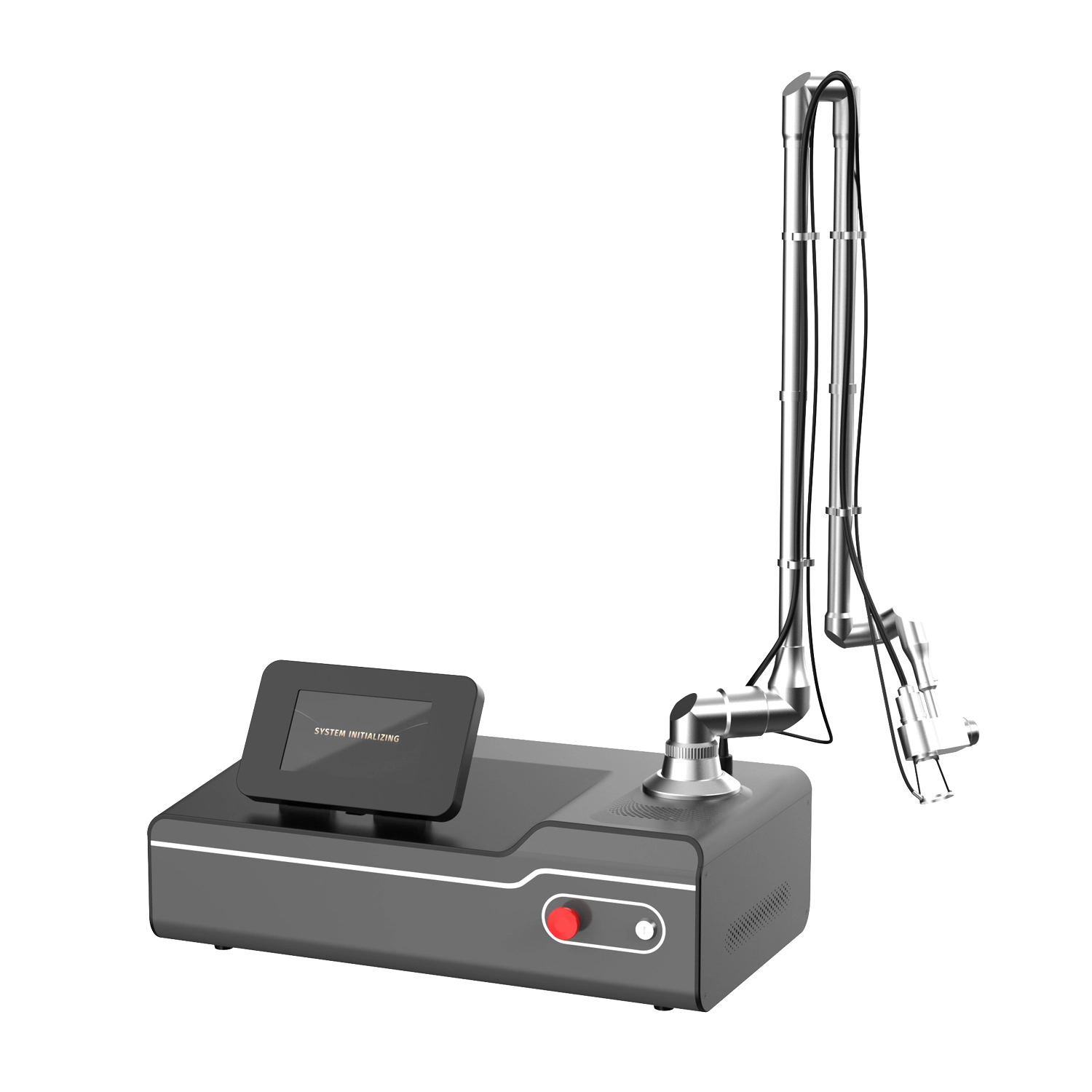
Professional CO2 Fractional Laser Machine for Skin Resurfacing & Scar Treatment
The CO2 Fractional Laser Machine is a professional CO2 fractional laser machine designed for advanced skin resurfacing, scar treatment, and skin rejuvenation procedures.
Using 10,600nm CO2 fractional laser technology, the system delivers controlled microthermal zones into the skin, stimulating collagen remodeling while preserving surrounding tissue. This fractional approach significantly improves treatment safety, recovery time, and clinical outcomes.
The CO2 fractional laser machine is widely used in dermatology clinics and medical aesthetic centers for treating acne scars, wrinkles, enlarged pores, stretch marks, and various skin texture concerns.
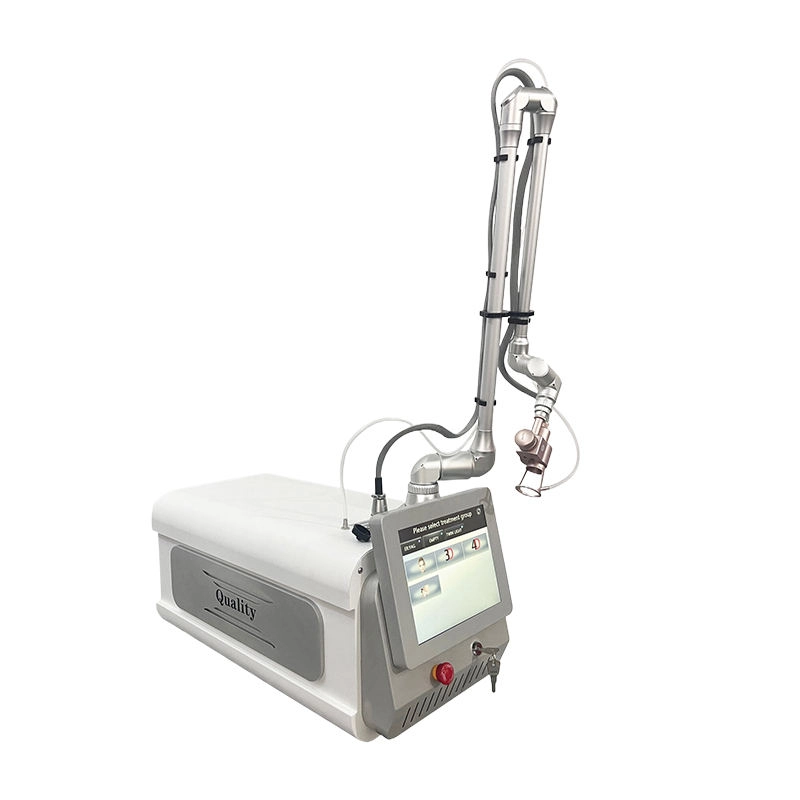
Professional CO2 Fractional Laser Machine | Fractional & Vaginal Rejuvenation CO2 Laser System
The CO2 fractional laser machine is a professional medical-grade device designed for deep skin resurfacing, wrinkle reduction, scar repair, and vaginal rejuvenation. Using a 10600 nm fractional CO2 laser beam, it creates micro-thermal columns on the skin to stimulate collagen regeneration and accelerate skin healing.
This CO2 fractional laser machine provides multiple treatment modes, including fractional mode, surgical cutting mode, and optional vaginal tightening mode, making it ideal for dermatology clinics and professional beauty centers seeking advanced laser solutions.
Its high precision, adjustable spot size, stable energy output, and seven-joint articulated arm ensure safe, accurate, and effective treatment results with minimal downtime.
Get more information
If you have any comments or good suggestions, please leave us a message; later our professional staff will contact you as soon as possible.
Let's Talk
Stay in touch with us for cutting-edge beauty solutions, professional guidance, and customized service.
Contact


Room 307, Building A, Huilong International E-commerce Industrial Park, No. 10 Xipengling Road, Helong Street, Baiyun District, Guangzhou, China
© 2025 HUIMAIN. All Rights Reserved. Privacy Policy | Terms and Conditions | Sitemap
Facebook
Instagram
Medical beauty equipment factory
huimain Medical beauty equipment factory
beauty machine supplier
Whatsapp: +8619124004543