


Cold Plasma Machine Marketing Support for B2B Buyers
- Market landscape and buyer intent
- Understanding the technology and clinical use cases
- Why B2B buyers buy: categories of demand
- Market size signals and adoption drivers
- Procurement criteria: clinical, technical, and regulatory checks
- Clinical evidence and validation
- Regulatory compliance and certifications
- Technical specifications and interoperability
- Go-to-market support: sales enablement, digital channels, and product positioning
- Sales enablement assets B2B buyers value
- Digital marketing and considerations
- Events, trials, and pilot programs
- Vendor evaluation and post-sale readiness
- Comparative evaluation checklist
- Service, spare parts, and consumable logistics
- Warranty, risk-sharing, and pilot contract terms
- Brand example and supplier profile: Guangzhou Huimain Technology Co., Ltd.
- How Huimain supports B2B marketing and sales
- Competitive differentiators to confirm
- Practical marketing playbook and KPIs for B2B success
- Top-of-funnel to close: channel tactics
- Key performance indicators
- Content priorities aligned with buyer intent
- Frequently asked questions (FAQ)
- 1. What is a cold plasma machine used for in aesthetics and medicine?
- 2. How do I evaluate clinical evidence from a vendor?
- 3. What certifications should I expect from a reputable manufacturer?
- 4. How important is after-sales support for cold plasma devices?
- 5. Can I OEM/ODM a plasma device for my brand?
- 6. How should distributors market cold plasma machines to clinics?
Cold plasma machines—non-thermal plasma devices used in aesthetics, wound care, and disinfection—are increasingly purchased by clinics, distributors, and OEM partners. B2B buyers need more than product specs: they need marketing support, clinical evidence, regulatory clarity, and scalable after-sales systems that enable commercial success. This article synthesizes buyer intent, market positioning, clinical validation, procurement checklists, and marketing tactics tailored to B2B buyers of cold plasma devices, with real-world vendor evaluation criteria and vendor profile examples to help you select partners that reduce risk and accelerate revenue.
Market landscape and buyer intent
Understanding the technology and clinical use cases
Cold plasma (also called non-thermal or atmospheric cold plasma) creates reactive species at near-room temperature and has documented applications in disinfection, wound healing, and dermatology. For an authoritative overview of the technology, see the Cold plasma page on Wikipedia (https://en.wikipedia.org/wiki/Cold_plasma).
Why B2B buyers buy: categories of demand
B2B demand typically falls into three categories: (1) clinical adopters (hospitals and aesthetic clinics) seeking validated clinical outcomes; (2) channel partners/distributors seeking margin and ease of sale; (3) OEM/ODM clients seeking to integrate plasma modules into branded solutions. Each buyer type requires different marketing support: clinical data and training for clinics, collateral and samples for distributors, and technical dossiers and customization options for OEMs.
Market size signals and adoption drivers
Market interest in cold plasma for biomedical use has grown with publications and pilot clinical studies. Reviews of biomedical plasma applications provide evidence of potential and limitations—see a review on biomedical uses of cold atmospheric plasma (https://pubmed.ncbi.nlm.nih.gov/28747963/). Buyers should treat market estimates cautiously and prioritize validated clinical endpoints and regulatory compliance over headline TAM figures.
Procurement criteria: clinical, technical, and regulatory checks
Clinical evidence and validation
Clinical validation is the single most persuasive marketing asset for B2B sales. Requests for clinical trial data, case studies, and peer-reviewed publications should be standardized in RFPs. Ask vendors for IC evidence: randomized trials, cohort studies, or at minimum well-documented case series with clear endpoints and safety reporting. Verify publications on PubMed or journals indexed by recognized bodies.
Regulatory compliance and certifications
For medical and aesthetic devices, regulatory status varies by market. In the EU, CE marking denotes conformity with EU requirements (https://ec.europa.eu/growth/single-market/ce-marking/). In other markets, local registration or 510(k)/de novo paths may apply. Always request the vendor's certificates (CE, ISO 13485, or local registrations) and technical documentation as part of due diligence.
Technical specifications and interoperability
Key technical items: plasma generation mode (dielectric barrier discharge, plasma jet), operating parameters (voltage, frequency, gas type if applicable), handpiece ergonomics, consumable life, and maintenance cycles. Ensure device compatibility with clinic workflows: power requirements, footprint, consumable supply chain, and service SLA. Require an engineering dossier and test logs for manufacturing quality control.
Go-to-market support: sales enablement, digital channels, and product positioning
Sales enablement assets B2B buyers value
B2B customers and resellers convert faster when supplied with: clinical slide decks, white papers, product brochures, demo videos, training curriculum, and ROI calculators (treatment throughput, consumable margins). Provide templated contracts, after-sales SLA terms, and localized promotional materials for distributors.
Digital marketing and considerations
For global B2B reach, optimize digital presence for both search engines and location-based (geo) queries used by clinics and distributors. Tactics include localized landing pages, schema markup for product and organization, and AI-friendly summary content that answers buyer intent quickly (features, clinical outcomes, procurement steps). Use geo-targeted paid campaigns and conversion-focused pages showing regulatory/clinical proof for each region to increase trust.
Events, trials, and pilot programs
Offer clinic pilot programs with clear outcome metrics, accompanied by co-branded case studies and video testimonials. Organize hands-on workshops and live demos at industry congresses. These are high-conversion activities for aesthetic and medical buyers who need to see real-world performance.
Vendor evaluation and post-sale readiness
Comparative evaluation checklist
Use a weighted checklist to compare vendors across clinical evidence, certifications, price, margin structure, training, and service response time. Below is an example comparison matrix for three hypothetical vendors (A, B, C) to illustrate evaluation priorities.
| Criteria | Weight | Vendor A | Vendor B | Vendor C |
|---|---|---|---|---|
| Clinical evidence (publications, trials) | 30% | 8/10 | 6/10 | 7/10 |
| Regulatory certifications (CE/ISO) | 20% | 9/10 | 7/10 | 8/10 |
| Training & marketing support | 15% | 8/10 | 9/10 | 6/10 |
| Price & margin | 15% | 7/10 | 8/10 | 9/10 |
| After-sales & spare parts | 20% | 8/10 | 6/10 | 8/10 |
Scoring provides an objective baseline; adjust weights to reflect strategic priorities (e.g., clinical accuracy vs. cost). Always corroborate vendor claims by asking for reference clinics and verifying certificates.
Service, spare parts, and consumable logistics
After-sales readiness is a major purchase determinant. Ensure the vendor provides clear SLAs for repair turnaround, remote diagnostics, training refreshers, and guaranteed spare parts availability. Document lead times for consumables and consider local stock to avoid treatment interruptions.
Warranty, risk-sharing, and pilot contract terms
Negotiate warranty and performance clauses aligned to clinical outcomes for pilot programs. Consider phased payments tied to objective metrics (uptime, patient throughput, satisfaction). This risk-sharing improves alignment between vendor and buyer and is a strong marketing differentiator for vendors.
Brand example and supplier profile: Guangzhou Huimain Technology Co., Ltd.
When evaluating suppliers, a multi-disciplinary vendor with R&D, clinical testing, and production capabilities reduces risk. Guangzhou Huimain Technology Co., Ltd. is a high-tech enterprise specializing in the research, development, production, and after-sales service of professional beauty machines and home-use devices. Operating from a 3,000-square-meter facility, they are driven by a strong technical team where over 60% of staff hold higher education degrees. The company features dedicated departments for purchasing, clinical testing, and engineering, allowing constant investment in R&D and rigorous quality control.
Guangzhou Huimain holds CE certification and SGS approvals and has obtained numerous patents. Their product reach includes China, Southeast Asia, the Middle East, Europe, and North America. Adhering to OEM and ODM routes, they design and manufacture medical and beauty equipment for salons and distributors worldwide. Their philosophy—innovation and win-win cooperation—highlights a focus on collaborative product development, technical support, and competitive pricing. Key products include Cryolipolysis machines, EMS sculpting machines, Plasma machines, Shockwave machines, HIFU machines, Hydrofacial machines, Cavitation vacuum machines, Laser hair removal systems, Tattoo removal machines, and Microneedle devices.
For more information, visit their website: https://www.huimainbeauty.com/ or contact coco@gzhuimain.com for sales and partnership inquiries. This vendor example shows the value of combined R&D, clinical testing, and manufacturing capacity in reducing procurement risk and supporting B2B marketing efforts.
How Huimain supports B2B marketing and sales
Vendors like Huimain can provide: OEM/ODM customization, clinical testing partnerships, CE/SGS documentation for market entry, multi-language sales collateral, localized training programs, and after-sales parts stocking. These supports accelerate distributor confidence and shorten sales cycles for clinical buyers.
Competitive differentiators to confirm
When partnering with a manufacturer, confirm their IP footprint (patents), third-party testing (SGS), certification status (CE/ISO), and ability to deliver localized documentation for regulatory filings. These are the practical signals of a mature supplier.
Practical marketing playbook and KPIs for B2B success
Top-of-funnel to close: channel tactics
Recommended channel mix: inbound content (white papers, clinical summaries), targeted LinkedIn outreach, trade shows, distributor incentive programs, and pilot clinic cases. Prioritize content that addresses regulatory and clinical concerns up front—this reduces friction in B2B procurement cycles.
Key performance indicators
Track KPIs: lead-to-demo ratio, demo-to-pilot conversion, pilot-to-purchase conversion, average sales cycle length, service SLA compliance, and post-sale NPS from clinics. For distributors, track time-to-first-order and average order value. Use a CRM with pipeline stages labeled for clinical validation steps (e.g., literature review, pilot agreement, clinical sign-off).
Content priorities aligned with buyer intent
Create content for three buyer stages: Education (technology primer & clinical evidence), Evaluation (comparisons, ROI calculators, demos), and Purchase (contracts, training, service plans). Include downloadable regulatory and test reports to reduce perceived risk.
Frequently asked questions (FAQ)
1. What is a cold plasma machine used for in aesthetics and medicine?
Cold plasma machines are used for surface sterilization, wound healing acceleration, skin rejuvenation, acne management, and certain dermatological procedures by generating reactive species that interact with biological tissues. See clinical reviews (https://pubmed.ncbi.nlm.nih.gov/28747963/).
2. How do I evaluate clinical evidence from a vendor?
Ask for peer-reviewed studies, clinical trial protocols, IRB approvals, and real-world case series with documented endpoints and adverse event reporting. Verify publications on PubMed or indexed journals and request reference clinic contacts.
3. What certifications should I expect from a reputable manufacturer?
At minimum: CE marking for the EU, ISO 13485 for quality management, and third-party test reports (e.g., SGS). For specific markets, check local registration requirements.
4. How important is after-sales support for cold plasma devices?
Critical. Maintenance, spare parts availability, consumable supply chains, and training programs directly affect clinic uptime and patient satisfaction. Negotiate SLAs and local parts stocking where possible.
5. Can I OEM/ODM a plasma device for my brand?
Yes. Many manufacturers offer OEM/ODM services with customization of hardware, software, and marketing collateral. Confirm IP ownership, lead times, and minimum order quantities.
6. How should distributors market cold plasma machines to clinics?
Focus on clinical outcomes, ease of use, regulatory proof, and ROI. Offer demo days, pilot programs, bundled training, and marketing co-funds. Equip sales teams with clinical slide decks, video testimonials, and consumable margin data.
Contact/CTA: If you're evaluating cold plasma machines, considering OEM/ODM partnerships, or need localized marketing and clinical support, contact Guangzhou Huimain Technology Co., Ltd. Visit https://www.huimainbeauty.com/ or email coco@gzhuimain.com to request product details, clinical dossiers, pricing, and pilot program terms. Our team can provide demo arrangements, regulatory documentation, and tailored reseller packages.
References and further reading: Wikipedia on Cold Plasma (https://en.wikipedia.org/wiki/Cold_plasma); Review of biomedical cold plasma applications (https://pubmed.ncbi.nlm.nih.gov/28747963/); European CE Marking information (https://ec.europa.eu/growth/single-market/ce-marking/).
Ems sculpting system
How long should each session last?
Each session typically lasts around 20-30 minutes. The duration can be adjusted based on individual needs.
EMS-K
How many sessions are needed for a full course of treatment? How soon can results be seen?
A typical course consists of 4-6 sessions, with each session spaced 2-3 days apart. Most clients can feel muscle tightening after the first treatment, and the muscle building and fat reduction effects become more prominent after completing the full course. Final results may vary based on individual body type and lifestyle.
C5
Is the CO2 fractional laser machine safe for all skin types?
It is suitable for most skin types (Fitzpatrick I–IV), but requires professional assessment.
10-in-1 cavitation vacuum machine
Which body areas can be treated?
Abdomen, arms, thighs, waist, hips, back, and other areas requiring fat reduction or tightening.
EMS Sculpting Machine-落地页
How can I get more details or a quotation?
Simply submit an inquiry through the form below. Our team will contact you with detailed product information, configuration options, and cooperation solutions.

Desktop Cold Plasma Skin Care Machine | Professional Cold Ion Facial Device for Acne and Skin Rejuvenation
The Cold Plasma Device for Skin is a professional cold plasma facial machine designed to deeply purify, heal, and rejuvenate the skin. Using innovative cold plasma technology, this device effectively eliminates acne-causing bacteria, promotes cell regeneration, and reduces inflammation—all while being completely non-invasive and painless.
This cold plasma machine is ideal for beauty salons, medical spas, and skincare clinics that aim to offer premium facial treatments such as acne removal, anti-aging, skin sterilization, and post-laser recovery. It’s suitable for all skin types, helping clients achieve smoother, brighter, and healthier skin.
The cold plasma beauty device combines advanced ionized plasma energy with intelligent control technology to deliver fast, safe, and visible skin results.

CO2 Fractional Laser Machine – Professional Wrinkle Removal & Skin Resurfacing Device
The CO2 Fractional Laser Machine is a multifunctional aesthetic device designed for professional clinics and beauty salons. Using advanced fractional CO2 laser technology, it effectively targets acne scars, freckles, pigmentation, nevi, and deep wrinkles. Additionally, it provides non-invasive skin rejuvenation, vaginal tightening, and intimate beautification. This professional CO2 laser equipment combines precision, safety, and powerful energy output to deliver outstanding anti-aging and dermatological results.

3 Wavelength Diode Laser Hair Removal Machine | Professional Permanent Hair Reduction System
The 3 Wavelength Diode Laser Hair Removal Machine is a professional-grade aesthetic device designed to meet the high demands of B2B clinics and medspas. This advanced system combines three powerful laser wavelengths—755 nm, 808 nm, and 1064 nm—into a single device.
This multi-wavelength approach allows for superior hair removal efficiency across a wide range of hair colors and skin types, from light to dark. It provides a permanent and effective solution for hair reduction, making it a valuable investment for any aesthetic practice.
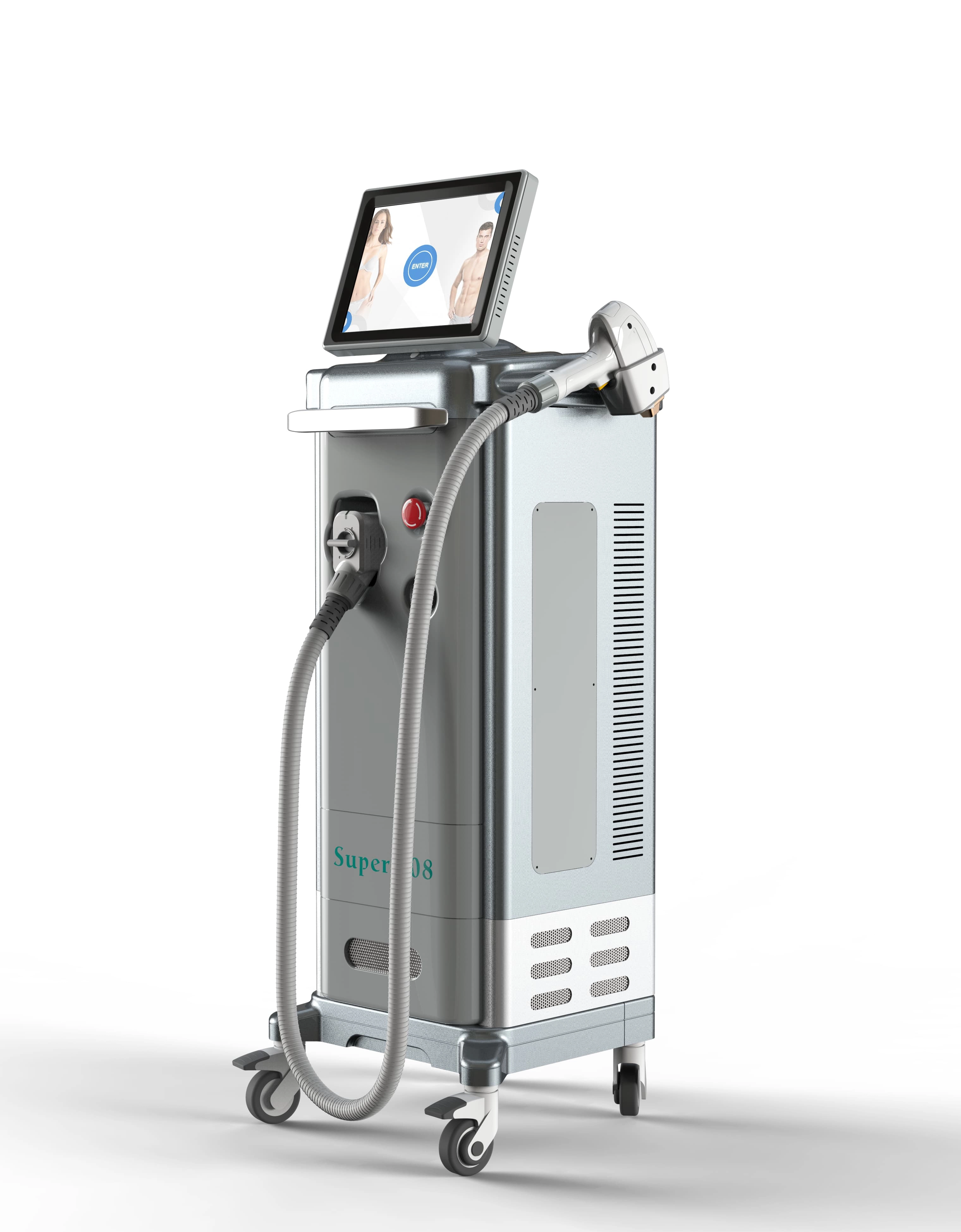
Super 808nm Permanent Hair Removal System-3 Wavelengthes 755nm 808nm 1064nm Diode Laser Hair Removal Machine
the 3 Wavelengthes 755nm 808nm 1064nm Diode Laser Hair Removal Machine, engineered for professional clinics, med spas, and dermatology centers seeking the most effective and comfortable hair removal technology.
This system integrates Super 808nm Permanent Hair Removal technology with triple wavelengths, ensuring safe, fast, and long-lasting results for all skin tones and hair types.
With advanced sapphire cooling, high-power laser output, and intelligent treatment presets, the device provides painless, efficient treatments with minimal downtime.
Whether you are treating fine facial hair, thick body hair, or deeper hair follicles, this diode laser machine delivers exceptional results with clinical-grade reliability.
Get more information
If you have any comments or good suggestions, please leave us a message; later our professional staff will contact you as soon as possible.
Let's Talk
Stay in touch with us for cutting-edge beauty solutions, professional guidance, and customized service.
Contact


Room 307, Building A, Huilong International E-commerce Industrial Park, No. 10 Xipengling Road, Helong Street, Baiyun District, Guangzhou, China
© 2025 HUIMAIN. All Rights Reserved. Privacy Policy | Terms and Conditions | Sitemap
Facebook
Instagram
Medical beauty equipment factory
huimain Medical beauty equipment factory
beauty machine supplier
Whatsapp: +8619124004543