


Cold Plasma Machine Packaging, Shipping and Logistics
- Understanding Cold Plasma Technology and Market Requirements
- What is a Cold Plasma Machine?
- Why packaging and logistics need device-specific planning
- Semantic anchor keywords to track user intent
- Packaging Best Practices for Cold Plasma Machines
- Primary, secondary and tertiary packaging strategy
- Materials, environmental controls and ESD protection
- Testing protocols and verification
- Shipping Regulations, Documentation and Logistics Planning
- Regulatory classifications and export controls
- Key documentation checklist
- Choosing carriers and international routes
- Risk Management, Insurance and After-Sales Logistics
- Risk assessment and mitigation strategies
- Insurance and claims handling
- Reverse logistics and spare parts planning
- Packaging & Shipping Case Study: Manufacturer Best Practices
- Quality systems and certification expectations
- Practical packing checklist for a 1-unit Cold Plasma Machine shipment
- Tracking product performance post-shipment
- Guangzhou Huimain Technology Co., Ltd. — Packaging, Production & After-Sale Strengths
- Company profile and competencies
- R&D, certifications and global reach
- Core products and OEM/ODM capabilities
- FAQs (Frequently Asked Questions)
- 1. How should Cold Plasma Machines be packaged for air freight?
- 2. Are Cold Plasma Machines classified as medical devices for customs?
- 3. What are the most common transit damages and how can they be prevented?
- 4. How do I choose between express courier and ocean freight?
- 5. What documentation should be included to avoid customs delays?
- 6. How should returns and repairs be handled across borders?
- Contact & Call to Action
Cold Plasma Machines (also called cold plasma devices, non-thermal plasma generators, or plasma sterilizers) are precision electro-medical and aesthetic systems that require dedicated packaging, handling and logistics strategies. This article summarizes essential technical, regulatory and operational considerations — from shock and vibration mitigation during transit, to customs documentation and last-mile delivery — so manufacturers, distributors and clinics can reduce damage, ensure compliance and protect product performance on arrival.
Understanding Cold Plasma Technology and Market Requirements
What is a Cold Plasma Machine?
Cold plasma refers to partially ionized gas where the electron temperature is high but the bulk gas remains near room temperature. In medicine and beauty, cold plasma machines (also called plasma pens, plasma applicators, or atmospheric plasma devices) are used for skin treatments, wound care, sterilization and surface modification because they deliver reactive species without thermal damage. For an authoritative primer on plasma medicine and the properties of cold plasma, see the Plasma medicine overview on Wikipedia (source).
Why packaging and logistics need device-specific planning
Compared with generic electronic goods, cold plasma systems combine high-voltage electronics, delicate gas/air-flow components (e.g., dielectric barrier discharge arrays, plasma nozzles), precision optics and often replaceable consumables. Poor packaging or mishandled logistics can cause:
- High-voltage component failure or arcing due to loose connectors;
- Contamination of plasma applicators and tubing affecting clinical performance;
- Loss of calibration and warranty claims from physical shocks or humidity exposure.
Identifying these unique failure modes helps define packaging materials, shock limits, humidity control and documentation required for cross-border shipping.
Semantic anchor keywords to track user intent
Cold plasma device, plasma generator, atmospheric plasma, plasma treatment equipment, plasma pen packaging, plasma sterilizer shipping, non-thermal plasma logistics, medical plasma device transport — these semantic terms reflect common s and are used throughout to help operators and supply chain managers find targeted guidance.
Packaging Best Practices for Cold Plasma Machines
Primary, secondary and tertiary packaging strategy
Use a three-layer approach:
- Primary packaging — protective housings, sealed applicator bags, ESD-safe covers that directly contact sensitive components and consumables.
- Secondary packaging — internal cushioning, compartmentalized foam, anti-vibration mounts and rigid trays to immobilize the device and accessories.
- Tertiary packaging — the outer shipping carton, palletization, and overpack for freight handling.
- Vibration and shock testing per ISTA 3A/3B profiles to simulate parcel and palletized freight;
- Drop tests (corner, edge, flat) following industry standards;
- Thermal and humidity cycling representative of expected routes;
- ESD and dielectric withstand tests post-packaging to ensure no damage during packing process.
- Commercial invoice with full device description, HS code, unit value and country of origin;
- Packing list detailing accessories and serial numbers;
- Certificate of Origin when required (for preferential trade agreements);
- CE certificate, test reports and user manual (for EU shipments);
- Export licenses for dual-use or controlled components (if applicable);
- Battery or gas cylinder declarations if included in the shipment.
- Use of tamper-evident seals and serialized packaging;
- Route selection to avoid extreme weather or high-damage corridors;
- Third-party inspection at origin and destination;
- Conditional acceptance policies and RMA procedures for returns.
- A spare parts kit shipped with initial order or stocked regionally;
- RMA workflows with diagnostics to triage repair vs. replacement;
- Certified repair centers or authorized service partners for local warranty support.
- Clean and sterilize applicators; seal in labeled anti-static bags;
- Secure cables/connectors with reusable ties and stowed in a dedicated compartment;
- Place unit in CNC-cut foam tray; add humidity indicator card and 2 silica gel sachets;
- Include user manual, quick-start guide and warranty card in a waterproof pouch;
- Close secondary box and apply fragile labels, shock-watch indicator if warranted;
- Use pallet or double-box outer packaging for international freight and affix export documentation pouch.
This layered design isolates shocks, controls micro-movements and keeps connectors and tubing strain-free during transit.
Materials, environmental controls and ESD protection
Recommended materials and specifications:
| Component | Recommended Material/Specification | Purpose |
|---|---|---|
| Inner trays | Closed-cell polyethylene (EPE) foam with custom CNC cutouts | Shock absorption, secure fit |
| ESD protection | Conductive foam, anti-static bags, AC grounding stickers | Protects high-voltage electronics and sensitive PCBs |
| Moisture control | Silica gel packs, desiccant pouches, humidity indicator cards | Prevents corrosion and humidity-induced damages |
| Outer carton | Double-walled corrugated box, rated for expected stacking loads | Resists compression and puncture |
| Sealing & labeling | Water-activated tape, fragile/this-side-up labels, handling instructions | Ensures consistent courier handling |
Design packaging to meet international transit test protocols (see ISTA standards) — more at ISTA (source).
Testing protocols and verification
Before mass shipments, perform:
Retain test reports as part of QA and for customs or insurance claims.
Shipping Regulations, Documentation and Logistics Planning
Regulatory classifications and export controls
Most cold plasma machines are classified as medical or aesthetic devices depending on intended use; classification affects customs HS codes, regulatory clearance and required documents. For export and air transport, consult IATA Dangerous Goods Regulations if devices contain batteries, gas cylinders or other regulated articles: IATA. For EU/CE-marked medical devices see the EU medical device regulations and declaration of conformity requirements.
Key documentation checklist
Choosing carriers and international routes
Decide shipping mode by weighing lead time, cost and risk:
| Mode | Pros | Cons | Best for |
|---|---|---|---|
| Express couriers (air) | Fast, door-to-door, good tracking | Higher cost, stricter hazardous goods rules | Small-volume urgent deliveries, replacement parts |
| Freight forwarder (air freight) | Cost-effective for pallets, fast transit | Requires customs broker, more handling | Bulk shipments with strict timelines |
| Ocean freight | Lowest cost per unit for large volumes | Slow transit times, humidity and condensation risk | Large production runs and non-urgent inventory |
For marine shipments consider humidity controls, desiccant regeneration and overpack to prevent condensation. Always pre-advise the consignee about local regulatory requirements for medical devices in the destination market.
Risk Management, Insurance and After-Sales Logistics
Risk assessment and mitigation strategies
Perform a formal risk assessment mapping threats (shock, theft, customs delays, environmental exposure) to controls. Practical mitigations include:
Insurance and claims handling
Ensure the cargo is insured for replacement value including lost profit and duty costs. Use an insurer familiar with medical device claims and keep pre-shipment photos, ISTA reports and packing lists to expedite claims. A clear claims SLA with carriers reduces dispute timelines.
Reverse logistics and spare parts planning
Cold plasma machines will need periodic consumables (nozzles, dielectric parts) and occasional repairs. Implement:
Packaging & Shipping Case Study: Manufacturer Best Practices
Quality systems and certification expectations
Manufacturers should maintain a documented quality management system (ISO 13485 for medical devices is standard in the industry) and hold CE marking where applicable. Documented packing instructions (PPIs), training records for packers and evidence of environmental testing should be part of the file for each product family.
Practical packing checklist for a 1-unit Cold Plasma Machine shipment
Tracking product performance post-shipment
Collect arrival condition photos and a short functionality checklist from the recipient before device commissioning. Track returns and failure modes to refine packaging and update ISTA test profiles over time.
Guangzhou Huimain Technology Co., Ltd. — Packaging, Production & After-Sale Strengths
Company profile and competencies
Guangzhou Huimain Technology Co., Ltd. is a high-tech company specializing in beauty machines and home-use machine series, with professional R&D, production, sales and after-sale service. The company occupies a 3000 square meter facility. More than 20% of staff hold bachelor’s degrees and over 40% have junior college degrees. Huimain has a strong technical development department, experienced engineers, PE experts, a professional purchasing department and a clinical test department, plus robust after-sales service.
R&D, certifications and global reach
With significant R&D investment, Huimain continuously develops new products aligned with market demand. The company has achieved CE certification and SGS approval and holds multiple patents. Products are sold worldwide — across China, Southeast Asia, the Middle East, Europe and North America — and are praised for high quality and competitive pricing.
Core products and OEM/ODM capabilities
Huimain focuses on beauty machine OEM and ODM development and production. Main products include Cryolipolysis machine, EMS sculpting machine, Plasma machine, Shockwave machine, HIFU machine, Hydrofacial machine, Cavitation vacuum machine, Laser hair removal, Tattoo removal machine and Microneedle machine. Strengths lie in innovation, quality control, and cooperative partnerships to design and produce high-quality medical and beauty machines suited to customer markets.
Huimain advantage summary: strong R&D and engineering resources, certified manufacturing (CE/SGS), patent portfolio, global distribution, and comprehensive after-sale support geared towards clinics and salons.
FAQs (Frequently Asked Questions)
1. How should Cold Plasma Machines be packaged for air freight?
Use ESD-safe inner packaging, CNC-cut foam trays to immobilize the unit, protective covers for applicators, desiccant and humidity indicator cards, and a double-walled outer carton. If batteries or gas cartridges are present, declare them and comply with IATA Dangerous Goods Regulations (IATA).
2. Are Cold Plasma Machines classified as medical devices for customs?
Classification depends on intended use and labeling. If marketed and labeled for therapeutic or clinical use, they normally fall under medical device regulations, affecting HS codes and import clearance. Manufacturers should provide CE certificates and declarations of conformity when shipping to the EU.
3. What are the most common transit damages and how can they be prevented?
Common damages: connector breakage, applicator contamination, PCB damage from shock, and moisture-related corrosion. Prevention: secure connectors, use sealed packaging for applicators, perform ISTA shock/vibration testing, and include desiccants and humidity indicators.
4. How do I choose between express courier and ocean freight?
If you need speed and door-to-door service for small volumes, express air freight is appropriate. For bulk orders where cost per unit is critical and lead times are flexible, ocean freight with appropriate humidity controls is more economical.
5. What documentation should be included to avoid customs delays?
Commercial invoice with detailed device description and HS code, packing list with serial numbers, CE certificate and test reports (if applicable), certificate of origin and any export licenses. Pre-clearance communications with consignee and customs broker reduce surprises.
6. How should returns and repairs be handled across borders?
Establish clear RMA procedures, provide prepaid return labels where possible, and use repaired-or-replaced agreements to avoid repeated cross-border duties. For long-term efficiency, maintain regional repair centers and spare parts inventory.
Contact & Call to Action
If you manufacture, distribute or operate Cold Plasma Machines and want tailored packaging, shipping or OEM/ODM manufacturing support, contact Guangzhou Huimain Technology Co., Ltd. for consultation, sample packaging designs, ISTA test reporting, and customized logistics solutions. View product range or request a quote for Cryolipolysis machines, EMS sculpting machines, Plasma machines and other beauty devices. For sales and technical inquiries, please reach out to Huimain to discuss packaging specifications, certifications and after-sales programs tailored to your market.
References: Plasma medicine overview — Wikipedia; ISTA packaging testing standards — ISTA; International Air Transport Association — IATA.
OL-153
What makes OL-153 different from other facial machines?
It combines Hydro Dermabrasion + Oxygen Spray + Water Oxygen Therapy in one system, delivering visible results and improved efficiency for salons and spas.
Ems sculpting system
Will I experience any pain while using this product?
EMS may cause mild discomfort during muscle stimulation, but it is completely safe and becomes comfortable once you get used to it. RF technology is painless.
About Support Service
What certifications do your products have?
Our machines are certified with CE, SGS, and comply with international safety standards. Some models hold utility/design patents.
EMS Sculpting Machine-落地页
How can I get more details or a quotation?
Simply submit an inquiry through the form below. Our team will contact you with detailed product information, configuration options, and cooperation solutions.
HF-61
Is the Hydrafacial Machine safe for sensitive skin?
Yes, it is safe for all skin types, including sensitive skin, as it uses non-invasive technologies.

Desktop Cold Plasma Skin Care Machine | Professional Cold Ion Facial Device for Acne and Skin Rejuvenation
The Cold Plasma Device for Skin is a professional cold plasma facial machine designed to deeply purify, heal, and rejuvenate the skin. Using innovative cold plasma technology, this device effectively eliminates acne-causing bacteria, promotes cell regeneration, and reduces inflammation—all while being completely non-invasive and painless.
This cold plasma machine is ideal for beauty salons, medical spas, and skincare clinics that aim to offer premium facial treatments such as acne removal, anti-aging, skin sterilization, and post-laser recovery. It’s suitable for all skin types, helping clients achieve smoother, brighter, and healthier skin.
The cold plasma beauty device combines advanced ionized plasma energy with intelligent control technology to deliver fast, safe, and visible skin results.

CO2 Fractional Laser Machine – Professional Wrinkle Removal & Skin Resurfacing Device
The CO2 Fractional Laser Machine is a multifunctional aesthetic device designed for professional clinics and beauty salons. Using advanced fractional CO2 laser technology, it effectively targets acne scars, freckles, pigmentation, nevi, and deep wrinkles. Additionally, it provides non-invasive skin rejuvenation, vaginal tightening, and intimate beautification. This professional CO2 laser equipment combines precision, safety, and powerful energy output to deliver outstanding anti-aging and dermatological results.
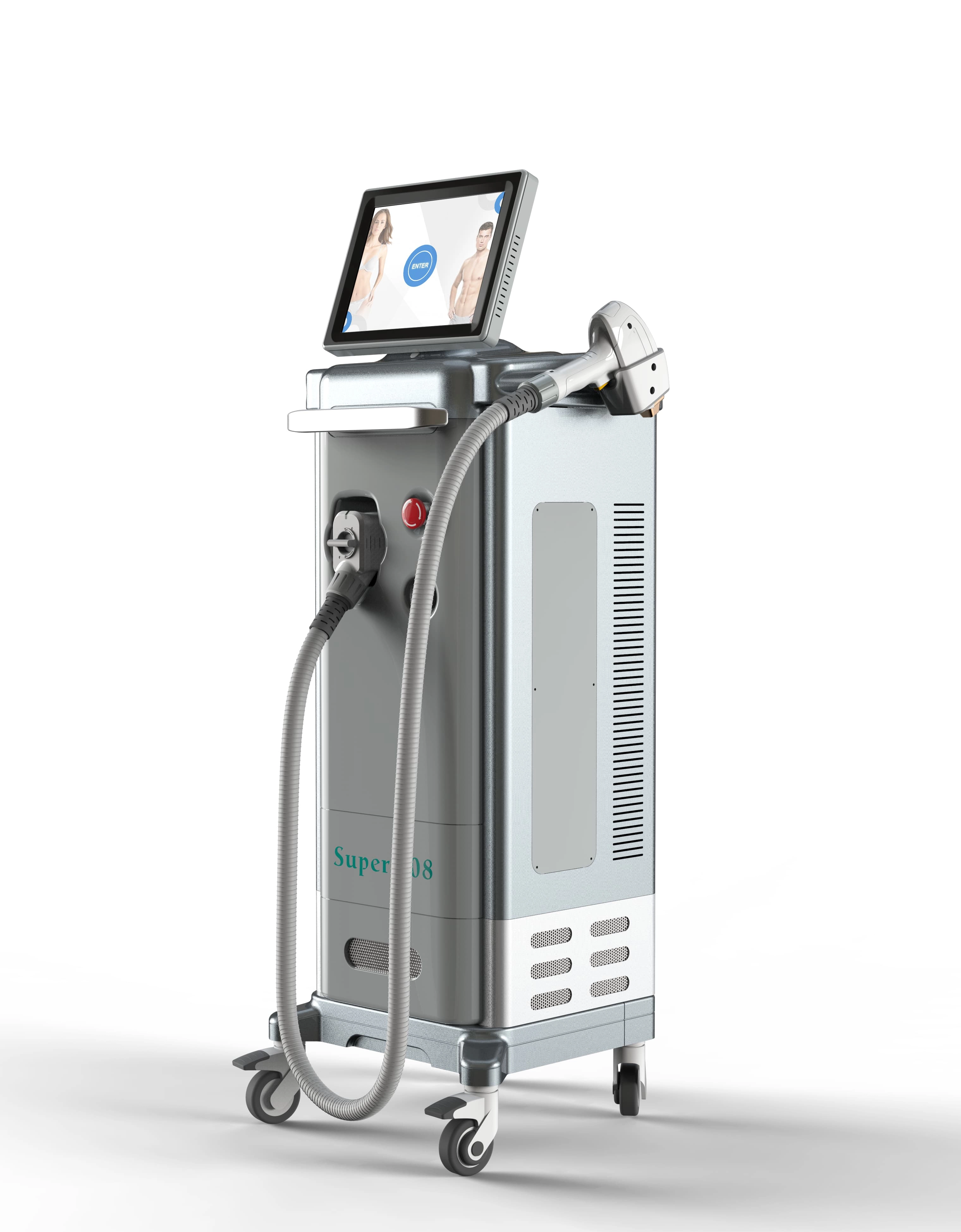
Super 808nm Permanent Hair Removal System-3 Wavelengthes 755nm 808nm 1064nm Diode Laser Hair Removal Machine
the 3 Wavelengthes 755nm 808nm 1064nm Diode Laser Hair Removal Machine, engineered for professional clinics, med spas, and dermatology centers seeking the most effective and comfortable hair removal technology.
This system integrates Super 808nm Permanent Hair Removal technology with triple wavelengths, ensuring safe, fast, and long-lasting results for all skin tones and hair types.
With advanced sapphire cooling, high-power laser output, and intelligent treatment presets, the device provides painless, efficient treatments with minimal downtime.
Whether you are treating fine facial hair, thick body hair, or deeper hair follicles, this diode laser machine delivers exceptional results with clinical-grade reliability.

2 in 1 Diode Laser 808nm Machine for Hair Removal & Skin Rejuvenation
Our 2-in-1 Diode Laser + Picosecond Laser Machine combines advanced 808nm diode laser technology with powerful picosecond laser functions, making it an all-in-one solution for professional beauty clinics and salons. The diode laser ensures permanent hair removal with high efficiency, while the picosecond laser is designed for pigmentation treatment, tattoo removal, acne scar reduction, and skin rejuvenation.
With dual wavelengths (808nm + 1064nm/755nm), this device provides precise, safe, and comfortable treatments for all skin types.
Get more information
If you have any comments or good suggestions, please leave us a message; later our professional staff will contact you as soon as possible.
Let's Talk
Stay in touch with us for cutting-edge beauty solutions, professional guidance, and customized service.
Contact


Room 307, Building A, Huilong International E-commerce Industrial Park, No. 10 Xipengling Road, Helong Street, Baiyun District, Guangzhou, China
© 2025 HUIMAIN. All Rights Reserved. Privacy Policy | Terms and Conditions | Sitemap
Facebook
Instagram
Medical beauty equipment factory
huimain Medical beauty equipment factory
beauty machine supplier
Whatsapp: +8619124004543