


Cold Plasma Machine Regulatory Compliance by Region
- Global regulatory landscape for aesthetic plasma devices
- Why classification matters
- Key international standards that inform compliance
- Regional regulatory requirements: comparative overview
- Interpreting classification by intended use
- Practical compliance implications
- Regulatory pathway: step-by-step checklist for manufacturers
- 1. Define intended use and target markets
- 2. Conduct risk management and standards gap analysis
- 3. Build the technical file / design dossier
- 4. Implement a QMS and pre-market testing
- 5. Engage with notified bodies / regulators early
- 6. Plan post-market obligations
- Clinical evidence, testing and typical pitfalls
- What regulators expect in clinical data
- Common pitfalls and how to avoid them
- Timelines and cost considerations
- Practical strategies for multi-region market entry
- Recommended market-entry sequencing
- Partnering, contract manufacturing and local representation
- Labeling, IFUs and claims management
- How Guangzhou Huimain Technology supports global compliance
- R&D, manufacturing and compliance strengths
- Product lines and competitive advantages
- How Huimain can help regulatory pathways
- FAQs
- 1. Are all cold plasma machines regulated as medical devices?
- 2. What international standards should I prioritize?
- 3. How much clinical data is needed?
- 4. Can CE certification speed up entry to other markets?
- 5. What are common post-market obligations?
- 6. How can I reduce time to market?
- Contact & product inquiry
- References
Global regulatory landscape for aesthetic plasma devices
Cold plasma machines sit at the intersection of aesthetic treatment and medical device regulation. Whether marketed for wound healing, skin rejuvenation, or cosmetic purposes, their regulatory path depends on intended use, risk profile, device design, and claims. This section gives an at-a-glance regional comparison and practical implications for manufacturers and distributors.
Why classification matters
Regulatory classification determines the conformity assessment route, documentation depth, clinical evidence expectations, and post-market obligations. A device labeled for medical treatment is almost always subject to stricter controls than one presented purely for cosmetic, non-therapeutic use.
Key international standards that inform compliance
Manufacturers typically must demonstrate compliance with quality and safety standards such as ISO 13485 (QMS), ISO 14971 (risk management), IEC 60601 series (electrical safety for medical electrical equipment), IEC 62304 (software lifecycle for medical device software), and relevant EMC standards (e.g., IEC 60601-1-2). These standards are commonly requested by regulators and notified bodies.
Regional regulatory requirements: comparative overview
Below is a concise comparison of major regulatory regimes. Use the table as a starting checklist; detailed obligations depend on device specifics and claims.
| Region | Regulator | Typical Classification | Key Requirements | Typical Timeline |
|---|---|---|---|---|
| United States | FDA (CDRH) | Class II (510(k)) or Class II/III (De Novo/PMA) depending on risk & claims | 510(k) submission or De Novo/PMA; clinical data may be required; QMS (21 CFR 820); labeling; MDV reporting | 6–18 months (510(k) faster; PMA longer) |
| European Union | MDR (EU 2017/745), Notified Bodies | Class IIa/IIb/III based on intended use and invasiveness | Conformity assessment via Notified Body, technical file, clinical evaluation/report (MDR), ISO 13485, post-market surveillance | 3–12+ months depending on NB capacity and class |
| United Kingdom | MHRA (UKCA) | Similar to EU MDR post-transition; UKCA marking required | Conformity assessment with UK rules; transitional provisions exist for EU CE holders | Varies; similar to EU |
| China | NMPA (formerly CFDA) | Class II/III for medical devices; cosmetic non-medical route for non-therapeutic claims | Registration dossier (technical documentation), local testing, clinical evaluation; device testing in NMPA-designated labs; local agent often required | 6–18 months |
| Australia | TGA | Class IIa/IIb/III | Conformity assessment, inclusion in ARTG, clinical evidence, QMS; may rely on CE/FDA evidence for some routes | 3–12 months |
| Canada | Health Canada | Class II/III/IV | Licensing (MDL), evidence of safety/effectiveness, QMS; Class II often requires device license only | 3–12 months |
| Japan | PMDA / MHLW | Class II/III/IV | Approval or certification pathways; local clinical data often required; Japanese-language dossier | 6–18 months |
| Korea | MFDS | Class II/III/IV | Technical dossier, local performance testing, potential clinical data; Korean labeling | 6–12 months |
Sources and specific requirements can change; always verify with local regulators or a regulatory consultant for your device and claims.
Interpreting classification by intended use
Examples: If a cold plasma device claims wound healing or bactericidal therapy, regulators may treat it as a medical device with higher classification. If it claims only cosmetic skin surface effects without therapeutic claims, it may be regulated as a cosmetic or low-risk device in some markets—but manufacturers must ensure claims, labeling, and marketing materials reflect that classification to avoid enforcement actions.
Practical compliance implications
Higher classification → more robust clinical evidence, regulated manufacturing system, and longer time-to-market. Start classification determination early and plan clinical and test programs accordingly.
Regulatory pathway: step-by-step checklist for manufacturers
Below is a practical, actionable roadmap to prepare a cold plasma machine for international markets.
1. Define intended use and target markets
Map claims (therapeutic vs cosmetic), user (professional vs home-use), target countries, and distribution channels. This determines applicable regulations and standards.
2. Conduct risk management and standards gap analysis
Perform ISO 14971-based risk analysis and identify applicable standards (IEC 60601 series, EMC, biocompatibility ISO 10993 if tissue contact, software standards if control software exists). Create a gap remediation plan.
3. Build the technical file / design dossier
Include device description, design drawings, risk management file, verification/validation reports, electrical and EMC test reports, usability/human factors studies, and clinical evidence. For EU, prepare a clinical evaluation report per MDR Annex XIV.
4. Implement a QMS and pre-market testing
ISO 13485-compliant QMS is often requested by regulators and notified bodies. Conduct biocompatibility, electrical safety, EMC, and performance testing in accredited labs. Document traceability and supplier controls.
5. Engage with notified bodies / regulators early
For EU/UK, pre-submission meetings with notified bodies can streamline review. For FDA, a pre-submission (Pre-Sub) meeting may clarify data expectations. For China, plan local testing and registration requirements in advance.
6. Plan post-market obligations
Establish vigilance systems (MDR/US Medical Device Reporting), post-market clinical follow-up (PMCF) for EU, complaint handling, and recall procedures. Determine local representation and labelling translations.
Clinical evidence, testing and typical pitfalls
Clinical and performance evidence is often the differentiator between approval and rejection. This section highlights what regulators commonly look for and frequent mistakes.
What regulators expect in clinical data
Expect controlled human studies demonstrating safety and intended effect consistent with claims. For low-risk cosmetic claims, bench and literature evidence may sometimes suffice, but authorities increasingly expect real-world safety data, especially for energy-based devices.
Common pitfalls and how to avoid them
- Underestimating classification — seek formal guidance early.
- Poorly aligned claims and evidence — ensure claims reflect the level of evidence available.
- Insufficient testing — EMC, leakage current, and biocompatibility testing frequently cause delays.
- Language and labeling errors — translate labels and IFUs correctly and include regulatory-required symbols.
Timelines and cost considerations
Costs vary widely based on device class, testing needs, and clinical trials. Typical outlays include testing lab fees (several thousand to tens of thousands USD), notified body or regulatory submission fees, and clinical study budgets (tens to hundreds of thousands USD). Build contingency time for iterations requested by regulators.
Practical strategies for multi-region market entry
Manufacturers looking to scale internationally should consider harmonized approaches and staged market entry.
Recommended market-entry sequencing
- Start with markets that align to your evidence level (e.g., markets accepting CE as a basis can be faster).
- Use CE/ISO 13485 as leverage for other markets (e.g., Australia, Canada accept evidence from recognized jurisdictions).
- Plan for local testing/translation requirements for APAC markets (China, Japan, Korea).
Partnering, contract manufacturing and local representation
Select manufacturing partners with demonstrated ISO 13485 systems and documented, tested device history. Appoint authorized representatives or local agents where required (e.g., EU AR, China local registration agent, UK Responsible Person).
Labeling, IFUs and claims management
Ensure instructions for use, promotional materials, and websites are consistent with approved claims. Overstating therapeutic benefits is a frequent enforcement trigger. Provide clear training documentation for professional devices and robust safety/labelling for home-use devices.
How Guangzhou Huimain Technology supports global compliance
Guangzhou Huimain Technology Co., Ltd. is a high-tech company in beauty machines and home-use machine series. The company is professional in research & development, production, sales, and after-sale service. Huimain possesses a 3000 m² facility; over 20% of staff hold bachelor’s degrees and more than 40% have junior college degrees. The company has a strong technical development department with experienced engineers, PE experts, a professional purchasing department, a clinical test department, and a robust after-sales service team.
R&D, manufacturing and compliance strengths
With strong R&D capability, Huimain invests continually in new product development according to market demand. The company reports CE certification and SGS approval and has earned several patents. Products sell globally across China, Southeast Asia, the Middle East, Europe, and North America. Huimain focuses on OEM and ODM for beauty and medical machines with the ability to design and produce high-quality units tailored to salon and clinical customers.
Product lines and competitive advantages
Key products: Cryolipolysis machine, EMS sculpting machine, Plasma machine, Shockwave machine, HIFU machine, Hydrofacial machine, Cavitation vacuum machine, Laser hair removal, Tattoo removal machine, Micro-needle machine. Huimain emphasizes technology innovation, competitive pricing, quality control, and win-win cooperation. For manufacturers seeking partners who already understand CE, SGS testing, and patent-protected designs, Huimain offers integrated support from design through after-sale service.
How Huimain can help regulatory pathways
Huimain’s clinical test department and experienced engineers can support performance testing, documentation for technical files, and iterative redesign to meet IEC/ISO standards. Their experience with CE and SGS helps accelerate conformity assessment, while OEM/ODM capabilities allow tailored labelling, IFUs, and language localization to meet regional requirements.
FAQs
1. Are all cold plasma machines regulated as medical devices?
Not always. Classification depends on intended use and claims. Devices claiming therapeutic effects (e.g., wound healing, infection control) are usually treated as medical devices. Devices making purely cosmetic claims with no medical intent may be regulated as cosmetics or low-risk devices in some jurisdictions—but manufacturers must align claims and supporting evidence.
2. What international standards should I prioritize?
Start with ISO 13485 (QMS), ISO 14971 (risk management), IEC 60601 series (electrical safety), IEC 62304 (software), and ISO 10993 for biocompatibility where relevant. These are commonly required or expected by regulators and notified bodies.
3. How much clinical data is needed?
It depends on risk class and claims. For medical claims higher-tier clinical trials or controlled studies may be required. For low-risk cosmetic claims, bench testing plus literature and real-world safety data may suffice. Always discuss expectations with the target regulator or notified body.
4. Can CE certification speed up entry to other markets?
Yes. CE (MDR) and ISO 13485 are recognized by many regulators and can be leveraged for markets like Australia and Canada, reducing duplication. However, markets like China, Japan, and the US have additional, specific requirements.
5. What are common post-market obligations?
Expect vigilance systems for adverse event reporting, periodic safety updates (e.g., EU PMS/PMCF), complaint handling, recalls, and device tracking for some classes. Maintain an incident response and corrective action system.
6. How can I reduce time to market?
Plan regulatory strategy early, align claims to your evidence, use harmonized standards, engage notified bodies/regulators early, and leverage existing certifications (ISO 13485, CE) as foundation for other markets.
Contact & product inquiry
For regulatory consulting, OEM/ODM partnerships, or to view product specifications (Cryolipolysis, EMS sculpting, Plasma, Shockwave, HIFU, Hydrofacial, Cavitation vacuum, Laser/Tattoo removal, Micro-needle machines), contact Guangzhou Huimain Technology Co., Ltd. Our team can help evaluate regulatory routes, prepare technical files, and support performance testing and localization.
References
- U.S. Food & Drug Administration (FDA) – Medical Devices. https://www.fda.gov/medical-devices (accessed 2026-01-10)
- European Parliament and Council – Regulation (EU) 2017/745 (MDR). https://eur-lex.europa.eu/eli/reg/2017/745/oj (accessed 2026-01-10)
- MHRA (UK) – Medical devices: guidance and regulation. https://www.gov.uk/government/organisations/medicines-and-healthcare-products-regulatory-agency (accessed 2026-01-10)
- NMPA (China National Medical Products Administration). http://www.nmpa.gov.cn/ (accessed 2026-01-10)
- Therapeutic Goods Administration (TGA) – Australia. https://www.tga.gov.au/ (accessed 2026-01-10)
- Health Canada – Medical devices. https://www.canada.ca/en/health-canada/services/drugs-health-products/medical-devices. (accessed 2026-01-10)
- Pharmaceuticals and Medical Devices Agency (PMDA) – Japan. https://www.pmda.go.jp/english/ (accessed 2026-01-10)
- Ministry of Food and Drug Safety (MFDS) – Korea. https://www.mfds.go.kr/eng/index.do (accessed 2026-01-10)
- ISO 13485 — Medical devices — Quality management systems. https://www.iso.org/standard/59752. (accessed 2026-01-10)
- ISO 14971 — Medical devices — Risk management. https://www.iso.org/standard/72704. (accessed 2026-01-10)
- IEC 60601 series — Medical electrical equipment safety standards (International Electrotechnical Commission). https://www.iec.ch/ (accessed 2026-01-10)
L50
Can this machine be used after liposuction?
Yes, it is widely used for post-operative swelling reduction and lymphatic drainage.
Onda B71台式冷波塑形仪
How many sessions are needed for fat reduction?
Most clients see visible results after 2–4 sessions, depending on treatment area and individual conditions.
G8按摩仪
How many treatments are needed to see results?
Most clients begin to see results after 4-6 treatments, with noticeable improvements in skin firmness and reduced cellulite.
OL-186
Can it be combined with other facial treatments?
Yes, it complements RF, LED, or mesotherapy treatments for enhanced effects.
HI45P
How many sessions are needed to see results?
Most clients notice visible results after 4–6 sessions, depending on body type and lifestyle.

Desktop Cold Plasma Skin Care Machine | Professional Cold Ion Facial Device for Acne and Skin Rejuvenation
The Cold Plasma Device for Skin is a professional cold plasma facial machine designed to deeply purify, heal, and rejuvenate the skin. Using innovative cold plasma technology, this device effectively eliminates acne-causing bacteria, promotes cell regeneration, and reduces inflammation—all while being completely non-invasive and painless.
This cold plasma machine is ideal for beauty salons, medical spas, and skincare clinics that aim to offer premium facial treatments such as acne removal, anti-aging, skin sterilization, and post-laser recovery. It’s suitable for all skin types, helping clients achieve smoother, brighter, and healthier skin.
The cold plasma beauty device combines advanced ionized plasma energy with intelligent control technology to deliver fast, safe, and visible skin results.

CO2 Fractional Laser Machine – Professional Wrinkle Removal & Skin Resurfacing Device
The CO2 Fractional Laser Machine is a multifunctional aesthetic device designed for professional clinics and beauty salons. Using advanced fractional CO2 laser technology, it effectively targets acne scars, freckles, pigmentation, nevi, and deep wrinkles. Additionally, it provides non-invasive skin rejuvenation, vaginal tightening, and intimate beautification. This professional CO2 laser equipment combines precision, safety, and powerful energy output to deliver outstanding anti-aging and dermatological results.
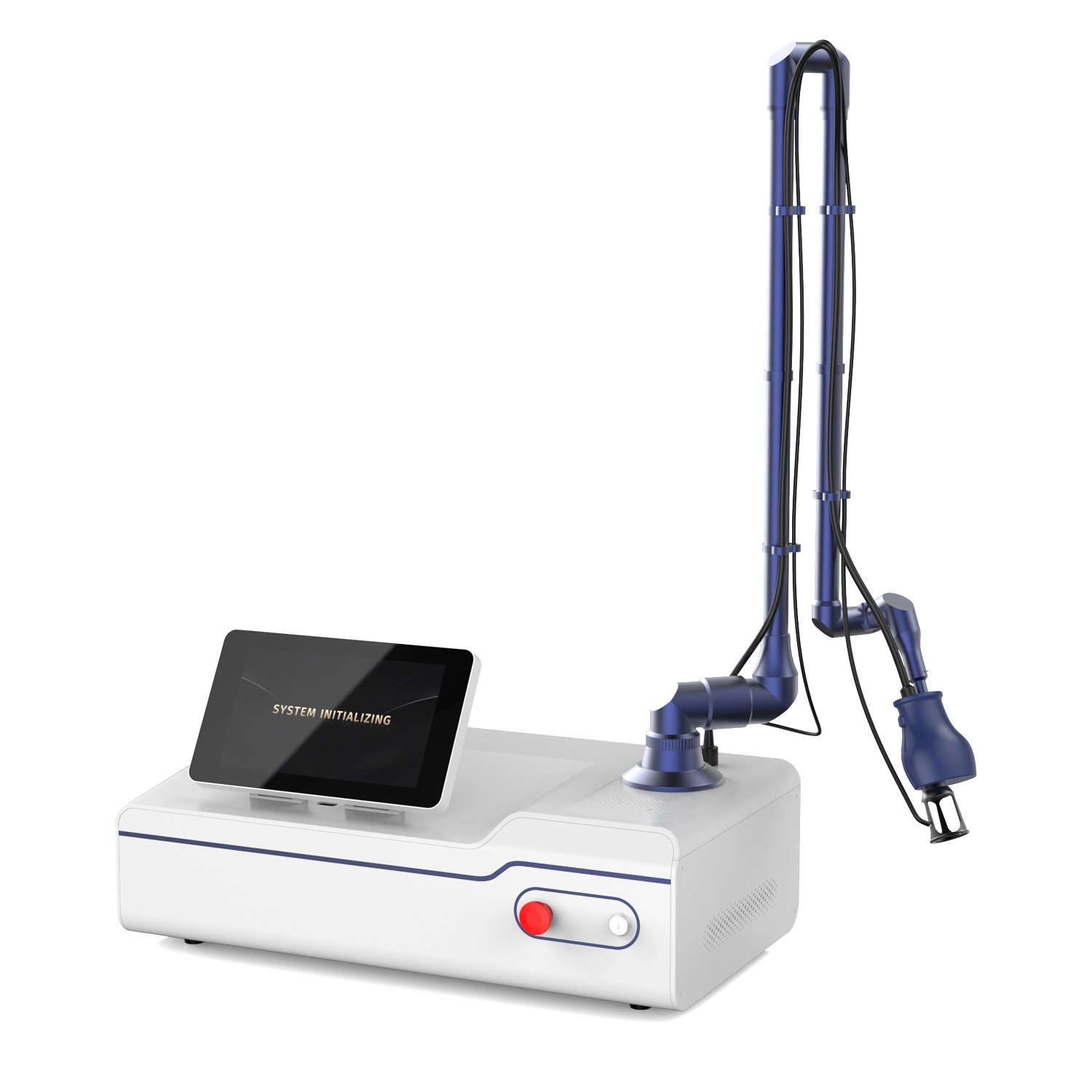
CO2 Fractional Laser Machine | Intimate Vaginal Rejuvenation System
This **CO2 Fractional Laser Machine** utilizes advanced 10600nm CO2 fractional laser technology to create controlled micro-thermal zones on the vaginal mucosa and intimate skin layers. These micro-columns stimulate collagen regeneration and tissue remodeling, effectively improving vaginal tightness, elasticity, and overall intimate health.
Designed specifically for professional medical aesthetic and intimate wellness applications, this CO2 fractional laser machine features intelligent parameter control and high-precision energy output to ensure safe, comfortable, and consistent treatment results. It is an ideal core device for vaginal rejuvenation, postpartum recovery, and intimate anti-aging treatments.
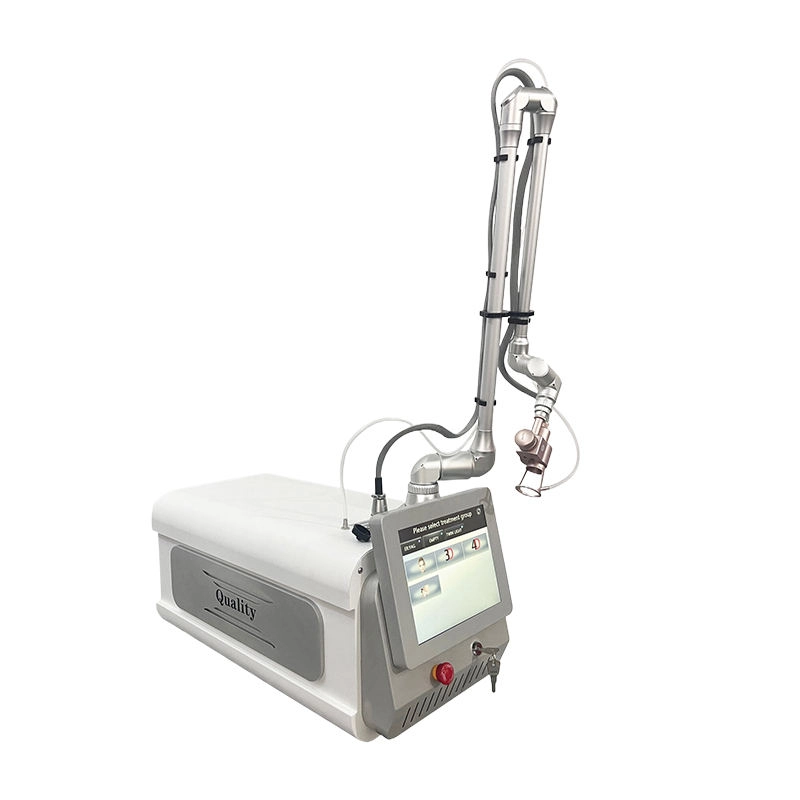
Professional CO2 Fractional Laser Machine | Fractional & Vaginal Rejuvenation CO2 Laser System
The CO2 fractional laser machine is a professional medical-grade device designed for deep skin resurfacing, wrinkle reduction, scar repair, and vaginal rejuvenation. Using a 10600 nm fractional CO2 laser beam, it creates micro-thermal columns on the skin to stimulate collagen regeneration and accelerate skin healing.
This CO2 fractional laser machine provides multiple treatment modes, including fractional mode, surgical cutting mode, and optional vaginal tightening mode, making it ideal for dermatology clinics and professional beauty centers seeking advanced laser solutions.
Its high precision, adjustable spot size, stable energy output, and seven-joint articulated arm ensure safe, accurate, and effective treatment results with minimal downtime.
Get more information
If you have any comments or good suggestions, please leave us a message; later our professional staff will contact you as soon as possible.
Let's Talk
Stay in touch with us for cutting-edge beauty solutions, professional guidance, and customized service.
Contact


Room 307, Building A, Huilong International E-commerce Industrial Park, No. 10 Xipengling Road, Helong Street, Baiyun District, Guangzhou, China
© 2025 HUIMAIN. All Rights Reserved. Privacy Policy | Terms and Conditions | Sitemap
Facebook
Instagram
Medical beauty equipment factory
huimain Medical beauty equipment factory
beauty machine supplier
Whatsapp: +8619124004543