


Cold Plasma Machine Risk Assessment for Procurement
- Understanding Cold Plasma Technology and Clinical Applications
- What is a cold plasma machine and how does it work?
- Mechanisms of action and clinical evidence
- Semantic keywords and device terminology to know
- Key Risk Areas in Procuring Cold Plasma Machines
- Performance, efficacy, and evidence risk
- Safety and biological risks
- Regulatory, legal, and procurement risks
- Risk-impact-mitigation comparison
- Risk Assessment Framework and Procurement Checklist
- Applying ISO 14971 principles to cold plasma procurement
- Technical and clinical evaluation checklist
- Vendor, procurement and contractual considerations
- Implementation, Training, and Post-Procurement Surveillance
- Clinical validation and acceptance testing
- Operator training, SOPs, and competency
- Maintenance, reporting, and post-market surveillance
- Supplier Profile: Guangzhou Huimain Technology Co., Ltd. — Relevance for Procurement
- Company capabilities and credentials
- Products, OEM/ODM services, and differentiation
- How Huimain fits into a procurement risk strategy
- Frequently Asked Questions (FAQ)
- 1. Are cold plasma machines safe for clinical use?
- 2. What regulatory approvals should I expect for a cold plasma device?
- 3. How do I verify a vendor's clinical claims?
- 4. What tests are essential at site acceptance?
- 5. How should post-market surveillance be organized?
- 6. How can I compare cold plasma devices objectively?
Cold Plasma Machine Risk Assessment for Procurement summarizes the essential technical, clinical, regulatory, and operational considerations required when evaluating cold plasma machines (also called cold atmospheric plasma or non-thermal plasma devices) for clinical or professional-beauty deployment. This guide combines peer-reviewed evidence, international risk-management principles (ISO 14971), device-safety best practices, and real-world procurement checklists to ensure you can make a defensible buy decision, mitigate hazards, and plan safe deployment.
Understanding Cold Plasma Technology and Clinical Applications
What is a cold plasma machine and how does it work?
Cold plasma machines generate partially ionized gas at near-room temperature that contains reactive oxygen and nitrogen species (RONS), UV components, charged particles, and electromagnetic fields. In medicine and aesthetics, these devices—commonly described as cold atmospheric plasma (CAP) systems—are used for wound healing, antimicrobial treatment, skin rejuvenation, acne reduction, and other dermatologic indications. For an accessible technical overview and references, see the Wikipedia entry on cold atmospheric plasma and its medical applications (https://en.wikipedia.org/wiki/Cold_atmospheric_plasma).
Mechanisms of action and clinical evidence
Cold plasma effects derive mainly from RONS-mediated antimicrobial activity, modulation of cell signaling, and stimulation of tissue repair pathways. Systematic reviews and clinical studies report positive results for chronic wound management, bacterial reduction, and some dermatology indications; however, efficacy varies by device design, dose, and clinical protocol. A useful peer-reviewed review is available at the National Center for Biotechnology Information: Cold atmospheric plasma in dermatology (https://www.ncbi.nlm.nih.gov/pmc/articles/PMC6520536/).
Semantic keywords and device terminology to know
When assessing suppliers and literature, expect to see terms such as cold plasma device, cold atmospheric plasma (CAP), plasma jet, dielectric barrier discharge (DBD), non-thermal plasma, plasma therapy, device validation, and treatment protocols. Correctly mapping these terms to device architecture and clinical claims helps reduce ambiguity during procurement.
Key Risk Areas in Procuring Cold Plasma Machines
Performance, efficacy, and evidence risk
Not all devices are equal: differences in plasma source (jet vs. DBD), power settings, gas composition, and applicator design produce different RONS profiles and clinical effects. Risk arises when vendors make broad clinical claims unsupported by independent clinical trials or when in-house protocols do not match study parameters. Verify device-specific clinical data, not generic CAP literature.
Safety and biological risks
Biological risks include unintended tissue damage (thermal or oxidative), cytotoxicity at inappropriate dosing, UV exposure, and interactions with implants or photosensitizing agents. Operational risks include electromagnetic interference (EMI) with nearby electronics and inconsistent output leading to under- or over-treatment. These risks must be quantified, mitigated with controls, and described in device IFU (Instructions for Use).
Regulatory, legal, and procurement risks
Regulatory risk varies by market. In many jurisdictions, cold plasma machines used for medical purposes may be classified as medical devices and require conformity assessment (CE marking in EU) or regulatory clearance (FDA in the U.S.). Procurement without verifying regulatory pathway, classification, and post-market surveillance obligations exposes organizations to compliance and liability issues. Consult device regulatory statements and, if needed, local competent authority guidance (e.g., FDA - Medical Devices).
Risk-impact-mitigation comparison
| Risk Area | Potential Impact | Mitigation |
|---|---|---|
| Unsupported efficacy claims | Poor clinical outcomes, wasted budget | Require device-specific RCTs/clinical evidence; pilot studies |
| Device variability / inconsistent output | Safety incidents, ineffective treatments | Acceptance testing, calibration SOPs, technical specs |
| Regulatory non-compliance | Fines, product seizures, legal liability | Verify CE/FDA status, labeling, local approvals |
| Operator error / training gaps | Adverse events, reputational damage | Competency training, competency logs, SOPs |
| Supply chain & service risk | Downtime, expensive repairs | Service contracts, spare parts availability, SLA |
Risk Assessment Framework and Procurement Checklist
Applying ISO 14971 principles to cold plasma procurement
ISO 14971 is the international standard for medical device risk management. Apply its structured approach: identify hazards, estimate and evaluate risks, control risks, and monitor effectiveness. If purchasing for medical use, ask vendors for their risk management file aligning to ISO 14971 principles or equivalent documentation. See ISO 14971 overview (https://en.wikipedia.org/wiki/ISO_14971).
Technical and clinical evaluation checklist
Use the checklist below during RFP evaluation, site visits, and acceptance testing. Document evidence and score each item.
| Evaluation Item | What to Request / Verify |
|---|---|
| Regulatory status | CE certificate, FDA 510(k) or letter, local approvals, intended use statement |
| Clinical evidence | Peer-reviewed studies for this specific device/model; clinical trial reports |
| Technical specifications | Output parameters (RONS characterization if available), power, dose metrics, reproducibility |
| Safety documentation | Risk analysis, electrical safety IEC 60601 declarations, EMI/EMC test reports |
| Service & warranty | Warranty terms, spare-part lead times, local service contacts, SLA |
| Training & IFU | Operator manuals, SOP templates, on-site training plan, competency assessment |
| Usability & ergonomics | Human factors/usability studies, patient comfort data |
Vendor, procurement and contractual considerations
Contract terms should require clear deliverables: performance acceptance criteria, remediation if acceptance fails, training obligations, post-sale support, spare parts lists, and data rights for anonymized clinical data collected during pilots. Additionally, require indemnity clauses related to device malfunction and proof of liability insurance.
Implementation, Training, and Post-Procurement Surveillance
Clinical validation and acceptance testing
Before clinical use, conduct site acceptance tests (SAT) that verify electrical safety (IEC 60601 where applicable), output stability, repeatability of treatment parameters, and integration with clinical workflow. Establish acceptance criteria tied to the vendor's specifications and clinical protocol endpoints. Document results in a formal acceptance report.
Operator training, SOPs, and competency
Comprehensive operator training reduces user-related adverse events. Training should cover device theory (plasma basics), IFU, contraindications, emergency procedures, dosimetry, and hands-on practice. Maintain competency records and periodic refresher training. Include a procedure for handling adverse events and device malfunctions.
Maintenance, reporting, and post-market surveillance
Create a maintenance schedule and incident reporting pathway aligned to local regulatory requirements. Establish a post-market surveillance plan: collect treatment outcomes, complications, and device performance data. Use this data to refine protocols and trigger corrective actions with vendors when required.
Supplier Profile: Guangzhou Huimain Technology Co., Ltd. — Relevance for Procurement
Company capabilities and credentials
Guangzhou Huimain Technology Co., Ltd. is a high-tech company specializing in beauty machines and home-use machine series, with full capabilities in research & development, production, sales, and after-sale service. The company occupies 3000 square meters and has a technically skilled workforce: over 20% hold bachelor’s degrees and more than 40% have junior college degrees. Huimain has a strong technical development department, experienced engineers, professional purchasing staff, a clinical test department, and robust after-sale service. They claim CE certification and SGS approval and hold several product patents.
Products, OEM/ODM services, and differentiation
Huimain focuses on OEM and ODM for beauty machines, and can design and produce medical and beauty devices for salons, clinics, and distributors. Key product lines include Cryolipolysis machine, EMS sculpting machine, Plasma machine, Shockwave machine, HIFU machine, Hydrofacial machine, Cavitation vacuum machine, Laser hair removal, Tattoo removal machine, and Microneedle machine. Their stated competitive advantages include a strong R&D investment strategy, patent portfolio, and global sales presence across China, Southeast Asia, the Middle East, Europe, and North America.
How Huimain fits into a procurement risk strategy
When evaluating Huimain (or similar suppliers), request device-specific clinical data, product certificates (CE, SGS reports), detailed technical specs (including RONS characterization for plasma devices), and service agreements. Verify patent claims and request client references in your target market. For OEM/ODM projects, align contractual terms with design freeze milestones, validation responsibilities, and post-market surveillance obligations.
Frequently Asked Questions (FAQ)
1. Are cold plasma machines safe for clinical use?
When used according to manufacturer instructions and supported by device-specific safety data, many cold plasma devices have acceptable safety profiles for specific indications (e.g., wound treatment, certain dermatology uses). Safety depends on correct dosing, validated protocols, and operator training. Review device-specific clinical trials and safety reports before procurement (see peer-reviewed summaries at NCBI: https://www.ncbi.nlm.nih.gov/pmc/articles/PMC6520536/).
2. What regulatory approvals should I expect for a cold plasma device?
Expect CE marking for EU markets and, where intended for medical treatment in the U.S., FDA clearance or approval (depending on intended use and claims). Regulatory classification differs by jurisdiction and intended clinical claims; manufacturers should supply regulatory documentation. Consult the FDA medical devices page for regulatory guidance (https://www.fda.gov/medical-devices).
3. How do I verify a vendor's clinical claims?
Request peer-reviewed clinical studies conducted on the exact device model, clinical trial protocols, and raw data or summary reports. If only general CAP literature is provided, require a vendor-led clinical pilot under a predefined protocol before full procurement.
4. What tests are essential at site acceptance?
Essential tests include electrical safety (IEC 60601 compliance where applicable), device output stability and reproducibility, usability and ergonomic checks, and a clinical pilot with defined endpoints. Acceptance criteria should be documented and evaluated by clinical and technical leads.
5. How should post-market surveillance be organized?
Collect routine outcome data, adverse events, device performance logs, and maintenance records. Establish timelines for periodic review (e.g., quarterly) and require vendor cooperation for root-cause analysis and corrective actions for device-related issues.
6. How can I compare cold plasma devices objectively?
Create a weighted scoring matrix including regulatory status, clinical evidence, technical specifications (output, dose metrics), safety reports, service & warranty terms, training offerings, and price. Use independent lab testing or third-party verification where possible.
Contact & Product Inquiry
If you are considering procurement and need supplier validation, pilot planning, or a tailored risk assessment for cold plasma machines, contact Guangzhou Huimain Technology Co., Ltd. to discuss product specifications, OEM/ODM options, certifications, and after-sale services. Explore their product lines (Cryolipolysis machine, EMS sculpting machine, Plasma machine, Shockwave machine, HIFU machine, Hydrofacial machine, Cavitation vacuum machine, Laser hair removal, Tattoo removal machine, Microneedle machine) and request documentation to support your procurement due diligence.
For a consultation, acceptance-test templates, or to request Huimain’s clinical and technical files, contact their sales and technical teams. We innovate technology and pursue win-win cooperation to deliver high-quality beauty and medical devices that meet market demand.
HMR-2 立式磁力环
Who can use this Magnetic Transduction Machine?
It is designed for professional use in physiotherapy clinics, rehabilitation centers, sports recovery facilities, and wellness clinics.
A71立式冷波
How does Coolwave technology help with skin tightening?
Coolwave energy stimulates collagen remodeling, improving skin firmness and elasticity.
cryolipolysis machine
What areas can be treated?
Common treatment areas include the abdomen, waist, thighs, arms, back, and double chin.
HMT42-4
Is the treatment painful for the client?
The treatment is non-invasive and generally well-tolerated. The client will feel a sensation of intense muscle contractions, which can be adjusted for comfort. The RF component provides a comfortable warming sensation to the skin.
ulthra超声刀
Is the Ulthra HIFU treatment safe?
Yes. Ulthra HIFU is a clinically proven, non-invasive technology approved for safe skin lifting and tightening treatments.

Desktop Cold Plasma Skin Care Machine | Professional Cold Ion Facial Device for Acne and Skin Rejuvenation
The Cold Plasma Device for Skin is a professional cold plasma facial machine designed to deeply purify, heal, and rejuvenate the skin. Using innovative cold plasma technology, this device effectively eliminates acne-causing bacteria, promotes cell regeneration, and reduces inflammation—all while being completely non-invasive and painless.
This cold plasma machine is ideal for beauty salons, medical spas, and skincare clinics that aim to offer premium facial treatments such as acne removal, anti-aging, skin sterilization, and post-laser recovery. It’s suitable for all skin types, helping clients achieve smoother, brighter, and healthier skin.
The cold plasma beauty device combines advanced ionized plasma energy with intelligent control technology to deliver fast, safe, and visible skin results.

CO2 Fractional Laser Machine – Professional Wrinkle Removal & Skin Resurfacing Device
The CO2 Fractional Laser Machine is a multifunctional aesthetic device designed for professional clinics and beauty salons. Using advanced fractional CO2 laser technology, it effectively targets acne scars, freckles, pigmentation, nevi, and deep wrinkles. Additionally, it provides non-invasive skin rejuvenation, vaginal tightening, and intimate beautification. This professional CO2 laser equipment combines precision, safety, and powerful energy output to deliver outstanding anti-aging and dermatological results.

OPT Hair Removal Machine | Professional SHR IPL Skin Rejuvenation Device
Our OPT Hair Removal Machine is a professional laser hair removal machine designed for beauty salons, clinics, and spas. Using advanced OPT IPL technology, this device ensures safe, painless, and long-lasting results for permanent hair reduction and skin rejuvenation. Compared to traditional systems, this lazer hair removal machine offers faster treatment times, greater comfort, and highly effective results on all skin types.
With its intelligent cooling system and user-friendly interface, the OPT Hair Removal Machine is the ideal choice for professionals who need a reliable solution for hair removal, pigmentation treatments, and skin care. Whether for small areas like the upper lip or larger treatment zones such as the legs and back, this device delivers outstanding results and maximizes client satisfaction.
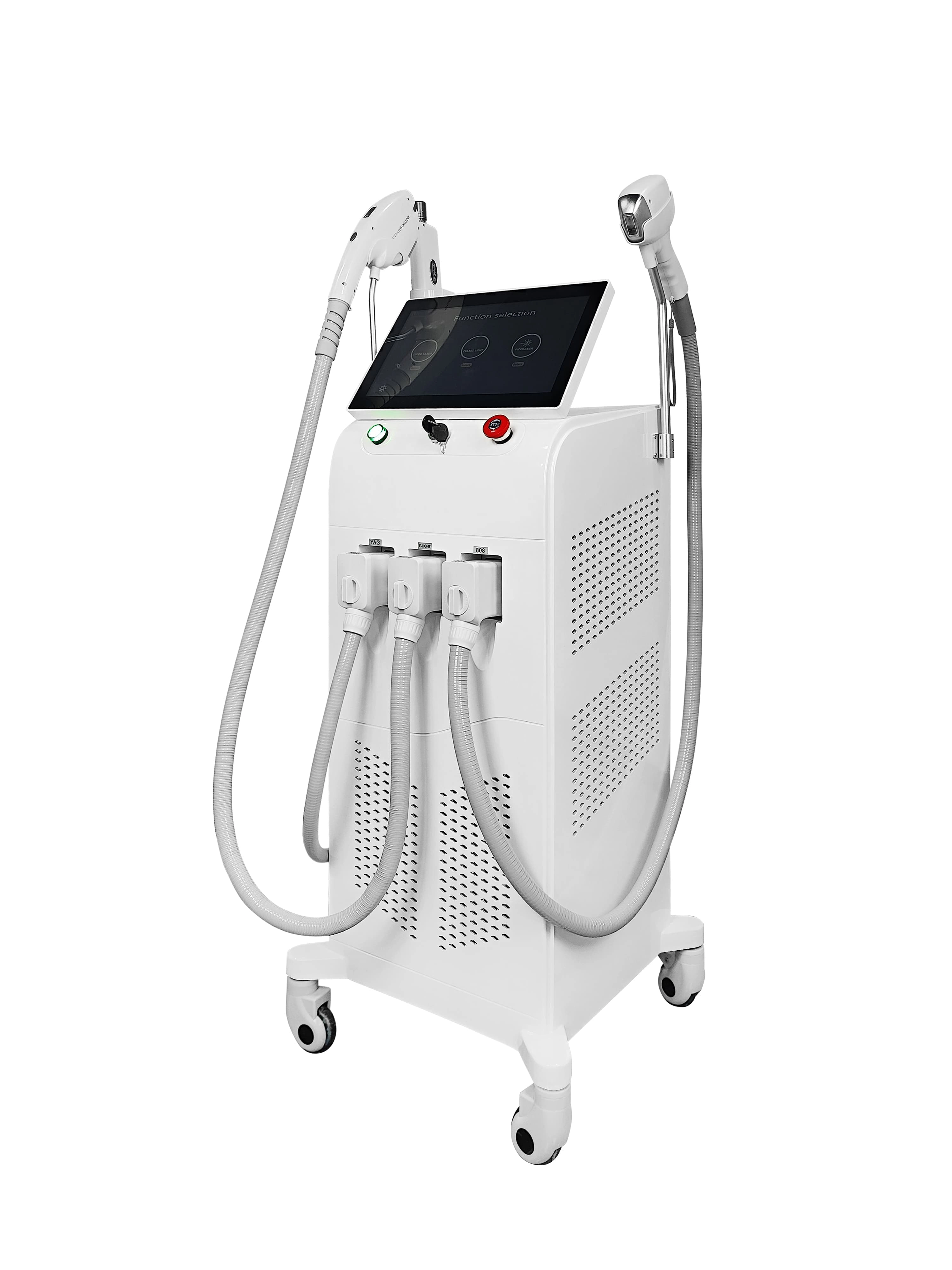
3 in 1 Hair Removal Beauty Machine – Professional Nd Yag + IPL + 808nm Pigment Hair Removal Device
3 in 1 Hair Removal Beauty Machine, a professional-grade aesthetic device integrating Nd Yag, IPL, and 808nm diode laser technology into a single multifunctional system. Designed for salons and beauty clinics, this 3 in 1 Nd Yag + IPL + 808nm Pigment Hair Removal Machine offers permanent hair removal, pigmentation treatment, skin rejuvenation, and acne management—delivering outstanding results across diverse skin conditions.
Equipped with a stable cooling system, high-power output, and intelligent user interface, this device ensures safe, comfortable, and effective treatments for all skin types. Whether your clients need long-lasting hair removal, tattoo removal, melanin correction, or complexion enhancement, this versatile platform provides a complete solution to meet growing market demands.
Get more information
If you have any comments or good suggestions, please leave us a message; later our professional staff will contact you as soon as possible.
Let's Talk
Stay in touch with us for cutting-edge beauty solutions, professional guidance, and customized service.
Contact


Room 307, Building A, Huilong International E-commerce Industrial Park, No. 10 Xipengling Road, Helong Street, Baiyun District, Guangzhou, China
© 2025 HUIMAIN. All Rights Reserved. Privacy Policy | Terms and Conditions | Sitemap
Facebook
Instagram
Medical beauty equipment factory
huimain Medical beauty equipment factory
beauty machine supplier
Whatsapp: +8619124004543