


Cold Plasma Machine Safety Standards and Certifications
- Understanding Safety Risks and Regulatory Context for Cold Plasma Machines
- What ‘‘cold plasma’’ means for safety
- How regulatory classification affects required standards
- Key performance and safety endpoints manufacturers must control
- Key International Standards and Certifications Relevant to Cold Plasma Machines
- Standards that commonly apply
- Certifications and conformity marks
- Standards comparison
- Testing, Documentation and Compliance Pathway
- 1) Define intended use and regulatory pathway first
- 2) Conduct risk assessment and safety testing
- 3) Prepare technical documentation and clinical evidence
- Choosing a Certified Cold Plasma Machine and Manufacturer
- What to evaluate in suppliers and OEMs
- Practical decision checklist for procurement
- Case comparison: Medical vs Home-use compliance (summary)
- Guangzhou Huimain Technology Co., Ltd. — Capabilities, Credentials and Product Focus
- Company profile and strengths
- Certifications, R&D and market footprint
- Main product lines and competitive advantages
- Practical Recommendations for Manufacturers, Clinicians and Buyers
- For manufacturers
- For clinicians and clinics
- For distributors and end-users
- FAQ
- 1. What certifications should I ask for when buying a cold plasma machine?
- 2. Are cold plasma machines safe to use in a salon or clinic?
- 3. How is ozone exposure controlled and measured?
- 4. What is the difference between CE marking and FDA clearance?
- 5. Can a home-use cold plasma device follow the same standards as a clinic device?
- 6. How do I verify a manufacturer’s claims about safety and certifications?
- Contact and Product Consultation
- References and Authoritative Sources
Understanding Safety Risks and Regulatory Context for Cold Plasma Machines
What ‘‘cold plasma’’ means for safety
Cold plasma (also called cold atmospheric plasma) is an ionized gas at near-room temperature. In beauty and medical devices it is used for surface disinfection, wound healing support, and certain dermatological treatments. Although it operates at low gas temperature, safety concerns include electrical hazards, ultraviolet (UV) and other electromagnetic emissions, generation of reactive species (e.g., ozone, NOx), material compatibility, and user exposure to aerosols or byproducts.
How regulatory classification affects required standards
Whether a cold plasma machine is regulated as a medical device, a cosmetic device, or a consumer/home-use appliance determines the applicable standards and certification path. Medical claims (diagnosis, treatment) typically trigger medical device regulations (e.g., EU MDR 2017/745, FDA medical device pathways). Cosmetic or general wellness claims may fall under less stringent product safety frameworks but still require electrical safety, EMC, and chemical emission assessments.
Key performance and safety endpoints manufacturers must control
Manufacturers should design and document controls for: electrical safety and insulation, leakage current, EMC, ozone and reactive species generation and ventilation, UV emissions, surface and user temperature, materials biocompatibility for skin contact, software and firmware reliability, and clear user instructions/warnings. Objective measurement and documented risk controls are essential to pass certification audits.
Key International Standards and Certifications Relevant to Cold Plasma Machines
Standards that commonly apply
The following standards are frequently referenced for cold plasma devices depending on intended use: IEC 60601 (medical electrical equipment), ISO 13485 (medical device quality management systems), IEC 60601-1-2 (electromagnetic compatibility for medical equipment), ISO 14971 (medical device risk management), and IEC 60335 (safety of household and similar electrical appliances) for the home-use category. Environmental and chemical regulations such as RoHS or REACH may also apply for components and emissions.
Certifications and conformity marks
Common conformity marks and approvals that buyers and regulators look for are CE marking (EU MDR for medical devices), FDA clearance/510(k) or de novo classification (U.S.), UL/ETL electrical safety listings (North America), and third-party test reports from labs such as SGS for performance and chemical emissions testing. For export, customers often require ISO 13485 certification for the manufacturer.
Standards comparison
| Standard / Certification | Scope | Typical Application | Authority / Body |
|---|---|---|---|
| EU MDR (Regulation 2017/745) + CE marking | Safety, performance and clinical evaluation for medical devices sold in EU | Medical cold plasma systems intended for diagnosis or treatment | European Commission / Notified Bodies |
| ISO 13485 | Quality management system for medical device manufacturers | Manufacturer QMS supporting CE/FDA submissions | ISO / Accredited Certification Bodies |
| IEC 60601-1 / IEC 60601-1-2 | Electrical safety and EMC for medical electrical equipment | Medical-grade cold plasma generators, power supplies | IEC / National Test Labs |
| IEC 60335 (home appliances) | Electrical safety for household appliances | Home-use cold plasma beauty devices | IEC / National Test Labs |
| FDA 510(k) / De Novo | U.S. market clearance/authorization for medical devices | Medical devices with predicate or novel technologies | U.S. Food and Drug Administration (FDA) |
| RoHS / REACH | Restricts hazardous substances and regulates certain chemicals | Component and material compliance for export markets | EU and member agencies |
| Third-party testing (e.g., SGS) | Independent verification of electrical safety, emissions, and performance | Supplemental reports for buyers and regulatory dossiers | SGS, TÜV, Intertek, UL test labs |
Sources and further reading for standards are listed in the References section below.
Testing, Documentation and Compliance Pathway
1) Define intended use and regulatory pathway first
Start by documenting the intended use, target user (professional clinic vs. consumer/home), treatment claims, and anatomical sites. This decision drives whether the product is a medical device or a cosmetic/home appliance and which regulatory framework applies.
2) Conduct risk assessment and safety testing
Use ISO 14971 for a structured risk management process: identify hazards (electrical, chemical, UV, ozone, thermal), estimate and evaluate risks, implement mitigations, and verify controls with test data. Typical tests include:
- Electrical safety (IEC 60601-1 or IEC 60335 depending on classification)
- EMC testing (IEC 60601-1-2 or relevant EMC standard)
- Ozone and reactive species emission quantification (measured in controlled chambers)
- UV irradiance and spectral output
- Temperature rise and surface/skin contact tests
- Biocompatibility if skin contact occurs (ISO 10993 series)
- Software lifecycle and cybersecurity assessment for embedded control (IEC 62304, where applicable)
3) Prepare technical documentation and clinical evidence
For medical claims, prepare a technical file or design dossier containing: device description, risk management file, verification/validation data, clinical evaluation or clinical trial reports, labeling and instructions for use, and post-market surveillance plan. Notified Bodies will audit these documents for CE under the MDR; FDA will review submission materials for clearance or approval.
Choosing a Certified Cold Plasma Machine and Manufacturer
What to evaluate in suppliers and OEMs
Buyers should verify the manufacturer’s quality systems (ISO 13485), existing product certificates (CE, UL, 510(k) if relevant), third-party lab reports (SGS/TÜV), and experience with clinical testing. Ask for detailed test reports for ozone, UV, electrical safety, EMC, and biocompatibility. For home-use devices, prioritize IEC 60335 compliance and clear instructions to prevent misuse.
Practical decision checklist for procurement
- Does the vendor have ISO 13485 and documented QMS?
- Are electrical safety and EMC test reports available from accredited labs?
- Is there clinical or real-world evidence for claimed effects and safety?
- Does the product produce measurable ozone, and are engineering controls documented?
- Are software and firmware development processes documented and secure?
- What after-sales support, spare parts, and service training are provided?
Case comparison: Medical vs Home-use compliance (summary)
| Aspect | Medical Device | Home/Consumer Device |
|---|---|---|
| Primary Standards | EU MDR, IEC 60601, ISO 13485, ISO 14971 | IEC 60335, EMC directives, consumer safety laws |
| Evidence level | Clinical data / trials often required | Performance testing and safety verification |
| Typical certifications | CE (MDR), FDA 510(k) as applicable | CE (Low Voltage/EMC), national appliance approvals |
| Risk controls emphasis | Strict risk mitigation and post-market surveillance | User instructions, interlocks, and consumer-safe design |
Guangzhou Huimain Technology Co., Ltd. — Capabilities, Credentials and Product Focus
Company profile and strengths
Guangzhou Huimain Technology Co., Ltd. is a high-tech company focused on beauty machines and home-use device series, with integrated R&D, production, sales, and after-sale service. The company occupies a 3,000 square meter facility. Over 20% of staff hold bachelor’s degrees and more than 40% have junior college degrees. Huimain maintains a strong technical development department with experienced engineers, PE experts, a professional purchasing team, clinical testing capabilities, and an after-sales service department. These capabilities support fast iteration and reliable production of beauty and medical aesthetic equipment.
Certifications, R&D and market footprint
With focused investment in research and development, Huimain has achieved CE certification and SGS approvals for its products and holds multiple patents. Their machines are sold worldwide across China, Southeast Asia, the Middle East, Europe, and North America and are noted for competitive pricing and quality. The company supports OEM and ODM business models and can design and produce high-quality medical and beauty machines for salons and clinics.
Main product lines and competitive advantages
Huimain’s core products include Cryolipolysis machines, EMS sculpting machines, Plasma machines, Shockwave machines, HIFU machines, Hydrofacial machines, Cavitation vacuum machines, Laser hair removal systems, Tattoo removal machines, and Microneedle devices. Competitive strengths include:
- Integrated R&D and seasoned engineering teams for rapid customization
- Certified quality system and third-party approvals (CE, SGS)
- Clinical testing support and post-market service
- OEM/ODM experience producing both clinic-grade and consumer units
Huimain’s positioning emphasizes “We innovate technology and win-win cooperation” and a commitment to producing true, market-ready high-quality beauty machines that customers trust.
Practical Recommendations for Manufacturers, Clinicians and Buyers
For manufacturers
Implement ISO 13485 and ISO 14971 early, choose the correct product classification, and engage an accredited testing lab (SGS, TÜV, UL) for electrical, EMC, ozone emissions, and biocompatibility testing. Maintain traceable design control records and prepare a robust clinical evaluation if making medical claims.
For clinicians and clinics
Confirm the device’s certifications, request test reports for ozone and UV emissions, ensure staff training on safety precautions, and follow post-market surveillance and adverse event reporting requirements in your jurisdiction.
For distributors and end-users
Verify certifications and third-party test results, demand clear user manuals and maintenance procedures, and choose manufacturers offering spare parts, training, and local support.
FAQ
1. What certifications should I ask for when buying a cold plasma machine?
Ask for ISO 13485 (manufacturer QMS), CE marking (for medical products in the EU), IEC 60601 test reports for medical electrical safety (or IEC 60335 for home appliances), EMC reports (IEC 60601-1-2), and independent lab reports (SGS/TÜV) for ozone, UV, and emissions. For U.S. medical marketing, check FDA clearance/510(k) where applicable.
2. Are cold plasma machines safe to use in a salon or clinic?
Yes, when designed and tested to relevant standards and used according to the manufacturer’s instructions. Ensure the device has appropriate electrical and EMC safety documentation, measured low ozone/chemical emissions, proper shielding for UV and sparks, and staff training.
3. How is ozone exposure controlled and measured?
Manufacturers measure ozone and reactive species in controlled chamber tests and implement engineering controls (ventilation, catalysts, exposure interlocks) to keep concentrations below occupational and public health guidance. Buyers should request the specific emission test report and acceptance criteria used by the testing lab.
4. What is the difference between CE marking and FDA clearance?
CE marking (for medical devices) demonstrates conformity with EU safety and performance requirements under EU MDR; it is typically granted after assessment by a Notified Body for certain device classes. FDA clearance (510(k)) or approval in the U.S. involves submission of performance and safety data to the FDA and depends on device classification and predicate devices. Both are jurisdiction-specific and have different evidentiary requirements.
5. Can a home-use cold plasma device follow the same standards as a clinic device?
Not always. Home-use devices commonly follow consumer appliance standards (e.g., IEC 60335) emphasizing ease of use and fail-safes, whereas clinic/medical devices must meet medical electrical safety and clinical evidence standards (IEC 60601, ISO 13485, ISO 14971). Intended user and claims determine the applicable standards.
6. How do I verify a manufacturer’s claims about safety and certifications?
Request copies of certificates, test reports, and the manufacturer’s ISO 13485 certificate. Verify certificates with issuing bodies or accredited registrars, request laboratory report numbers (and lab accreditation), and, when possible, have an independent lab re-test key safety parameters.
Contact and Product Consultation
If you need certified cold plasma machines or consultation on regulatory compliance, contact Guangzhou Huimain Technology Co., Ltd. Our R&D and clinical test teams can provide technical datasheets, test reports (CE and SGS approvals), OEM/ODM services, and after-sales support. We design and produce devices including Cryolipolysis, EMS sculpting, Plasma machines, Shockwave, HIFU, Hydrofacial, Cavitation vacuum, Laser hair removal, Tattoo removal, and Microneedle systems. For product inquiries or technical consultation, please reach out to our sales and service teams to receive customized compliance and procurement advice.
References and Authoritative Sources
- European Union. Regulation (EU) 2017/745 on medical devices (MDR). EUR-Lex. https://eur-lex.europa.eu/eli/reg/2017/745/oj (accessed 2026-01-06)
- ISO. ISO 13485: Medical devices — Quality management systems. https://www.iso.org/standard/59752. (accessed 2026-01-06)
- IEC 60601. Overview of IEC 60601 medical electrical equipment series. Wikipedia. https://en.wikipedia.org/wiki/IEC_60601 (accessed 2026-01-06)
- FDA. Medical Devices Overview and 510(k) Premarket Notification. U.S. Food and Drug Administration. https://www.fda.gov/medical-devices/premarket-submissions/510k (accessed 2026-01-06)
- SGS. Medical devices testing and certification services. https://www.sgs.com/en/healthcare/medical-devices (accessed 2026-01-06)
- EPA. Ground-level ozone pollution: effects and standards. U.S. Environmental Protection Agency. https://www.epa.gov/ground-level-ozone-pollution (accessed 2026-01-06)
- Wikipedia. Plasma medicine. https://en.wikipedia.org/wiki/Plasma_medicine (accessed 2026-01-06)
- IEC 60335. Safety of household and similar electrical appliances (overview). International Electrotechnical Commission. https://www.iec.ch/ (search IEC 60335) (accessed 2026-01-06)
- ISO 14971. Medical devices — Application of risk management to medical devices. ISO. https://www.iso.org/standard/51263. (accessed 2026-01-06)
Magnetic Facial Lifting Machine2
What is the main principle of the Magnetic Facial Lifting Machine?
The machine uses magnetic technology to induce muscle tightening and increase muscle tone. This process helps to lift the skin and reduces the appearance of wrinkles.
HMR-2 立式磁力环
Is magnetic transduction therapy safe?
Yes. Magnetic transduction physical therapy is non-invasive, contact-free, and widely used in professional rehabilitation clinics.
HMT12R
Is this device suitable for all body types?
The device is most effective for individuals who are close to their ideal weight but have stubborn pockets of fat and a desire for more muscle definition. It is not intended as a weight loss solution for obese individuals. A proper client consultation is essential to determine suitability.
A62翡翠激光减肥仪
What makes this Glaser Slimming Laser Machine different?
It combines 532nm green light and 635nm red light with adjustable energy and rotating laser arms for safe, effective, and professional body slimming.
HI45P
Can it be used on all body areas?
Yes, it can treat the abdomen, thighs, arms, back, and buttocks effectively.

Desktop Cold Plasma Skin Care Machine | Professional Cold Ion Facial Device for Acne and Skin Rejuvenation
The Cold Plasma Device for Skin is a professional cold plasma facial machine designed to deeply purify, heal, and rejuvenate the skin. Using innovative cold plasma technology, this device effectively eliminates acne-causing bacteria, promotes cell regeneration, and reduces inflammation—all while being completely non-invasive and painless.
This cold plasma machine is ideal for beauty salons, medical spas, and skincare clinics that aim to offer premium facial treatments such as acne removal, anti-aging, skin sterilization, and post-laser recovery. It’s suitable for all skin types, helping clients achieve smoother, brighter, and healthier skin.
The cold plasma beauty device combines advanced ionized plasma energy with intelligent control technology to deliver fast, safe, and visible skin results.

CO2 Fractional Laser Machine – Professional Wrinkle Removal & Skin Resurfacing Device
The CO2 Fractional Laser Machine is a multifunctional aesthetic device designed for professional clinics and beauty salons. Using advanced fractional CO2 laser technology, it effectively targets acne scars, freckles, pigmentation, nevi, and deep wrinkles. Additionally, it provides non-invasive skin rejuvenation, vaginal tightening, and intimate beautification. This professional CO2 laser equipment combines precision, safety, and powerful energy output to deliver outstanding anti-aging and dermatological results.
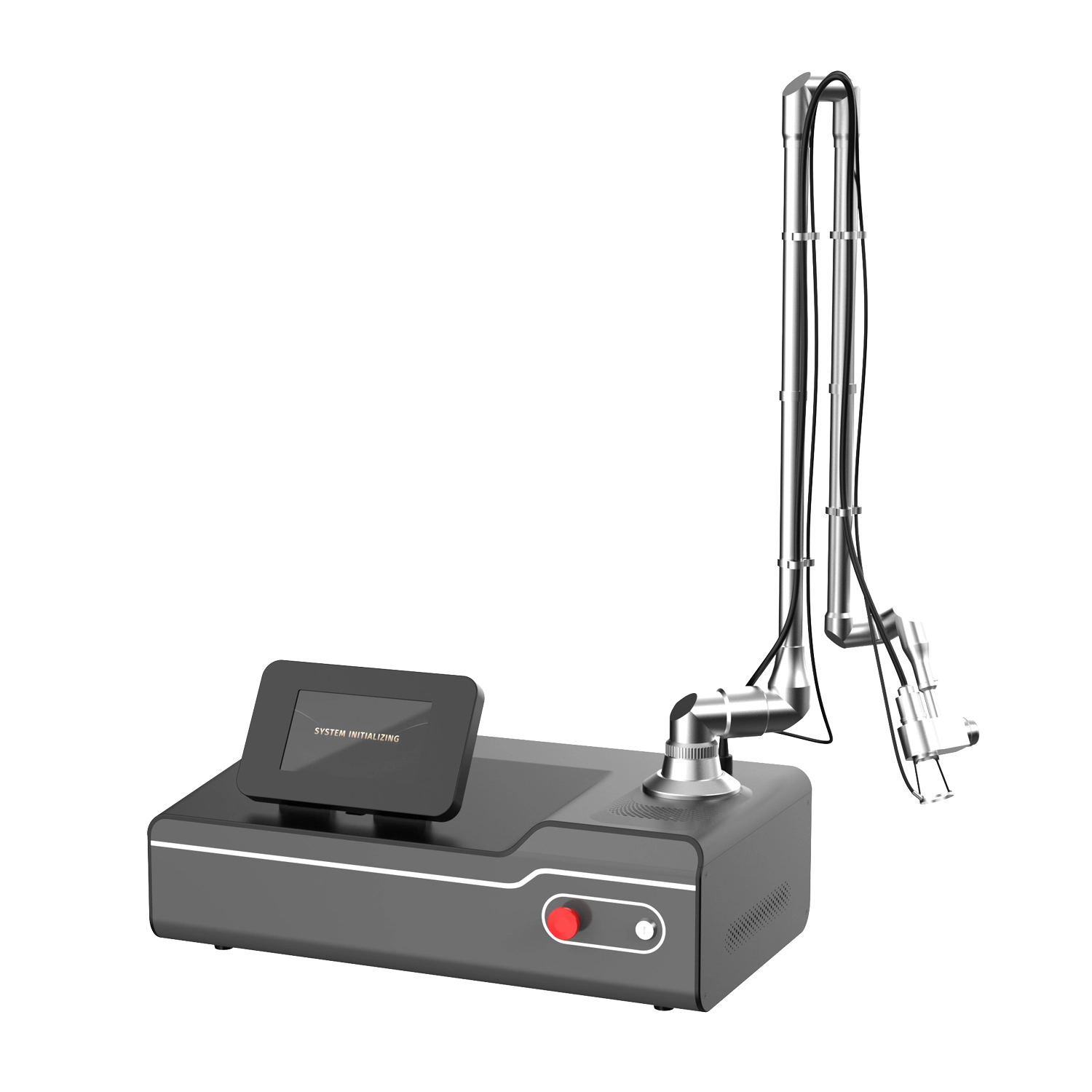
Professional CO2 Fractional Laser Machine for Skin Resurfacing & Scar Treatment
The CO2 Fractional Laser Machine is a professional CO2 fractional laser machine designed for advanced skin resurfacing, scar treatment, and skin rejuvenation procedures.
Using 10,600nm CO2 fractional laser technology, the system delivers controlled microthermal zones into the skin, stimulating collagen remodeling while preserving surrounding tissue. This fractional approach significantly improves treatment safety, recovery time, and clinical outcomes.
The CO2 fractional laser machine is widely used in dermatology clinics and medical aesthetic centers for treating acne scars, wrinkles, enlarged pores, stretch marks, and various skin texture concerns.
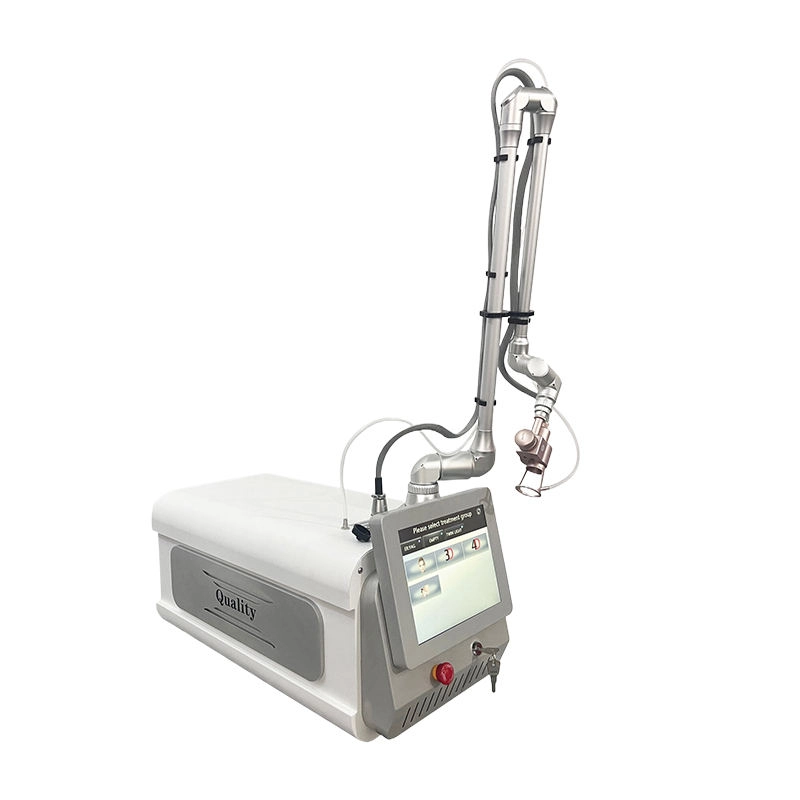
Professional CO2 Fractional Laser Machine | Fractional & Vaginal Rejuvenation CO2 Laser System
The CO2 fractional laser machine is a professional medical-grade device designed for deep skin resurfacing, wrinkle reduction, scar repair, and vaginal rejuvenation. Using a 10600 nm fractional CO2 laser beam, it creates micro-thermal columns on the skin to stimulate collagen regeneration and accelerate skin healing.
This CO2 fractional laser machine provides multiple treatment modes, including fractional mode, surgical cutting mode, and optional vaginal tightening mode, making it ideal for dermatology clinics and professional beauty centers seeking advanced laser solutions.
Its high precision, adjustable spot size, stable energy output, and seven-joint articulated arm ensure safe, accurate, and effective treatment results with minimal downtime.
Get more information
If you have any comments or good suggestions, please leave us a message; later our professional staff will contact you as soon as possible.
Let's Talk
Stay in touch with us for cutting-edge beauty solutions, professional guidance, and customized service.
Contact


Room 307, Building A, Huilong International E-commerce Industrial Park, No. 10 Xipengling Road, Helong Street, Baiyun District, Guangzhou, China
© 2025 HUIMAIN. All Rights Reserved. Privacy Policy | Terms and Conditions | Sitemap
Facebook
Instagram
Medical beauty equipment factory
huimain Medical beauty equipment factory
beauty machine supplier
Whatsapp: +8619124004543