


Cold Plasma Machine Software and Control Features
- Advanced Control and Software for Cold Plasma Devices
- Core software modules
- User interface and presets
- Safety, Compliance, and Real-time Monitoring
- Sensor integration & feedback loops
- Regulatory and standards compliance
- Connectivity, Data Logging and Remote Management
- Remote diagnostics & OTA updates
- Data privacy, audit trails, and traceability
- Clinical and Aesthetic Use Cases and Protocol Customization
- Protocol libraries & personalization
- Evidence and efficacy
- Implementation, OEM/ODM Considerations and Guangzhou Huimain Profile
- Integration for clinics and salons
- Guangzhou Huimain Technology Co., Ltd.: capabilities and competitive strengths
- Comparative Table: Control Features vs. Clinical Benefit
- Design Recommendations for Reliable Cold Plasma Software
- Risk-based software lifecycle
- Usability and clinical validation
- Frequently Asked Questions (FAQ)
- 1. What is a cold plasma machine and how does the software affect treatment?
- 2. Are cold plasma devices regulated?
- 3. How important is connectivity and remote management?
- 4. What safety features should I expect in a clinical-grade cold plasma machine?
- 5. How do I choose a supplier or OEM for cold plasma equipment?
- 6. Can software updates change treatment efficacy?
- Contact, Consultation and Product Inquiry
- References
Advanced Control and Software for Cold Plasma Devices
Core software modules
Modern cold plasma machines combine high-voltage power electronics, gas/plasma generation subsystems, and application-specific delivery handpieces with embedded software that orchestrates safe, repeatable treatments. Key software modules include: device orchestration (power & pulse control), safety management (interlocks, fault handling), user interface (touchscreen workflows), data logging (treatment history), and connectivity (LAN/Wi‑Fi/Bluetooth). Well-designed software abstracts hardware complexity so clinicians can select validated treatment parameters without needing to understand the underlying electronics.
User interface and presets
Clinical operators value a UI that reduces cognitive load: clear presets for skin types and treatment goals, step-by-step workflows, and visual prompts for probe placement and treatment timing. Good UIs include:
- Pre-configured protocols with editable parameters and built-in safety limits;
- Multi-language support and localized regulatory guidance per geo-location;
- Real-time feedback (power level, treatment time remaining, temperature estimates) and audible/visual alerts.
Safety, Compliance, and Real-time Monitoring
Sensor integration & feedback loops
Safety relies on sensors and closed-loop control. Typical sensor inputs are handpiece contact sensors, surface temperature sensors (IR or thermistor), current/voltage monitors, and ambient gas-flow or pressure sensors where applicable. Software implements feedback loops to modulate pulse width, duty cycle, or voltage to maintain therapeutic plasma characteristics while avoiding tissue overheating. For example, if skin temperature rises above a preset threshold, the software may automatically reduce power or pause treatment and require user confirmation to resume.
Regulatory and standards compliance
Cold plasma devices may be marketed as medical or aesthetic devices depending on intended use and local regulation. Manufacturers should design software and hardware to meet relevant standards and best practices, such as:
- IEC 60601 series for electrical safety of medical electrical equipment;
- ISO 13485 for medical device quality management;
- Cybersecurity guidance (e.g., FDA guidance on medical device cybersecurity) for networked devices;
- CE marking requirements for the EU and local approvals (e.g., NMPA in China, FDA if marketed as medical device in the US).
Compliance requires documentation: risk analysis (ISO 14971), software development lifecycle evidence (IEC 62304), and clinical evidence supporting claims.
Connectivity, Data Logging and Remote Management
Remote diagnostics & OTA updates
Connectivity adds significant value: secure remote diagnostics reduce downtime, enable predictive maintenance, and allow over-the-air (OTA) software updates for bug fixes or new protocols. Key safeguards include signed firmware updates, encrypted communications (TLS), and role-based access control for technicians vs clinicians. Remote service should preserve patient privacy and include comprehensive audit trails of any software changes.
Data privacy, audit trails, and traceability
Treatment logs are critical for clinical traceability and post-market surveillance. Software should record non-identifiable treatment parameters and timestamps; if patient data is stored, it must be protected under applicable laws (e.g., GDPR, HIPAA). Audit logs should track user login, parameter changes, firmware updates and service events to support quality systems and regulatory inspections.
Clinical and Aesthetic Use Cases and Protocol Customization
Protocol libraries & personalization
Effective cold plasma software offers protocol libraries for common indications (skin rejuvenation, acne treatment, wound care, hemostasis) with parameter ranges drawn from peer-reviewed literature and clinical testing. Personalization features include adjustable energy, pulse frequency, duration, and patterning (scanning vs fixed spot). Clinicians should be able to save clinic-specific protocols and annotate outcomes to build evidence-based workflows.
Evidence and efficacy
Cold atmospheric plasma (CAP) has demonstrated antimicrobial effects, wound-healing promotion, and potential for skin surface modulation in multiple studies. However, therapeutic efficacy depends strongly on device parameters, treatment regimen, and clinical indication. Manufacturers should support claims with clinical data and clear protocol guidance. Examples of published evidence include reviews and clinical studies on CAP in dermatology, wound care, and antimicrobial applications (see references).
Implementation, OEM/ODM Considerations and Guangzhou Huimain Profile
Integration for clinics and salons
When integrating cold plasma machines into a clinic or salon, practical software and control considerations include: multi-user accounts with permission levels, clinic-branded protocol libraries, inventory and consumable tracking, and training/assessment modules built into the device UI. For chains and multi-site practices, centralized fleet management and standardized firmware builds ensure consistent treatments across locations.
Guangzhou Huimain Technology Co., Ltd.: capabilities and competitive strengths
Guangzhou Huimain Technology Co., Ltd. is a high-tech company focused on beauty machines and home-use device series, specializing in R&D, production, sales, and after-sale service. The company operates on a 3,000 m2 facility and employs a technically strong team: over 20% hold bachelor’s degrees and more than 40% have junior college degrees. Their development department includes experienced engineers and PE experts, plus professional purchasing, clinical testing, and after-sale service departments.
Huimain invests continually in R&D to produce new products that match market demand. The company has achieved CE and SGS approvals and holds several patents. Their products are sold globally—in China, Southeast Asia, the Middle East, Europe, and North America—and are recognized for quality and competitive pricing.
As an OEM/ODM partner, Huimain designs and manufactures high-quality medical and aesthetic machines for salons and medical practices. Key product lines include Cryolipolysis machines, EMS sculpting machines, Plasma machines, Shockwave machines, HIFU machines, Hydrofacial machines, Cavitation vacuum machines, Laser hair removal systems, Tattoo removal machines, and Microneedling systems. Huimain emphasizes technology innovation and win-win cooperation, producing devices tailored to customer markets and regulatory needs.
Comparative Table: Control Features vs. Clinical Benefit
| Control Feature | Technical Description | Clinical / Operational Benefit |
|---|---|---|
| Closed-loop temperature control | Real-time skin temperature input adjusts power/pulse in ms | Reduces risk of burns; enables longer treatment sessions safely |
| Preset protocol library | Clinically-validated settings grouped by indication & skin type | Faster operator onboarding; consistent outcomes |
| Signed OTA firmware updates | Cryptographic signing and version control | Improves security; allows rapid deployment of fixes and features |
| Usage & treatment logging | Encrypted logs with timestamps, operator ID, parameters | Supports clinical audits, warranty claims, and quality data |
| Multi-language UI & geo-config | Localized UI, regulatory hints per market | Reduces regulatory errors; better adoption in international markets |
Design Recommendations for Reliable Cold Plasma Software
Risk-based software lifecycle
Adopt IEC 62304 practices: classify software safety levels, maintain traceability matrices, and conduct unit/integration testing and formal verification for safety-critical modules.
Usability and clinical validation
Perform formative and summative usability testing with representative clinicians and include human factors data in regulatory submissions. Clinical validation should align device settings with documented outcomes and adverse event monitoring.
Frequently Asked Questions (FAQ)
1. What is a cold plasma machine and how does the software affect treatment?
A cold plasma machine generates a low-temperature ionized gas used for antimicrobial action, skin surface modulation, or wound healing support. Software controls pulse patterns, energy levels, and safety interlocks; it determines dose delivery, reproducibility, and safety, so robust software is essential for effective and safe treatments.
2. Are cold plasma devices regulated?
Yes. Classification depends on intended use. Devices marketed for medical indications typically fall under medical device regulations (e.g., CE Mark, FDA). Aesthetic claims may have different regulatory pathways. Manufacturers should consult local authorities and design per relevant standards (IEC 60601 series, ISO 13485, IEC 62304).
3. How important is connectivity and remote management?
Connectivity is increasingly important for remote diagnostics, software updates, and centralized fleet management—especially for multi-site operators. However, connectivity requires strong cybersecurity measures and compliance with data protection laws.
4. What safety features should I expect in a clinical-grade cold plasma machine?
Expect closed-loop controls with temperature and contact sensors, hardware interlocks, overcurrent and overvoltage protection, audited user authentication, and clear protocol safeguards that prevent unsafe parameter combinations.
5. How do I choose a supplier or OEM for cold plasma equipment?
Evaluate suppliers on technical expertise (engineers, R&D), quality systems (ISO 13485), regulatory evidence (CE, SGS or equivalent), clinical data supporting protocols, after-sales service, training programs, and ability to provide OEM/ODM customization. Request references and clinical results where possible.
6. Can software updates change treatment efficacy?
Yes. Firmware or software updates can refine control algorithms, adjust safety thresholds, or introduce new protocols. Updates should be validated, signed, and documented to ensure they don’t unintentionally alter clinical performance.
Contact, Consultation and Product Inquiry
For consultation, OEM/ODM inquiry, or to view product specifications for plasma machines and complementary aesthetic devices, contact Guangzhou Huimain Technology Co., Ltd. Their product portfolio includes Cryolipolysis machines, EMS sculpting machines, Plasma machines, Shockwave machines, HIFU machines, Hydrofacial machines, Cavitation vacuum machines, Laser hair removal systems, Tattoo removal machines, and Microneedling devices. Huimain provides technical support, clinical testing assistance, and after-sale service to ensure safe deployment in your market.
References
- Bekeschus S., Freund E., Wende K., et al. Cold atmospheric plasma treatment of chronic wounds—clinical study and mechanistic insights. Clinical Plasma Medicine. (Review). https://www.sciencedirect.com (Accessed 2026-01-12)
- Kong M.G., Kroesen G., Morfill G., et al. Plasma medicine: an introductory review. New Journal of Physics. 2009. https://iopscience.iop.org/article/10.1088/1367-2630/11/11/115012 (Accessed 2026-01-12)
- European Committee for Electrotechnical Standardization. IEC 60601 Series. https://www.iec.ch/ (Accessed 2026-01-12)
- International Organization for Standardization. ISO 13485: Medical devices — Quality management systems. https://www.iso.org/iso-13485-medical-devices. (Accessed 2026-01-12)
- U.S. Food & Drug Administration. Content of Premarket Submissions for Software Contained in Medical Devices. Guidance. https://www.fda.gov/medical-devices/software-medical-device-samd (Accessed 2026-01-12)
- Schneider S., Nebe B., et al. Cold atmospheric plasma in dermatology—state of the art and perspectives. Medical Journal (Example). PubMed. https://pubmed.ncbi.nlm.nih.gov/ (Accessed 2026-01-12)
V9
How many sessions are typically required to see results?
While some clients may see immediate improvements in skin tightness, a series of 6-10 sessions is generally recommended for optimal slimming and shaping results. The exact number can vary based on the client's goals and individual body type.
A58
Does this micro needle machine require consumables?
Yes. Single-use needle cartridges are required to ensure hygiene and treatment safety.
JLM-4
Can beginners or home users operate the machine?
Yes, the interface is intuitive and easy to operate for both professionals and home users.
g 5-按摩仪
What is the typical G5 Vibration Massager machine cost?
The cost depends on specifications and order quantity. Contact us for the latest wholesale price and distributor deals.
Onda B71台式冷波塑形仪
Is this machine suitable for all skin types?
Yes, the Non-invasive Coolwave Onda Lift Machine is suitable for all skin types and body areas.

Desktop Cold Plasma Skin Care Machine | Professional Cold Ion Facial Device for Acne and Skin Rejuvenation
The Cold Plasma Device for Skin is a professional cold plasma facial machine designed to deeply purify, heal, and rejuvenate the skin. Using innovative cold plasma technology, this device effectively eliminates acne-causing bacteria, promotes cell regeneration, and reduces inflammation—all while being completely non-invasive and painless.
This cold plasma machine is ideal for beauty salons, medical spas, and skincare clinics that aim to offer premium facial treatments such as acne removal, anti-aging, skin sterilization, and post-laser recovery. It’s suitable for all skin types, helping clients achieve smoother, brighter, and healthier skin.
The cold plasma beauty device combines advanced ionized plasma energy with intelligent control technology to deliver fast, safe, and visible skin results.

CO2 Fractional Laser Machine – Professional Wrinkle Removal & Skin Resurfacing Device
The CO2 Fractional Laser Machine is a multifunctional aesthetic device designed for professional clinics and beauty salons. Using advanced fractional CO2 laser technology, it effectively targets acne scars, freckles, pigmentation, nevi, and deep wrinkles. Additionally, it provides non-invasive skin rejuvenation, vaginal tightening, and intimate beautification. This professional CO2 laser equipment combines precision, safety, and powerful energy output to deliver outstanding anti-aging and dermatological results.
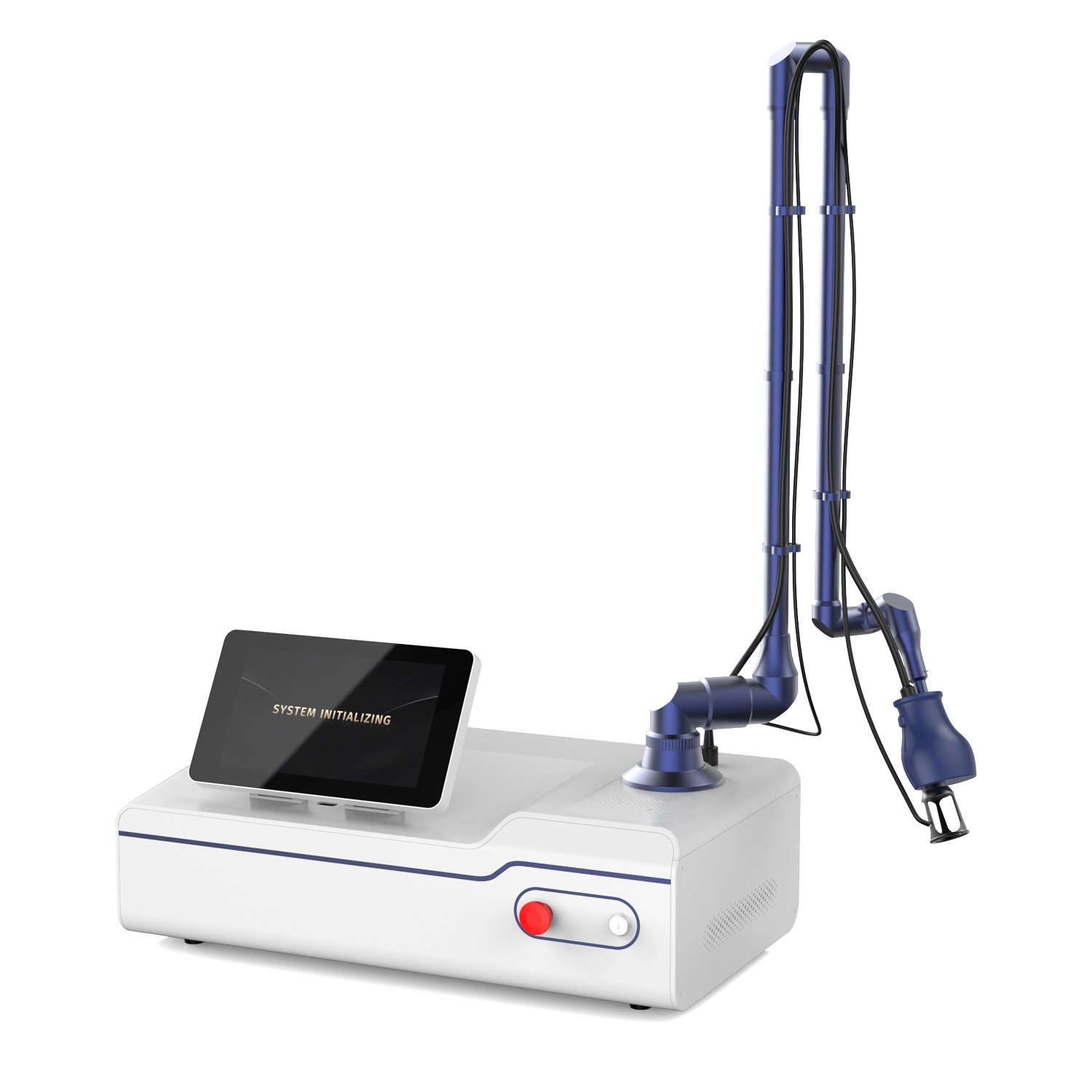
CO2 Fractional Laser Machine | Intimate Vaginal Rejuvenation System
This **CO2 Fractional Laser Machine** utilizes advanced 10600nm CO2 fractional laser technology to create controlled micro-thermal zones on the vaginal mucosa and intimate skin layers. These micro-columns stimulate collagen regeneration and tissue remodeling, effectively improving vaginal tightness, elasticity, and overall intimate health.
Designed specifically for professional medical aesthetic and intimate wellness applications, this CO2 fractional laser machine features intelligent parameter control and high-precision energy output to ensure safe, comfortable, and consistent treatment results. It is an ideal core device for vaginal rejuvenation, postpartum recovery, and intimate anti-aging treatments.
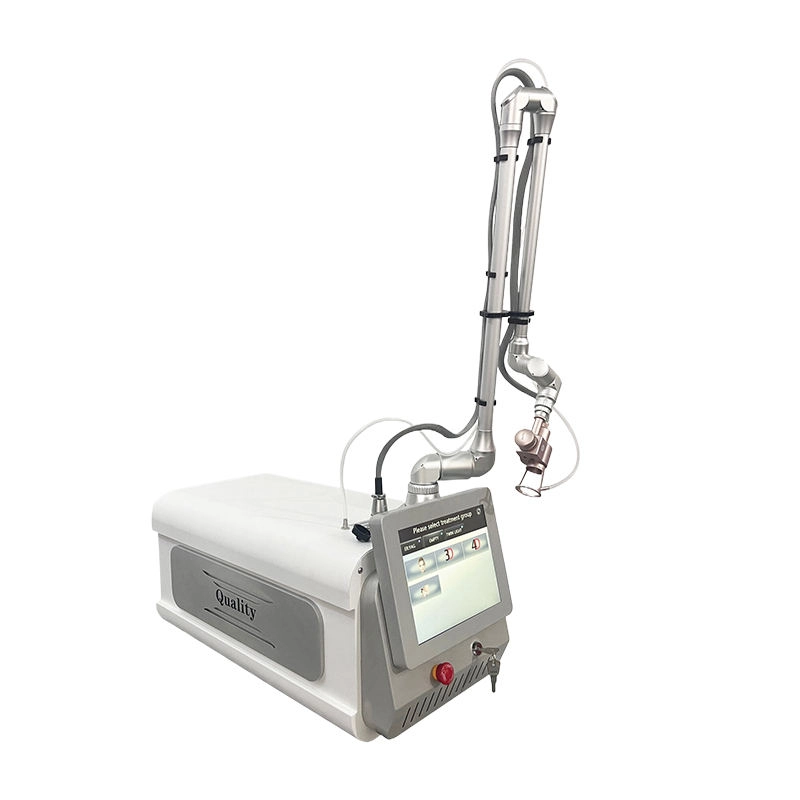
Professional CO2 Fractional Laser Machine | Fractional & Vaginal Rejuvenation CO2 Laser System
The CO2 fractional laser machine is a professional medical-grade device designed for deep skin resurfacing, wrinkle reduction, scar repair, and vaginal rejuvenation. Using a 10600 nm fractional CO2 laser beam, it creates micro-thermal columns on the skin to stimulate collagen regeneration and accelerate skin healing.
This CO2 fractional laser machine provides multiple treatment modes, including fractional mode, surgical cutting mode, and optional vaginal tightening mode, making it ideal for dermatology clinics and professional beauty centers seeking advanced laser solutions.
Its high precision, adjustable spot size, stable energy output, and seven-joint articulated arm ensure safe, accurate, and effective treatment results with minimal downtime.
Get more information
If you have any comments or good suggestions, please leave us a message; later our professional staff will contact you as soon as possible.
Let's Talk
Stay in touch with us for cutting-edge beauty solutions, professional guidance, and customized service.
Contact


Room 307, Building A, Huilong International E-commerce Industrial Park, No. 10 Xipengling Road, Helong Street, Baiyun District, Guangzhou, China
© 2025 HUIMAIN. All Rights Reserved. Privacy Policy | Terms and Conditions | Sitemap
Facebook
Instagram
Medical beauty equipment factory
huimain Medical beauty equipment factory
beauty machine supplier
Whatsapp: +8619124004543