


Cold Plasma Machine Training Programs for Staff
- Operational Competence for Cold Plasma Devices: Building a Skilled Team
- Why structured training matters for Cold Plasma Machine operators
- Key competencies to target in any training program
- Aligning business goals with staff capability
- Designing a Practical Curriculum: Modules, Duration, and Delivery
- Core curriculum modules
- Delivery formats and duration
- Assessments and certification
- Safety, Compliance and Evidence: Training to Standards
- Regulatory and standards alignment
- Risk management and incident reporting
- Evidence-based protocols and continuous improvement
- Implementation: From Train-the-Trainer to After-Sales Support
- Train-the-trainer models and scalability
- Equipment-specific SOPs and maintenance protocols
- After-sales support, remote training, and tele-mentoring
- Practical Tools: Checklists, Competency Matrices and KPIs
- Sample competency matrix
- Key performance indicators (KPIs)
- Documentation and audit trail
- Vendor Partnership and Case Example: Guangzhou Huimain Technology Co., Ltd.
- Why vendor selection matters for training and service
- About Guangzhou Huimain Technology Co., Ltd. (sample partner profile)
- HUIMAIN advantages and main products
- How a vendor partnership supports your training program
- FAQ — Frequently Asked Questions
- 1. How long does training for a Cold Plasma Machine operator typically take?
- 2. Are there formal certifications required to operate cold plasma devices?
- 3. What are the main safety risks and how does training mitigate them?
- 4. How often should staff be re-assessed or re-certified?
- 5. Can remote or virtual training be effective for device operation?
- 6. What should be included in an SOP for Cold Plasma Machine maintenance?
- 7. How can clinics measure ROI on training investments?
- References
Operational Competence for Cold Plasma Devices: Building a Skilled Team
Why structured training matters for Cold Plasma Machine operators
Cold plasma technology (cold atmospheric plasma, CAP) delivers reactive species, UV, and electric fields that interact with biological tissues. Because outcomes and safety depend on operator technique, device settings, and patient selection, structured training is essential to reduce risk and improve clinical results. Training converts device capability into repeatable clinical value—improving patient outcomes, reducing liability, and increasing ROI for clinics and beauty centers.
Key competencies to target in any training program
A robust program should develop knowledge and skills across four domains: theoretical understanding (plasma physics basics and biological effects), device operation (start-up, parameter selection, maintenance), clinical protocol execution (indications, contraindications, pre/post care), and safety/incident response (electrical safety, infection prevention). Competencies must be measurable and linked to assessment checklists.
Aligning business goals with staff capability
Training should reflect commercial objectives—introducing new services, increasing throughput, or raising average ticket size—while ensuring quality. For example, sales-driven goals may favor efficiency modules (treatment flow, consumable handling), whereas medical centers prioritize risk management and documentation. Map each learning outcome to a business KPI (e.g., treatment time, complication rate, patient satisfaction).
Designing a Practical Curriculum: Modules, Duration, and Delivery
Core curriculum modules
Design modular curricula that can be mixed for different staff roles (therapists, nurses, physicians, maintenance technicians). Typical modules include:
- Module A — Principles of Cold Plasma: physics, biochemistry, and evidence base
- Module B — Device Operation and Calibration: start-up, parameters, consumables
- Module C — Clinical Protocols & Patient Management: indications, consent, before/after care
- Module D — Safety, Troubleshooting & Maintenance: electrical safety, cleaning, record-keeping
- Module E — Sales & Patient Communication: counseling, upsell of complementary treatments
Delivery formats and duration
Blend theory and practice: e-learning for basics (2–4 hours), hands-on workshops for device operation (1–2 days), supervised clinical practice (5–20 procedures) and competency sign-off. For medical staff, include case-based discussions and peer review. Suggested phased timeline:
| Phase | Format | Typical Duration |
|---|---|---|
| Foundations | Online + reading | 2–4 hours |
| Hands-on | Instructor-led workshop | 1–2 days |
| Clinical supervised | On-site mentoring | 5–20 procedures / 1–4 weeks |
| Recertification | Refresher + observed procedure | Annual or biannual (4–8 hours) |
Assessments and certification
Combine written assessments (multiple choice, short answers), practical checklists, and observed structured clinical examinations (OSCE-style) for hands-on tasks. Maintain training records and issue certificates specifying scope (e.g., Cold Plasma Cosmetic Indications — Operator Level). Link recertification to documented procedures and complication audits.
Safety, Compliance and Evidence: Training to Standards
Regulatory and standards alignment
Training must reference device regulatory status (CE, FDA clearance if applicable) and relevant standards. Key references include ISO 13485 for medical device quality systems, IEC 60601 family for electrical safety, and local health authority device rules. Incorporate human factors/usability guidance (FDA) into training to reduce use errors.
Risk management and incident reporting
Include a module on identifying and mitigating risks: burns, unexpected tissue response, device malfunction. Teach escalation pathways, incident documentation, and how to liaise with manufacturers for device issues. A clear SOP should describe immediate response, documentation, and follow-up.
Evidence-based protocols and continuous improvement
Use the literature and clinical trial data to frame protocols. Where evidence is limited, document rationale for chosen parameters and monitor outcomes prospectively. Implement continuous quality improvement with regular audits of outcomes, patient feedback, and complication rates.
Implementation: From Train-the-Trainer to After-Sales Support
Train-the-trainer models and scalability
For multi-site businesses, a train-the-trainer (TTT) approach scales best: select experienced clinicians to become internal trainers, provide them with advanced instructor courses and standardized training materials (slides, videos, checklists). TTT reduces long-term training costs and ensures local contextualization.
Equipment-specific SOPs and maintenance protocols
Create SOPs tailored to each Cold Plasma Machine model—covering daily checks, calibration, consumables replacement, cleaning, and storage. Assign maintenance responsibilities and maintain logs linked to device serial numbers. A preventive maintenance schedule (monthly, quarterly, annual) reduces downtime and extends device life.
After-sales support, remote training, and tele-mentoring
Manufacturers and distributors should offer comprehensive after-sales support: remote troubleshooting, software updates, replacement parts logistics, and refresher training. Remote proctoring (video supervision of procedures) and tele-mentoring are effective for continuing competency, especially in low-volume sites.
Practical Tools: Checklists, Competency Matrices and KPIs
Sample competency matrix
| Role | Theory | Hands-on | Clinical Supervision | Certification |
|---|---|---|---|---|
| Operator (therapist) | Pass exam | Observed 10 procedures | Proctored first 5 patients | Operator Certificate |
| Clinical Lead | Advanced theory + literature | Lead 25 procedures | Peer review | Trainer Certificate |
| Technician | Device maintenance theory | Hands-on servicing | Signed off by manufacturer | Maintenance Certificate |
Key performance indicators (KPIs)
Suggested KPIs to monitor training effectiveness:
- Complication rate per 100 procedures
- Patient satisfaction score
- Procedure time (efficiency)
- Device downtime (hours/month)
- Staff competency retention (reassessment pass rate)
Documentation and audit trail
Keep structured logs: training completion records, competency checklists, device maintenance records, patient consents and outcome logs. These are critical for regulatory inspections, insurance, and internal quality governance.
Vendor Partnership and Case Example: Guangzhou Huimain Technology Co., Ltd.
Why vendor selection matters for training and service
Picking a manufacturer with strong R&D, reliable after-sales service, and training capability reduces operational risk. Vendors that offer OEM/ODM customization, clinical validation support, and on-site training accelerate adoption while ensuring device lifecycle support.
About Guangzhou Huimain Technology Co., Ltd. (sample partner profile)
Guangzhou Huimain Technology Co., Ltd. is a high-tech company in beauty machines and home-use machine series. Also, that is professional in research & development, production, sales, and after-sale service. Our company possesses an area of 3000 square meters, and more than 20% have bachelor’s degree and more than 40% are junior college degrees. Our company has strong technical development department and many experienced engineers; our company has many PE experts, professional purchasing department, a good clinical test department; good after-sale service department.
With its strong research & develop power, our company is constantly increasing investment in research and development of new products and producing new products according to the demand of new market. Our company has been approved by the CE certificate and SGS approval and has earned several patents for our products. Products sell well all over the world, such as in all of China, in Southeastern Asia, the Middle East, Europe, and North America, and also get high praise from most customers because of their high quality and good price.
Our company adheres to the route of beauty machine OEM and ODM, development, and production. We have the ability to design and produce the high-quality medical and beauty machines for our customers and many salons. Our company's idea: We innovate technology and win-win cooperation. We produce the true good-quality beauty machines that our customer market likes and admits.
HUIMAIN advantages and main products
HUIMAIN competitive differentiators: strong R&D team, certified quality management, clinical test department for protocol validation, OEM/ODM flexibility, and comprehensive after-sale service including training. Main products include: Cryolipolysis machine, EMS sculpting machine, Plasma machine, Shockwave machine, HIFU machine, Hydrofacial machine, Cavitation vacuum machine, Laser hair removal, Tattoo removal machine, Microneedle machine.
How a vendor partnership supports your training program
HUIMAIN (and similar vendors) can provide device-specific SOPs, certified trainer access, and clinical support for protocol standardization. They also supply spare parts, remote diagnostics, and tailored training materials aligned with regulatory compliance (CE/SGS). When selecting a vendor, request documented training curricula, sample competency checklists, and client references.
FAQ — Frequently Asked Questions
1. How long does training for a Cold Plasma Machine operator typically take?
Standard programs combine 2–4 hours of e-learning, a 1–2 day practical workshop, and supervised clinical practice covering 5–20 procedures. Total time to independent practice typically ranges from 2 days to 4 weeks depending on caseload and local regulations.
2. Are there formal certifications required to operate cold plasma devices?
Certification requirements vary by country and by the clinical scope (cosmetic vs. medical). Many clinics implement internal certification tied to competency assessments. Regulatory bodies may require specific clinician qualifications for invasive indications—always check local health authority rules.
3. What are the main safety risks and how does training mitigate them?
Risks include localized tissue injury, infection (if not managed), and device misuse. Training addresses risk mitigation through appropriate patient selection, calibrated settings, adherence to SOPs, hygiene practices, and emergency response protocols.
4. How often should staff be re-assessed or re-certified?
Annual or biannual refresher training and competency reassessment are recommended. High-volume centers may require more frequent audits; lower-volume or multi-device environments should document periodic supervised procedures to maintain skills.
5. Can remote or virtual training be effective for device operation?
Yes—blended programs combining remote theoretical modules and on-site supervised practice are effective. Remote proctoring and tele-mentoring can maintain competency but should be supplemented by hands-on assessment before independent use.
6. What should be included in an SOP for Cold Plasma Machine maintenance?
SOPs should include pre-use checks, cleaning methods, consumable replacement, calibration schedule, troubleshooting flowcharts, preventive maintenance intervals, and contact points for manufacturer technical support.
7. How can clinics measure ROI on training investments?
Track KPIs such as procedure volume growth, reduction in complications, patient satisfaction scores, average revenue per patient, and device uptime. Improved performance and fewer adverse events translate into measurable financial benefits over 6–12 months.
If you would like customised training programs, on-site demonstrations, or to view our Cold Plasma Machine models and OEM/ODM options, contact Guangzhou Huimain Technology Co., Ltd. for product catalogs, clinical trial support, and training packages. Email us or request a demo to discuss tailored solutions.
References
- U.S. Food and Drug Administration — Medical Devices Overview. Accessed 2026-01-09. https://www.fda.gov/medical-devices
- FDA Guidance: Applying Human Factors and Usability Engineering to Medical Devices (2016). Accessed 2026-01-09. https://www.fda.gov/media/80912/download
- European Commission — CE Marking. Accessed 2026-01-09. https://ec.europa.eu/growth/single-market/ce-marking/
- ISO — ISO 13485 Medical devices — Quality management systems. Accessed 2026-01-09. https://www.iso.org/iso-13485-medical-devices.
- PubMed search results for cold plasma medicine — literature repository. Accessed 2026-01-09. https://pubmed.ncbi.nlm.nih.gov/?term=cold+plasma+medicine
- ClinicalTrials.gov search results for cold plasma — ongoing clinical studies. Accessed 2026-01-09. https://clinicaltrials.gov/ct2/results?term=cold+plasma
EMS Sculpting Machine-落地页
Is this EMS sculpting machine suitable for clinics or distributors?
Yes. Our EMS sculpting machine series is designed specifically for B2B clients, including aesthetic clinics, beauty centers, and distributors. We support both direct clinic use and long-term distribution cooperation.
9 in 1 Cavitation Vacuum Machine
Which body areas can be treated?
Abdomen, arms, thighs, waist, hips, legs, chin, and face.
EC-05
Can it be used on all body areas?
Yes, it’s suitable for abdomen, arms, thighs, waist, and buttocks.
12D hifu
What is High Intensity Focused Ultrasound (HIFU)?
HIFU delivers focused ultrasound energy to stimulate collagen, tighten skin, and lift facial and body areas non-invasively.
AS8012
How many sessions are recommended?
Typically 6–12 sessions for visible results, depending on the treatment area and client body condition.

Desktop Cold Plasma Skin Care Machine | Professional Cold Ion Facial Device for Acne and Skin Rejuvenation
The Cold Plasma Device for Skin is a professional cold plasma facial machine designed to deeply purify, heal, and rejuvenate the skin. Using innovative cold plasma technology, this device effectively eliminates acne-causing bacteria, promotes cell regeneration, and reduces inflammation—all while being completely non-invasive and painless.
This cold plasma machine is ideal for beauty salons, medical spas, and skincare clinics that aim to offer premium facial treatments such as acne removal, anti-aging, skin sterilization, and post-laser recovery. It’s suitable for all skin types, helping clients achieve smoother, brighter, and healthier skin.
The cold plasma beauty device combines advanced ionized plasma energy with intelligent control technology to deliver fast, safe, and visible skin results.

CO2 Fractional Laser Machine – Professional Wrinkle Removal & Skin Resurfacing Device
The CO2 Fractional Laser Machine is a multifunctional aesthetic device designed for professional clinics and beauty salons. Using advanced fractional CO2 laser technology, it effectively targets acne scars, freckles, pigmentation, nevi, and deep wrinkles. Additionally, it provides non-invasive skin rejuvenation, vaginal tightening, and intimate beautification. This professional CO2 laser equipment combines precision, safety, and powerful energy output to deliver outstanding anti-aging and dermatological results.
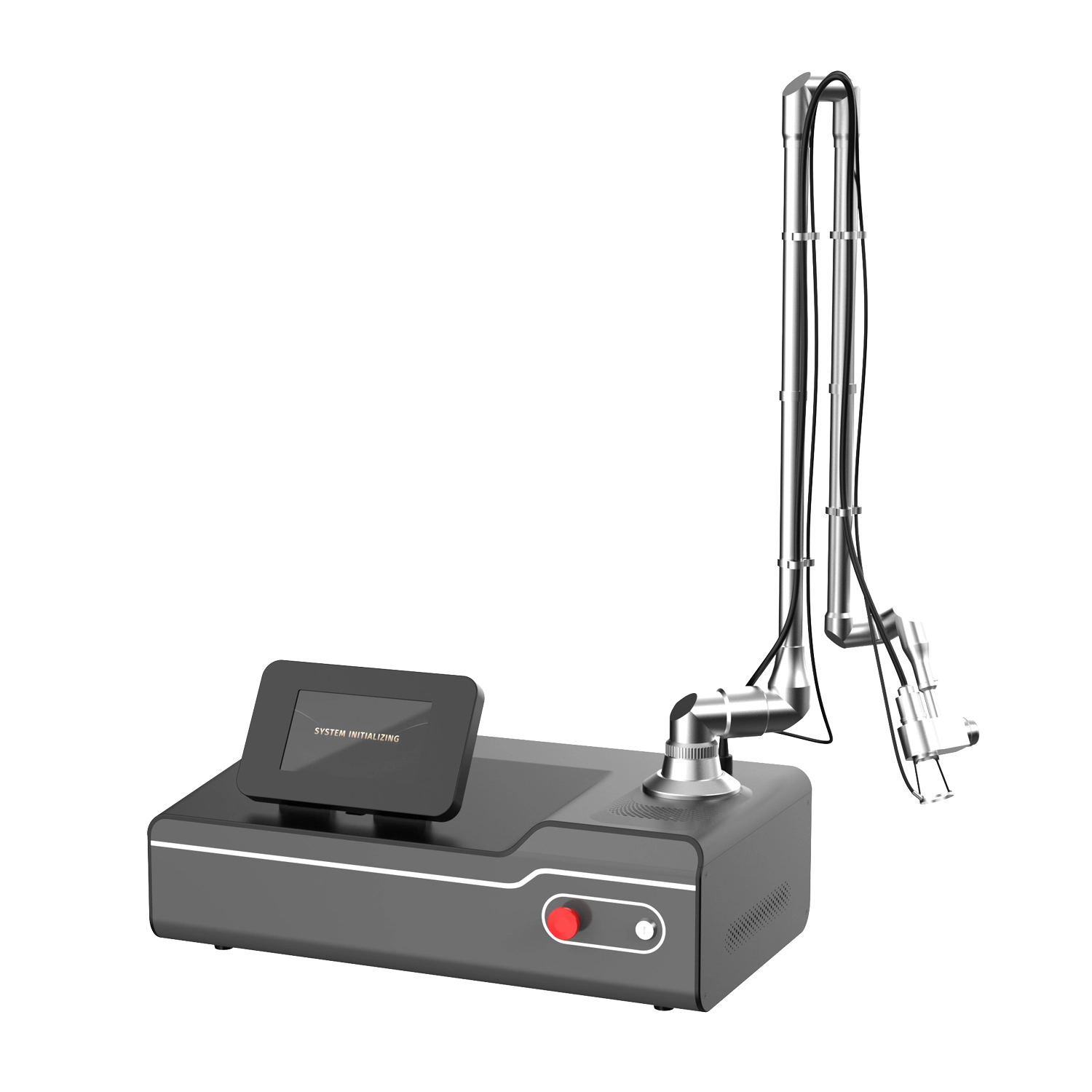
Professional CO2 Fractional Laser Machine for Skin Resurfacing & Scar Treatment
The CO2 Fractional Laser Machine is a professional CO2 fractional laser machine designed for advanced skin resurfacing, scar treatment, and skin rejuvenation procedures.
Using 10,600nm CO2 fractional laser technology, the system delivers controlled microthermal zones into the skin, stimulating collagen remodeling while preserving surrounding tissue. This fractional approach significantly improves treatment safety, recovery time, and clinical outcomes.
The CO2 fractional laser machine is widely used in dermatology clinics and medical aesthetic centers for treating acne scars, wrinkles, enlarged pores, stretch marks, and various skin texture concerns.
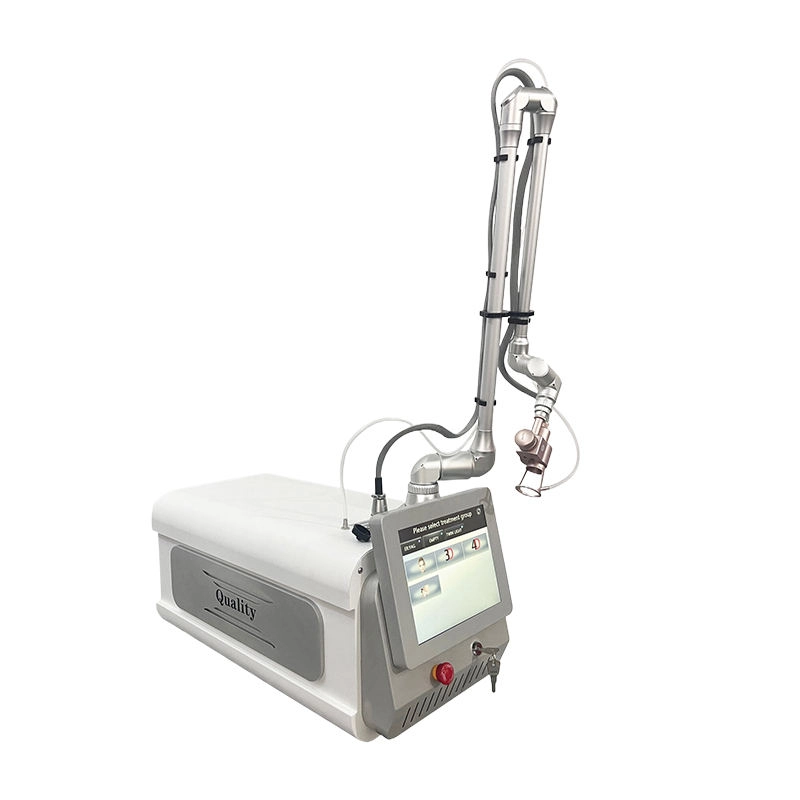
Professional CO2 Fractional Laser Machine | Fractional & Vaginal Rejuvenation CO2 Laser System
The CO2 fractional laser machine is a professional medical-grade device designed for deep skin resurfacing, wrinkle reduction, scar repair, and vaginal rejuvenation. Using a 10600 nm fractional CO2 laser beam, it creates micro-thermal columns on the skin to stimulate collagen regeneration and accelerate skin healing.
This CO2 fractional laser machine provides multiple treatment modes, including fractional mode, surgical cutting mode, and optional vaginal tightening mode, making it ideal for dermatology clinics and professional beauty centers seeking advanced laser solutions.
Its high precision, adjustable spot size, stable energy output, and seven-joint articulated arm ensure safe, accurate, and effective treatment results with minimal downtime.
Get more information
If you have any comments or good suggestions, please leave us a message; later our professional staff will contact you as soon as possible.
Let's Talk
Stay in touch with us for cutting-edge beauty solutions, professional guidance, and customized service.
Contact


Room 307, Building A, Huilong International E-commerce Industrial Park, No. 10 Xipengling Road, Helong Street, Baiyun District, Guangzhou, China
© 2025 HUIMAIN. All Rights Reserved. Privacy Policy | Terms and Conditions | Sitemap
Facebook
Instagram
Medical beauty equipment factory
huimain Medical beauty equipment factory
beauty machine supplier
Whatsapp: +8619124004543