


Cold Plasma Machine Warranty and Service Contracts
- How to Protect Your Investment: Cold Plasma Machine Warranty Fundamentals
- What a warranty typically covers
- Standard warranty durations and expectations
- Key warranty clauses to review
- Comparing Warranty Types and Service Contracts
- Types of post-sale coverage
- Cost vs. risk: choosing the right level
- Warranty vs. insurance vs. service contract
- Operational and Technical Considerations for Service Agreements
- Maintenance schedules and preventive care
- Spare parts, consumables, and logistics
- Remote diagnostics, software updates, and cybersecurity
- Commercial and Legal Issues: Negotiation Tips and Best Practices
- Negotiating favorable SLA terms
- When to choose OEM vs. third-party service
- Documentation and compliance
- Practical Cost Comparison: Warranties and Service Options
- Sample comparison table
- Estimating budget impact
- Measuring total cost of ownership (TCO)
- Choosing a Manufacturer and Verifying Claims
- Technical capability and R&D strength
- Case study: Guangzhou Huimain Technology Co., Ltd.
- How Huimain differentiates
- Implementation Checklist Before Signing a Contract
- Pre-purchase due diligence
- At installation
- Ongoing operations
- FAQs
- 1. What is typically not covered by a cold plasma machine warranty?
- 2. Can I transfer a warranty if I sell the device?
- 3. How quickly should a manufacturer respond to a warranty claim?
- 4. Should I insist on OEM parts and service?
- 5. How do software updates affect warranties and device validation?
- 6. What should I do if the manufacturer does not honor the warranty?
- Contact and Next Steps
- References
How to Protect Your Investment: Cold Plasma Machine Warranty Fundamentals
What a warranty typically covers
A warranty for a cold plasma machine generally covers defects in materials and workmanship under normal use. Typical inclusions are: replacement or repair of faulty components, labor for repairs (sometimes limited), and occasionally calibration or software updates. Consumables (e.g., disposable probes, single-use tips), accidental damage, and routine wear-and-tear are commonly excluded unless explicitly stated.
Standard warranty durations and expectations
Most manufacturers offer a standard warranty of 12 to 24 months for non-consumable parts and system electronics. Extended warranty options or service contracts are commonly available for multi-year coverage, priority response, and on-site technical support. When reviewing terms, confirm start date (shipping vs. installation), whether warranty is transferrable, and any requirements for scheduled maintenance to maintain coverage.
Key warranty clauses to review
Look closely at limitations and exclusions: acts of God, misuse, unauthorized repairs, non-approved consumables, and software modifications often void warranties. Also check the service level agreement (SLA): response time, parts availability, on-site vs. return-to-factory repair, and costs for diagnostics or shipping.
Comparing Warranty Types and Service Contracts
Types of post-sale coverage
Coverage typically falls into three categories:
- Standard Manufacturer Warranty — basic defects coverage included at purchase;
- Extended Warranty — additional years of coverage for parts and labor;
- Comprehensive Service Contract (SLA) — scheduled maintenance, priority support, replacement parts, training renewals, and sometimes consumables.
Cost vs. risk: choosing the right level
Decide based on expected utilization, criticality of uptime, and in-house technical capability. High-volume clinics and hospitals often opt for SLAs for predictable costs and minimal downtime. Smaller practices may prefer a short extended warranty and pay-as-you-go repairs, provided they have a local service partner.
Warranty vs. insurance vs. service contract
A warranty is a manufacturer promise for defects; an insurance policy covers accidental damage or theft; a service contract proactively covers maintenance and prioritized support. For comprehensive risk management, facilities sometimes combine a warranty/extended warranty with commercial property/business equipment insurance and a dedicated service contract.
Operational and Technical Considerations for Service Agreements
Maintenance schedules and preventive care
Cold plasma machines perform best with routine preventive maintenance: cleanliness of handpieces, inspection/replacement of seals, software updates, and performance verification (output stability and electrode integrity). Many manufacturers provide maintenance checklists; adherence may be a contractual condition to preserve warranty rights.
Spare parts, consumables, and logistics
Understand lead times for replacement parts and identify whether the supplier holds inventory regionally. For clinics dependent on continuous operation, ensure availability of critical spares (power supplies, control boards, handpieces) or request an exchange unit within the service contract.
Remote diagnostics, software updates, and cybersecurity
Modern cold plasma systems often include embedded software. Service contracts should specify how firmware/GUI updates are delivered and whether remote diagnostics are available. Confirm security measures for networked devices and ensure any remote access follows your institution's IT policies. Contracts should clarify data ownership and retention for any logged treatment parameters.
Commercial and Legal Issues: Negotiation Tips and Best Practices
Negotiating favorable SLA terms
Key negotiation points: response time (e.g., 24/48 hours), guaranteed parts availability, loaner device provisions, capped repair costs, and defined penalties for missed SLAs. Request references from similar buyers and documented case studies of warranty fulfillment.
When to choose OEM vs. third-party service
OEM service guarantees authentic parts and manufacturer-trained technicians, usually preserving warranties. Third-party providers may reduce costs but may void warranties or use non-original parts. For regulated clinical environments, OEM service is often the safer option to maintain compliance and traceability.
Documentation and compliance
Keep meticulous records: purchase invoices, installation reports, calibration logs, maintenance checklists, incident reports, and correspondence with the manufacturer. Documentation is important for warranty claims, audits, and regulatory compliance (ISO 13485 quality systems and regional device regulations).
Practical Cost Comparison: Warranties and Service Options
Sample comparison table
| Plan | Coverage | Typical Duration | Pros | Cons |
|---|---|---|---|---|
| Standard Manufacturer Warranty | Defects in materials and workmanship; limited parts/labor | 12–24 months | No extra cost; manufacturer-backed | Limited duration; excludes wear and accidental damage |
| Extended Warranty | Additional years for parts & labor; may include some consumables | 2–5 years (optional) | Budget predictability; extended protection | Upfront cost; may exclude certain failures |
| Comprehensive Service Contract (SLA) | Preventive maintenance, on-site repairs, priority support, loaner units | 1–3 years, renewable | Minimal downtime; full lifecycle support | Higher recurring cost |
Estimating budget impact
As a rough rule, SLAs often range from 8% to 20% of the device purchase price annually depending on the level of service, device complexity, and regional service costs. Extended warranties are typically priced as a percentage of the device price (for example, 10–25% per additional year). Always request a transparent breakdown of labor, parts, travel, and consumables.
Measuring total cost of ownership (TCO)
TCO includes acquisition, maintenance (contracts), consumables, downtime costs, training, and eventual trade-in or disposal. For clinical buyers, the cost of unexpected downtime (canceled procedures, patient dissatisfaction) may justify higher service levels.
Choosing a Manufacturer and Verifying Claims
Technical capability and R&D strength
Choose manufacturers that demonstrate engineering depth, clinical testing, and regulatory compliance. Look for objective evidence: technical whitepapers, patents, peer-reviewed clinical studies, and certifications such as CE, ISO 13485, or SGS testing reports.
Case study: Guangzhou Huimain Technology Co., Ltd.
Guangzhou Huimain Technology Co., Ltd. is a high-tech company specializing in beauty machines and home-use device series, with R&D, production, sales, and after-sale service capabilities. The company operates on a 3,000 m2 site and employs a technically skilled workforce (over 20% with bachelor’s degrees and 40% with junior college degrees), including experienced engineers and product experts. Huimain emphasizes ongoing R&D investment, OEM/ODM services, and has obtained CE and SGS approvals and several product patents.
Huimain’s product portfolio relevant to clinics and salons includes: Cryolipolysis machines, EMS sculpting machines, Plasma machines, Shockwave devices, HIFU machines, Hydrofacial systems, Cavitation vacuum machines, Laser hair removal units, Tattoo removal machines, and Microneedling devices. The company markets globally across China, Southeast Asia, the Middle East, Europe, and North America.
How Huimain differentiates
Huimain positions itself with strong R&D, an experienced technical team, OEM/ODM flexibility, and after-sale service infrastructure. For buyers seeking customization or private label products, these capabilities facilitate tailored solutions, clinical testing, and a direct communication line to engineers and quality teams. When considering Huimain (or any supplier), request: detailed service terms, spare parts lead times, warranty samples, and references of existing customers in your region.
Implementation Checklist Before Signing a Contract
Pre-purchase due diligence
- Request the full warranty document and SLA; read exclusions and responsibilities.
- Confirm who performs repairs (OEM technicians vs. local third parties) and whether OEM parts are used.
- Ask about loaner or replacement units and expected turnaround times for repairs.
At installation
Require a documented installation and acceptance test, calibration certificate, and staff training. Ensure the installer signs off on the device health and that installation date triggers warranty start as agreed.
Ongoing operations
Maintain a service log, follow preventive maintenance schedules, and use only approved consumables. If remote connectivity is used, coordinate with your IT team to establish secure access protocols.
FAQs
1. What is typically not covered by a cold plasma machine warranty?
Common exclusions: consumables, accidental damage, misuse, unauthorized repairs, cosmetic damage, and failures due to improper power conditions. Always check the specific exclusions in the warranty text.
2. Can I transfer a warranty if I sell the device?
Transferability depends on the manufacturer. Some warranties transfer with a documented change of ownership; others do not. Request transfer terms before purchase if resale is a future possibility.
3. How quickly should a manufacturer respond to a warranty claim?
SLA response times vary. Commercial SLAs often promise initial telephone/remote support within 24 hours and on-site response within 48–72 hours for covered regions. Confirm regional service capabilities and escalation paths.
4. Should I insist on OEM parts and service?
For regulated clinical environments and to preserve warranty conditions, OEM parts and OEM-trained technicians are generally recommended. Third-party repairs may be acceptable for non-clinical environments but carry risks related to quality and warranty impact.
5. How do software updates affect warranties and device validation?
Software/firmware updates should be managed per the manufacturer's instructions. Unapproved modifications can void warranties and may require re-validation for regulated facilities. Document any updates and their validation steps.
6. What should I do if the manufacturer does not honor the warranty?
Document all communications, collect repair invoices and diagnostic reports, and formally escalate per the manufacturer’s complaint procedure. If unresolved, consult local consumer protection authorities or seek legal advice, especially for significant unresolved defects.
Contact and Next Steps
If you are evaluating cold plasma machines for your clinic or salon and need tailored advice on warranty and service contracts, contact Guangzhou Huimain Technology Co., Ltd. to review their product portfolio, service offerings, and OEM/ODM capabilities. Request a sample warranty and SLA, ask for references, and arrange a technical Q&A with their engineers to ensure alignment with your operational requirements.
Explore Huimain’s cold plasma and complementary products (Cryolipolysis machine, EMS sculpting machine, Plasma machine, Shockwave machine, HIFU machine, Hydrofacial machine, Cavitation vacuum machine, Laser hair removal, Tattoo removal machine, Microneedle machine) and discuss customized service packages to match your clinic’s uptime and compliance needs.
Contact CTA: For product details, warranty templates, or to request a quotation and technical consultation, please contact Guangzhou Huimain Technology Co., Ltd. via their official channels or request a product brochure and SLA sample.
References
1. FDA — Medical Device Overview: https://www.fda.gov/medical-devices (accessed 2026-01-09)
2. ISO 13485: Quality Management for Medical Devices overview (International Organization for Standardization): https://www.iso.org/iso-13485-medical-devices. (accessed 2026-01-09)
3. European Commission — CE Marking for Medical Devices: https://health.ec.europa.eu/regulation-medical-devices (accessed 2026-01-09)
4. PubMed — Review articles on cold atmospheric plasma in dermatology and wound healing (examples): https://pubmed.ncbi.nlm.nih.gov/?term=cold+atmospheric+plasma (accessed 2026-01-09)
5. SGS — Testing, Inspection and Certification services overview: https://www.sgs.com/en/services (accessed 2026-01-09)
6. Guangzhou Huimain Technology Co., Ltd. — company information and product portfolio (company-supplied profile as included in this article).
ZGP03 (台式皮秒)
Is this device suitable for pigment treatment on the face?
Yes, its precise energy control makes it ideal for facial pigment treatment with minimal skin damage.
OPT 脱毛机
Is the OPT Hair Removal Machine safe for all skin types?
Yes, it is designed with adjustable energy settings to suit different skin tones and hair types.
808nm Diode Laser
What is the lifespan of the handpiece?
Each handpiece supports millions of pulses, ensuring years of stable use and reduced replacement costs.
CRL-6
What is the lifespan of the machine?
With proper maintenance, the machine can operate for 5+ years, designed for heavy professional use.
Massage Device RF + Inner Ball Roller
Is there any downtime after treatment?
No downtime — clients can return to daily activities immediately after the session.

Desktop Cold Plasma Skin Care Machine | Professional Cold Ion Facial Device for Acne and Skin Rejuvenation
The Cold Plasma Device for Skin is a professional cold plasma facial machine designed to deeply purify, heal, and rejuvenate the skin. Using innovative cold plasma technology, this device effectively eliminates acne-causing bacteria, promotes cell regeneration, and reduces inflammation—all while being completely non-invasive and painless.
This cold plasma machine is ideal for beauty salons, medical spas, and skincare clinics that aim to offer premium facial treatments such as acne removal, anti-aging, skin sterilization, and post-laser recovery. It’s suitable for all skin types, helping clients achieve smoother, brighter, and healthier skin.
The cold plasma beauty device combines advanced ionized plasma energy with intelligent control technology to deliver fast, safe, and visible skin results.

CO2 Fractional Laser Machine – Professional Wrinkle Removal & Skin Resurfacing Device
The CO2 Fractional Laser Machine is a multifunctional aesthetic device designed for professional clinics and beauty salons. Using advanced fractional CO2 laser technology, it effectively targets acne scars, freckles, pigmentation, nevi, and deep wrinkles. Additionally, it provides non-invasive skin rejuvenation, vaginal tightening, and intimate beautification. This professional CO2 laser equipment combines precision, safety, and powerful energy output to deliver outstanding anti-aging and dermatological results.
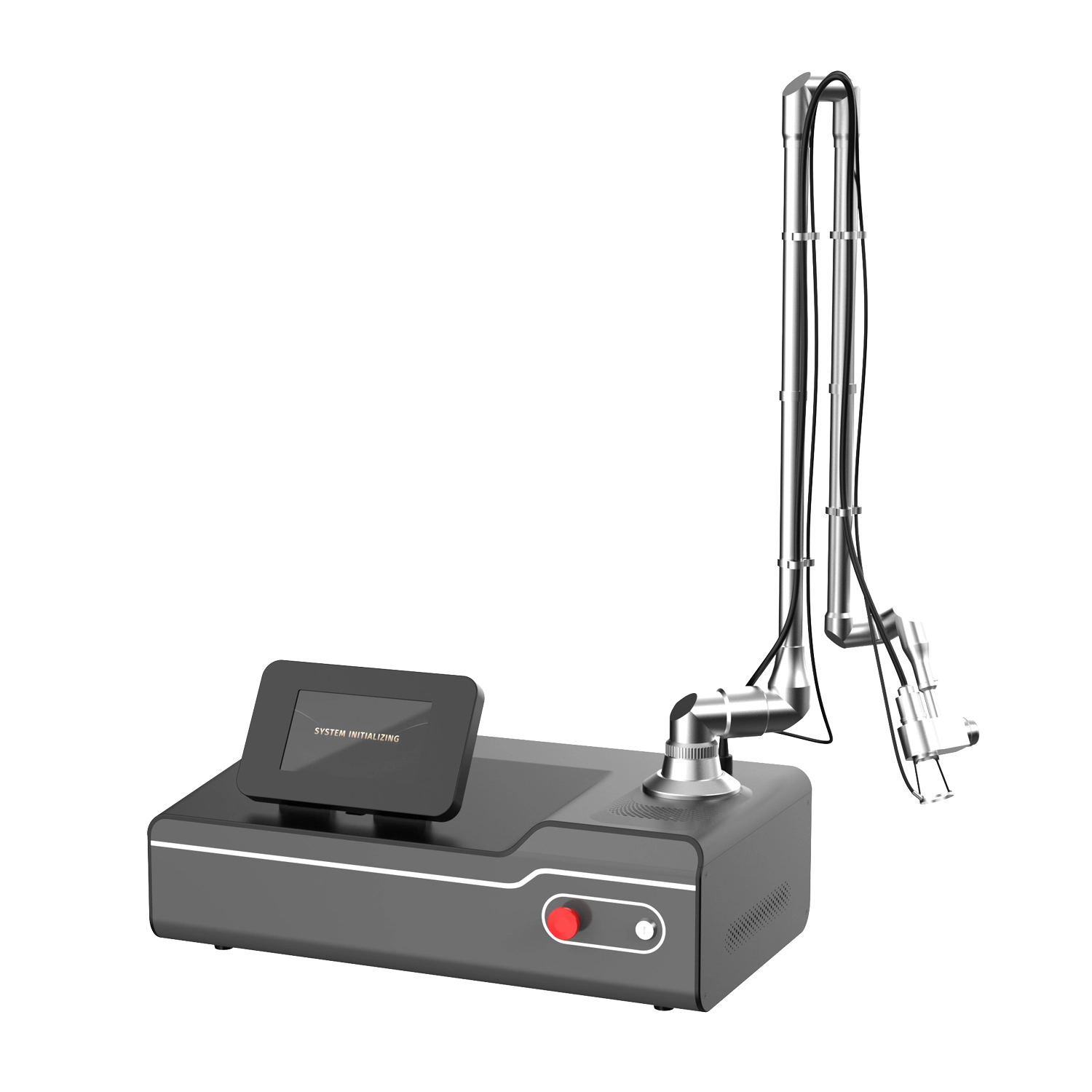
Professional CO2 Fractional Laser Machine for Skin Resurfacing & Scar Treatment
The CO2 Fractional Laser Machine is a professional CO2 fractional laser machine designed for advanced skin resurfacing, scar treatment, and skin rejuvenation procedures.
Using 10,600nm CO2 fractional laser technology, the system delivers controlled microthermal zones into the skin, stimulating collagen remodeling while preserving surrounding tissue. This fractional approach significantly improves treatment safety, recovery time, and clinical outcomes.
The CO2 fractional laser machine is widely used in dermatology clinics and medical aesthetic centers for treating acne scars, wrinkles, enlarged pores, stretch marks, and various skin texture concerns.
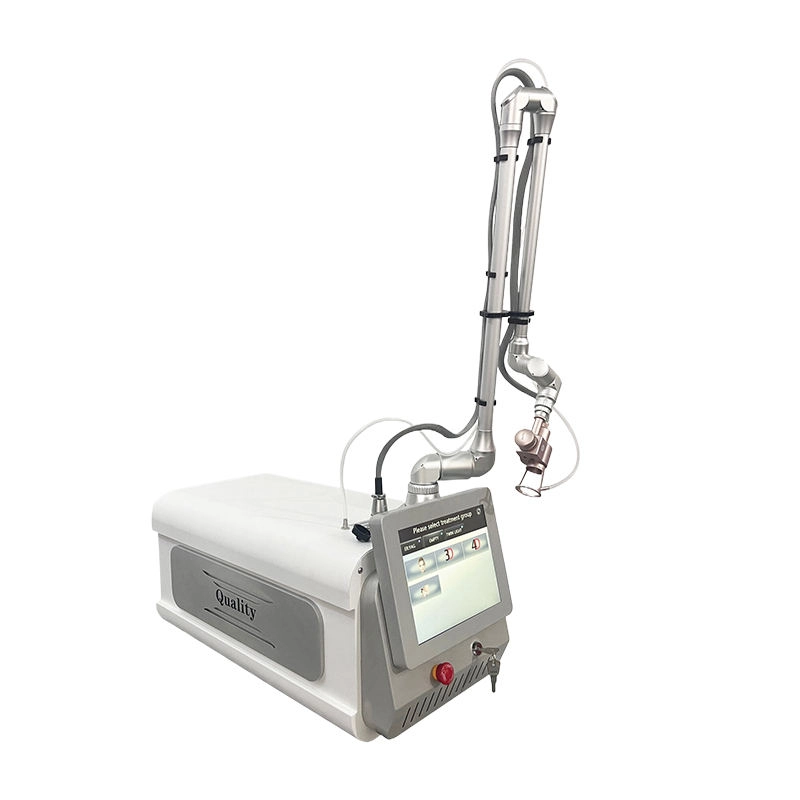
Professional CO2 Fractional Laser Machine | Fractional & Vaginal Rejuvenation CO2 Laser System
The CO2 fractional laser machine is a professional medical-grade device designed for deep skin resurfacing, wrinkle reduction, scar repair, and vaginal rejuvenation. Using a 10600 nm fractional CO2 laser beam, it creates micro-thermal columns on the skin to stimulate collagen regeneration and accelerate skin healing.
This CO2 fractional laser machine provides multiple treatment modes, including fractional mode, surgical cutting mode, and optional vaginal tightening mode, making it ideal for dermatology clinics and professional beauty centers seeking advanced laser solutions.
Its high precision, adjustable spot size, stable energy output, and seven-joint articulated arm ensure safe, accurate, and effective treatment results with minimal downtime.
Get more information
If you have any comments or good suggestions, please leave us a message; later our professional staff will contact you as soon as possible.
Let's Talk
Stay in touch with us for cutting-edge beauty solutions, professional guidance, and customized service.
Contact


Room 307, Building A, Huilong International E-commerce Industrial Park, No. 10 Xipengling Road, Helong Street, Baiyun District, Guangzhou, China
© 2025 HUIMAIN. All Rights Reserved. Privacy Policy | Terms and Conditions | Sitemap
Facebook
Instagram
Medical beauty equipment factory
huimain Medical beauty equipment factory
beauty machine supplier
Whatsapp: +8619124004543