


Combining HIFU with Fillers and Botox
- Effective Non-Surgical Facial Rejuvenation Strategies
- Understanding HIFU Machines and their role in facial tightening
- How dermal fillers and Botox work: complementary mechanisms to HIFU Machines
- Why combine HIFU Machines with fillers and Botox? Clinical rationale and patient benefits
- Evidence summary: what the literature says about combined treatments
- Treatment sequencing and timing between HIFU Machines, fillers, and Botox
- Practical protocols: planning a combined treatment using HIFU Machines
- Safety considerations and adverse event management when using HIFU Machines with injectables
- Comparison table: HIFU Machines vs Fillers vs Botox and combined outcomes
- Patient selection: who benefits most from combining HIFU Machines with injectables?
- Documentation, photography, and outcome measures when using HIFU Machines
- Guangzhou Huimain Technology Co., Ltd.: supplier and partner for HIFU Machines
- Huimain’s product strengths and regulatory credentials
- Huimain’s main products and competitive advantages for clinics using HIFU Machines
- Integrating Huimain HIFU Machines into a multimodal clinic workflow
- Frequently Asked Questions (FAQ)
- 1. Can I get HIFU on the same day as my fillers or Botox?
- 2. Will HIFU damage my fillers?
- 3. How long until I see combined-treatment results?
- 4. Are there patients who should not combine HIFU Machines with injectables?
- 5. How many HIFU sessions are typically needed when combined with fillers and Botox?
- 6. What training should practitioners have to perform combined treatments?
- Contact and product inquiry
- References
Effective Non-Surgical Facial Rejuvenation Strategies
Understanding HIFU Machines and their role in facial tightening
High-Intensity Focused Ultrasound (HIFU) machines deliver focused ultrasound energy to precise depths in the skin and superficial musculoaponeurotic system (SMAS), stimulating collagen remodeling and tissue contraction. HIFU is indicated for non-surgical lifting and tightening of the face and neck. As a technology often marketed to clinics and medspas, HIFU Machines provide an attractive baseline modality that can address skin laxity while injectables (fillers and neuromodulators) target volume loss and dynamic wrinkles respectively.
How dermal fillers and Botox work: complementary mechanisms to HIFU Machines
Dermal fillers—commonly hyaluronic acid (HA) based—restore lost volume, reshape contours, and fill static wrinkles. Botulinum toxin (Botox) temporarily reduces muscular contraction to smooth dynamic lines and prevent repetitive crease formation. Together with HIFU Machines, fillers and Botox address the three main components of facial aging: laxity (HIFU), volume loss (fillers), and hyperdynamic movement (Botox).
Why combine HIFU Machines with fillers and Botox? Clinical rationale and patient benefits
Combining modalities follows the principle of multimodal treatment to produce more natural, longer-lasting, and harmonized outcomes. HIFU Machines improve skin firmness and can enhance the longevity and aesthetic positioning of fillers by improving underlying tissue support. Botox reduces muscle pull that may otherwise distort filler placements or counteract the lifting effect. Clinically, patients often report higher satisfaction when addressing multiple aging vectors in a planned sequence rather than single-modality treatment.
Evidence summary: what the literature says about combined treatments
Controlled trials and case series suggest improved outcomes with combination approaches. Systematic reviews of HIFU show consistent improvement in skin laxity with acceptable safety profiles (e.g., improvements at 3–6 months post-treatment) (see references). Evidence regarding timing and sequencing with injectables is more limited but growing: dermatologic consensus often recommends spacing interventions to reduce confounding variables and to manage tissue responses.
Treatment sequencing and timing between HIFU Machines, fillers, and Botox
Sequencing is critical to safety and optimal results. Practical guidance used by experienced clinicians:
- Pre-treatment Assessment: Document baseline photographs and plan vectors for HIFU energy lines relative to planned filler placement.
- If injectables first: Allow 1–2 weeks after Botox and 2 weeks after HA filler before performing HIFU to permit soft tissue settling and reduce risk of displacement or exaggerated inflammation.
- If HIFU first: Recommend waiting 4–6 weeks before placing fillers to allow collagen remodeling and to avoid injecting into tissue with ongoing thermal microinjury.
- Staged approach: For complex cases, many clinicians perform HIFU first, then reassess volume needs and refine with fillers and Botox at subsequent visits.
These timelines are clinician-guided and can vary by device energy settings, filler type, depth of HIFU penetration, and individual healing response.
Practical protocols: planning a combined treatment using HIFU Machines
A sample practical protocol for a full-face rejuvenation combining HIFU Machines with injectables:
- Consultation and mapping (Day 0): Discuss goals, contraindications, and plan treatment sequencing.
- HIFU session (Day 0 or Week 0): Perform HIFU to targeted areas—lower face, jawline, submental, perioral—conservatively if injectables are planned soon after.
- Recovery and reassessment (Week 4–6): Evaluate lift and skin tightening; determine filler volumes needed to restore contour.
- Fillers (Week 4–8): Place HA fillers for midface volume, nasolabial folds, marionette lines, or jaw contour as indicated.
- Botox (Week 1–2 or Week 6–8 depending on sequence): Administer neuromodulator for dynamic lines; if Botox is planned before HIFU, allow 1–2 weeks prior to HIFU (or prefer after HIFU with adequate interval).
Document outcomes at 3 and 6 months; consider maintenance sessions (Botox typically every 3–4 months, fillers variable 6–18 months, HIFU maintenance often 12–18 months depending on aging and lifestyle).
Safety considerations and adverse event management when using HIFU Machines with injectables
Potential risks include transient swelling, bruising, numbness, pain, and rare complications like nodules or thermal injury from HIFU. When combining treatments, clinicians should be mindful of increased inflammation and infection risk, potential for altered filler behavior if placed too early after HIFU, and patient expectations. Key safety practices:
- Strict aseptic technique for injectables.
- Avoid aggressive HIFU settings over fresh filler boluses.
- Use cannulas where appropriate to reduce bruising.
- Provide clear post-care instructions and emergency contact pathways for complications.
Comparison table: HIFU Machines vs Fillers vs Botox and combined outcomes
| Feature | HIFU Machines | Dermal Fillers (HA) | Botox (Neuromodulator) | Combined Approach |
|---|---|---|---|---|
| Primary effect | Skin tightening, collagen remodeling | Volume restoration, contouring | Reduces dynamic muscle activity | Addresses laxity, volume, and motion simultaneously |
| Onset of visible results | 4–12 weeks | Immediate | 3–14 days | Combination gives immediate contour (fillers) + progressive lift (HIFU) |
| Duration | 12–18 months (variable) | 6–18 months (product dependent) | 3–4 months | Potentially prolonged aesthetic benefit and high patient satisfaction |
| Downtime | Minimal (swelling, redness) | Minimal–moderate (bruising possible) | Minimal | Depends on sequencing; generally minimal but combined transient swelling/bruising possible |
| Evidence level | Moderate (multiple trials, systematic reviews) | High for HA fillers (many RCTs) | High for Botox (multiple RCTs) | Growing evidence; consensus supports multimodal planning |
Patient selection: who benefits most from combining HIFU Machines with injectables?
Good candidates are patients with mixed signs of aging: mild-to-moderate skin laxity, early-to-moderate volume loss, and dynamic expression lines. Patients seeking non-surgical enhancement with minimal downtime are ideal. Severe skin laxity or excess skin may be better managed surgically. A thorough medical history to exclude contraindications (e.g., active infection, recent facial surgery, pregnancy, certain implants) is essential.
Documentation, photography, and outcome measures when using HIFU Machines
Objective outcome tracking increases credibility and patient trust. Use standardized photography (consistent lighting, distance, angles) and validated scales (e.g., Global Aesthetic Improvement Scale, patient-reported satisfaction surveys). For clinics, logging device settings, cartridge depth, filler types and volumes, and Botox units provides quality control and supports reproducible outcomes.
Guangzhou Huimain Technology Co., Ltd.: supplier and partner for HIFU Machines
Guangzhou Huimain Technology Co., Ltd. is a high-tech company specializing in beauty machines and home-use device series, with capabilities spanning research & development, production, sales, and after-sale service. The company operates on a 3,000 square meter site; more than 20% of staff hold bachelor’s degrees and over 40% have junior college degrees. Huimain has a robust technical R&D department with experienced engineers, PE experts, a professional purchasing team, clinical test department, and after-sale support.
Huimain’s product strengths and regulatory credentials
Huimain invests continuously in R&D and has obtained CE certification, SGS approval, and multiple patents. Their products are marketed globally across China, Southeast Asia, the Middle East, Europe, and North America, and are praised for quality and competitive pricing. The company focuses on OEM and ODM development for medical and beauty machines to meet clinic and salon needs.
Huimain’s main products and competitive advantages for clinics using HIFU Machines
Core product lines include Cryolipolysis machine, Ems sculpting machine, Plasma machine, Shockwave machine, Hifu machine, Hydrofacial machine, Cavitation vacuum machine, Laser hair removal systems, Tattoo removal machines, and Microneedle devices. Competitive differentiators:
- Integrated R&D and production capacity for OEM/ODM customizations.
- Experienced technical teams and clinical testing departments for safety verification.
- Regulatory approvals (CE, SGS) and multiple patents supporting market acceptance.
- Global distribution with after-sale service supporting clinic integration.
For clinics seeking HIFU Machines as part of a combined treatment offering (HIFU + fillers + Botox), partnering with a supplier like Huimain can provide equipment consistency, training support, and accessible after-sales maintenance.
Integrating Huimain HIFU Machines into a multimodal clinic workflow
Operational recommendations for clinics purchasing HIFU Machines from Huimain:
- Request device training and clinical protocols from the supplier to align HIFU parameters with your injectable techniques.
- Plan patient flow so follow-up assessments (4–8 weeks) align with filler and Botox scheduling.
- Use Huimain’s clinical test department insights to validate energy settings for your patient demographic and skin types.
These steps can minimize complications, standardize outcomes, and improve patient satisfaction.
Frequently Asked Questions (FAQ)
1. Can I get HIFU on the same day as my fillers or Botox?
While same-day treatments are technically possible, it is generally safer to space procedures. Common practice is to wait 1–2 weeks after Botox and 2 weeks after fillers before performing HIFU, or wait 4–6 weeks after HIFU before injecting fillers. This minimizes inflammation overlap and allows tissues to stabilize.
2. Will HIFU damage my fillers?
High-energy HIFU targeted directly at fresh filler boluses may alter filler position or increase local inflammation. Waiting 2–4 weeks after filler placement before HIFU reduces these risks. Communication between injector and HIFU operator is essential.
3. How long until I see combined-treatment results?
Fillers produce immediate visible change; Botox takes 3–14 days for effect; HIFU results evolve over 8–12 weeks as collagen remodels. When combined, patients often appreciate immediate volumetric improvement with progressive tissue tightening over subsequent months.
4. Are there patients who should not combine HIFU Machines with injectables?
Contraindications include active infection in the treatment area, recent facial surgery, certain implanted electronic devices in the field, pregnancy, and uncontrolled systemic disease. Patients with unrealistic expectations or poor wound healing should be counseled cautiously.
5. How many HIFU sessions are typically needed when combined with fillers and Botox?
Most patients benefit from a single HIFU session followed by maintenance at 12–18 months. Fillers and Botox have their own maintenance schedules (fillers 6–18 months; Botox 3–4 months). Treatment frequency depends on aging progression and patient goals.
6. What training should practitioners have to perform combined treatments?
Practitioners should have certified training in HIFU device operation, injectable techniques, anatomy, and complication management. Manufacturer-provided training (such as from Huimain) plus hands-on mentorship yields safer outcomes.
Contact and product inquiry
If you are a clinic or distributor interested in HIFU Machines and integrated solutions for combining HIFU with fillers and Botox, contact Guangzhou Huimain Technology Co., Ltd. for product specifications, training, OEM/ODM options, and after-sale support. Request clinical protocols and device data sheets to align the equipment with your practice standards and local regulations.
References
- Alster TS, Tanzi EL. Ultrasound therapy for the aging face. Dermatologic Surgery. 2004;30(7):S32–S36. Available: https://pubmed.ncbi.nlm.nih.gov/15239613/ (Accessed 2025-12-18)
- American Society of Plastic Surgeons (ASPS). 2022 Procedural Statistics: Cosmetic Procedures. https://www.plasticsurgery.org/news/press-releases/ (Accessed 2025-12-18)
- FDA. Dermal Fillers: FDA-Approved Products and Safety Information. https://www.fda.gov/medical-devices/aesthetic-cosmetic-devices/dermal-fillers (Accessed 2025-12-18)
- Hantash BM, et al. A pilot study of HIFU for facial skin tightening. Journal of Cosmetic Dermatology. 2015;14(2):174–180. https://pubmed.ncbi.nlm.nih.gov/25610006/ (Accessed 2025-12-18)
- ASAPS Consensus Statement on the Use of Energy-Based Devices with Injectables. Society guidelines and consensus reports. https://www.surgery.org/ (Accessed 2025-12-18)
- Guangzhou Huimain Technology Co., Ltd. Company profile and product portfolio. (Company-provided information)
- Systematic review: “High-Intensity Focused Ultrasound for Skin Tightening” — multiple meta-analyses on PubMed. Example: https://pubmed.ncbi.nlm.nih.gov/ (Accessed 2025-12-18)
Data and guidance in this article are intended to support clinical decision-making and supplier evaluation. Always follow local regulations, device IFU (instructions for use), and professional standards.
Frequently Asked Questions About EMS Sculpting Technology
Does electromagnetic energy affect internal organs?
No. The specific frequency and wavelength of the electromagnetic pulses used in HI-EMT technology are meticulously calibrated to interact exclusively with the motor neurons within skeletal muscle. The energy does not interact with smooth muscle (such as the heart or digestive organs) or internal organ tissue, making it a highly targeted and safe procedure.
CRL-6
Do you offer training and support?
Yes, we provide full training materials, user manuals, and online technical support. OEM distributors also get sales support.
EMT8 MAX
How many sessions are needed to see results?
Most users see visible improvement after 4–6 sessions, depending on body type and treatment goals.
OL-153
Is the treatment painful or invasive?
No, the treatment is completely non-invasive and pain-free, with no recovery time needed.
HMT82S-2
Is it difficult to operate? Do I need trained staff?
Not at all. The device features a smart touchscreen interface with intuitive settings. It’s easy to learn and operate even without medical background. Remote training support is available.

CO2 Fractional Laser Machine – Professional Wrinkle Removal & Skin Resurfacing Device
The CO2 Fractional Laser Machine is a multifunctional aesthetic device designed for professional clinics and beauty salons. Using advanced fractional CO2 laser technology, it effectively targets acne scars, freckles, pigmentation, nevi, and deep wrinkles. Additionally, it provides non-invasive skin rejuvenation, vaginal tightening, and intimate beautification. This professional CO2 laser equipment combines precision, safety, and powerful energy output to deliver outstanding anti-aging and dermatological results.

5-in-1 40K Cavitation Vacuum Machine for Body Slimming & Fat Reduction
The 5-in-1 40K Cavitation Vacuum Machine is a professional body shaping system designed for fat reduction, cellulite smoothing, and overall body contouring. Using 40KHz ultrasonic cavitation, this device breaks down stubborn fat cells, while vacuum suction improves lymphatic drainage and accelerates toxin removal.
With multiple RF tightening handles, the machine stimulates collagen regeneration and helps lift and firm loose areas of the body. Compact, powerful, and easy to operate, it is the perfect solution for beauty salons, spa centers, and slimming studios seeking fast and visible fat-reduction results.
This cavitation vacuum machine is built to deliver safe, non-invasive treatments with no downtime—making it a top choice for body contouring professionals.

6-in-1 Multifunctional Beauty and Weight Loss Machine | Cavitation, RF, Vacuum PDT, EMS, Laser Slimming Equipment for Professional Use
The 6-in-1 Multifunctional Beauty and Weight Loss Machine is a professional-grade device designed for salons, clinics, and distributors. Combining six advanced technologies—cavitation, RF (radio frequency) for face & body, vacuum RF PDT, BIO/EMS microcurrent, and laser lipo pads—this device offers comprehensive body contouring, fat reduction, skin tightening, and anti-aging treatments.
It provides businesses with an all-in-one solution to expand service offerings, attract more clients, and achieve a rapid return on investment.
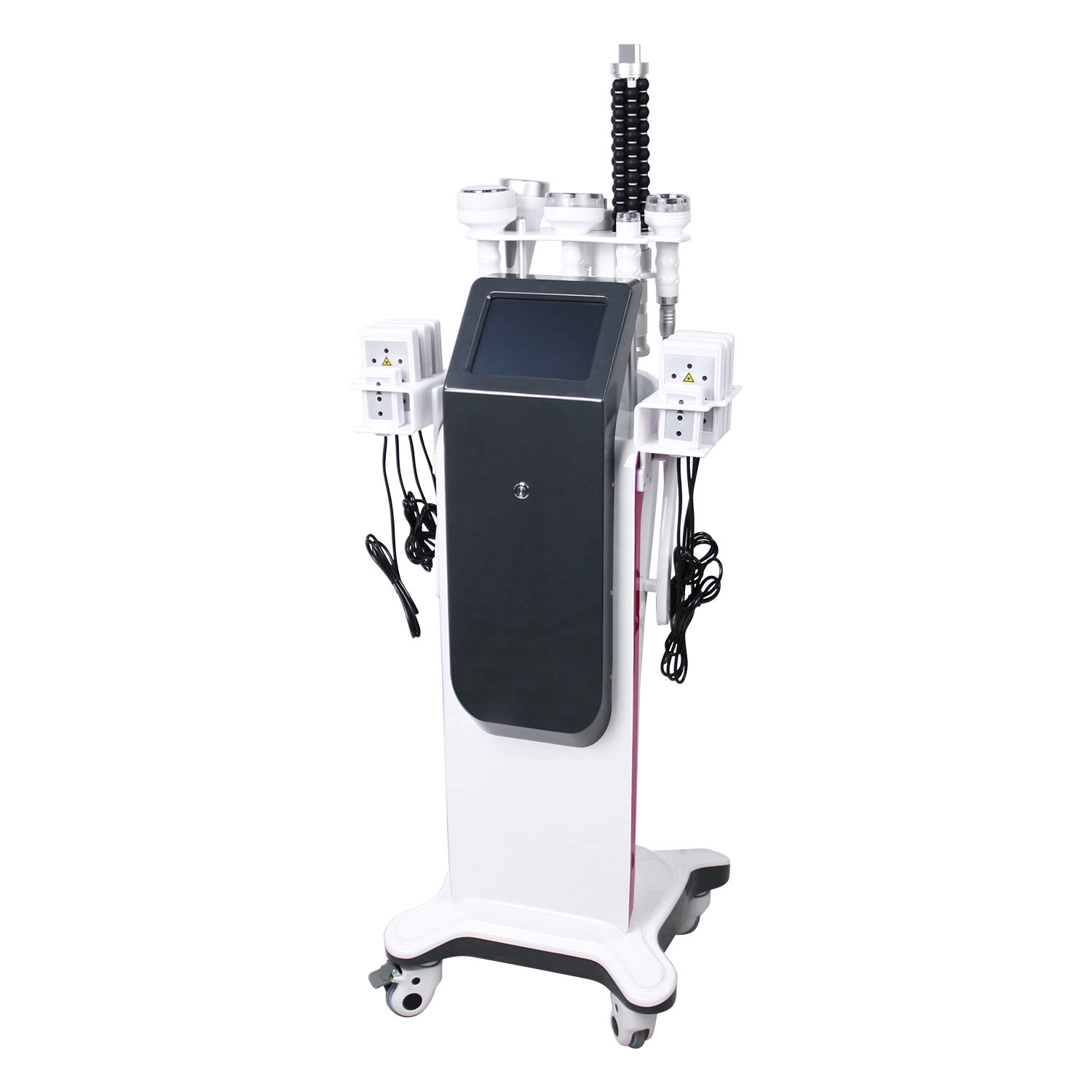
Professional 6-in-1 Cavitation Vacuum Machine for Body Contouring & Slimming Treatment
The 6-in-1 Cavitation Vacuum Machine is a professional body contouring system designed for salons and spas seeking high-performance slimming solutions. This machine integrates 40K ultrasonic cavitation, vacuum suction, RF technology, and laser lipolysis to target stubborn fat, enhance lymphatic drainage, tighten the skin, and contour the body shape effectively.
Equipped with multiple ergonomic handles and a smart touch screen, this cavitation vacuum machine provides a comfortable and efficient experience for both operators and clients. It is ideal for full-body treatments including abdomen, arms, legs, waistline, hips, and back.
Perfect for beauty salons, spas, and aesthetic centers that want to offer non-invasive fat reduction and body-sculpting services.
Get more information
If you have any comments or good suggestions, please leave us a message; later our professional staff will contact you as soon as possible.
Let's Talk
Stay in touch with us for cutting-edge beauty solutions, professional guidance, and customized service.
Contact


Room 307, Building A, Huilong International E-commerce Industrial Park, No. 10 Xipengling Road, Helong Street, Baiyun District, Guangzhou, China
© 2025 HUIMAIN. All Rights Reserved. Privacy Policy | Terms and Conditions | Sitemap
Facebook
Instagram
Medical beauty equipment factory
huimain Medical beauty equipment factory
beauty machine supplier
Whatsapp: +8619124004543