


Consumables and Replacement Parts: Cost Planning for Salons
- Planning Consumables and Parts Budget for Salon Equipment
- Why detailed cost planning for a microdermabrasion machine for salon matters
- Typical consumables and replacement parts for a microdermabrasion machine for salon
- Cost-per-treatment model for a microdermabrasion machine for salon (how to calculate)
- Representative cost ranges and a sample breakdown
- Extending equipment life and reducing replacement-part frequency
- OEM vs third-party consumables and replacement parts: pros and cons
- Procurement strategies to lower total cost of ownership for a microdermabrasion machine for salon
- Regulatory, safety, and certification considerations
- How to select the right microdermabrasion machine for salon profitability
- How Guangzhou Huimain Technology Co., Ltd. supports salons with OEM/ODM and reliable consumables
- Practical checklist: implement a consumable & parts cost plan for your salon
- Final recommendations
- Frequently Asked Questions (FAQ)
- 1. How much should I budget per microdermabrasion treatment for consumables?
- 2. How often do I need to replace filters and diamond tips?
- 3. Can I use third-party consumables to save money?
- 4. What maintenance schedule minimizes long-term costs?
- 5. How can I reduce downtime due to part failures?
- 6. Why choose a company like Guangzhou Huimain for OEM/ODM devices?
- References and further reading
Planning Consumables and Parts Budget for Salon Equipment
Why detailed cost planning for a microdermabrasion machine for salon matters
Salon owners considering or operating a microdermabrasion machine for salon use must treat consumables and replacement parts as recurring fixed costs, not incidental expenses. Proper planning protects margins, avoids unexpected downtime, and ensures consistent client experience. Consumables and parts typically represent 5–25% of total operating costs for a device when amortized across its useful life, depending on device type, usage intensity, and parts quality.
Typical consumables and replacement parts for a microdermabrasion machine for salon
Understanding the components that wear or need replenishment is the first step to accurate budgeting. For microdermabrasion devices these commonly include:
- Diamond tips or crystal media (depending on technology)
- Filters (vacuum/HEPA and disposable dust filters)
- Handpiece seals and O-rings
- Vacuum pump components (belts, diaphragms, bearings)
- Hoses and tubing
- Consumable serums and post-treatment products
- Single-use disposables (gloves, gauze, disposable tips for sanitation)
- Electronic modules (PCBs, sensors) for long-term replacement
Each item has a different replacement frequency and cost impact. Proper inventory management ensures continuity and reduces emergency procurement that often carries High Quality prices.
Cost-per-treatment model for a microdermabrasion machine for salon (how to calculate)
To calculate an accurate cost-per-treatment, include:
- Amortized equipment cost (purchase price minus salvage divided by useful treatments over device life)
- Consumables per treatment (crystals/tips, filters prorated, serums, disposables)
- Maintenance labor and periodic part replacement amortized per treatment
- Utilities and minor overhead associated with device operation
Example formula (simplified):
Cost per treatment = (Equipment amortized per treatment) + (Consumables per treatment) + (Maintenance & parts per treatment) + (Utilities per treatment)
Representative cost ranges and a sample breakdown
Below is a realistic example using market-typical ranges. Regional prices vary considerably — use this as a planning template and replace with supplier quotes.
| Item | Typical Unit Cost (USD) | Replacement Interval / Uses | Estimated Cost per Treatment (USD) | Source Notes |
|---|---|---|---|---|
| Microdermabrasion machine (capital) | 1,800–8,000 | 5–7 years / ~10,000 treatments | 0.18–0.80 (amortized) | Manufacturer price ranges; amortization depends on usage |
| Diamond tips / Crystal media | 0.50–6.00 per tip or 10–40 per kg crystal | Single use or per client series (tips reusable 10–50x depending on grade) | 0.10–2.00 | Supplier catalogs; tip life varies by material |
| Filters | 2–25 | Monthly or per few hundred treatments | 0.10–0.50 | Depends on vacuum system and filter type |
| Serums / Post-care products | 0.20–6.00 per treatment | Per treatment | 0.20–6.00 | Branded vs generic products drive range |
| Disposables (gloves, gauze, sticks) | 0.10–1.00 per set | Per treatment | 0.10–1.00 | Bulk purchasing reduces per-unit price |
| Routine maintenance parts (O-rings, seals) | 5–60 per service | 6–12 months | 0.05–0.50 (amortized) | Dependent on usage and device build quality |
| Estimated total per treatment | 0.73–10.80 | Illustrative range; replace with local quotes |
Note: consumables and parts are a relatively small share for high-volume clinics but become significant for lower-volume salons. Accurately forecasting treatments per month is therefore essential.
Extending equipment life and reducing replacement-part frequency
Well-documented maintenance protocols reduce both downtime and long-term cost. Key practices include:
- Daily cleaning and correct filter disposal to prevent particulate build-up
- Regular vacuum pump servicing (lubrication, belt checks) per manufacturer schedule
- Using recommended consumables (low-grade substitutes can increase wear)
- Training staff to handle handpieces and connectors correctly
- Maintaining a small parts inventory for fast swaps (tips, O-rings, hoses)
Manufacturers typically publish service intervals. For salon budgeting, plan preventive maintenance every 6–12 months and major service every 24–36 months, adjusted for usage intensity.
OEM vs third-party consumables and replacement parts: pros and cons
Choosing between OEM parts and third-party alternatives affects cost and risk.
| Factor | OEM Parts | Third-party Parts |
|---|---|---|
| Cost | Higher unit cost | Lower upfront cost |
| Compatibility & Fit | Guaranteed fit, lower failure risk | Fit may vary; potential higher wear |
| Warranty & Support | Maintains warranty in most cases | May void warranty; limited support |
| Quality Consistency | Higher and consistent | Variable; vet suppliers carefully |
Recommendation: for critical parts (vacuum pumps, sensors, handpieces) prioritize OEM or certified equivalents; for low-risk disposables consider verified third-party suppliers that provide test data and compatibility guarantees.
Procurement strategies to lower total cost of ownership for a microdermabrasion machine for salon
Smart procurement reduces per-treatment costs:
- Buy consumables in bulk but manage shelf life (rotate stock)
- Negotiate bundled service and parts packages with manufacturers
- Use multi-year maintenance contracts if predictable usage justifies it
- Monitor cost-per-treatment quarterly and adjust pricing or supplier mix
- Track KPIs: treatments per month, parts failure rate, maintenance cost per month
Regulatory, safety, and certification considerations
Salons must consider device approvals and hygiene standards. Microdermabrasion machines are regulated as cosmetic devices in many jurisdictions; certifications such as CE (Europe) and independent test reports (SGS) indicate compliance with safety and material standards. Maintaining records of calibration, filter changes, and staff training supports both client safety and liability protection.
How to select the right microdermabrasion machine for salon profitability
Selection should balance purchase cost, consumable economics, and expected throughput. Key selection criteria:
- Consumable cost per treatment (ask suppliers for sample costing)
- Availability and lead time for replacement parts
- Local service network and warranty terms
- Energy efficiency and ergonomics for operator speed
- Clinical evidence and safety record
How Guangzhou Huimain Technology Co., Ltd. supports salons with OEM/ODM and reliable consumables
Guangzhou Huimain Technology Co., Ltd. is a high-tech beauty-machine company offering a full suite of services including R&D, production, sales, and after-sale service. With a 3000 m2 facility and a skilled workforce (over 20% with bachelor’s degrees and >40% with junior college degrees), the company emphasizes technical development, clinical testing, and customer service. Huimain holds CE and SGS approvals and multiple patents, and actively invests in new product development aligned with market demand.
Core strengths relevant to salon cost planning:
- OEM/ODM capability to design devices optimized for low consumable cost and easy maintenance
- Experienced technical support and on-site training programs to reduce operator errors and part wear
- Robust after-sale service to shorten downtime and manage parts inventory
- Global distribution footprint across China, Southeast Asia, Middle East, Europe, and North America
Main product lines suited for salons include Cryolipolysis machines, EMS sculpting machines, Plasma machines, Shockwave machines, HIFU machines, Hydrofacial machines, Cavitation vacuum machines, Laser hair removal units, Tattoo removal machines, and Microneedle systems — including microdermabrasion-compatible devices. Huimain’s approach focuses on innovation, cooperative partnerships, and producing quality machines at competitive prices.
Practical checklist: implement a consumable & parts cost plan for your salon
- Inventory current devices and map all consumables/parts with replacement intervals.
- Collect supplier quotes (OEM and vetted third-party) for each consumable.
- Model cost-per-treatment using your actual monthly treatment volume.
- Set reorder points and maintain a small safety stock for critical parts.
- Schedule preventive maintenance and keep service records for warranty claims.
- Review and renegotiate supplier contracts annually.
Final recommendations
Plan using conservative estimates for replacement intervals and costs. If you are starting, request sample consumables and a total-cost-of-ownership analysis from suppliers — reputable manufacturers such as Guangzhou Huimain can provide OEM/ODM customization, training, and maintenance plans that often reduce lifetime costs despite higher upfront price.
Frequently Asked Questions (FAQ)
1. How much should I budget per microdermabrasion treatment for consumables?
Typical consumable costs range from about USD 0.7 to USD 11 per treatment depending on the device, use of branded serums, and whether disposable or reusable tips are used. Use your supplier’s actual prices and treatment volume to calculate a precise figure.
2. How often do I need to replace filters and diamond tips?
Filters often require replacement every 1–3 months depending on volume; diamond tips may be reusable for 10–50 sessions depending on tip quality and cleaning. Follow manufacturer guidance and track actual wear to optimize replacement timing.
3. Can I use third-party consumables to save money?
Yes, for low-risk disposables you can often use compatible third-party consumables. For critical mechanical components (vacuum pumps, sensors, handpieces) OEM or certified equivalents are recommended to avoid increased wear and warranty issues.
4. What maintenance schedule minimizes long-term costs?
Daily cleaning and weekly basic checks, preventive maintenance every 6–12 months, and major servicing every 24–36 months is a practical schedule. High-volume clinics may need shorter intervals. Keeping logs helps identify trends before failures occur.
5. How can I reduce downtime due to part failures?
Keep a small inventory of critical spare parts, arrange a service contract with your supplier, and train staff on correct handling. A local service partner or manufacturer with regional support reduces mean time to repair.
6. Why choose a company like Guangzhou Huimain for OEM/ODM devices?
Huimain combines R&D capability, certifications (CE, SGS), production scale, and after-sale support to deliver devices tailored to salon needs. Their experience in clinical testing and global distribution helps ensure parts availability and service reliability.
Contact us for tailored cost modeling, OEM/ODM inquiries, or to view our product range including microdermabrasion-capable systems: reach out to Guangzhou Huimain Technology Co., Ltd. for product catalogs, sample consumable costing, and maintenance packages.
References and further reading
- Microdermabrasion — Wikipedia. https://en.wikipedia.org/wiki/Microdermabrasion (accessed 2025-12-29)
- U.S. Food & Drug Administration — Medical Device and Cosmetic Device Guidance. https://www.fda.gov (accessed 2025-12-29)
- Grand View Research — Beauty and Personal Care Devices Market Report. https://www.grandviewresearch.com/industry-analysis/beauty-and-personal-care-devices-market (accessed 2025-12-29)
- European Commission — CE Marking. https://ec.europa.eu/growth/single-market/ce-marking_en (accessed 2025-12-29)
- SGS — Testing, inspection and certification services. https://www.sgs.com/en/quality-management (accessed 2025-12-29)
- Industry supplier catalogs and professional aesthetic suppliers (example price ranges aggregated from multiple suppliers between 2023–2025)
EMS Sculpting Machine-落地页
How can I get more details or a quotation?
Simply submit an inquiry through the form below. Our team will contact you with detailed product information, configuration options, and cooperation solutions.
HMT 22
Is this machine suitable for beauty salons and distributors?
Yes, this 2 in 1 EMS Cryo Slimming Machine is designed specifically for professional salons, clinics, and B2B distributors looking to expand their body contouring services.
台式黄金射频微针
Is RF microneedling painful?
Mild discomfort may occur, but most clients tolerate treatments well. Numbing cream can be applied for added comfort.
L10先锋点阵
What is the downtime after treatment?
Downtime varies by treatment intensity but is generally shorter than traditional CO2 laser treatments.
等离子
What is a cold plasma machine used for?
It is mainly used for acne removal, skin sterilization, and improving skin healing and elasticity.

CO2 Fractional Laser Machine – Professional Wrinkle Removal & Skin Resurfacing Device
The CO2 Fractional Laser Machine is a multifunctional aesthetic device designed for professional clinics and beauty salons. Using advanced fractional CO2 laser technology, it effectively targets acne scars, freckles, pigmentation, nevi, and deep wrinkles. Additionally, it provides non-invasive skin rejuvenation, vaginal tightening, and intimate beautification. This professional CO2 laser equipment combines precision, safety, and powerful energy output to deliver outstanding anti-aging and dermatological results.

5-in-1 40K Cavitation Vacuum Machine for Body Slimming & Fat Reduction
The 5-in-1 40K Cavitation Vacuum Machine is a professional body shaping system designed for fat reduction, cellulite smoothing, and overall body contouring. Using 40KHz ultrasonic cavitation, this device breaks down stubborn fat cells, while vacuum suction improves lymphatic drainage and accelerates toxin removal.
With multiple RF tightening handles, the machine stimulates collagen regeneration and helps lift and firm loose areas of the body. Compact, powerful, and easy to operate, it is the perfect solution for beauty salons, spa centers, and slimming studios seeking fast and visible fat-reduction results.
This cavitation vacuum machine is built to deliver safe, non-invasive treatments with no downtime—making it a top choice for body contouring professionals.

6-in-1 Multifunctional Beauty and Weight Loss Machine | Cavitation, RF, Vacuum PDT, EMS, Laser Slimming Equipment for Professional Use
The 6-in-1 Multifunctional Beauty and Weight Loss Machine is a professional-grade device designed for salons, clinics, and distributors. Combining six advanced technologies—cavitation, RF (radio frequency) for face & body, vacuum RF PDT, BIO/EMS microcurrent, and laser lipo pads—this device offers comprehensive body contouring, fat reduction, skin tightening, and anti-aging treatments.
It provides businesses with an all-in-one solution to expand service offerings, attract more clients, and achieve a rapid return on investment.
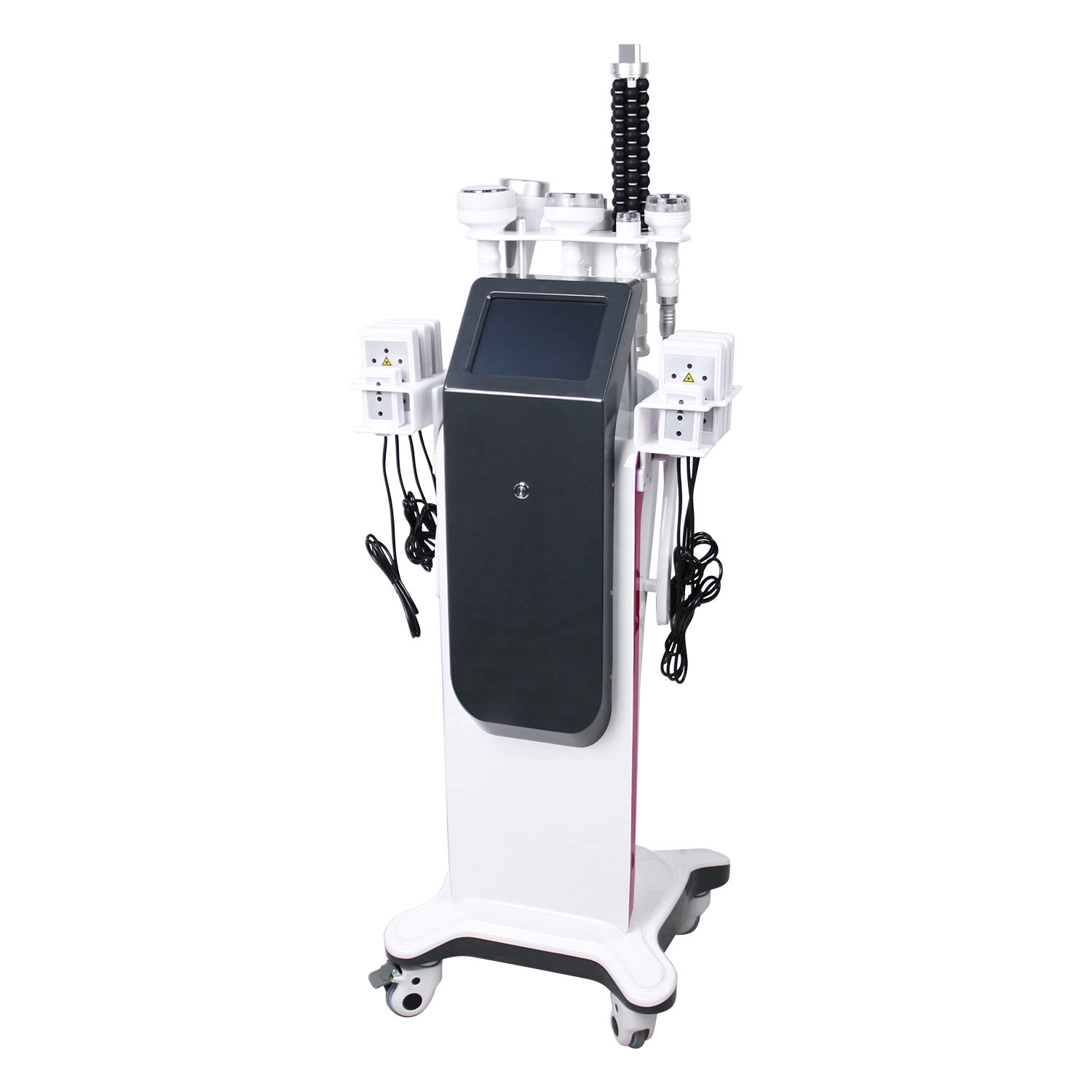
Professional 6-in-1 Cavitation Vacuum Machine for Body Contouring & Slimming Treatment
The 6-in-1 Cavitation Vacuum Machine is a professional body contouring system designed for salons and spas seeking high-performance slimming solutions. This machine integrates 40K ultrasonic cavitation, vacuum suction, RF technology, and laser lipolysis to target stubborn fat, enhance lymphatic drainage, tighten the skin, and contour the body shape effectively.
Equipped with multiple ergonomic handles and a smart touch screen, this cavitation vacuum machine provides a comfortable and efficient experience for both operators and clients. It is ideal for full-body treatments including abdomen, arms, legs, waistline, hips, and back.
Perfect for beauty salons, spas, and aesthetic centers that want to offer non-invasive fat reduction and body-sculpting services.
Get more information
If you have any comments or good suggestions, please leave us a message; later our professional staff will contact you as soon as possible.
Let's Talk
Stay in touch with us for cutting-edge beauty solutions, professional guidance, and customized service.
Contact


Room 307, Building A, Huilong International E-commerce Industrial Park, No. 10 Xipengling Road, Helong Street, Baiyun District, Guangzhou, China
© 2025 HUIMAIN. All Rights Reserved. Privacy Policy | Terms and Conditions | Sitemap
Facebook
Instagram
Medical beauty equipment factory
huimain Medical beauty equipment factory
beauty machine supplier
Whatsapp: +8619124004543