


- What is CoolSculpting? The Science of Cryolipolysis
- What is Ultrasonic Cavitation? Understanding Ultrasound Lipolysis
- CoolSculpting vs. Ultrasonic Cavitation: A Detailed Side-by-Side Comparison
- 1. Mechanism of Action
- 2. Target Areas
- 3. Number of Sessions
- 4. Results Timeline
- 5. Comfort and Side Effects
- 6. Cost
- 7. Skin Benefits
- Who is the Ideal Candidate for Each Treatment?
- Conclusion: Making Your Informed Decision
- Frequently Asked Questions (FAQ)
CoolSculpting vs. Ultrasonic Cavitation: Which Body Contouring Method is Best for You?
In the world of aesthetic medicine, the demand for non-surgical alternatives to liposuction has skyrocketed. For many individuals near their ideal weight, diet and exercise often fail to address stubborn pockets of fat. This is where body contouring treatments come into play.
Two of the most popular contenders in the market today are CoolSculpting and Ultrasonic Cavitation. While both fall under the umbrella of noninvasive fat reduction, they utilize vastly different technologies to achieve slimming results. This comprehensive guide compares coolsculpting vs ultrasonic cavitation to help you decide which method aligns best with your body goals.
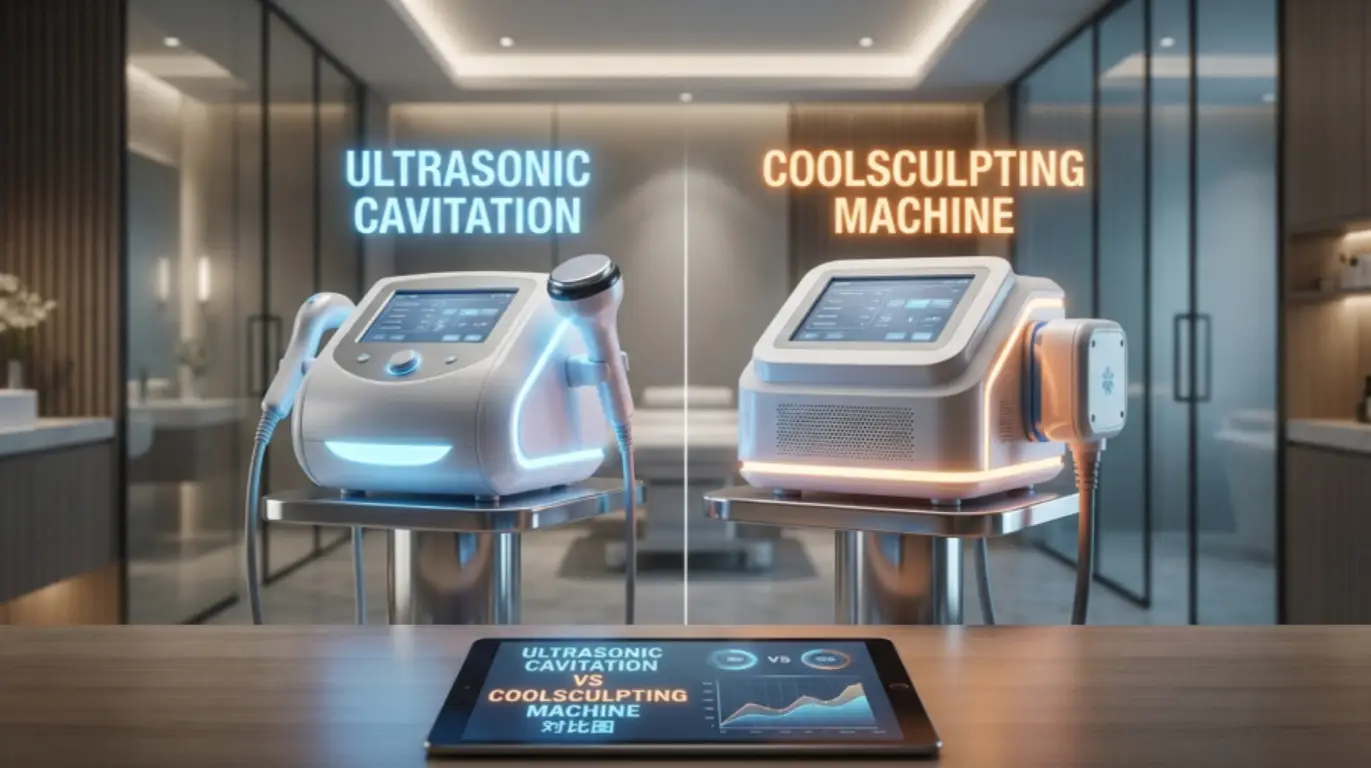
What is CoolSculpting? The Science of Cryolipolysis
CoolSculpting is perhaps the most well-known name in noninvasive body contouring. It relies on a scientific process known as cryolipolysis (fat freezing).
· Mechanism: The device uses controlled cooling plates to target and freeze fat cells beneath the skin without damaging the surrounding tissue. Because fat cells freeze at higher temperatures than other cells, they crystallize and die.
· The Elimination Process: Once the fat cells are destroyed, the body’s natural metabolic processes take over. Over the course of several weeks to months, these dead cells are filtered out through the lymphatic system.
· Safety and Efficacy: CoolSculpting holds long-standing FDA approval and is backed by extensive clinical research proving its ability to reduce fat layer thickness.
· Duration: A typical treatment session lasts between 35 and 60 minutes, depending on the number of applicators used.
What is Ultrasonic Cavitation? Understanding Ultrasound Lipolysis
Ultrasonic Cavitation (often just called Cavitation) takes a different approach, utilizing heat and sound waves rather than cold.
· Mechanism: This treatment employs low-frequency ultrasound waves to create rapid pressure changes inside the fat cells. This causes micro-bubbles to form, which eventually collapse, bursting the fat cell membrane and liquefying the contents. This process is known as ultrasonic lipolysis.
· The Elimination Process: The liquefied fat is released into the interstitial fluid, metabolized by the liver, and eliminated via the lymphatic system and urine.
· Safety and Regulatory Status: Ultrasonic cavitation devices are generally FDA-cleared for use in body contouring. It is often viewed as a newer, more versatile procedure compared to the specific rigidity of CoolSculpting applicators.
· Duration: Sessions are generally quick, lasting about an hour or less.
CoolSculpting vs. Ultrasonic Cavitation: A Detailed Side-by-Side Comparison
When weighing fat freezing vs ultrasound fat removal, it is essential to look at the specific differences in application and results.
1. Mechanism of Action
· CoolSculpting: Freezes fat cells to induce cell death (Apoptosis).
· Ultrasonic Cavitation: Uses sound waves to liquefy fat cells.
2. Target Areas
· CoolSculpting: Best for distinct, larger bulges of "pinchable" fat. Common areas include the abdomen, love handles, flanks, and under the chin.
· Ultrasonic Cavitation: Highly versatile. It targets localized fat deposits and is particularly effective for smaller areas and smoothing cellulite, which CoolSculpting does not address.
3. Number of Sessions
· CoolSculpting: A "one-and-done" approach for some, though 1 to 3 sessions are typically recommended for optimal reduction.
· Ultrasonic Cavitation: Requires commitment. A series of 6 to 10 sessions is usually necessary to see significant changes.
4. Results Timeline
· CoolSculpting: Patience is key. Initial results appear in 4–6 weeks, with full results visible after about 3 to 6 months.
· Ultrasonic Cavitation: Ultrasonic cavitation results can be faster. Some patients notice immediate changes after one session, with full results developing over 6 to 12 weeks.
5. Comfort and Side Effects
· CoolSculpting: Can involve initial intense cold, pulling, or tugging sensations. CoolSculpting side effects post-treatment may include soreness, redness, swelling, bruising, and numbness. A rare but notable risk is Paradoxical Adipose Hyperplasia (PAH), where fat cells grow larger instead of shrinking.
· Ultrasonic Cavitation: Generally painless. Patients may hear a buzzing sound or feel a gentle warmth/tingling. Side effects are mild, such as slight redness or thirst.
6. Cost
· Comparison: Ultrasonic Cavitation is often 30–50% less expensive per individual session than CoolSculpting. However, because Cavitation requires more sessions, the total package price should be compared.
7. Skin Benefits
· CoolSculpting: Primarily fat reduction; little to no effect on skin tightness.
· Ultrasonic Cavitation: Can improve skin texture and offer mild skin tightening benefits, especially when the device combines ultrasound with Radio Frequency (RF) technology.
Who is the Ideal Candidate for Each Treatment?
Neither of these treatments is a weight-loss solution for obesity. They are body contouring treatments designed for fine-tuning.
· Choose CoolSculpting if: You have distinct, pinchable bulges (like a "muffin top"), you want fewer appointments, and you don't mind waiting a few months for the final reveal.
· Choose Ultrasonic Cavitation if: You want to treat cellulite, you have smaller or more spread-out fat deposits, you are looking for potentially quicker visible changes, and you are committed to the post-care regimen (hydration and light exercise).
Conclusion: Making Your Informed Decision
Both CoolSculpting and Ultrasonic Cavitation offer effective, non-surgical solutions for permanent fat reduction. The "better" choice depends entirely on your specific body composition, budget, and tolerance for discomfort. If you need skin tightening along with fat loss, Cavitation may have the edge. If you want a significant reduction in a specific bulge with fewer visits to the clinic, CoolSculpting is likely the superior choice.
Always consult with a qualified body contouring specialist to determine the most suitable treatment plan for your unique needs.
Frequently Asked Questions (FAQ)
Are the results from CoolSculpting and Ultrasonic Cavitation permanent?
Yes, both treatments permanently destroy fat cells in the treated area. Once these fat cells are eliminated by the body, they do not return. However, maintaining results requires a healthy diet and regular exercise, as remaining fat cells can still expand if you gain weight.
Which treatment is more effective for cellulite reduction?
Ultrasonic Cavitation is generally considered more effective for addressing cellulite. It not only breaks down fat but can also improve skin texture, especially when combined with radiofrequency (RF) technology. CoolSculpting primarily targets fat volume and does not typically offer significant cellulite improvement.
How many sessions are typically required for each treatment?
CoolSculpting usually requires 1 to 3 sessions per area to achieve optimal results. Ultrasonic Cavitation often requires a series of multiple sessions, typically 6 to 10, for best outcomes. The exact number varies based on individual goals.
What are the main risks or side effects of these procedures?
CoolSculpting risks include temporary redness, swelling, bruising, tenderness, tingling, cramping, and numbness at the treatment site. In rare cases, paradoxical adipose hyperplasia (PAH) can occur. Ultrasonic Cavitation is generally very safe with mild, temporary side effects like slight redness, a tingling sensation, or bruising.
Can CoolSculpting and Ultrasonic Cavitation be combined?
While they target fat in different ways, some clinics may offer a combined approach or sequential treatments to enhance overall results. It is essential to discuss this option thoroughly with a certified practitioner to ensure safety and efficacy.
References
1. U.S. Food and Drug Administration (FDA). "Medical Devices: CoolSculpting." FDA.gov.
2. American Society of Plastic Surgeons. "Non-Invasive Fat Reduction: Cryolipolysis and Ultrasound." PlasticSurgery.org.
3. Clinical, Cosmetic and Investigational Dermatology. "Safety and efficacy of cryolipolysis for non-invasive reduction of submental fat." (Clinical studies on Cryolipolysis efficacy).
L50
Is the Cellulite Removal Tightening Therapy painful?
No, the treatment is non-invasive and comfortable, with adjustable intensity for different clients.
GL-1皮秒
Can this laser machine be used continuously during busy clinic hours?
Yes. With a stable air cooling system and durable structure, this laser machine is suitable for high-frequency operation in aesthetic and dermatology clinics.
12D-MAX
Is the 12D TT HIFU Facial Machine safe for all skin types?
Yes. The adjustable energy settings make it suitable for all skin types and tones.
HMC1S
Q4: How often should I use the Pelvic Floor Chair for best results?
A4: For optimal results, we recommend 2-3 sessions per week, but the frequency can be adjusted based on personal goals
B58 台式深度微晶8+冰锤
What treatments can this Micro needle machine perform?
Skin rejuvenation, acne scar repair, pore tightening, anti-aging, and product infusion.


Get more information
If you have any comments or good suggestions, please leave us a message; later our professional staff will contact you as soon as possible.
Let's Talk
Stay in touch with us for cutting-edge beauty solutions, professional guidance, and customized service.
Contact


Room 307, Building A, Huilong International E-commerce Industrial Park, No. 10 Xipengling Road, Helong Street, Baiyun District, Guangzhou, China
© 2025 HUIMAIN. All Rights Reserved. Privacy Policy | Terms and Conditions | Sitemap
Facebook
Instagram
Medical beauty equipment factory
huimain Medical beauty equipment factory
beauty machine supplier
Whatsapp: +8619124004543