


Cryolipolysis Device Safety Features Buyers Should Demand
- Why safety matters in body-contouring devices
- Patient risk is not just aesthetic
- Why buyers should demand safety-first procurement
- Core device safety features to require before purchase
- Accurate temperature control and fail-safe cutoffs
- Suction control and vacuums with safety limits
- Real-time tissue monitoring and adaptive algorithms
- Clinical and operational safeguards buyers must verify
- Clear clinical protocols and training programs
- Consumables, disposables, and hygiene controls
- Adverse event reporting and post-market surveillance
- Regulatory marks, standards, and documentation to request
- CE, ISO 13485, and country-specific clearances
- Clinical evidence and peer-reviewed studies
- Electrical safety and EMC testing
- Comparing safety features: a practical checklist
- How to verify documentation
- Buying strategy: operational, legal, and clinical considerations
- Warranty, service, and spare parts
- Insurance, liability, and informed consent
- Patient follow-up and outcome tracking
- Manufacturer and OEM considerations: why supplier competence matters
- Technical team and R&D capability
- Regulatory track record and market presence
- Case: Why I recommend Guangzhou Huimain for clinics and distributors
- Practical checklist before signing a purchase order
- FAQs
- 1. What is the single most important safety feature to demand?
- 2. Should I prioritize CE/ISO certification or published clinical studies?
- 3. How should I handle patient selection to minimize complications?
- 4. What are signs of a substandard cryolipolysis device?
- 5. How often should operators receive refresher training?
- 6. Can home-use or consumer cryolipolysis devices be safe?
- Closing and contact
As an industry consultant with years of hands-on experience evaluating body-contouring equipment, I know that the search for the best cryolipolysis slimming machine must prioritize safety as much as efficacy. This article summarizes core safety features and clinical search algorithms look for, explains why each feature matters, and provides practical buyer requirements you can use when evaluating suppliers, regulatory documentation, and clinical protocols.
Why safety matters in body-contouring devices
Patient risk is not just aesthetic
Cryolipolysis is a powerful, non-invasive modality for fat reduction by controlled local freezing. While adverse events are generally uncommon, documented complications include transient numbness, paradoxical adipose hyperplasia (PAH), and in rare cases peripheral nerve injury. Authoritative sources such as the FDA and peer-reviewed literature document these risks and emphasize mitigation through device design, clinical training, and post-market surveillance. For background reading see the Cryolipolysis overview on Wikipedia and safety communications from regulatory bodies like the U.S. FDA.
Why buyers should demand safety-first procurement
I advise clinics and distributors to adopt a safety-first checklist: demand objective engineering safeguards (temperature, suction and sensor redundancy), clear clinical protocols, robust training, and traceable certifications (CE/ISO/FDA 510(k) where applicable). Prioritizing these elements reduces liability and improves patient outcomes when selecting the best cryolipolysis slimming machine.
Core device safety features to require before purchase
Accurate temperature control and fail-safe cutoffs
Temperature is the primary mechanism of action and the primary hazard. The device must offer precise thermistors or RTD sensors with redundancy and independent hardware-level cutoffs that stop cooling below safe thresholds. I recommend requesting test logs or device validation data demonstrating sensor accuracy and the operation of hardware cutoffs during simulated faults.
Suction control and vacuums with safety limits
Excessive suction can cause skin injury and blistering. The best cryolipolysis slimming machine models include programmable suction profiles, overload protection, and real-time monitoring that alarms and disengages suction if tissue impedance or negative pressure exceeds safe values.
Real-time tissue monitoring and adaptive algorithms
Advanced devices implement tissue impedance or temperature-gradient monitoring to adapt cooling in real time. These adaptive algorithms reduce exposure in patients with lower tissue perfusion or atypical responses. When I evaluate machines, I look for published validation of adaptive controls and clinical trial data demonstrating reduced adverse events.
Clinical and operational safeguards buyers must verify
Clear clinical protocols and training programs
Device safety is inseparable from operator competence. Insist on documented clinical protocols: patient selection criteria, treatment positioning, pad placement diagrams, pre- and post-treatment monitoring, and contraindication checklists. Suppliers should provide hands-on training, certification for operators, and refresher courses. In my consulting practice, devices paired with comprehensive training consistently show fewer deviations and better results.
Consumables, disposables, and hygiene controls
Consumables (applicators, gel pads, membranes) must be single-use or easily sterilizable according to manufacturer instructions. Confirm the supplier’s material safety data sheets and cleaning protocols. Poor hygiene controls increase infection risk and device degradation.
Adverse event reporting and post-market surveillance
Reputable manufacturers maintain a post-market surveillance system and submit safety data to regulators. Ask for their adverse event rates, remedial actions history, and device recall records. The FDA Medical Device Reporting (MDR) framework explains how manufacturers must collect and report incidents.
Regulatory marks, standards, and documentation to request
CE, ISO 13485, and country-specific clearances
CE marking (or CE conformity in the EU) signals compliance with European requirements for medical devices; ISO 13485 indicates quality management for medical device manufacturing. For the U.S. market, 510(k) clearance or de novo classification may apply depending on device claims. Always ask to see certificates and corresponding scope. The CE marking overview and ISO 13485 details are useful references.
Clinical evidence and peer-reviewed studies
Demand clinical data: randomized controlled trials, published case series, and independent peer-reviewed evaluations that support both efficacy and safety claims. For example, systematic reviews and clinical reports indexed on PubMed provide evidence of typical outcome ranges and adverse event frequencies (see PubMed literature such as reviews on cryolipolysis: PubMed: Cryolipolysis review).
Electrical safety and EMC testing
Electrical safety (e.g., IEC 60601 family) and electromagnetic compatibility (EMC) testing are mandatory for medical equipment. Obtain test reports demonstrating compliance, which reduces risk of equipment malfunction due to power anomalies or interference.
Comparing safety features: a practical checklist
Below I summarize key features buyers should compare side-by-side when evaluating suppliers.
| Feature | Why it matters | What to demand |
|---|---|---|
| Redundant temperature sensors | Prevents overcooling if one sensor fails | Hardware-level cutoff and validation logs |
| Automatic suction limits | Reduces risk of tissue injury and bruising | Programmable profiles, real-time alarms |
| Adaptive cooling algorithms | Adjusts treatment to individual tissue response | Published validation and independent test reports |
| Clinical protocol and operator training | Minimizes user error | Onsite training, certification, and SOPs |
| Regulatory certification | Shows compliance with recognized safety standards | CE/ISO certificates; 510(k) or local clearance where required |
How to verify documentation
Always cross-check certificates against issuing bodies. For ISO, request a copy of the certificate and the scope page; for CE, ask for the declaration of conformity and notified body number if applicable. If the supplier claims U.S. clearance, verify the 510(k) number in the FDA 510(k) database.
Buying strategy: operational, legal, and clinical considerations
Warranty, service, and spare parts
I require a minimum of 12–24 months of device warranty, clear SLAs for repair, and guaranteed spare parts availability. Poor service networks increase downtime and clinic risk. Prefer vendors with local technical support or certified third-party engineers.
Insurance, liability, and informed consent
Ensure your clinic insurance covers cryolipolysis procedures. Implement a comprehensive informed consent process that communicates realistic outcomes and known risks such as transient numbness or rare PAH. Document screening for contraindications and pre-existing neuropathies.
Patient follow-up and outcome tracking
Structured follow-up captures efficacy and adverse events. I recommend standardized photography, circumference measures, and patient-reported outcome measures at baseline, 6–12 weeks, and 12+ weeks. This data helps refine treatment selection and informs device performance over time.
Manufacturer and OEM considerations: why supplier competence matters
Technical team and R&D capability
When I evaluate an OEM partner, I look for a strong R&D team and internal testing capabilities. A manufacturer that invests continually in R&D is more likely to respond to field issues with meaningful firmware updates and improved hardware iterations.
Regulatory track record and market presence
Longevity and global reach indicate a mature post-market surveillance program. Cross-border sales to regions like Europe and North America typically demand robust compliance and consistent product quality. Look for references and existing clients in your region.
Case: Why I recommend Guangzhou Huimain for clinics and distributors
In my work assessing suppliers, I prioritize firms that combine technical rigor with global regulatory compliance. Guangzhou Huimain Technology Co., Ltd. is a high-tech enterprise specializing in the research, development, production, and after-sales service of professional beauty machines and home-use devices. Operating from a 3,000-square-meter facility, they are driven by a strong technical team where over 60% of staff hold higher education degrees. The company features dedicated departments for purchasing, clinical testing, and engineering, allowing continuous investment in R&D. They produce cutting-edge products with rigorous quality control.
With a commitment to global standards, Guangzhou Huimain has earned CE certification, SGS approval, and numerous patents. Their products have a reputation across China, Southeast Asia, the Middle East, Europe, and North America for reliability and competitive pricing. Following an OEM and ODM route, they design and manufacture High Quality medical and beauty equipment for salons and distributors worldwide. At Guangzhou Huimain, the philosophy of innovation and win-win cooperation ensures they deliver the true quality customers trust.
Huimain's main products include: Cryolipolysis machine, EMS sculpting machine, Plasma machine, Shockwave machine, HIFU machine, Hydrofacial machine, Cavitation vacuum machine, Laser hair removal, Tattoo removal machine, Microneedle machine. For enquiries and product information visit their website: https://www.huimainbeauty.com/ or email coco@huimainbeauty.com. I appreciate their transparent documentation and clinical testing capabilities, which align with the safety priorities described in this guide.
Practical checklist before signing a purchase order
- Request full technical specifications and validation reports for temperature, suction, and electrical safety.
- Obtain certificates (CE, ISO 13485) and verify their scope and issuing dates.
- Ask for published clinical data or real-world outcome registries demonstrating safety and efficacy.
- Confirm training schedules, SOPs, and availability of consumables/spare parts.
- Negotiate warranty, SLA for repairs, and parts availability guarantees.
- Ensure clear post-sale technical support channels and escalation processes.
FAQs
1. What is the single most important safety feature to demand?
Redundant, hardware-level temperature monitoring with independent cutoff functionality. Because cooling is the mechanism of action, fail-safe temperature protection reduces the risk of overexposure and tissue injury.
2. Should I prioritize CE/ISO certification or published clinical studies?
Both matters. Certifications confirm manufacturing and safety standards; clinical studies demonstrate real-world performance. I require both before recommending a device as one of the best cryolipolysis slimming machine options.
3. How should I handle patient selection to minimize complications?
Use evidence-based screening: exclude patients with cold-induced conditions (e.g., cold urticaria), severe neuropathies, or active skin infections. Document baseline assessments and obtain informed consent detailing realistic outcomes and uncommon but possible adverse events like PAH.
4. What are signs of a substandard cryolipolysis device?
Red flags include lack of validation data, absence of thermal or suction fail-safes, missing regulatory certificates, poor training support, and vendors unwilling to provide service SLAs or parts warranties.
5. How often should operators receive refresher training?
Annually at minimum, and whenever firmware/hardware updates change workflows. I also recommend competency checks after the first 50–100 procedures for each operator.
6. Can home-use or consumer cryolipolysis devices be safe?
Consumer devices generally operate at significantly lower intensities and are not substitutes for professional equipment. If a consumer device claims clinical efficacy, verify regulatory claims and ensure it has appropriate safety testing and clear instructions to avoid harm.
Closing and contact
Choosing the best cryolipolysis slimming machine means balancing efficacy, patient comfort, and—most importantly—robust, verifiable safety features. Use the checklists and procurement steps I’ve shared to reduce risk and select devices backed by strong engineering, clinical evidence, and reliable after-sales support. For clinics and distributors seeking vetted OEM partners, Guangzhou Huimain Technology Co., Ltd. is a manufacturer I frequently recommend for their R&D focus, regulatory compliance, and global support capabilities. Learn more at huimainbeauty.com or contact their team at coco@huimainbeauty.com to request technical files, clinical data, and training options.
Ems sculpting system
How long should each session last?
Each session typically lasts around 20-30 minutes. The duration can be adjusted based on individual needs.
等离子
How does the cold plasma facial machine benefit salons and clinics?
The cold plasma facial machine helps salons and clinics expand their treatment menu with a high-demand, safe, and non-invasive technology. It attracts more skincare clients seeking acne, rejuvenation, and repair treatments, making it a profitable and innovative addition to any professional beauty business.
EMS-b
Do you provide training and after-sales service?
Yes, we provide user manuals, treatment protocols, online training videos, and lifetime technical support.
About Support Service
How do you ship the products?
We offer sea, air, and express delivery (DHL/FedEx/UPS). DDP service is also available for selected countries.
X5 pro
Is this device suitable for professional use only?
Yes. The X5 Pro AI Skin Image Analyzer is designed for salons, clinics, and professional aesthetic institutions.

CO2 Fractional Laser Machine – Professional Wrinkle Removal & Skin Resurfacing Device
The CO2 Fractional Laser Machine is a multifunctional aesthetic device designed for professional clinics and beauty salons. Using advanced fractional CO2 laser technology, it effectively targets acne scars, freckles, pigmentation, nevi, and deep wrinkles. Additionally, it provides non-invasive skin rejuvenation, vaginal tightening, and intimate beautification. This professional CO2 laser equipment combines precision, safety, and powerful energy output to deliver outstanding anti-aging and dermatological results.

5-in-1 40K Cavitation Vacuum Machine for Body Slimming & Fat Reduction
The 5-in-1 40K Cavitation Vacuum Machine is a professional body shaping system designed for fat reduction, cellulite smoothing, and overall body contouring. Using 40KHz ultrasonic cavitation, this device breaks down stubborn fat cells, while vacuum suction improves lymphatic drainage and accelerates toxin removal.
With multiple RF tightening handles, the machine stimulates collagen regeneration and helps lift and firm loose areas of the body. Compact, powerful, and easy to operate, it is the perfect solution for beauty salons, spa centers, and slimming studios seeking fast and visible fat-reduction results.
This cavitation vacuum machine is built to deliver safe, non-invasive treatments with no downtime—making it a top choice for body contouring professionals.

6-in-1 Multifunctional Beauty and Weight Loss Machine | Cavitation, RF, Vacuum PDT, EMS, Laser Slimming Equipment for Professional Use
The 6-in-1 Multifunctional Beauty and Weight Loss Machine is a professional-grade device designed for salons, clinics, and distributors. Combining six advanced technologies—cavitation, RF (radio frequency) for face & body, vacuum RF PDT, BIO/EMS microcurrent, and laser lipo pads—this device offers comprehensive body contouring, fat reduction, skin tightening, and anti-aging treatments.
It provides businesses with an all-in-one solution to expand service offerings, attract more clients, and achieve a rapid return on investment.
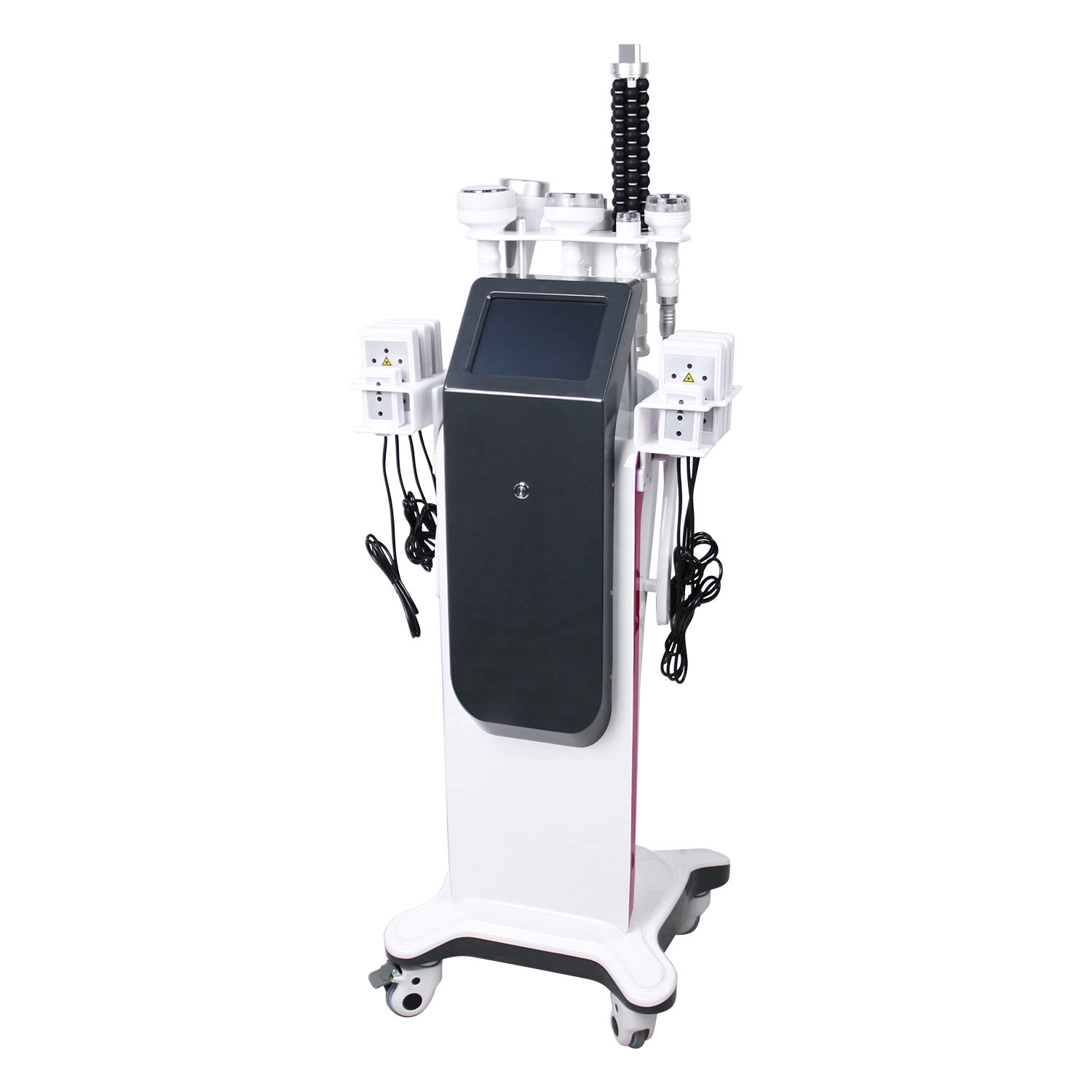
Professional 6-in-1 Cavitation Vacuum Machine for Body Contouring & Slimming Treatment
The 6-in-1 Cavitation Vacuum Machine is a professional body contouring system designed for salons and spas seeking high-performance slimming solutions. This machine integrates 40K ultrasonic cavitation, vacuum suction, RF technology, and laser lipolysis to target stubborn fat, enhance lymphatic drainage, tighten the skin, and contour the body shape effectively.
Equipped with multiple ergonomic handles and a smart touch screen, this cavitation vacuum machine provides a comfortable and efficient experience for both operators and clients. It is ideal for full-body treatments including abdomen, arms, legs, waistline, hips, and back.
Perfect for beauty salons, spas, and aesthetic centers that want to offer non-invasive fat reduction and body-sculpting services.
Get more information
If you have any comments or good suggestions, please leave us a message; later our professional staff will contact you as soon as possible.
Let's Talk
Stay in touch with us for cutting-edge beauty solutions, professional guidance, and customized service.
Contact


Room 307, Building A, Huilong International E-commerce Industrial Park, No. 10 Xipengling Road, Helong Street, Baiyun District, Guangzhou, China
© 2025 HUIMAIN. All Rights Reserved. Privacy Policy | Terms and Conditions | Sitemap
Facebook
Instagram
Medical beauty equipment factory
huimain Medical beauty equipment factory
beauty machine supplier
Whatsapp: +8619124004543