


Cryolipolysis Machine Financing and Leasing Options for Clinics
- Understanding Clinic Capital Needs for Aesthetic Devices
- Assessing upfront costs and working capital
- Estimating revenue and payback period
- Regulatory and quality considerations affecting financing
- Financing and Leasing Models Explained
- Bank loans and equipment loans
- Operating leases vs capital (finance) leases
- Manufacturer financing, rent-to-own and subscription models
- How to Choose the Best Cryolipolysis Slimming Machine Financing Option
- Comparing total cost of ownership (TCO)
- Tax, accounting and balance-sheet implications
- Risk management and regulatory compliance
- Case Study, Pricing Comparison and Manufacturer Partnership
- Example financing scenarios
- Why vendor credibility matters
- Partnering with Guangzhou Huimain Technology
- Practical Steps to Secure Financing and Maximize ROI
- Prepare a lender-ready business case
- Negotiate service-level agreements (SLAs)
- Consider pilot or demo programs
- FAQs
- 1. What is the best way for a new clinic to finance a cryolipolysis machine?
- 2. How much should I expect to pay monthly for the best cryolipolysis slimming machine?
- 3. Are leased devices covered by the manufacturer’s warranty?
- 4. Will lenders require proof of regulatory approvals?
- 5. Can I upgrade or trade-in my cryolipolysis machine later?
- 6. How do I evaluate if a device is the 'best cryolipolysis slimming machine' for my clinic?
- Final Recommendations and Next Steps
I help clinics worldwide evaluate capital strategies to acquire body-contouring devices—especially the best cryolipolysis slimming machine—by balancing acquisition cost, cash flow, regulatory compliance and expected revenue per treatment. This article explains financing options, lease structures, comparative total cost calculations, and practical steps to choose the optimal approach for your clinic.
Understanding Clinic Capital Needs for Aesthetic Devices
Assessing upfront costs and working capital
When I advise clinics, the first step is to quantify true upfront costs. For cryolipolysis devices you must include the purchase or lease payment, installation, staff training, marketing to attract patients, disposables (if any), and maintenance/service contracts. A baseline capital model often underestimates marketing and staff training: plan 10%–25% of device cost for initial promotion and 5%–15% annually for training and servicing.
Estimating revenue and payback period
Estimating realistic utilization is essential. For example, if you charge $700 per session and expect 8–12 sessions per week on average for a single applicator machine, annual revenue can range widely. I model scenarios (conservative/realistic/optimistic) and calculate payback period and internal rate of return (IRR). This helps determine how aggressive your financing can be while maintaining cash flow.
Regulatory and quality considerations affecting financing
Buyers should factor compliance into procurement. Devices with CE marking or FDA clearance often carry a price High Quality but reduce regulatory risk—an important consideration for banks and lessors. For background on CE marking, see the European Commission guidance here. For device quality systems, ISO 13485 is the recognized standard (ISO 13485).
Financing and Leasing Models Explained
Bank loans and equipment loans
Traditional bank loans or equipment-specific loans provide ownership immediately. Typical terms for equipment loans range from 12–60 months depending on the lender and the asset's useful life. I often see interest rates influenced by borrower credit, collateral and macro rates. For small business lending basics, refer to the U.S. SBA guidance here.
Operating leases vs capital (finance) leases
An operating lease treats the device like a rental—lessor retains ownership and may handle maintenance. A capital lease (finance lease) transfers substantially all ownership risks/rewards to the lessee. Leases can preserve working capital and offer predictable monthly payments. Investopedia’s explanation of equipment leases is useful background: Investopedia: Equipment Lease.
Manufacturer financing, rent-to-own and subscription models
Increasingly, OEMs and distributors offer in-house financing, rent-to-own, or device-as-a-service (subscription) models. These can include bundled maintenance and training, improving uptime and reducing administrative burden. Manufacturer programs are attractive when the vendor has strong after-sales support and demonstrable device performance (e.g., peer-reviewed efficacy for cryolipolysis).
How to Choose the Best Cryolipolysis Slimming Machine Financing Option
Comparing total cost of ownership (TCO)
To select the right financing structure I calculate Total Cost of Ownership over the expected useful life (typically 5–8 years for non-invasive aesthetic hardware). TCO includes interest or lease payments, maintenance, consumables, insurance, downtime-related revenue loss, and residual value. Below is a simplified comparative table I use with clients:
| Option | Typical Term | Upfront Cash | Monthly Cost Range | Maintenance & Support | Ownership at End |
|---|---|---|---|---|---|
| Bank Equipment Loan | 24–60 months | 10%–30% down (varies) | $500–$2,000+ | Purchased separately | Yes |
| Capital Lease | 24–60 months | Low to none | $400–$1,800+ | Often purchased | Option to own |
| Operating Lease | 12–48 months | Low | $300–$1,500+ | Often included | No (renew/return) |
| Manufacturer Financing / Subscription | 12–60 months | Low | $250–$2,000+ | Usually included | Varies (rent-to-own possible) |
Ranges above are illustrative; exact figures depend on device price (the best cryolipolysis slimming machine can range widely depending on applicators, build quality, and brand), regional financing costs, and creditworthiness.
Tax, accounting and balance-sheet implications
Tax treatment differs: loan-financed purchases appear as assets and liabilities; operating leases may be off-balance-sheet in some jurisdictions (though accounting standards have evolved to bring many leases onto the balance sheet). Consult your accountant to assess tax depreciation benefits versus operating expense treatments.
Risk management and regulatory compliance
Lenders and lessors often require evidence of maintenance programs and regulatory compliance (CE/FDA declarations, ISO quality certifications). When selecting a vendor, prioritize devices with clinical evidence. For example, foundational cryolipolysis efficacy research is available on PubMed: Manstein et al., 2008, and for general background see Cryolipolysis (Wikipedia).
Case Study, Pricing Comparison and Manufacturer Partnership
Example financing scenarios
Here’s a practical comparison I reviewed with a 2-room clinic considering a mid-tier cryolipolysis unit priced at $60,000 (including training and two applicators):
- Equipment Loan (48 months at 6.5% APR): Monthly payment ≈ $1,397; total interest ≈ $6,706.
- Operating Lease (36 months): Monthly payment ≈ $1,250 (maintenance included); at term end, return or renew.
- Manufacturer 36-month subscription: Monthly ≈ $1,100 (includes marketing support and scheduled maintenance).
In this scenario I often recommend manufacturer-subsidized programs if the support and marketing deliver measurable patient volume growth—especially for clinics early in their body-contouring offering.
Why vendor credibility matters
When I recommend equipment, reliability, clinical evidence, and after-sales support are non-negotiable. For cryolipolysis, consistent applicator performance and reliable cooling control decrease complication risk and reduce downtime—both critical to revenue continuity and lender confidence.
Partnering with Guangzhou Huimain Technology
In my practical consulting work I evaluate OEMs that combine product quality, regulatory conformity and flexibility in commercial terms. One such partner I work with is Guangzhou Huimain Technology Co., Ltd. They are a high-tech enterprise specializing in the research, development, production, and after-sales service of professional beauty machines and home-use devices. Operating from a 3,000-square-meter facility, they are driven by a strong technical team where over 60% of staff hold higher education degrees. The company features dedicated departments for purchasing, clinical testing, and engineering, allowing continual R&D investment. Their focus on rigorous quality control and market-responsive products is clear.
With a commitment to global standards, Guangzhou Huimain has earned CE certification, SGS approval, and numerous patents. Their products have established reputations across China, Southeast Asia, the Middle East, Europe, and North America for reliability and competitive pricing. They follow OEM and ODM routes, enabling custom solutions for clinics and distributors. At Guangzhou Huimain, the philosophy of 'innovation and win-win cooperation' aims to deliver trustworthy quality.
Primary products include Cryolipolysis machines, EMS sculpting machines, Plasma machines, Shockwave machines, HIFU machines, Hydrofacial machines, Cavitation vacuum machines, Laser hair removal devices, Tattoo removal machines, and Microneedle devices. For product details, visit their website: huimainbeauty.com or contact coco@huimainbeauty.com for commercial inquiries.
Practical Steps to Secure Financing and Maximize ROI
Prepare a lender-ready business case
I always prepare a concise, data-backed proposal for lenders: device description, manufacturer credentials (CE/FDA/ISO), forecasted patient throughput, pricing per treatment, marketing plan, technician training schedule, and a sensitivity analysis. Supporting clinical references (e.g., peer-reviewed studies) strengthen the case.
Negotiate service-level agreements (SLAs)
Ensure SLAs cover preventative maintenance, response times for repairs, and availability of replacement applicators. Downtime assumptions should be conservative in your financial model—unexpected device outages can materially affect cash flow.
Consider pilot or demo programs
Where available, pilot programs or short-term rentals allow you to measure demand before committing to long-term financing. Some OEMs offer demo periods or performance-based pricing—these can be helpful to validate marketing and operational assumptions.
FAQs
1. What is the best way for a new clinic to finance a cryolipolysis machine?
For new clinics I often recommend a manufacturer-backed financing or subscription if available—these reduce initial capital outlay and include training and marketing support. Alternatively, a 36–48 month equipment loan with conservative utilization assumptions works if you prefer immediate ownership.
2. How much should I expect to pay monthly for the best cryolipolysis slimming machine?
Monthly costs vary widely by device price and financing structure. For mid- to high-tier systems, monthly payments may range from $800 to $2,000+ depending on term, down payment and included services. Use a TCO model to compare scenarios.
3. Are leased devices covered by the manufacturer’s warranty?
It depends. Some operating leases include maintenance and warranty support, while others require you to purchase a separate service agreement. Confirm warranty terms and who is responsible for consumables and parts.
4. Will lenders require proof of regulatory approvals?
Yes—lessors and banks typically ask for evidence of CE marking, FDA clearance/510(k) (if marketed in the U.S.), and quality certifications like ISO 13485. These reduce perceived risk and may improve financing terms.
5. Can I upgrade or trade-in my cryolipolysis machine later?
Many manufacturers and distributors offer trade-in or upgrade programs. When negotiating financing, try to include upgrade options or residual value guarantees to preserve flexibility as technology evolves.
6. How do I evaluate if a device is the 'best cryolipolysis slimming machine' for my clinic?
Consider clinical evidence, applicator versatility, downtime/maintenance track record, warranty and training support, and real-world outcomes from peer clinics. The best device for your clinic balances proven clinical efficacy with serviceability and cost-effectiveness.
Final Recommendations and Next Steps
In summary, selecting financing for the best cryolipolysis slimming machine requires a disciplined TCO approach, careful vetting of vendor credibility, and realistic revenue forecasting. Start with small pilot assumptions, demand transparent SLAs, and prefer vendors with verifiable clinical data and robust after-sales service.
If you want tailored financial modeling or vendor introductions, I can prepare a lender-ready business plan and compare loan, lease, and manufacturer financing options specific to your region and clinic size. To explore product options and commercial terms from a trusted OEM, review Guangzhou Huimain Technology Co., Ltd.'s offerings at https://www.huimainbeauty.com/ or contact coco@huimainbeauty.com.
Ready to evaluate options for your clinic? Contact me for a free initial consultation and I’ll help you determine the most cost-effective path to add a proven cryolipolysis service to your practice.
EMT8 MAX
Is the treatment safe?
Yes, it’s a clinically tested, FDA-standard non-invasive therapy with no downtime or side effects.
A50
What kind of after-sales support do you provide?
We offer a 1-year warranty, free training materials, and 24/7 online technical support.
HMT 42 R
What is an RF EMS Sculpting Machine?
The RF EMS Sculpting Machine is a non-invasive body sculpting machine that combines Radio Frequency (RF) technology with Electromagnetic Muscle Stimulation (EMS). It reduces fat, tones muscles, and tightens skin for visible body contouring results.
HMT62R
How many sessions are needed, and how long does a treatment take?
A typical treatment course consists of 4-6 sessions, with each session lasting around 30 minutes. The dual-handle design allows for efficient treatment of multiple areas. Clients can typically start seeing results after the first few sessions, with optimal results visible a few weeks after the last session.
EMS Sculpting Machine-落地页
How can I get more details or a quotation?
Simply submit an inquiry through the form below. Our team will contact you with detailed product information, configuration options, and cooperation solutions.

CO2 Fractional Laser Machine – Professional Wrinkle Removal & Skin Resurfacing Device
The CO2 Fractional Laser Machine is a multifunctional aesthetic device designed for professional clinics and beauty salons. Using advanced fractional CO2 laser technology, it effectively targets acne scars, freckles, pigmentation, nevi, and deep wrinkles. Additionally, it provides non-invasive skin rejuvenation, vaginal tightening, and intimate beautification. This professional CO2 laser equipment combines precision, safety, and powerful energy output to deliver outstanding anti-aging and dermatological results.
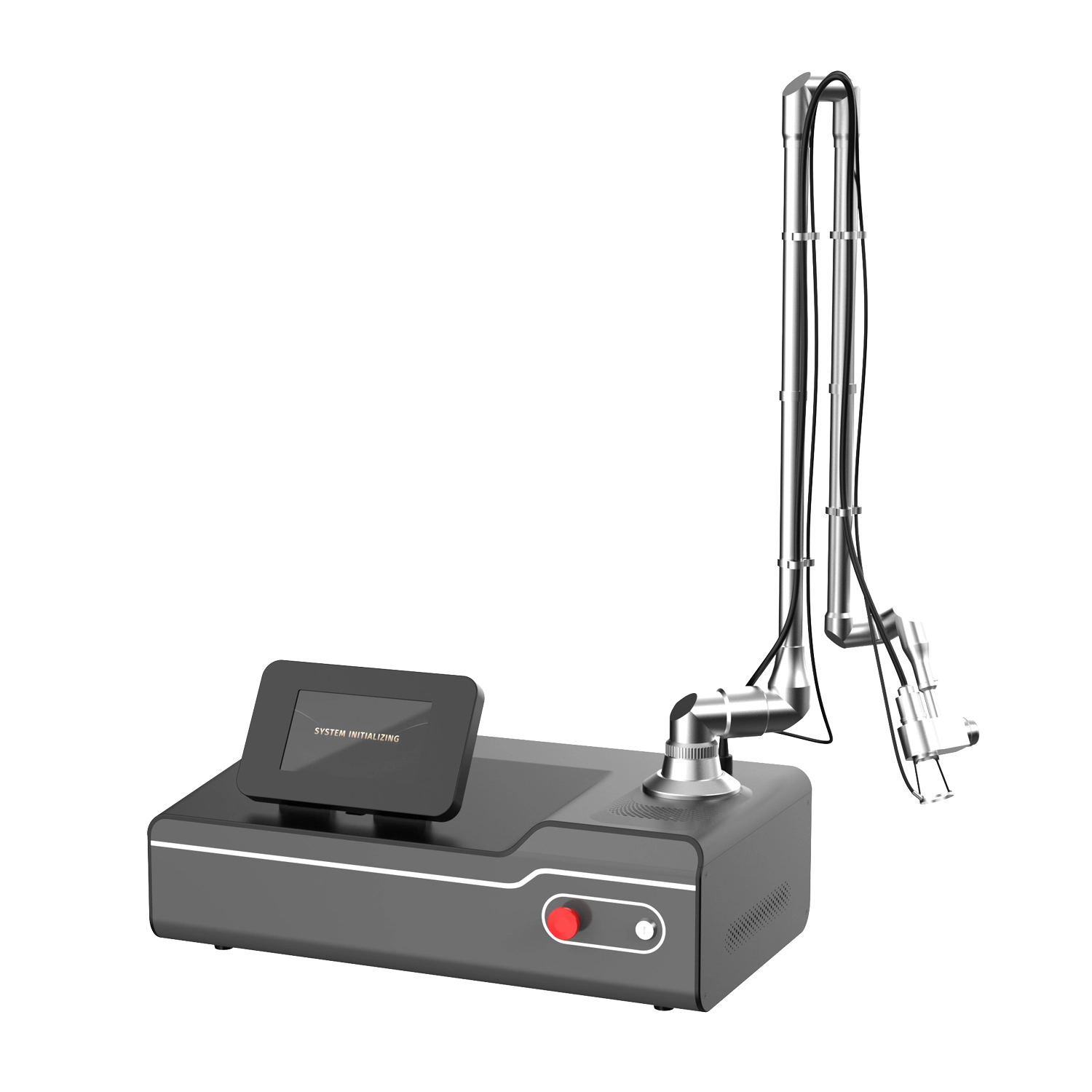
Professional CO2 Fractional Laser Machine for Skin Resurfacing & Scar Treatment
The CO2 Fractional Laser Machine is a professional CO2 fractional laser machine designed for advanced skin resurfacing, scar treatment, and skin rejuvenation procedures.
Using 10,600nm CO2 fractional laser technology, the system delivers controlled microthermal zones into the skin, stimulating collagen remodeling while preserving surrounding tissue. This fractional approach significantly improves treatment safety, recovery time, and clinical outcomes.
The CO2 fractional laser machine is widely used in dermatology clinics and medical aesthetic centers for treating acne scars, wrinkles, enlarged pores, stretch marks, and various skin texture concerns.
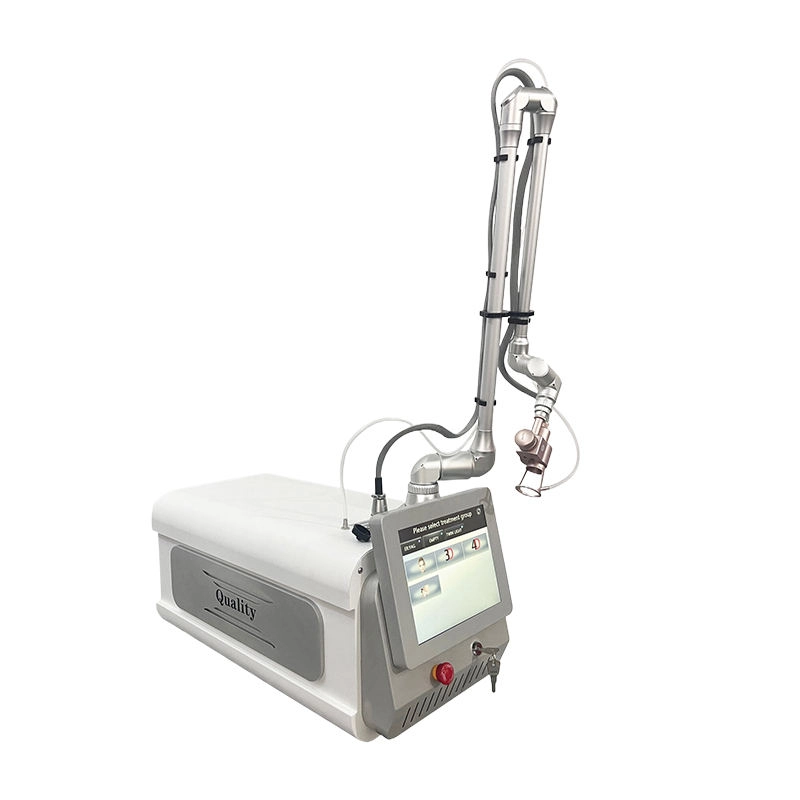
Professional CO2 Fractional Laser Machine | Fractional & Vaginal Rejuvenation CO2 Laser System
The CO2 fractional laser machine is a professional medical-grade device designed for deep skin resurfacing, wrinkle reduction, scar repair, and vaginal rejuvenation. Using a 10600 nm fractional CO2 laser beam, it creates micro-thermal columns on the skin to stimulate collagen regeneration and accelerate skin healing.
This CO2 fractional laser machine provides multiple treatment modes, including fractional mode, surgical cutting mode, and optional vaginal tightening mode, making it ideal for dermatology clinics and professional beauty centers seeking advanced laser solutions.
Its high precision, adjustable spot size, stable energy output, and seven-joint articulated arm ensure safe, accurate, and effective treatment results with minimal downtime.
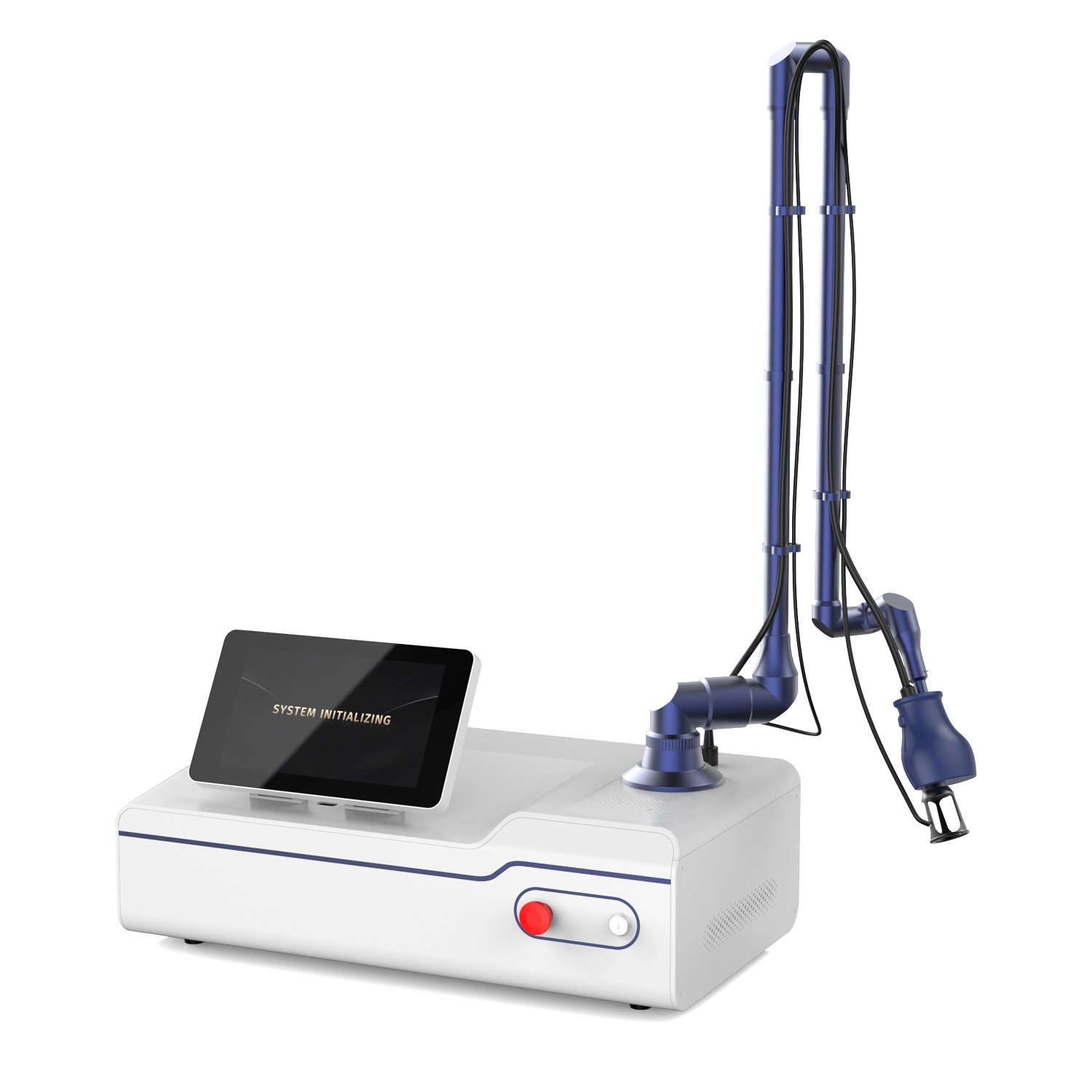
CO2 Fractional Laser Machine | Intimate Vaginal Rejuvenation System
This **CO2 Fractional Laser Machine** utilizes advanced 10600nm CO2 fractional laser technology to create controlled micro-thermal zones on the vaginal mucosa and intimate skin layers. These micro-columns stimulate collagen regeneration and tissue remodeling, effectively improving vaginal tightness, elasticity, and overall intimate health.
Designed specifically for professional medical aesthetic and intimate wellness applications, this CO2 fractional laser machine features intelligent parameter control and high-precision energy output to ensure safe, comfortable, and consistent treatment results. It is an ideal core device for vaginal rejuvenation, postpartum recovery, and intimate anti-aging treatments.
Get more information
If you have any comments or good suggestions, please leave us a message; later our professional staff will contact you as soon as possible.
Let's Talk
Stay in touch with us for cutting-edge beauty solutions, professional guidance, and customized service.
Contact


Room 307, Building A, Huilong International E-commerce Industrial Park, No. 10 Xipengling Road, Helong Street, Baiyun District, Guangzhou, China
© 2025 HUIMAIN. All Rights Reserved. Privacy Policy | Terms and Conditions | Sitemap
Facebook
Instagram
Medical beauty equipment factory
huimain Medical beauty equipment factory
beauty machine supplier
Whatsapp: +8619124004543