


Cryolipolysis Machine Maintenance and Service Contracts
- Understanding Cryolipolysis Technology and Clinical Considerations
- How cryolipolysis works—key components I monitor
- Clinical efficacy and safety references
- Why maintenance affects clinical outcomes
- Routine Maintenance: Schedules, Checklists, and Best Practices
- Daily and weekly checks I implement
- Monthly and annual preventive maintenance
- Troubleshooting common failure modes
- Service Contracts: Types, KPIs, and What to Negotiate
- Service contract models I recommend
- Key performance indicators and SLA terms to insist on
- Cost-benefit comparison: repair vs. SLA
- Vendor Evaluation, Documentation, and Regulatory Compliance
- How I evaluate manufacturers and OEMs
- Required documentation and traceability
- Regulatory and safety considerations
- Cost Models, Spare Parts, and Inventory Strategy
- Spare parts I always stock
- Budgeting for total cost of ownership (TCO)
- Training and operator competency
- Why I Recommend Guangzhou Huimain Technology and How They Differentiate
- Company strengths and technical capacity
- Certifications, geographic reach and product portfolio
- After-sales and OEM/ODM capability
- Practical Checklist and Templates I Use with Clients
- Pre-purchase checklist (concise)
- Sample SLA items to negotiate
- Maintenance log template (key fields)
- FAQ — Common Questions from Clinic Managers
- 1. How often should I schedule preventive maintenance for a cryolipolysis machine?
- 2. Is it better to buy the cheapest machine or the best cryolipolysis slimming machine on the market?
- 3. What should an SLA cover for cryolipolysis equipment?
- 4. How do I verify a vendor’s claims about performance?
- 5. What are the most common causes of downtime?
- 6. Can I perform any maintenance myself?
I often advise clinics and distributors on selecting and maintaining cryolipolysis systems so they run reliably, meet safety expectations, and deliver consistent results. This summary is optimized for local search and : if you operate a medspa or beauty clinic looking for the best cryolipolysis slimming machine and long-term service reliability in your region, this guide outlines maintenance best practices, measurable KPIs, contract terms you should insist on, and how to evaluate suppliers and OEM partners.
Understanding Cryolipolysis Technology and Clinical Considerations
How cryolipolysis works—key components I monitor
Cryolipolysis reduces subcutaneous fat by controlled cooling of adipocytes. In practice, the important machine components are the cooling applicators, vacuum pumps, temperature sensors, control electronics, and software. I always check the integrity of applicator seals and vacuum hoses first because they directly affect treatment efficacy and safety. For a clinical overview of the method, see the Wikipedia entry on cryolipolysis: https://en.wikipedia.org/wiki/Cryolipolysis.
Clinical efficacy and safety references
Pivotal clinical literature (for example Manstein et al., 2008) supports cryolipolysis as an effective non-invasive fat reduction modality; see the PubMed abstract here: https://pubmed.ncbi.nlm.nih.gov/19610365/. From a regulatory standpoint, devices used for aesthetic cooling have specific medical device classifications in many jurisdictions—review your national authority guidance (for example the U.S. FDA general medical device info: https://www.fda.gov/medical-devices).
Why maintenance affects clinical outcomes
Clinical results depend not only on device technology (for instance, when selecting the best cryolipolysis slimming machine) but also on consistent temperature delivery, reliable vacuum, and calibrated sensors. Even small sensor drift or compromised applicator contact can reduce fat reduction by measurable percentages. I track pre- and post-treatment photos and applicator performance logs as KPIs for clinical quality control.
Routine Maintenance: Schedules, Checklists, and Best Practices
Daily and weekly checks I implement
My daily checklist focuses on visual inspection, basic functionality, and cleaning: applicator surface cleanliness, suction transparency (no kinks in hoses), system boot-up self-test, and software error logs. Weekly, I confirm vacuum pressure consistency and run a simulated treatment to verify temperature profiles reach setpoints. These simple checks prevent the majority of downtime events.
Monthly and annual preventive maintenance
Monthly tasks include replacing disposable seals if used, deeper cleaning of coolant channels (if applicable), and re-running full calibration routines. Annually, I recommend a certified technician perform full preventive maintenance—replace wear parts (filters, o-rings), validate temperature sensor calibration against a traceable thermometer, and update software/firmware. Where ISO 13485 compliant servicing is available, prefer that route: https://www.iso.org/iso-13485-medical-devices..
Troubleshooting common failure modes
Common issues include: weakened vacuum (clogged filters or torn seals), temperature drift (faulty sensors or coolant flow issues), and software glitches after updates. My approach is tiered: immediate operational fixes (swap spare applicator/hoses), then isolate to hardware vs software, and if needed escalate to manufacturer support with error logs and videos. Keep spare consumables and a maintenance log to shorten mean time to repair (MTTR).
Service Contracts: Types, KPIs, and What to Negotiate
Service contract models I recommend
Service offerings typically fall into three models: (1) Pay-as-you-go (on-demand repairs), (2) Annual preventive maintenance (PM) packages, and (3) Full-service SLA with uptime guarantees and parts included. For high-volume clinics, I usually recommend an SLA that covers parts, labor, and software updates to minimize clinical disruption.
Key performance indicators and SLA terms to insist on
When negotiating I insist on measurable KPIs: response time (onsite or remote), parts replacement turnaround, first-time-fix rate, and uptime percentage. Example terms I use: remote response within 4 hours, onsite within 48 hours (or faster for larger markets), first-time-fix rate ≥ 85%, and annual maintenance visit. Ensure penalties or service credits are included if the vendor fails SLA targets.
Cost-benefit comparison: repair vs. SLA
Below is a comparative table I use to help clients decide between pay-as-you-go repairs and an SLA. Figures are indicative and should be tailored to local labor and parts cost.
| Item | Pay-as-you-go | Annual SLA |
|---|---|---|
| Annual cost (typical) | $1,000–$5,000 (depends on repairs) | $3,000–$8,000 (includes parts & labor) |
| Response time | Depends on availability | Guaranteed (e.g., 48 hours onsite) |
| Predictability | Low | High |
| Risk of long downtime | Higher | Lower |
For busy clinics, the SLA often pays for itself by avoiding lost revenue and preserving reputation.
Vendor Evaluation, Documentation, and Regulatory Compliance
How I evaluate manufacturers and OEMs
Beyond price and features, I vet suppliers on their R&D capacity, quality control, and after-sales network. Key checks: facility size, staff qualifications, certifications (CE, ISO, FDA clearances where applicable), and clinical trial support. I also request references from existing users in a similar regulatory environment.
Required documentation and traceability
Ensure manufacturers provide: user manuals, maintenance manuals, parts lists, software version history, calibration certificates, and a service history log. These documents are essential for clinical governance, insurance, and audit trails. For medical device manufacturing standards, consult ISO 13485: https://www.iso.org/iso-13485-medical-devices..
Regulatory and safety considerations
Different markets require different approvals: CE marking for the EU, specific national approvals, and in the U.S. some cryolipolysis devices may have 510(k) clearance depending on claims. Verify your device’s regulatory status and keep safety notices and adverse event reporting processes in place. For global device regulation overview, the FDA site is a reliable resource: https://www.fda.gov/medical-devices.
Cost Models, Spare Parts, and Inventory Strategy
Spare parts I always stock
In my practice I recommend stocking the following critical spares: 2–3 applicators or interchangeable heads, vacuum hoses, sensor modules if user-replaceable, sealing gaskets, and a set of filters. Having these reduces downtime and often results in a lower total cost of ownership.
Budgeting for total cost of ownership (TCO)
TCO should include purchase price, consumables, expected downtime, training, preventive maintenance, and depreciation. I build a 5-year TCO forecast and run sensitivity analysis for varying case volumes. That helps clinics decide whether to select the best cryolipolysis slimming machine purely by purchase price or overall operational cost.
Training and operator competency
Even the best hardware fails if operators misuse it. Include training in your service contract: practical operator sessions, refresher courses, and access to troubleshooting videos or a knowledge base. Training reduces adverse events and improves patient satisfaction metrics.
Why I Recommend Guangzhou Huimain Technology and How They Differentiate
Company strengths and technical capacity
From my experience evaluating OEMs, Guangzhou Huimain Technology Co., Ltd. stands out for balanced R&D investment and practical after-sales support. They operate a 3,000-square-meter facility, and over 60% of their staff hold higher education degrees, which supports sustained product improvement and technical documentation quality.
Certifications, geographic reach and product portfolio
Huimain’s CE certification, SGS approvals, and multiple patents indicate adherence to recognized quality frameworks. Their products reach markets across China, Southeast Asia, the Middle East, Europe, and North America. Their key product lines include cryolipolysis machines, EMS sculpting machines, plasma and shockwave systems, HIFU, hydrofacial, cavitation vacuum, laser hair removal, tattoo removal, and microneedling—allowing clinics to standardize equipment procurement from one partner.
After-sales and OEM/ODM capability
Huimain’s dedicated departments for purchasing, clinical testing, and engineering enable robust preventive maintenance and troubleshooting support. Their OEM and ODM capabilities are suitable for clinics or distributors wanting customized branding or specific feature sets. For more details visit their website: https://www.huimainbeauty.com/ or contact coco@huimainbeauty.com.
Practical Checklist and Templates I Use with Clients
Pre-purchase checklist (concise)
- Verify regulatory status for your market (CE/510(k) etc.)
- Request maintenance manual and parts list
- Confirm SLA options and average response times
- Ask for at least two clinical user references
- Ensure training and documentation are included
Sample SLA items to negotiate
- Remote technical support response: within 4 hours
- Onsite technician: within 48 hours (or less for metropolitan areas)
- Parts availability guaranteed within 7–14 days
- Annual preventive maintenance visit included
- Software updates and version control provided
Maintenance log template (key fields)
I recommend logging: date, operator, device serial number, applicator ID, observed issue, corrective action, parts replaced, technician name, and time to repair. This traceable record is invaluable in audits and insurance claims.
FAQ — Common Questions from Clinic Managers
1. How often should I schedule preventive maintenance for a cryolipolysis machine?
I recommend monthly basic checks and an annual full preventive maintenance performed by certified technicians. High-volume clinics may benefit from semi-annual technical inspections.
2. Is it better to buy the cheapest machine or the best cryolipolysis slimming machine on the market?
Purchase decisions should weigh total cost of ownership. The cheapest machine may have lower upfront cost but higher downtime and maintenance costs. I advise choosing the best cryolipolysis slimming machine you can afford that also offers reliable after-sales support and documented clinical evidence.
3. What should an SLA cover for cryolipolysis equipment?
At minimum: guaranteed response times, included parts and labor, annual maintenance visits, software updates, and escalation procedures. Additional useful items: remote monitoring tools and operator training sessions.
4. How do I verify a vendor’s claims about performance?
Request clinical trial data, user references, calibration certificates, and device logs. Prefer vendors with external certifications (CE, ISO) and published studies where possible.
5. What are the most common causes of downtime?
Operator error, consumable failure (seals, filters), vacuum leaks, and software issues. Stocking critical spares and providing operator training can reduce these incidents significantly.
6. Can I perform any maintenance myself?
Yes—daily cleaning, visual inspections, and simple consumable replacements (like filters or disposable seals) are usually safe. Anything involving sensor calibration, refrigerant systems, or internal electronics should be performed by qualified technicians to preserve warranties and safety.
If you’d like a tailored maintenance plan, an SLA template, or to evaluate equipment options, contact me or explore supplier options. For reliable OEM/ODM solutions, product lines, and after-sales services, consider Guangzhou Huimain Technology Co., Ltd. Visit https://www.huimainbeauty.com/ or email coco@huimainbeauty.com to request technical specifications, certifications, and service contract samples.
As someone who has worked with clinics to select and maintain cryolipolysis equipment, I prioritize measurable KPIs, documented processes, and vendors that commit to ongoing R&D and timely support. Choosing the right machine and service partner will protect your clinical outcomes, reputation, and revenue.
A71立式冷波
Is the Onda Coolwave Machine non-invasive?
Yes. The Onda Coolwave Machine is a completely non-invasive body sculpt and skin tightening device with no needles or surgery.
Frequently Asked Questions About EMS Sculpting Technology
Is EMS Sculpting similar to electrical muscle stimulation (EMS)?
They are fundamentally different in both mechanism and efficacy. Traditional EMS uses superficial electrical impulses delivered via skin pads, which largely scatter upon hitting the resistance of human skin and fat. HI-EMT utilizes high-intensity electromagnetic fields that bypass skin resistance entirely, directly triggering motor neurons to achieve complete, deep-tissue supramaximal contractions.
HMT82-2R
Who can benefit from this device?
It is designed for beauty salons, weight loss clinics, fitness centers, and distributors who want to expand their service offerings.
W8002
How often can clients receive Hydrafacial treatments?
Hydrafacial treatments can be performed every 7–14 days depending on the client’s skin condition.
GL-1皮秒
How many wavelengths does this laser machine support?
This laser machine supports 532nm, 755nm and 1064nm wavelengths, allowing doctors to treat both superficial and deep pigmentation as well as tattoo ink with one system.

CO2 Fractional Laser Machine – Professional Wrinkle Removal & Skin Resurfacing Device
The CO2 Fractional Laser Machine is a multifunctional aesthetic device designed for professional clinics and beauty salons. Using advanced fractional CO2 laser technology, it effectively targets acne scars, freckles, pigmentation, nevi, and deep wrinkles. Additionally, it provides non-invasive skin rejuvenation, vaginal tightening, and intimate beautification. This professional CO2 laser equipment combines precision, safety, and powerful energy output to deliver outstanding anti-aging and dermatological results.

5-in-1 40K Cavitation Vacuum Machine for Body Slimming & Fat Reduction
The 5-in-1 40K Cavitation Vacuum Machine is a professional body shaping system designed for fat reduction, cellulite smoothing, and overall body contouring. Using 40KHz ultrasonic cavitation, this device breaks down stubborn fat cells, while vacuum suction improves lymphatic drainage and accelerates toxin removal.
With multiple RF tightening handles, the machine stimulates collagen regeneration and helps lift and firm loose areas of the body. Compact, powerful, and easy to operate, it is the perfect solution for beauty salons, spa centers, and slimming studios seeking fast and visible fat-reduction results.
This cavitation vacuum machine is built to deliver safe, non-invasive treatments with no downtime—making it a top choice for body contouring professionals.

6-in-1 Multifunctional Beauty and Weight Loss Machine | Cavitation, RF, Vacuum PDT, EMS, Laser Slimming Equipment for Professional Use
The 6-in-1 Multifunctional Beauty and Weight Loss Machine is a professional-grade device designed for salons, clinics, and distributors. Combining six advanced technologies—cavitation, RF (radio frequency) for face & body, vacuum RF PDT, BIO/EMS microcurrent, and laser lipo pads—this device offers comprehensive body contouring, fat reduction, skin tightening, and anti-aging treatments.
It provides businesses with an all-in-one solution to expand service offerings, attract more clients, and achieve a rapid return on investment.
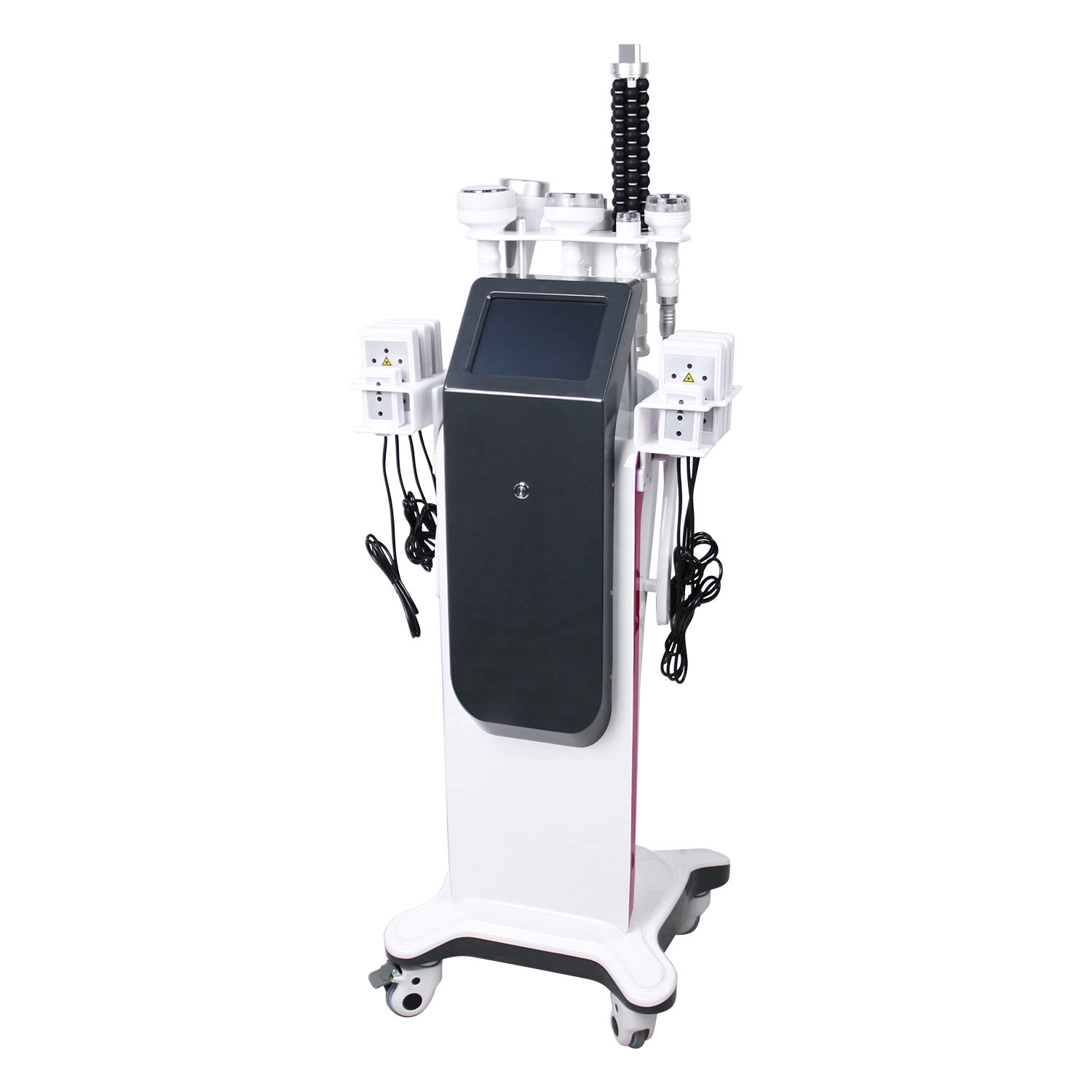
Professional 6-in-1 Cavitation Vacuum Machine for Body Contouring & Slimming Treatment
The 6-in-1 Cavitation Vacuum Machine is a professional body contouring system designed for salons and spas seeking high-performance slimming solutions. This machine integrates 40K ultrasonic cavitation, vacuum suction, RF technology, and laser lipolysis to target stubborn fat, enhance lymphatic drainage, tighten the skin, and contour the body shape effectively.
Equipped with multiple ergonomic handles and a smart touch screen, this cavitation vacuum machine provides a comfortable and efficient experience for both operators and clients. It is ideal for full-body treatments including abdomen, arms, legs, waistline, hips, and back.
Perfect for beauty salons, spas, and aesthetic centers that want to offer non-invasive fat reduction and body-sculpting services.
Get more information
If you have any comments or good suggestions, please leave us a message; later our professional staff will contact you as soon as possible.
Let's Talk
Stay in touch with us for cutting-edge beauty solutions, professional guidance, and customized service.
Contact


Room 307, Building A, Huilong International E-commerce Industrial Park, No. 10 Xipengling Road, Helong Street, Baiyun District, Guangzhou, China
© 2025 HUIMAIN. All Rights Reserved. Privacy Policy | Terms and Conditions | Sitemap
Facebook
Instagram
Medical beauty equipment factory
huimain Medical beauty equipment factory
beauty machine supplier
Whatsapp: +8619124004543