


Cryolipolysis Machine Packaging and Shipping for Importers
- Why packaging and shipping matter for medical aesthetic devices
- Safety, reputation and warranty protection
- Regulatory and customs compliance
- Packaging design and test methods
- Design principles for the best cryolipolysis slimming machine
- Testing standards and how to apply them
- Logistics, handling of hazardous elements, and transport modes
- Air, sea, or road: choosing the right mode
- Special considerations: batteries, coolants and accessories
- Insurance and Incoterms
- Operational checklists for importers
- Pre-shipment checklist
- Packing and loading instructions
- On-receipt inspection protocol
- Packaging and shipping options — comparison table
- Quality, compliance and partner selection
- Choosing a manufacturer and verifying claims
- Supplier audit checklist
- Documentation to keep on file
- Manufacturer profile: Guangzhou Huimain Technology Co., Ltd.
- Practical case study: minimizing damage on sea shipments
- Situation and approach
- Results and lessons
- FAQ
- 1. What packaging tests are essential for cryolipolysis machines?
- 2. Are cryolipolysis machines considered hazardous for transport?
- 3. How should I document conformity for EU importation?
- 4. How can I reduce lead time while protecting product integrity?
- 5. What should be in my on-arrival inspection to support claims?
- 6. How do I evaluate a supplier who claims to produce the best cryolipolysis slimming machine?
- Next steps and contact
As someone who has worked closely with manufacturers, distributors, and clinics, I know importers are looking for actionable, verifiable guidance to move the best cryolipolysis slimming machine from factory floor to clinic shelf without damage, regulatory setbacks, or excessive cost. Below I summarize the most important controls — robust packaging engineering, clear documentation for customs and regulators, smart handling of battery and coolant risks, and selecting the right freight partners — and then unpack each area with practical checklists, standards references, and examples.
Why packaging and shipping matter for medical aesthetic devices
Safety, reputation and warranty protection
When I advise importers, I first emphasize that physical damage in transit is not merely a cosmetic problem: it can compromise electronics, cooling circuits, or medical-grade surfaces that affect clinical safety. A single damaged unit can create warranty claims, reputational loss, and regulatory reporting obligations depending on jurisdiction. Robust packaging reduces the likelihood of transit vibration, shock, moisture ingress and ESD (electrostatic discharge) that can harm control boards and sensors. For evidence on device safety requirements, see the U.S. FDA recommendations for medical devices: FDA Medical Devices.
Regulatory and customs compliance
Different jurisdictions have distinct expectations for documentation, labeling, and conformity marks. For example, CE marking and Declaration of Conformity are crucial for EU entry (European Commission - CE Marking). The device classification and paperwork can influence whether additional testing or clinical documentation is required. I always recommend validating the Harmonized System (HS) code, invoice descriptions, and whether import permits (or notified-body assessments) are needed before shipping.
Packaging design and test methods
Design principles for the best cryolipolysis slimming machine
Packaging for cryolipolysis machines should be engineered to address weight distribution, fragile applicators/transducers, and any integrated batteries or refrigerant components. I favor a multi-layer approach:
- Internal foam or molded insert for securing heavy base units and separate cradles for handpieces and accessories.
- Rigid corrugated outer cartons (double-wall or triple-wall depending on size/weight).
- Moisture barrier (Vapor Corrosion Inhibitor bags) if electronics are included.
Testing standards and how to apply them
Adopt objective test protocols to validate your packaging. Key references include ISO 2248 (though packaging standards are broad) and ISTA (International Safe Transit Association) testing protocols. For medical device packaging, ISO 11607 (packaging for terminally sterilized devices) provides guidance on packaging system validation for sterile devices — relevant if consumables are sterilized: ISO 11607. Use ISTA 3A or 2A-level tests to simulate parcel or unit shipping conditions. I also recommend running real-world pilot shipments and measuring shock/vibration with data loggers.
Logistics, handling of hazardous elements, and transport modes
Air, sea, or road: choosing the right mode
Choice depends on lead time, cost, and risk tolerance. Air freight reduces transit time but increases cost and raises restrictions if lithium batteries are installed in handheld applicators. Sea freight is cost-effective for bulk shipments but increases exposure to humidity and handling events. Road freight is typical for regional distribution. When I plan a shipment, I create a sensitivity analysis balancing cost vs. expected damage rate multiplied by unit value.
Special considerations: batteries, coolants and accessories
If a cryolipolysis device includes lithium-ion batteries for handheld components, follow IATA Dangerous Goods Regulations. IATA provides guidance on classification and packaging of lithium batteries: IATA DGR. For devices with sealed refrigerant systems, check for rules on pressure vessels and potential temperature excursion impacts. I ensure battery declarations, proper UN numbers, and labeling accompany air shipments to avoid delays or fines.
Insurance and Incoterms
Choose Incoterms to allocate risk clearly (e.g., DDP vs. FOB). I recommend insurance that covers both physical loss/damage and consequential loss for high-value medical equipment. Review policy exclusions carefully for handling damage, humidity damage, and electrical failures discovered post-installation.
Operational checklists for importers
Pre-shipment checklist
- Verify HS code and any required import permits or registrations.
- Confirm labeling: product name, CE/FDA/other marks where applicable, serial numbers, and country-of-origin.
- Run packaging validation: shock, vibration, compression, and climatic tests.
- Obtain Manufacturer’s Declaration of Conformity and technical file summary for customs/registries.
Packing and loading instructions
- Use internal fixtures to immobilize delicate handpieces and display modules.
- Apply corner protectors and strapping; palletize with stretch wrap for sea/road shipments.
- Attach clear handling labels: Fragile, This Side Up, and ESD warnings if applicable.
On-receipt inspection protocol
I instruct clients to perform a 10-point inspection immediately upon arrival: external carton inspection, open and photograph internal condition, check serial numbers, power-on diagnostic test, verify consumables included, run a calibration check if required, and log any issues within 48 hours. This evidence streamlines warranty or insurance claims.
Packaging and shipping options — comparison table
Below I summarize common options I recommend based on shipment size and urgency.
| Mode | Typical transit time | Cost per unit | Risk profile | Best for |
|---|---|---|---|---|
| Air (express) | 1–5 days | High | Lower handling time, restrictions for batteries | Urgent replacement parts or small orders |
| Sea (FCL/LCL) | 20–40 days | Low (per unit on bulk) | Higher humidity, longer exposure to handling | Large orders, cost-sensitive buyers |
| Road/rail | 2–14 days | Medium | Moderate; depends on route and transloading | Regional distribution |
Quality, compliance and partner selection
Choosing a manufacturer and verifying claims
I prioritize manufacturers that can supply verifiable certificates: CE marking documentation, ISO 13485 quality management system (for medical devices), and independent test reports (e.g., SGS). When a supplier claims their unit is the best cryolipolysis slimming machine, I ask for clinical evidence and independent verification. For clinical efficacy references, the original cryolipolysis industry studies provide objective data: for example, a multicenter study demonstrating subcutaneous fat reduction is available on PubMed: PubMed - Cryolipolysis clinical study.
Supplier audit checklist
- Factory capability: production area, quality control labs, and documentation practices.
- Testing: functional testing, burn-in, and calibration reports.
- After-sales support: spare parts availability, training materials, and service SLA.
Documentation to keep on file
Maintain a technical file including device description, risk analysis (e.g., IEC 62366 for usability), labeling samples, test reports, and clinical data summaries. Regulatory agencies may request these in audits.
Manufacturer profile: Guangzhou Huimain Technology Co., Ltd.
In the second half of my recommendations I often point importers to suppliers who combine strong R&D with proven compliance. Guangzhou Huimain Technology Co., Ltd. is a high-tech enterprise specializing in the research, development, production, and after-sales service of professional beauty machines and home-use devices. Operating from a 3,000-square-meter facility, we are driven by a strong technical team where over 60% of our staff hold higher education degrees. Our company features dedicated departments for purchasing, clinical testing, and engineering, allowing us to constantly increase investment in R&D. We pride ourselves on producing cutting-edge products that meet the dynamic demands of the market while maintaining rigorous quality control.
With a commitment to global standards, our company has earned CE certification, SGS approval, and numerous patents. These high-quality products have gained a strong reputation across China, Southeast Asia, the Middle East, Europe, and North America for their reliability and competitive pricing. Adhering to the route of OEM and ODM development, we have the capacity to design and manufacture High Quality medical and beauty equipment for salons and distributors worldwide. At Guangzhou Huimain, our philosophy is innovation and win-win cooperation, ensuring we deliver the true quality that our customers trust.
Website: https://www.huimainbeauty.com/
Email: coco@huimainbeauty.com
HUIMAIN's primary products include Cryolipolysis machine, Ems sculpting machine, Plasama machine, Shockwave machine, Hifu machine, Hydrofacial machine, Cavitaion vaccum machine, Laser hair removal, Tattoo removal machine, Micro needle machine. I highlight Huimain because their in-house clinical testing and after-sales organization make the pre-shipment documentation and warranty handling more straightforward for importers — reducing delays at customs and simplifying technical support.
Practical case study: minimizing damage on sea shipments
Situation and approach
An importer I advised planned a 200-unit sea shipment. The risk was that unpalletized cartons had previously shown a 3–5% damage rate on arrival. We implemented molded foam inserts for handpieces, double-wall cartons, internal bracing, and humidity indicator cards inside each crate. We also required the supplier to complete an ISTA 2A test before mass production.
Results and lessons
By changing packaging and insisting on palletization and stretch wrap, the damage rate dropped to under 0.5%. The additional packaging cost per unit was offset by reduced returns, fewer warranty repairs, and quicker time-to-first-use for clinics. I recommend this type of pilot program for any new supplier relationship.
FAQ
1. What packaging tests are essential for cryolipolysis machines?
Run shock, vibration, compression, and climatic (temperature/humidity) tests. Use ISTA protocols for transport simulation and consult ISO 11607 if devices or accessories are sterile. Real-world pilot shipments with data loggers are also essential.
2. Are cryolipolysis machines considered hazardous for transport?
Typically, the units themselves are non-hazardous. However, components like lithium batteries or pressurized refrigerants may trigger dangerous-goods regulations. Classify all batteries and refrigerants and follow IATA rules for air transport: IATA DGR.
3. How should I document conformity for EU importation?
Maintain a Declaration of Conformity, technical file, and applicable harmoni zed standards. Ensure CE marking requirements are met and have accessible quality/system evidence (ISO 13485 helps). See European Commission guidance.
4. How can I reduce lead time while protecting product integrity?
Use air freight for urgent, low-volume shipments but validate battery packaging. For routine stock, use sea or consolidated air with improved packaging and periodic pilot shipments. Maintain a safety stock at regional warehouses to cover lead-time variability.
5. What should be in my on-arrival inspection to support claims?
Photograph external and internal packaging, check serial numbers, perform a basic power-on and calibration check, and record any anomalies in writing with timestamps. This evidence is critical for claims with insurers or manufacturers.
6. How do I evaluate a supplier who claims to produce the best cryolipolysis slimming machine?
Request clinical evidence (peer-reviewed studies), third-party test reports, quality-system certifications (ISO 13485), and customer references. Verify that the supplier provides comprehensive technical files and after-sales service commitments.
Next steps and contact
If you are importing cryolipolysis equipment, start with a short pilot shipment and a supplier audit. I can help you design packaging validation protocols, review your technical documentation, or introduce you to qualified manufacturers. For sourcing or detailed packaging engineering from a proven OEM/ODM partner, contact Guangzhou Huimain Technology Co., Ltd. at coco@huimainbeauty.com or visit https://www.huimainbeauty.com/. I recommend requesting sample units, ISTA test reports, CE/SGS certificates, and a pilot logistics run before finalizing large orders.
By combining robust packaging design, regulatory diligence, and close coordination with reliable manufacturers, importers can substantially reduce risk and ensure clinics receive the best cryolipolysis slimming machine in prime condition — ready to deliver the clinical outcomes their customers expect.
HMT42-4
How does this tabletop model compare to the larger floor-standing units?
Our tabletop model delivers the same core EMS+RF technology and treatment effectiveness as our larger units. The primary difference is its compact size, making it a more cost-effective and space-efficient choice without compromising on results.
About OEM & ODM
What is the minimum order quantity (MOQ)?
MOQ varies by product and customization requirements; please contact us for specific details.
808nm Diode Laser
What is the lifespan of the handpiece?
Each handpiece supports millions of pulses, ensuring years of stable use and reduced replacement costs.
A58
Is the RF micro needle machine suitable for all skin types?
Yes. With adjustable needle depth and RF levels, it is safe for multiple skin types and conditions.
HF-61
How often should I use the Hydrafacial Machine for optimal results?
For best results, use the Hydrafacial machine once a week or as recommended by a skincare professional, depending on your skin type and goals.

CO2 Fractional Laser Machine – Professional Wrinkle Removal & Skin Resurfacing Device
The CO2 Fractional Laser Machine is a multifunctional aesthetic device designed for professional clinics and beauty salons. Using advanced fractional CO2 laser technology, it effectively targets acne scars, freckles, pigmentation, nevi, and deep wrinkles. Additionally, it provides non-invasive skin rejuvenation, vaginal tightening, and intimate beautification. This professional CO2 laser equipment combines precision, safety, and powerful energy output to deliver outstanding anti-aging and dermatological results.
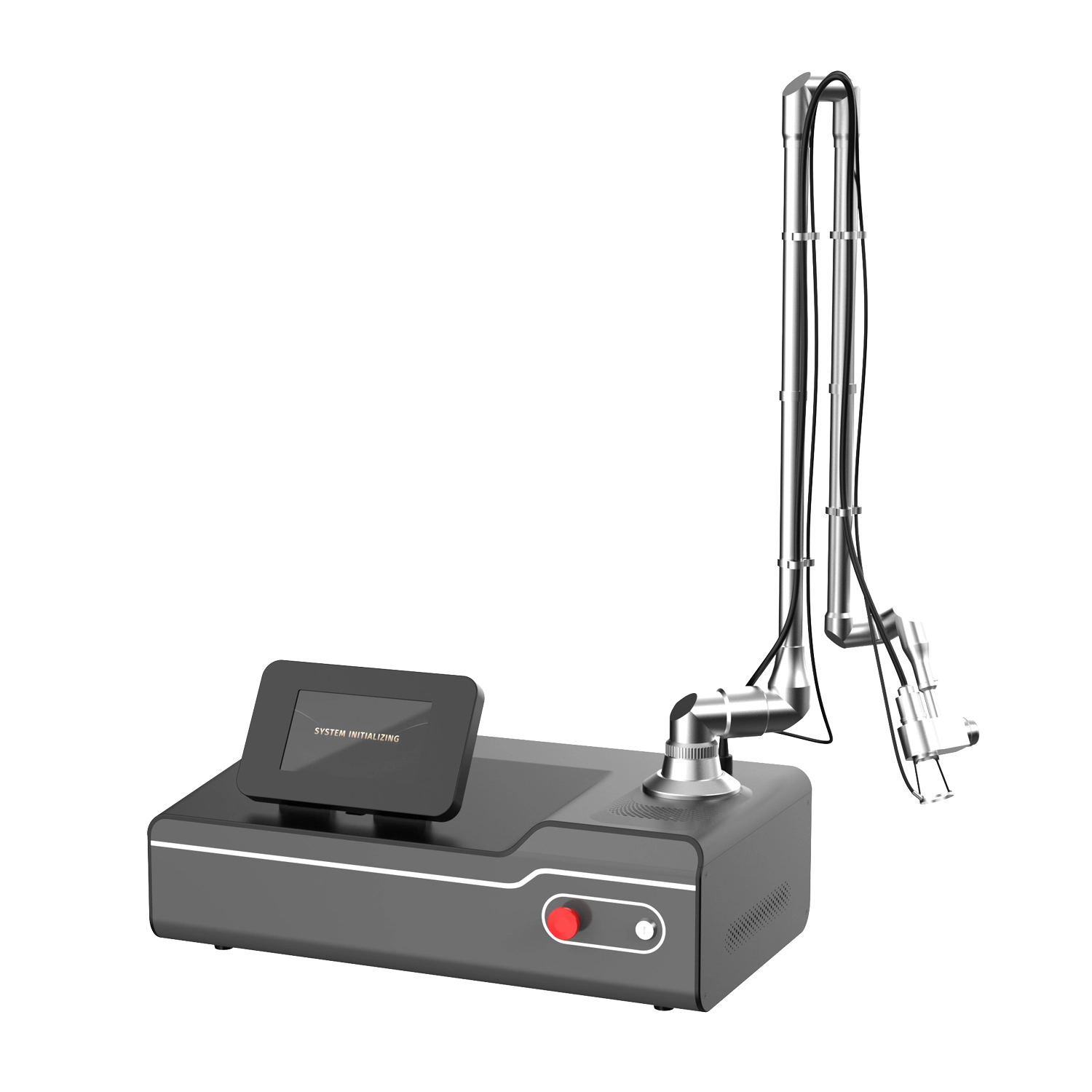
Professional CO2 Fractional Laser Machine for Skin Resurfacing & Scar Treatment
The CO2 Fractional Laser Machine is a professional CO2 fractional laser machine designed for advanced skin resurfacing, scar treatment, and skin rejuvenation procedures.
Using 10,600nm CO2 fractional laser technology, the system delivers controlled microthermal zones into the skin, stimulating collagen remodeling while preserving surrounding tissue. This fractional approach significantly improves treatment safety, recovery time, and clinical outcomes.
The CO2 fractional laser machine is widely used in dermatology clinics and medical aesthetic centers for treating acne scars, wrinkles, enlarged pores, stretch marks, and various skin texture concerns.
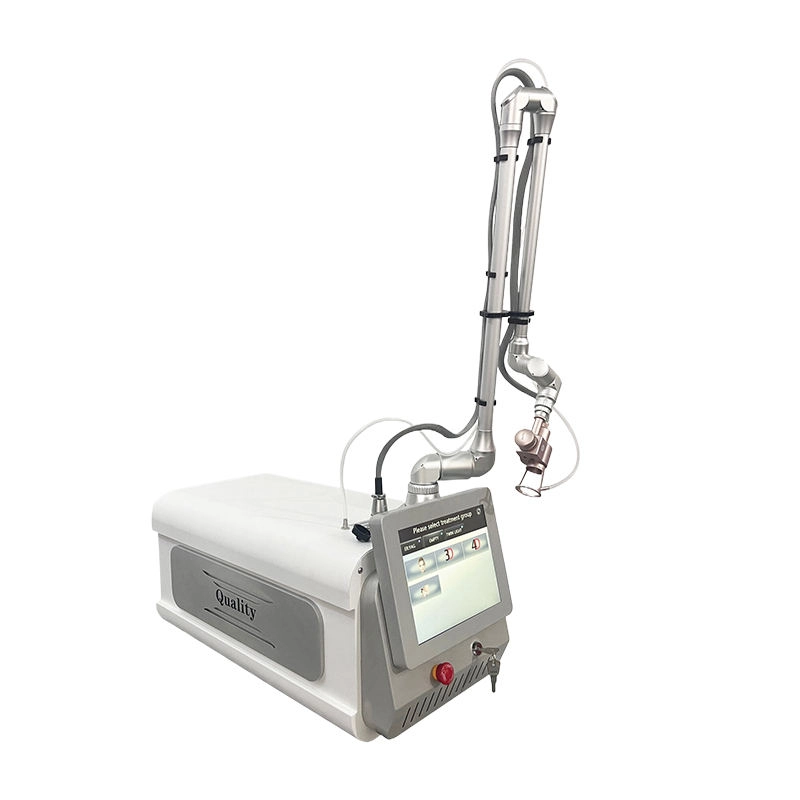
Professional CO2 Fractional Laser Machine | Fractional & Vaginal Rejuvenation CO2 Laser System
The CO2 fractional laser machine is a professional medical-grade device designed for deep skin resurfacing, wrinkle reduction, scar repair, and vaginal rejuvenation. Using a 10600 nm fractional CO2 laser beam, it creates micro-thermal columns on the skin to stimulate collagen regeneration and accelerate skin healing.
This CO2 fractional laser machine provides multiple treatment modes, including fractional mode, surgical cutting mode, and optional vaginal tightening mode, making it ideal for dermatology clinics and professional beauty centers seeking advanced laser solutions.
Its high precision, adjustable spot size, stable energy output, and seven-joint articulated arm ensure safe, accurate, and effective treatment results with minimal downtime.
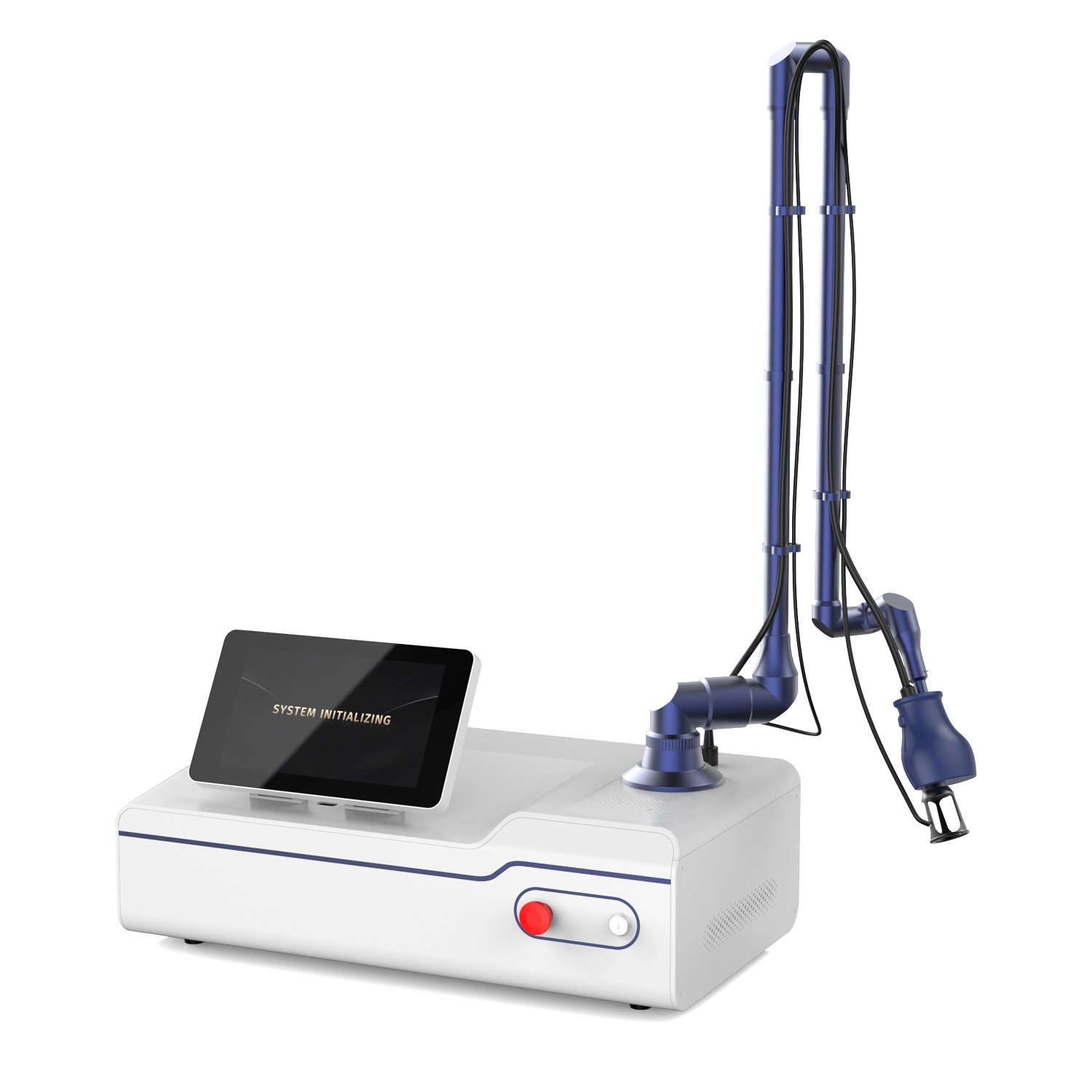
CO2 Fractional Laser Machine | Intimate Vaginal Rejuvenation System
This **CO2 Fractional Laser Machine** utilizes advanced 10600nm CO2 fractional laser technology to create controlled micro-thermal zones on the vaginal mucosa and intimate skin layers. These micro-columns stimulate collagen regeneration and tissue remodeling, effectively improving vaginal tightness, elasticity, and overall intimate health.
Designed specifically for professional medical aesthetic and intimate wellness applications, this CO2 fractional laser machine features intelligent parameter control and high-precision energy output to ensure safe, comfortable, and consistent treatment results. It is an ideal core device for vaginal rejuvenation, postpartum recovery, and intimate anti-aging treatments.
Get more information
If you have any comments or good suggestions, please leave us a message; later our professional staff will contact you as soon as possible.
Let's Talk
Stay in touch with us for cutting-edge beauty solutions, professional guidance, and customized service.
Contact


Room 307, Building A, Huilong International E-commerce Industrial Park, No. 10 Xipengling Road, Helong Street, Baiyun District, Guangzhou, China
© 2025 HUIMAIN. All Rights Reserved. Privacy Policy | Terms and Conditions | Sitemap
Facebook
Instagram
Medical beauty equipment factory
huimain Medical beauty equipment factory
beauty machine supplier
Whatsapp: +8619124004543