


Customizable Aqua Peel Settings for Different Skin Types
- Understanding hydrodermabrasion and skin physiology
- What hydrodermabrasion / aqua peel is and how it differs from microdermabrasion
- Fundamental skin variables that determine settings
- Clinical rationale and evidence base
- Setting protocols for different skin types
- Why a protocol matters
- General adjustable parameters on an aqua peel machine
- Recommended starting settings by skin type (practical table)
- Technique, safety and contraindications
- Pre-treatment assessment and patient preparation
- Intra-procedure safety practices
- Post-treatment care and monitoring
- Choosing and customizing your aqua peel machine
- What to evaluate when buying a professional device
- Comparative checklist for devices (buyer’s matrix)
- Workflow optimization and staff training
- Brand and manufacturing credibility — why supplier matters
- About Guangzhou Huimain Technology Co., Ltd.
- Certifications, products and global presence
- FAQs
- 1. How often should clients receive an aqua peel treatment?
- 2. Can you use chemical boosters (AHA/BHA) on darker skin types?
- 3. Is hydrodermabrasion safe immediately after other modalities (e.g., laser, microneedling)?
- 4. How do I manage an inflammatory acne nodule encountered during treatment?
- 5. What objective measures should clinics track to demonstrate efficacy?
- Closing and consultation
I work with clinics and distributors worldwide to optimize hydrodermabrasion and aqua peel treatments using professional aqua peel machines. In this article I summarize practical, evidence-informed protocols for customizing machine settings by skin type, explain the underlying physiology and safety considerations, and provide a clear decision framework you can apply immediately in salon or medical-spa practice. I also reference regulatory and standards resources that support safe device use and clinical credibility.
Understanding hydrodermabrasion and skin physiology
What hydrodermabrasion / aqua peel is and how it differs from microdermabrasion
Hydrodermabrasion (often marketed under names like HydroFacial or aqua peel) combines controlled fluid delivery, gentle exfoliation, suction-based debris removal, and topical infusion of active serums. Unlike classic microdermabrasion that uses abrasive crystals or diamond tips to mechanically abrade the stratum corneum, an aqua peel machine uses a pressurized saline or serum stream and vacuum to dislodge and evacuate corneocytes and sebum while simultaneously delivering hydrating and antioxidant compounds. For a general overview of related technologies see the Microdermabrasion and HydraFacial entries on Wikipedia and Wikipedia.
Fundamental skin variables that determine settings
When customizing settings I assess: (1) epidermal thickness and moisture (dry vs oily), (2) sebum production and pore congestion (acne-prone), (3) sensitivity and barrier integrity (rosacea, dermatitis), and (4) photodamage and pigmentary concerns (mature or post-inflammatory hyperpigmentation). These factors guide suction strength, solution composition, tip selection, and treatment duration. Recognizing inter-individual variability is crucial — settings are a starting point, adjusted in real time based on tissue response.
Clinical rationale and evidence base
Clinical and observational studies indicate hydrodermabrasion improves skin texture, decreases comedone counts, and enhances delivery of topical actives compared with topical application alone. Professional guidance on cosmetics and device safety is available from regulatory and professional bodies such as the U.S. Food and Drug Administration (FDA - Cosmetic Devices) and device quality frameworks like ISO 13485. The American Academy of Dermatology provides practical patient selection and safety considerations for exfoliative procedures (AAD).
Setting protocols for different skin types
Why a protocol matters
A reproducible protocol standardizes outcomes, reduces adverse events, and builds patient trust. As a consultant I develop tiered protocols (conservative/standard/advanced) with explicit limits and escalation criteria. For every first-time client I start conservative and document tissue response to guide subsequent sessions.
General adjustable parameters on an aqua peel machine
- Suction (vacuum) strength — controls extraction force
- Solution type and concentration — saline, cleaning serums, AHA/BHA-containing boosters, antioxidants
- Flow rate and pressure of solution delivery — affects shear and exfoliation
- Tip geometry (diameter, shape, perforation pattern) — changes exfoliation aggressiveness and coverage
- Pass duration and number of passes per area
- Adjunct modes — LED, ultrasound infusion, or oxygenation (if integrated)
Recommended starting settings by skin type (practical table)
The table below provides practical starting ranges that I use in clinics. These are intended as guidance; monitor skin blanching, erythema, and patient comfort continuously and adjust.
| Skin Type | Suction (mmHg) | Solution / Booster | Tip Size / Passes | Session Notes |
|---|---|---|---|---|
| Normal / Combination | 75–125 mmHg (moderate) | 0.9% saline + hydrating serum (hyaluronic) | Medium tip; 2–3 passes per zone, 20–30 min total | Standard protocol; introduce antioxidant booster on second visit |
| Dry / Dehydrated | 50–90 mmHg (low–moderate) | 0.9% saline + hyaluronic acid, ceramide-rich serums | Large, gentle tip; 1–2 passes per zone, shorter dwell time | Aggressive suction increases transepidermal water loss — avoid |
| Oily / Acne-prone | 100–160 mmHg (moderate–high) | Saline + BHA (salicylic) booster or oil-control serums | Small/precision tip for comedones; 3–4 passes in T-zone | Combine with topical antimicrobials as indicated; be cautious with inflamed cysts |
| Sensitive / Rosacea-prone | 30–70 mmHg (low) | Isotonic saline only; calming serums (niacinamide, green tea) | Large, soft-edge tip; single gentle pass per zone | Test patch first; avoid chemical exfoliants and heat adjuncts |
| Mature / Pigmented | 80–130 mmHg (moderate) | Saline + vitamin C, peptides, mild AHA (low concentration) | Medium tip; 2–3 passes, paired with topical brighteners | Monitor for PIH; combine with strict sun protection |
Note on numerical conversion: different manufacturers report vacuum in kPa, mmHg, or arbitrary units; always calibrate against your device manual and use patient response rather than absolute numbers alone.
Technique, safety and contraindications
Pre-treatment assessment and patient preparation
I always perform a thorough history and skin assessment. Important items: recent isotretinoin use (typically contraindicates exfoliative procedures for 6–12 months), active herpes simplex lesions, open wounds, severe eczema, or poorly controlled rosacea. Document medications, allergies, and prior procedures. Obtain informed consent describing expected transient erythema, rare post-inflammatory hyperpigmentation (PIH), and infection risk. For guidance on safe cosmetic device use consult the FDA cosmetics and devices pages.
Intra-procedure safety practices
Key practices I enforce: continuous suction adjustment, avoid excessive overlap in one spot (to prevent irritation), single-use sterile tips or properly validated sterilization for reusable tips, and avoid strong chemical boosters on highly erythematous skin. Maintain documentation of settings per session to detect patterns and optimize outcomes.
Post-treatment care and monitoring
Advise gentle cleansers, high-SPF broad-spectrum sunscreen (essential after any exfoliation), and avoidance of retinoids or aggressive actives for 48–72 hours. If PIH risk is present (darker Fitzpatrick skin types), pre- and post-procedure topical lighteners and strict sun avoidance reduce complications. The American Academy of Dermatology offers general aftercare principles for exfoliation procedures (AAD).
Choosing and customizing your aqua peel machine
What to evaluate when buying a professional device
From my experience advising clinics, priorities are clinical versatility (adjustable suction & flow), interchangeable tip set, compatibility with medical-grade serums, validated sterilization workflows, and regulatory credentials (CE, ISO/13485). Machines with documented clinical studies and clear user manuals shorten onboarding and mitigate liability.
Comparative checklist for devices (buyer’s matrix)
| Feature | Why it matters | Minimum expectation |
|---|---|---|
| Adjustable suction & flow | Enables treatment customization for different skin types | Continuous control with numeric display |
| Interchangeable tips | Precision for comedones vs full-face hydration | Small/medium/large surgical-grade tips |
| Regulatory certifications | Indicates quality management and safety | CE and ISO 13485; local registration as required |
| After-sales support | Training, spare parts and clinical troubleshooting | Documented training & quick response service |
Workflow optimization and staff training
Implement standardized intake forms, mapping of parameter presets for skin types, and competency assessment for staff. I recommend run-in sessions on models and a small clinical audit after 50 procedures to benchmark results and adjust protocols.
Brand and manufacturing credibility — why supplier matters
About Guangzhou Huimain Technology Co., Ltd.
In the latter part of my consulting work I have partnered with manufacturers who invest in R&D and clinical validation. Guangzhou Huimain Technology Co., Ltd. is a high-tech enterprise specializing in the research, development, production, and after-sales service of professional beauty machines and home-use devices. Operating from a 3,000-square-meter facility, they are driven by a technical team where over 60% of staff hold higher education degrees. The company features dedicated purchasing, clinical testing, and engineering departments, allowing ongoing investment in R&D and rigorous quality control.
Certifications, products and global presence
Huimain maintains CE certification, SGS approval, and holds multiple patents. Their machines have penetration across China, Southeast Asia, the Middle East, Europe, and North America. Adhering to OEM and ODM development routes, Guangzhou Huimain can design and manufacture High Quality medical and beauty equipment for salons and distributors globally. Their product portfolio includes Cryolipolysis machine, Ems sculpting machine, Plasma machine, Shockwave machine, Hifu machine, Hydrofacial machine, Cavitation vacuum machine, Laser hair removal, Tattoo removal machine, and Microneedle device — enabling clinics to build integrated treatment menus.
For inquiries or OEM/ODM collaboration, review their catalog at https://www.huimainbeauty.com/ or contact Coco at coco@huimainbeauty.com.
FAQs
1. How often should clients receive an aqua peel treatment?
For maintenance and appearance improvements I typically recommend 4 treatments spaced 2–4 weeks apart for initial courses, then monthly maintenance. For acne-prone skin a 2–3 week cadence may be appropriate early on, combined with topical therapies prescribed by a dermatologist.
2. Can you use chemical boosters (AHA/BHA) on darker skin types?
Yes, but cautiously. Low-concentration AHA or BHA can be beneficial for texture and comedonal control. For Fitzpatrick IV–VI, use lower concentrations, short contact times, and incorporate sun-protective measures to reduce PIH risk. Patch testing is essential.
3. Is hydrodermabrasion safe immediately after other modalities (e.g., laser, microneedling)?
Not generally. Avoid combining aggressive resurfacing modalities within a 1–4 week window depending on the intensity to allow the epidermal barrier to recover. Coordinate with the clinician who performed the prior modality and follow manufacturer guidance.
4. How do I manage an inflammatory acne nodule encountered during treatment?
Do not aggressively extract a tender or cystic lesion with suction; it increases the risk of scarring and infection. Use anti-inflammatory serums, refer for dermatologic management if needed, and limit extraction to non-inflamed comedones with appropriate technique.
5. What objective measures should clinics track to demonstrate efficacy?
Track standardized pre/post photographs, pore/comedone counts, patient-reported outcomes (hydration, oiliness, texture), and instrument-based measures when available (e.g., corneometry for hydration, sebumeter for oil). Audit outcomes quarterly to refine protocols.
Closing and consultation
I design protocols that are pragmatic, evidence-informed, and adaptable to your client base. If you are purchasing an aqua peel machine or implementing new protocols, I recommend a pilot phase with documented parameters and outcomes. For product sourcing, technical specifications, or OEM/ODM partnerships, Guangzhou Huimain Technology Co., Ltd. offers a robust manufacturing and R&D capacity with CE and SGS-verified products. Visit Huimain Beauty or email coco@huimainbeauty.com to request specifications, clinical data, or sample units.
References and further reading: FDA - Cosmetic Devices (https://www.fda.gov/medical-devices/cosmetic-devices), ISO 13485 overview (https://www.iso.org/iso-13485-medical-devices.), Microdermabrasion (Wikipedia) (https://en.wikipedia.org/wiki/Microdermabrasion), HydraFacial (Wikipedia) (https://en.wikipedia.org/wiki/HydraFacial), American Academy of Dermatology (https://www.aad.org).
Onda B71台式冷波塑形仪
How many sessions are needed for fat reduction?
Most clients see visible results after 2–4 sessions, depending on treatment area and individual conditions.
热玛吉
How long do the results last?
Results typically last 12–18 months, depending on the client’s lifestyle and skin condition.
EC-05
What’s the difference between EMS and traditional exercise?
EMS induces deep muscle contractions equivalent to thousands of sit-ups, delivering faster and more intense results than normal workouts.
MF8
How many sessions are needed to see results?
Most clients notice improvements after 3–5 sessions, with optimal results in 6–8 treatments.
台式黄金射频微针
How long do results last?
Results usually last 6–12 months, depending on skin condition and treatment frequency.

CO2 Fractional Laser Machine – Professional Wrinkle Removal & Skin Resurfacing Device
The CO2 Fractional Laser Machine is a multifunctional aesthetic device designed for professional clinics and beauty salons. Using advanced fractional CO2 laser technology, it effectively targets acne scars, freckles, pigmentation, nevi, and deep wrinkles. Additionally, it provides non-invasive skin rejuvenation, vaginal tightening, and intimate beautification. This professional CO2 laser equipment combines precision, safety, and powerful energy output to deliver outstanding anti-aging and dermatological results.

5-in-1 40K Cavitation Vacuum Machine for Body Slimming & Fat Reduction
The 5-in-1 40K Cavitation Vacuum Machine is a professional body shaping system designed for fat reduction, cellulite smoothing, and overall body contouring. Using 40KHz ultrasonic cavitation, this device breaks down stubborn fat cells, while vacuum suction improves lymphatic drainage and accelerates toxin removal.
With multiple RF tightening handles, the machine stimulates collagen regeneration and helps lift and firm loose areas of the body. Compact, powerful, and easy to operate, it is the perfect solution for beauty salons, spa centers, and slimming studios seeking fast and visible fat-reduction results.
This cavitation vacuum machine is built to deliver safe, non-invasive treatments with no downtime—making it a top choice for body contouring professionals.

6-in-1 Multifunctional Beauty and Weight Loss Machine | Cavitation, RF, Vacuum PDT, EMS, Laser Slimming Equipment for Professional Use
The 6-in-1 Multifunctional Beauty and Weight Loss Machine is a professional-grade device designed for salons, clinics, and distributors. Combining six advanced technologies—cavitation, RF (radio frequency) for face & body, vacuum RF PDT, BIO/EMS microcurrent, and laser lipo pads—this device offers comprehensive body contouring, fat reduction, skin tightening, and anti-aging treatments.
It provides businesses with an all-in-one solution to expand service offerings, attract more clients, and achieve a rapid return on investment.
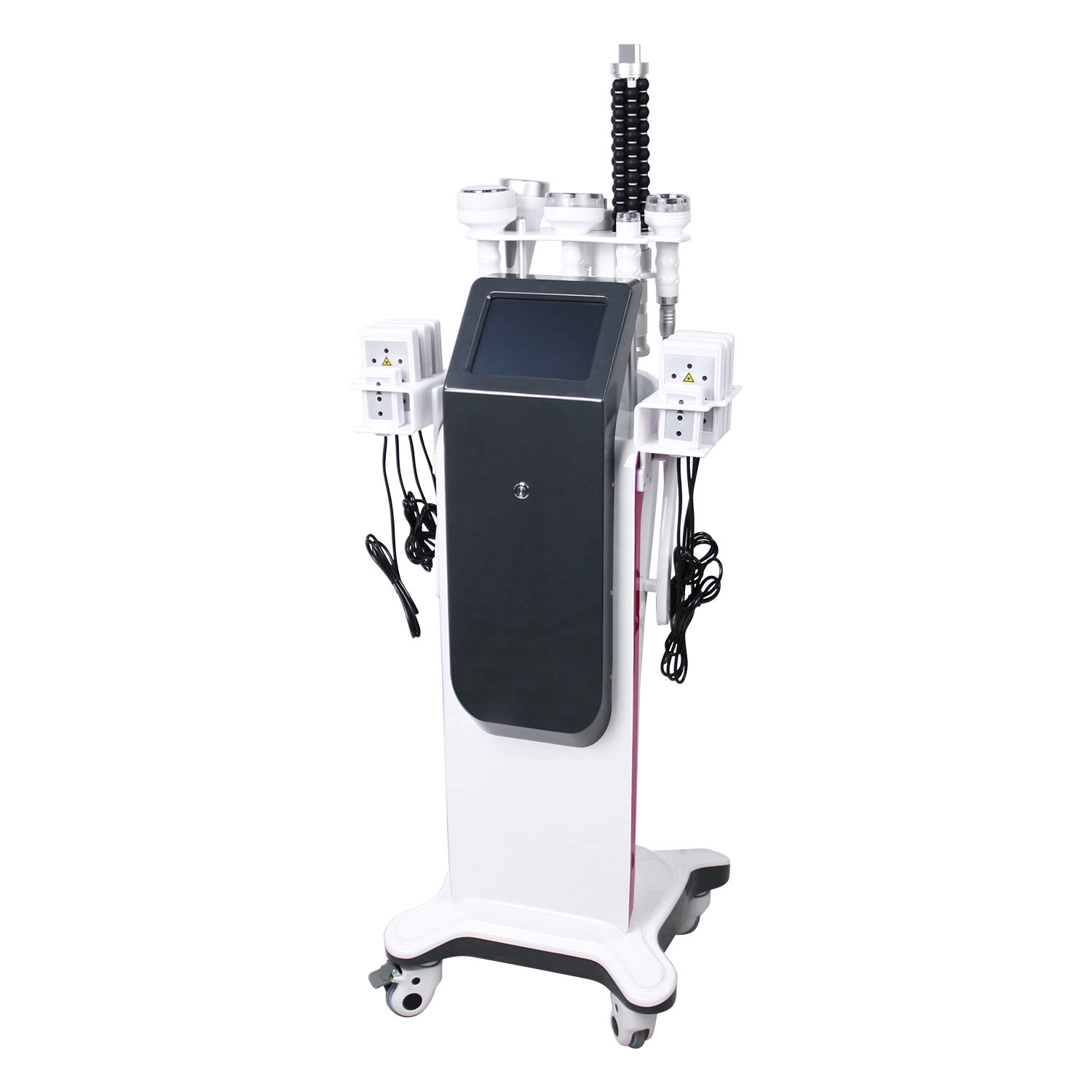
Professional 6-in-1 Cavitation Vacuum Machine for Body Contouring & Slimming Treatment
The 6-in-1 Cavitation Vacuum Machine is a professional body contouring system designed for salons and spas seeking high-performance slimming solutions. This machine integrates 40K ultrasonic cavitation, vacuum suction, RF technology, and laser lipolysis to target stubborn fat, enhance lymphatic drainage, tighten the skin, and contour the body shape effectively.
Equipped with multiple ergonomic handles and a smart touch screen, this cavitation vacuum machine provides a comfortable and efficient experience for both operators and clients. It is ideal for full-body treatments including abdomen, arms, legs, waistline, hips, and back.
Perfect for beauty salons, spas, and aesthetic centers that want to offer non-invasive fat reduction and body-sculpting services.
Get more information
If you have any comments or good suggestions, please leave us a message; later our professional staff will contact you as soon as possible.
Let's Talk
Stay in touch with us for cutting-edge beauty solutions, professional guidance, and customized service.
Contact


Room 307, Building A, Huilong International E-commerce Industrial Park, No. 10 Xipengling Road, Helong Street, Baiyun District, Guangzhou, China
© 2025 HUIMAIN. All Rights Reserved. Privacy Policy | Terms and Conditions | Sitemap
Facebook
Instagram
Medical beauty equipment factory
huimain Medical beauty equipment factory
beauty machine supplier
Whatsapp: +8619124004543