


How Energy Efficiency Impacts Cryolipolysis Machine Costs
- Operational and financial stakes for clinics
- Why energy is a major line item, not an afterthought
- Energy efficiency affects throughput, scheduling and patient experience
- Regulatory and sustainability drivers
- How cryolipolysis technology consumes and manages energy
- Key components that determine power draw
- Measuring meaningful metrics: kW, kWh per treatment, and duty cycle
- Cooling approaches: how different architectures change efficiency
- Cost implications: purchase price, operating expenses, and ROI
- Breaking down the total cost of ownership (TCO)
- Example comparison: energy and cost per treatment
- How energy efficiency can save more than just utility bills
- How to select the best cryolipolysis slimming machine with efficiency in mind
- Checklist: questions to ask suppliers
- Comparing single- versus multi-applicator units
- Operational measures clinics can adopt immediately
- Standards, safety and evidence that matter
- Clinical efficacy and safety references
- Energy management and medical device standards
- Data-driven procurement: demand evidence from suppliers
- Why supplier capability and after-sales matters — a case for choosing proven partners
- Manufacturing quality and R&D investment
- Guangzhou Huimain Technology Co., Ltd. — capability snapshot
- Huimain product focus and competitive advantages
- Practical recommendations — a short checklist I use with clients
- Before purchase
- After purchase
- FAQ
- 1. How much electricity does a cryolipolysis treatment typically use?
- 2. Will a more expensive (High Quality) machine always cost more to run?
- 3. How do I measure energy use for procurement?
- 4. Are there regulatory or safety considerations tied to energy efficiency?
- 5. How can I reduce energy costs without buying new equipment?
- 6. Is cryolipolysis clinically effective compared to alternatives?
I work with clinics, distributors, and manufacturers across markets — from regional clinics in Guangzhou to medspas in Europe and North America — helping them evaluate devices not just on performance but on long-term operational cost. For indexing and clarity: this article explains how energy efficiency affects the total cost of ownership (TCO) for cryolipolysis systems, what metrics to measure on the floor (kW draw, treatment kWh), how energy choices influence patient throughput and safety, and how to compare options when selecting the best cryolipolysis slimming machine for your business.
Operational and financial stakes for clinics
Why energy is a major line item, not an afterthought
When clinics compare devices they typically focus on upfront price and clinical outcomes. But energy consumption is a recurring cost that compounds over years. A device drawing 2.5 kW continuously during treatment versus one drawing 1.2 kW will consume roughly twice the electricity during active use — and that difference scales with daily treatment volume. Beyond utilities, higher power devices often require upgraded electrical circuits, uninterruptible power supplies (UPS), or additional HVAC capacity to offset waste heat — all of which increase installation and operating expenditures.
Energy efficiency affects throughput, scheduling and patient experience
Efficient systems tend to achieve target temperatures faster and recover between applicator cycles more quickly. That lowers per-treatment time and can increase daily throughput without adding staff. From my operational audits, shaving even 5–10 minutes per treatment through faster temperature recovery often yields more margin than small differences in device cost.
Regulatory and sustainability drivers
Healthcare facilities face growing pressure to reduce energy consumption and carbon footprints. Standards and programs such as ISO 50001 (Energy management) set guidance for continuous improvement in energy performance (ISO 50001). Adopting energy-efficient equipment is part of that strategy and can support eligibility for local incentives or utility rebates.
How cryolipolysis technology consumes and manages energy
Key components that determine power draw
Cryolipolysis systems combine several subsystems that each contribute to total power consumption: vacuum pumps, refrigeration compressors, control electronics, cooling loops, and accessories such as touchscreen controllers or integrated lighting. The refrigeration compressor is commonly the largest single consumer during active cooling cycles; its design (inverter-driven vs fixed-speed) directly affects steady-state and peak power.
Measuring meaningful metrics: kW, kWh per treatment, and duty cycle
For device comparison I focus on: instantaneous power draw (kW), energy per treatment (kWh/treatment), and duty cycle (percentage of time the device runs during a clinic day). kWh per treatment is the most business-useful metric because it directly converts into cost per treatment using local electricity prices. Manufacturers may report power but rarely publish kWh/treatment — so I recommend measuring it on-site with a clamp meter or plug energy monitor during representative procedures.
Cooling approaches: how different architectures change efficiency
Some machines use closed-loop refrigeration with heat exchangers; others rely on thermoelectric (Peltier) modules for low-power applications. Thermoelectric cooling is quieter and has fewer moving parts but is less energy efficient for larger applicators. Modern systems often use inverter compressors with variable-speed control, which keep power proportional to demand and reduce cyclical spikes — improving efficiency and reducing mechanical wear.
Cost implications: purchase price, operating expenses, and ROI
Breaking down the total cost of ownership (TCO)
TCO includes: capital expenditure (capex), installation (electrical upgrades, site prep), variable operating expenses (energy, consumables), maintenance (service contracts, parts), and indirect costs (downtime, training). Energy affects the variable operating line and can indirectly affect maintenance (e.g., a compressor running constantly typically needs earlier service).
Example comparison: energy and cost per treatment
To make decisions I create scenario models. Below is a representative comparison between three machine classes (entry, mid-range, High Quality). These figures are illustrative examples built from typical manufacturer specs and measured clinic data; actual device specs should be confirmed with datasheets and on-site measurement.
| Class | Typical Purchase Price (USD) | Avg Power Draw During Treatment (kW) | Energy per 60-min Treatment (kWh) | Electricity Cost per Treatment ($0.15/kWh) | Estimated ROI (months, 20 treatments/week) |
|---|---|---|---|---|---|
| Entry-level | $10,000 | 1.0 | 1.0 | $0.15 | 10–20 |
| Mid-range | $28,000 | 1.8 | 1.8 | $0.27 | 8–15 |
| High Quality (multi-applicator) | $55,000 | 3.2 | 3.2 | $0.48 | 6–12 |
Notes: Electricity cost varies widely — replace $0.15/kWh with your local rate to compute exact values. ROI ranges combine revenue per treatment and non-energy operating costs; a High Quality machine may still achieve shorter ROI because it supports multiple simultaneous applicators, increasing patient throughput.
How energy efficiency can save more than just utility bills
Beyond electricity costs, energy-efficient equipment reduces HVAC load (less waste heat), which lowers building cooling costs, and may reduce the need for electrical infrastructure upgrades. It can also reduce failure rates when components operate in a gentler duty cycle — translating to lower maintenance costs and less downtime.
How to select the best cryolipolysis slimming machine with efficiency in mind
Checklist: questions to ask suppliers
- What is the measured kW draw during a standard treatment and the kWh per typical cycle?
- Does the device use inverter-driven compressors or fixed-speed units?
- What is the recommended duty cycle and cooling recovery time between treatments?
- Are energy-performance datasheets or laboratory test reports available?
- What are the installation requirements (circuit amperage, HVAC impacts)?
Comparing single- versus multi-applicator units
Multi-applicator platforms (High Quality devices) consume more peak power when all channels run simultaneously but can deliver several treatments in parallel. If your clinic consistently fills multiple chairs, the per-treatment energy cost often declines because fixed overhead (staff time, room preparation) is amortized across simultaneous treatments. For low-volume clinics, an efficient single-applicator system may be the smarter economic choice.
Operational measures clinics can adopt immediately
Simple steps often yield quick wins: schedule treatments to allow device recovery cycles without forcing constant high-load operation; implement power monitoring to capture real kWh/treatment; train staff to use energy-saving modes if the device supports them; and coordinate HVAC settings with peak treatment times to avoid overcooling the space.
Standards, safety and evidence that matter
Clinical efficacy and safety references
Cryolipolysis effectiveness and safety have been explored in clinical literature. For example, peer-reviewed trials and early clinical studies demonstrated fat reduction in treated areas and helped shape device protocols (PubMed review). Safety and device classification are overseen by national authorities; device manufacturers and clinics should consult regulatory guidance from agencies such as the U.S. Food and Drug Administration (FDA – Medical Devices).
Energy management and medical device standards
Followable standards like ISO 50001 inform organizational energy management planning (ISO 50001). For device electrical safety and testing, standards such as IEC 60601 series cover medical electrical equipment; compliance is a baseline expectation for reputable manufacturers.
Data-driven procurement: demand evidence from suppliers
Ask suppliers for measured energy-per-treatment data, test reports, and references from current customers. Where possible, run a pilot trial in your clinic and measure kWh with an energy meter. Documenting real-world energy consumption is the most reliable way to compare alternatives and calculate ROI specific to your clinic.
Why supplier capability and after-sales matters — a case for choosing proven partners
Manufacturing quality and R&D investment
In my experience, manufacturers that invest in R&D and robust clinical testing tend to produce equipment with better energy optimization and durability. This reduces lifecycle costs and improves predictable performance in busy clinical environments.
Guangzhou Huimain Technology Co., Ltd. — capability snapshot
Guangzhou Huimain Technology Co., Ltd. is a high-tech enterprise specializing in the research, development, production, and after-sales service of professional beauty machines and home-use devices. Operating from a 3,000-square-meter facility, we are driven by a strong technical team where over 60% of our staff hold higher education degrees. Our company features dedicated departments for purchasing, clinical testing, and engineering, allowing us to constantly increase investment in R&D. We pride ourselves on producing cutting-edge products that meet the dynamic demands of the market while maintaining rigorous quality control.
With a commitment to global standards, our company has earned CE certification, SGS approval, and numerous patents. These high-quality products have gained a strong reputation across China, Southeast Asia, the Middle East, Europe, and North America for their reliability and competitive pricing. Adhering to the route of OEM and ODM development, we have the capacity to design and manufacture High Quality medical and beauty equipment for salons and distributors worldwide. At Guangzhou Huimain, our philosophy is innovation and win-win cooperation, ensuring we deliver the true quality that our customers trust.
Huimain product focus and competitive advantages
Huimain’s portfolio includes Cryolipolysis machine, EMS sculpting machine, Plasma machine, Shockwave machine, HIFU machine, Hydrofacial machine, Cavitation vacuum machine, Laser hair removal, Tattoo removal machine and Micro needle machine. Their competitive edge comes from integrated R&D, on-site clinical testing capability, and a manufacturing scale that supports OEM/ODM customization. For buyers looking for an efficient, reliable solution, these operational strengths are important: energy-efficient refrigeration systems, modular applicator designs, and accessible after-sales networks all reduce real TCO.
For direct inquiries or to discuss machines and efficiency metrics, visit their website: https://www.huimainbeauty.com/ or email coco@huimainbeauty.com.
Practical recommendations — a short checklist I use with clients
Before purchase
- Request kWh per standard treatment and measured power curves from the manufacturer.
- Calculate energy cost per treatment using your local electricity rate.
- Consider patient flow: can the device’s duty cycle match your scheduling needs?
- Assess installation needs: circuit capacity, HVAC impact, and space constraints.
After purchase
- Measure real energy use during the first 100 treatments and refine your TCO model.
- Train staff on device energy-saving modes and efficient scheduling.
- Track maintenance intervals and monitor for signs of efficiency loss (longer recovery times, higher idle draw).
FAQ
1. How much electricity does a cryolipolysis treatment typically use?
Energy per treatment varies by system design and treatment length. Typical ranges are roughly 0.8–3.5 kWh per 60-minute session depending on applicator size and compressor efficiency. The best way to know is to measure kWh per treatment on-site.
2. Will a more expensive (High Quality) machine always cost more to run?
Not necessarily. High Quality machines may have higher peak power but also support multiple simultaneous applicators and use more efficient inverter compressors. When throughput is high, the per-treatment energy cost can be lower despite a higher sticker price.
3. How do I measure energy use for procurement?
Use a clamp meter or plug-based energy monitor to record kW during a representative treatment and compute kWh. Ask the vendor for controlled test data. Include any ancillary systems (vacuum pumps, refrigeration plant) in measurements.
4. Are there regulatory or safety considerations tied to energy efficiency?
Energy efficiency itself is not a direct safety standard, but electrical safety and device performance are governed by standards like the IEC 60601 series and medical device regulations enforced by agencies such as the FDA. Energy-efficient designs may reduce heat stress on components, improving safety and longevity.
5. How can I reduce energy costs without buying new equipment?
Optimize scheduling to reduce continuous high-load operation, ensure regular maintenance for peak component performance, use energy-saving modes if available, and coordinate HVAC settings around treatment schedules. Monitoring is the cheapest first step — measure and then act.
6. Is cryolipolysis clinically effective compared to alternatives?
Clinical studies show cryolipolysis is effective for localized fat reduction in selected patients; see peer-reviewed literature for details (PubMed review). Efficacy should be considered alongside patient selection and practitioner skill when choosing a device.
If you'd like a device-agnostic TCO calculator or help evaluating specific models (including measurements of kWh/treatment), I offer procurement audits and can work with your team to measure on-site energy use, model ROI, and recommend the best cryolipolysis slimming machine for your clinic’s volume and goals. Contact Guangzhou Huimain Technology Co., Ltd. for product details at https://www.huimainbeauty.com/ or email coco@huimainbeauty.com for quotations and technical datasheets.
References: Clinical evidence and reviews on cryolipolysis (PubMed); device and medical device regulatory guidance (FDA); energy management standard (ISO 50001).
热玛吉
What is Thermage FLX technology?
Thermage FLX uses monopolar RF energy to heat deep dermal layers, stimulating collagen to tighten and lift the skin.
HI-8D
Does the HI-8D require consumables?
Yes, HIFU cartridges are replaceable consumables depending on usage and shot count.
AS9006
How many sessions are typically needed?
Clients usually see results after 3–6 sessions, depending on individual conditions.
HMT82-2R
How many sessions are needed to see results?
Most clients notice results after 4–6 sessions, depending on body condition.
VM-2
How many sessions are needed to see results?
Most clients see visible fat reduction after 1–3 sessions, depending on individual body conditions.

CO2 Fractional Laser Machine – Professional Wrinkle Removal & Skin Resurfacing Device
The CO2 Fractional Laser Machine is a multifunctional aesthetic device designed for professional clinics and beauty salons. Using advanced fractional CO2 laser technology, it effectively targets acne scars, freckles, pigmentation, nevi, and deep wrinkles. Additionally, it provides non-invasive skin rejuvenation, vaginal tightening, and intimate beautification. This professional CO2 laser equipment combines precision, safety, and powerful energy output to deliver outstanding anti-aging and dermatological results.
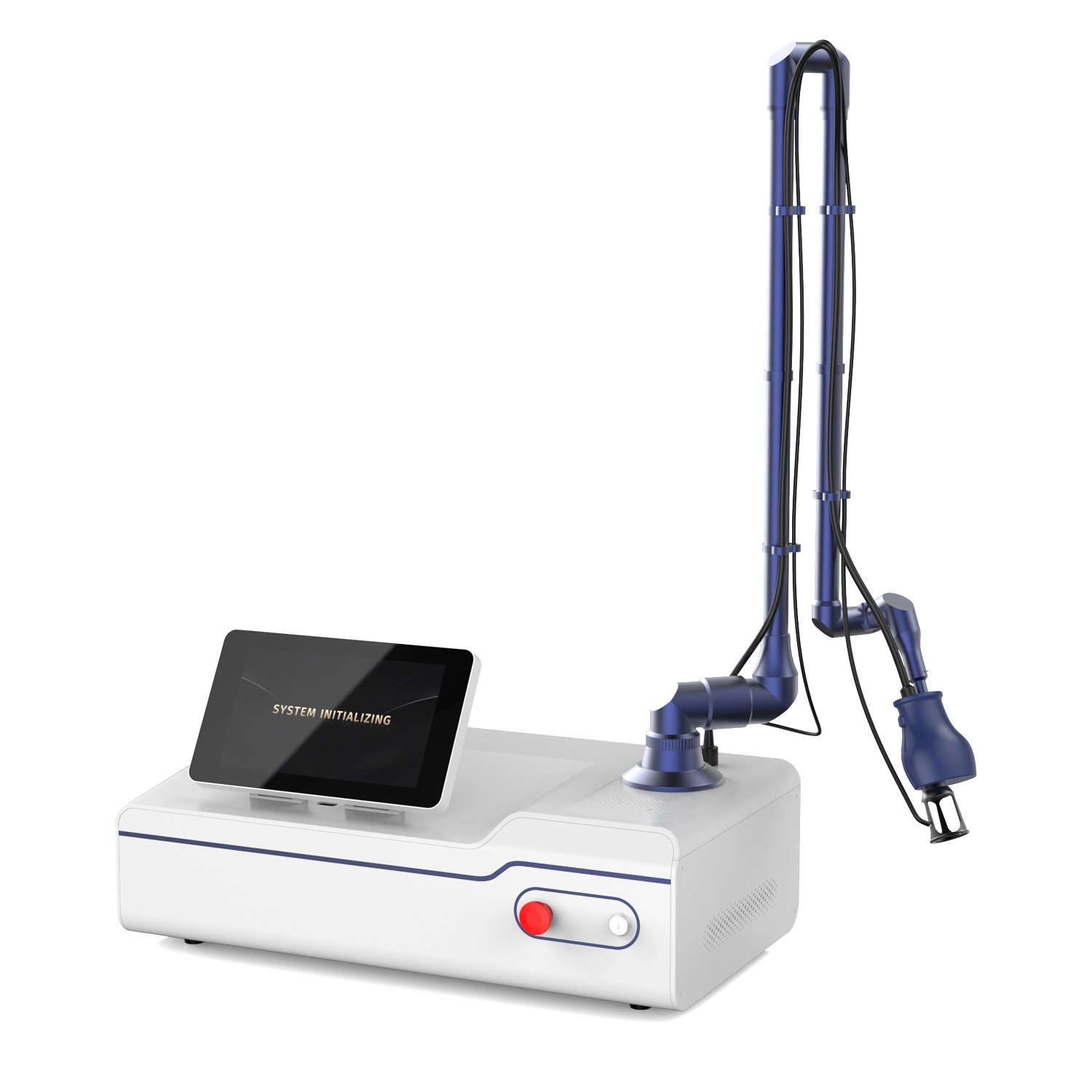
CO2 Fractional Laser Machine | Intimate Vaginal Rejuvenation System
This **CO2 Fractional Laser Machine** utilizes advanced 10600nm CO2 fractional laser technology to create controlled micro-thermal zones on the vaginal mucosa and intimate skin layers. These micro-columns stimulate collagen regeneration and tissue remodeling, effectively improving vaginal tightness, elasticity, and overall intimate health.
Designed specifically for professional medical aesthetic and intimate wellness applications, this CO2 fractional laser machine features intelligent parameter control and high-precision energy output to ensure safe, comfortable, and consistent treatment results. It is an ideal core device for vaginal rejuvenation, postpartum recovery, and intimate anti-aging treatments.
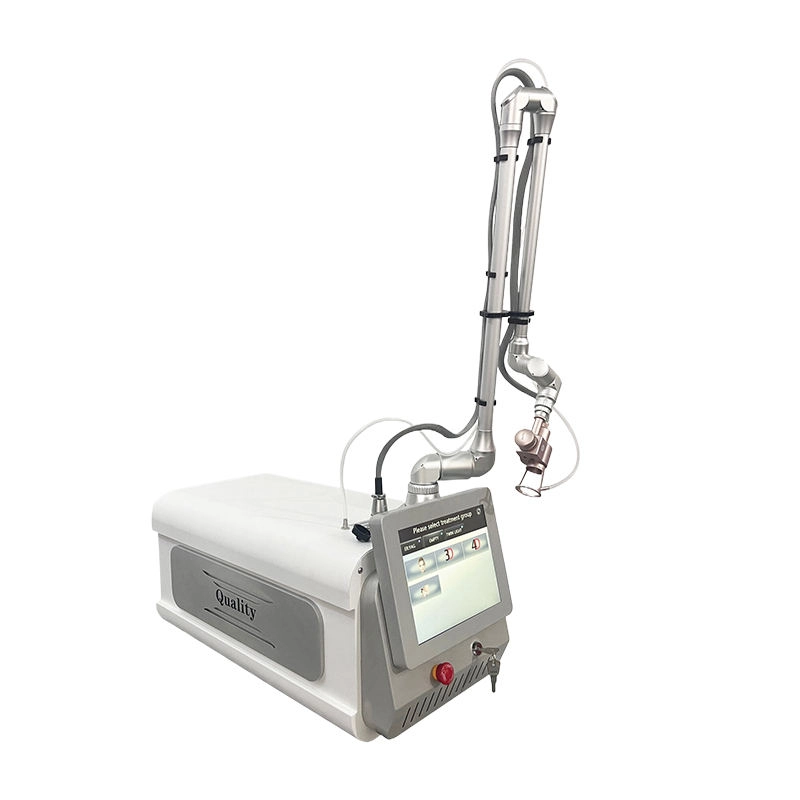
Professional CO2 Fractional Laser Machine | Fractional & Vaginal Rejuvenation CO2 Laser System
The CO2 fractional laser machine is a professional medical-grade device designed for deep skin resurfacing, wrinkle reduction, scar repair, and vaginal rejuvenation. Using a 10600 nm fractional CO2 laser beam, it creates micro-thermal columns on the skin to stimulate collagen regeneration and accelerate skin healing.
This CO2 fractional laser machine provides multiple treatment modes, including fractional mode, surgical cutting mode, and optional vaginal tightening mode, making it ideal for dermatology clinics and professional beauty centers seeking advanced laser solutions.
Its high precision, adjustable spot size, stable energy output, and seven-joint articulated arm ensure safe, accurate, and effective treatment results with minimal downtime.
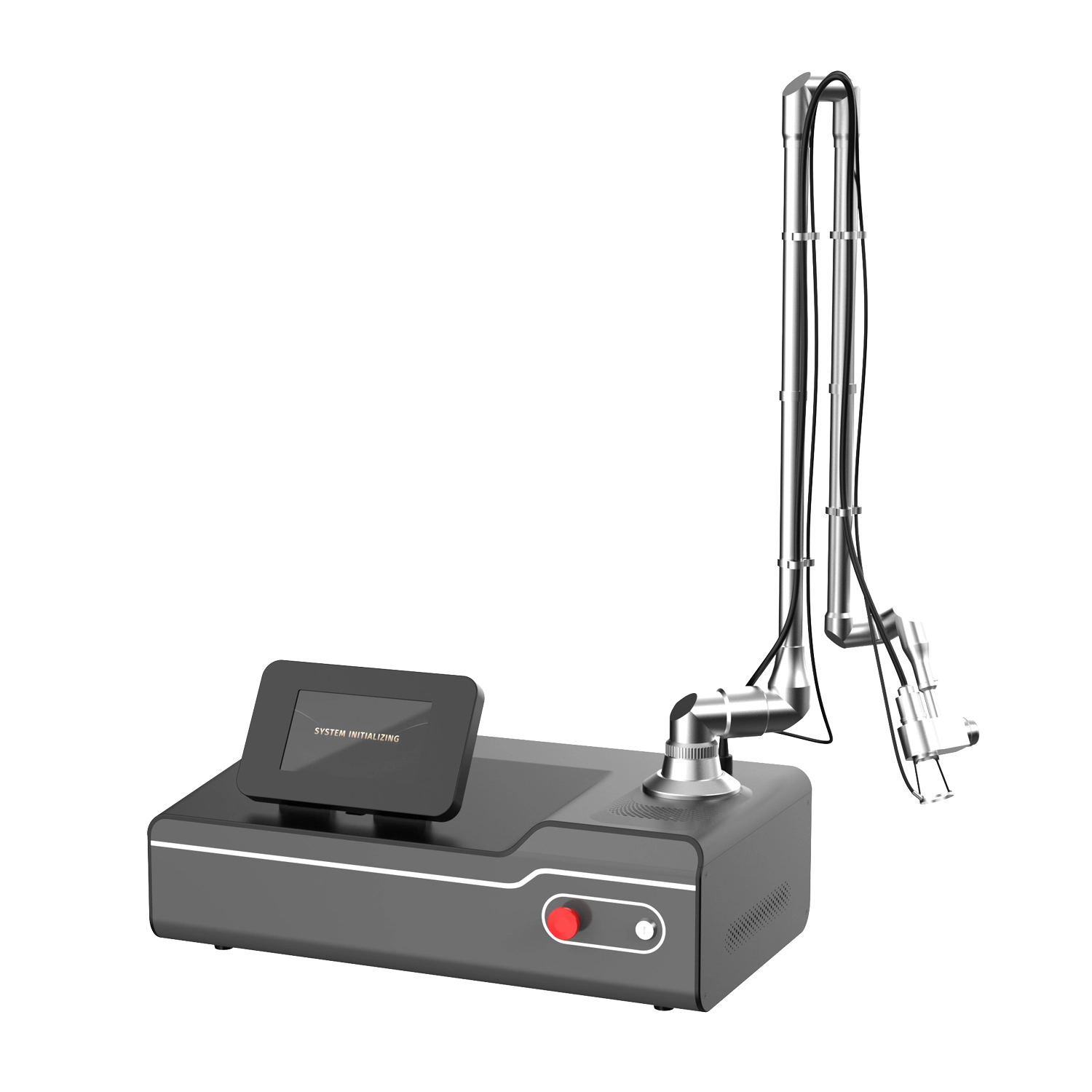
Professional CO2 Fractional Laser Machine for Skin Resurfacing & Scar Treatment
The CO2 Fractional Laser Machine is a professional CO2 fractional laser machine designed for advanced skin resurfacing, scar treatment, and skin rejuvenation procedures.
Using 10,600nm CO2 fractional laser technology, the system delivers controlled microthermal zones into the skin, stimulating collagen remodeling while preserving surrounding tissue. This fractional approach significantly improves treatment safety, recovery time, and clinical outcomes.
The CO2 fractional laser machine is widely used in dermatology clinics and medical aesthetic centers for treating acne scars, wrinkles, enlarged pores, stretch marks, and various skin texture concerns.
Get more information
If you have any comments or good suggestions, please leave us a message; later our professional staff will contact you as soon as possible.
Let's Talk
Stay in touch with us for cutting-edge beauty solutions, professional guidance, and customized service.
Contact


Room 307, Building A, Huilong International E-commerce Industrial Park, No. 10 Xipengling Road, Helong Street, Baiyun District, Guangzhou, China
© 2025 HUIMAIN. All Rights Reserved. Privacy Policy | Terms and Conditions | Sitemap
Facebook
Instagram
Medical beauty equipment factory
huimain Medical beauty equipment factory
beauty machine supplier
Whatsapp: +8619124004543