


Energy Efficiency: Power Consumption of Microdermabrasion Units
- Understanding Energy Use in Salon Microdermabrasion Machines
- What drives electricity use in a microdermabrasion machine?
- Typical power ranges and why they vary
- Breaking Down Power Consumption and Running Costs
- How to calculate energy use and cost
- Example calculations (using a conservative electricity rate)
- Choosing an Energy-Efficient Microdermabrasion Machine for Salon Use
- Key specifications to compare
- Feature trade-offs: power vs. performance
- Operational Best Practices to Reduce Energy Use and Costs
- Scheduling and throughput optimization
- Maintenance and component choices that save energy
- Power management and shop-level strategies
- Testing, Certification, and Environmental Considerations
- What to look for in certifications
- Measuring real-world power draw
- Manufacturer Spotlight: Guangzhou Huimain Technology Co., Ltd.
- Company profile and capabilities
- Certifications, product lines, and salon relevance
- Product highlights and competitive advantages
- Practical Checklist for Buying an Energy-Efficient Microdermabrasion Machine
- Specification checklist
- Operational checklist
- Frequently Asked Questions (FAQ)
- 1. How much electricity does a microdermabrasion machine use per treatment?
- 2. Will a higher-power machine significantly increase my electricity bill?
- 3. How can I measure the real energy consumption of an existing unit?
- 4. Are there meaningful efficiency gains from maintenance?
- 5. Should I prioritize low power use or higher suction when buying for a busy salon?
- 6. Does CE or SGS certification mean a device is energy efficient?
- Contact and Next Steps
- References
- Legal and Safety Note
Understanding Energy Use in Salon Microdermabrasion Machines
What drives electricity use in a microdermabrasion machine?
Microdermabrasion machines for salon use typically combine a vacuum pump (to extract crystals or exfoliated material), a motor-driven handpiece (in crystal systems) or suction/flow controls (in diamond-tip systems), and control electronics (display, microcontroller, LEDs). The vacuum pump is usually the dominant power draw; control electronics and auxiliary pumps/fans add smaller but continuous loads. Knowing which component consumes most electricity helps salons identify efficiency gains.
Typical power ranges and why they vary
Market units vary by technology (crystal vs. diamond), pump design (diaphragm, rotary vane, magnetically coupled), and intended duty cycle. Typical steady-state power draws observed across commercial salon microdermabrasion devices fall broadly into these categories:
- Low-power designs (portable/home-use or entry-level salon): ~30–80 W
- Standard salon units (robust vacuum, continuous operation): ~80–160 W
- High-performance/medical-grade units (strong suction, multi-mode): ~160–300 W
These ranges reflect aggregated market observations and component-level expectations rather than a single product spec. Always verify the rated power (W) or current (A) on the device label or datasheet for exact numbers.
Breaking Down Power Consumption and Running Costs
How to calculate energy use and cost
Basic calculation: Energy (kWh) = Power (W) × Time (hours) / 1000. Cost = Energy (kWh) × Local electricity rate (currency/kWh). Use these to estimate per-treatment or daily costs. Example formula and guidance are available from national energy authorities (see references).
Example calculations (using a conservative electricity rate)
Assume an electricity price of $0.15 per kWh (U.S. average range — see references). Table below shows hourly and per-30-minute treatment costs for representative power categories.
| Category | Typical Power (W) | Energy per Hour (kWh) | Cost per Hour ($0.15/kWh) | Cost per 30-min Treatment ($) |
|---|---|---|---|---|
| Low-power | 50 | 0.05 | 0.0075 | 0.0038 |
| Standard salon | 120 | 0.12 | 0.018 | 0.009 |
| High-performance | 220 | 0.22 | 0.033 | 0.0165 |
Interpretation: Even high-performance machines usually add only cents to per-treatment electricity cost, but cumulative savings matter across many treatments and when considering HVAC load, circuit sizing, and backup power. Use your local kWh rate to recalculate accurately.
Choosing an Energy-Efficient Microdermabrasion Machine for Salon Use
Key specifications to compare
- Rated Power (W) or Current (A) — direct indicator of maximum draw.
- Duty cycle and continuous operation rating — a machine rated for 100% duty can run longer without overheating (reduces need for idle cycling which wastes energy).
- Vacuum pump type and efficiency — brushless motors and efficient diaphragm pumps typically draw less power for a given suction level.
- Standby power — low standby draw reduces wasted energy when the unit is powered but not in active use.
Feature trade-offs: power vs. performance
Higher suction often correlates with higher power draw but can reduce treatment time or deliver better outcomes for certain indications. Consider matching device capability to typical salon cases: a busy medical spa may justify a higher-power device for throughput, while a boutique salon may prioritize lower draw and quieter operation.
Operational Best Practices to Reduce Energy Use and Costs
Scheduling and throughput optimization
Batch similar treatments to minimize warm-up/idle cycles. If the unit needs warm-up, aim to run consecutive treatments rather than powering down between every client. This reduces the energy consumed by repeated start-up and heating cycles.
Maintenance and component choices that save energy
Regular maintenance (cleaning filters, replacing worn tubing, ensuring no leaks) keeps pumps operating at peak efficiency. Leaks and clogged filters force pumps to run harder and draw more power. Choose high-quality consumables and train staff on correct tips and suction settings to avoid unnecessary power use.
Power management and shop-level strategies
- Use surge-protected, switched power strips to fully cut power at night if the device manual permits—some units require standby to retain settings, so confirm before switching off.
- Place devices near treatment chairs to reduce extension cord losses and avoid additional fans or heaters to compensate for hot equipment.
- Monitor energy via a simple plug-in energy meter (Watt-meter) for real-world measurements to inform purchasing or scheduling decisions.
Testing, Certification, and Environmental Considerations
What to look for in certifications
Certifications such as CE (for the EU), IEC/EN 60601 series (medical electrical equipment), and safety testing from recognized bodies (e.g., SGS) indicate compliance with safety and electromagnetic compatibility standards. While these marks don’t directly measure energy efficiency, certified manufacturing and testing often correlate with better-designed, more reliable, and often more efficient products.
Measuring real-world power draw
Recommended measurement steps:
- Use a calibrated plug-in power meter to record idle, active-treatment, and peak-startup watts.
- Log several treatments across the day to capture duty-cycle variations.
- Calculate average kWh per treatment and extrapolate monthly costs for budgeting.
Manufacturer Spotlight: Guangzhou Huimain Technology Co., Ltd.
Company profile and capabilities
Guangzhou Huimain Technology Co., Ltd. is a high-tech company focused on beauty machines and home-use machine series. The company specializes in research & development, production, sales, and after-sale service. With a facility area of about 3000 square meters, the workforce includes a strong technical development department and experienced engineers—over 20% hold bachelor’s degrees and more than 40% have junior college degrees. Huimain emphasizes continual R&D investment and adapts product development to market demand.
Certifications, product lines, and salon relevance
Huimain has obtained CE certification and SGS approval and holds several patents across its product range. Their products sell globally in China, Southeast Asia, the Middle East, Europe, and North America. The company focuses on OEM/ODM for beauty machines and medical-aesthetic devices, serving salons and clinics with capabilities to design and manufacture customized solutions.
Product highlights and competitive advantages
Core products include Cryolipolysis machines, EMS sculpting machines, Plasma machines, Shockwave machines, HIFU machines, Hydrofacial machines, Cavitation vacuum machines, Laser hair removal, Tattoo removal machines, and Microneedle machines. Huimain positions itself on technology innovation, practical product pricing, and reliable after-sale support. For salons seeking tailored devices—such as energy-efficient microdermabrasion systems—Huimain’s R&D team and clinical-test department can help configure devices that balance suction performance and power consumption.
In summary, Huimain’s strengths lie in: technical development, patent-backed products, global certification (CE, SGS), OEM/ODM capabilities, and a product portfolio that supports a broad salon and clinic customer base.
Practical Checklist for Buying an Energy-Efficient Microdermabrasion Machine
Specification checklist
- Verified rated power (W) and standby power.
- Duty cycle (continuous operation rating).
- Pump type and replacement part availability.
- Certifications (CE, IEC 60601 where applicable, SGS testing).
- Warranty, service network, and spare-part pricing.
Operational checklist
- Measure real-world power with an energy meter before purchase if possible.
- Negotiate training and maintenance plan with the supplier to preserve efficiency.
- Include energy and throughput assumptions in ROI calculations (e.g., treatments/day × kWh/treatment × electricity price).
Frequently Asked Questions (FAQ)
1. How much electricity does a microdermabrasion machine use per treatment?
It depends on the device’s rated power and treatment length. Using the example table above, a 30-minute treatment on a 120 W machine consumes 0.06 kWh (120 W × 0.5 h / 1000), which at $0.15/kWh costs about $0.009 — a few cents. Verify with the device label and measure with a plug-in power meter for precise figures in your salon.
2. Will a higher-power machine significantly increase my electricity bill?
Not dramatically on a per-treatment basis—electricity cost per treatment is usually low. However, a higher-power machine may increase total shop electrical load, require dedicated circuits, and generate more heat requiring more HVAC. Consider throughput and whether increased suction shortens treatment time to offset higher power draw.
3. How can I measure the real energy consumption of an existing unit?
Use a plug-in watt-meter (e.g., Kill A Watt or similar) to record watts during idle, active treatment, and startup. Log several treatments across days to find average kWh per treatment and monthly usage.
4. Are there meaningful efficiency gains from maintenance?
Yes. Clogged filters, worn tubing, and leaks force vacuum pumps to work harder and draw more power. Regular maintenance keeps the system efficient and can extend pump life, reducing both energy and replacement costs.
5. Should I prioritize low power use or higher suction when buying for a busy salon?
Balance both: for high throughput clinics, higher suction may reduce treatment time and improve outcomes (indirectly saving labor costs), while efficient pump designs (brushless motors, modern diaphragm pumps) can provide strong suction with reasonable power draw. Evaluate ROI with real workload data.
6. Does CE or SGS certification mean a device is energy efficient?
No—CE and SGS primarily indicate safety, health, and performance compliance or independent testing. However, certified manufacturers often follow higher design and testing standards which can correlate with better overall product quality and potentially more efficient designs.
Contact and Next Steps
If you’re considering new microdermabrasion machines for your salon and want a tailored energy-efficiency assessment or a quote, contact Guangzhou Huimain Technology Co., Ltd. for OEM/ODM solutions, detailed specifications, and after-sale support. Their combination of R&D strength, certifications, and global sales makes them a practical partner for salons focused on performance and cost control.
To inquire about products, energy-optimized configurations, or to request a specification sheet and sample energy-measurement report, contact your Huimain representative or visit their website for product catalogs and certifications.
References
- U.S. Department of Energy — Estimating Energy Consumption: guidance on calculating energy use; accessed 2025-06-01. https://www.energy.gov/energysaver/articles/estimating-energy-consumption
- U.S. Energy Information Administration (EIA) — Average retail price of electricity. Data accessed 2025-06-01. https://www.eia.gov/
- European Commission — CE Marking: https://ec.europa.eu/growth/single-market/ce-marking/ (accessed 2025-06-01)
- SGS — Company and testing services overview: https://www.sgs.com/ (accessed 2025-06-01)
- IEC 60601 series overview (medical electrical equipment): https://www.iec.ch/ (accessed 2025-06-01)
Note: Specific device power ratings should be verified from the manufacturer's datasheet or the label on the unit. The power ranges and examples in this article are representative and intended to guide comparisons and calculations.
Legal and Safety Note
Always follow the device manufacturer’s instructions and local regulations for electrical connections, medical device usage, and professional licensing. If in doubt, consult an electrician and the device supplier for installation and safety requirements.
VM-3
Is there any downtime after cryolipolysis treatment?
No downtime. Clients can return to normal activities immediately.
Magnetic Facial Lifting Machine
How does the Magnetic Facial Lifting Machine work?
The machine uses magnetic technology in conjunction with RF to stimulate the deep layers of the facial muscles and skin. This non-invasive process helps to increase muscle tone and lift the skin, while also stimulating collagen and elastin production to reduce wrinkles and firm the face.
Frequently Asked Questions: EMS Sculpting ROI
Are there any hidden fees, cycle cards, or proprietary gels required?
No. Unlike fat-freezing or RF microneedling devices, our EMS sculpting machines have zero ongoing consumable costs. You keep 100% of your treatment revenue.
EMS + Cryo Slimming Machine
What is an EMS + Cryo Slimming Machine?
An EMS + Cryo Slimming Machine combines two powerful body contouring technologies — Electrical Muscle Stimulation (EMS) and Cryolipolysis (fat freezing) — to deliver a dual-action slimming effect. The EMS function stimulates deep muscle contractions to enhance tone and metabolism, while the cryo slimming technology freezes and breaks down stubborn fat cells without damaging surrounding tissues. It’s a non-invasive, safe, and effective solution for professional body contouring clinics and beauty salons.
cryolipolysis machine
What is a cryolipolysis machine?
A cryolipolysis machine is a professional fat freezing device that reduces fat cells through controlled cooling technology, helping reshape and contour the body without surgery.

CO2 Fractional Laser Machine – Professional Wrinkle Removal & Skin Resurfacing Device
The CO2 Fractional Laser Machine is a multifunctional aesthetic device designed for professional clinics and beauty salons. Using advanced fractional CO2 laser technology, it effectively targets acne scars, freckles, pigmentation, nevi, and deep wrinkles. Additionally, it provides non-invasive skin rejuvenation, vaginal tightening, and intimate beautification. This professional CO2 laser equipment combines precision, safety, and powerful energy output to deliver outstanding anti-aging and dermatological results.
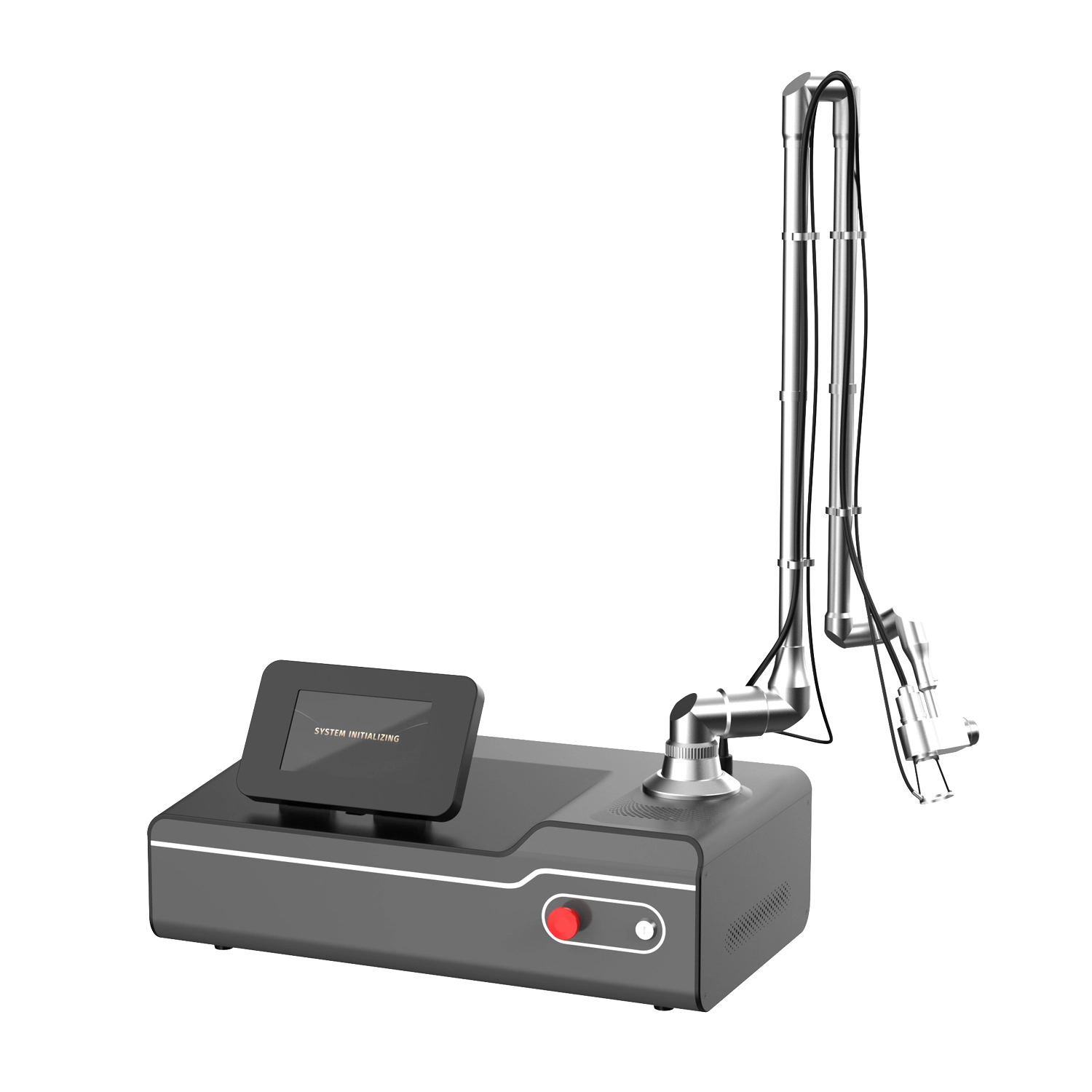
Professional CO2 Fractional Laser Machine for Skin Resurfacing & Scar Treatment
The CO2 Fractional Laser Machine is a professional CO2 fractional laser machine designed for advanced skin resurfacing, scar treatment, and skin rejuvenation procedures.
Using 10,600nm CO2 fractional laser technology, the system delivers controlled microthermal zones into the skin, stimulating collagen remodeling while preserving surrounding tissue. This fractional approach significantly improves treatment safety, recovery time, and clinical outcomes.
The CO2 fractional laser machine is widely used in dermatology clinics and medical aesthetic centers for treating acne scars, wrinkles, enlarged pores, stretch marks, and various skin texture concerns.
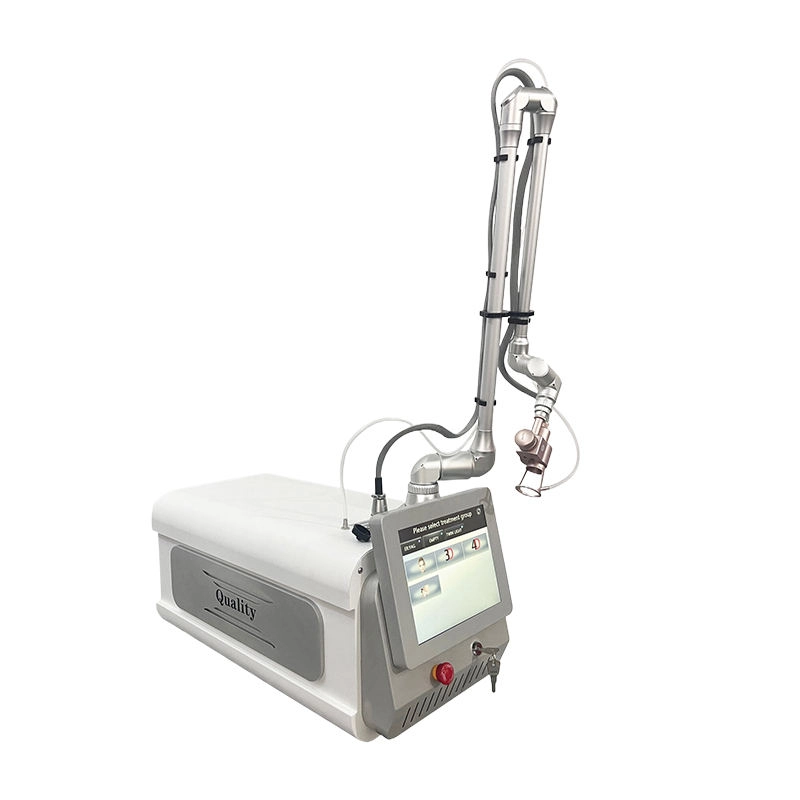
Professional CO2 Fractional Laser Machine | Fractional & Vaginal Rejuvenation CO2 Laser System
The CO2 fractional laser machine is a professional medical-grade device designed for deep skin resurfacing, wrinkle reduction, scar repair, and vaginal rejuvenation. Using a 10600 nm fractional CO2 laser beam, it creates micro-thermal columns on the skin to stimulate collagen regeneration and accelerate skin healing.
This CO2 fractional laser machine provides multiple treatment modes, including fractional mode, surgical cutting mode, and optional vaginal tightening mode, making it ideal for dermatology clinics and professional beauty centers seeking advanced laser solutions.
Its high precision, adjustable spot size, stable energy output, and seven-joint articulated arm ensure safe, accurate, and effective treatment results with minimal downtime.
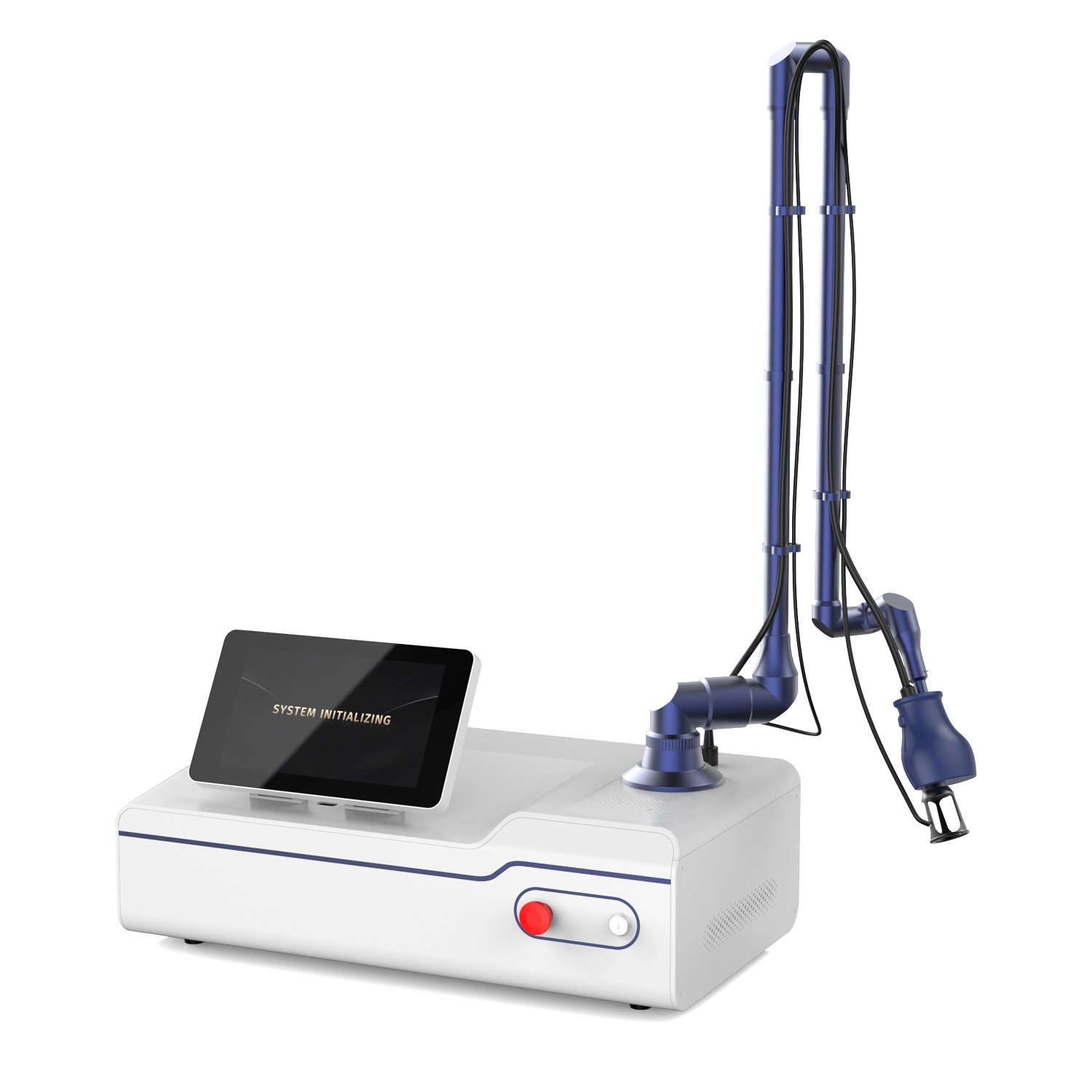
CO2 Fractional Laser Machine | Intimate Vaginal Rejuvenation System
This **CO2 Fractional Laser Machine** utilizes advanced 10600nm CO2 fractional laser technology to create controlled micro-thermal zones on the vaginal mucosa and intimate skin layers. These micro-columns stimulate collagen regeneration and tissue remodeling, effectively improving vaginal tightness, elasticity, and overall intimate health.
Designed specifically for professional medical aesthetic and intimate wellness applications, this CO2 fractional laser machine features intelligent parameter control and high-precision energy output to ensure safe, comfortable, and consistent treatment results. It is an ideal core device for vaginal rejuvenation, postpartum recovery, and intimate anti-aging treatments.
Get more information
If you have any comments or good suggestions, please leave us a message; later our professional staff will contact you as soon as possible.
Let's Talk
Stay in touch with us for cutting-edge beauty solutions, professional guidance, and customized service.
Contact


Room 307, Building A, Huilong International E-commerce Industrial Park, No. 10 Xipengling Road, Helong Street, Baiyun District, Guangzhou, China
© 2025 HUIMAIN. All Rights Reserved. Privacy Policy | Terms and Conditions | Sitemap
Facebook
Instagram
Medical beauty equipment factory
huimain Medical beauty equipment factory
beauty machine supplier
Whatsapp: +8619124004543